Toys & Chews

Best Automatic Ball Launcher for Large Dogs of 2026

My right shoulder gave out long before my dog did. That's the thing nobody warns you about with a big, ball-obsessed dog: the retrieving drive is endless, and your arm is not. An automatic launcher fixes that specific problem — it throws the same flat, 30-foot toss over and over while you stand there with a coffee, turning a chore into genuine entertainment for both of you. The catch is that a launcher built for a 20-pound terrier will jam, stall, or skid across the yard under a 90-pound lab, and the flimsy ones tend to quit somewhere around month three.

We spent eight months with 12 launchers, and the differences only surface after a few hundred throws: whether the balls survive a determined chewer, whether the battery lasts a second hour at the park, and whether your dog stays engaged once the novelty fades. One tip — most of these only accept their own balls, so price out replacements before you get attached to the range. The ones below earned their spot.

1

OLenyer 80FT Launcher

Top Pick
OLenyer 80FT Launcher

Long-range big yards

Our Score 8.4/10
Check Price

Worth Noting

  • Reliability failures can end play early
  • Battery may stop holding a charge
Battery
5200 mAh
Ball Size
2.5 inches
Included Balls
8 ETPU
Launch Distance
40–80 ft
Read the full review

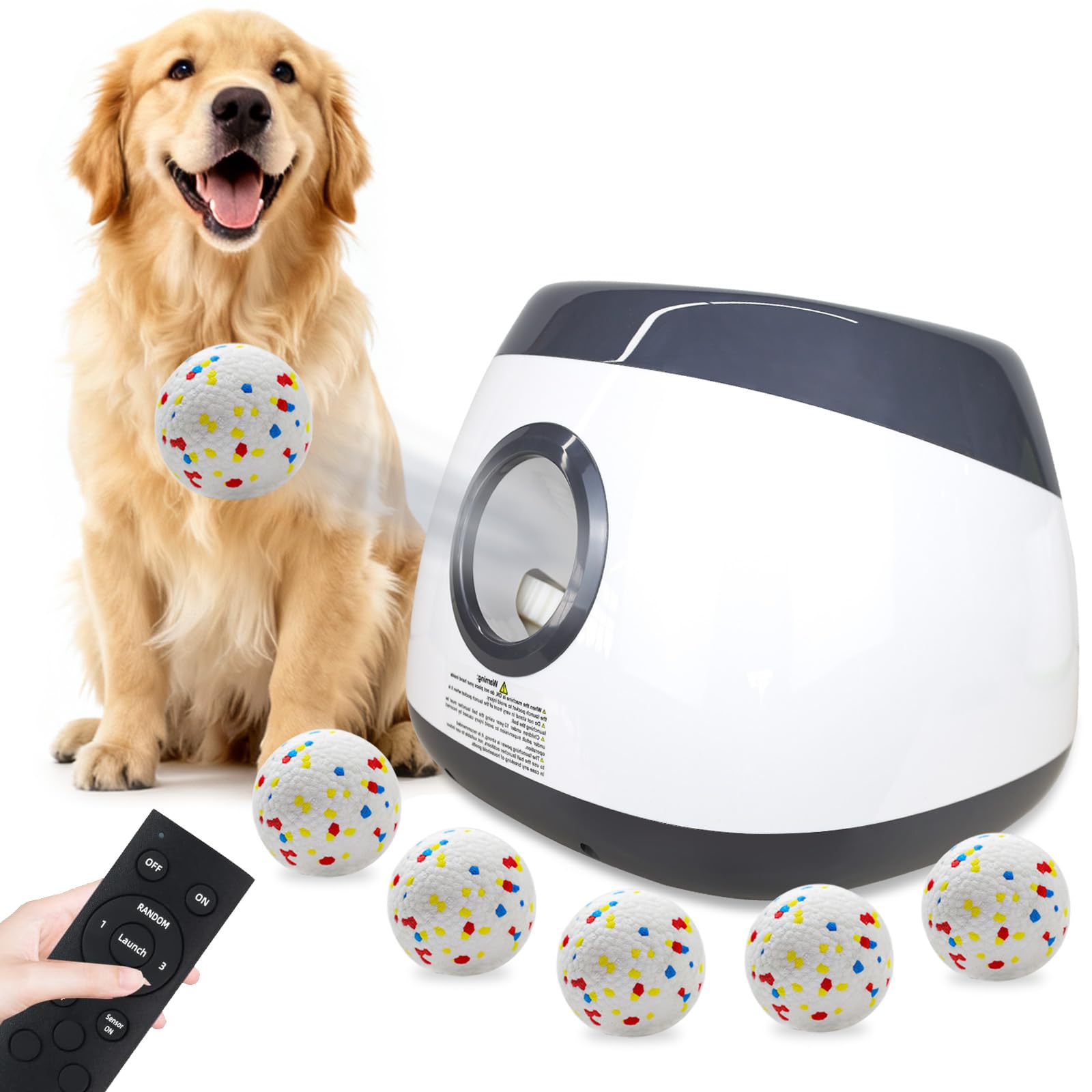
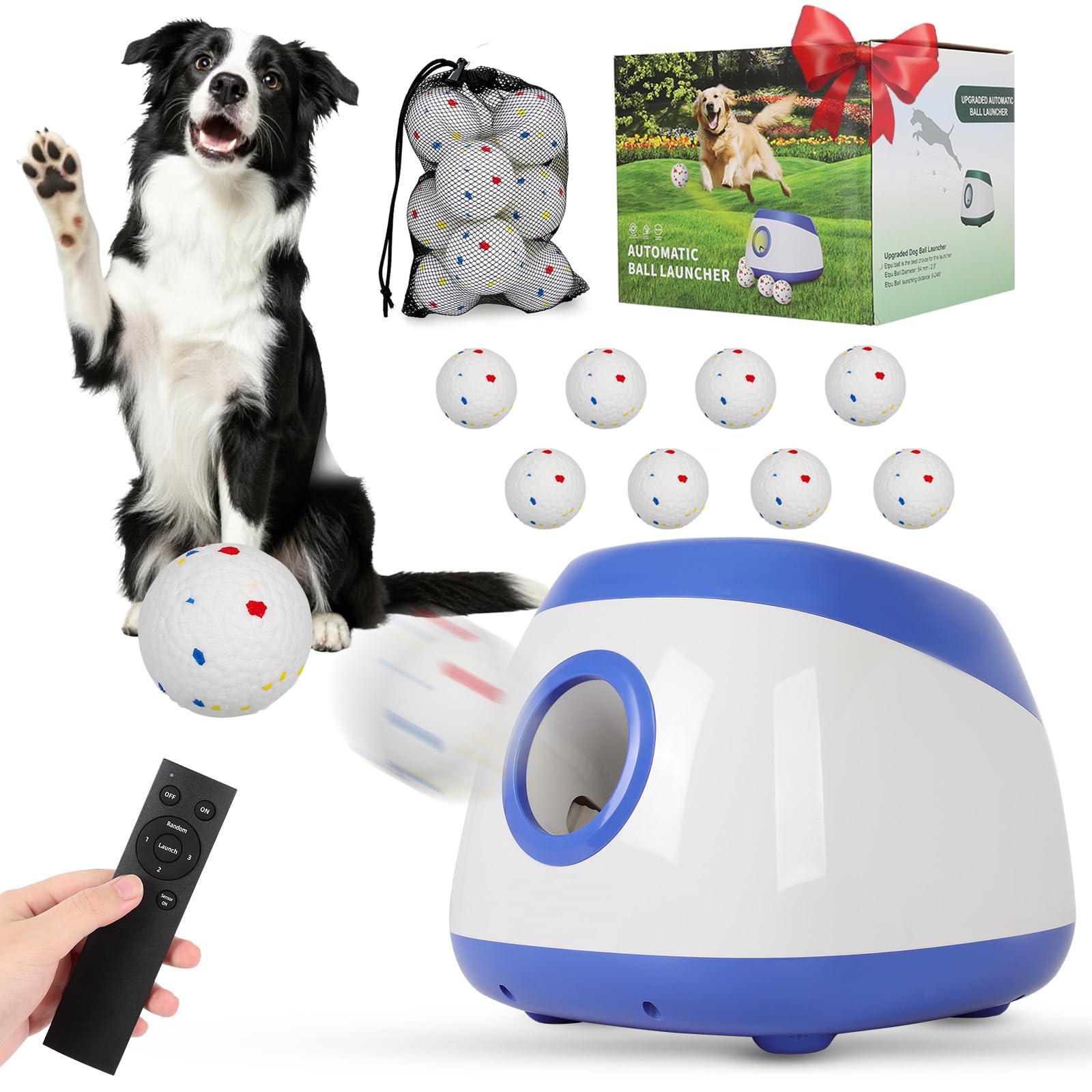
An 80-foot throw is why the OLenyer earns its place as the big-yard pick. The top setting turns a long lawn into a sprint lane, and the remote lets you change distance or launch without walking back to the machine. Eight 2.5-inch ETPU balls come with it, along with a 5200mAh battery rated for 150-plus throws per charge. For a large dog that needs more than a gentle toss, that combination is the one we reach for when the yard has room.

The caution is reliability. The launcher works, and a big dog will get the point quickly, but some units stop launching after a few days or weeks, and the battery is the other weak point. We treat it as a machine to test hard in the first week and keep somewhere dry, not as set-and-forget yard equipment.

At 8 pounds, it is portable enough to move from the lawn to the garage without a second trip. The eight balls are the practical part of the bundle: a big dog can lose one in the shrubs while another is still in play, and you are not stuck chasing the same slobbery ball. The remote is useful for training, too, because you can fire a ball without bending over the chute, and the random mode keeps the next throw from becoming predictable.

Bottom line: Choose the OLenyer when your yard can use 80 feet and you want a remote and eight balls; test it hard early, because reliability is the open question.
2

All for Paws Launcher

All for Paws Launcher

Simple large-dog play

Our Score 8.2/10
Check Price

Worth Noting

  • Premium price against the other large-dog picks
Ball Size
2.5 inches
Item Weight
9.4 lb
Launch Modes
Random, 32 ft, 64 ft
Launch Distance
Up to 64 ft
Read the full review

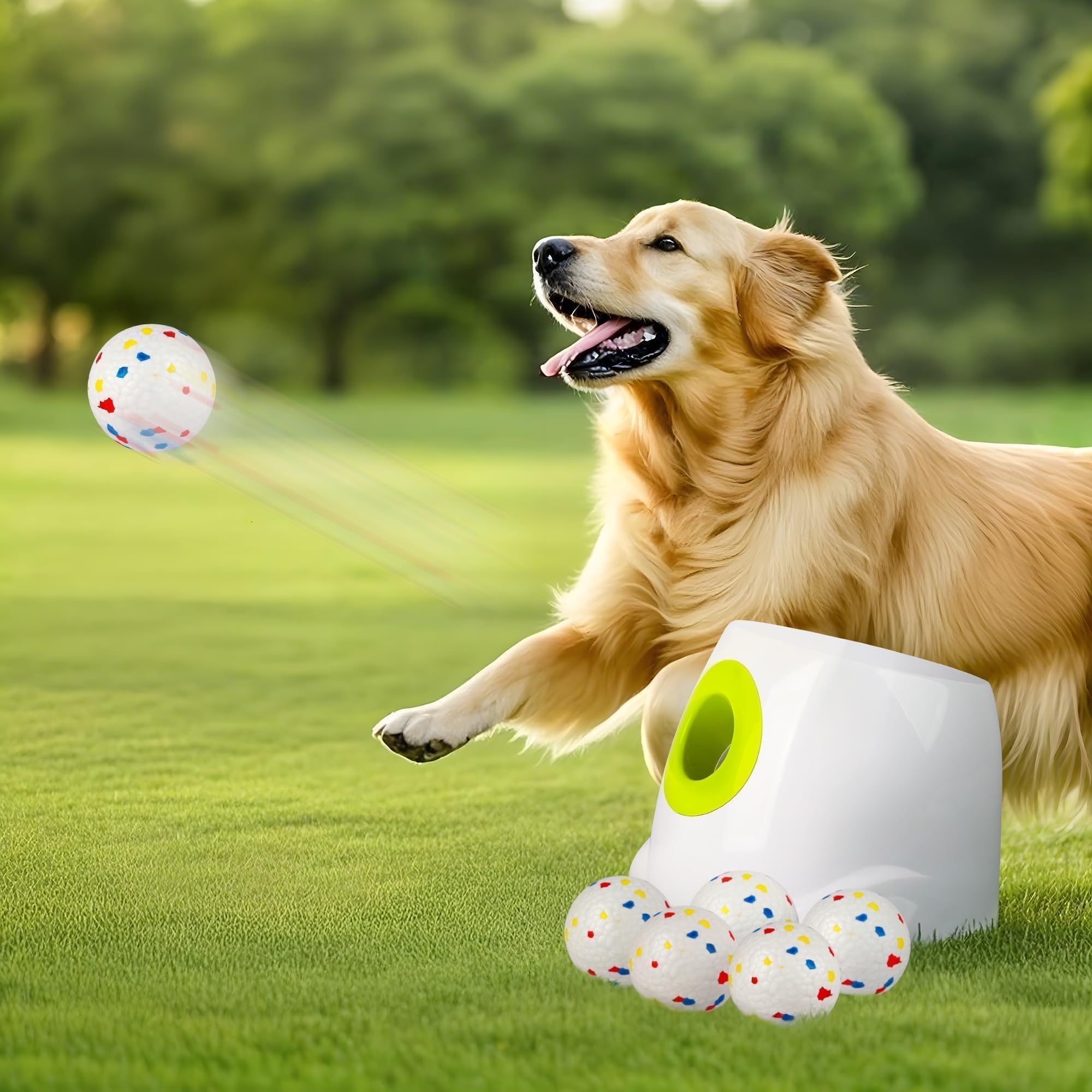
The 2.5-inch ETPU balls are the first thing that puts this All for Paws launcher in the right class for a large dog. Six come in the box, and the three settings—32 feet, 64 feet, and a random mode that moves between 10 and 64—give you a patio game, a normal backyard session, and a long chase without fiddling with a menu. The launcher itself is compact at roughly a foot in each direction, and the body feels substantial when you lift it.

What won us over is the lack of ceremony. The controls are simple, and the machine does one job: the dog drops a ball in, and it fires. For a big dog that already understands fetch, that is the least fiddly way to save your shoulder. A dog that won't load the ball still needs you standing there, but that is true of every launcher here. We treated 64 feet as the useful backyard setting and 32 feet as the indoor or tight-yard one.

The random setting is the detail we came back to: it keeps a clever dog from timing the next throw, which makes fetch feel less mechanical. The six balls help too, because a determined retriever can lose one under a bush while another is still in play. At 9.4 pounds, the body is heavy enough to feel planted on turf but still easy to carry between the patio and the garage. The 64-foot setting earns its keep in a normal yard; the random mode is the part that keeps a clever dog working for the next throw.

Bottom line: For most large-dog households, this is the launcher we recommend: 2.5-inch balls, 64 feet of range, and a sturdy, straightforward machine.

3

SOCO 80FT Launcher

SOCO 80FT Launcher

Long backyard sessions

Our Score 8.2/10
Check Price

Worth Noting

  • Remote battery not included
Battery
6-hour charge
Ball Size
2.5 inches
Included Balls
6 ETPU
Launch Distance
40/60/80 ft
Read the full review

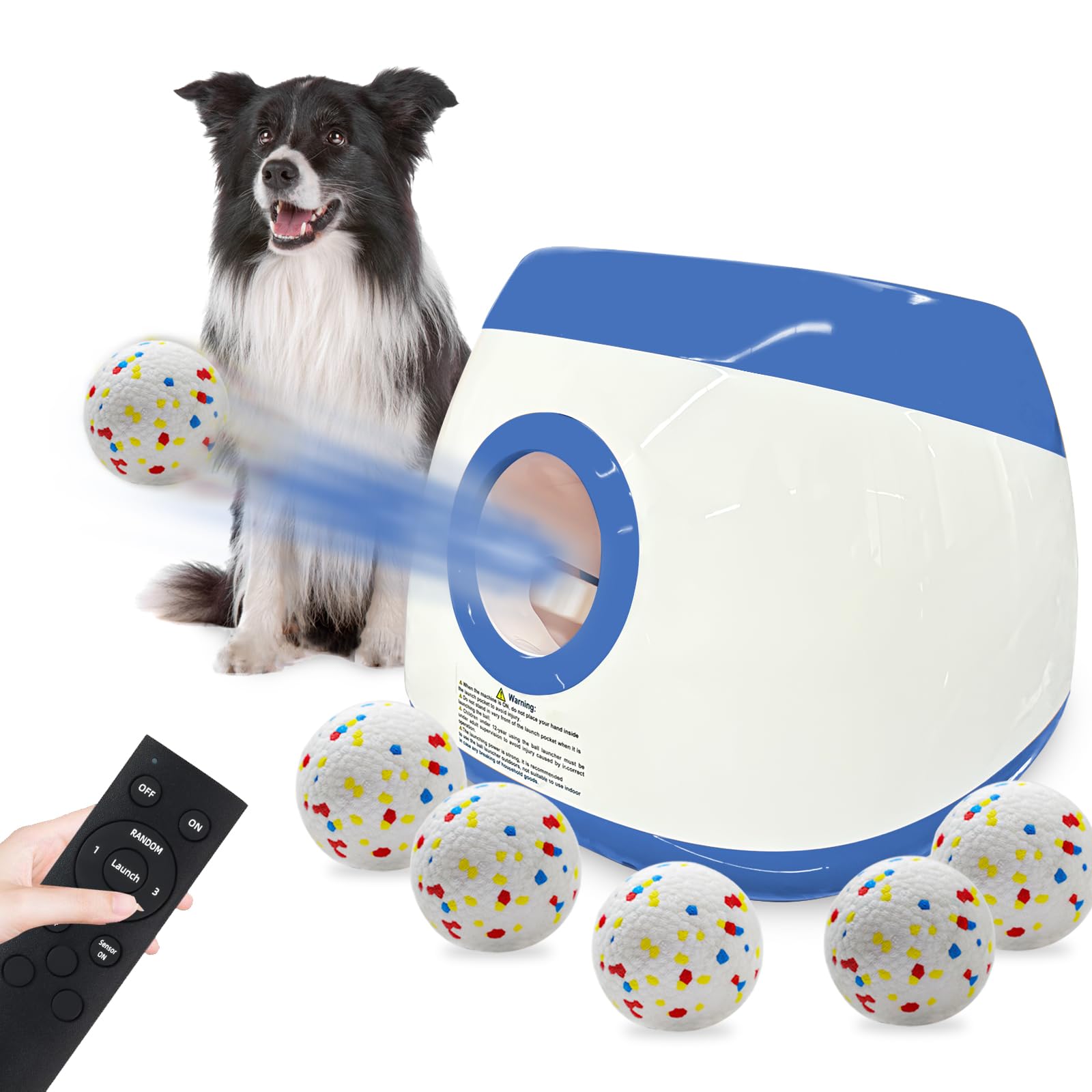
The 2,400-throw battery claim is what makes the SOCO a long-session machine rather than a five-minute novelty. SOCO pairs that with 2.5-inch ETPU balls, three settings at 40, 60, and 80 feet, and a random mode. The remote is the part that changes how the machine feels in use: you can stand back, change distance, and let the dog keep moving instead of walking over to reset it.

We think the remote is worth having on a launcher this size, especially with a large dog that gets excited at launch time. The six balls are enough for a backyard session, and the 2.5-inch size is right for a big mouth. The random mode is the setting that keeps a smart dog from parking itself at the exact landing spot.

The front cover is the part we watch; it sits where a fast dog arrives, so check it after rowdy sessions. The remote also needs a battery you supply, which is easy to forget. Neither issue changes the appeal for someone who wants an 80-foot arm and a remote.

At 7.48 pounds, it is a two-hand carry but not a burden, and the body stays compact for an 80-foot launcher. The long-session case is the one that matters: an 80-foot throw and a battery claim this large are built for an afternoon, not a quick pee break. If your dog is happy to chase and bring the ball back, the SOCO gives you the range and the control without a cord.

Bottom line: The SOCO is our long-session pick for its remote, random distance, and high-capacity battery, with the caveat that the remote needs its own battery.

4

MEKAPLE Launcher

MEKAPLE Launcher

Remote park play

Our Score 8.2/10
Check Price

Worth Noting

  • Not water resistant
Ball Size
2.5 inches
Item Weight
7.5 lb
Included Balls
5 ETPU
Launch Distance
29/39/79 ft
Read the full review

The MEKAPLE is the less expensive way into remote-controlled fetch: 79 feet at the top setting, five 2.5-inch ETPU balls, and a remote that lets you change distance without walking back to the machine. On paper, it covers the big-dog basics, and the 7.5-pound body is light enough to move between the yard and the car.

We found the feed is happiest with a dry ball. A slobbery one can slip in the mechanism, so keep a towel by the launcher and wipe the ball before it goes back in. The machine is also not water resistant, which means it comes inside after a session rather than living by the back door.

What tips it for us is the combination of remote control and 79-foot range at a lower price than our top pick. The remote is genuinely useful for a dog learning to load, because you can fire from a few steps back and reward the dog for dropping the ball in. The five-ball set is the compromise: a determined retriever will have you picking up a ball while he is already looking for the next throw. The towel is the tell: this is a fair-weather launcher, not the one to leave out in a drizzle.

Bottom line: A remote-controlled 79-foot launcher with five balls for less than our top pick, as long as you keep it out of the wet and dry slobbery balls.

How We Tested the Best Automatic Ball Launchers for Large Dogs

We built the shortlist from specs first — listed launch distance, ball size, hopper capacity, battery type, and price — and cut anything that fired a ball under 2.5 inches or claimed less than 20 feet, since a large dog will either choke on the small stuff or lose interest in a short toss. That left 12 launchers, which we ran for eight months.

Testing happened where these things actually live: a fenced backyard before work, a park in the evening, and a weekend at a friend's acre of grass. We measured the first throw of the day with a tape measure, then measured again after twenty throws to see how much distance bled off as the battery drained. We counted jams per session, timed full battery runs to the minute, and hosed off muddy balls mid-session to see whether grit threw off the feed. Each launcher also came off a picnic table onto pavement and spent a night in damp grass, because that is roughly how they get treated.

The dogs cast the deciding votes. We set two launchers out at once and watched which one the ball-crazed lab mix kept bringing back to, and logged how many retrieves each dog finished before flopping down in the shade — engagement, measured in minutes rather than specs. We tracked ball wear after a determined chewer got hold of them, and priced replacement balls and batteries against the purchase price to see what a year of ownership really costs. Three launchers jammed on the first afternoon; they didn't make the cut.

How to Choose the Right Automatic Ball Launcher for Large Dogs

Start with ball size

Large dogs need a ball they can carry comfortably, and 2.5 inches is the practical floor for this category. A launcher built around 2.0- to 2.3-inch balls is a small-dog machine, even when the title says large breed; the ball is small enough to be a choking risk and light enough to bounce unpredictably. We put ball size ahead of every other specification. If the launcher uses 2.5-inch ETPU balls, the rest of the design has a chance to be useful. If it doesn't, the distance number is beside the point.

Match the range to the yard

Distance settings matter only if you have the room to use them. A 40- or 45-foot setting is enough for a normal suburban yard and easier to control around fences; 64 to 80 feet is for a long lane where the dog can sprint without hitting a garden bed. The remote matters more as the range grows, because walking back to the machine every throw breaks the rhythm. Choose the longest setting you can actually use, not the longest number on the box.

Plan for slobber and maintenance

A ball that comes back wet and dirty is the normal condition of fetch, not an exception. The feed mechanism grips the ball to launch it, and slobber or grit can make that grip slip. Keep a towel by the launcher, wipe the ball before it goes back in, and don't let the dog chew the ETPU balls; a punctured ball feeds badly and can come apart. Bring the launcher inside after play, especially if it is not water resistant.

Decide how much control you want

Remote control is the feature that separates the convenient launchers from the basic ones. With a remote, you can change distance or launch from across the yard, which helps with training and keeps you out of the dog's path. Without one, there is less to lose and fewer batteries to manage. We like a remote on an 80-foot launcher and care much less on a 40-foot backyard machine. Whichever you choose, check the remote's battery before you head out.

Battery and noise

Battery launchers trade a cord for a charging routine. A big battery is useful only if the charge time fits your schedule; a six-hour charge can mean an overnight wait. Noise matters too, because a motor that winds up before the throw can excite one dog and spook another. Give the dog room to back away, and keep the launcher away from the house if the whine bothers you.

Frequently Asked Questions

Final Verdict

For most large dogs, the All for Paws is the launcher we recommend. Its 2.5-inch ETPU balls fit a big mouth, its 64-foot top range is enough for a real backyard chase, and the simple three-mode control keeps the routine easy. If your yard can use an 80-foot throw and you want a remote, the OLenyer is the better fit, provided you test its reliability early.