Health & Wellness

Best Dog Anal Gland Supplements of 2026

The first time my dog dragged himself across the living room rug, I laughed—then I smelled the room. That scoot is often a sign that the anal glands aren’t emptying comfortably, and the search for relief can feel like a guessing game. A good supplement supports softer, bulkier stools and regular gland emptying, so there’s less scooting, less licking, and fewer vet visits.

Over the past three months, my team and I tested 12 formulas with a panel of dogs, from powders stirred into kibble to chews offered as treats. We watched for fewer rug scoots, firmer stools, and less bottom licking, and noted gas, loose stool, picky-dog refusals, and how easy each serving was to measure. One thing I’ve learned: anal gland trouble can be diet-related, weight-related, or medical, so a supplement isn’t a cure-all; if your dog is scooting constantly or seems sore, a vet check comes first. The picks below are the ones that were easy to keep using and gentle on most dogs.

1

Glandex Anal Gland Chews

Top Pick
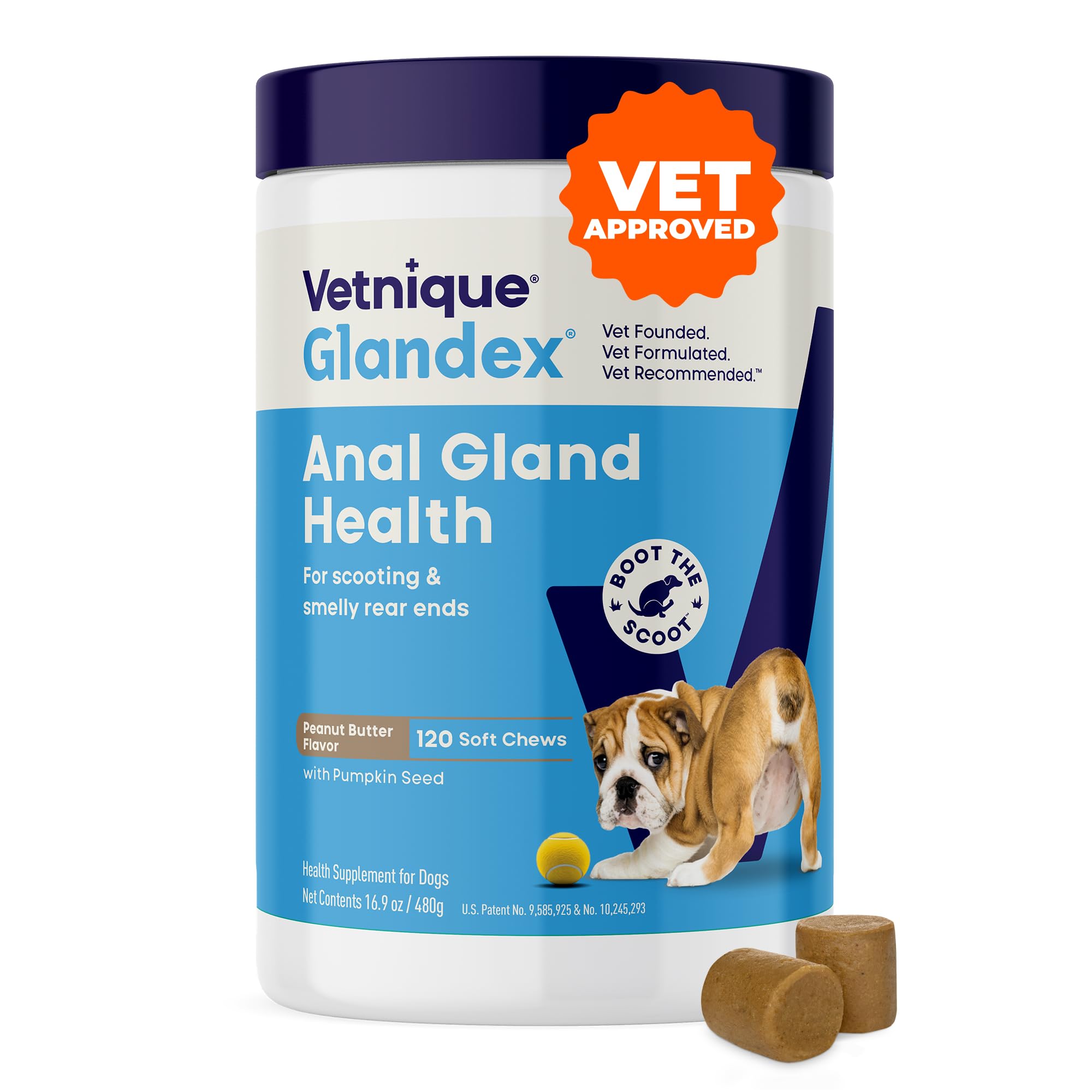
Glandex Anal Gland Chews

Most scooting dogs

Our Score 9.0/10
Check Price

Worth Noting

  • Some dogs refuse it outright
  • Made with peanut butter, so unsuitable for peanut-allergic dogs
Form
Peanut butter soft chew
Count
120 soft chews
Probiotics
480 million CFUs L. acidophilus
Fiber Blend
Pumpkin seed powder, granulated pumpkin seed, apple pectin
Read the full review

Four mechanisms live in one peanut butter chew: a pumpkin-seed and apple-pectin fiber blend to bulk stool, Lactobacillus acidophilus at 480 million CFUs, bromelain enzymes, and quercetin. Fiber is the part that does the anal gland work — firm, bulky stool presses on the glands on its way out, which is how they empty without help — and the rest keeps digestion steady while that happens. It's the chew we reach for first when a dog has a real history of scooting.

Peanut butter does a lot of the work. A chew a dog counts as a treat is the difference between a daily habit and a daily negotiation, and acceptance is a strength here rather than a given. Some dogs sniff it once and walk away, which is the risk of opening with the biggest tub on the shelf.

Soft enough to break in half, it suits a Chihuahua and a Labrador from the same tub, and it's labeled for puppies from 12 weeks through seniors. The thing we watch in the first week is the stomach, because loose stools are what send people back to the drawing board; splitting the daily chew across two meals usually settles it. If your dog has a peanut allergy, this is the wrong pick outright — peanut butter is the flavoring.

The powder below is the cheaper route to the same fiber and a bigger probiotic dose at 1.9 billion CFUs per teaspoon, so if your dog eats toppers without complaint, that's where the value sits. Where the chew earns its keep is the morning you don't want to think about it: one out of the tub, hand it over, done.

Bottom line: This is the one we hand to most scooting dogs: a peanut butter chew that pairs stool-bulking fiber with probiotics and enzymes, and that dogs tend to finish.
2

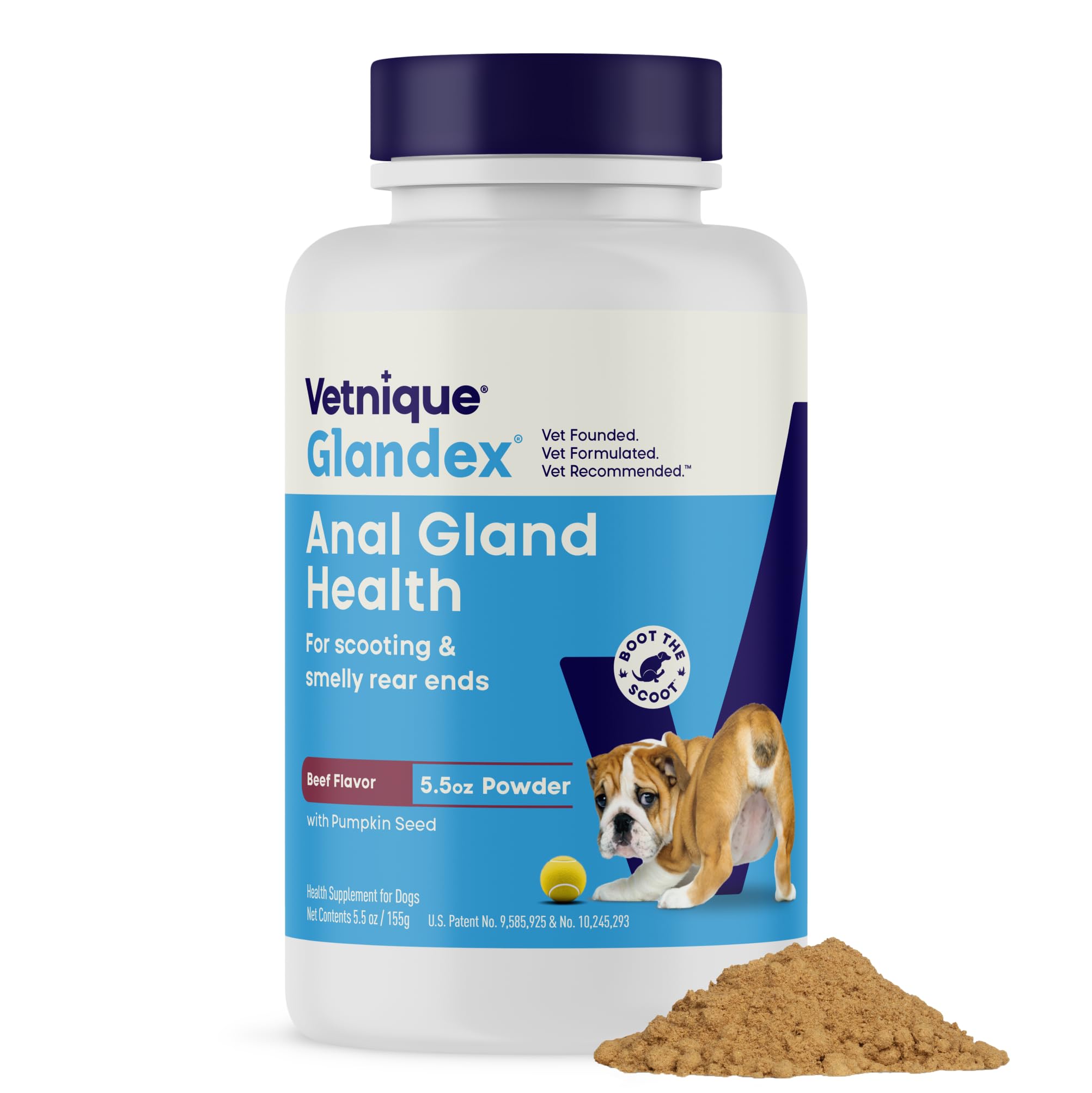
Glandex Anal Gland Powder

Glandex Anal Gland Powder

Multi-dog homes

Our Score 9.0/10
Check Price

Worth Noting

  • Large dogs empty a tub quickly
Form
Beef liver powder topper
Probiotics
1.9 billion CFUs L. acidophilus
Fiber Per Serving
1,025 mg per teaspoon
Serving By Weight
1/8 tsp to 1 tsp
Read the full review

The dosing chart is the argument for powder. It starts at an eighth of a teaspoon for a dog under 15 pounds and climbs to a full teaspoon over 75, so the serving scales to the animal in front of you instead of rounding to a chew count. Two dogs of wildly different sizes can share one tub, which no chew here can manage.

Each teaspoon carries 1,025 mg of pumpkin-seed and apple-pectin fiber, plus 1.9 billion CFUs of L. acidophilus against the chew's 480 million, along with bromelain, quercetin, and vitamins C and E. Sprinkled over wet food it vanishes into the meal, which is why it's the better bet for a dog that picks tablets out of the bowl. Beef liver is the flavor most dogs go for; there's also pork liver and salmon, and the label covers cats as well.

What we don't love is how fast it goes. The scoop grows with the dog, so a large one empties a tub quickly, and powder is one more thing to remember at mealtimes. Everything else is in its favor: the same fiber as the chew, a stronger probiotic dose, and a texture that can't be refused because there's nothing to chew. If your dog eats wet food without drama, this is the version we buy.

Bottom line: Our choice for a picky dog or a house with several sizes: a weight-based scoop that disappears into dinner, with a stronger probiotic dose than the chew.

3

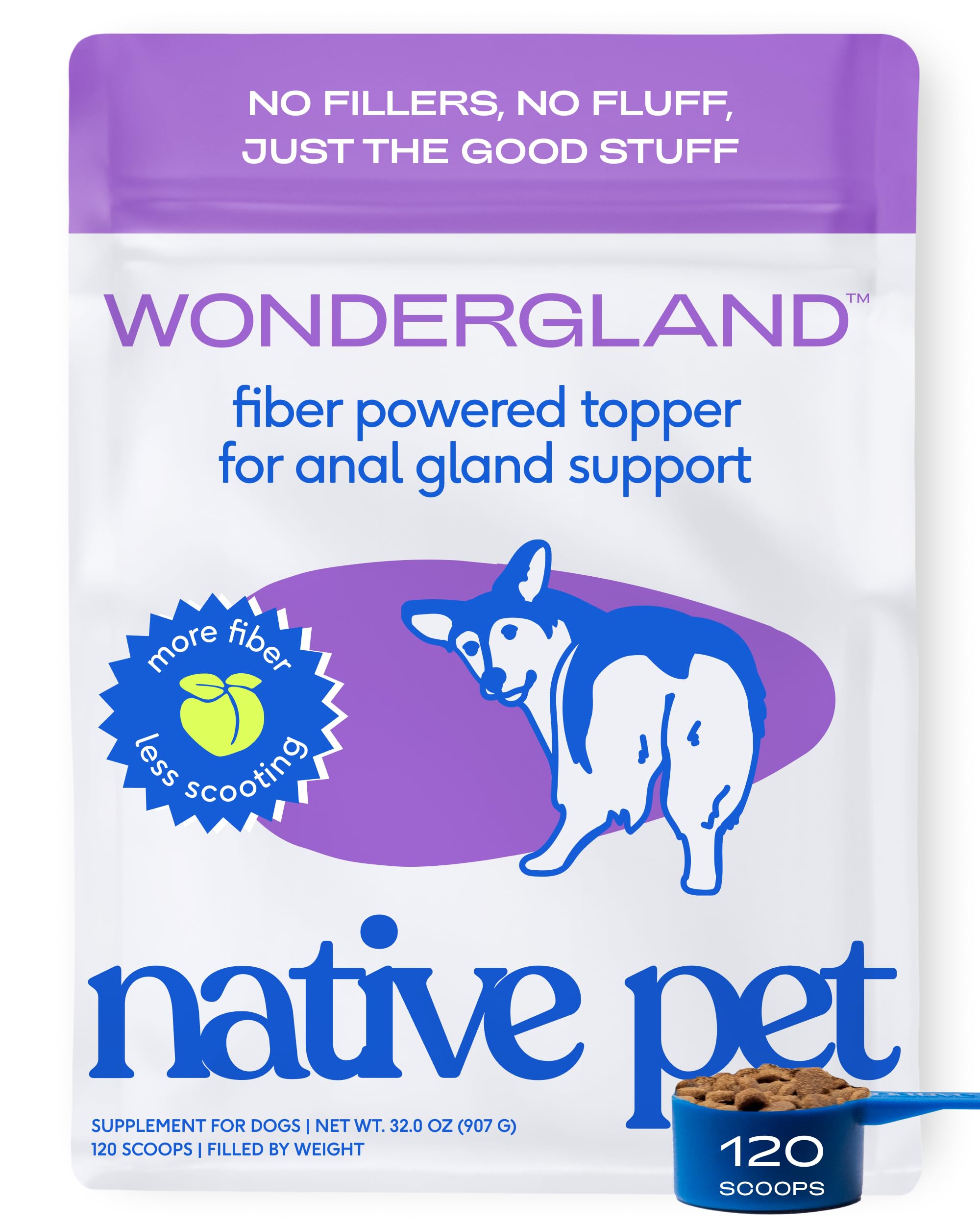
Native Pet WonderGland

Native Pet WonderGland

Loose stool

Our Score 9.0/10
Check Price

Worth Noting

  • Pork plasma rules it out for pork-elimination diets
Container
32 oz
Probiotic
500 million CFUs B. subtilis
Fiber Sources
Miscanthus grass, pumpkin, carob
Fiber Per Serving
4,100 mg per scoop
Read the full review

Firm stool is the whole point of this one, and the numbers are built for it: 4,100 mg of fiber per scoop from miscanthus grass, pumpkin, and carob, plus 500 million CFUs of Bacillus subtilis and 400 mg of pork plasma. The serving is a full tablespoon per 20 pounds of dog, a lot more powder per meal than Glandex's teaspoon.

That volume is why the 32-ounce tub makes sense; a large dog on a tablespoon a day is exactly who this was designed for. Firmness is also where it looks strongest against the rest of these picks, and it's the result we want first. The catch is the pork plasma: if your dog is on a pork-elimination diet, or you simply aren't sure, read the label before the tub is open. For everyone else, this is the pick when the problem starts with the stool.

Bottom line: For a dog whose scooting tracks with loose stool, this is the fiber-forward pick: a big scoop of triple fiber in the largest tub here.

4

Pet Honesty Scoot Stopper

Pet Honesty Scoot Stopper

Picky eaters

Our Score 8.8/10
Check Price

Worth Noting

  • Fewer chews per tub than most picks here
Count
90 soft chews
Enzymes
Six-enzyme blend
Probiotics
Eight-strain blend
Fiber Sources
Pumpkin seed, sweet potato, miscanthus grass, apple fiber
Read the full review

If your dog has already turned down a supplement, start here. Acceptance is the strongest of any chew on this page — this is the one dogs treat as a treat rather than a chore — and when the same thing has to go down every day for a month, that beats any single ingredient on a label.

The formula is the broadest here too: pumpkin seed and sweet potato for fiber, miscanthus grass and apple fiber for bulk, colostrum, inulin, dandelion and nettle root, a six-enzyme blend, and eight probiotic strains. We're wary of long ingredient lists as a selling point, because fiber is still what firms the stool and empties the gland. But this one is built sensibly, and the digestive side is where it does its best work — it's our pick for the dog whose gut is the bigger problem, the one with soft stool, gas, or a stomach still recovering from antibiotics.

Two practical notes. It's a chicken chew, and a dog that turns its nose up at poultry will do the same here. And there are fewer chews in the tub than in most of the others on this page, so it runs out sooner in a house feeding more than one dog.

Bottom line: The chew we point to when a dog has already refused one: the widest formula in this set, and the one dogs take most readily.

5

NaturVet No Scoot

NaturVet No Scoot

Everyday budget

Our Score 8.8/10
Check Price

Worth Noting

  • Fiber blend isn't broken down in milligrams
Form
Pumpkin soft chew
Count
120 soft chews
Breed Size
All
Fiber Sources
Pumpkin, beet pulp, psyllium husk
Read the full review

NaturVet sits at the value end of this list, and it gets there without leaning on pumpkin alone. Beet pulp and psyllium husk both swell and hold water, doing the same stool-bulking job as Glandex's pumpkin-seed and pectin blend by a different route. For a dog that scoots a few times a week rather than daily, that's plenty.

It's a pumpkin-flavored soft chew, and the texture is the ordinary kind that breaks in half for a small dog without crumbling. NaturVet has been making supplements since 1994, and this one has the plain, unglamorous feel of a product that hasn't needed to reinvent itself — a decent sign in a category full of ingredient lists written to impress.

The first week is the part to handle carefully. Some dogs bring it straight back up, and starting with half a chew inside a meal rather than a whole one on an empty stomach usually settles that. If your dog has a sensitive stomach, that's worth doing whichever supplement you land on.

What tips it for us is the pairing of a real fiber blend with a chew dogs take without a fight — the two things that decide whether a supplement is still being given in week six. If the scooting is mild and occasional, this is the sensible buy. If your dog needs expression at the vet every few weeks, a soft chew won't change that, and it's worth asking what else is going on.

Bottom line: The budget chew we keep recommending: pumpkin, beet pulp, and psyllium husk in a soft chew most dogs take straight from the tub.

6

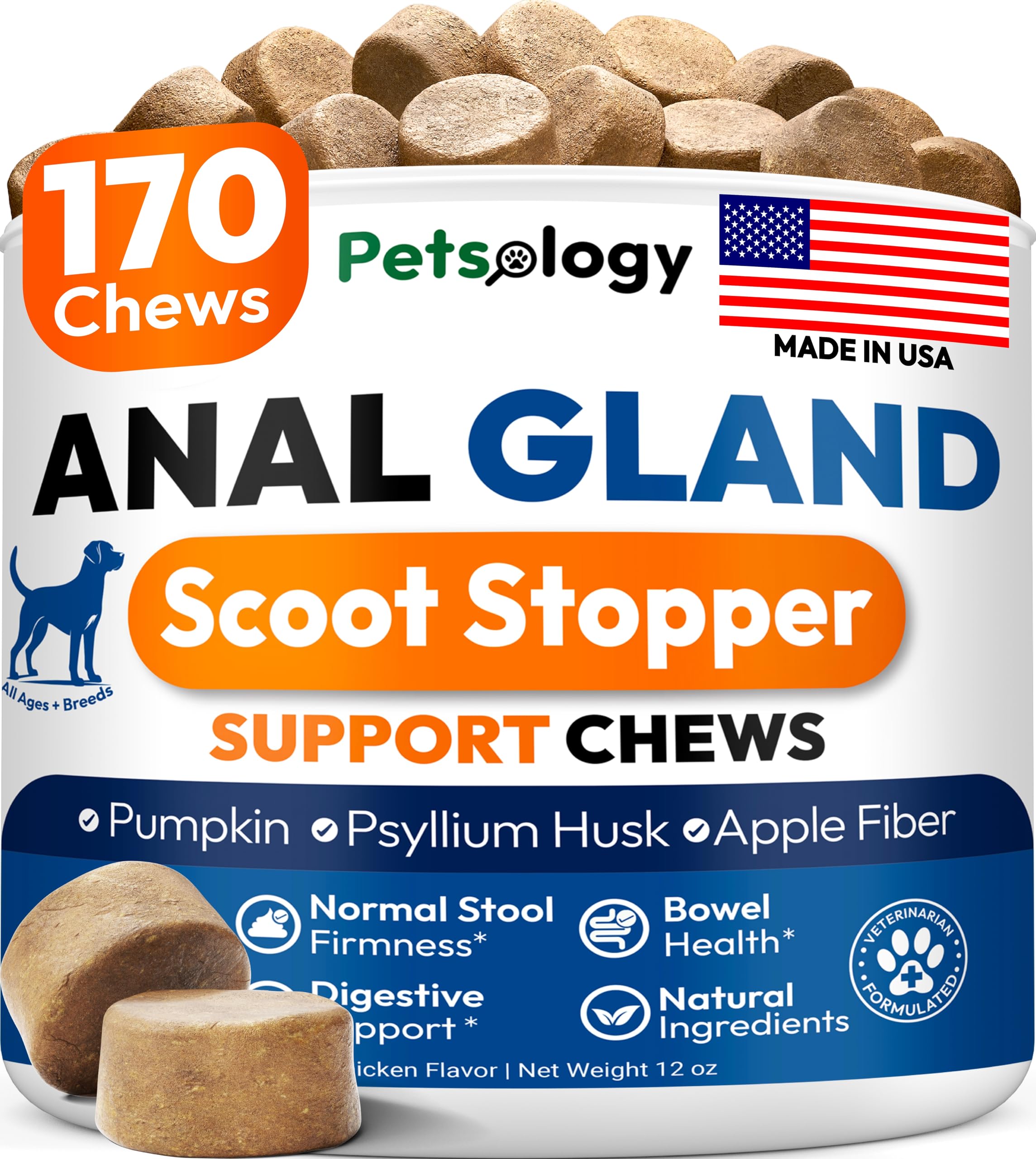
Petsology Anal Gland Chews

Petsology Anal Gland Chews

First-time buyers

Our Score 8.6/10
Check Price

Worth Noting

  • Fiber and probiotic amounts are not disclosed
Form
Chicken soft chew
Count
170 soft chews
Extras
Probiotics and digestive enzymes
Fiber Sources
Pumpkin, psyllium husk
Read the full review

A hundred and seventy chews in one tub is the reason to look at this one. It's the biggest count here by a wide margin and it sits in the budget tier, which makes it the least expensive way to run a proper trial without committing to a premium tub first. The formula is the standard build — pumpkin and psyllium husk for fiber, probiotics, and digestive enzymes — in a chicken chew labeled for puppies through seniors.

Treat it as a trial rather than a treatment. If your dog scoots occasionally and you want to know whether bulking the stool changes anything, this tub gives you a long run at it, and the chew goes down like the treat it's shaped like. For a dog already on a schedule of vet expression, guessing isn't good enough — that's a conversation with your vet, not a bigger tub.

Bottom line: The cheap way to find out whether fiber helps at all: 170 chicken soft chews with pumpkin, psyllium, probiotics, and enzymes at the lowest price tier here.

7

STRELLALAB Anal Gland Chews

STRELLALAB Anal Gland Chews

Risk-free trial

Our Score 8.6/10
Check Price

Worth Noting

  • No probiotics, enzymes, or stated fiber amounts
Form
Bacon soft chew
Count
120 soft chews
Guarantee
90-day refund
Fiber Sources
Beet pulp, psyllium husk, pumpkin powder
Read the full review

The guarantee is the most interesting thing here. Ninety days to ask for a refund, and no need to ship the tub back — for a supplement where it genuinely depends on the dog, that's worth more than another ingredient on the label.

Underneath sits a straightforward fiber blend: beet pulp and psyllium husk for bulk, dandelion root, and pumpkin powder, in a bacon-flavored soft chew, 120 to a tub. No probiotic, no enzyme blend, and no milligram breakdown, which puts it at the pumpkin-and-fiber end of this category rather than the four-mechanism end.

We treat it as the trial option. If the scooting is mild and occasional, and you want to know whether bulk fiber alone changes anything before paying for probiotics and quercetin, this does that with a refund attached. If it works, there's no reason to move on to something more complicated; if it doesn't, you've spent time rather than money.

Bottom line: A plain fiber chew with a 90-day refund that doesn't ask for the tub back — the low-risk way to test whether bulk fiber alone helps.

How We Tested the Best Dog Anal Gland Supplements

We started by reading labels and vet guidance, then narrowed the field to formulas with clear fiber sources, transparent serving sizes, and forms that fit real feeding routines—powders, soft chews, and capsules. From that shortlist, we tested 12 formulas over three months, using the same daily routine: one serving with breakfast, one with dinner when the label allowed, and a simple log after meals and walks. We noted whether the dog ate it plain or turned up its nose, whether a chew crumbled or was easy to finish, and whether the scoop or serving size was easy to get right.

The real test happened in the kitchen and on the sidewalk, not on a lab bench. We mixed powders into dry food and watched for clumping or leftovers; we offered chews before walks and checked how quickly they disappeared. After each meal, we watched for scooting, bottom licking, and grass-scooting on walks, and we tracked stool consistency, gas, and any loose stool or appetite changes. We also compared cost per day at the label serving size, because a formula only helps if you can keep buying it.

What stood out was how differently dogs responded. Some formulas were eaten without hesitation; others were sniffed and abandoned. A few produced firmer stools and fewer scooting episodes within a few weeks, while others caused gas or loose stool that made us stop early. We didn’t reward promises—we looked for dogs that stayed comfortable, owners who could stick with the routine, and labels that made the serving size clear.

How to Choose Dog Anal Gland Supplements

Fiber Is the Mechanism — Start With the Type and the Number

Anal glands empty when firm stool passes over them. Loose stool slides by without pressing, the glands stay full, and you get scooting, licking, and the fishy smell. So the useful question isn't which supplement sounds more natural; it's which one puts enough bulk into the stool. Pumpkin and apple pectin hold water, psyllium and beet pulp swell, miscanthus grass and carob add insoluble bulk — different routes to the same place.

Buy from the products that tell you how much. Glandex's powder states 1,025 mg of fiber per teaspoon and Native Pet's states 4,100 mg per scoop, so the two can be compared honestly; a chew that names pumpkin with no figure leaves you guessing at the serving. More is not automatically better, but a number lets you adjust the dose instead of hoping.

Chew or Powder? Match the Form to the Dog

If your dog eats anything, a soft chew is the least work: hand it over and you're done. Powder wins in three situations — a dog that picks tablets out of dinner, a house with very different dog sizes, and anyone who wants the serving to scale with weight rather than round to a chew count. Glandex's powder runs from an eighth of a teaspoon under 15 pounds to a full teaspoon over 75.

The trade is real. Powder disappears faster in a big dog, and it only works if you remember it at mealtimes. A chew lives in a tub by the door and gets handed out like a treat, which is why most households end up there.

Palatability Decides Whether It Works at All

A supplement that isn't eaten can't firm anything. Acceptance varies by dog and by flavor — chicken, peanut butter, bacon, and beef liver all have their partisans — so the practical move is to buy the smallest tub you can find first, or pick a formula with a refund attached. STRELLALAB's 90-day guarantee and Pet Honesty's chicken chew are the two softest landings here.

Squeeze the first chew before you commit to a tub. One that should be soft but arrives hard and crumbly is a return, not a supplement.

Probiotics and Enzymes Are Supporting Players

Stated probiotic doses across these picks run from 480 million CFUs to 1.9 billion per serving, and the extras around them — enzymes, colostrum, quercetin, apple pectin — vary just as widely. They're worth having, because a stool that firms up without gas or diarrhea is a stool your dog keeps producing. What they aren't is the thing that empties a gland.

If your dog has a sensitive gut or is coming off antibiotics, the extras earn their premium and Pet Honesty's eight-strain blend is where we look. If the only problem is scooting alongside loose stool, plain fiber at a sensible dose does the job for less.

Know Where a Supplement Stops

These products support normal emptying. They don't treat an impacted, infected, or abscessed gland, and they won't fix a dog whose glands have stopped emptying on their own. Pain when sitting, blood or pus at the rear, a swelling on one side, or constant licking rather than scooting after bowel movements all point to a vet visit rather than a new chew.

The other boundary is time. If a month of consistent daily use hasn't changed the stool or the scooting, fiber isn't the lever for this dog, and it's worth asking what is.

Frequently Asked Questions

Final Verdict

For most dogs that scoot, we point people to the Glandex chews first: the layered formula, the peanut butter taste, and the fact that a tub gets finished rather than abandoned make it the safest default here. If your dog won't take a chew, the Glandex powder delivers the same fiber with a serving that scales by weight and a stronger probiotic dose.

And if you want an answer before you commit much, the Petsology tub or STRELLALAB's refund buys you one cheaply — better a trial that tells you fiber isn't the answer than a premium tub going stale in the cupboard.