Travel & Carriers

Best Dog Backpack Carriers of 2026

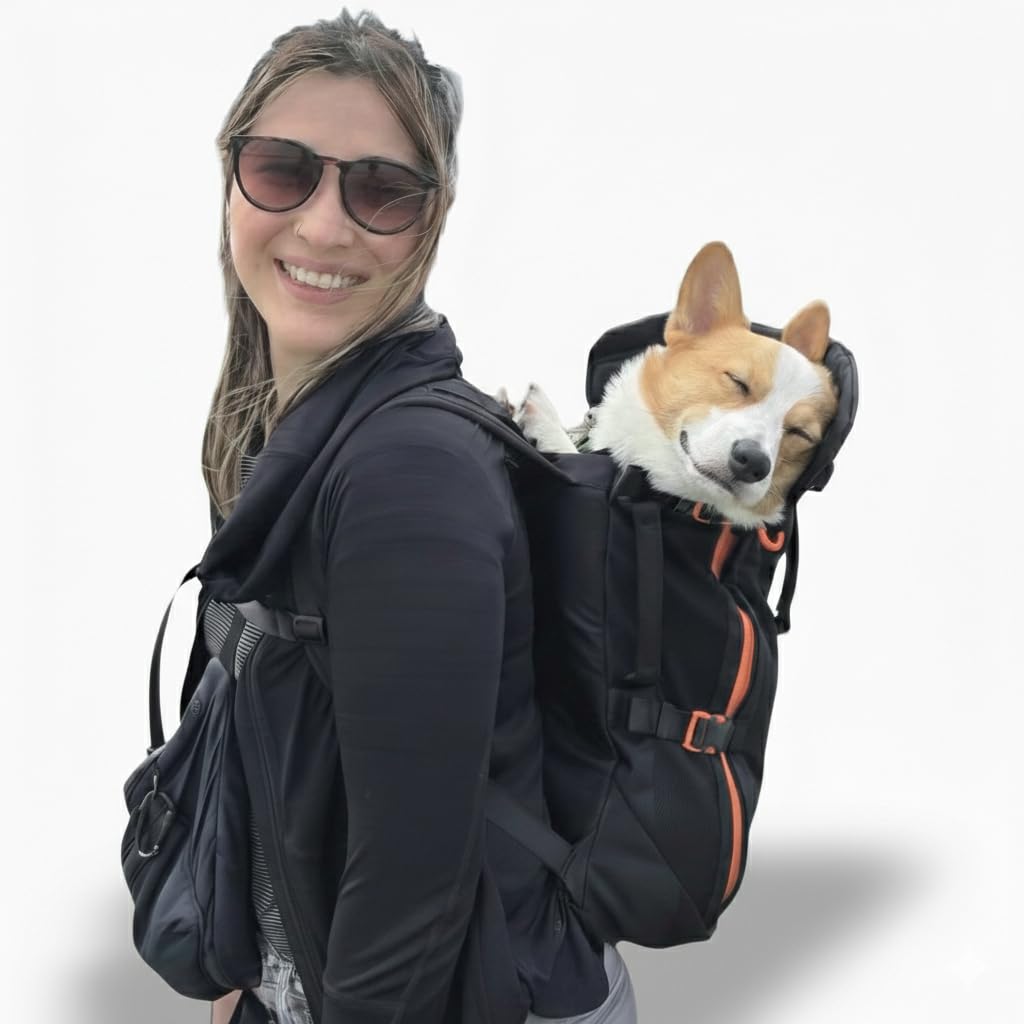
A dog backpack carrier earns its keep when your pup flops down halfway through a hike or freezes at the edge of a crowded farmers market. The right one isn't a substitute for walking — it's a backup plan that keeps small dogs safe and included when the day runs long. But a poorly made carrier can turn a fun outing into a wrestling match: zippers that creep open, straps that dig in, and a body that sags the moment your dog shifts their weight. Over the past six months, we've tested 12 carriers on neighborhood walks, rocky trails, and busy errands with dogs from 10 to 25 pounds.

The first thing I tell anyone shopping for one: weight limit is a starting point, not the whole story. You need your dog's length from neck to tail base and their standing height — a carrier that's too short forces them into a crouch. We also checked how each folded down for storage and whether the price still felt fair after six months of steady use. Every pick below earned its place on a trail, a sidewalk, or a crowded vet waiting room.

1

PetAmi 4-Way Entry

Top Pick
PetAmi 4-Way Entry

Everyday walks and flights

Our Score 9.2/10
Check Price

Worth Noting

  • 18 lb limit suits compact dogs best
Closure
Lockable zips with buckles, internal tether
Interior
12.5 x 12 x 16.5 in
Carry System
Padded straps, chest buckle, waist belt
Weight Limit
18 lb
Read the full review

The harness is where this one wins. A 15-pound dog plus the pack is a load you feel by the second mile, and the PetAmi is one of only two carriers here with a waist belt as well as a chest strap. Cinch the belt and the pack stops swinging off one shoulder, because the weight moves down onto your hips where it belongs. That one strap is the difference between a carrier you take on a real hike and one you take to the vet.

The rest of it earns its place too. Four entrances, top, front and both sides, sound like a spec-sheet indulgence until you are loading a wriggling dog in an airplane seat or the back of a car, and the sliders buckle shut so a determined nose cannot work them open. Inside there is a leash clip on a short strap and a sherpa-lined mat that lifts out for washing. The interior measures 12.5 by 12 by 16.5 inches.

Under-seat flying is what a lot of people buy this for. The pack is sized for most airplane seats, and the guidance that comes with it is to confirm your airline's current requirements before you fly, which is the honest position given how much seat dimensions vary by aircraft. Before a trip, load the dog and check the pack's footprint against your airline's carry-on limit, because the 12.5 by 12 inch base is the part a gate agent actually looks at.

Bottom line: The carrier we point most people to: a waist belt that turns a 15-pound dog into a load you can walk a few miles with, plus zips that buckle shut.

2

Petsfit Waist-Support Pack

Petsfit Waist-Support Pack

Bigger small dogs

Our Score 9.2/10
Check Price

Worth Noting

  • Wide, stiff shoulder straps need breaking in
Frame
Reinforced anti-collapse structure
Interior
13.5 x 12.5 x 17.5 in
Carry System
Chest strap, waist belt, padded back panel
Weight Limit
18 lb
Read the full review

At 13.5 by 12.5 by 17.5 inches, the Petsfit is the roomiest box in this group, a full inch taller than our top pick and the first carrier here where a stocky terrier can actually stand up. On something you wear, that cuts both ways: the extra bulk sits behind your shoulders, and you feel it by the end of a long walk.

What earns it a place is the back. This version is built around a decompression panel and a wider waist section, with shoulder, chest and waist straps all present, so a heavier dog rides without a strap line digging across your shoulders. It is the one we hand to anyone with a cranky lower back, and the first choice for a dog that refuses to curl up.

The shell is 600D Oxford cloth, which shrugs off claws and road grit, and the frame is stiff enough that the pack keeps its shape when you set it on the floor, so the dog steps in rather than being folded in. The seams around the frame are where a carrier like this takes its load, so give them a look before you head out with a full pack.

Bottom line: For a bigger small dog or a sore back, this is the one: the tallest interior here, with a decompression panel and waist support to keep the load off your shoulders.

3

Lekebobor Expandable Backpack

Lekebobor Expandable Backpack

Rest-stop stretching

Our Score 9.2/10
Check Price

Worth Noting

  • Folding it back down takes some wrestling
Entries
Four, including front and back
Interior
12.6 x 11.2 x 16.5 in
Ventilation
Mesh on four sides, roll-down shade
Weight Limit
18 lb
Read the full review

Somewhere past the second mile a carrier stops being a bag and becomes a place your dog has to sit. Lekebobor's answer is the panel at the back: unzip it and the rear extends, so when you set the pack down at a rest stop the dog gets a deeper space to stretch in rather than the same cramped box.

The rest of the layout points at the same problem. Mesh on all four sides keeps air moving, four entrances let you load from whichever side is facing you, and a roll-down blind covers the front window when the sun is in the dog's eyes, a small thing that turns out to matter on a bright platform. Two side pockets take a lead and treats, and the pack collapses flat enough to live in a car boot between trips.

The price of that flexibility is a softer structure, which is where we mark it down against the Petsfit. The frame is rods in the top and sides over a padded floor, and with a heavier dog the base flexes enough that the pack leans against your back instead of sitting square. Under about 12 pounds it is a roomy, genuinely useful carrier; above that the stiffer box carries better.

Bottom line: The expandable pick: unzip the back panel at a rest stop and a small dog gets room to stretch, in a pack that folds flat between trips.

4

Texsens Bubble Backpack

Texsens Bubble Backpack

Tight budgets

Our Score 9.2/10
Check Price

Worth Noting

  • PVC panels run warmer than fabric mesh
  • 15 lb limit rules out most medium dogs
Panels
PVC mesh on three sides
Included
Removable mat
Interior
12.6 x 11.4 x 16.5 in
Weight Limit
15 lb dog, 18 lb cat
Read the full review

The Texsens is the least expensive carrier here, and it is the one we point people toward when they want to try the backpack format without much risk. It works: a small dog or a cat goes in through the top or the side, the mat comes out for washing, and the chest buckle keeps the straps from sliding off your shoulders on a walk.

Clear PVC mesh across three sides is the defining feature. The dog can see out and you can see in without unzipping anything, which is why this design stays popular for vet trips and short errands, and it gives a nervous animal something to look at instead of a wall of fabric.

The zips are the weak link, and that is not a small thing on a carrier. A slider that works loose is how a dog ends up on the pavement, so we clip the internal tether to a harness every single time and run a thumb along the sliders before lifting the pack onto a shoulder. The mesh is the other part that goes first with a determined pup. This is a carrier for a calm small dog, not a chewer.

Bottom line: The budget starter pack: a clear-panel carrier that gets a calm small dog to the vet and back, with zips worth checking before every trip.

5

Lekereise Expandable Backpack

Lekereise Expandable Backpack

Extra interior room

Our Score 9.2/10
Check Price

Worth Noting

  • Base flexes and rides against your lower back
Interior
14 x 12.5 x 16.2 in
Ventilation
Mesh on front, top and sides
Weight Limit
25 lb
Expandable Panel
Rear extension
Read the full review

Twenty-five pounds is the highest rating among the enclosed carriers here, five more than the PetAmi and Petsfit packs, in a 14 by 12.5 by 16.2 inch box that gets bigger again when you unzip the rear panel. For a 20-pound dog that has been squeezing into an 18-pound carrier, that is a real difference on paper.

Mesh across the front, top and sides keeps the air moving, the zips lock, and the whole thing folds down flat between trips, which matters if it lives in a closet nine months a year. The chest buckle and padded shoulder straps are the same arrangement as the rest of this group.

Where it lands for us: this is a lot of carrier for the money at the smaller end, roomy and well ventilated for a dog up to about 15 pounds. Push it toward its 25-pound rating and the Petsfit's frame carries the weight better, so treat the big number as headroom rather than a target.

Bottom line: The roomiest enclosed carrier here on paper, with locking zips and four mesh panels, best kept to dogs near 15 pounds where the base stays solid.

6

K9 Sport Sack Air 2

K9 Sport Sack Air 2

Bikes and steep trails

Our Score 8.8/10
Check Price

Worth Noting

  • Size chart leaves little margin for error
  • Head and front legs stay out in the weather
Carry Style
Front legs through side openings, head out
Pack Weight
1.3 lb
Sizing Basis
20-22 in back length, up to 31 in girth
Weight Limit
30 lb
Read the full review

This is not a box with windows. The Air 2 is built for the dog that comes along rather than rides along: front legs through the side openings, chest against your back, head over your shoulder. K9 sizes it by back length, 20 to 22 inches from collar to tail base, with a girth up to 31 inches for this Large, rather than by weight, which is the right way to fit something a dog has to sit in.

For a hiking or biking dog this is the most natural carry in the group. The weight sits high and close to your spine, the Angle-Base gives the dog a shelf to settle on, and macro-mesh panels on both sides move a lot of air on a hot climb. It is our pick of the legs-in designs, and the one that made the case for the whole style.

Practice is the catch. Loading takes two hands and a dog that has learned the routine: collar clip, then one paw at a time, then the cinch straps. A dog that has never been handled like that will object the first three or four times, and the trailhead is not the place to find out.

The build is Cordura with triple-stitched seams at the load points, which is the right specification for something a dog's weight hangs from, and at 1.3 pounds the pack is light enough that the dog is most of what you are carrying. That lightness is the whole argument for the style.

Bottom line: For the dog that hikes or bikes with you, this legs-in carrier sits high and close with mesh sides, as long as you measure its back and teach it the routine.

7

Little Chonk Maxine One

Little Chonk Maxine One

Long-backed medium dogs

Our Score 8.6/10
Check Price

Worth Noting

  • No hip belt, so the load hangs on your shoulders
  • Sizing outside 14 to 19 inches is a dead end
Frame
Rigid, back-straightening shell
Grab Handles
Tubular, on all four sides
Sizing Basis
14-19 in back length, 19-30 in girth
Read the full review

Little Chonk does not sell this by weight. You measure the dog's back at 14 to 19 inches and its chest girth at 19 to 30 inches, then buy against those numbers, which is the way you would fit a boot rather than the way most carriers are sold.

The rigid shell is what you notice first. It keeps its shape when you set it on the floor, so the dog walks in and you lift the whole thing onto your back using the grab handles, tubular ones on all four sides. That sounds excessive until you are lifting a loaded pack off a car seat. A tail port at the back lets the tail sit outside the fabric, and the neck collar is soft and reflective, cut to let the head move.

Construction is where the premium goes: thick material, strong stitching, and a shell that does not crease when the dog shifts its weight. Because the pack holds the dog over your center of gravity instead of slinging it at the bottom of a bag, it feels steadier than the soft carriers here on stairs and kerbs.

So it suits a specific dog and a specific week: a medium, long-backed dog carried high and facing forward on trains, in shops and around town, by someone who wants it upright rather than stowed behind mesh. Nothing else here holds its shape like this one, and that is what the money buys.

Bottom line: For a medium dog with a long back, this is the best-fitting carrier here: a rigid shell that holds the dog upright and lets you load it on the floor.

How We Tested Dog Backpack Carriers

We started with a shortlist of 12 carriers from brands we already trust, filtering by weight range, dog length limits, and price so the group included both budget and premium options. Then we spent six months actually using them — on daily neighborhood walks, weekend hikes on rocky trails, vet visits, and one very crowded street fair. We tested with dogs from 10 to 25 pounds and measured each one from neck to tail base so we could see how they sat inside.

We took turns carrying the dogs ourselves when they got tired, which made strap problems obvious fast — a shoulder pad that slipped or a waist belt that dug in showed up after 20 minutes, not 20 days. Every zipper got opened and closed at least 50 times, and we watched whether the teeth stayed aligned after a dog leaned against the side. We checked seams, strap stitching, and buckle security after each week. And we noted when a carrier tipped forward or sagged because the dog shifted their weight.

For portability, we folded each carrier down and carried it in a tote while the dog walked. Security came down to leg holes, safety tethers, and whether a friend who'd never used a carrier could strap it on without help. Value was judged after six months: a budget model with frayed seams lost points against a pricier one that still looked new. We'll keep using these carriers and update this list if anything changes.

How to Choose Dog Backpack Carriers

Fit the dog first, the pack second

Every carrier here is sold with a weight limit, and every weight limit is optimistic: it describes a compact dog, not a long-backed one. Measure your dog standing up, nose to tail base and floor to shoulder, then compare that to the interior dimensions rather than the outside of the pack. The 18-pound carriers here are realistically 14- to 16-pound carriers.

A dog that has to lie down for the whole walk will tell you about it. If yours is near the top of a rating, look at the tallest interior in the group or at a legs-in design, which carries by body length rather than by a box.

The harness matters more than the pockets

Two of the carriers here have a waist belt, and those are the two that make sense for a long walk. A waist belt moves a 15-pound load off your shoulders and onto your hips, which is the difference between arriving fresh and arriving with a knot between your shoulder blades.

If the pack is for the vet, the train and the occasional café, shoulder straps and a chest buckle are plenty. If you plan to be out for hours, do not buy without the belt.

Enclosed box or legs-in carrier

Most of this group is an enclosed box: the dog travels behind mesh, can lie down, and cannot put a paw out. That is what you want for flights, buses and shops, and it is the easier place to leave a dog while you queue.

The legs-in style puts the dog against your back with its head over your shoulder, which is the better ride for hiking and biking and the wrong one for a nervous dog. It needs a back length that actually matches the size chart and a dog that has been taught the loading routine.

Zips, tethers and the way out

The most common way a dog leaves a carrier mid-walk is a zip that was never fully closed or a slider that worked itself open. Look for sliders that lock or buckle to each other, and use the internal tether every single time.

Clip that tether to a harness rather than a collar, so it is stopping a body and not a neck. On the cheapest pack here the zips are the part we trust least; on the better ones they are the last thing to give.

Flying with a carrier on your back

Airline approved is a manufacturer's phrase, not a boarding pass. Seat dimensions vary by aircraft and by airline, and the pack has to fit under the seat in front of you, not just through the gate.

The carriers here run 16.2 to 17.5 inches tall, so height is the measurement to check first. Confirm your airline's current in-cabin pet rules, and expect the carrier to count toward your carry-on allowance.

Frequently Asked Questions

Final Verdict

Buy the PetAmi four-way entry pack if you want one carrier that handles the vet, the train and a two-hour walk. The waist belt is the reason it works and the buckled sliders are the reason we trust it with a dog on our back.

If your dog sits at the top of the size range, or your back already complains, the Petsfit earns its higher price with a taller interior and a decompression panel. And if your dog hikes or bikes with you rather than simply coming along, the K9 Sport Sack Air 2 is a different shape of carrier and the better one for that job.