Apparel & Accessories

Best Dog Backpacks of 2026

Halfway up a rocky trail, my terrier mix sat down and refused to move, so I carried 12 pounds of dog in my arms for the next mile. A good dog backpack exists for that exact moment: hands-free carrying for a small dog whose legs have quit, without wrecking your shoulders. What separates a pack you'll keep reaching for from one that hangs in the closet comes down to unglamorous details — how the harness sits against a dog's chest, whether the frame holds its shape when they lean, and whether the zippers and clips give you real confidence.

Over the past six months we've walked, hiked, and run errands with 12 of these carriers, and the differences showed up fast. The mistake I see most first-time buyers make is sizing by weight alone: a bag rated for 15 pounds can still fit a long-backed dog badly, so measure from collar to tail base before you order anything. The picks below are the ones that earned their place.

1

FERMAO Pet Carrier Backpack

Top Pick
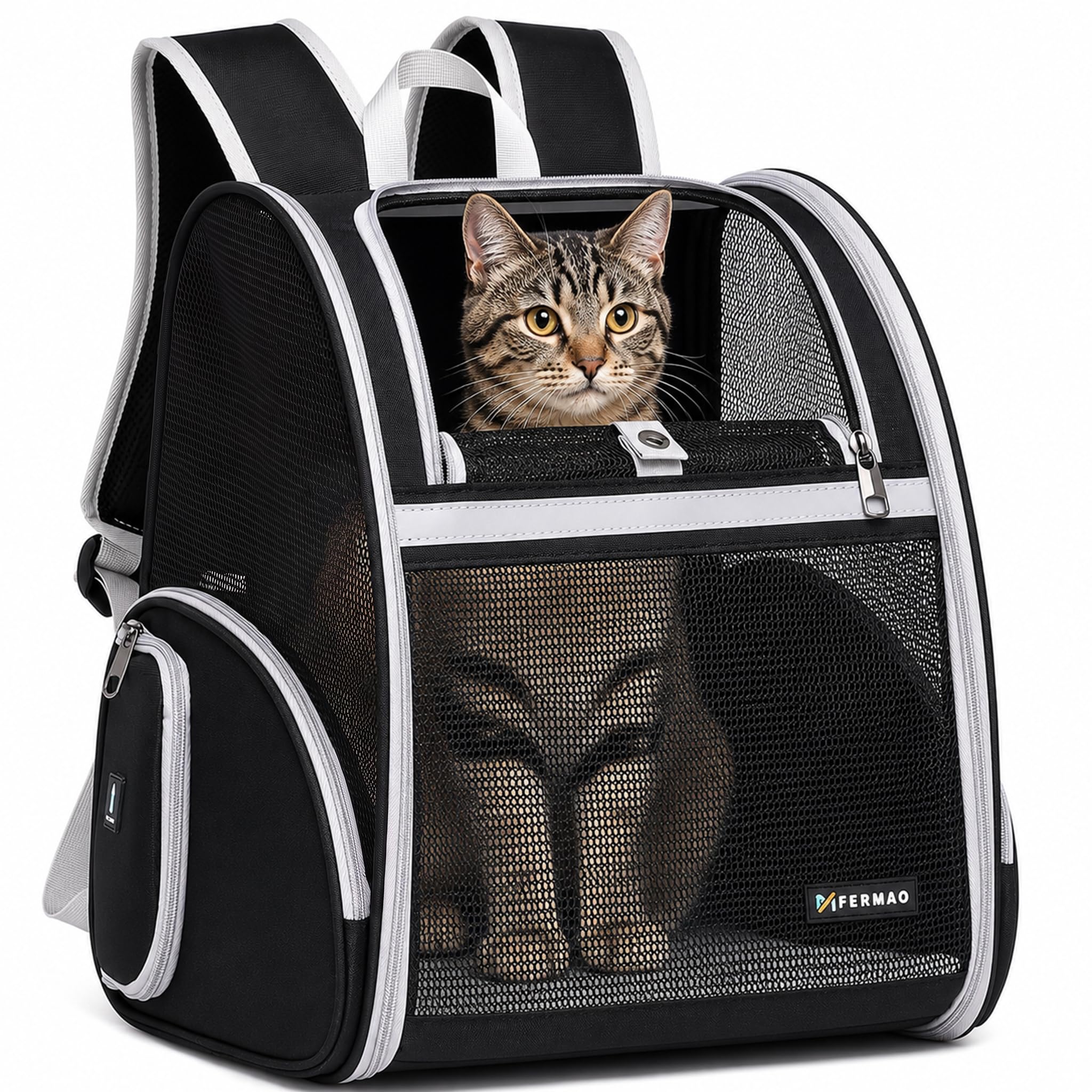
FERMAO Pet Carrier Backpack

Tight budgets

Our Score 9.4/10
Check Price

Worth Noting

  • 15-pound limit and low ceiling cap it at toy breeds
Frame
Internal steel frame
Dimensions
12.9"L x 10.62"W x 15.5"H
Carrier Weight
2.5 lb
Maximum Weight
15 lb
Read the full review

The cheapest pack here is also one of the better-built ones, which is not what we expected. The FERMAO hides a steel frame inside its Oxford shell, so it stands up on the floor and holds its shape while you load a dog through one of three entrances. There is a clasp to stop a pet pushing the zip open, a removable mat, reflective strips outside and a water-bottle pocket, on a pack rated to 15 pounds.

Fifteen pounds is the honest limit, and at 12.9 by 10.62 by 15.5 inches it has the lowest cabin among the enclosed carriers here, so a leggy dog will be lying down rather than standing. For a puppy, a Yorkie or a cat it is all the pack you need, and it leaves room in the budget for a proper harness to clip inside.

Bottom line: The budget pick we trust for a toy breed: a steel frame, three doors and an escape clasp on a genuinely small, light pack.

2

PetAmi Dog Backpack Carrier

PetAmi Dog Backpack Carrier

Everyday all-rounder

Our Score 9.2/10
Check Price

Worth Noting

  • 16.3-inch ceiling limits long-backed dogs
Frame
Structured, no-collapse
Dimensions
12.5"L x 10.2"W x 16.3"H
Carrier Weight
2 lb
Maximum Weight
18 lb
Read the full review

Set the PetAmi down on a trailside rock and it stays a box. That sounds trivial until you have tried to lower a wriggling terrier into a bag that has folded in on itself; the structured frame keeps the 12.5 by 10.2 by 16.3-inch cabin open, so your dog lands on a flat sherpa bed instead of a heap of fabric. Of everything here, it is the one we hand to most people.

The 18-pound rating covers the dogs most of us actually carry — a 12-pound terrier, a solid cat, a shih tzu that fizzles out on the second mile — and the interior is tall enough for most of them to sit up and turn. We were impressed by the two side entries as well: loading from a passenger door is far easier than hauling the whole bag across a seat. Reinforced zips and an interior strap with a buckle clip give you two things between your dog and the pavement.

Where the arithmetic gets loose is length. Sixteen inches of interior sounds generous until a long-backed dachshund mix tries to stand, and the 18-pound figure assumes a dog that fits the box rather than one that merely weighs the right amount. Measure from collar to tail base, add an inch, and compare that with the floor dimensions before ordering. The ceiling limits this pack, not the scale.

It gives up the least elsewhere, too. It sits flat under a plane seat instead of slumping, the sherpa bed lifts out for a wash, and the padding on the back panel is honest rather than decorative. Against the Petsfit it loses the waist belt for long climbs; against the Lekebobor it cannot stretch out at a café. For the errand, the vet run and the two-hour hike, that is the right trade.

Bottom line: Our default: a rigid cabin, an 18-pound rating and an interior tether make it the pack we recommend for everyday errands and real hikes.

3

Petsfit Dog and Cat Backpack Carrier

Petsfit Dog and Cat Backpack Carrier

Long hikes

Our Score 9.2/10
Check Price

Worth Noting

  • Wide, stiff shoulder straps need breaking in
Material
600D Oxford cloth
Dimensions
13.5"L x 12.5"W x 17.5"H
Waist Support
Padded waist belt and chest strap
Maximum Weight
18 lb
Read the full review

The waist belt is why this one exists. Most carriers here hang their whole load from two shoulder straps, and a 15-pound cat on a climbing trail turns into a dull ache between the shoulder blades within a mile. The Petsfit adds a padded waist band and a chest strap so the weight sits against your hips, and on a long uphill we noticed that before we noticed anything else about the pack.

It is also the roomiest of the enclosed carriers at 13.5 by 12.5 by 17.5 inches, rated to 18 pounds, with lockable zips, a built-in safety belt and 600D Oxford cloth that shrugs off claws. The trade is heft: at 1.69 kg empty it is the heaviest pack in this group, and the first few walks feel like breaking in a boot.

For a weekend hiker, or someone with an older dog who still wants the long walk, that is a fair exchange — a belt does more for your back than two pounds of padding ever will. If your trips are the vet and the farmers market, the PetAmi does the same job with less bulk.

Bottom line: Buy this one for distance: the waist belt and taller interior are what make a 15-pound dog comfortable on a two-hour climb.

4

Lekebobor Expandable Pet Carrier Backpack

Lekebobor Expandable Pet Carrier Backpack

Stretch-out breaks

Our Score 9.2/10
Check Price

Worth Noting

  • Can rock or topple when a dog paws at it
  • Folding it flat takes three stiff panels and patience
Entrances
Four (sides, front, back)
Dimensions
12.6"L x 11.2"W x 16.5"H
Mesh Panels
4 sides
Maximum Weight
18 lb
Read the full review

A zip around the back panel buys this carrier a second room. Unzipped, the rear of the Lekebobor folds out into extra floor space — the difference between a dog that can only lie down and one that can stretch, turn and settle. Four mesh panels keep the view and the airflow going while it is closed up, and there are four ways in and out: both sides, the front and the back.

Closed, it measures 12.6 by 11.2 by 16.5 inches and rates to 18 pounds, with a rod across the top and frames down both sides to stop it folding onto the dog. We found the expansion most useful with the pack off your back — on a café floor, at the vet, on a bench at the turnaround — because while you are wearing it, the extra panel hangs behind you rather than giving the dog more usable room.

The frame is also the weak point in handling: a dog that paws at the mesh can set the whole bag rocking when it is standing on the ground. It settles once you are moving, and it does not matter in a car seat, so it mainly affects dogs that scrabble. What we liked most is the loading — four doors means the dog goes in whichever way it happens to be facing.

Bottom line: We pick the Lekebobor when the dog needs room to stretch at the other end of the trip; the expanding back panel earns its keep.

5

Lekereise Expandable Pet Carrier Backpack

Lekereise Expandable Pet Carrier Backpack

Bigger pets

Our Score 9.2/10
Check Price

Worth Noting

  • Base flexes under a heavier pet
  • Presses on the lower back on long carries
Dimensions
14"L x 12.5"W x 16.2"H
Expanded Size
24.4"L x 14"W x 16.2"H
Carrier Weight
3.1 lb
Maximum Weight
25 lb
Read the full review

Twenty-five pounds is the highest rating among the enclosed carriers here, and the Lekereise backs it with the biggest box: 14 by 12.5 by 16.2 inches, extending to a 24.4-inch length when the back panel is unzipped. The mesh is anti-scratch, the back panel is padded, and a chest buckle keeps the shoulder straps where you put them.

Weight is the thing to think about. A 20-pound dog plus a three-pound pack is a serious load on one set of shoulder straps, and the base is the part we would watch: with a heavier pet the floor of the bag flexes, and the pack rides low enough to press on the lower back after a while.

We would still choose it for the job nothing else here does as well — a big cat, a pair of cats, or a 20-pound dog that needs to lie flat rather than perch. Just plan shorter carries than you would with the Petsfit, and use the expansion when the pack is parked rather than while it is on you.

Two details earn it a place beyond raw capacity. The side pockets are big enough for a folded leash and a bag of treats, and the top opening lets you reach in without unbuckling anything. It is not the pack to carry all day; it is the one to take when the dog is the reason for the trip.

Bottom line: Our choice for a 20-pound dog or a pair of cats, provided you can carry that weight comfortably for the length of the trip.

6

Texsens Traveler Bubble Backpack

Texsens Traveler Bubble Backpack

Bubble-window fans

Our Score 9.2/10
Check Price

Worth Noting

  • ⚠️ Zips can work loose with a pet pushing at the door
Mat
Removable
Mesh
PVC mesh on three sides
Dimensions
12.6"L x 11.4"W x 16.5"H
Maximum Weight
17.6 lb
Read the full review

A clear dome at the front is the whole idea here, and it works for the dog it suits. The Texsens pairs that bubble with PVC mesh across three sides, so a pet can watch the world at eye level instead of staring at the inside of a bag. At 12.6 by 11.4 by 16.5 inches and a stated 8 kg limit, it is sized for cats and small dogs.

A dog with a view does tend to settle faster than one in a dark bag, and the chest buckle keeps the straps from sliding while it shifts around. The mat lifts out for washing, the pockets take a leash and bags, and the shoulder straps are cut narrow enough for a smaller frame.

The front panel is the thinnest material on the pack, and a dog that scratches at the door will find that out for you. Ours has survived a cat that likes to stand on it, but it is not the bag for a chewer, and it is not the bag to leave a determined puppy in unattended.

For the vet, the café and the school run, though, it does the job for the least money here, and the view is worth something real on a nervous animal. If your dog launches itself at mesh, spend more and buy a framed pack.

Bottom line: A cheap, cheerful window seat for a calm cat or toy dog on short trips, and not for a pet that chews or shoves at the mesh.

7

PetAmi Airline Cat Backpack

PetAmi Airline Cat Backpack

Under-seat travel

Our Score 8.8/10
Check Price

Worth Noting

  • 18-pound rating oversells it; nearer 10 to 12 pounds
Bed
Removable sherpa-lined
Dimensions
11.5"L x 9"W x 16"H
Carrier Weight
1.81 lb
Maximum Weight
18 lb
Read the full review

Eleven and a half inches long, nine wide and sixteen tall, at 0.82 kg — on paper this is the smallest carrier in the group, and in a cabin aisle that is the entire point. It slips under a seat, sits on a lap in a departure lounge without swallowing the neighbouring passenger, and folds down flat enough to go into a tote once the dog is walking.

We liked it for exactly that: the trips where a bigger pack is a nuisance rather than an asset. What we do not trust is the 18-pound rating. Nine inches of width and sixteen of height describe a bag for a pet that lies down, and a 12-pound cat fills it. Read it as a 10- or 12-pound carrier and it makes sense; buy it for an 18-pound dog and the dog rides with its chin on the zip.

Set it beside the other PetAmi in this guide and the difference is the frame. This one is a soft bag with a padded base; the structured pack is a box you can set down. Both have the interior leash, four mesh windows and a sherpa bed that lifts out, and this one wears on the front or the back — which matters more than it sounds when your shoulders tire on a long terminal walk.

Bottom line: For cabins, buses and small cars, this is the pack that fits; just do not expect it to hold the 18 pounds it claims.

8

K9 Sport Sack Air 2

K9 Sport Sack Air 2

Medium dogs

Our Score 8.8/10
Check Price

Worth Noting

  • Awkward to load a wriggling dog on your own
  • Open design offers no cover in rain or cold
Material
Cordura
Carrier Weight
1.3 lb
Maximum Weight
30 lb
Fits Back Length
20"-22", girth up to 31"
Read the full review

This one is sized with a tape measure, not a scale. K9 asks for 20 to 22 inches from collar to the base of the tail and a girth of up to 31 inches for the Large, and rates the pack to 30 pounds — which is why it is the only carrier here that takes a genuinely medium dog rather than a large cat.

The design is different in kind. Your dog sits against your back with its head out through a padded collar opening, its weight on a patented Angle-Base that leaves room for the tail, held by collar and harness clips plus side and back cinch straps. Cordura with triple-reinforced stitching at the load points, macro mesh down both sides, and 1.3 pounds of pack.

None of that makes it easy to load. Getting a squirmy dog into a head-out sack takes two hands and a bit of nerve the first few times, and if the measurements are off you will find out on the trail rather than at the door. There is also nothing over your dog's head, so a cold, wet walk is a cold, wet dog.

Where it wins is the middle of the weight range nobody else covers — a corgi on a bike path, a frenchie on a hot day, a dog working back from an injury. Measure twice, buy once, and start with short loops close to home so the dog learns what the cinch straps feel like before you commit to a whole afternoon.

Bottom line: We recommend it for the 20-to-30-pound dog that cannot manage the whole walk, and for handlers who want both hands free.

How We Tested the Best Dog Backpacks

We started with roughly 40 carriers sold by pet-gear retailers and direct-to-consumer brands, then cut anything missing an interior safety tether, a locking or double zipper on the main compartment, or a stated weight limit under 10 pounds. That left 12, running from soft-sided slings to structured frame packs. Each one was measured before it ever went on a body: interior length and height, the width of the leg openings, and the bag's own empty weight, then checked against our two tester dogs, a 9-pound terrier mix and a 16-pound spaniel.

Testing ran for six months, and every pack did the same rounds — weekday morning walks of about a mile, a four-mile weekend trail with one steep climb, errands on foot, a vet visit, and a long train ride where the bag had to go under the seat. We loaded each with a 10-pound sandbag and bent over to tie a shoe, noting whether the bag swung around to the front or stayed put against the back. Then the dogs went in and out 20 times in a row, and we logged whether the zipper caught fur, needed two hands, or ran smoothly one-handed, the way it would on a busy sidewalk.

A few things got checked on a schedule. Once a month we inspected the seams at the strap anchors and the base panel for stretched stitching, and looked at whether the frame or back panel had started to sag under a dog's weight. Comfort was judged with a stopwatch: after an hour of wearing each pack, we wrote down where the straps dug in and whether our lower back felt it the next morning. Security got a deliberately paranoid pass — tugging every clip from odd angles, checking that the interior tether was long enough for a dog to turn around but short enough to stop a jump, and confirming nothing could be worked loose by a paw. Portability meant folding each pack flat and seeing whether it fit in a daypack, and value came down to how a bag looked and performed after six months against what it asked of us up front.

We're still using the standouts for regular walks, and we'll update this list as the seams and zippers tell us more.

How to Choose Dog Backpacks

Measure the dog, not the label

Interior height is what most shoppers get wrong. The enclosed packs here run from 15.5 inches on the FERMAO to 17.5 on the Petsfit, and a dog needs clearance to sit up without its head pressed against the top. Measure collar to tail base for length and floor to shoulder for standing height, then subtract an inch for the mat and the frame.

If your dog's standing height is within an inch of the interior, plan on it lying down for the ride and size by length instead. A long-backed 14-pounder can need a bigger pack than a compact 18-pounder, which is why the weight rating alone never settles it.

Enclosed cabin or head-out seat

There are two families here. Most are enclosed cabins: a framed box with mesh windows that gives the dog a floor, some shelter and somewhere to lie down. The K9 Sport Sack is the other idea — the dog rides against your back with its head out through a padded collar opening, which suits a medium dog that wants to see and balance with you.

The trap is temperament, not specification. A dog that panics in a closed bag will fight a cabin for the whole walk, and a dog that hates being lifted will fight a sack. If you cannot borrow one to try, start enclosed: it is easier to load and much easier to set down.

What your shoulders pay for

A padded waist belt is the biggest single comfort upgrade on a long carry, and the Petsfit is the pack here built around one, with a 17.5-inch interior to match. The cost is weight and bulk: belted, framed carriers are heavier empty and take up shelf space in the hall.

For errands and short trips, lighter and softer wins — the compact PetAmi folds flat and disappears into a tote. For anything over an hour on your back, prioritise the belt and the rigid base, and accept that the pack will look like luggage rather than a handbag.

Doors, zips and getting a dog in

Count the openings before you buy. A top-loading pack lets you lower a nervous dog in from above, which is far easier than pushing; side doors are what you want in a car, where you are loading across a passenger seat. The PetAmi and the Lekebobor both open on two sides, and the Lekebobor adds front and back doors.

Zips are the wear point on every soft carrier in this category. Look for lockable pulls, or a buckle that takes the strain off the zip line, and test each one with the pack empty before a dog goes anywhere near it.

Flying with a dog backpack

Airline approved is a claim on a listing, not a boarding pass. Cabin pet rules vary by airline and by aircraft, and the sizer at the gate is the only measurement that counts. The compact PetAmi at 11.5 by 9 by 16 inches is the shape that tends to clear under-seat space; the Lekereise at 14 inches long is a different proposition entirely.

Check your airline's current in-cabin pet page for dimensions, weight and pets per cabin, and confirm the dog has to stay inside for the whole flight. Then practise a two-hour confinement at home, because the gate is a bad place to discover that your dog disagrees.

Frequently Asked Questions

Final Verdict

The PetAmi is the pack we recommend to most people: a rigid cabin that holds its shape while you load, an 18-pound rating with an interior tether behind it, and enough padding that an afternoon of errands does not end with a sore back.

Change the brief and the answer changes. Long climbs belong to the Petsfit and its waist belt, a toy breed on a tight budget belongs in the FERMAO, and a 25-pound dog needs the K9 Sport Sack plus a tape measure. Buy for the walk you actually take.