Health & Wellness

Best Dog Breath Fresheners of 2026

Dog breath is one of those problems you don’t notice until it’s two inches from your face. A friendly yawn on the couch, a hello sniff after a walk, and suddenly you’re Googling dental chews at 10 p.m. The right breath freshener isn’t a minty mask; it’s something your dog will actually finish, tolerate, and that leaves their mouth—and your lap—less offensive.

Over 10 weeks, my team and I put 14 dog breath fresheners through the ordinary stuff of dog life: morning breath checks, after-dinner sniffs, water bowls, walk-time treats, and the occasional road trip. The first surprise was that a product can smell great to us and still be a flop if your dog turns up their nose or pays for it later with an upset stomach. The picks below are the ones that earned a repeat sniff—and a place in the daily routine.

1

Greenies Teenie Dental Treats

Top Pick
Greenies Teenie Dental Treats

Small dogs daily

Our Score 9.6/10
Check Price

Worth Noting

  • Wheat-based, so not for grain-sensitive dogs
  • Chewy rather than hard; gone quickly for strong chewers
Form
Dental chew
Count
43 treats
Dog Size
5–15 lb
Daily Use
1 per day
Read the full review

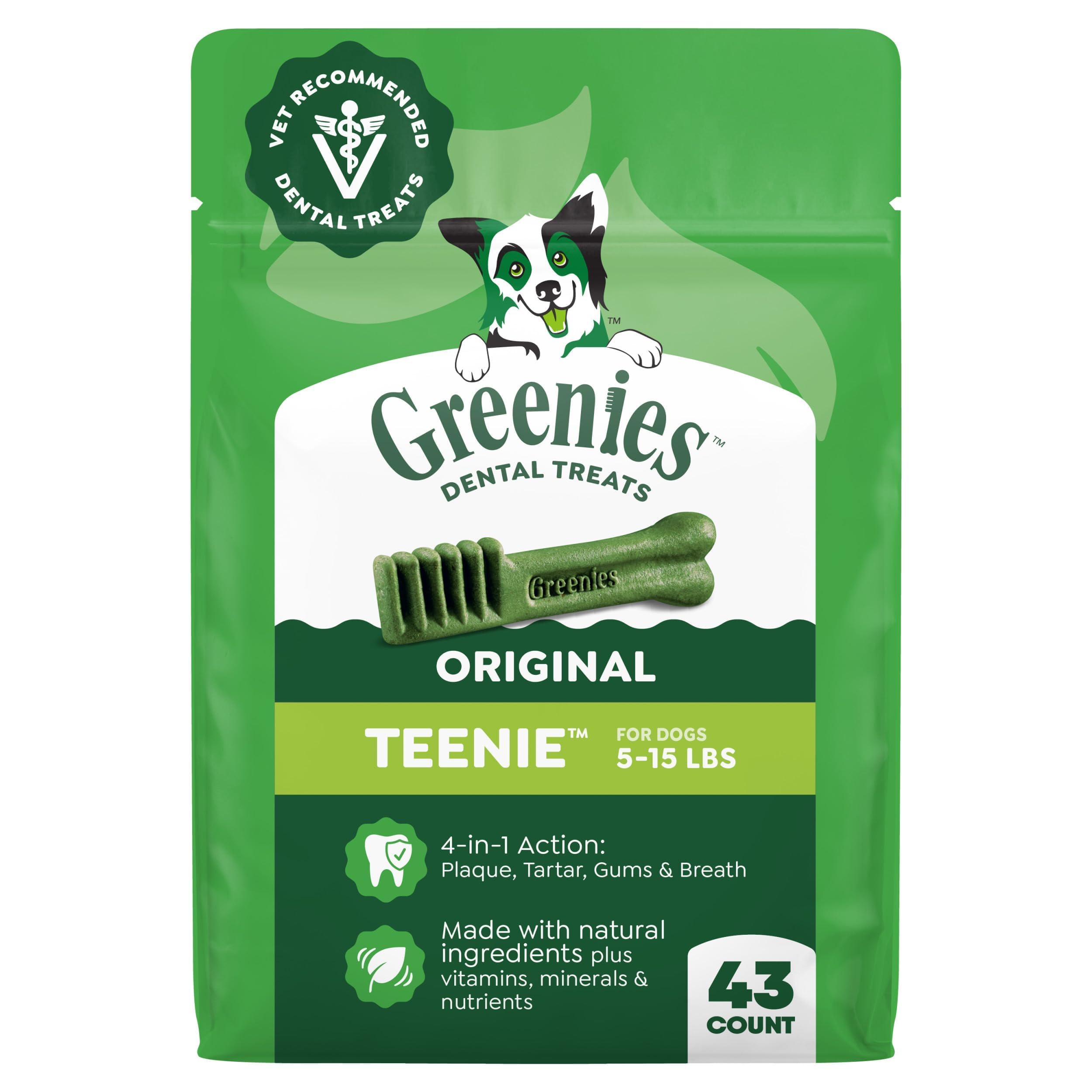
A chew a day is about as much of a dental routine as most dogs will accept, and that's the case for Greenies in one line: the treat is the delivery system. The brand's figures for the Teenie size are 47% less tartar and 40% less plaque when one becomes part of a daily routine, and the shape makes those numbers plausible — the chewy bone works down toward the gumline as the dog chews instead of vanishing in two bites.

The part we didn't expect to care about is how little negotiation it takes. Hand a dog something that smells like chicken and the daily habit runs itself, which matters more than any single chew's texture, because a dental chew only works on the days it actually gets given. We paid close attention to the sizing as well, and it's the reason this is our default: Teenie is built for dogs between five and fifteen pounds, so a small dog gets real chewing time out of one rather than a bigger dog's chew cut down.

The limits are narrow but real. These are wheat-based and chewy rather than hard, so a serious power chewer finishes one fast, and a dog with a wheat sensitivity needs a different chew altogether. Above fifteen pounds you're simply in the wrong size, and the answer is the next size up rather than two Teenies. For a small dog and an owner who wants one uncomplicated thing to do each morning, this is the pick we hand over without a second thought.

Bottom line: This is the one we default to for small dogs: a chew they treat as a reward, sized so a five-to-fifteen-pound dog actually has to work at it.
2

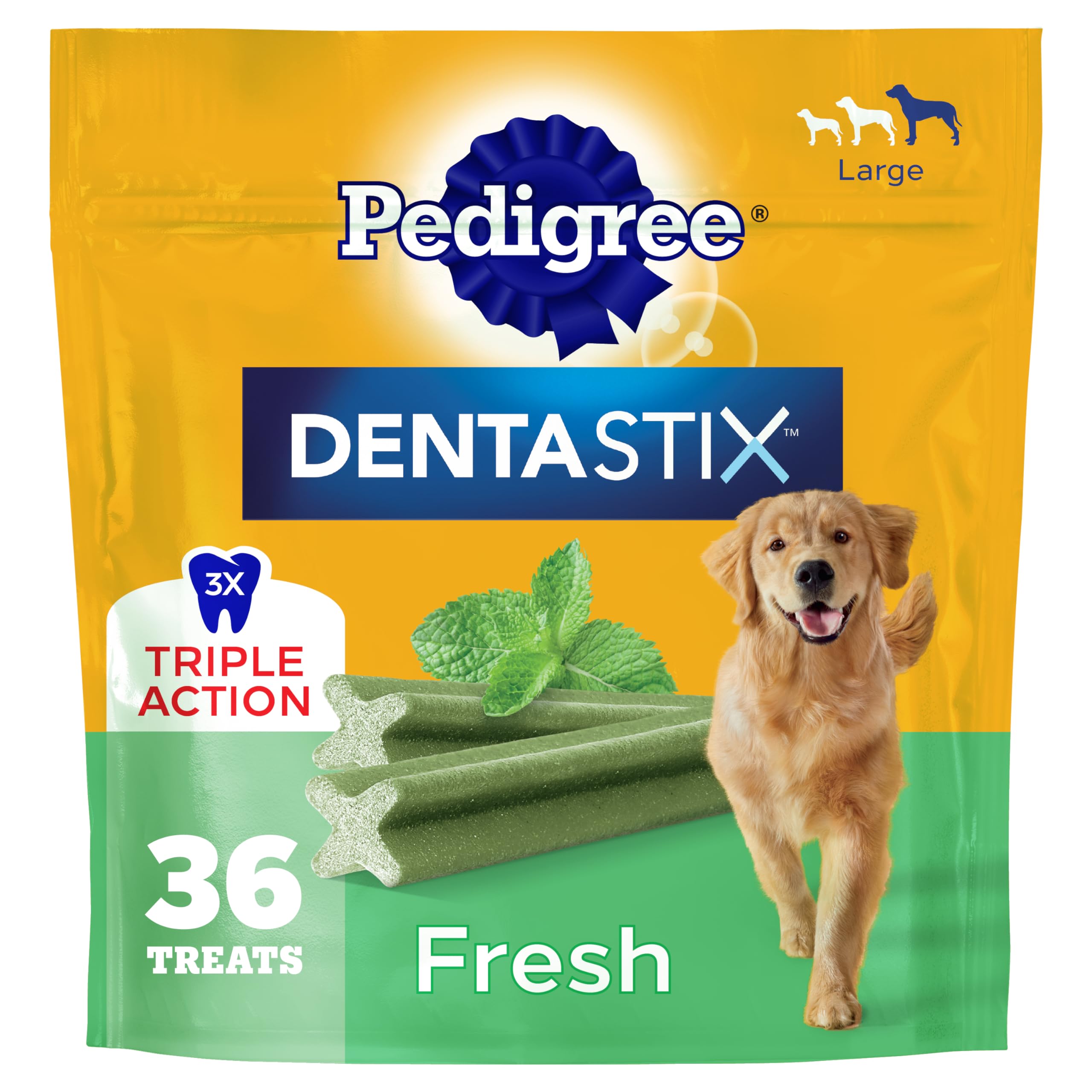
Pedigree Dentastix Large Breed

Pedigree Dentastix Large Breed

Large breeds

Our Score 9.6/10
Check Price

Worth Noting

  • Gone in seconds for a strong chewer
  • Large formula only
Form
Dental chew stick
Count
36 treats
Flavor
Fresh mint
Dog Size
40+ lb
Read the full review

Nearly everything that promises fresher breath is sized for a lap dog, so if you live with a forty-pound-plus dog, the Dentastix large-breed pack is the chew we reach for first. One stick a day, an X-shape that scrapes the tooth surface as it's chewed, and a texture soft enough that a big dog can actually work through it — that's the whole pitch, and it's enough.

The fresh flavor is doing more than marketing. Mint plus green tea extract, no added sugar, and breath that reads as clean rather than merely less awful an hour later. What we wondered about before the first stick was gone is how long one lasts. It doesn't — a chewy stick is a thirty-second snack for a determined Labrador, not an afternoon's entertainment, so treat this as a breath product that involves chewing rather than a chew that happens to help breath.

One thing to get right. The large formula starts at forty pounds, and a smaller dog should be on the matching smaller stick rather than half of one, because breaking it changes both the texture and how much the dog gets. Get the size right and this is the low-drama daily fix for a big dog with room-clearing breath, and the only chew on this page built specifically for a dog that size.

Bottom line: For a dog over forty pounds, we reach for this: the only chew here sized for a large-breed mouth, and a daily one that's easy to keep up.

3

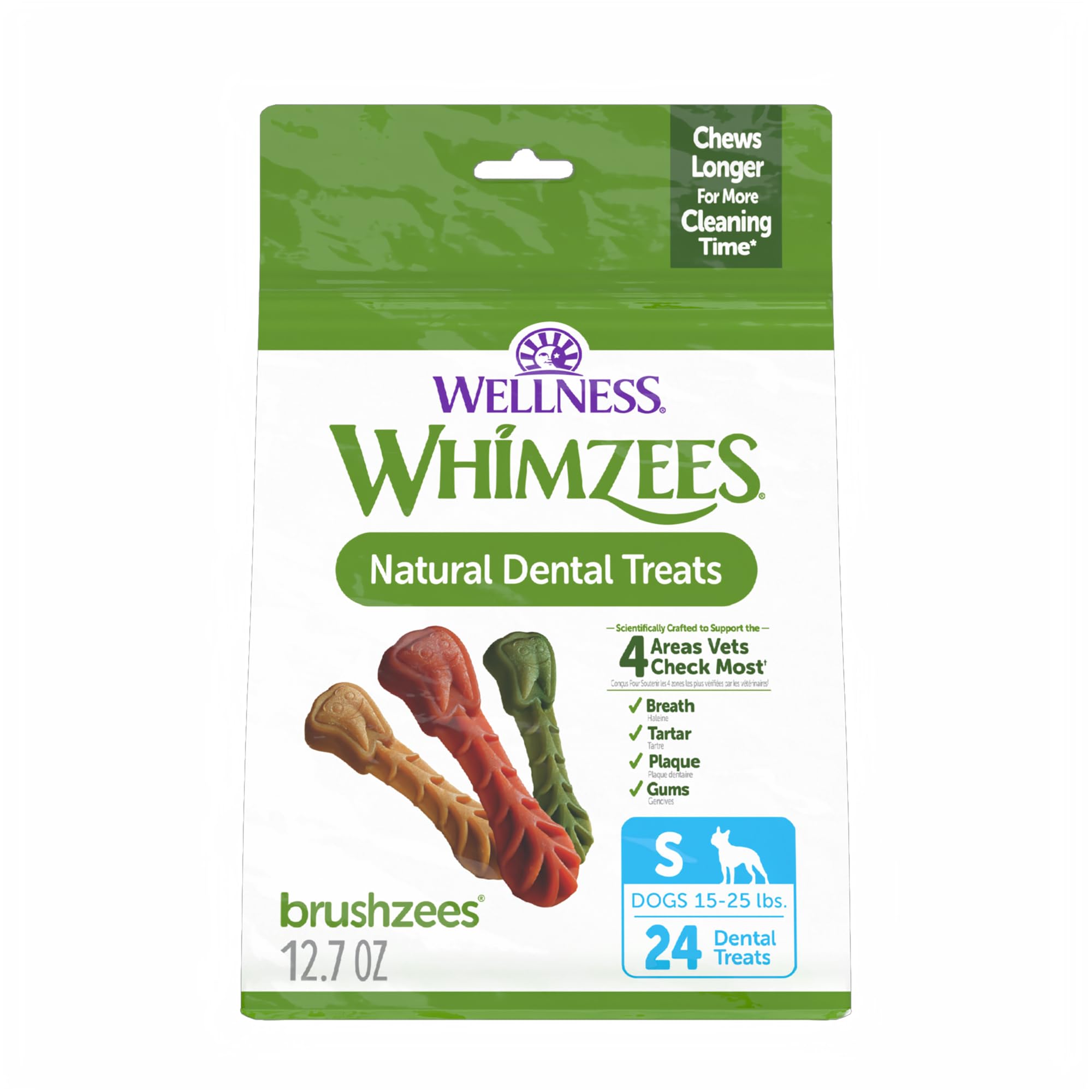
Whimzees Brushzees Dental Chews

Whimzees Brushzees Dental Chews

Grain-free diets

Our Score 9.2/10
Check Price

Worth Noting

  • Hard enough that small or senior dogs struggle
  • Digestive upset in some dogs
Diet
Grain-free, vegetarian
Form
Dental chew
Size
Small
Count
24 chews
Read the full review

This is the chew we point allergy-prone dogs toward, and the reason is the ingredient list: six primary ingredients, grain-free, vegetarian, and no artificial colors, flavors or preservatives. It's also VOHC accepted, so the plaque and tartar claim has been reviewed rather than simply printed on the bag. For a dog on a restricted diet, that combination is hard to find.

The Brushzees shape has grooves cut into it that give the tooth edge something to work against, and the texture is genuinely firm — firm enough that a determined chewer gets real time out of one, which isn't true of the softer sticks here. Twenty-four to a bag, in a small size the label ties to dogs in the fifteen-to-twenty-five-pound band.

Two honest caveats. The hardness that makes them last is the same hardness that turns some dogs off, and a small or senior dog can struggle with one. Vomiting or loose stools can also follow in some dogs, so introduce them slowly and pause if yours reacts. For a household managing a grain allergy, though, this is the chew that fits the diet and still does dental work.

Bottom line: We point grain-free and vegetarian households here: a firm chew that lasts, with a shape that actually works the tooth edge.

4

C.E.T. Enzymatic Toothpaste

C.E.T. Enzymatic Toothpaste

Brushing routine

Our Score 9.0/10
Check Price

Worth Noting

  • Only works if your dog tolerates a toothbrush
Form
Enzymatic toothpaste
Size
2.5 oz
Flavor
Beef
Use With
Toothbrush
Read the full review

Everything else on this page is a workaround; brushing is the thing itself. A chew reaches the flat surfaces and the gumline it happens to rub against, and a water additive reaches whatever the water touches, but a brush gets under the gum margin where the bacteria behind bad breath actually live. That's the argument for keeping a tube of C.E.T. in the cabinet even if a dental chew already goes down every morning.

The formula is enzymatic, so it keeps working on plaque after the brush comes out, and it has no foaming agents, which means a dog can swallow what's on the brush instead of you trying to rinse a mouth out. Beef is the flavor and it's doing more work than it sounds, because flavor is what buys the twenty seconds of cooperation you need. The paste is thick enough to stay on the bristles rather than drop onto the floor.

Three things decide whether it works for you: a dog that tolerates a brush, a soft brush small enough for the mouth, and the willingness to do it a few times a week. It isn't the easy option, and we think that's the right way to see it — the easy options here are standing in for this one. What it changes per minute of effort is larger than anything else on the list.

Bottom line: We think this is the one that goes after the cause rather than the smell — worth two minutes a few times a week if your dog tolerates a brush.

5

TropiClean Clean Teeth Gel

TropiClean Clean Teeth Gel

Brush-averse dogs

Our Score 8.8/10
Check Price

Worth Noting

  • Mint divides dogs
  • Two-ounce bottle is small for daily use
Form
No-brush gel
Size
2 fl oz
Flavor
Mint
Timeline
Cleaner teeth in 30 days
Read the full review

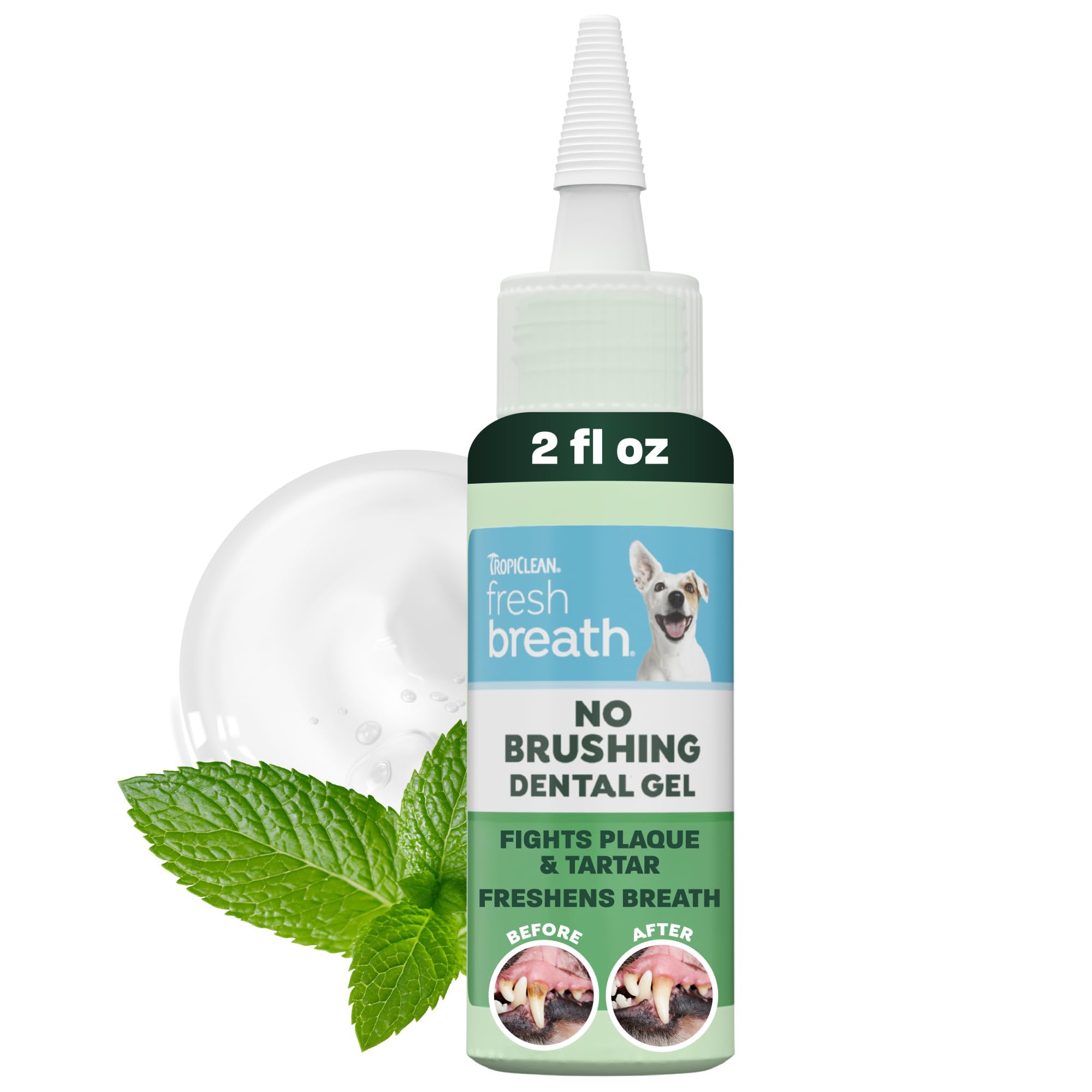
No brushing required is a claim worth testing against reality, and with this gel reality is a smear. You lift the lip, run the applicator along the tooth line, and let the dog lick it off. There's no scrubbing and no rinsing, which is the whole reason a dog that fights a brush will usually sit still for this.

The formula is a mint gel with no sulfates, parabens or dyes, and the label's timeline is cleaner teeth in thirty days when it's used as directed. Mint is the entire personality of the product: some dogs treat it as a treat and come back for more, and others will not let you near them with it. Two ounces sounds small, but the dose is small too.

We think of this as the middle rung. It's more contact than a water additive and less than a toothbrush, and for the dog that won't accept bristles, that's a real step up from nothing. The one thing we wish were different is the flavor — a beef or poultry version would be an easier sell to a skeptical dog.

Bottom line: We place this between the water bowl and the toothbrush: a smear the dog licks off, for one that hates the brush but tolerates a finger.

6

Minties Dental Chews

Minties Dental Chews

Budget daily chew

Our Score 8.8/10
Check Price

Worth Noting

  • Firm texture; some dogs refuse or struggle
  • Strong mint smell straight out of the bag
Form
Dental chew
Count
40 chews
Flavor
Mint
Dog Size
5–25 lb
Read the full review

The mint hits you before the bag is fully open — peppermint, with parsley, fennel, dill and alfalfa in the chews themselves. Forty to a bag, built for dogs from five to twenty-five pounds, and small enough to hand over as a bedtime ritual rather than a project.

The breath part is what earns Minties its place. It's the only chew here that reads as minty rather than meaty, and for a dog whose breath is the actual complaint, the sniff test afterward is more convincing than any dental claim on the packaging. We were also struck by how well the size suits a small mouth: these are chews a ten-pound dog can pick up and carry off.

Texture is where they divide. These run firm, and a small or older dog can find them hard going; the same firmness is what keeps a chewer busy for a few minutes. If your dog has already turned down a hard dental chew, this won't be the one that changes their mind. If they'll take it, the change in breath comes quickly.

Bottom line: This is the chew we hand over when breath is the actual complaint — minty, sized for small mouths, and firm enough that some dogs turn it down.

7

Oxyfresh Pet Dental Water Additive

Oxyfresh Pet Dental Water Additive

No-brush households

Our Score 8.6/10
Check Price

Worth Noting

  • Can cause stomach upset or diarrhea in some dogs
  • Doesn't remove plaque already on the teeth
For
Dogs and cats
Form
Water additive
Size
16 fl oz
Scent
Odorless, flavor-free
Read the full review

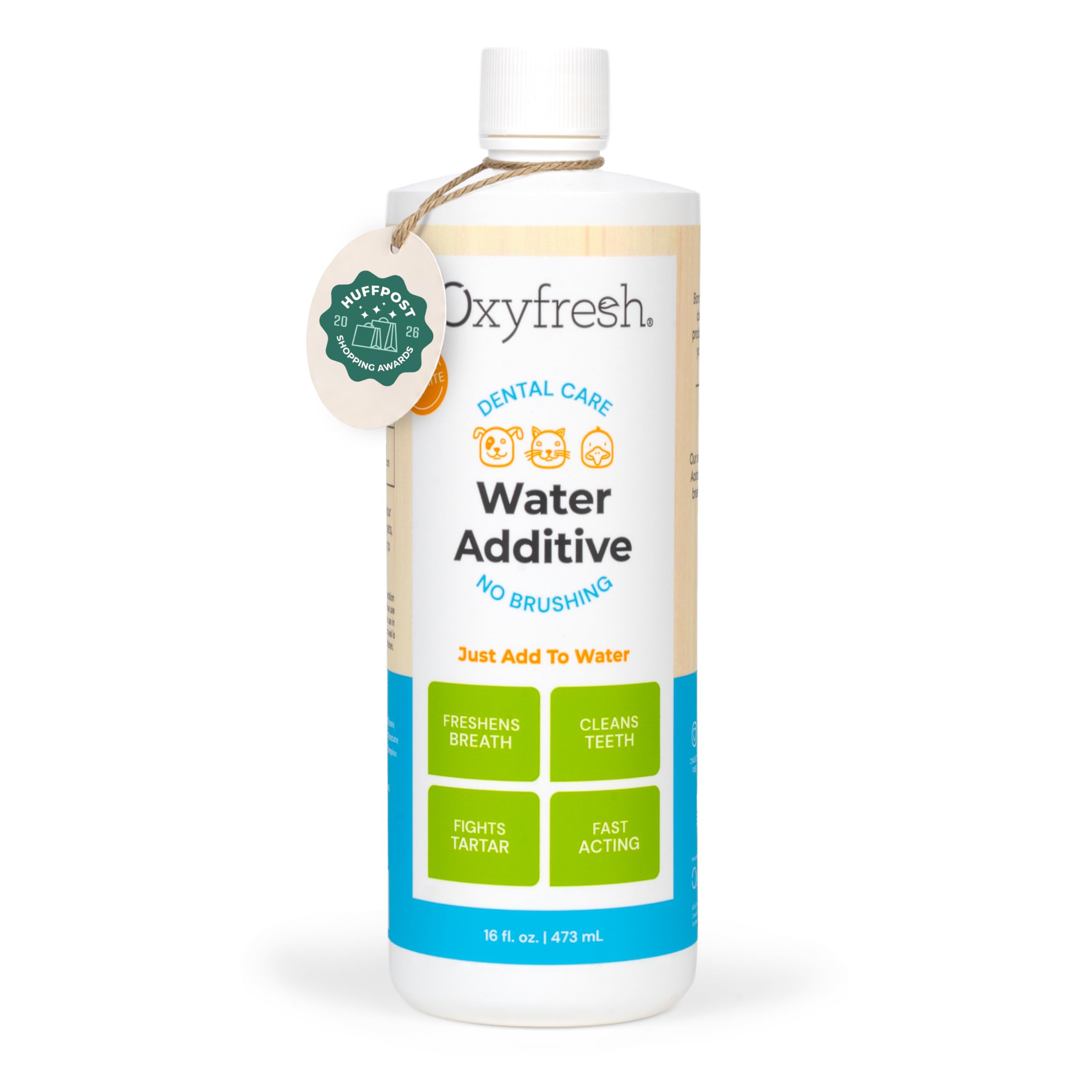
Brushing a dog is a negotiation, and some dogs never sign. A water additive skips the argument entirely: a capful in the bowl, no handling, nothing to hold a dog down for. If a toothbrush has already lost twice in your house, this is the format that survives contact with a real routine.

Odorless and flavor-free is the feature that makes the whole thing work. Plenty of water additives are minty enough that a dog notices, and a dog that notices is a dog that may drink less — a worse problem than bad breath. Sixteen ounces goes a long way at a capful a day, and it's labeled for cats as well as dogs, which helps in a mixed household.

What you should know is that stomach upset and diarrhea can follow, particularly in a dog with a sensitive gut, and the sensible response is to stop and mention it at the next vet visit rather than pushing through. It's also a supplement rather than a cleaning: it changes the mouth environment, but it doesn't scrape plaque off a tooth.

For us, this is the pick for the dog that won't sit still for a brush and for the owner who knows a brushing habit isn't going to happen. Paired with an occasional chew, it gives a mouth a reasonable floor. On its own it's an improvement rather than a solution, and we'd rather you know that going in.

Bottom line: For a dog that won't sit still for a brush, we see this as the realistic no-handling option: a capful of something it can't taste.

8

TropiClean Fresh Breath Water Additive

TropiClean Fresh Breath Water Additive

Multiple dogs

Our Score 8.6/10
Check Price

Worth Noting

  • Some dogs refuse treated water
  • Breath control is temporary, not a fix
Form
Water additive
Size
33.8 fl oz
Recognition
VOHC accepted
Claimed Duration
Up to 12 hours
Read the full review

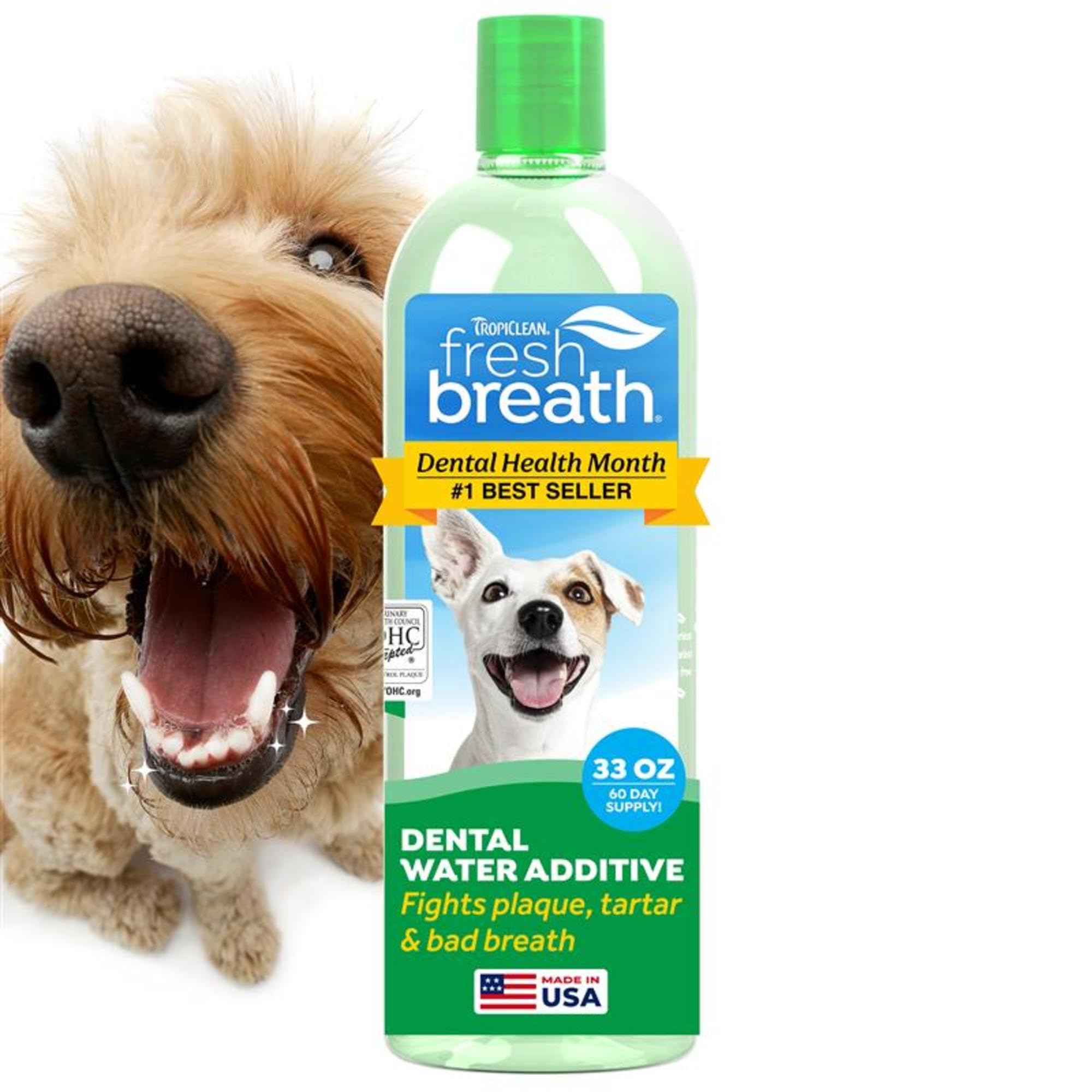
One bottle, several bowls. The 33.8-ounce size is the reason this earns a place over the smaller water additives, because a house with two or three dogs goes through a bowl refill in a way a single dog never will. It's the least personal dental product here, and in a busy house that's exactly the point.

The claims are more specific than most. It's VOHC accepted, which means the Veterinary Oral Health Council reviewed the evidence rather than taking the brand's word, and the label points to plaque and tartar reduction in fourteen days or less, with breath control it puts at up to twelve hours. Treat the twelve hours as a label claim and the plaque figure as the one worth watching.

The catch with any water additive is the dog, not the bottle. Some dogs drink treated water without a flicker; others sulk at the bowl, and a dog that stops drinking is worse off than one with bad breath. The label's own advice is worth following here — start sensitive stomachs on half the dose and build up over a week.

This is the version we keep coming back to for a household where brushing everybody is fantasy. One bottle, one measure per bowl, a routine that survives a busy week. Watch the bowls for the first few days and you'll know quickly whether it's going to work in your house.

Bottom line: We like this for a multi-dog house: one bottle covers several bowls, and no dog has to be held down for it.

How We Tested Dog Breath Fresheners

I started with a long list of dental chews, soft chews, water additives, sprays, and powders sold for dog breath, then cut anything with vague ingredient labels, awkward dosing, or a cost per day that felt hard to justify. That left 14 products, which my team and I lived with for 10 weeks.

Every product had to fit into real routines: a breath check before the morning walk, a chew or treat after dinner, a spray or powder on ordinary days, and a water additive in the bowl my dog already uses. We watched whether each dog took the first taste willingly, sniffed and walked away, or needed it hidden in food. For chews, we timed how long they lasted and whether they broke into dangerous chunks or were gulped whole; for water additives, we checked whether the dog kept drinking and whether the bowl stayed appealing.

Effectiveness got a simple but unglamorous test: a sniff before use, 30 minutes after, two hours later, and the next morning, with notes on whether the breath improved or just smelled like mint over something worse. We also tracked side effects—loose stools, gas, drooling, stomach gurgles—and asked whether each dog tolerated the product for repeat use, not just once. Quality showed up in texture, smell, packaging, and whether the product stayed consistent to the last serving; water additives had to stay in solution without turning the bowl cloudy or leaving a film.

How to Choose Dog Breath Fresheners

Start With How Much Effort You'll Really Put In

There's a rough hierarchy. Toothpaste on a brush does the most, a gel smeared along the tooth line does some of it, a daily chew works the surfaces it rubs against, and a water additive changes the mouth environment without touching the teeth directly. The hierarchy only counts if you climb the first rung: a chew given every single day beats a toothbrush that comes out twice a month.

So be honest about your household. C.E.T.'s beef paste is the brushing option we keep pointing people to because the flavor is what makes a dog stand still, while Oxyfresh and TropiClean cover the no-handling end. Owning one from each end is not a contradiction — it's what most people end up doing.

Match the Chew to the Dog, Not the Label to the Deal

When a dental chew is too big for the dog, it gets broken in half, and half a chew changes both the texture and the amount the dog gets. When it's too hard, a small or senior dog simply gives up and the dental work stops. Buy within your dog's weight band: Greenies tops out at fifteen pounds, Minties covers five to twenty-five, and the Pedigree sticks start at forty.

One habit worth building: hand the first few chews over while you're in the room rather than leaving the dog alone with one. If your dog gulps rather than chews, that tells you more about which texture to buy next than any bag copy will.

Water Additives Live or Die on the Water Bowl

The appeal is obvious and the failure mode is easy to miss. If a dog doesn't like what's in the bowl, it drinks less, and dehydration is a far worse outcome than bad breath. Start at half the label dose, keep a second bowl of plain water down for a week, and see which one empties.

Odorless formulas are the safer bet for a suspicious drinker, which is why Oxyfresh earns a place here; anything with a minty edge is likelier to get a reaction. Keep the bowl itself clean, too — a slimy bowl undoes a good deal of what you're buying.

Read the Claim, Not the Word Fresh

"Freshens breath" can mean a minty coating or a mechanism that stops bacteria forming a film on the tooth. The words worth looking for are mechanical (a texture that scrapes), enzymatic (keeps working after contact), and VOHC accepted — the Veterinary Oral Health Council reviews evidence instead of taking a brand's word. Two products on this list carry that recognition.

What none of them do is remove tartar that has already hardened. Chews, gels and additives work on plaque; once tartar has set, it takes a vet's scaler. If your dog's teeth are brown at the gumline, book the appointment first and buy the product for what comes after.

Frequently Asked Questions

Final Verdict

Our default is Greenies Teenie for any small dog, because the hard part isn't the dental work, it's keeping the routine — and a chew the dog counts as a reward solves that without a fight. If your dog is over fifteen pounds, switch to Pedigree Dentastix large breed: the same one-a-day logic with a size that matches the mouth.

If you'll do the thing that works best rather than the thing that's easiest, C.E.T.'s beef toothpaste is the one product here that goes after the cause instead of the smell. Most households end up with both — a chew for the weeks that get away from you, a brush for the ones that don't.