Crates & Gates

Best Dog Crates of 2026

A crate should be the one spot where your dog settles and you stop watching the door. The wrong one announces itself fast: a latch that pops when a delivery truck rolls past, a pan that rattles loose on night two, a wire frame that sags the first time your dog throws himself at it. I've crated puppies, fosters, and one 90-pound escape artist who could nose open anything with a hinge, and the crates I've trusted all got three things right — latch, frame, and fit.

Fit is where most people go wrong: measure your dog standing, and buy for the adult he'll grow into, not the puppy in front of you. Over the past six months my team and I have assembled, folded, hauled, and lived with 12 crates — wire, plastic, and one that passes as furniture — and the ones below survived a determined chewer and a lot of hose-downs. They're grouped by what they do best, so start with the one that matches your dog's worst habit.

1

Amazon Basics Double Door Crate, 36-Inch

Top Pick
Amazon Basics Double Door Crate, 36-Inch

Medium breeds

Our Score 9.4/10
Check Price

Worth Noting

  • Thin bars can arrive bent or bow under a pushy dog
  • 22-pound frame takes two hands to move
Doors
2 (front and side)
Divider
Included
Dimensions
36"L x 23"W x 25"H
Item Weight
22.1 lb
Read the full review

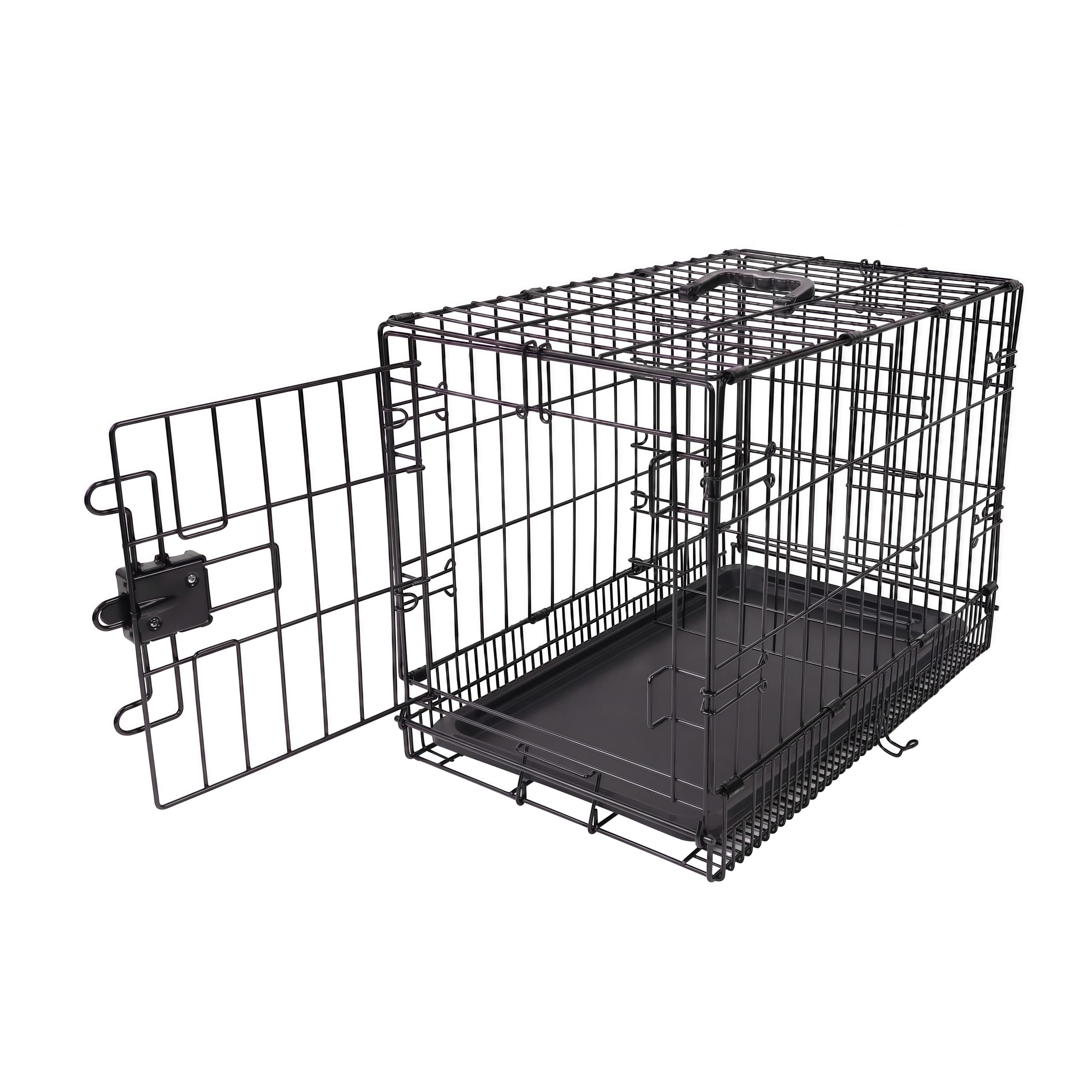
A crate has to fit the room before it can fit the dog. This one opens at the front and on the side, which is the reason we keep recommending it: pushed into a corner, set against a wall, or wedged beside a sofa, you can still reach your dog without hauling the whole crate out of position. That second door is the difference between a crate that lives where you need it and one that lives wherever it happens to fit.

The size suits the middle of the dog world. At 36 inches long and 25 tall, it gives a Corgi, a cocker spaniel, or a 60-pound mixed breed room to stand, turn, and stretch out, and the divider shrinks the space for a new puppy so you aren't buying twice. Setup is unfold, clip, done, with no tools involved, and the whole thing collapses flat when you want the floor back.

We came away impressed by the spring latch, which works one-handed while your other hand is on a collar. The bars are worth a look on arrival: they're on the thin side, a bent panel out of the box isn't unheard of, and a dog that throws its weight at the door can bow them. Set it up the day it lands and check every panel before the return window closes.

Where it stops is a dog with an escape history or a serious chewer. If your dog is heading toward 70 pounds, the 42-inch iCrate below has more room and more mass to back it up.

Bottom line: For most medium dogs, this is the crate we point to: a side door that solves tight rooms, a divider that handles a puppy's first year, and hardware that works without a fight.

2

MidWest iCrate Single Door, 30-Inch

MidWest iCrate Single Door, 30-Inch

Small-medium dogs

Our Score 9.4/10
Check Price

Worth Noting

  • Little room for dogs much past 40 pounds
Doors
1
Divider
Included
Fits Dogs
21-40 pounds
Dimensions
30.67"L x 19.3"W x 21.46"H
Read the full review

Thirty inches long and a little over 21 tall, the smallest iCrate is built for the dog most people actually own: a French bulldog, a terrier, a dachshund, something in the 21-to-40-pound range. It's also the size that's easiest to get wrong, so measure the adult dog rather than the puppy. Yours needs to stand without ducking and turn around without folding itself in half.

What we like is how little there is to the thing. The panels unfold and the corners clip, the divider drops into place, and the tray slides out for a hose-down. No tools, no scraped knuckles. At 17 pounds it's light enough to carry out to the car for a vet visit, though the handle is a balance aid rather than a way to move it, so put a hand underneath.

The door is where it gives ground. There's one slide latch, centered, and the top and bottom corners of the door can flex outward when a determined dog pushes. For a calm dog that's nothing; for a door-pusher it's the difference between a crate and a puzzle. A pair of carabiners at the corners closes that gap, and the money is better spent there than on a bigger crate you don't need.

Bottom line: For a dog in the 21-to-40-pound band, this is the value pick: tool-free setup, a tray that slides out, and a divider included, as long as you clip the single latch on a door-pusher.

3

MidWest iCrate Double Door, 42-Inch

MidWest iCrate Double Door, 42-Inch

Large breeds

Our Score 9.4/10
Check Price

Worth Noting

  • 37-pound frame stays where you set it up
  • Tight headroom for dogs past 90 pounds
Doors
2 (front and side)
Fits Dogs
71-90 pounds
Dimensions
42"L x 28"W x 30"H
Item Weight
37 lb
Read the full review

The 42-inch iCrate is the one people buy for a Labrador, a boxer, or a German shepherd, and the dimensions explain why: 42 inches long, 28 wide, 30 tall, sized by the maker for dogs in the 71-to-90-pound range. Two doors, front and side, mean you can back it into a corner and still open it. So far, straightforward. The hardware is where it gets interesting.

Each door is held by a pair of slide bolts, and the bolts don't span the full height of the door. A dog that paws at the corners can work them outward until there's a gap worth exploiting. The fix takes a minute and almost no money: a carabiner or a clip at the top and bottom of each door closes that gap before the dog finds it. It's the first thing we tell anyone who asks about this crate, and it belongs in the setup rather than in the category of optional extras.

With that done, it's one of the best crates here for a big dog. Ninety pounds gets room to stand, turn, and lie flat, the divider shrinks the space for a puppy, and the tray is deep enough to hold a tipped water bowl until you get to it. What tips it for us is room per dollar: it's a lot of crate for a mid-range price, and the folding frame means it comes apart again if you move.

Bottom line: If your dog is heading past 70 pounds, this is the crate to buy: room to stand and turn, a side door for tight corners, and a price that stays mid-range as long as you clip the door corners shut.

4

Amazon Basics Single Door Wire Crate, 24-Inch

Amazon Basics Single Door Wire Crate, 24-Inch

Puppies, small breeds

Our Score 9.4/10
Check Price

Worth Noting

  • Thin bars bend under a dog that works at them
Doors
1
Divider
Included
Dimensions
24"L x 18"W x 20"H
Item Weight
13.9 lb
Read the full review

Every puppy crate has a short working life. The 24-inch Amazon Basics makes that cheap: it's the smallest and lightest crate in this group, and it's a permanent adult size for a pug, a Havanese, or a small mixed breed. The divider walls off most of the space for a new puppy and opens up as the dog grows, which for a first crate we think is the smart buy.

We liked how easily it moves. At 13.9 pounds it goes from bedroom to living room to back seat without a second trip, and it folds flat enough to slide behind a sofa once the puppy is house-trained. The spring latch works one-handed, which matters more than it sounds when you're holding a wriggling dog and trying to close a door at the same time.

Sizing is the trap. A 24-inch crate is a permanent home for a small dog and a six-month waypoint for a big one, so a puppy headed for 45 pounds will be cramped well before its first birthday; the divider buys layout options, not volume. The single front door is the other constraint, because it needs clear floor space in front, and the narrow gap between a bed and a wall is not going to work.

Bottom line: The crate to start a puppy in: light enough to move from bedroom to car, with a divider that keeps a small dog out of space it doesn't need yet.

5

Petmate Two-Door Kennel, 24-Inch

Petmate Two-Door Kennel, 24-Inch

Small pets, travel

Our Score 9.2/10
Check Price

Worth Noting

  • Screws and panels instead of a folding frame
  • Sold without a manufacturer's warranty
Doors
2 (front and top)
Dimensions
24.05"L x 16.8"W x 14.5"H
Airline Specs
Meets most airline cargo specs
Maximum Weight
15 lb
Read the full review

Loading a reluctant animal is usually a two-person job: one to hold the collar, one to work the door. The Petmate's top hatch does away with the negotiation. It hinges open so you can lower a small dog or a cat in from above and close the lid, without asking it to walk through a doorway it has decided is a trap.

That hatch is why we rate it as the travel crate in this group, and it turned out to be the door we reached for rather than the front one. The shell is solid, wipes out in under a minute after an accident, and the ventilation on all four sides keeps a nervous animal from breathing stale air on a long drive. It's 24 inches long and about 14.5 tall, built for pets up to 15 pounds, and it meets most airline cargo specifications, which is worth confirming with your carrier before you book since the rules change by airline and by aircraft.

Two things to know before you order. It arrives as panels and screws rather than folding open like a wire crate, so give it ten minutes and a screwdriver, and expect the last fastener to need a little persuasion. And the 15-pound ceiling is generous on paper: measure your pet from nose to the base of the tail and add an inch or two, because a 12-pound cat fills this box more completely than the photos suggest.

Bottom line: For a small dog or a cat that hates being loaded, the top hatch earns its place, and this is the one here that meets most airline cargo specs.

6

Petmate Vari Kennel, 40-Inch

Petmate Vari Kennel, 40-Inch

Flying large dogs

Our Score 9.0/10
Check Price

Worth Noting

  • Bulky and awkward to carry once assembled
  • Shell can crack at a corner with hard use
Material
Plastic
Fits Dogs
70-90 pounds
Dimensions
40"L x 27"W x 30"H
Airline Specs
Meets most airline cargo specs
Read the full review

Plastic kennels and wire crates do different jobs, and the 40-inch Vari Kennel is the clearest example in this group. A wire crate is a room the dog lives in; this is a box you move it in. The shell blocks drafts, the curved walls give a shy dog a dark den instead of a view in four directions, and the stay-dry moat keeps a nervous traveler off wet plastic.

It's built for dogs in the 70-to-90-pound range, with ventilation on all four sides and a wire door drilled for zip ties, which is the detail worth using. A zip tie through the frame takes a second and closes the one real gap in the design, because a strong dog can push this door open otherwise.

Whether it earns its premium depends entirely on how the crate gets used. If your dog flies, or rides in a car where a solid shell matters more than a view, this is the shape to buy and the extra cost is easier to defend. If the crate mostly sits in a corner of the kitchen, a wire crate does the same job for less and folds flat when you want the floor back. What we appreciate is the simplicity of it: no folding hardware to fail in a parking lot, no panels to clip, and a door you can tie shut.

Bottom line: The kennel to buy if your large dog actually flies: an enclosed shell, four-sided ventilation, and zip-tie holes at the door, provided you tie it shut.

How We Chose and Tested These Dog Crates

We began with a list of nearly 40 crates and cut it down using the things you'd check yourself: whether each comes in a size that fits a real dog, how much it weighs, how many doors it has, and whether the maker sells replacement latches and pans instead of making you buy a whole new crate. That left 12, spanning wire, plastic, and furniture-style, which we lived with for six months.

Assembly happened on a living room floor with only the tools in the box and no second set of hands. We timed it, then grabbed each frame at opposite corners and shook it to see what flexed. Every latch got opened and closed a few dozen times, lifted while engaged, and checked for a secondary lock or just a single slide bolt. The pan got the boot test — a foot on one corner to see whether it tipped, cracked, or stayed put.

Then the dogs moved in. Crates sat in bedrooms overnight, in kitchens through dinner, and in the back of an SUV on weekend trips; one went to a foster home with a chewer who worked the door for a solid hour. We measured each interior with a tape measure against the listed dimensions, then measured again with a bed inside, since that's the number that actually matters. Accidents got wiped and hosed, the folding models got folded and carried up a flight of stairs, and we kept a running tally of what came in the box — divider, tray, cover — against what each crate cost.

How to Choose Dog Crates

Size the crate for the adult dog

Puppies are the reason crates get bought twice. Measure the dog you will have: standing height plus an inch or two, and nose to the base of the tail plus a couple of inches so it can lie flat. A crate has to let your dog stand without ducking, turn around, and stretch out, and weight bands on the box are a starting point rather than a guarantee, since a leggy 45-pound dog needs more length than a dense 50-pound one.

When we're between two sizes, we size up and use the divider to shrink the space for a young puppy. An oversized crate with a divider beats an undersized one every time.

One door or two

A second door is the most underrated feature in this category. A front-door crate needs clear floor space in front of it, which rules out the corner of a small room, the gap beside a bed, and a lot of car boots and hallways. A side door lets you back the crate into a corner and still reach your dog.

If the crate is going anywhere other than the middle of an open floor, the second door is worth paying for. It is also the feature that keeps a crate in the room where the family actually is, which is where house-training goes fastest.

The latch decides whether the crate holds

Most escapes happen at the door, not through the bars. We look at how far the bolts travel: a single centered slide latch leaves the top and bottom corners of the door able to flex outward, and a dog that paws at them will find that out. Two bolts are better than one, and a bolt near each corner is better still.

If you already own a crate with a single latch, a carabiner clipped at the top and bottom turns it into a much harder door to open. Do that before you conclude the crate is no good.

Folding, weight, and where it lives

A 42-inch crate runs about 37 pounds and stays where you put it; a 24-inch crate is closer to 14 and gets carried out to the car. Decide which one you're buying before you order, because a crate that is too heavy to move stops being useful the moment you need it somewhere else.

Folding matters most if the crate doubles as travel gear or has to disappear between uses. For a crate that will sit in one spot for years, folded depth is irrelevant next to door placement and how easily the tray slides out.

Wire or plastic

Wire crates ventilate better and let the dog see the room, which suits everyday crating and house-training. Plastic kennels are darker, more enclosed, block drafts, and wipe clean in a minute, which makes them the better travel box for a nervous animal.

The trade-off is storage and longevity. A plastic kennel doesn't fold, is awkward to carry once assembled, and can crack at the corners with hard use. Buy wire for the house and plastic for the car, and don't expect one to do both jobs well.

Frequently Asked Questions

Final Verdict

If we were buying one crate this week, it would be the 36-inch Amazon Basics double door. The side door solves the placement problem that sinks most crates, the divider covers the puppy-to-adult stretch, and the whole thing folds flat without a single tool. It asks you to check the panels on arrival and to keep a determined chewer out of it, which is a fair trade at a mid-range price.

Buy the 42-inch iCrate once your dog is heading past 70 pounds, and budget a minute for clips at the door corners. If the crate is really for the car and the plane rather than the kitchen, the Petmate Two-Door is the one to get.