Food & Treats

Best Dog Food for Aussiedoodles

An Aussiedoodle is a smart, athletic dog with a poodle's sensitive digestion and an Australian Shepherd's enthusiasm for the next meal—which makes a bad bag of kibble especially frustrating. You buy a premium formula, set it down, and watch your dog sniff once and walk away. Or worse, they eat it and spend the night pacing. I've been there with my own Aussiedoodle, who treats fish-based kibble like a personal insult. The right food solves both problems: digestible enough to keep stools firm and gas down, tasty enough that mealtime isn't a negotiation.

Over the past five months, our team tested 11 Aussiedoodle-appropriate formulas, from grain-inclusive kibbles to limited-ingredient options. We fed them to a rotating panel of dogs at different ages and activity levels, and tracked the things that matter: whether they cleaned the bowl, how their digestion held up, and the cost per day rather than per bag. A quick piece of wisdom: the most expensive food is the one your dog won't eat, and the cheapest is the one that gives them diarrhea. The picks below are the ones that passed both tests.

1

Purina Pro Plan Sport 30/20

Top Pick
Purina Pro Plan Sport 30/20

Active adult dogs

Our Score 9.4/10
Check Price

Worth Noting

  • Calorie-dense enough to put weight on a quiet dog
  • Six-pound bag costs more per pound
Bag Size
6 lb
Life Stage
Adult
Protein And Fat
30% protein, 20% fat
First Ingredient
Real chicken
Read the full review

Thirty percent protein and twenty percent fat is the number that starts this conversation. An Aussiedoodle is a herding cross with a poodle's stamina, and most of them are built to run; this is the richest formula in the set and the one explicitly aimed at sporting and working dogs. Real chicken is the first ingredient, and the amino acid load is there to repair muscle after a hard run rather than to hold a couch dog steady.

That makes it the default here for a doodle with a real job — two long walks, a weekend hike, a backyard agility habit. Where it stops fitting is the dog that sleeps between two short strolls: 20% fat is a lot of calories, and a quiet doodle will gain weight on a full scoop. Half the skill of feeding this one is knowing which dog you own.

In the bowl it behaves like a food dogs finish. The kibble runs small and firm enough to load into a puzzle feeder or scatter across the lawn, and the fat shows up as steady energy rather than a spike. The switch is the part to plan: going straight from a supermarket kibble to 30/20 is how a dog ends up with a week of loose stools.

One boundary worth naming. It's chicken and rice, so if your doodle's itching or ear trouble arrived with a chicken formula, this is not the bag to test next — the salmon picks further down the page are.

Bottom line: For a doodle that genuinely works or runs daily, this is the first bag we reach for: high protein, high fat, real chicken first.
2

Hill's Sensitive Stomach & Skin

Hill's Sensitive Stomach & Skin

Sensitive stomachs

Our Score 9.4/10
Check Price

Worth Noting

  • Priciest per pound among these picks
  • Some dogs refuse the kibble
Flavor
Chicken
Bag Size
4 lb
Life Stage
Adult 1-6
Primary Support
Stomach, skin and immune
Read the full review

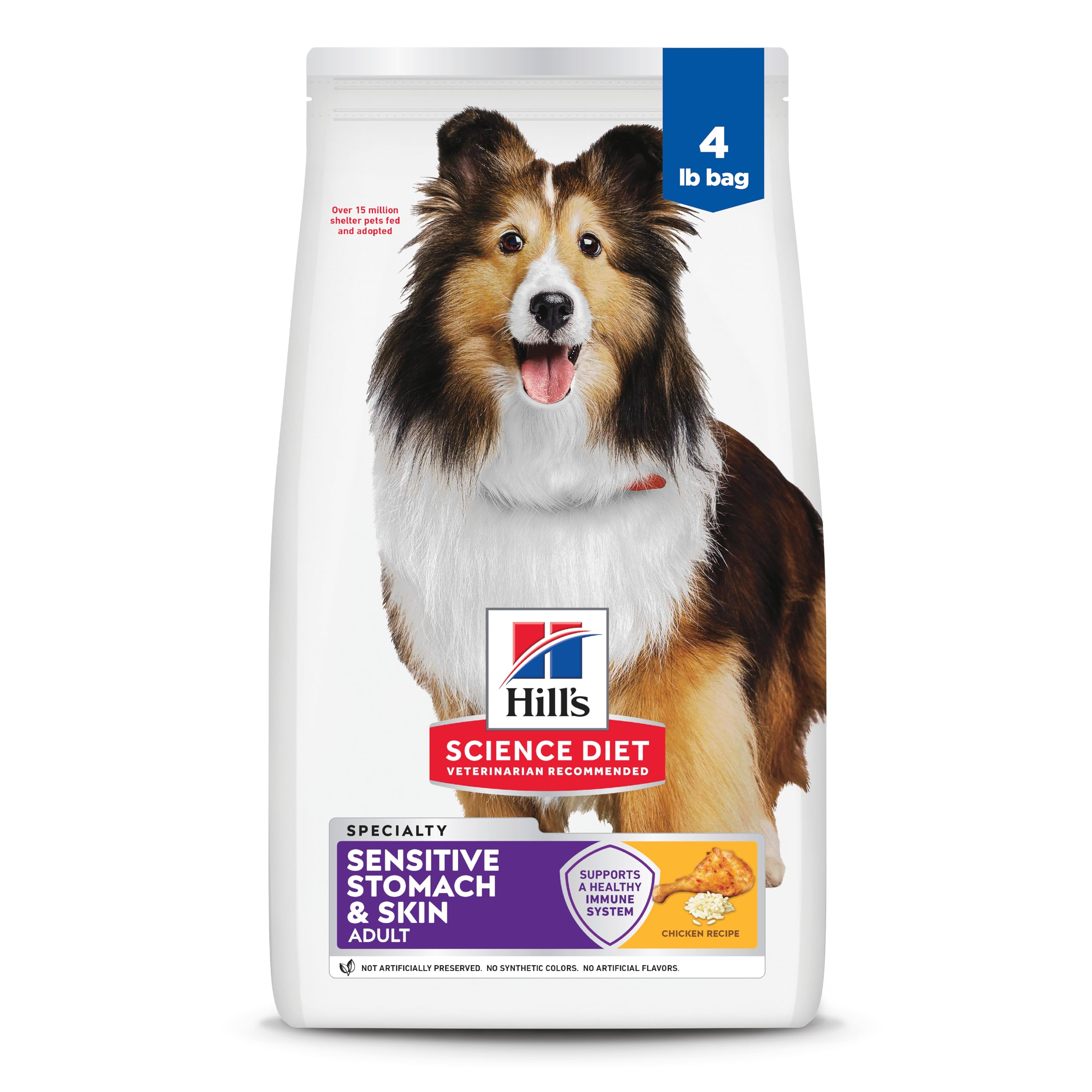
If your doodle is the reason you're reading this — the itchy flank, the soft stool, the ear that never quite clears — this is the formula to try first. Hill's built it around three things at once: highly digestible kibble with prebiotic fiber for the gut, vitamin E with omega-3 and omega-6 for skin and coat, and antioxidants for the immune system. It's complete adult nutrition for dogs one to six, not a supplement.

What earns it the spot is how specific it is about the two problems doodles actually have. Itching, flaky skin, and loose stools are the troubles this bag answers best, and it answers them at the same time, which matters when you're changing one bag and hoping for two results. The catch is the bowl: some dogs simply refuse the kibble, and a sensitive-stomach food that goes uneaten has done nothing at all. Mix it in slowly and don't concede on day two.

The boundary is chicken. If the itching or the loose stools started on a chicken formula, this is the wrong bag no matter how gentle it is, and one of the salmon options is the better test. A doodle whose gut and coat are already fine doesn't need the specialty formula either; a plain adult food covers the same ground.

Bottom line: Our pick for the doodle with a sensitive gut or itchy skin: one gentle chicken formula that takes on both problems in the same bowl.

3

Purina ONE Chicken & Rice

Purina ONE Chicken & Rice

Everyday value

Our Score 9.4/10
Check Price

Worth Noting

  • Not every dog settles on it
Bag Size
8 lb
Life Stage
Adult
Key Feature
Prebiotic fiber for microbiome
First Ingredient
Chicken
Read the full review

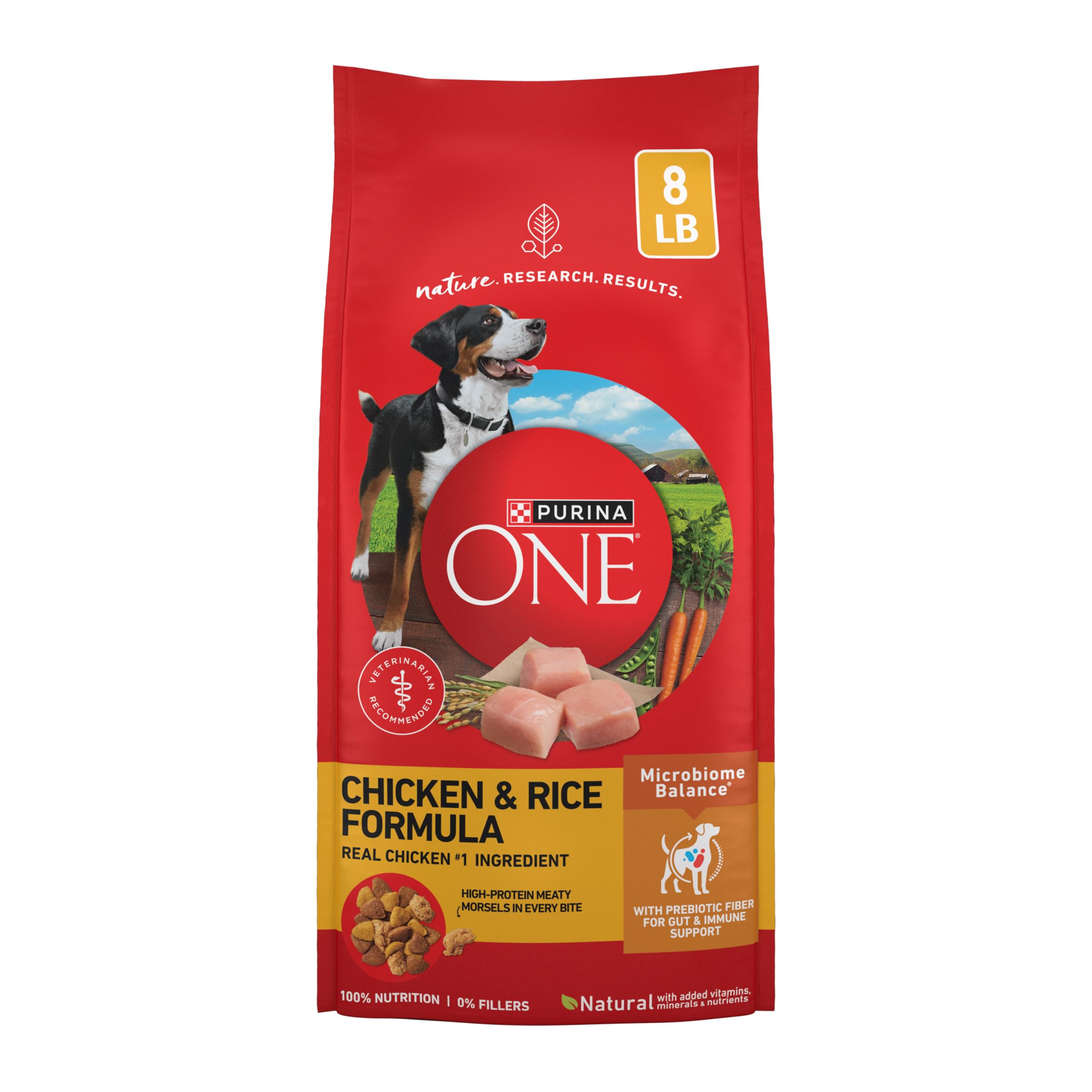
Most doodles don't need a performance formula. They need a bag that's good enough to feed every day without wincing at the per-pound cost, and this is that bag: real chicken first, prebiotic fiber, and a price per pound well under our top pick.

The formula is broader than a budget food has any right to be. There's prebiotic fiber aimed at the gut, omega-6 for the coat, four antioxidant sources, and natural glucosamine for joints — which matters for a cross that likes to launch itself off furniture. It's complete and balanced for adults, and the bag mixes crunchy bites with tender meaty pieces, the sort of texture that keeps a suspicious eater eating.

This is the bag for a healthy, active doodle with no skin or stomach history, and it's where we stop recommending an upgrade: nothing in a costlier formula helps a dog that's already doing well. Not every dog settles on it, though — loose stools and the odd refusal are the two things to watch, so take the switch over a full week before committing to the big bag.

Bottom line: The everyday bag we recommend for a healthy, active doodle: real chicken, gut-friendly fiber, and a per-pound cost that leaves room for the odd treat.

4

Taste of the Wild Pacific Stream

Taste of the Wild Pacific Stream

Itchy, sensitive skin

Our Score 9.4/10
Check Price

Worth Noting

  • Small bag and a high per-pound price
  • Some dogs refuse the fish flavor
Diet
Grain-free
Bag Size
5 lb
Probiotics
K9 Strain proprietary probiotics
First Ingredient
Real salmon
Read the full review

If you've already cut chicken and the itching didn't stop, cut it properly. This bag leads with salmon, carries omega fatty acids for the coat, and adds a blend of species-specific probiotics and prebiotics aimed at digestion. It's grain-free, which matters far less here than the protein swap.

Among these picks it has the clearest skin story. Itching, hot spots, and a coat that's gone dull are what this bag is for, and it's the one we point at first when the problem sits on the outside of the dog rather than the inside. That's worth paying a premium for, and it's why it's here.

Two things to know before you order. The bag is five pounds, so the per-pound cost sits near the top of this group and a big doodle will empty it quickly. And fish is a love-it-or-leave-it flavor — refusal is the real risk with this one, more than with any chicken bag here, so start with a small scoop mixed into the old food rather than filling the bowl.

Bottom line: Our chicken-free pick: salmon first, grain-free, and the formula here with the strongest case for itchy skin and a dull coat.

5

Blue Buffalo Life Protection

Blue Buffalo Life Protection

Grain-inclusive feeding

Our Score 9.4/10
Check Price

Worth Noting

  • Some dogs get loose stools or vomiting on it
  • Costs more per pound than our value pick
Grains
Brown rice, barley, oatmeal
Bag Size
5 lb
Life Stage
Adult
First Ingredient
Real chicken
Read the full review

Grain-free gets treated as the default for doodles, and for most of them it isn't necessary. This bag takes the other road: brown rice, barley, and oatmeal for slow energy and regular digestion, real chicken first, and LifeSource Bits — the antioxidant and vitamin pieces — mixed through the kibble.

It's also corn-, wheat-, and soy-free, which is the useful middle ground for a dog that reacts to cheap fillers but does fine on oats and barley. That's a narrower claim than grain-free, and it's the one most doodles actually need.

Here's the part that gives us pause. Digestion is the split on this bag: some dogs do well on it, others come up with loose stools or vomiting in the first week. That doesn't make it a bad food; it makes it one to introduce slowly, a quarter new food to three quarters old for the first few days, and to drop if the stool doesn't firm up.

We keep it on the list because the panel is genuinely good for the money — whole grains, real chicken, no corn or wheat — and the five-pound bag suits a single dog. If your doodle has an iron gut, this is a sensible everyday choice; if it doesn't, start with a bag built for the problem you actually have.

Bottom line: A grain-inclusive, corn- and wheat-free everyday food built on real chicken — a good fit if your doodle's digestion has never been the issue.

6

IAMS Proactive Health Minichunks

IAMS Proactive Health Minichunks

Small-kibble feeding

Our Score 9.4/10
Check Price

Worth Noting

  • Doesn't slow down a dog that bolts its food
Kibble
Mini chunks
Bag Size
30 lb
Life Stage
Adult
Protein Sources
Chicken and egg
Read the full review

The kibble is the product here. These pieces are small — small enough to scatter in a snuffle mat, small enough for a dog with a delicate mouth, small enough to run through an automatic feeder without jamming it. That's the reason to buy this bag, and the thirty-pound size is the reason it stays in the cupboard.

The rest is competent rather than exciting: chicken and egg for protein, a fiber and prebiotic blend for digestion, antioxidants, and wholesome grains for energy, all of it complete adult nutrition. It's a maintenance food rather than a performance one, and it's priced like a maintenance food.

The catch is those small pieces in a big mouth. A doodle can take a mouthful and swallow most of it whole, so if your dog bolts its dinner this bag slows nothing down — that's a slow-feeder bowl's job. For a careful eater, an older dog with a tender mouth, or a house running an automatic feeder, it's the easiest kibble here to live with.

Bottom line: The value bag with the smallest kibble in the set — ideal for careful eaters and automatic feeders, and no help at all to a dog that inhales dinner.

7

Pedigree Complete Nutrition

Pedigree Complete Nutrition

Lowest-cost feeding

Our Score 9.4/10
Check Price

Worth Noting

  • Contains soy and wheat
  • Some dogs refuse it or get loose stools
Flavor
Chicken & vegetable
Bag Size
18 lb
Life Stage
Adult
Key Feature
Kibble plus Vitamin Goodbites
Read the full review

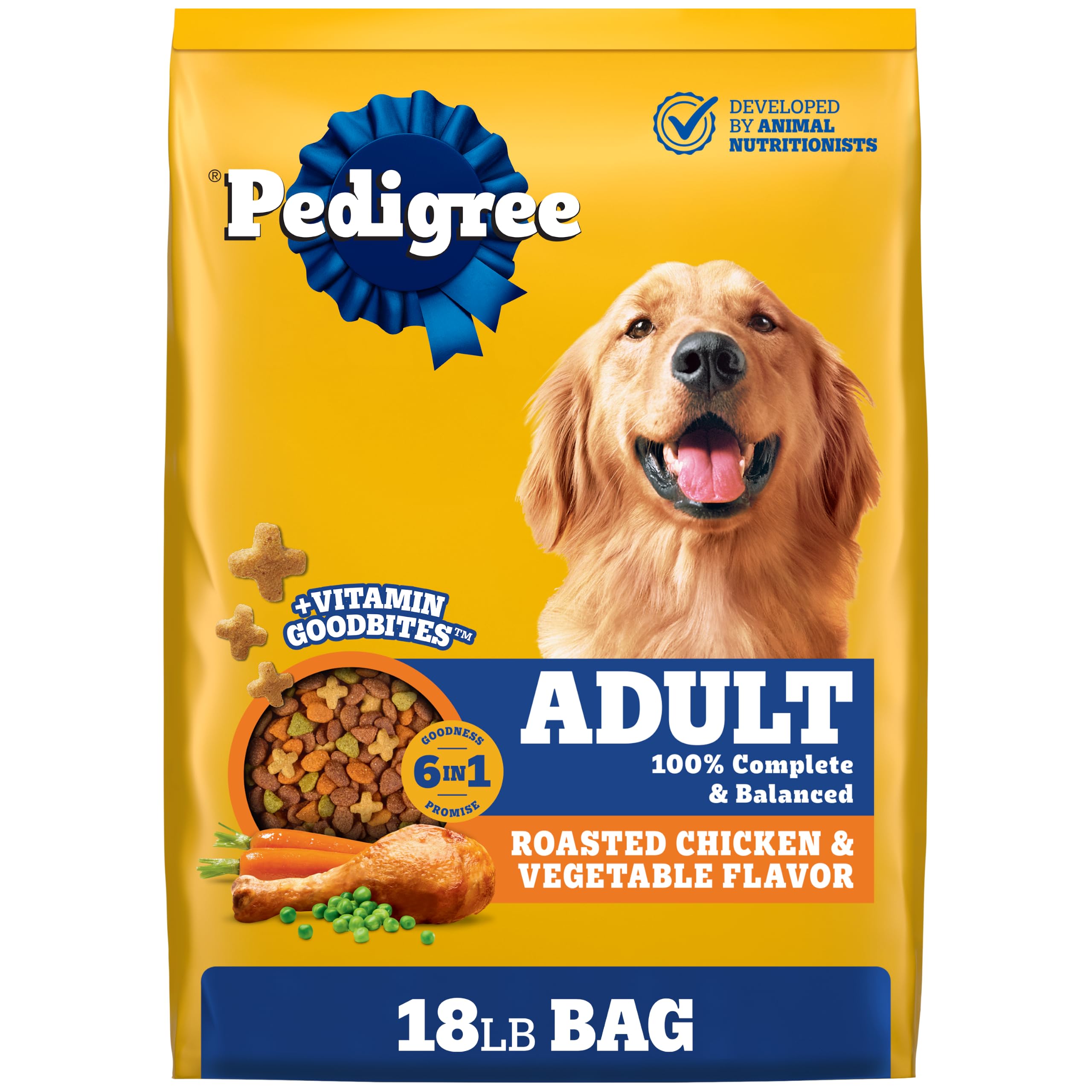
This is the cheapest food per pound here, and it doesn't pretend otherwise. Eighteen pounds, chicken and vegetable, prebiotic fiber for digestion, omega-6 and zinc for the coat, and Vitamin Goodbites — vitamin-enriched pieces mixed through the kibble — for the dog that picks the good bits out first.

It's complete adult nutrition, and for a dog already thriving on it, that's enough. Not every bag has to be a performance formula or a sensitive-stomach formula.

The trade-offs are real. Soy and wheat are both on the allergen list, which is the last thing an itch-prone doodle needs, and the kibble doesn't suit every dog — refusal and loose stools both turn up.

We keep it for a specific reader: the one feeding two or three dogs on a fixed budget, or fostering, where volume matters more than fine-tuning. Buy it for a dog that has already proved it does well on it, not as the bag you reach for when you're trying to solve a problem.

Bottom line: The lowest cost per pound in this set — a sensible maintenance bag for a dog that already does well on it, and a risky switch for a sensitive one.

8

Diamond Naturals Skin & Coat

Diamond Naturals Skin & Coat

Big-bag value

Our Score 9.2/10
Check Price

Worth Noting

  • Salmon flavor divides picky dogs
  • A thirty-pound bag to store and keep fresh
Bag Size
30 lb
Life Stage
All life stages
Primary Support
Skin and coat
First Ingredient
Salmon
Read the full review

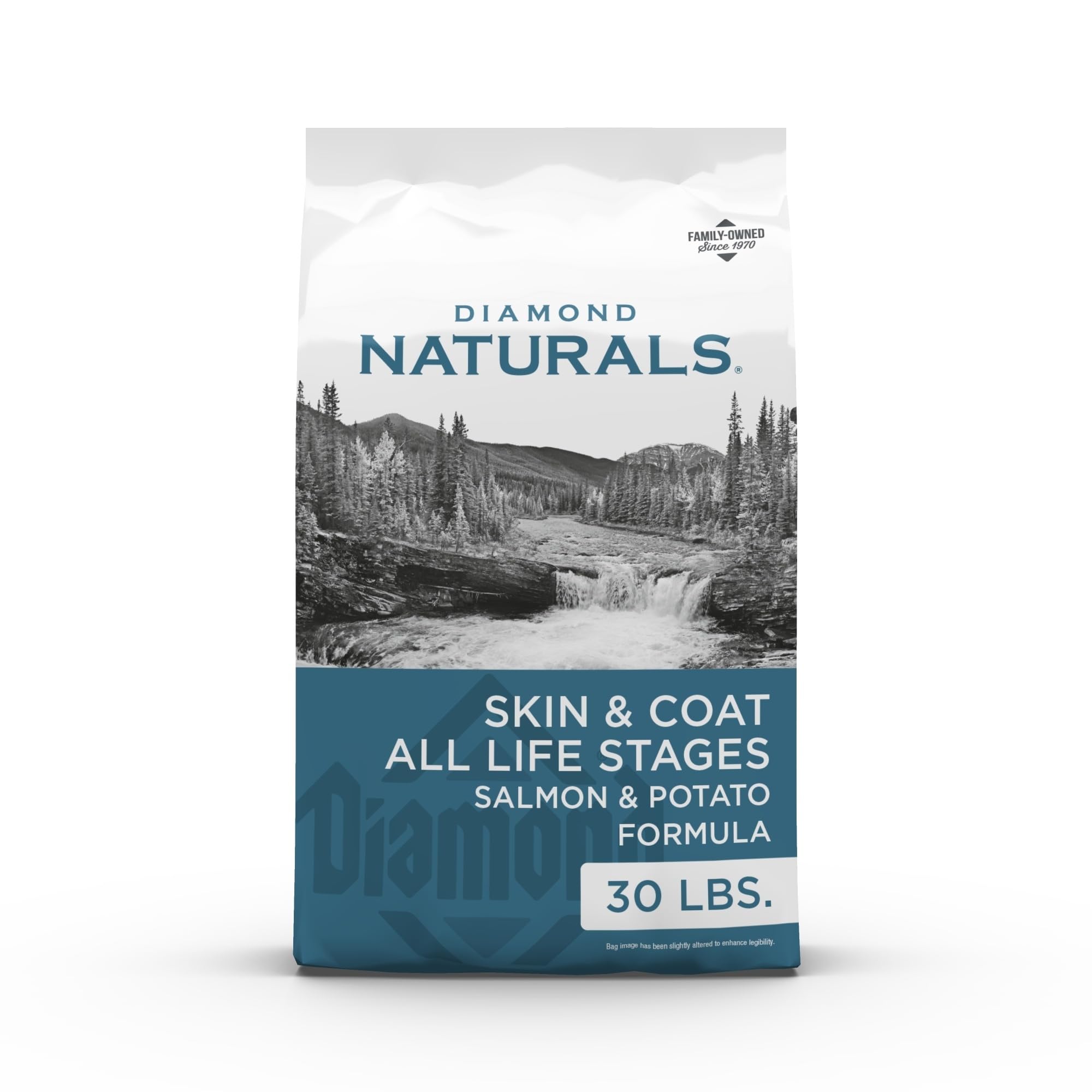
Thirty pounds is the whole argument. A medium-to-large doodle works through a five-pound bag fast, and this one lets you judge a food over weeks instead of days. Salmon is the first ingredient, with vegetables and superfoods alongside the same K9 Strain probiotics and prebiotics you find in the pricier fish formulas.

It's built for skin and coat, and that's where the difference shows: dandruff clearing, shine returning, and the itching that followed a chicken diet easing off over a month or so. It's an all-life-stages formula, which is convenient in a two-dog house and does the job for an adult.

Where it wins is the arithmetic of a big bag — the cheapest per pound of our fish-based picks, and by a clear margin, without dropping to a supermarket formula. The catch is flavor. Salmon divides dogs, and refusal is the most likely reason a thirty-pound bag ends up in the bin, so try a smaller bag of any salmon food before committing to this one.

Bottom line: The value pick in fish-based food: thirty pounds of salmon-first skin support at a per-pound cost the premium bags can't match.

How We Tested 11 Aussiedoodle Formulas

We started by gathering every formula marketed for medium-to-large, high-energy breeds or labeled for sensitive skin and stomachs, then filtered out anything without an AAFCO feeding statement for the right life stage. We also cut foods that were hard to find in stores or online, or priced far above the category average for a 40-pound dog. That left us with 11 formulas, which we rotated through a panel of Aussiedoodles over five months.

Each formula got at least three weeks, with a seven-to-ten-day transition to avoid confusing one food's effects with another's. We fed twice a day in the same kitchen, using the same measuring cup, and logged how eagerly each dog approached the bowl—did they finish in one go, graze, or walk away? We tracked stool consistency on a simple 1-to-5 scale (we were looking for firm, pick-up-able logs), noted gas and any vomiting, and checked coats and energy levels after the third week.

To assess value, we calculated cost per day for a 50-pound Aussiedoodle based on the bag's calorie density and the manufacturer's feeding chart—not the sticker price. We stored each bag in its original packaging inside an airtight bin and checked it weekly for staleness, clumping, or off smells; we also inspected every bag on arrival for signs of insects or damaged seals. And because taste is personal, we let the dogs vote with their forks: a formula that got snubbed for three days in a row was out, no matter how good its ingredient panel looked.

How to Choose the Right Dog Food for Aussiedoodles

Match the Formula to Your Dog's Energy, Not Its Name

Aussiedoodles run from a thirty-pound mini to a sixty-plus-pound standard, and the breed label tells you less about feeding than the dog in front of you does. A doodle with two real runs a day burns through a 30/20 performance formula and looks better for it. The same scoop in a dog that walks to the corner and back becomes extra weight by spring.

Our rule: if your dog works — hiking, running, chasing balls, agility — a high-protein, high-fat formula earns its place. If your dog is a companion with a daily walk, a standard adult formula is plenty and the performance bag is money you don't need to spend. Watch the waist and the ribs rather than the scoop.

Change the Protein Before You Change Everything

For a doodle with itchy skin, recurring ear trouble, or a coat that's gone dull, chicken is the first thing we suspect. Poodle crosses turn up in the itchy category often, and chicken is the protein in most bags on this page. Moving to a salmon-first formula is the single change with the best odds.

Change one thing at a time. A dog switched to fish while you're also trialing a new treat or a new shampoo tells you nothing about which one worked, and finding out costs you another bag.

Look at How Your Dog Eats, Not Just What

Kibble size is the most underrated line on the bag. Small chunks suit a careful chewer, an older dog with a tender mouth, and any household running an automatic feeder — the IAMS Minichunks is the obvious pick there. A dog that bolts its dinner gets no benefit from a smaller piece; it just swallows faster.

If your doodle inhales meals, spend the money on a slow-feeder bowl or a snuffle mat rather than shopping for a kibble that will slow it down, because none will. Texture is a comfort choice, not a behavior fix.

Buy the Bag Size You Can Keep Fresh

Cost per pound drops steeply as bags get bigger — the thirty-pound bags here run a fraction of the per-pound cost of the five-pound ones — but a bag that takes months to finish is stale long before it's empty, and the fat goes off first. Two dogs, or one big doodle, justifies the big bag; a single small appetite does not.

Whatever you buy, check it when it arrives. Food that smells sharp, has clumped or dusty kibble, or shows insects goes straight back — it turns up often enough across brands that it's worth a look before the first scoop. Seal the bag or decant it into an airtight bin, keep it cool and dry, and don't top up old food with new.

Frequently Asked Questions

Final Verdict

The default we hand most Aussiedoodle owners is Purina Pro Plan Sport 30/20: 30% protein, 20% fat, real chicken first, and enough calories to hold weight and coat on a dog that actually runs. If your doodle is the itchy one, start with Hill's Sensitive Stomach & Skin or the salmon-based Taste of the Wild and give either a full six weeks before deciding.

And if the gut is settled and the coat is fine, Purina ONE Chicken & Rice does the everyday job for a good deal less per pound — the upgrade only pays when there's a problem to solve.