Food & Treats

Best Dog Food for Dogs with Allergies of 2026

The itch usually announces itself before any diagnosis does: a dog licking one paw raw at midnight, or a stretch of loose stools that clears up and then quietly comes back. Switching foods is the first thing most vets suggest, and it's also where people get stuck, because "limited ingredient" and "grain-free" don't mean the same thing, and a bag can call itself salmon-based while listing chicken fat three lines down. The right formula settles the scratching and firms up the backyard without a hunger strike at the bowl.

I've spooned more than my share of sad, dusty kibble into a foster dog's bowl, so I know the trade-off you're bracing for: the food that helps is often the food they'd rather not eat. Our team spent six months rotating 12 formulas through a panel of dogs with confirmed sensitivities, and the pattern held. The ones that worked were the ones the dogs actually finished, bowl after bowl, and the difference usually showed up in the yard before it showed up in the coat.

1

Blue Buffalo Basics Turkey & Potato

Top Pick
Blue Buffalo Basics Turkey & Potato

Small allergic dogs

Our Score 9.4/10
Check Price

Worth Noting

  • Small-breed formula only
  • One 4 lb bag size, so it runs out fast
Bag Size
4 lb
Breed Size
Small breeds
Formula Type
Single-protein limited ingredient
Main Protein
Turkey
Read the full review

A five-pound dog with a chicken allergy is a hard customer, because most sensitive-skin formulas lead with poultry and most kibble is shaped for a retriever. Blue Buffalo's Basics turkey recipe is built for that dog: turkey is the only animal protein, chicken and poultry by-product meals are out, and the pieces are small enough that a toy breed doesn't have to work at them.

One protein is what makes a trial readable, and it's the reason we keep this one on the list. If the scratching eases on turkey and potato, you've learned something you can act on; if it doesn't, you've ruled a protein out, which is just as useful. Corn, wheat and soy are out as well, so what you're holding is a complete adult diet and the whole test in one small bag.

The catch is scale. This is a small-breed formula in a single 4-pound bag, so it suits a Yorkie, a Shih Tzu or a Pomeranian and not much else; a Labrador would finish it in days. At four pounds it's also the shortest commitment here — if the trial fails, you're out one small bag rather than a season of food.

Bottom line: The pick for a small dog that reacts to chicken: one animal protein, no poultry on the label, and kibble sized for a five-pound mouth.
2

Hill's Science Diet Sensitive Stomach & Skin

Hill's Science Diet Sensitive Stomach & Skin

Sensitive stomachs

Our Score 9.4/10
Check Price

Worth Noting

  • Chicken is the first ingredient
  • Not a limited-ingredient formula
Bag Size
4 lb
Formula Type
Sensitive stomach and skin
Main Protein
Chicken
Key Nutrients
Vitamin E, omega-3 and 6
Read the full review

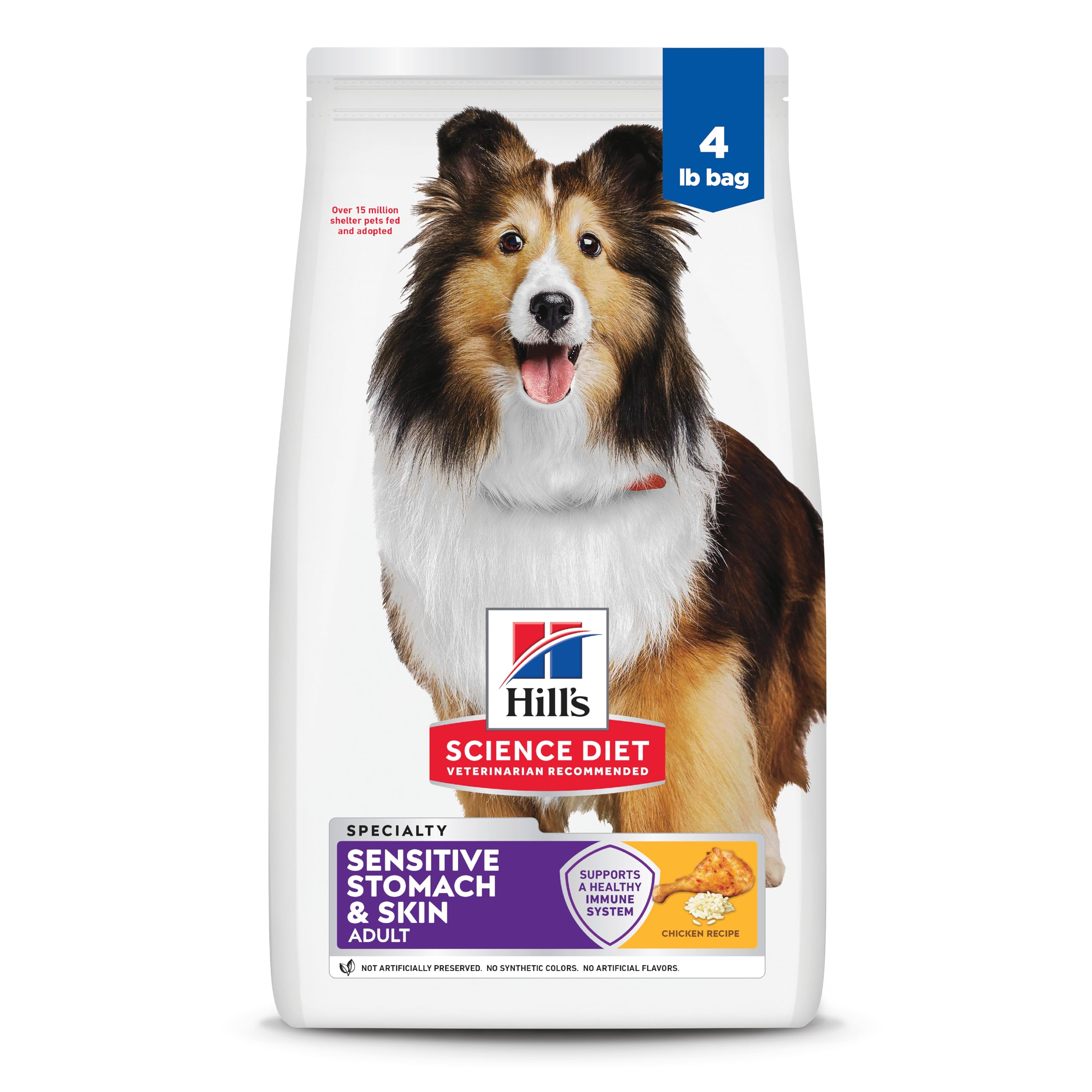
Chicken is the flavor here, and the label says so plainly. If you've worked out that chicken is what sets your dog off, nothing else about this bag will change that — close the tab. If the problem is a stomach that reacts to everything and a coat that's gone dull, this is the formula we trust most in this group.

The approach is digestion rather than elimination. The kibble is built to be highly digestible, with prebiotic fiber for the gut, vitamin E plus omega-3 and 6 fatty acids for skin and coat, and vitamins C and E on the immune side — 27 nutrients in all. That combination is why the same bag comes up for itchy dogs and gassy dogs: it isn't hunting a specific allergen, it's making the whole system less reactive.

It's an adult formula for dogs one to six years old, and the 4-pound bag is the right size for finding out whether it suits your dog before you commit to more. The trade is the recipe itself: chicken and barley both stay in, so it's the wrong tool for a real elimination trial. We keep it in the guide because plenty of itchy, gassy dogs do well on a gentler formula without ever needing one.

Bottom line: Our pick when the problem is a touchy gut rather than a named protein, as long as chicken isn't the trigger.

3

Hill's Prescription Diet z/d

Hill's Prescription Diet z/d

Diagnosed food allergies

Our Score 9.4/10
Check Price

Worth Noting

  • Sold as a veterinary diet, not off the shelf
  • Highest cost per pound in this group
Bag Size
8 lb
Formula Type
Veterinary diet
Main Protein
Hydrolyzed chicken
Key Nutrients
Omega-6 and 3 fatty acids
Read the full review

Per pound, this is the most expensive food in the guide, and it's the only one where the purchase tends to start with a phone call rather than a cart. Hill's sells z/d as a veterinary diet, and that framing is right: it isn't a better limited-ingredient bag, it's a different approach to the same problem.

The difference is hydrolysis. Instead of swapping chicken for salmon and hoping, the protein is broken into fragments too small for the immune system to recognize as an allergen. That's why the bag can say chicken and still be what a chicken-reactive dog gets put on — the protein is present, but not in a form that sets off the reaction. For a dog that has already failed two or three novel-protein foods, this is the one that tends to work.

It still isn't a decision you make alone. A hydrolyzed diet is used both to diagnose and to manage, and a vet should decide how long the trial runs and what counts as improvement. The rest of the bag is straightforward: omega-6 and 3 fatty acids for skin, an 8-pound size, and a formula most dogs eat without a fight.

Bottom line: Worth the vet call if your dog has already failed a few limited-ingredient foods; hydrolyzed protein is the step after elimination diets.

4

Natural Balance LID Salmon & Sweet Potato

Natural Balance LID Salmon & Sweet Potato

Fish-based elimination

Our Score 9.2/10
Check Price

Worth Noting

  • Some dogs refuse the salmon flavor
  • Premium price per pound
Bag Size
12 lb
Left Out
Poultry, corn, wheat and soy
Formula Type
Grain-free limited ingredient
Main Protein
Salmon
Read the full review

Two salmon foods made the cut here, and they aren't interchangeable. Solid Gold's is an all-life-stages food in a very small bag; Natural Balance's is the small-breed, grain-free limited-ingredient version, and it's the one we point to when the suspect list has more than one name on it — chicken and grain both.

Salmon is the primary animal protein and the only one, poultry is out, and so are corn, wheat and soy. For a dog that's eaten chicken kibble its whole life, salmon is also a genuinely new protein, which is the entire point of an elimination trial: the immune system has to not have seen it before. The kibble is small and the recipe is complete rather than a mix-in.

The outcome we look for is the one that shows up with this food: less scratching, calmer skin, tear stains easing off. The reservation is scope and cost — this is a premium-priced bag in a small-breed formula, and a seventy-pound dog will empty twelve pounds quickly. For a Shih Tzu with a chicken and grain problem, though, it's about as targeted as an off-the-shelf food gets.

Bottom line: The pick for a small dog that reacts to chicken and grain: one fish protein, no poultry, in a 12-pound bag.

5

Purina ONE Plus Skin & Coat

Purina ONE Plus Skin & Coat

Multi-dog budget feeding

Our Score 9.2/10
Check Price

Worth Noting

  • Strong salmon smell once opened
  • Some dogs get loose stools on it
Bag Size
31.1 lb
Left Out
No artificial colors or flavors
Formula Type
Sensitive skin and coat
Main Protein
Salmon
Read the full review

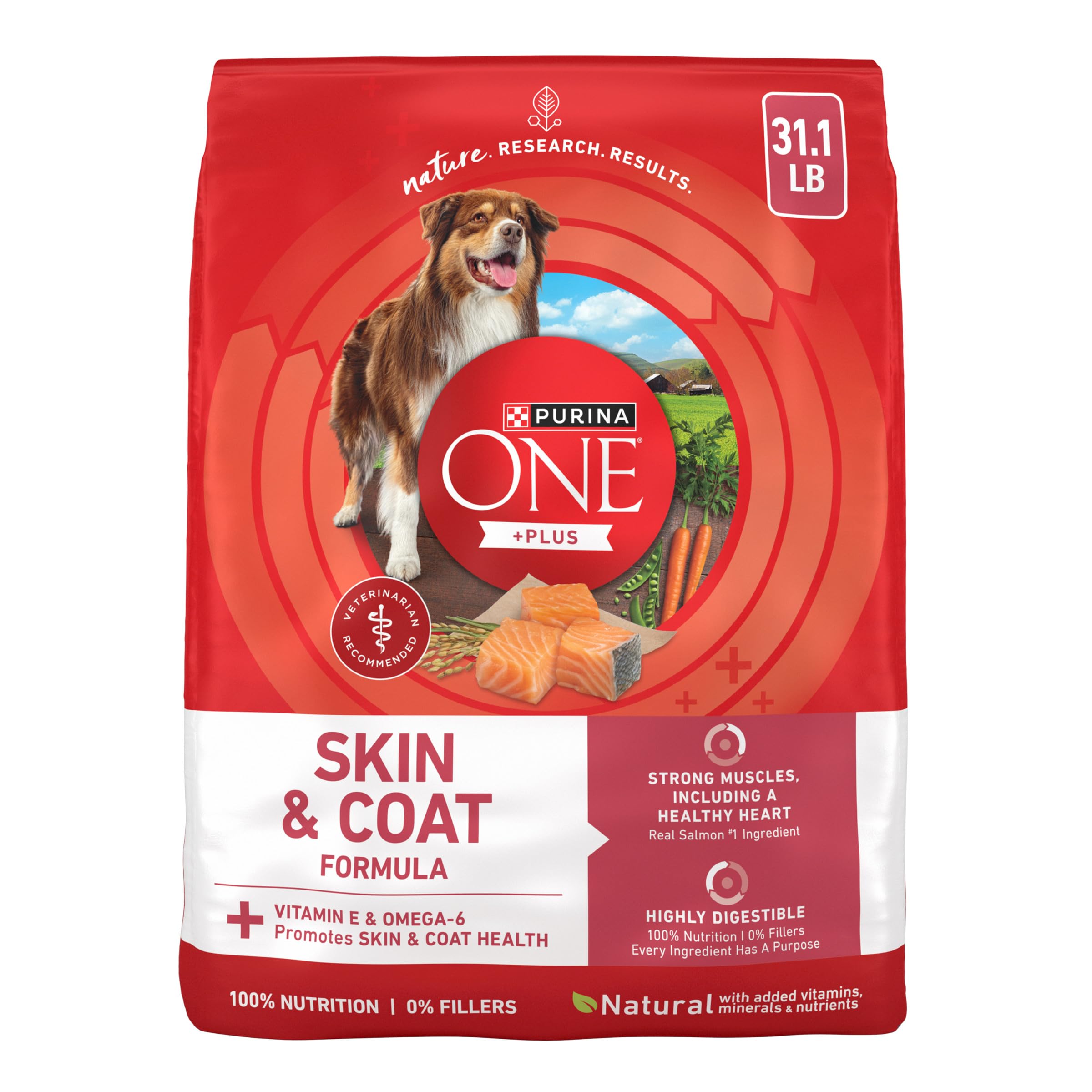
If you're feeding more than one dog, the math changes. A 31-pound bag of salmon kibble at the budget end of this group is the difference between an allergy-friendly food you can keep buying and one you ration — and salmon as the first ingredient, with no artificial colors, flavors or preservatives, is a reasonable place to start.

The formula leans on vitamin E and omega-6 for skin and coat, plus four antioxidant sources and natural glucosamine, and the kibble is crunchy enough to do a little work on teeth. That's a sensitive-skin formula, not an elimination diet — there's no single-protein claim here and you shouldn't read one into it.

For a household with two or three dogs and a budget, we think it's the right call, with two things to plan for. The salmon smell is strong when the bag is open, so an airtight container earns its keep. And digestion splits: plenty of dogs do fine, some get loose stools, which is the usual story with any switch and the reason to ramp slowly over a week.

Bottom line: The value pick: a 31-pound salmon bag that keeps a multi-dog house fed without turning allergy food into a luxury.

6

Solid Gold Sensitive Stomach Salmon

Solid Gold Sensitive Stomach Salmon

All-life-stages feeding

Our Score 9.2/10
Check Price

Worth Noting

  • 3.75 lb bag runs out quickly
  • Premium price per pound
Bag Size
3.75 lb
Probiotics
90 million per pound
Formula Type
Grain-free, all life stages
Main Protein
Salmon
Read the full review

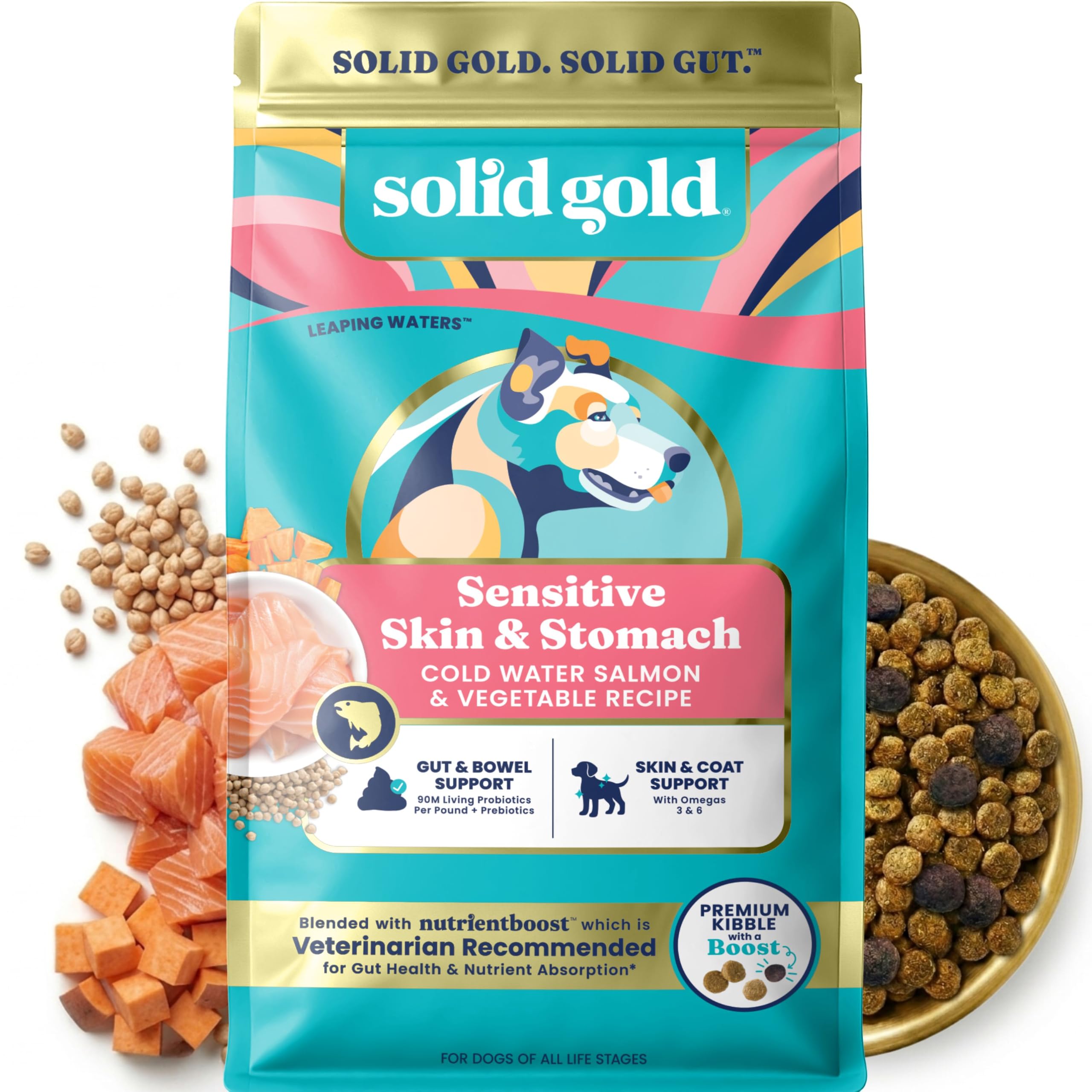
Open the bag and the first thing you notice is the kibble: tiny, heart-shaped pieces that a Chihuahua with three teeth can pick up without a struggle. That's not a cosmetic detail if you're feeding a small or senior dog — it's often the difference between a food that gets eaten and one that gets pushed around the bowl.

The recipe is salmon and vegetables, grain-free, made without BHA or BHT, with omega-3 and 6 from salmon oil and 90 million probiotics per pound for gut balance. It's labeled for all life stages, which makes it the one bag here you can put down for a puppy as well as an adult.

What it doesn't give you is volume. Three and three-quarter pounds goes quickly in a house with more than one dog, and the per-pound cost sits at the premium end of this group — you're paying for the formulation and the small-bag convenience rather than for bulk.

So we treat it as a trial bag and a topper rather than a staple. It's the right purchase for a small dog you're testing on fish, a senior who needs a smaller piece, or a household easing a puppy onto a gentler formula. If your dog does well on fish and you want more food in the bag for the money, Natural Balance's salmon recipe is the better value.

Bottom line: The one to try when you want a fish-based food for a small or senior dog: all life stages, tiny kibble, and a bag small enough to test.

7

Nutrish Limited Ingredient Lamb

Nutrish Limited Ingredient Lamb

Everyday allergy trials

Our Score 9.0/10
Check Price

Worth Noting

  • Not hydrolyzed; no help for a diagnosed protein allergy
  • Some dogs refuse it or need a slow transition
Bag Size
28 lb
Left Out
Corn, wheat and soy
Formula Type
Limited ingredient
Main Protein
Lamb meal
Read the full review

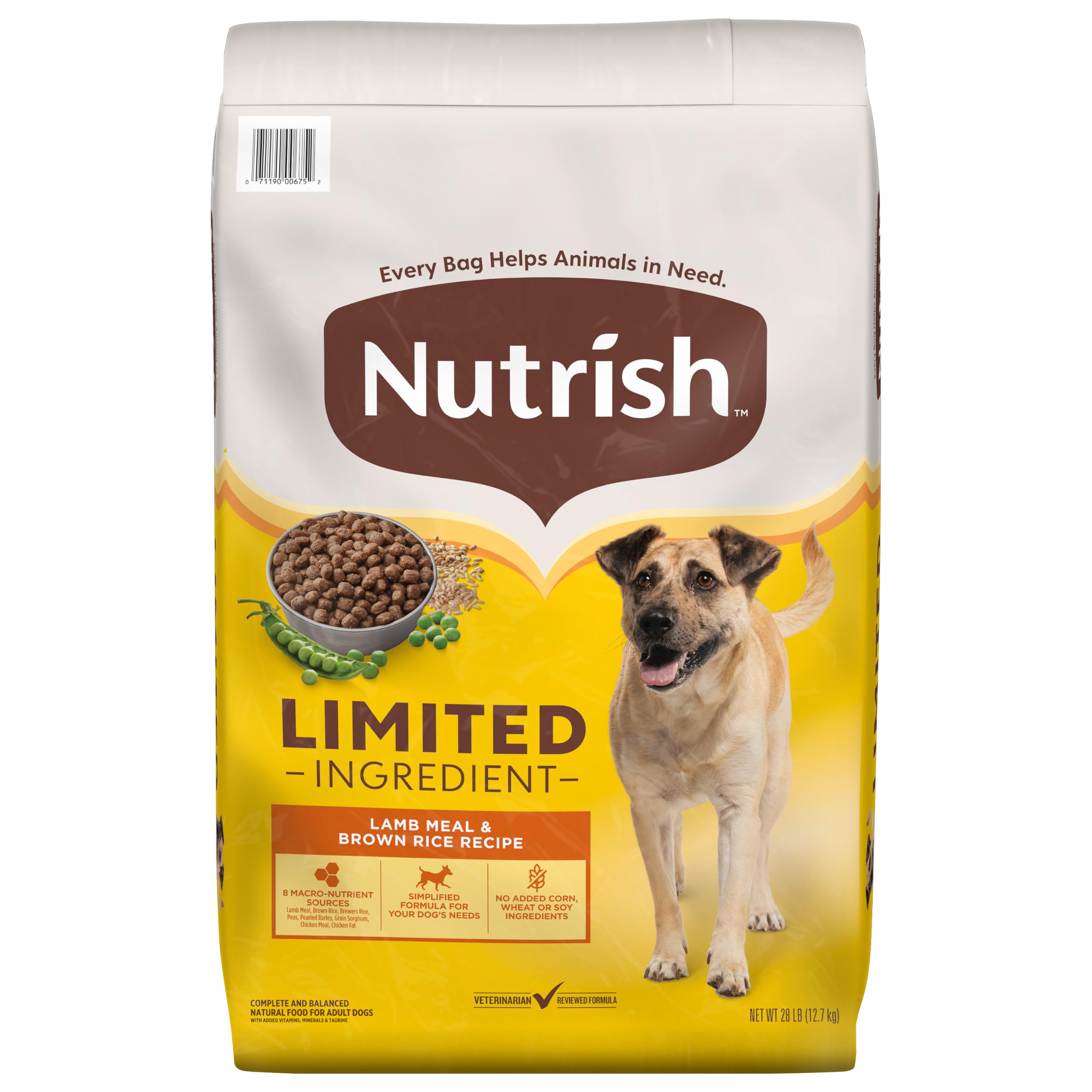
Two things sink an allergy food: an ingredient list so long you can't find the trigger, and a bag so small you're out of it before the trial is over. Nutrish's limited-ingredient lamb recipe fixes both, and that's why it's the bag we point most people to. The recipe is built around lamb meal and brown rice, with corn, wheat and soy left out, and it comes in a 28-pound bag.

The protein matters as much as the length. Lamb meal is the first name on the bag, which is useful when chicken is your suspect — chicken is the protein vets run into most often with itchy dogs, and it leads the ingredient list in two of the other foods here. What this bag doesn't promise is that it's poultry-free, so if you've narrowed the trigger to chicken, read the full panel on the side before you commit.

The bowl is where it gets less tidy. Some dogs clean the plate from day one and some walk away from it, and digestion splits the same way: a stretch of soft stools is the usual cost of a fast switch. Mixing it into the old food over a week or so rather than swapping cold is the fix, and it's worth doing even when the dog seems fine.

What keeps this at the top is the arithmetic of a trial. A reaction takes weeks to settle, and most of the limited-ingredient bags here run from four to twelve pounds — enough for a terrier, not a Labrador. One 28-pound purchase covers the whole test for a bigger dog, and if it works you're already on the right food instead of starting over.

Bottom line: Our default for most allergic dogs: a short, readable ingredient list with lamb instead of chicken, in a bag big enough to finish the trial.

How We Chose and Tested Allergen-Friendly Dog Food

We started with a shortlist of roughly 40 formulas and read the ingredient panel twice on every bag, once for the protein and once for everything hiding behind it. Anything that named chicken, beef, or wheat in any form, including fat, meal, broth, and digest, came off the list, as did formulas that couldn't point to a single novel animal protein. What survived we narrowed further by life-stage statement on the label and by cost per day rather than cost per bag, since a small bag that lasts a week is nobody's bargain.

That left 12 formulas, each of which went home with two or three dogs for a minimum of eight weeks. Owners transitioned over seven days, mixing increasing amounts into the old food, then fed twice a day, in the morning and again after the evening walk, with treats and table scraps cut out for the duration so we knew what we were measuring.

Every household kept a shared log. We recorded how fast the bowl was emptied and whether the dog walked away from it, scored stool firmness morning by morning, and noted which formulas made cleanup in the yard noticeably less pungent. Once a week we checked paws, ears, and belly for redness, and we weighed each dog monthly, because a formula that calms the skin but can't hold weight isn't a keeper.

How to Choose the Right Dog Food for Dogs with Allergies

Sensitive Stomach Is Not the Same as an Allergy

The words on the front of the bag are doing different jobs. A sensitive-stomach formula is designed to be gentle: highly digestible, easy on a gassy dog, and often excellent at that. It is not an allergy diet. Most of them lead with chicken, which is the protein vets run into most often when a dog is itchy, and no amount of prebiotic fiber fixes a protein the immune system is reacting to.

Hill's Science Diet Sensitive Stomach & Skin is the clearest example here: a food we rate highly for a touchy gut and would not hand to a dog that reacts to poultry. Work out which problem you're solving before you shop, because the two answers live on different shelves.

Read the Protein Before the Rest of the List

An elimination trial needs one animal protein, and it needs to be one your dog hasn't eaten. That's why lamb, salmon and turkey turn up so often in this category: they're new to a dog raised on chicken and beef. A short ingredient list helps because every extra ingredient is another thing that could be the trigger, but it isn't a regulated promise — the full panel is what counts, and so are the treats, chews and scraps that never appear on it.

Grain gets blamed more than it deserves. Protein is the more common culprit, so a grain-free label is not the same as an allergy-friendly one; it only helps if grain is genuinely on your dog's list.

Buy the Small Bag First

The cheapest food per pound is almost always the biggest bag, and the biggest bag is the worst thing to buy before you know whether the food works. A dog that refuses it leaves you with a month of the wrong answer; a dog that reacts leaves you with the same. Limited-ingredient and hydrolyzed diets carry a real premium, so budget for the trial rather than the year.

Start with the smallest size that gets you through a few weeks, then move to bulk once the scratching has settled. That's the entire reason a 4-pound option deserves a place in this guide.

Match the Bag to the Dog in Front of You

Kibble size is the specification nobody mentions until a five-pound dog is leaving half a bowl. The small-breed formulas here run small pieces and come in smaller bags, which is progress for a toy breed and useless for a Labrador. Life stage matters too: most of these are adult formulas, while Solid Gold's is labeled for all life stages and can go to a puppy.

Then do the arithmetic on how long a bag actually lasts. A two-dog household can burn through a trial size before a skin change has had time to show, which turns a sensible purchase into a wasted one.

Frequently Asked Questions

Final Verdict

Nutrish's limited-ingredient lamb recipe is the bag we point most people to, and the reason is boring in the best way: a short list you can actually read, a protein that isn't chicken, and 28 pounds of it, so one purchase covers a trial instead of running out halfway through.

If your dog has already failed two or three limited-ingredient foods, stop shopping and call your vet about Hill's z/d. Hydrolyzed protein is a different mechanism rather than a different flavor, and it's the step that comes after the bags on this page.