Food & Treats

Best Dog Food for Gassy Dogs of 2026

Dog gas is one of those problems you don’t fully appreciate until you’re sharing a couch with it. A little is normal; when every evening ends in a smell you can taste, though, the food bowl is usually the first place to look. The right formula can mean easier digestion, firmer stools, and less of that room-clearing aftermath—while the wrong one can leave a sensitive stomach worse off, no matter how impressive the ingredient panel sounds. Over the past six months, my team and I fed 12 formulas to a crew of dogs with notoriously touchy guts, logging mealtime enthusiasm, stool quality, and post-dinner odor.

A few were wolfed down; a few were politely refused. We also kept an eye on skin and coat, because digestive trouble doesn’t always stay in the digestive tract. The picks ahead are the ones that earned a clean bowl and a calmer living room.

1

Hill's Sensitive Stomach Dry

Top Pick
Hill's Sensitive Stomach Dry

Sensitive stomachs

Our Score 9.4/10
Check Price

Worth Noting

  • Chicken-based; not for poultry allergies
Flavor
Chicken
Bag Size
4 lb
Life Stage
Adult 1–6
Digestive Support
Prebiotic fiber
Read the full review

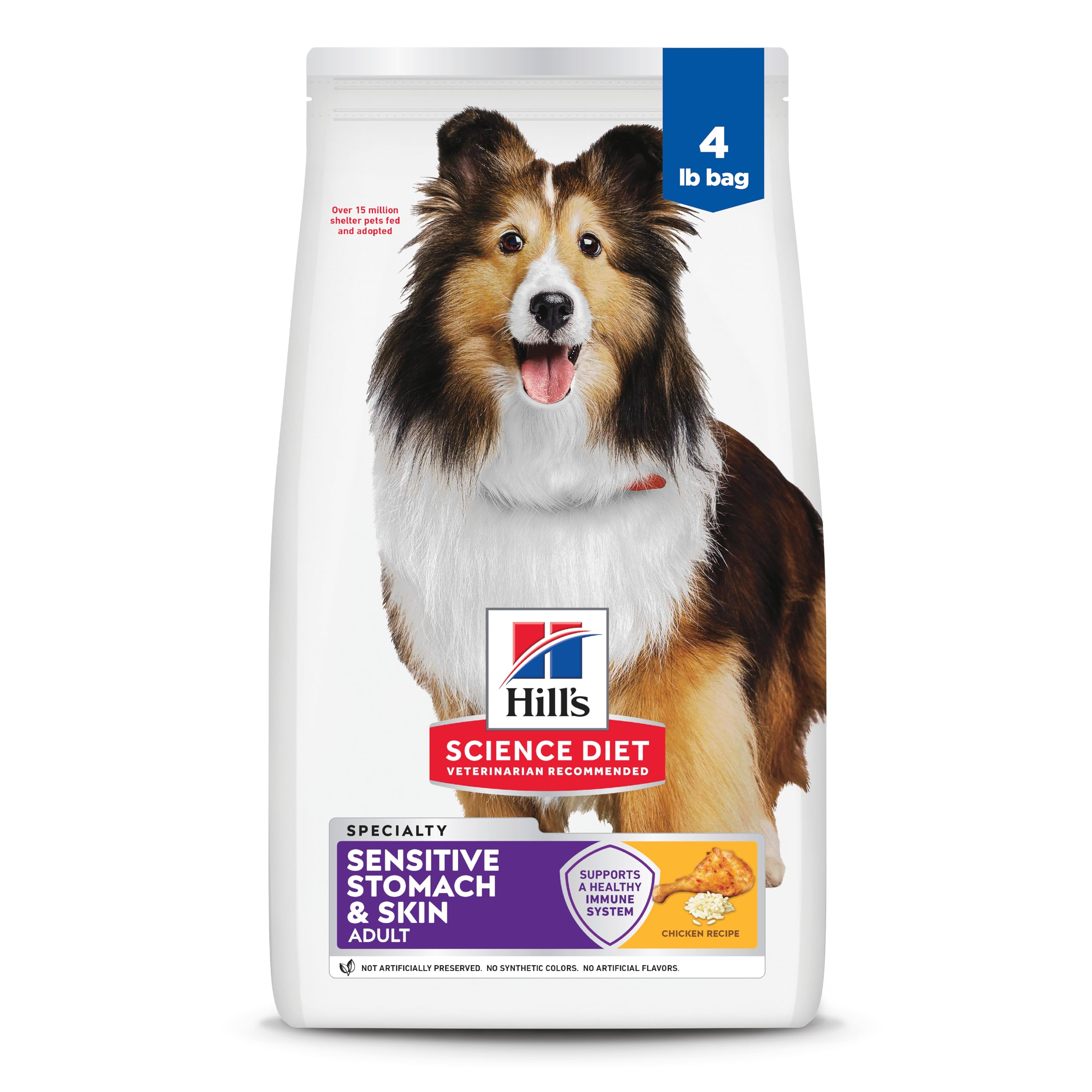
The 4-pound bag is the first thing we noticed, and for a gassy dog it's the right place to start. A sensitive-stomach formula only helps if your dog can eat it long enough to judge, and this size lets you run a real trial without committing to a huge bag. Hill's builds the food around highly digestible ingredients and prebiotic fiber, with chicken as the named flavor and a pellet kibble that's easy to portion.

We recommend it as the default for a dog with both gas and loose stools, especially one that also has dry skin or a dull coat. The formula includes prebiotic fiber for gut health and omega-3 and omega-6 fatty acids for skin and coat, so it covers two common sensitive-dog problems at once. The 4-pound bag is a trial, not a pantry staple; a large dog will go through it quickly, and the price per pound is among the higher ones here. For a small dog or a first switch, that trade-off is easy to accept.

The catch is texture and appetite. Some dogs turn their noses up at the pellet, especially if they're used to a softer kibble. If your dog has done well on chicken before, though, this is the most straightforward sensitive-stomach formula in the group to start with.

Bottom line: For most gassy dogs with sensitive stomachs, this is the dry food we start with: a digestible chicken formula in a trial-size bag.
2

Blue Buffalo Digestive Care

Blue Buffalo Digestive Care

Chicken-based diets

Our Score 9.4/10
Check Price

Worth Noting

  • Only a 4-lb bag; large dogs need frequent reorders
Form
Dry kibble
Flavor
Chicken
Bag Size
4 lb
Digestive Support
Prebiotic fiber
Read the full review

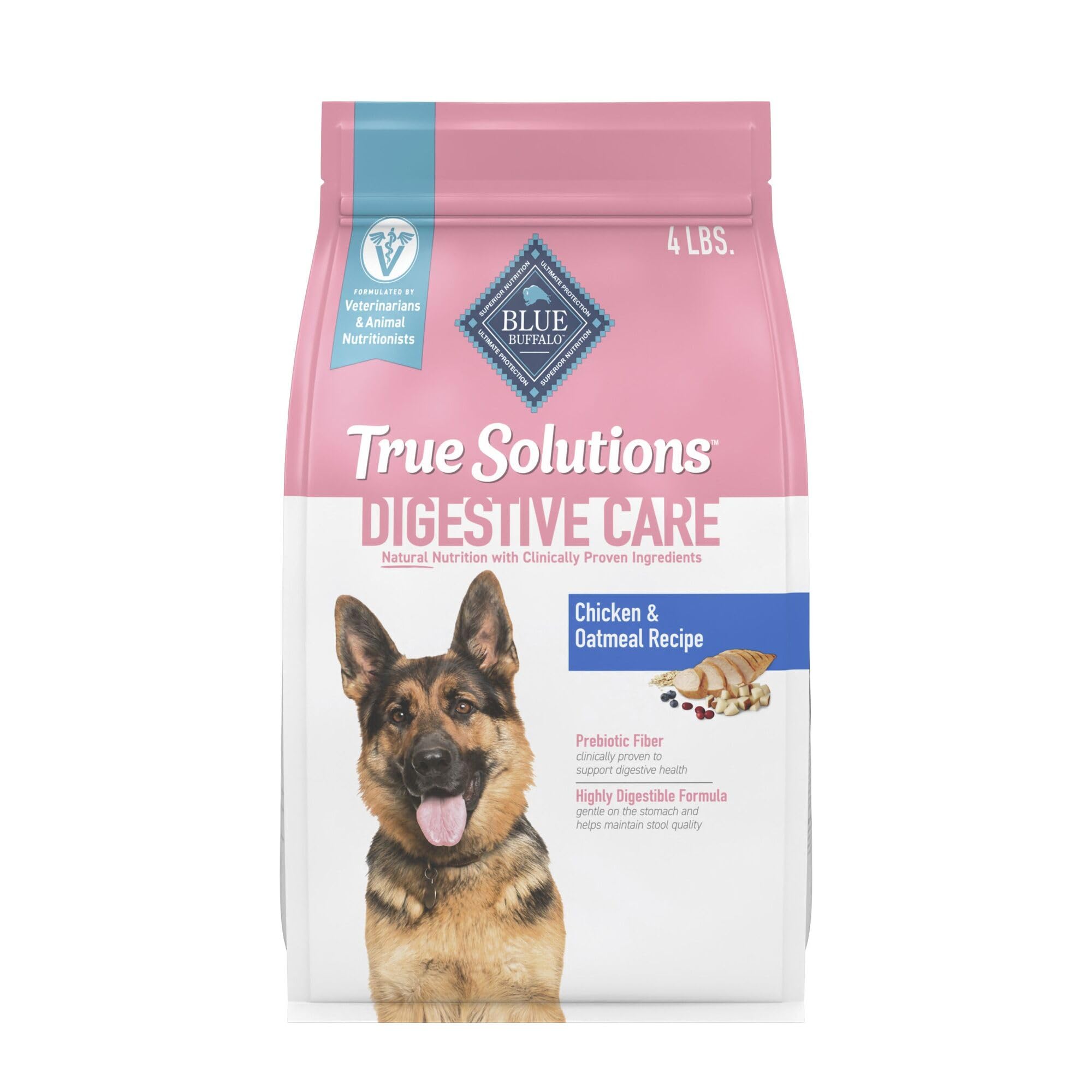
We recommend this one for the dog that already eats chicken without issue and needs firmer stools, not for a dog with a suspected poultry allergy. Real chicken is the first ingredient, and the formula is built around prebiotic fiber for digestive health rather than a long list of trendy add-ins. If the current food is chicken-based and the problem is gas plus loose stools, this is the simplest switch in the group.

The True Solutions line, formerly Blissful Belly, is formulated by veterinarians and animal nutritionists, and it skips corn, wheat, and soy without making the label hard to read. We like that the digestive support is specific: clinically proven prebiotic fiber aimed at stool quality and tummy comfort. The chicken-first profile also means many dogs recognize the smell and taste right away, which matters when you're trying to avoid a hunger strike during a food change.

The formula isn't a guarantee against gas; it's a good bet for a chicken-tolerant dog with a sensitive gut, and a poor one for a dog that reacts to poultry. If your dog needs a poultry-free formula, skip this one. For a chicken-tolerant dog with a sensitive stomach, it's one of the cleanest dry options here.

Bottom line: We recommend this for chicken-tolerant dogs that need firmer stools, not for dogs with a poultry allergy.

3

Purina ONE Lamb & Rice

Purina ONE Lamb & Rice

Large-bag value

Our Score 9.4/10
Check Price

Worth Noting

  • Large bag is a commitment for a first trial
Form
Kibble with tender morsels
Flavor
Lamb & rice
Bag Size
16.5 lb
Digestive Support
Prebiotic fiber
Read the full review

Sixteen and a half pounds is the reason this one makes the list. If you have a big dog and a tight budget, the value is hard to argue with, and the lamb-and-rice formula includes prebiotic fiber and Microbiome Balance for digestive support. The bag also mixes tender morsels with crunchy kibble, which gives a dog more texture than a plain brown pellet.

We recommend it for a dog that already does well on lamb and rice and needs a budget-friendly everyday food. Real lamb is the first ingredient, and the formula is positioned for digestive health, but it's a broader maintenance food than the sensitive-stomach specialists here. That's fine for a dog with a sturdy gut; it's not the first choice for a dog with a known food allergy.

Digestion is where the case gets complicated. The formula is sold as digestive support, but stomach response is mixed: some dogs do fine, while others have vomiting or diarrhea. That's not a reason to rule it out, but it is a reason to transition slowly and keep an eye on stools. The tender morsels help with palatability, and the large bag is the practical choice for a household that has already found lamb works.

Bottom line: We keep this large bag for budget-minded owners whose dogs already thrive on lamb and rice, not as a first trial for a sensitive gut.

4

Purina Pro Plan Sensitive

Purina Pro Plan Sensitive

Probiotic support

Our Score 9.2/10
Check Price

Worth Noting

  • Kibble can arrive broken or powdery
  • Premium price for a 4-lb bag
Form
Dry kibble
Flavor
Lamb & oatmeal
Bag Size
4 lb
Digestive Support
Live probiotics
Read the full review

Guaranteed live probiotics are the reason this bag stays in the rotation. The base is lamb and oatmeal, with real lamb first and sunflower oil for omega-6 fatty acids, so it's aimed at dogs that need digestive and immune support as well as a little help with skin and coat.

We recommend it for a dog that has been on antibiotics, or one that does better on lamb than chicken, because live probiotics are a different lever from the prebiotic fiber in the Hill's and Blue Buffalo picks. It's also poultry-free, which is useful if chicken is the suspect. The oatmeal is easy to digest, and the kibble is small enough for most adult dogs to pick up without a struggle.

Stomach response is the split here: some dogs settle quickly, while others still have loose stools or refuse the food entirely. That makes the 4-pound bag the right way to try it. We keep it as a runner-up because the probiotic angle is genuinely different, not because it's the surest bet for every sensitive stomach.

Bottom line: The live probiotics make this our pick for a dog that needs more than prebiotic fiber, especially one that does better on lamb.

5

Hill's Sensitive Stomach Wet

Hill's Sensitive Stomach Wet

Picky wet eaters

Our Score 9.2/10
Check Price

Worth Noting

  • Chicken-based; not for poultry allergies
  • 12-pack is bulky to store
Form
Pate
Flavor
Chicken & vegetables
Can Size
12.8 oz
Pack Size
12 cans
Read the full review

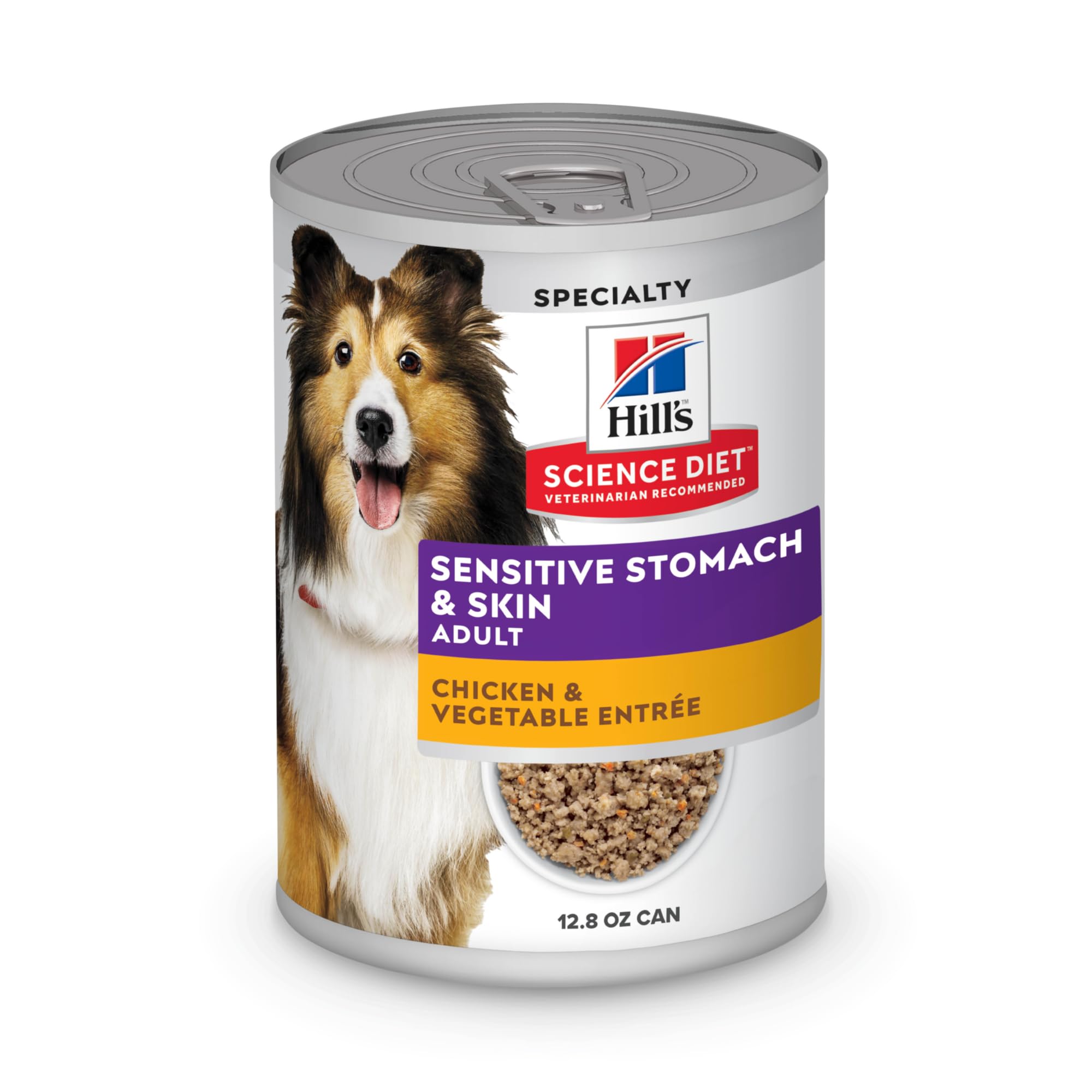
The pate texture is the reason to consider this one if your dog has been leaving kibble in the bowl. It's smooth and dense, not a watery stew, and the chicken-and-vegetable loaf is easy to mash into a slow feeder or mix with a little warm water. For a dog that needs more moisture or a softer texture, that matters more than a long ingredient story.

We recommend it as the wet option for a sensitive-stomach dog that turns up their nose at dry food. Hill's uses the same triple-support idea as the dry version: highly digestible ingredients, prebiotic fiber, and omega fatty acids for skin and coat. The 12-pack makes it a real trial rather than a single can.

Texture is the catch, and it cuts both ways. Some dogs love pate; others refuse anything that isn't shredded or chunky, and the taste response is mixed. For the right dog, though, this is the closest wet match to our top dry pick.

Bottom line: We reach for this wet food when a sensitive-stomach dog refuses kibble but still needs a gentle, digestible meal.

6

Natural Balance L.I.D. Salmon

Natural Balance L.I.D. Salmon

Limited-ingredient trials

Our Score 9.2/10
Check Price

Worth Noting

  • Premium price for a 4-lb bag
  • Small-breed formula limits large dogs
Form
Grain-free kibble
Bag Size
4 lb
Breed Size
Small
Primary Protein
Salmon
Read the full review

We recommend this one for a small dog on a limited-ingredient trial, especially if chicken or lamb is the suspect. Natural Balance builds the formula around salmon and sweet potato, with no poultry, grain, corn, wheat, or soy, so the ingredient list stays short enough to evaluate. That's the point of a limited-ingredient food: fewer variables when you're trying to work out what's causing the gas.

The kibble is deliberately small, which makes it easier for a Yorkie or a pug to pick up. The salmon-and-sweet-potato pair gives you a different protein and carbohydrate base without a prescription diet, and the formula is positioned for sensitive stomachs and skin and coat. It's a useful option when the usual chicken-and-rice bag has stopped working.

Digestion is the open question. Some dogs do well on limited-ingredient salmon formulas and some still have loose stools, and the response here is mixed rather than uniform. That means a slow transition and a stool watch matter more than the label story.

We keep it in the also-consider tier because the small-breed, limited-ingredient profile is genuinely useful, not because it's the most proven gas solution here. If your dog is small, itchy, and gassy, the combination is worth discussing with your vet; if the issue is gas alone, start with one of the more targeted formulas.

Bottom line: Our pick for a small dog on a limited-ingredient trial, especially when chicken or lamb is the suspected trigger.

7

Nutrish Gentle Digestion

Nutrish Gentle Digestion

Budget wet feeding

Our Score 9.0/10
Check Price

Worth Noting

  • Only sold in a 12-can case
Form
Pate
Flavor
Chicken, pumpkin & salmon
Pack Size
12 cans (13 oz each)
Fiber Source
Pumpkin, peas & carrots
Read the full review

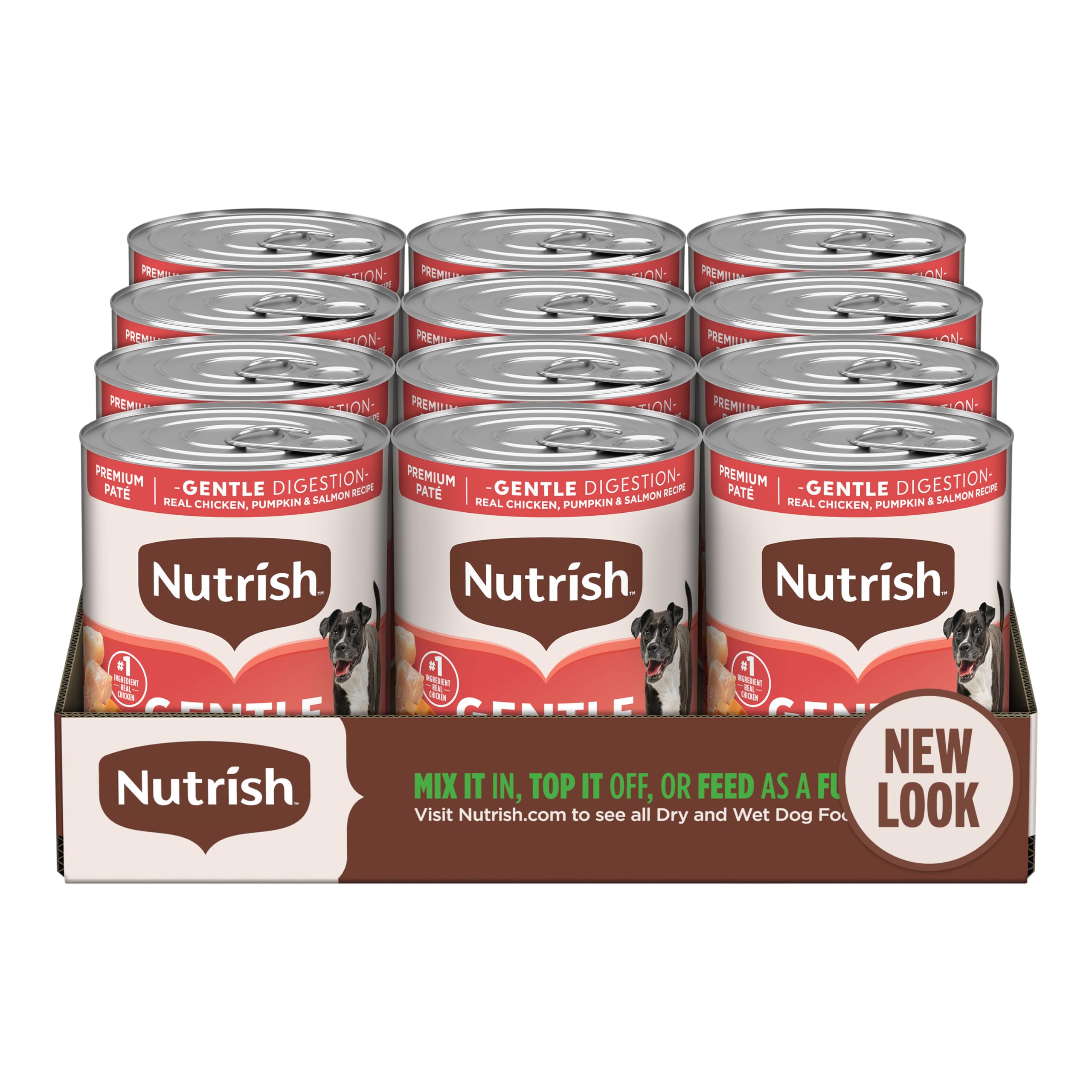
We recommend this as the budget wet pick for a dog that needs a gentler texture but doesn't need a premium formula. You get twelve 13-ounce cans in the case, and chicken is the first ingredient, with pumpkin, peas, and carrots supplying fiber for healthy digestion. That's a practical everyday wet food rather than a niche prescription diet.

The formula avoids poultry by-product meal, added corn, wheat, soy, and gluten, and the pumpkin is the headline fiber source. We appreciate that the ingredient list stays recognizable without turning dinner into a cooking project. It's also a good topper for dry food if you want to add moisture and interest without switching the whole bowl.

The trade-off is that pumpkin fiber helps some dogs and not others. If your dog has a very sensitive gut, introduce this slowly and watch the stool. The pate is also soft, so a dog that likes chunky food may turn away. For a budget case that still has a digestive purpose, though, it's the value pick here.

Bottom line: This is our budget wet pick: a pumpkin-rich pate in a twelve-can case that's easy on the wallet and gentle on most stomachs.

How We Tested Dog Food for Gassy Dogs

We started by building a shortlist of formulas made for sensitive stomachs—limited-ingredient recipes, novel proteins, and higher-fiber options—then narrowed it by protein source, calorie density, bag size, and cost per day. Over six months, 12 formulas went home with dogs whose owners had already complained about gas. Each formula spent at least three weeks in a real household, with a slow seven-day transition and no extra treats that could muddy the results.

At breakfast and dinner, we watched whether dogs went straight for the bowl, sniffed and walked away, or needed a topper to finish. We logged how quickly they ate, how often they drank, and whether they seemed uncomfortable after meals. On walks and in the yard, we recorded stool consistency, frequency, and gas episodes—then noted how long the smell hung around in a living room or car. We also checked skin and coat at the start and end of every trial, looking for new scratching, redness, or dullness.

Value was judged by cost per day, not just bag price, and we tracked whether the kibble stayed fresh and the closure held up over weeks. Any formula that triggered vomiting, loose stools, or a clear refusal across multiple dogs was cut. The final picks are the ones that reduced gas without trading it for a new problem—and that dogs were still excited to eat when the bag ran low.

How to Choose the Right Dog Food for Gassy Dogs

Start With Digestive Support, Not Marketing Words

Prebiotic fiber and live probiotics are the two supports worth looking for, and they do different jobs: prebiotic fiber feeds the gut bacteria already there, while live probiotics add more. Highly digestible grains such as oatmeal, barley, and rice can also matter more than a long ingredient list. We prioritize a named protein and a clear digestive claim over a bag that simply says natural. If your dog has loose stools, a prebiotic-fiber formula like Hill's or Blue Buffalo is the simpler start; if antibiotics or a recent illness knocked the gut flora back, the live probiotics in Purina Pro Plan are the more targeted choice.

Match the Protein and Carb to Your Dog

Chicken, lamb, and salmon are the common bases here, and the right one is the one your dog has already tolerated. A limited-ingredient salmon formula such as Natural Balance makes sense when you suspect chicken or lamb, but grain-free is not automatically gentler; some dogs do better with oatmeal or barley than with a rich grain-free blend. We look for a single named protein and a simple carbohydrate first, then judge the stool after a slow transition. Novel protein is a tool for a suspected sensitivity, not a universal gas cure.

Dry or Wet? Follow Appetite and Convenience

Wet food adds moisture and a stronger aroma, which helps a picky dog or one that needs more water in their day. Dry food is easier to store, cheaper per meal, and gives a dog something to chew. Neither is automatically gentler; a rich pate can upset a dog just as a new kibble can. We choose wet when appetite is the problem and dry when convenience and cost are. A case of pate is also a commitment, so start with a flavor and texture your dog has already accepted.

Buy the Smallest Bag That Answers the Question

However good the formula looks, a large bag is a gamble until your dog has eaten it for a few weeks. We start with the smallest size that gives a real trial, then move to the bulk bag once stools are steady. Price per pound matters, but price per meal your dog can actually finish matters more. A budget food that causes vomiting is not a bargain. For large dogs, the 4-pound bags here are trials; the 16.5-pound Purina ONE bag is the value move only after lamb agrees with your dog.

Frequently Asked Questions

Final Verdict

For most gassy dogs, we start with Hill's Science Diet Sensitive Stomach & Skin dry. The trial-size bag lets you test a highly digestible, prebiotic-fiber formula without a huge commitment, and it supports skin and coat as well as digestion. If your dog needs live probiotics or does better on lamb, choose Purina Pro Plan Sensitive Skin & Stomach. For wet food, Hill's Sensitive Stomach & Skin is the closest match; Nutrish Gentle Digestion is the budget case.