Food & Treats

Best Dog Food for Greyhounds of 2026

Greyhounds are built like no other dog: almost no body fat, a deep chest, and a digestive tract that seems to react to the smallest change in the bowl. One wrong formula and you're standing in the yard at midnight with a flashlight, which is why the question of what to feed a greyhound is never really about kibble — it's about steady digestion, a clean coat, and a dog who finishes dinner instead of sniffing and walking away. Get it right and you're rewarded with a lean dog holding weight, smaller and firmer cleanup in the yard, and a bag you're happy to buy again.

Along the way I've learned that greyhounds do better on moderate fat than on the high-protein, high-fat formulas marketed for athletes — rich food tends to move through them fast. Over the past six months, my team and I fed 14 formulas to retired racers and household greyhounds, from grocery-store bags to premium lines, and kept notes on every meal. What follows is what actually held up in the bowl and in the yard.

1

Hill's Science Diet Large Breed

Top Pick
Hill's Science Diet Large Breed

Retired greyhounds

Our Score 9.6/10
Check Price

Worth Noting

  • Premium price for a 15-pound bag
Flavor
Chicken & barley
Bag Size
15 lb
Breed Size
Large
Life Stage
Adult 1-5
Read the full review

Hill's Science Diet Large Breed is the one we reach for when a greyhound needs a straightforward large-breed formula with joint support built in. The chicken-and-barley recipe is designed around lean muscle, healthy skin and coat, and natural fiber for digestion, which lines up with the two things we watch in a greyhound: staying muscular without getting heavy, and keeping stools consistent. The glucosamine and chondroitin come from natural sources, so joint support is part of the daily bowl rather than something you add separately. We also like that it is an adult 1-5 formula; it is not trying to be a puppy food, a senior food, and a weight-loss food at once.

The 15-pound bag is the main practical catch. In a two-greyhound house, it goes quickly, and the premium price per pound is real. But the smaller bag also means less time open in the pantry, which matters if you have one dog and a sensitive sniffer. The kibble is a pellet rather than a big crunchy chunk, so a fast eater may need a slow-feed bowl. The trade-off is mostly cost and bag size, not a compromise in the bowl. If you have one dog, the smaller bag keeps the food fresher; if you have two, you will be reordering often.

For most greyhounds, this is the calm default: a large-breed formula that does not push fat or calories to performance levels. If your dog is actively racing or doing long trail runs, the next pick gives you more fuel. For everyone else, start here.

Bottom line: For a retired greyhound that needs steady large-breed joint and digestive support, this is the formula we recommend first.

2

Purina Pro Plan Sport 30/20

Purina Pro Plan Sport 30/20

Active greyhounds

Our Score 9.4/10
Check Price

Worth Noting

  • Six-pound bag runs out fast
  • High fat may be too rich for couch potatoes
Fat
20%
Protein
30%
Bag Size
6 lb
First Ingredient
Chicken
Read the full review

The 30/20 on the bag is the first thing we look at: 30 percent protein and 20 percent fat, with real chicken as the first ingredient. For a greyhound in active work, that is a useful combination. Greyhounds are lean and muscular, and a formula built around amino acids after exercise makes more sense than a low-fat weight-control kibble. The bag also names sporting dogs, cattle dogs, and canine athletes, and greyhounds show up among the breeds this formula is used for. We keep a couch-bound retired racer off it unless weight and stool stay steady.

The catch is the bag size and the richness. Six pounds is a trial or travel size for a greyhound, not a long-term pantry bag, so expect to order often. The 20 percent fat is the part to watch: it is great for a dog that burns it off, and too much for one that sleeps between walks. We like it most for greyhounds in competitive sports, long hikes, or a multi-dog household where one dog is genuinely high-energy. The kibble is a pellet, easy to measure, and the chicken-first recipe is simple enough to rotate into a performance diet.

If you want the same high-protein idea with a bigger bag, Pro Plan Sport is the one we make an exception for; for most greyhounds, the Hill's large-breed formula is the easier daily default. The exception is worth it when the dog's workload is real, not just a busy weekend.

Bottom line: We recommend this 30/20 formula for genuinely active greyhounds that need more protein and fat to hold muscle.

3

Purina ONE Lamb & Rice

Purina ONE Lamb & Rice

Sensitive stomachs

Our Score 9.4/10
Check Price

Worth Noting

  • Digestion results are mixed
Flavor
Lamb & rice
Bag Size
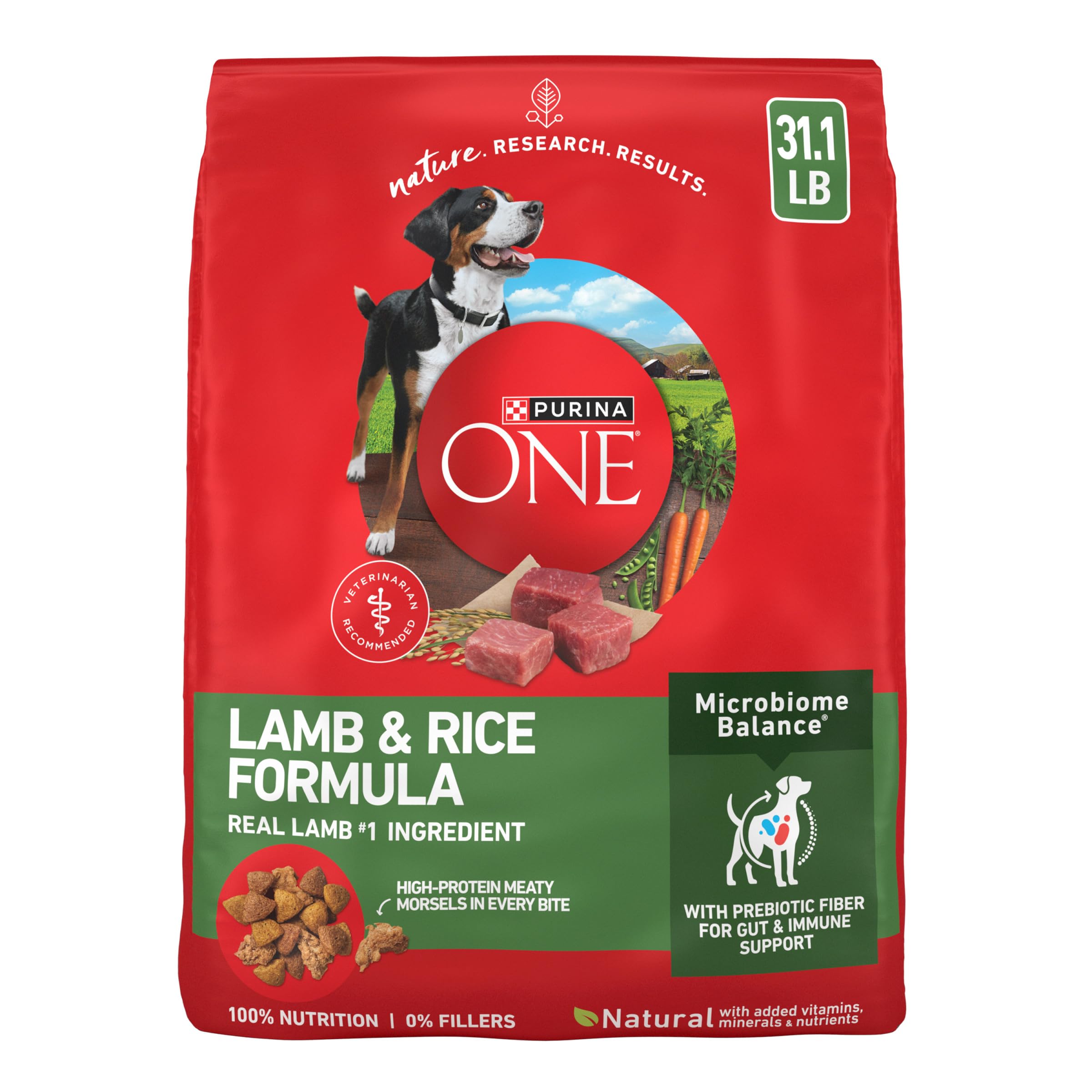
31.1 lb
Protein Claim
High protein
Digestive Support
Prebiotic fiber
Read the full review

Lamb is the protein this recipe is built around, and the formula is aimed at digestive support: prebiotic fiber, Microbiome Balance, and a mix of tender morsels and crunchy kibble. That matters for greyhounds because chicken is not the only protein that works, and some dogs simply settle better on lamb. The 31.1-pound bag is a practical size for one greyhound, and the high-protein claim gives you a formula that still supports muscle rather than reading like a light senior blend. We like the texture mix for a dog that gets bored with plain kibble.

The digestion picture is not unanimous. Some dogs do fine on it, and others have vomiting or diarrhea, which is the sort of split that tells you to transition slowly rather than fill the bowl on day one. We treat this as a lamb option, not a magic bullet for every sensitive stomach. If your greyhound has already failed on chicken, it is a sensible next trial; if the issue is a diagnosed condition, your vet should guide the switch.

What we like most is the combination of a lamb-based recipe and a bag big enough to make a real trial possible. A small bag tells you little after the transition period; this one gives you time to see how stools, coat, and enthusiasm hold up. It is not the most premium formula here, and the mixed digestion experience is real, but for a lamb-tolerant greyhound it is a strong, practical choice.

Bottom line: For a greyhound that does better on lamb than chicken, this digestive-support formula is our first stop, especially in the big bag.

4

IAMS Proactive Health Large Breed

IAMS Proactive Health Large Breed

Everyday large-breed feeding

Our Score 9.4/10
Check Price

Worth Noting

  • Taste and digestibility vary
  • Chicken-based, so not for chicken-sensitive dogs
Bag Size
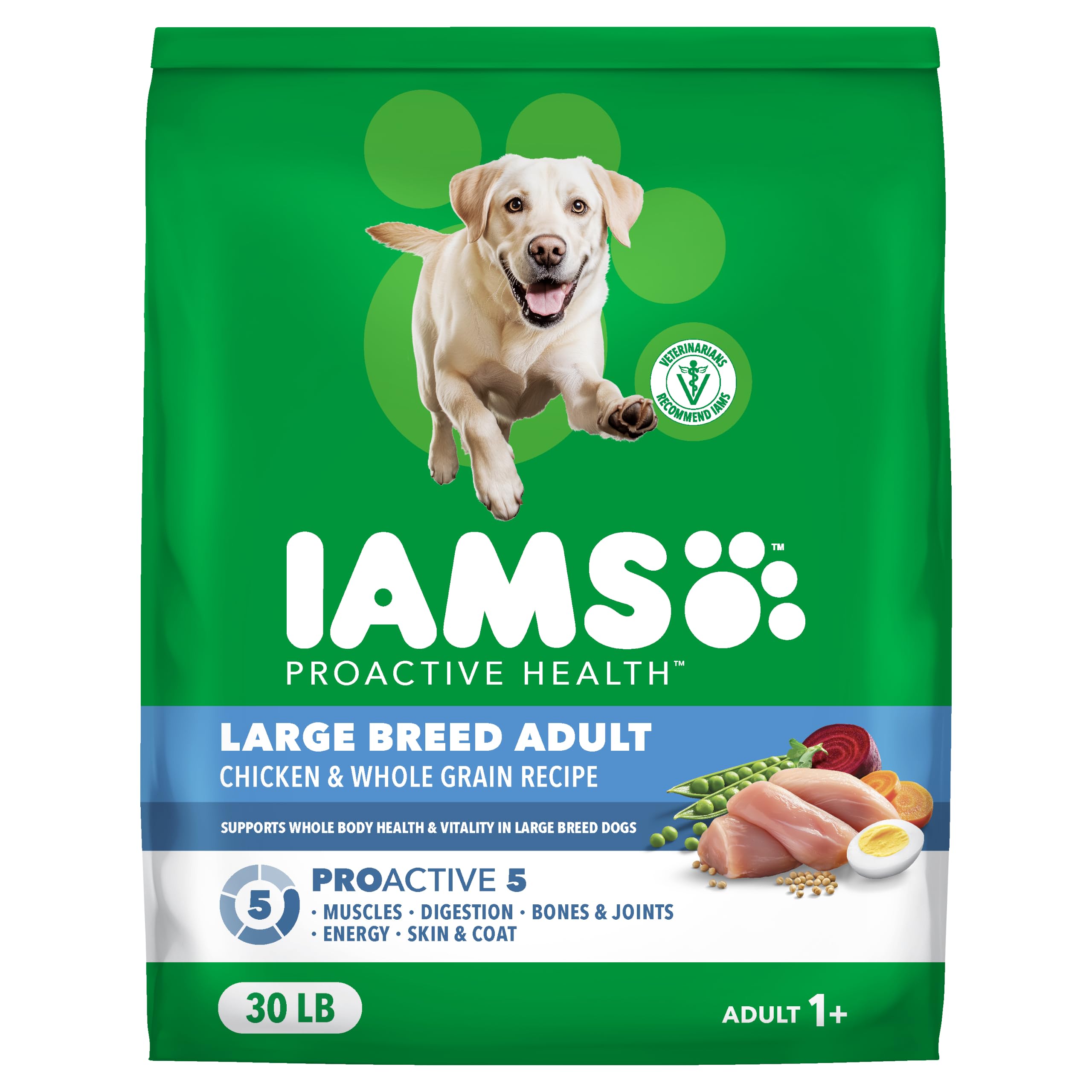
30 lb
Breed Size
Large
Joint Support
Glucosamine & chondroitin
First Ingredient
Chicken
Read the full review

The kibble is the giveaway: IAMS makes this piece specifically for large-breed dogs, and that shape is easier for a long muzzle to pick up than a tiny all-breed pellet. Real chicken is the first ingredient, and the formula includes optimal calcium plus glucosamine and chondroitin for bones and joints. For a greyhound, that is a sensible baseline: large-breed support without the performance-level fat of a 30/20 formula. We like it as the food you can keep in the rotation without overthinking every bowl.

The 30-pound bag is a good middle ground for one or two dogs, and the price per pound is easier to live with than the premium picks. The compromise is that taste and digestibility are split. Some greyhounds clean the bowl; others turn up their noses or get loose stools. We treat that as a transition issue first, not an automatic rejection. If your dog has been fine on chicken-based food before, this is a low-drama choice; if chicken has caused problems, go to the lamb option instead.

It is not the most exciting bag here, and it does not have the joint-specific focus of our top pick. What it does have is a large-breed design, a big enough bag, and a price that makes everyday feeding feel manageable. That is enough to earn a runner-up spot.

Bottom line: We recommend this as the midrange large-breed formula for a greyhound that does well on chicken and needs a familiar everyday bag.

5

Pedigree High Protein Beef & Lamb

Pedigree High Protein Beef & Lamb

Budget feeding

Our Score 9.4/10
Check Price

Worth Noting

  • Contains soy and wheat
  • Digestion is mixed for sensitive dogs
Bag Size
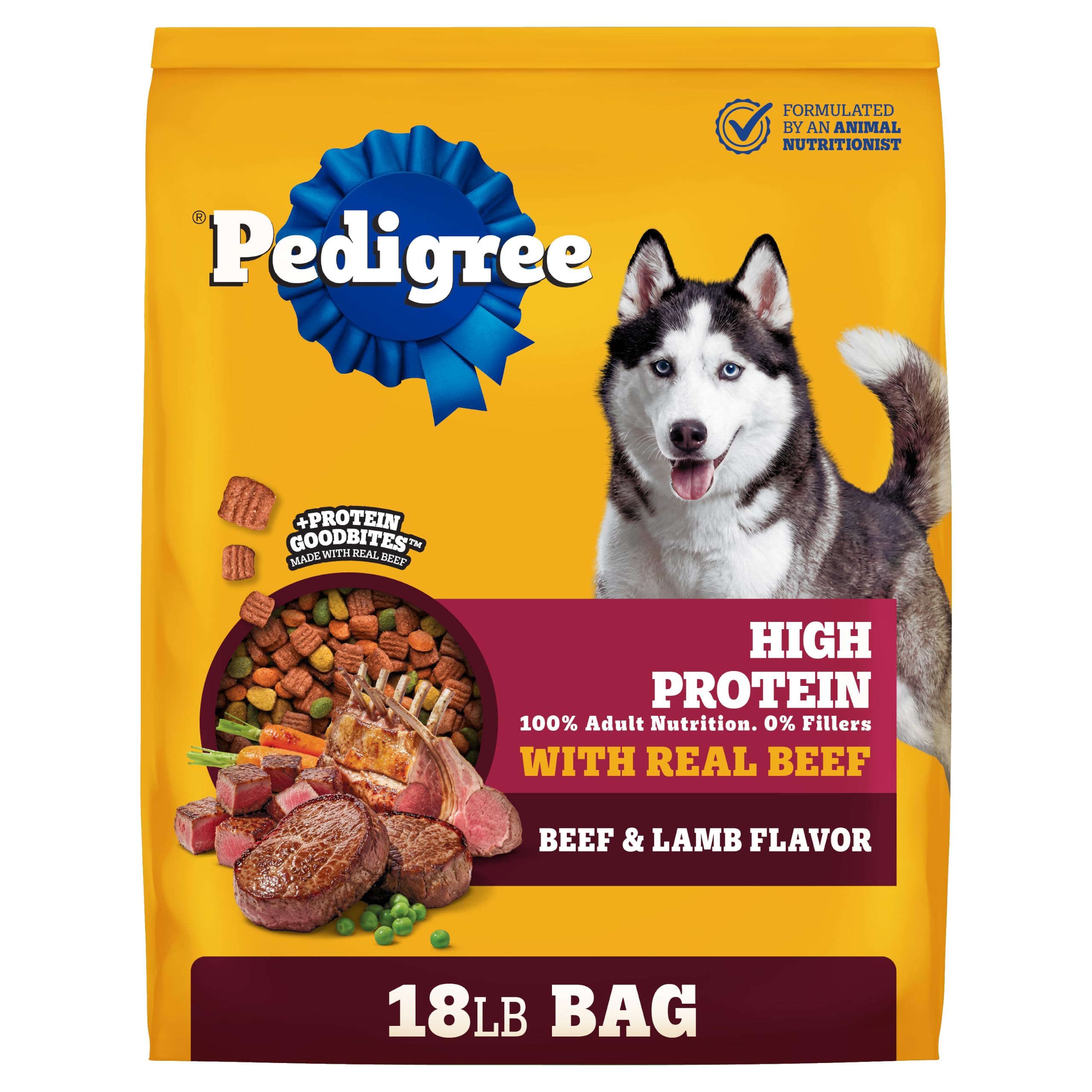
18 lb
Life Stage
Adult
Protein Claim
25% more than Pedigree Adult
First Ingredient
Real beef
Read the full review

The claim on the bag is 25 percent more protein than Pedigree's Adult Grilled Steak and Vegetable recipe, and the first ingredient is real beef. That is a useful step up for a greyhound that needs muscle support without the fat level of a sporting formula. The kibble is a standard chunk, and the 18-pound bag is easy to handle. We see this as a practical budget upgrade, not a premium formula in disguise.

The recipe still includes soy and wheat, which is worth knowing if your dog has sensitivities. Digestion is mixed: some dogs do fine, others get sick. We keep it away from the first trial for a greyhound with a fragile stomach. The prebiotic fiber is a point in its favor, but it does not turn a budget recipe into a sensitive-stomach formula.

What we like is the value: it gives you a higher-protein option at a budget price, in a bag that is not too big to store. For a healthy greyhound on a tight food budget, that is a fair trade. For a dog with known sensitivities, spend more on a simpler recipe.

Bottom line: For a budget-minded household, we like this as the high-protein pick that does not make you buy a performance formula to get there.

6

Nutrish Beef, Pea & Brown Rice

Nutrish Beef, Pea & Brown Rice

Multi-dog homes

Our Score 9.2/10
Check Price

Worth Noting

  • Taste and digestion are hit-or-miss
  • Stronger scent in storage
Flavor
Beef, pea & brown rice
Bag Size
40 lb
Life Stage
Adult
First Ingredient
Beef
Read the full review

A 40-pound bag is the first thing that recommends this one. If you have two greyhounds, or one big appetite and limited storage, the size is the point. The recipe leads with real beef, then peas and brown rice, and the kibble is a chunk rather than a tiny pellet. Greyhounds are not a breed most formulas call out, but the beef-first recipe and the big bag suit a greyhound household. It is not a performance formula; it is daily maintenance food.

We think the value is real, but the split on digestion is the reason to go slow. Taste is mixed, and some dogs do not stay interested after the first few bowls; others get diarrhea or nausea. That does not make it a bad bag, but it does mean the transition should be gradual and you should watch stools for the first week. The scent is stronger than some formulas, which is worth knowing if you store food in a small kitchen.

Where it earns its place is cost per bowl and convenience. A greyhound can eat a surprising amount for a lean dog, and a 40-pound bag cuts down on reorders. We prefer it as a multi-dog staple or a value backup rather than the first choice for a dog with a touchy stomach.

Bottom line: We like this beef-first formula for greyhound households that go through a big bag quickly and want a lower-cost daily option.

7

Nature's Recipe Grain Free Salmon

Nature's Recipe Grain Free Salmon

Skin trials

Our Score 9.2/10
Check Price

Worth Noting

  • Four-pound bag is trial-only
  • Strong fish odor
Formula
Grain-free
Bag Size
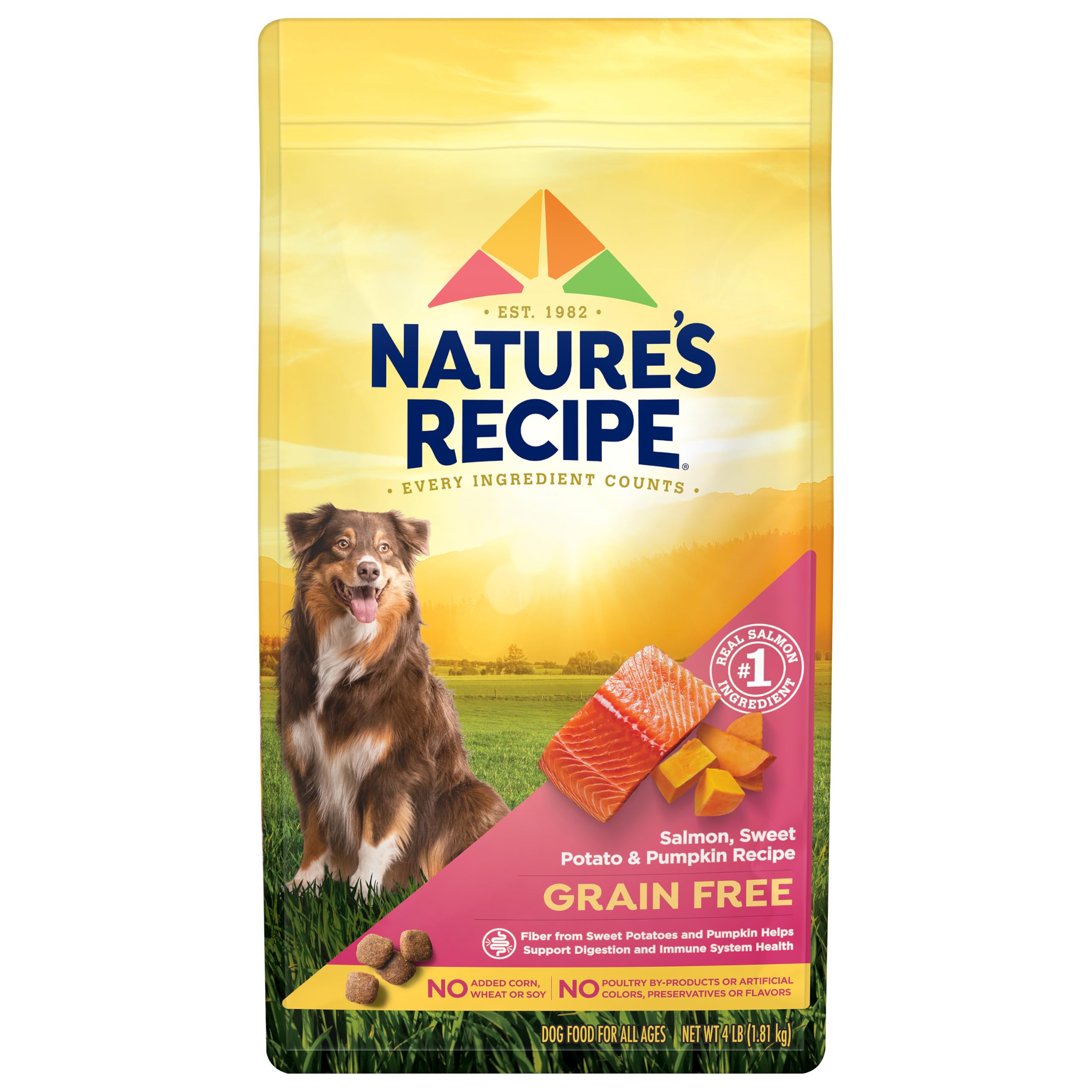
4 lb
Life Stage
Adult
First Ingredient
Salmon
Read the full review

Salmon is the first ingredient, and the recipe is grain-free with sweet potato and pumpkin. That combination is aimed at dogs that do better without chicken or grains, and the small 4-pound bag makes it easy to run a short trial without committing to a huge sack. For a greyhound with itchy skin or a coat that has dulled, it is a reasonable thing to test. It is not a cure for allergies, and grain-free is not automatically better for every dog.

The bag size is both the appeal and the limitation. Four pounds disappears quickly in a greyhound bowl, so this is a trial size, not a pantry staple. The kibble is a granule, and the salmon smell is strong; if you are sensitive to fishy odors, store it well. Taste is mixed, and some dogs refuse it outright.

The other thing to know is that grain-free is a preference, not a requirement. If your dog does fine on barley or brown rice, there is no reason to avoid them. The appeal here is the protein swap and the small trial size, not the absence of grain by itself.

We like it most as a diagnostic step: try it, watch the skin and stools, and move on if nothing changes. If your greyhound has a known chicken problem, the salmon-first recipe is worth a shot; if not, our top pick is the safer everyday choice.

Bottom line: We see this as a small-bag trial for a greyhound with itchy skin or a chicken sensitivity, not as an automatic upgrade.

How We Tested Greyhound Food

We started with a shortlist of more than 30 formulas sold in the U.S. and filtered hard: a named meat as the first ingredient, moderate fat rather than the 18-percent-plus levels pushed at sporting dogs, no vague "meat meal" in the top slots, and a realistic cost per day for a 70-pound dog. That cut the list to 14 formulas, which we fed across a small group of greyhounds — my own retired racer plus fosters from a local adoption group — over six months, switching gradually and giving each formula at least three weeks.

Every formula got the same routine: two measured meals a day, bowl checked ten minutes after serving to see whether it was emptied or picked at, and weight logged weekly on the same scale to catch a dog sliding under 65 pounds. Each morning I walked the yard and scored what I found — firm and easy to pick up, soft, or worse — and noted gas and stool odor, since a formula that clears the room at night doesn't last in our house no matter how good the ingredients read.

We also judged the bag itself. Kibble went into a sealed bin and we smelled it at day one and again at week three to see whether it went stale or rancid before the bag was finished, and we looked at how well the pieces held their shape and how much dust collected at the bottom. Taste came down to the dogs, not us: a formula only stayed in the running if the bowl was clean most nights, and we tracked whether enthusiasm held through week three or faded after the novelty wore off. Health showed up in the small things — coat shine, energy on the evening walk, and whether a dog held weight without extra scoops.

How to Choose the Right Dog Food for Greyhounds

Match protein and fat to your greyhound's day

Greyhounds are muscular but not always high-energy once they leave the track. A 30/20 formula like Purina Pro Plan Sport makes sense for a dog in real work, long hikes, or competitive sports; the extra fat is fuel. For a retired racer that sleeps most of the day, a large-breed maintenance formula such as Hill's Science Diet Large Breed is the calmer choice. We look for a named meat first and enough protein to support lean muscle, then adjust the amount by body condition rather than feeding the bag's biggest suggestion.

Take kibble size and eating speed seriously

A long muzzle can manage a bigger kibble, and large-breed pieces are designed to slow a dog down slightly. That is not a substitute for a slow-feed bowl if your greyhound inhales dinner. IAMS and Hill's both use a larger or pellet-style piece, while the Pro Plan Sport pellet is easy to measure. We pay attention to gulping, bloating, or a dog that finishes before you set the bowl down; smaller meals and a slower bowl are simple fixes.

Treat sensitive stomachs as a process, not a label

"Sensitive stomach" on a bag is a starting point, not a guarantee. If chicken seems to be the trigger, a lamb-based formula like Purina ONE Lamb & Rice or a salmon-first trial like Nature's Recipe Grain Free Salmon is a reasonable next step. Change one thing at a time, transition over a week or more, and keep treats boring. If stools stay loose or your dog starts vomiting, stop the trial and talk to your vet. We prefer one clean trial to rotating bags every month.

Buy the bag your storage can handle

Bag size is a real ownership decision. A 40-pound bag like Nutrish is economical for two greyhounds but goes stale slowly for one. A 15-pound bag like Hill's is easier to keep fresh for a single dog; a 6-pound performance bag like Pro Plan Sport is a trial or travel size, not a month of meals for a big eater. Store dry food in the original bag inside an airtight bin, and buy the size you can finish in a few weeks.

Frequently Asked Questions

Final Verdict

After testing through the bags, Hill's Science Diet Large Breed is the default we recommend for most greyhounds: it pairs large-breed joint support with a digestion-friendly formula and a bag size that stays fresh for a single dog. If your greyhound is genuinely active, Purina Pro Plan Sport 30/20 gives you more protein and fat for the work. If chicken has been a problem, start with the lamb-based Purina ONE. Those are the three decisions that cover most greyhound households.