Food & Treats

Best Dog Food for Labrador Retrievers of 2026

A Labrador will eat just about anything, which sounds like a blessing until you're the one holding the measuring cup. That appetite makes overfeeding easy, and it makes a food that isn't suiting him easy to miss — loose stools, room-clearing gas, a dull coat all hide behind a wagging tail. Labs are also among the breeds most prone to extra weight and joint trouble, so the kibble has to earn its place in the bowl.

I've fed Labs through the bargain-bag years and the read-every-label years, and the difference shows up in the yard before it shows up anywhere else. We've spent the past six months running 12 formulas past a panel of Labradors, from an eight-week-old puppy to a nine-year-old who'd rather nap than retrieve. Taste was almost never the sticking point. Portion size, stool quality, coat, energy on the evening walk, and cost per day rather than cost per bag separated them, and the list below is what survived.

1

Purina ONE Healthy Weight

Top Pick
Purina ONE Healthy Weight

Weight management

Our Score 9.4/10
Check Price

Worth Noting

  • Not a large-breed-specific formula
  • Lower calories may not suit hard workers
Formula
Weight control
Bag Size
31.1 lb
Key Support
Weight and joints
First Ingredient
Turkey
Read the full review

A Labrador can look eager and still be carrying two or three extra pounds, and that is where this bag earns its place. It is an adult weight-control formula with turkey as the first ingredient, and it keeps the protein high enough that the goal is losing fat rather than muscle.

We like it as the first alternative for a Lab that needs portions pulled back. The kibble is a mix of crunchy pieces and tender morsels, which helps a food-motivated dog stay interested, and the formula includes glucosamine sources for joints. In practice, the weight-control claim only works if you measure the scoop; a Labrador will happily eat a weight-control food in weight-gain amounts.

The catch is that this is an all-breed formula, not a large-breed one. The kibble is not as big as the Large Breed bag, and the calorie level is lower, so very active or underweight Labs may need more than the bag suggests. For the common Labrador case, a healthy but slightly round adult, it is the more useful tool.

Bottom line: When the goal is a leaner Labrador, we point to this weight-control formula because it keeps protein high and joints in view while trimming calories.

2

Purina Pro Plan Sport 30/20

Purina Pro Plan Sport 30/20

Working dogs

Our Score 9.4/10
Check Price

Worth Noting

  • Calorie-dense for less active Labs
  • Premium price tier
Bag Size
37.5 lb
Life Stage
All life stages
Protein/fat
30% protein, 20% fat
First Ingredient
Chicken
Read the full review

The 30/20 on the bag is the whole story: 30 percent protein and 20 percent fat, a combination built for endurance and hard exercise rather than a couch-bound Labrador. If your dog spends weekends in the field or runs with you daily, this is the formula here that matches that workload.

Chicken is the first ingredient, and the formula is designed around amino acids for muscle recovery. We also appreciate that it is an all-life-stages food, so it can carry a young active Lab through to adulthood without a sudden formula change. The trade-off is calorie density: a Labrador that is not actually working will get round on this food quickly.

That makes it a specialist, not the default. For a typical suburban Lab with two walks a day, the Large Breed or Healthy Weight bags are more sensible. For a hunting dog, a competitive athlete, or a dog that burns through food and still looks lean, Pro Plan Sport earns the premium.

Bottom line: We set this aside for a Labrador with a real job or a serious daily workload; the 30/20 formula is built for endurance, not couch time.

3

Pro Plan Complete Essentials Salmon

Pro Plan Complete Essentials Salmon

Skin and coat

Our Score 9.4/10
Check Price

Worth Noting

  • Strong fish odor
  • Not a large-breed formula
Texture
Shredded blend
Bag Size
33 lb
Probiotics
Guaranteed live probiotics
First Ingredient
Salmon
Read the full review

Salmon is the first ingredient here, and the bag mixes hard kibble with tender shredded pieces. We like that texture for a dog that picks at dinner: a softer piece in the bowl often keeps a picky Labrador interested when plain kibble gets ignored.

The formula is adult, high-protein, and fortified with guaranteed live probiotics. It also brings vitamin A and omega-6 fatty acids for skin and coat, which is the reason we choose it over the Sport formula for a Lab with a dull coat or sensitive digestion. The salmon flavor is strong, though; if smell bothers you, this is not the bag to keep in an open bin in the kitchen.

It is not a large-breed formula, and it costs more than the Purina ONE bags, so it earns its place as a targeted pick rather than the default. For a Labrador that turns up its nose at chicken or needs a fish-based recipe, the combination of salmon, shreds, and probiotics is worth the step up.

Bottom line: For a picky Labrador or one that needs fish-based coat support, we like the salmon-first recipe and its live probiotics.

4

IAMS Proactive Health Minichunks

IAMS Proactive Health Minichunks

Easy chewing

Our Score 9.4/10
Check Price

Worth Noting

  • Not large-breed or weight-control specific
Kibble
Minichunks
Bag Size
30 lb
Key Support
Digestion and immunity
First Ingredient
Chicken
Read the full review

Minichunks are the point of this bag. The pieces are small enough for a dog that gulps, and the formula is an adult chicken-and-egg recipe with prebiotics and antioxidants. It is not a large-breed formula, so it is not the first choice for a big Labrador with joint concerns.

We like the everyday ease: the kibble is easy to chew, which can help an older Lab or one with dental trouble, and the chicken-and-egg protein supports muscle. The formula also brings a tailored blend of natural fiber and prebiotics for digestion, plus antioxidants for immune support.

The trade-off is size. A small kibble does not give a fast-eating Labrador much to chew on, and the formula is not tailored to large-breed joints or weight control. For a Labrador that needs an easy-to-eat kibble, or a household that wants a familiar chicken formula, it is a sensible alternative. For the breed's core needs, the large-breed and weight-control picks are stronger.

Bottom line: We reach for this one when easy chewing matters more than large-breed tailoring; for joint and weight support, the large-breed picks are stronger.

5

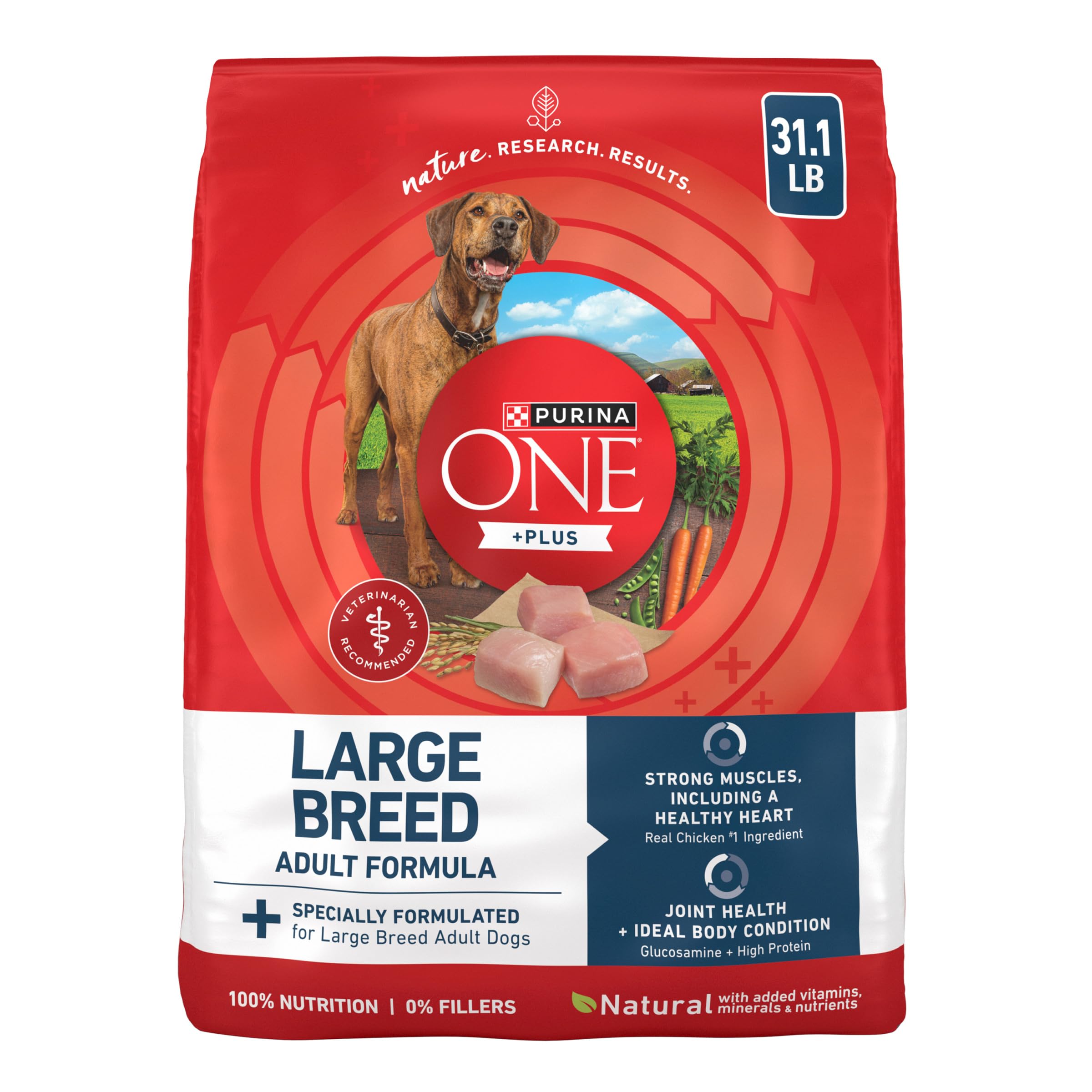
Purina ONE Large Breed Adult

Purina ONE Large Breed Adult

Large-breed adults

Our Score 9.2/10
Check Price

Worth Noting

  • Not a weight-control formula
Bag Size
31.1 lb
Key Support
Muscle and joint
Breed Formula
Large breed adult
First Ingredient
Chicken
Read the full review

The first thing that separates this Purina ONE bag from the rest of the list is that it is actually built for a large breed. The kibble is bigger, the formula is aimed at adult large dogs, and the chicken-first recipe brings the protein and joint support a Labrador needs. That combination is why it is our top pick: it does the everyday job without making you puzzle out a dozen add-ons.

A Labrador's mouth and eating style make kibble size matter more than it sounds. A bigger bite gives a fast eater something to crunch instead of inhaling, and it suits a broad muzzle. The formula also lists joint support, which is the right thing to look for in a breed that asks a lot of its hips and elbows. We also like that chicken is the first ingredient; it keeps the protein story simple.

The trade-off is that this is not a weight-control formula. If your Lab is already carrying extra rib cover, the Healthy Weight version is the smarter starting point. And because it comes in a big bag, check the kibble when it arrives and keep it sealed; dry food can pick up pantry pests if it sits around. For a typical adult Lab at a healthy weight, though, this is the formula we reach for first.

Bottom line: For an adult Lab at a healthy weight, this is the bag we choose first: large-breed formula, bigger kibble, and joint support in one straightforward package.

6

Nutrish Chicken & Veggies

Nutrish Chicken & Veggies

Multi-dog homes

Our Score 9.2/10
Check Price

Worth Noting

  • Not a large-breed formula
Bag Size
40 lb
Key Claim
No poultry by-product meal
Life Stage
Adult
First Ingredient
Chicken
Read the full review

A 40-pound bag is the first thing you notice here, and for a Labrador household that is a practical advantage. It is a chicken-first adult formula with no poultry by-product meal, sold in a size that makes sense for a dog that eats through a bag quickly.

We like the ingredient story for the money: real chicken leads, the formula includes taurine and omega-3s, and there are no artificial preservatives. It is not a large-breed formula, so the kibble and nutrient profile are aimed at all sizes rather than a big dog specifically. That matters less for an adult Lab with no joint issues and more for one that needs a targeted large-breed diet.

The mixed part is digestion. Some Labs do fine, while others refuse it or get loose stools, so a slow switch is worth the effort here. The 40-pound bag is also a commitment; if you have one dog and limited storage, split it into smaller containers and use it up before it goes stale. For multi-dog homes or a Lab that breezes through food, it is a strong value pick.

Bottom line: Our choice for multi-dog homes is this big chicken-first bag, which keeps the ingredient list simple and the cost per pound low.

7

Diamond Naturals Lamb & Rice

Diamond Naturals Lamb & Rice

Budget-minded homes

Our Score 9.2/10
Check Price

Worth Noting

  • Not large-breed or weight-control specific
Bag Size
40 lb
Life Stage
Adult
Probiotics
K9 Strain probiotics
First Ingredient
Lamb meal
Read the full review

The value case is easy to see: a 40-pound bag of lamb-based adult food for less than most of the premium bags here. If you are feeding a Labrador and watching the monthly bill, that combination is worth a look.

Lamb meal is the first ingredient, and the formula includes species-specific K9 Strain probiotics, antioxidants, and prebiotics. We like that it is not just a cheap filler bag; the protein and fat levels are moderate, which suits an adult Lab that gets regular exercise but not a working-dog workload. The kibble is a normal adult size, not a large-breed bite.

Palatability is the question mark. Some dogs eat it from day one; others turn their nose up, and a Labrador that normally eats everything can still refuse it. That is not a reason to avoid the bag, but it is a reason to transition slowly with the food your dog already knows.

For a budget-minded household with a dog that likes lamb, this is the bag we point to. It is not the most targeted large-breed formula, and the label is not built around weight control, so a Lab that is already overweight should start with the Healthy Weight pick instead.

Bottom line: We keep this lamb-based bag in the budget slot because the 40-pound size and probiotic formula give a lot for the money.

8

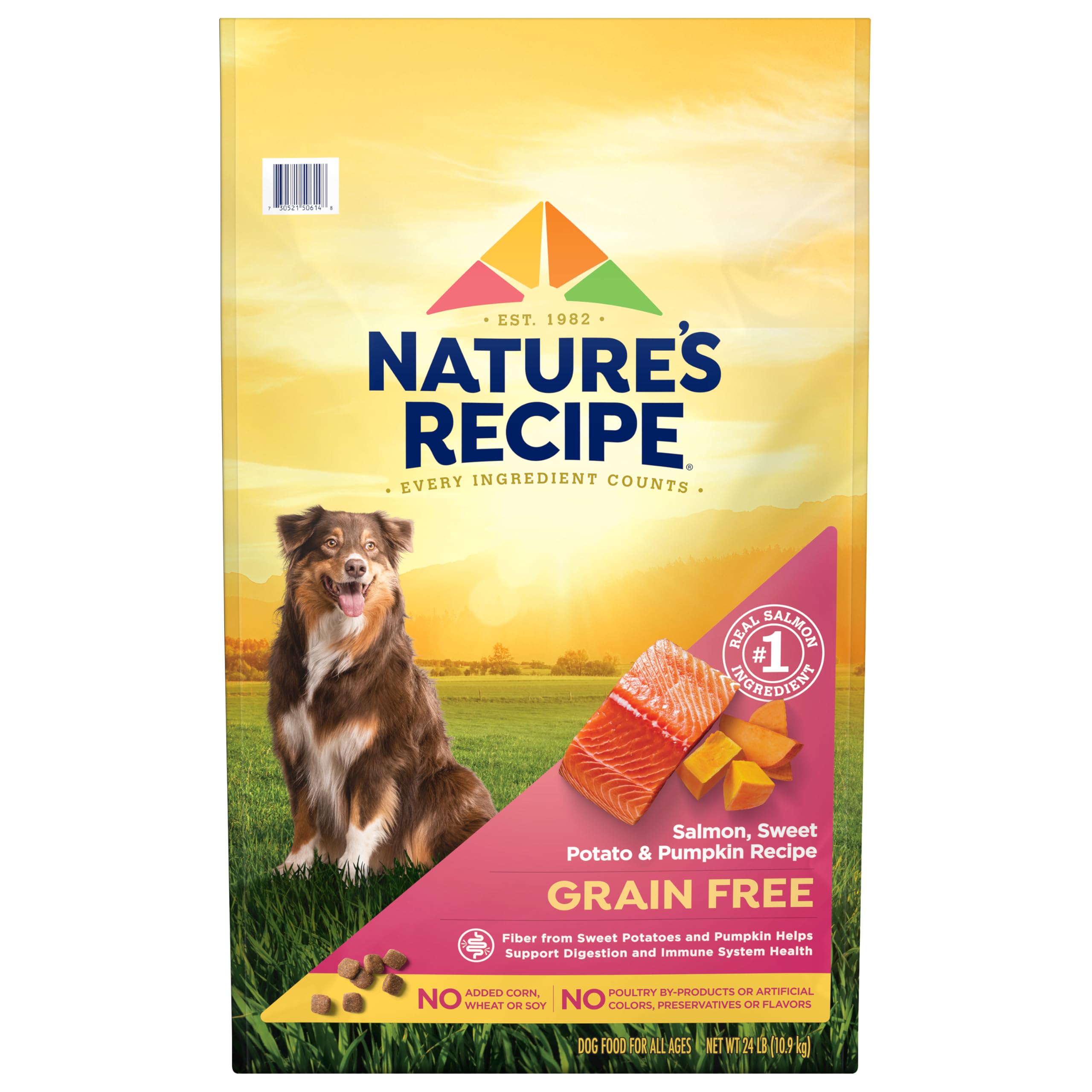
Nature's Recipe Grain Free Salmon

Nature's Recipe Grain Free Salmon

Grain-free feeding

Our Score 9.2/10
Check Price

Worth Noting

  • Strong fish odor
  • Not a large-breed formula
Formula
Grain free
Bag Size
24 lb
Life Stage
All life stages
First Ingredient
Salmon
Read the full review

This is the fish-first, grain-free option in the group. Salmon leads the recipe, and sweet potato and pumpkin bring fiber for digestion. If you have decided you want a grain-free salmon food, this is the bag that fits that brief.

We like the coat and skin angle: salmon oil and omega fatty acids are the reason many people try a fish recipe in the first place. The kibble is small and easy to chew, which can suit an older Labrador or one with dental issues. It is an all-life-stages formula, not an adult-only large-breed food.

The fish smell is strong. That is not a flaw in the food, but it is a practical detail if you keep the bag in a small kitchen or have a sensitive nose. More important, digestion is mixed: some dogs do well, while others get loose stools, so a slow switch matters more here than with a bland chicken formula.

For a Labrador with a confirmed fish preference or a household that specifically wants grain-free, it is worth considering. For most Labs, a large-breed or weight-control formula is the more direct route, and grain-free is not automatically better. This is a niche pick, not the default.

Bottom line: We see this as a niche pick for a Labrador that does well on fish and needs a grain-free recipe, not as a breed default.

How We Tested: Six Months, Twelve Formulas, a Yard Full of Labs

We started with roughly 60 formulas sold in the U.S. and cut the list down before a single bowl was filled. Anything without an AAFCO feeding statement for the right life stage was out, as was any food with no large-breed or weight-management version and no published calorie count per cup. We read the ingredient panel on every bag and flagged formulas built mostly on unnamed fats, by-product meals, or a long split of grains, and we checked recall history. From there we compared cost per day for a 70-pound dog rather than cost per bag, and dropped anything that was routinely out of stock. Twelve formulas survived, and we fed them for six months.

Each food got a slow transition, then at least two weeks of straight feeding, twice a day in the same kitchen from the same measuring cup. We timed how fast the bowl emptied and whether the dog walked away from it, so palatability was measured instead of assumed. Every morning we picked up in the yard, scored firmness on a seven-point scale, and counted how many piles we were getting per day; indoors we logged gas, burping, and anything that cleared a room. Skin and ear reactions got their own notes — paw licking after meals, ear scratching, chin rubbing, a pink belly — and any dog that showed them came off that food.

Effectiveness took longer to judge. We weighed each dog monthly on the vet's scale, ran hands-on rib and waist checks, and watched coat shine, shedding, and how much pull there was on the evening walk. We also noted kibble size, since a Lab that gulps will inhale a small kibble without chewing, and we bought every bag the way a reader would — subscription, big-box shelf, or boutique counter — to see whether it arrived in stock, in one piece, and resealable. Value came down to what a bag cost per day at the portion that actually kept the dog at a healthy weight.

How to Choose the Right Dog Food for Labrador Retrievers

Put Body Condition Before the Bag

Labradors are famous for finishing dinner and asking for more, so the right food is the one that keeps your dog's waist visible and the ribs easy to feel under a light cover. Start with the feeding chart for your dog's current weight, split it into two meals, and adjust every few weeks rather than free-feeding. A weight-control formula helps, but it cannot outrun an oversized scoop. If your Lab is already carrying extra weight, measure every meal and choose a formula built for weight management.

What Large-Breed Actually Changes

Large-breed formulas are not just marketing. Bigger kibble gives a Labrador something to chew, and the nutrient profile is aimed at a big dog's joints and muscles. The trap is assuming large-breed always means lower calorie; it does not. Check the feeding guide and the protein level, not just the word large on the bag. For a typical adult Lab, a large-breed adult formula is the simplest starting point; for a round Lab, weight control matters more than the breed label.

Protein, Ingredients, and Grain-Free

Look for a named meat first if you want a simple protein story, but the first ingredient is not the whole formula. A moderate protein level with a digestible recipe matters more than a long list of extras. Grain-free is a legitimate choice for some dogs, but it is not automatically better for a Labrador, and it is not a shortcut to weight loss. If your dog has a diagnosed allergy, work from that diagnosis rather than the front of the bag.

Switch Slowly and Watch the Stool

Any new food is a change for the gut. Mix a small amount into the old food and increase it over seven to ten days; a faster switch is the usual reason a Labrador ends up with loose stools. Probiotic formulas can help, but they do not replace a gradual transition. If a dog refuses food for more than a day or shows repeated vomiting, call your vet.

Frequently Asked Questions

Final Verdict

For most Labrador households, the default is Purina ONE Large Breed Adult. It is the only formula here built specifically for a large breed, and the bigger kibble and joint support match the way a Lab eats and moves.

If your dog is carrying extra weight, start with Purina ONE Healthy Weight; if you have a working or field-trial dog, Pro Plan Sport 30/20 is the better fit. Those two exceptions are worth making; otherwise, the large-breed bag is the one we point to first.