Food & Treats

Best Dog Food for Newfoundlands of 2026

Feeding a Newfoundland is a high-volume business. A 130-pound dog can go through a bag of food faster than you expect, and the wrong formula makes itself known—loose stools, gas, a dull coat, or a bowl left half full. I’ve learned that the right food is the one he actually enjoys, digests comfortably, and keeps looking healthy, without making every meal feel like a splurge. That combination of taste, digestion, skin support, and day-to-day value is what separates a food you tolerate from one you keep buying.

Taste matters, but so does what happens after the bowl is empty. We watched how eagerly each dog ate, then tracked stool quality, gas, coat condition, and scratching over the following weeks. Because Newfs eat so much, we also calculated cost per day, not just price per bag. After eight months with 14 formulas, the standouts combined quality ingredients, a reasonable per-meal cost, and a dog who looked and felt good—those are the differences reflected below.

1

Hill's Science Diet Large Breed

Top Pick
Hill's Science Diet Large Breed

Trial-size feeding

Our Score 9.6/10
Check Price

Worth Noting

  • Costly per pound for a giant breed
Flavor
Chicken & Barley
Bag Size
15 lb
Life Stage
Adult 1-5
Joint Support
Glucosamine and chondroitin
Read the full review

Fifteen pounds is the number that defines this bag. For a retriever, it is a reasonable monthly buy; for a Newfoundland, it is closer to a trial size. We recommend it when you want to test a joint-support formula without committing to a 30- or 40-pound sack, or when pantry space is tight. The trade-off is the small size: a Newfoundland will empty it quickly, so it is not the long-run default in a big-dog household.

The formula itself is sensible. Chicken and barley define the recipe, glucosamine and chondroitin address joints, and omega-6 plus vitamin E support skin and coat. Natural fiber is there for digestion, and the food is positioned for large breeds rather than all sizes. We especially like the explicit Adult 1-5 age range; it is more useful than a vague “adult” claim, and it tells you when to start looking at a senior large-breed formula. That clarity is useful.

Where it loses ground is routine feeding. A 15-pound bag is a convenience purchase, and the small size means more frequent reordering. Keep it for a trial, a rotation, or a tight pantry. If you already know your Newfoundland does well on Hill's, the larger-bag options here make more sense for the everyday bin.

Bottom line: We recommend the 15-pound bag as a trial or small-storage option; the joint ingredients are useful, but a Newfoundland will empty it quickly.

2

Purina Pro Plan Large Breed

Purina Pro Plan Large Breed

Giant-breed adults

Our Score 9.4/10
Check Price

Worth Noting

  • Premium price against the budget pick
  • Loose stools or vomiting can occur when switching
Flavor
Chicken & Rice
Bag Size
34 lb
Breed Size
Giant and large breeds
Joint Support
Glucosamine and EPA
Read the full review

The phrase that matters on this bag is “giant breeds.” Purina Pro Plan lists both giant and large breeds for its chicken-and-rice adult formula, and for a Newfoundland that is more than a label flourish: it signals a food built around a heavy frame rather than simply packed in a big bag. Glucosamine and EPA cover joint support, while the high-protein formula is aimed at muscle condition. Those are exactly the specifications we weigh first for a Newfoundland.

The 34-pound bag is a sensible middle ground for a giant breed: big enough to be worth ordering, not so large that it takes over the pantry. We also appreciate that the formula ties protein to proper exercise rather than treating a high number as the whole story; a Newfoundland carrying extra weight needs muscle condition and portion control together. The chicken-and-rice base is easy to understand, and nothing in the formula reads as a gimmick.

Digestion is where this pick separates itself. Its balance of digestive tolerance and coat condition is the strongest among these formulas, and that matters more than a long ingredient story when you are feeding a dog that weighs as much as a small adult. We still treat any change as a week-long transition, mixing the new food into the old in increasing amounts, because a giant breed makes a digestive misstep expensive in cleanup and comfort. Coat condition is the other quiet strength: a dense Newfoundland coat looks better when the food is agreeing with the dog.

For a household that wants the most complete giant-breed package here, with joint support, protein, and the most settled digestion, Pro Plan is the one we recommend.

Bottom line: For a Newfoundland, this is the large-breed formula we recommend first: explicit giant-breed fit, joint support, and the best balance of digestive tolerance and coat condition here.

3

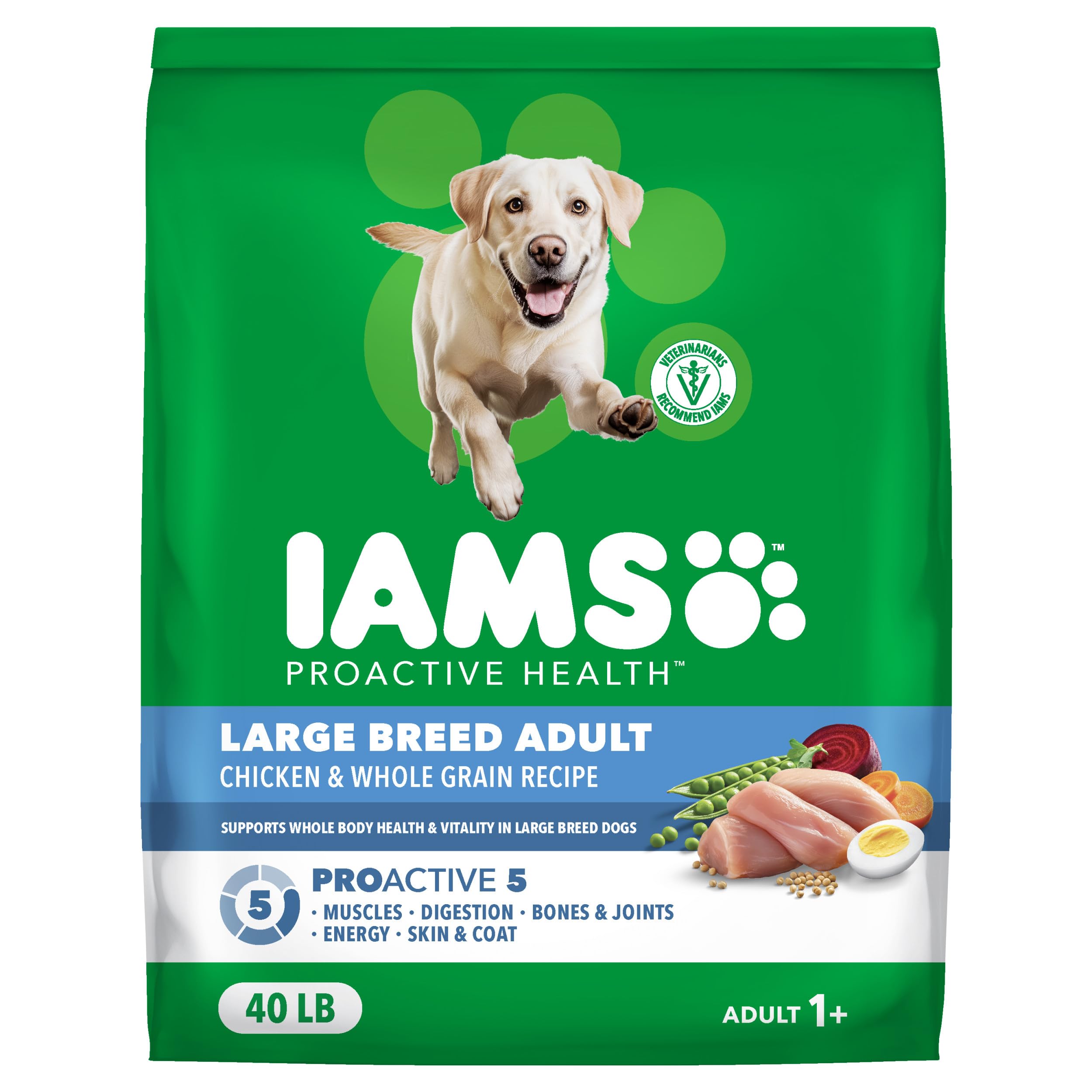
IAMS Proactive Health Large Breed

IAMS Proactive Health Large Breed

Budget large-breed feeding

Our Score 9.4/10
Check Price

Worth Noting

  • Loose stools or food refusal in some dogs
Flavor
Chicken & Rice
Bag Size
40 lb
Breed Size
Large breeds
Kibble Design
Large-breed kibble
Read the full review

Forty pounds is the reason this bag is in the guide. At this size, IAMS is the least expensive way here to keep a large-breed formula in the house, and that matters when a Newfoundland eats like a Newfoundland. The formula uses chicken as the first ingredient, egg for protein, and optimal calcium for bones and joints. It also avoids fillers and artificial flavors, which keeps the recipe straightforward rather than fussy.

We put it second because digestion is the deciding issue. This is not a universally gentle formula: loose stools and refusals happen. That is not unique to IAMS, but it means a slow switch and a willingness to stop if your dog reacts. If your Newfoundland has a sensitive stomach, Pro Plan is the safer first choice; if budget is the constraint and the food agrees, IAMS earns its place. The large-breed kibble design is a practical touch for a dog with a big mouth, though it will not solve a picky eater.

The 40-pound bag is also bulky. You need a dry, sealable spot for it, and you need to keep it closed against pests and moisture. That is the trade-off for the lower cost per pound: more food in the house, more storage discipline. For a Newfoundland household that already buys in bulk, it is a fair exchange; for someone with a small kitchen, the 15-pound Hill's bag is easier to live with.

Bottom line: This is our value pick for a Newfoundland household: a 40-pound large-breed bag with joint and muscle support, if the formula agrees with your dog.

4

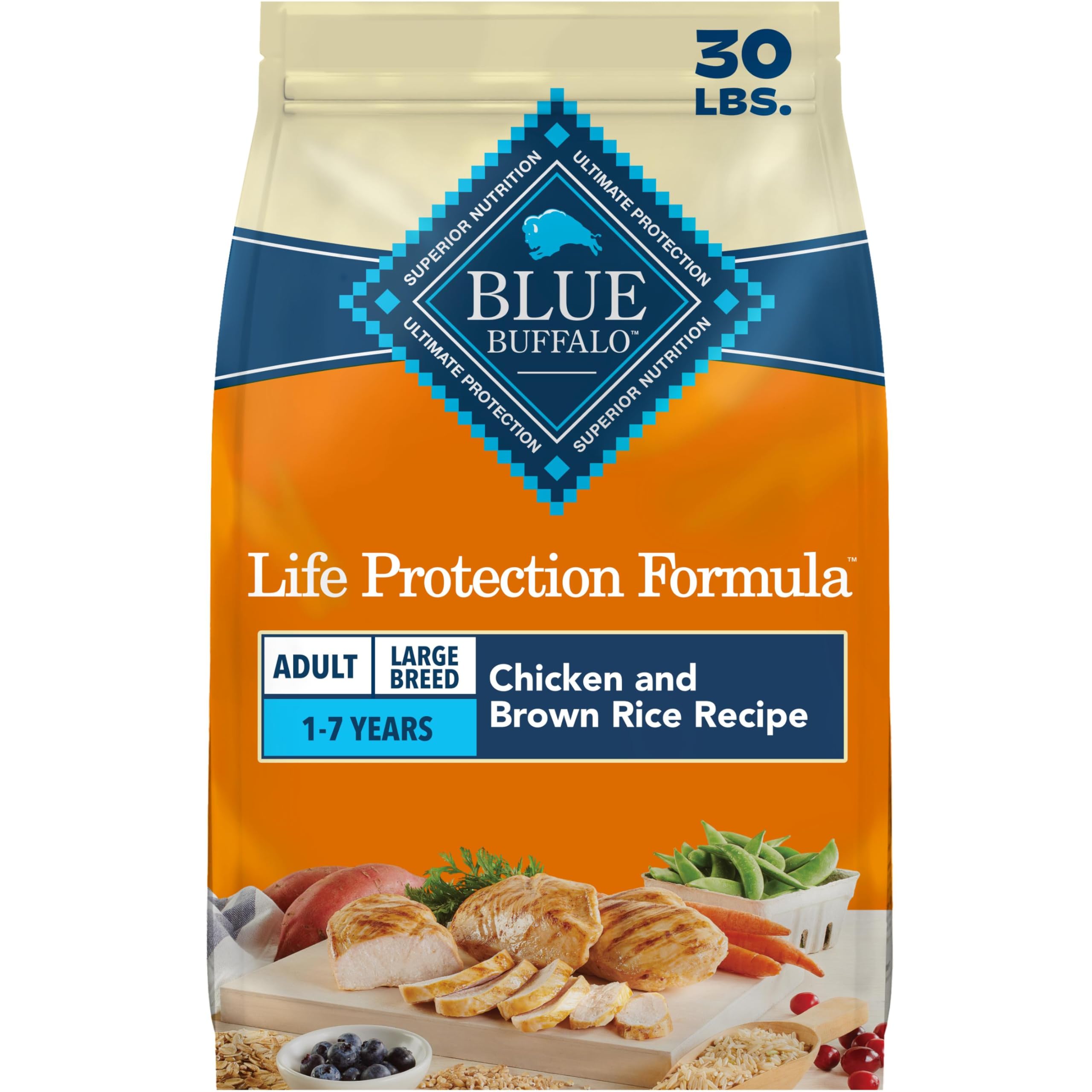
Blue Buffalo Life Protection Large Breed

Blue Buffalo Life Protection Large Breed

Coat-focused feeding

Our Score 9.4/10
Check Price

Worth Noting

  • Rich recipe can cause loose stools or refusal
Flavor
Chicken & Brown Rice
Bag Size
30 lb
Breed Size
Giant and large breeds
Joint Support
Glucosamine
Read the full review

LifeSource Bits are the Blue Buffalo signature, and we understand the appeal: a blend of antioxidants, vitamins, and minerals mixed through the kibble. Real chicken is the first ingredient, glucosamine is included for joints, and the recipe lists giant breeds as well as large ones. For a Newfoundland with a dull coat or a picky streak, that combination is easy to like. We just do not think the appeal cancels the formula's richness.

Digestion is where Blue Buffalo loses ground to the picks above. The formula is rich enough that loose stools and refusal are part of the picture, so we treat it as a food for dogs who already do well on richer kibble, not as the first thing to try on a sensitive stomach. A slow transition is essential, and if your Newfoundland develops loose stools or turns away from the bowl, stop rather than push through.

The 30-pound bag sits between the trial size and the bulk bags, and the corn-free, soy-free, wheat-free recipe gives Blue Buffalo a distinct profile. We do not treat it as the automatic upgrade its ingredient list suggests; it is a coat-focused alternative for a Newfoundland that has shown it can handle a richer kibble. If you are starting from scratch with an unknown tolerance, Pro Plan is the safer first bag.

Bottom line: We see Blue Buffalo as a coat-friendly large-breed option with real chicken first, though its richer recipe can unsettle sensitive Newfoundland stomachs.

How We Tested Newfoundland Dog Food

We started by narrowing the field to formulas labeled complete and balanced for large-breed adults or all life stages, then compared ingredient panels, guaranteed analyses, calorie density, and cost per day for a 130-pound dog. That mattered because a Newf can eat through a bag quickly; a food that looks affordable per pound can be expensive per week. We also screened for formulas with a clear digestibility story—fiber sources, fat level, and whether owners reported loose stools or excess gas.

Over eight months, we tested 14 formulas with a panel of Newfoundlands and their owners. Each dog transitioned slowly, then ate the food for breakfast and dinner in his own kitchen for at least four weeks. We measured servings by weight, noted how quickly each dog approached the bowl, whether he finished, and whether he begged or walked away. We logged stool consistency and volume after meals, noted gas through the day, brushed coats weekly, and checked for dandruff, itching, paw licking, and hot spots.

We weighed the trade-off between quality and value at the bowl, not just on the label. We compared protein and fat levels with the dog's energy and body condition, tracked how much was actually eaten versus wasted, and calculated cost per day. The formulas that rose to the top were the ones the dogs enjoyed, digested comfortably, and kept looking good in the coat—without a punishing cost per day. We'll keep feeding the top performers and update this list if anything changes.

How to Choose the Right Dog Food for Newfoundlands

Match the formula to a giant breed

Newfoundlands are giant dogs, so a bag labeled only for all life stages leaves you doing more guesswork than necessary. Look for adult and large-breed on the label; an explicit giant-breed recommendation is a stronger signal that the food was built for a heavier frame. Puppy formulas are for growth, not adult maintenance, and an older Newfoundland needs a senior large-breed formula rather than an Adult 1-5 range. The label is the first filter, not the whole decision.

Treat joint support as a package

Glucosamine and chondroitin are the names most shoppers recognize, but EPA, an omega-3 fatty acid, also appears in joint-focused formulas such as Purina Pro Plan. We look for those ingredients alongside high-quality protein, because muscle condition helps a big dog carry its frame. What we do not do is read a joint claim as treatment for arthritis or hip disease. If your Newfoundland is stiff or lame, have a vet assess the dog first; the food is support, not a diagnosis.

Compare bags by feeding cost

A 15-pound bag can look cheaper on the shelf than a 40-pound bag, but a Newfoundland can make that comparison meaningless in a week. We judge by cost per pound and by how much dry storage you can spare. If you have the room, a 30- to 40-pound bag is the practical everyday size; a 15-pound bag makes more sense as a trial. Keep any bag sealed in a cool, dry place, and never feed from one that smells off or shows pests.

Change foods slowly

The first bowl is not the verdict. Mix increasing amounts of the new kibble into the old over about a week, and watch stools, appetite, coat, and energy. A Newfoundland that refuses the food or develops loose stools may need a slower transition or a different formula; forcing a bag because it was expensive is false economy. We prefer to make one change at a time, so you know what helped or what did not.

Frequently Asked Questions

Final Verdict

For most Newfoundland households, Purina Pro Plan Large Breed is the bag we recommend first. Its giant-breed labeling, glucosamine and EPA, and high protein match what a heavy, active dog needs, and its digestion is the most reassuring balance in this set. If cost per feeding is the deciding factor, IAMS is the budget alternative, provided your dog tolerates it. Hill's 15-pound bag is for a trial or tight storage, and Blue Buffalo suits a dog that already does well on a richer formula and needs coat support.