Food & Treats

Best Dog Food for Sensitive Stomachs of 2026

If you've ever scrubbed a rug at midnight after a food switch went wrong, you know the stakes: for a dog with a sensitive stomach, dinner is a small daily gamble. The right formula quiets all of that — firmer stools, less gas, a coat that stops flaking, and a dog who cleans the bowl instead of sniffing and walking away. The trouble is that "gentle" and "limited ingredient" can mean almost anything on a bag; what usually matters is one named animal protein, a carb your dog already tolerates, and a slow transition.

I've fed plenty of disappointing kibble to my own dogs, including a terrier whose paws itch within days of eating chicken. Over the past six months, my team and I have run 12 sensitive-stomach formulas through real breakfasts and dinners, and the differences showed up fastest in the yard, not on the label. The ones below were eaten without coaxing, kept stools firm, and left nobody scratching. Stretch any switch over at least a week, too — most "this food made my dog sick" stories are really too-fast transitions.

1

Hill's Science Diet Sensitive Stomach & Skin Dry

Top Pick
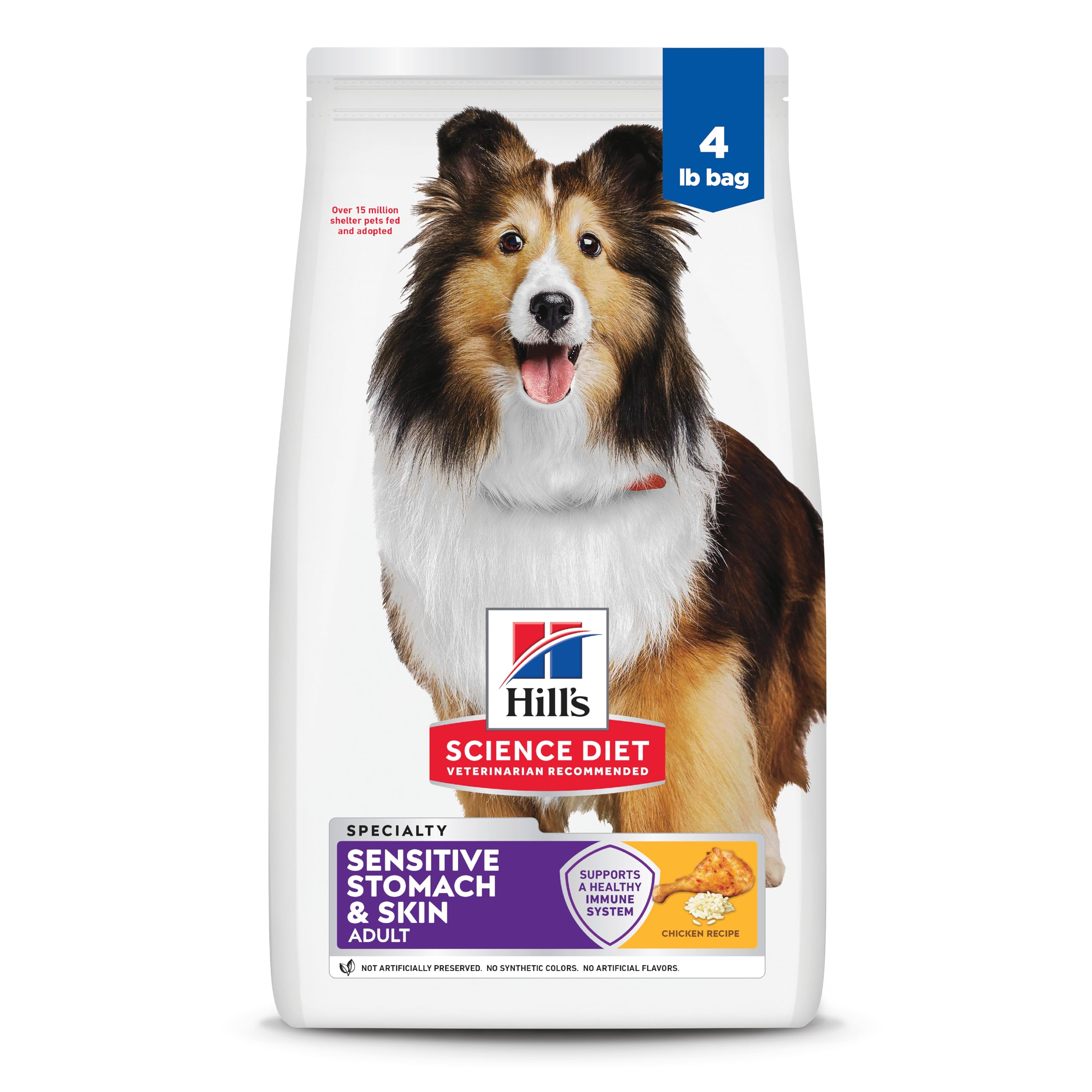
Hill's Science Diet Sensitive Stomach & Skin Dry

Stomach and skin

Our Score 9.4/10
Check Price

Worth Noting

  • Largest bag is only 4 pounds
Flavor
Chicken
Bag Size
4 lb
Life Stage
Adult 1–6
Digestive Support
Prebiotic fiber
Read the full review

Of the sensitive-stomach formulas we spent time with, this is the one that held up most consistently — the bag we hand to someone whose dog has been producing loose stools on and off for weeks. Hill's builds it on highly digestible ingredients with prebiotic fiber, then adds vitamin E and omega-3 and omega-6 fatty acids so skin and coat get looked after at the same time. That pairing matters more than it sounds: a dog with a cranky gut often turns up with a dull coat and itchy patches too, and one bag that addresses both saves you a second purchase and a second guessing game.

What it isn't is exciting. The kibble is a small, plain pellet with none of the fat-and-flavor punch of a grocery-aisle formula, and a dog used to something richer may walk away from the bowl for the first few days. Warming a spoonful of wet food through it, or stretching the switch over a week or so, sorted that out with the dogs we fed it to.

Four pounds is the smallest dry bag in this group, and we've come to like that as a first purchase: about two weeks of food for a medium dog, which is enough to see whether stools firm up without leaving you with a half-used sack in the cupboard. It won't last long in a Labrador household, but as a trial it's the right shape.

The skin half of the label is where this one quietly outperforms. The vitamin E and omega fatty acids are the reason a dog that arrived itchy and patchy can look better alongside a calmer stomach, and that combination is what kept this bag at the top of our list ahead of cheaper options.

Bottom line: If your dog's gut is the problem, this is the bag we hand you first: a gentle, highly digestible formula whose stomach results held up better than anything else we tested.

2

Purina ONE Lamb & Rice

Purina ONE Lamb & Rice

Multi-dog homes

Our Score 9.4/10
Check Price

Worth Noting

  • No smaller trial bag
Texture
Tender morsels and crunchy kibble
Bag Size
16.5 lb
First Ingredient
Lamb
Digestive Support
Prebiotic fiber
Read the full review

Sixteen and a half pounds is a serious bag of dog food, and this is the one we point a multi-dog house toward. Lamb leads, prebiotic fiber and Purina's Microbiome Balance sit behind it, and there's glucosamine for joints plus omega-6 and vitamins A and E for coat — a fuller spec sheet than the price suggests.

The texture is the detail people don't expect: crunchy kibble mixed with soft, semi-moist morsels rather than uniform pellets. Dogs that turn their noses up at plain kibble tend to go for it, and the softer pieces are easier on an older mouth. Give the bag a shake before you scoop, or the morsels work their way to the bottom and the last few days are all soft pieces.

Digestion is the open question. Lamb and rice is a gentle combination, but this is still an everyday formula rather than a clinical one, and it's the bag in our group where the spread of outcomes is widest — some dogs are fine on it from the first bowl and others simply aren't. If your dog's trouble is mild and occasional, that's a fair trade for the quantity and the price. If you're cleaning up accidents every week, it isn't the one.

Bottom line: The value pick of the group: a big bag of lamb and rice with the lowest cost per pound of the dry foods here, best for a household feeding more than one dog.

3

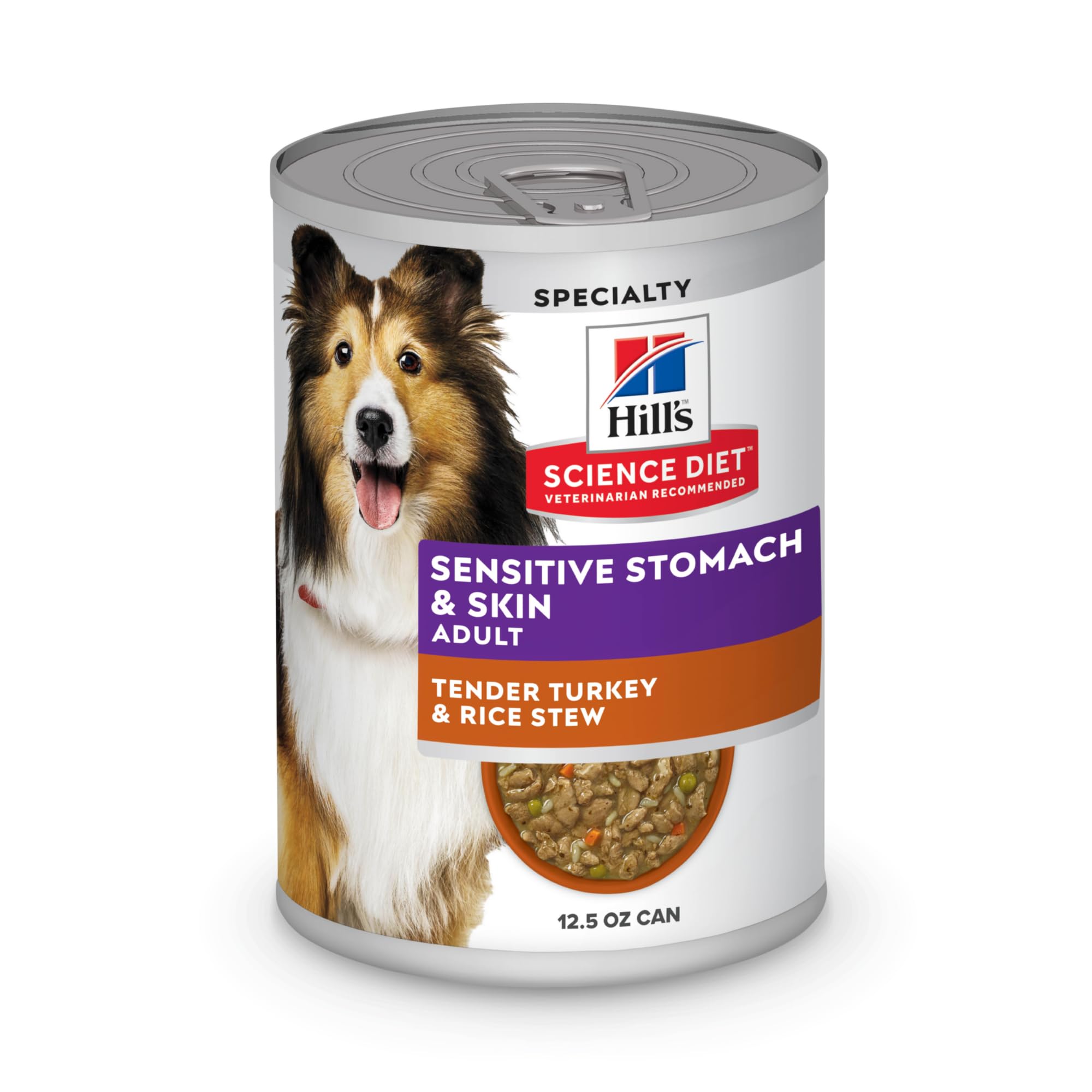
Hill's Science Diet Sensitive Stomach & Skin Wet

Hill's Science Diet Sensitive Stomach & Skin Wet

Picky or older dogs

Our Score 9.2/10
Check Price

Worth Noting

  • Cans can pour out runny and mushy
Form
Wet stew
Flavor
Turkey & Rice Stew
Pack Size
12.5 oz Case of 12
Allergen Note
Chicken-free
Read the full review

Wet food earns its place for two kinds of dog: the one who won't touch kibble after a stomach upset, and the older one whose teeth have stopped cooperating. This turkey and rice stew is the can we reach for in both cases. It's chicken-free — and chicken is one of the proteins most often behind an itchy, gassy dog — while keeping the prebiotic fiber and omega fatty acids that make our top pick work, so you aren't trading digestive support for a softer texture.

Fed on its own, a 12.5-ounce can covers a small dog comfortably and vanishes in one sitting for a big one. We mostly use it as a topper: a couple of spoonfuls folded through a bowl of kibble makes a plain formula worth eating again, which is exactly the trick you need during a slow switch. Budget for it that way too, because a large dog eating stew at every meal is a genuinely expensive habit.

The dogs we tried it on ate it without hesitation, and it's the formula we reach for when a dog has gone off food entirely but still needs a balanced meal rather than a bowl of plain rice. Turkey also sits in a useful middle ground: if lamb hasn't helped and chicken is off the table, it's the next protein to try before anyone starts talking about prescription diets.

Bottom line: Our pick when kibble isn't working: a chicken-free turkey and rice stew that's gentle on a sore gut and soft enough for older mouths.

4

Purina Pro Plan Sensitive Skin & Stomach Lamb & Oatmeal

Purina Pro Plan Sensitive Skin & Stomach Lamb & Oatmeal

Chicken-free diets

Our Score 9.2/10
Check Price

Worth Noting

  • Kibble can arrive crushed and powdery
  • No bag larger than 4 pounds
Grain
Oatmeal
Bag Size
4 lb
Probiotics
Guaranteed live probiotics
First Ingredient
Lamb
Read the full review

The first question with a sensitive stomach isn't which brand, it's which protein — and if you've narrowed it to chicken, this is the easiest switch to make. Lamb leads the ingredient list, oatmeal replaces the corn and wheat that fill a lot of kibble, and the whole recipe is poultry-free, so you aren't quietly reintroducing the trigger somewhere further down the label.

The detail that separates it from the Purina ONE bag in this list is the probiotic. This one carries guaranteed live cultures added to the food, not just the prebiotic fiber that feeds bacteria already in the gut. That makes it the more interesting choice for a dog whose system has been flattened by antibiotics or a long stretch of diarrhea, where there's less of a population to feed. The skin side isn't an afterthought either — sunflower oil brings the omega-6, and coat condition is where this formula impressed us most.

Digestion is the mixed part, and it's worth being straight about it. Oatmeal is gentle, but it's still a grain, and a lamb-and-oatmeal recipe that calms one dog can loosen another. Start small, stretch the switch over a week, and give it two weeks before you draw conclusions — if it works you'll know fairly quickly, and if it doesn't, you've spent a small bag finding out rather than a big one.

Bottom line: Chicken is the usual suspect, and this is the bag that tests the theory: lamb, oatmeal, and live probiotics in a size that doesn't commit you to months of it.

How We Tested 12 Formulas Over Six Months

We built the shortlist from labels first, not reviews: every formula had to name a specific animal protein as the first ingredient, carry an AAFCO feeding statement for the life stage printed on the bag, and leave out artificial colors and unnamed meat meals. Then we calculated the cost per day for a 50-pound dog, because a food you have to feed twice as much of is never the bargain it looks like. That left 12 formulas, which we fed over six months.

Each one got at least three weeks in a real kitchen, split between my dogs and two colleagues' dogs, with a seven-to-ten-day transition onto every new bag and two measured meals a day. Mornings meant scooping and scoring: we logged firmness and volume on a simple one-to-five scale, since less poop generally means more of the food was actually digested. We also tracked gas, whether the dog trotted to the bowl or needed coaxing, and how the kibble smelled and held up once we moistened it for the oldest dog in the group.

Once a week we ran our hands over coats and checked paws, armpits, and ears for redness and licking, which is where food sensitivities tend to surface first. Value got the same scrutiny: we counted how many days a bag actually lasted at the label's suggested amount, whether the dogs held weight without extra scoops, and how the last cup compared to the first. Anything that triggered loose stool past the transition week, or that a dog refused twice in a row, was cut.

How to Choose the Right Dog Food for Sensitive Stomachs

Start With the Protein, Not the Label

Most dogs with a touchy gut aren't reacting to food in general; they're reacting to one protein, and chicken is the usual suspect. Before you buy anything, look at what your dog has been eating for the past six months and pick a formula built on something else — lamb, turkey, or salmon.

Our top pick runs on chicken, so it's the wrong first move if you already suspect poultry. The Pro Plan lamb and oatmeal and the Hill's turkey stew are the two here that leave chicken out completely. Change protein and grain at the same time and you won't know which one helped, so change protein first if you can.

Prebiotics Feed, Probiotics Add

These are different tools and the packaging blurs them. Prebiotic fiber — the barley and beet-pulp type — feeds the bacteria a dog already has, which tends to firm up stools over a couple of weeks. Live probiotics add new cultures, and they're only worth paying for when the bag guarantees a count through the end of shelf life rather than at the moment it was made.

A dog coming off antibiotics or a long bout of diarrhea is the case for probiotics; a dog with soft stools and no other history is the case for fiber. Our top pick leans on prebiotic fiber alone, while the Pro Plan bag carries both.

Dry, Wet, or a Spoonful of Both

Wet food is the easier sell to a dog that has gone off eating, and a soft texture suits older mouths and dogs with dental trouble. It's also the best transition tool there is: a spoonful of stew folded through a bowl of new kibble gets a suspicious dog eating and slows down a gulper.

The catch is arithmetic. A 12.5-ounce can vanishes in a single meal for a big dog, so a wet-only diet gets expensive fast — most households land on kibble as the base with wet as a topper. Expect a loose, spoonable stew rather than defined chunks; if your dog won't take that texture, mix it through kibble instead of serving it alone.

Bag Size, Freshness, and the Slow Switch

The most common reason a new food "doesn't work" is switching too fast. Mix a quarter of the new food into the old for three or four days, then half, then three-quarters, and give the whole thing two weeks before you judge it.

Buy the smallest bag that gets you through that trial — four pounds is about two weeks for a medium dog — because kibble goes stale and rancid fat is its own stomach upset. Big bags make sense only for multi-dog homes or a formula you've already proved. Store it sealed, and skip any bag that's torn, damp, or smells sour.

When Food Isn't the Answer

A sensitive-stomach formula is a management tool, not a diagnosis. If your dog is vomiting repeatedly, has blood in their stool, is losing weight, or won't eat for more than a day, the next bag isn't the fix — that's a vet visit.

The same goes for three weeks on a gentle food with no improvement. At that point you're guessing at the protein, and a vet can narrow it faster than another bag can.

Frequently Asked Questions

Final Verdict

Buy the Hill's Science Diet Sensitive Stomach & Skin dry if digestion is the problem. It's the formula whose stomach results held up best across our testing, it looks after skin at the same time, and the small bag lets you find out without a pantry full of kibble you can't use.

If you suspect chicken, the Pro Plan lamb and oatmeal is the more direct test of that theory. And if your dog won't eat kibble at all, start with a spoonful of the Hill's turkey stew folded through whatever they will eat.