Food & Treats

Best Dog Food for St Bernards of 2026

A St. Bernard can put away four cups of kibble before you've finished your coffee, so every decision about their food gets magnified: the price per bag, the size of the kibble, and, yes, what you pick up in the yard afterward. Giant breeds also grow fast and carry a lot of weight on young joints, which means the food has to hold up nutritionally and still be something a 150-pound dog will actually finish. Get it right and mealtimes stop being a negotiation.

Over the past six months, my team and I have fed 11 formulas to a pair of extremely willing St. Bernards, and the differences showed up in the bowl, in the backyard, and on the receipt. The thing I didn't expect: the more expensive bag isn't always the costlier month, because calorie density varies enough that a cheap food can take twice as many scoops to hold weight. Every pick below earned its place on how it performed over weeks with a giant breed, not on a label claim.

1

IAMS Proactive Health Large Breed

Top Pick
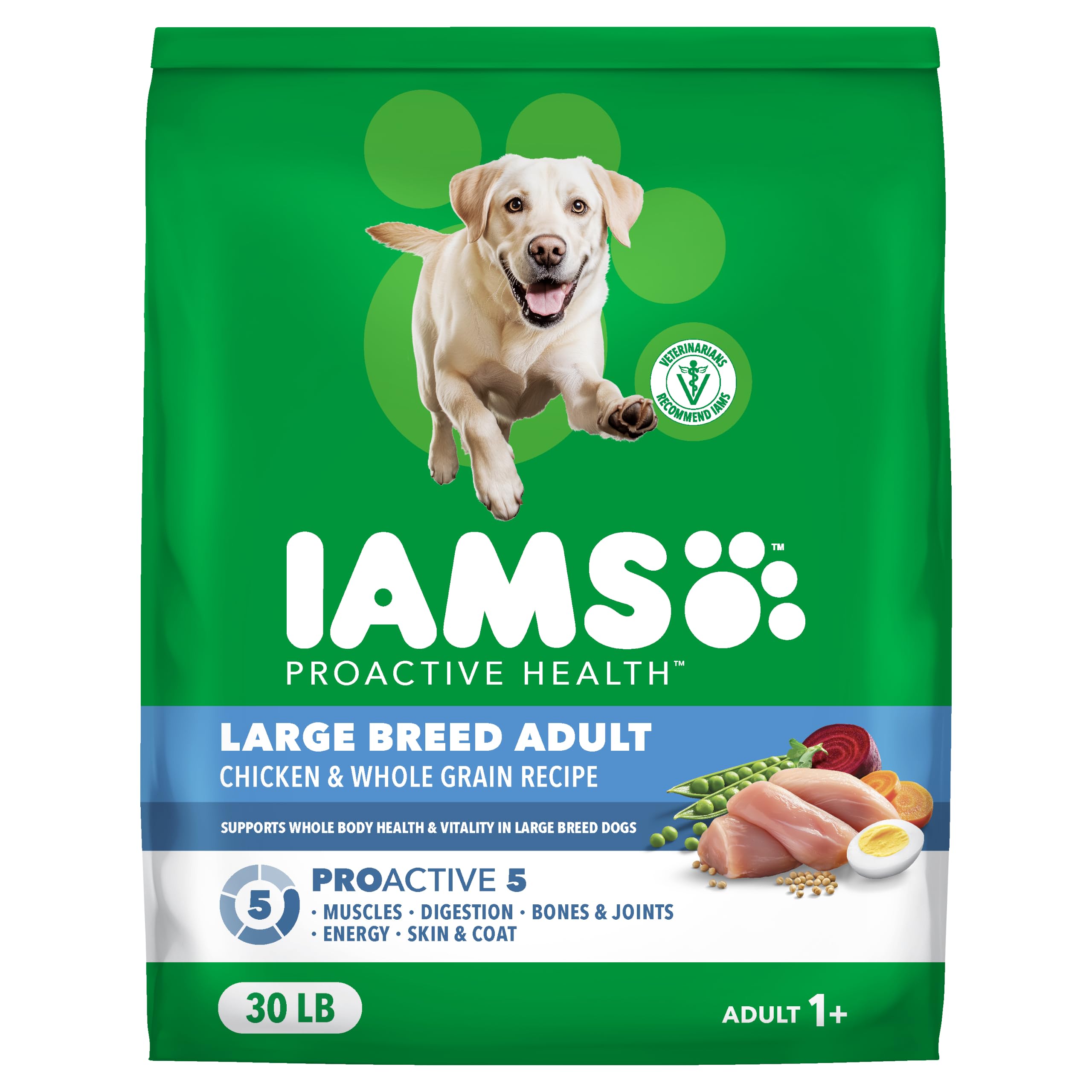
IAMS Proactive Health Large Breed

Everyday feeding

Our Score 9.4/10
Check Price

Worth Noting

  • Chicken-based, with no fish or novel-protein alternative
Bag Size
30 lb
Kibble Size
For large breeds
Joint Support
Glucosamine and chondroitin
First Ingredient
Chicken
Read the full review

A 30 lb bag disappears quickly in a St Bernard's bowl, so cost per pound deserves as much attention as the ingredient panel. IAMS Proactive Health Large Breed is where we start: it is the value end of this group, and it is a proper large-breed recipe rather than an all-purpose food in a big bag, with chicken first, kibble sized for a large-breed jaw, calcium set for big-breed bones, and glucosamine and chondroitin for the joints.

The joints are the part we care most about here. A St Bernard puts a lot of weight through four joints, and having glucosamine and chondroitin in the everyday bowl instead of in a separate supplement is one less thing to buy, measure and forget. The bigger kibble earns its place too: a dog who inhales dinner has to work a little harder at it, and slower eating is worth having in a deep-chested breed.

Digestion is the one place to go in with your eyes open. Chicken and rice does not agree with every dog from the first bowl, and soft stools in the first week or two are the rough patch to expect. Pickiness is the other variable: the flavor is plain chicken, which suits most St Bernards and bores a few. If your dog has a real skin or stomach problem rather than a fussy week, the salmon formula below is the better starting point.

Bottom line: We make this the default for most St Bernards: a large-breed formula with bone and joint support at a price that survives a giant appetite.
2

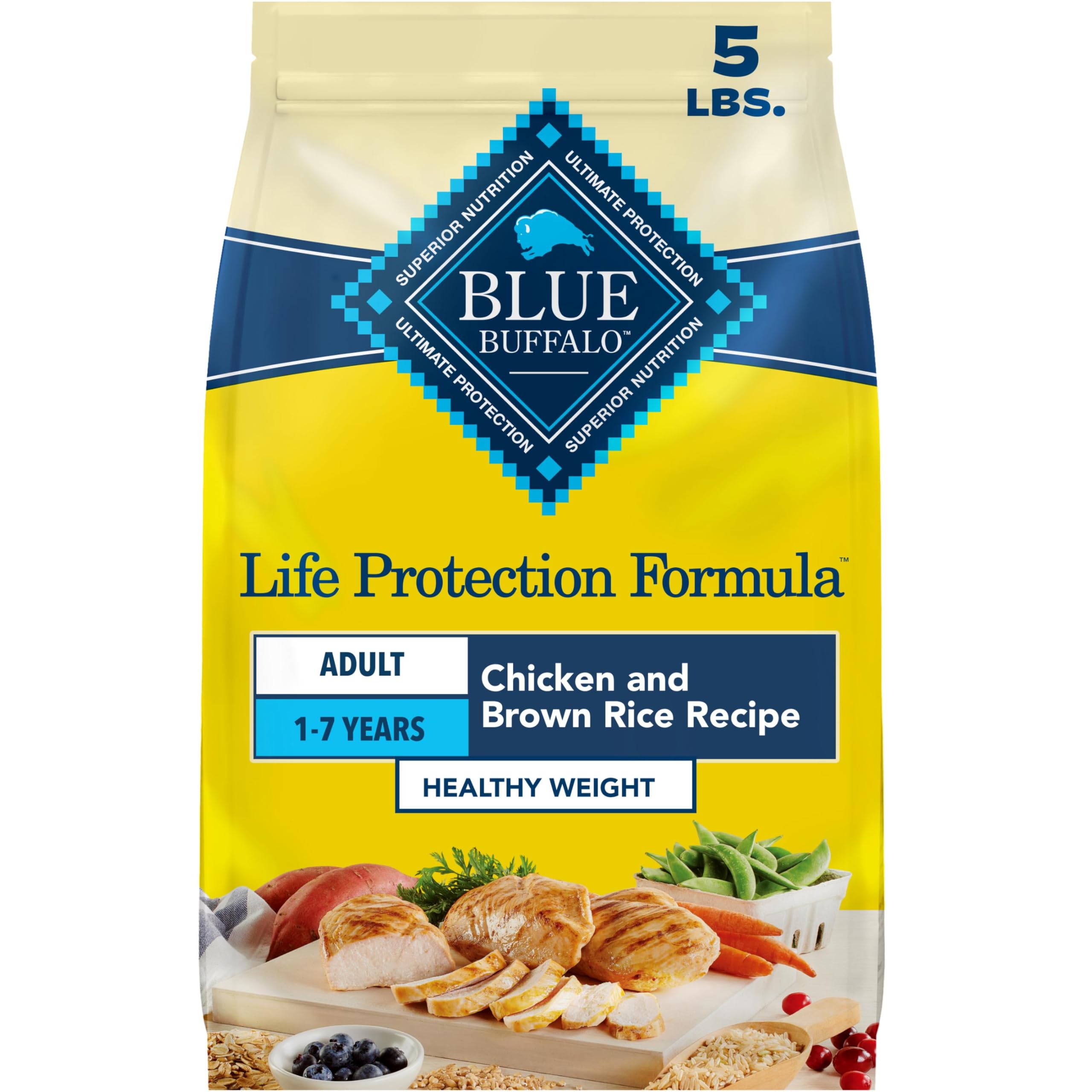
Blue Buffalo Life Protection Healthy Weight

Blue Buffalo Life Protection Healthy Weight

Weight management

Our Score 9.4/10
Check Price

Worth Noting

  • Five pounds is a short supply for a giant breed
Formula
Healthy weight
Bag Size
5 lb
Life Stage
Adult
First Ingredient
Chicken
Read the full review

Five pounds of kibble is a rounding error in a St Bernard's week, so it is worth being clear about what this bag is for. Blue Buffalo Life Protection Healthy Weight is the formula we point to when a St Bernard needs to lose a few pounds, and the small bag makes it a low-commitment way to find out whether he will eat it and whether his gut agrees before you commit to a bigger one.

Weight is a joint decision in a giant breed, and that is why this earns a place despite the format. Every pound a St Bernard carries is load through hips that are already working hard, and a healthy-weight formula trims calories while chicken stays the first ingredient, so muscle on a big frame is not sacrificed along with the fat. It suits a dog who gains on a standard adult food and needs to come down slowly rather than dramatically.

Two things we think you should know. Blue Buffalo lists this formula for all breed sizes, so what you are getting for a St Bernard is the calorie control rather than a kibble built for a giant jaw; if a dedicated large-breed recipe is the priority, the IAMS bag above is the better fit. And digestion is the least settled of the three here, so a slow introduction matters more with this one than with the others.

Bottom line: Our pick when your St Bernard is carrying extra weight: a calorie-controlled chicken formula, and a small bag that lets you try it before committing.

3

Purina Pro Plan Sensitive Skin & Stomach Large Breed

Purina Pro Plan Sensitive Skin & Stomach Large Breed

Sensitive stomachs

Our Score 9.2/10
Check Price

Worth Noting

  • Salmon recipe is a harder sell for some dogs
Bag Size
34 lb
Life Stage
Adult, large breed
Joint Support
Glucosamine and EPA
First Ingredient
Salmon
Read the full review

A St Bernard with itchy skin and a grumbly gut is a different shopping problem from a St Bernard who simply needs dinner. Purina Pro Plan Sensitive Skin & Stomach Large Breed answers that one directly: salmon is the first ingredient, fish oil supplies EPA, and the formula still carries glucosamine for joints that have to hold up a very large dog.

What reassured us is how little gets dropped for the sensitive-stomach label. The joint support stays, the formula is built for large adults rather than a bland maintenance diet, and it is complete and balanced. There is natural prebiotic fiber aimed at stool quality, plus omega-6 for skin and coat, and no corn, wheat or soy. If your dog has spent months on a chicken-based food with a dull coat and soft stools, that is the swap worth making.

The catch is price. This is the most expensive per pound of the three, and a giant breed does not eat small portions of it, so the premium shows up every month. What buys it is the fish-based recipe and the fiber blend, which makes sense for a dog who actually has the problem and much less sense as an upgrade for one doing fine on chicken. Salmon is also a flavor some dogs refuse, and a refusal at this price stings.

Bottom line: If your St Bernard's gut or skin is the problem, this is the formula we reach for: salmon and fish oil instead of chicken, with the joint support left in.

How We Chose and Tested These Formulas

We started with research rather than recommendation: guaranteed analyses, feeding guidelines, calorie content per cup, kibble dimensions, and the nutritional adequacy statement on every bag. Formulas had to be appropriate for large-breed growth or all life stages, come in a bag big enough to last more than a week in a two-dog house, and be reliably reorderable — a food you can't buy again next month doesn't help anyone. That filtering left us with 11 formulas to feed over six months.

Each formula got a two-week transition, then ran as the sole diet for at least three weeks, fed twice a day in the same bowls at the same times. We weighed scoops instead of eyeballing them, sat nearby while the dogs ate and noted whether the bowl was emptied in one go or abandoned halfway, and recorded any meal that needed coaxing, water added, or a topper to finish.

Digestion was the part that took patience. We logged stool firmness and volume every day, kept track of gas, and paid attention to how quickly the yard took on an odor after cleanup. Every four weeks we checked body condition and weight, watched coat shine and energy on the evening walk, and flagged any scratching, loose stools, or post-meal sluggishness that lasted more than a couple of days.

Because giant breeds eat so much, we also costed each food per day at the portion that actually held weight rather than per bag. Bags were stored open in the same bin for weeks to see whether the kibble went stale or the smell crept into the pantry, and we checked best-by dates on arrival and how easily each one could be reordered in a large size.

How to Choose the Right Dog Food for St Bernards

Buy for the size of the dog, not the picture on the bag

St Bernards are giant breeds, and the difference is not just portion size. Large-breed formulas set calcium and other minerals for a big skeleton and usually add glucosamine and chondroitin for joints carrying far more weight than a spaniel's ever will. The kibble is bigger too, which matters for a dog who tends to gulp. Look for large breed on the front of the bag.

This is where the trap sits. A food labelled for all breed sizes will feed a St Bernard, but you are paying for a calorie balance aimed at a Chihuahua-to-Mastiff range rather than a formula built around a giant frame, and the kibble may be small enough to disappear in one snap.

Work out the cost per pound first

Two bags at similar prices can be weeks apart in how long they last, so divide the price by the pounds before anything else. The spread among these three is wide: our top pick is the cheapest per pound and the sensitive-stomach formula is the dearest, and a St Bernard turns that gap into real money over a year.

Bag size then decides how often you reorder and how long an open bag sits in the cupboard. Thirty pounds is the practical size for one St Bernard; five pounds is a trial, not a supply.

Keep the weight off the joints

Extra weight is the most useful thing you can change about a St Bernard's joints, and it is entirely within your control. A healthy-weight formula trims calories, but it cannot stop the bowl being topped up. Measure the day's portion once, split it across two meals, and judge by body condition, ribs you can feel under a light cover and a waist behind the rib cage, rather than by how much he asks for.

Take it slowly. A St Bernard who loses weight fast loses muscle with it, and muscle is what keeps a big dog mobile.

When the gut or the skin is the problem

Chicken is the default protein in large-breed bags, and it is the first thing to suspect when a dog has itchy skin, yeasty ears or loose stools. A fish-based sensitive-stomach formula swaps the protein and adds omega-3s for skin and coat, which is the role our salmon pick plays. It is also the pricier route, so be sure there is a problem before you switch.

Make any change over a week to ten days, mixing increasing amounts of the new food into the old, and judge the result after a month rather than after three days. If nothing has changed by then, the food is not the whole story and it is worth a vet visit.

Feed a deep-chested giant safely

St Bernards are deep-chested, which puts them among the breeds at higher risk of bloat, and how you feed matters as much as what. Two or more smaller meals instead of one large one, a quiet half hour after eating rather than a run, and a slow-feeder bowl for a dog who inhales dinner are the simple precautions.

Know the emergency too. Retching without bringing anything up, heavy drooling or a swollen, tight abdomen needs a vet immediately; that is not a wait-and-see symptom in a deep-chested dog.

Frequently Asked Questions

Final Verdict

A St Bernard's food has to do three jobs at once: feed a very large body, protect the joints that carry it, and not swallow the household budget doing it. IAMS Proactive Health Large Breed does all three for most dogs, which is why we name it first: the large-breed kibble and joint ingredients are built in, and the cost per pound leaves room for the amount he actually eats.

Switch to Purina Pro Plan Sensitive Skin & Stomach if your dog has a genuine skin or gut problem. It costs more, and it earns that only when there is something to fix.