Food & Treats

Best Dog Food for Urinary Health of 2026

A urinary problem in a dog rarely announces itself. It shows up as asking to go out twice an hour, a new spot on the rug, or a vet bill with the word crystals on it. Urinary-care foods are one of the few things you actually control: they limit the minerals that form stones and, depending on the formula, adjust urine pH or add moisture so the bladder is a less welcoming place for trouble. They only work if your dog eats them, though, and plenty of these formulas sit in the bowl untouched.

My own test dog is a picky terrier who will skip a meal out of principle, so palatability stopped being a footnote for me fast. Over six months we fed 12 urinary formulas to dogs of different sizes and appetites, and the difference in enthusiasm was obvious by day three. One thing worth knowing before you scroll: struvite and calcium oxalate stones are managed in almost opposite ways, so match the food to your vet's diagnosis — the picks below are sorted with that in mind.

1

Hill's c/d Multicare Dry

Top Pick
Hill's c/d Multicare Dry

Everyday urinary support

Our Score 9.4/10
Check Price

Worth Noting

  • Chicken-based recipe rules out chicken-sensitive dogs
Flavor
Chicken
Bag Size
8.5 lb
Food Form
Dry food
Urinary Target
Struvite and calcium oxalate
Read the full review

Struvite and calcium oxalate are the two stone types Hill's built the c/d Multicare dry formula around, and that focus is why it is our default for most dogs whose vet has confirmed a struvite or calcium oxalate risk. The recipe uses controlled magnesium, calcium, and phosphorus, along with potassium citrate and omega-3 fatty acids, to make the bladder environment less friendly to crystal formation. We also like that Hill's positions it for lifelong adult feeding; a urinary diet is usually a commitment, not a short course.

The 8.5-pound bag is a practical middle size: substantial enough to be worth ordering, but still manageable for a household that needs to see whether the switch works. The chicken flavor is straightforward, and the dry format is easy to portion and store. We paid attention to the stone target here because that is the real difference between a urinary diet and an ordinary chicken kibble; this one is explicitly built for both struvite and calcium oxalate risk.

Palatability is the one place the formula can stumble. Some dogs eat it readily, while others turn away, and a refused prescription bag is a frustrating waste. If your dog is already fussy, the wet version is the gentler place to start. For a dog that eats dry food without drama, this is the one we reach for first: specific stone coverage, a familiar format, and a bag size that does not feel like a specialty purchase. On a repeat order, the 8.5-pound bag is the detail that makes the routine feel normal rather than clinical.

Bottom line: We recommend Hill's c/d Multicare dry as the default urinary diet for dogs that eat kibble, because it covers both struvite and calcium oxalate risk in one familiar formula.

2

Hill's c/d Multicare Wet

Hill's c/d Multicare Wet

Picky eaters

Our Score 9.2/10
Check Price

Worth Noting

  • Higher upfront cost than the dry bag
Flavor
Chicken and vegetable
Food Form
Wet stew
Pack Size
12 cans
Urinary Target
Struvite and calcium oxalate
Read the full review

When a dog turns away from dry food, a urinary diagnosis gets harder, not easier: the therapeutic formula has to go in, and a bowl of kibble that sits untouched does nothing. Hill's c/d Multicare wet food is the version built for that standoff. It carries the same struvite-and-calcium-oxalate strategy as the dry formula, with chicken and vegetable stew and a moisture-rich texture.

We see the moisture as the real practical benefit. Canned food adds water to the meal, which helps a dog that does not drink much, and the soft texture is easier for a reluctant eater to start. We do not treat that as a substitute for a vet's stone plan, but it can make the plan easier to follow. The 12-can pack is simple to rotate into meals, and the chicken-and-vegetable flavor gives a dog more to look forward to than plain kibble.

The wet food is a complete diet, and we feed it as the meal rather than as a splash over a different kibble. That matters for value: the formula only does its job when it is the food, not a garnish. For a dog that needs moisture or refuses dry food, this is the cleanest switch in the group.

Bottom line: Our pick for the dog that needs more moisture or refuses kibble is the wet c/d, which keeps the same urinary target in an easier-to-eat form.

3

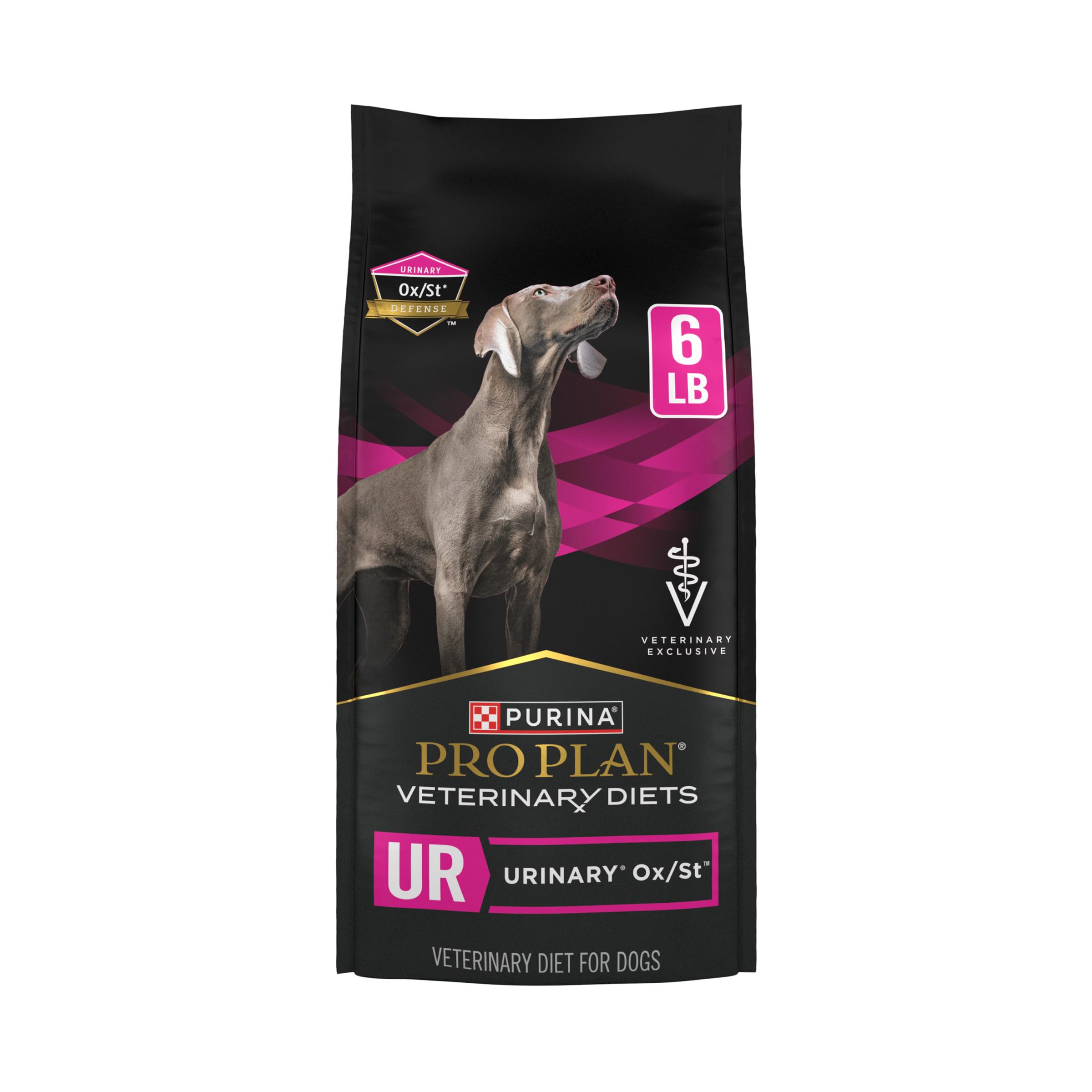
Purina Pro Plan UR Ox/St Dry

Purina Pro Plan UR Ox/St Dry

Smaller trial bag

Our Score 9.2/10
Check Price

Worth Noting

  • Six-pound bag is short for large dogs
Flavor
Chicken
Bag Size
6 lb
Food Form
Dry kibble
Urinary Target
Sterile struvite and calcium oxalate
Read the full review

The six-pound bag is the first thing we notice about Purina's UR Ox/St dry food, and it changes the decision: this is the pick for a household that wants to trial a urinary formula without committing to a larger bag, or for a small dog that takes a long time to finish one. The formula targets both sterile struvite and calcium oxalate, and Purina lists it as low in phosphorus, so it is doing a stone-focused job in a smaller package.

We also appreciate the matching wet version. A dog that needs more moisture, or simply refuses kibble, can stay on the same urinary formula instead of starting over with a different brand. The dry food is chicken-flavored and aimed at adult dogs of all breed sizes. In a large-dog house, six pounds is a short runway rather than a staple-size bag, so the small format is a trial or small-dog advantage, not a universal one.

Palatability is mixed enough to matter: some dogs eat it readily, while others walk away. We start with the small bag for a picky dog and ask the vet about the wet version before buying a larger supply. The chicken base is another practical check for dogs with sensitivities. For a smaller dog or a cautious first order, the smaller format makes the trial feel manageable.

Bottom line: We like the Purina UR dry for a smaller dog or a cautious trial, because it covers both common stone types in a bag that does not overcommit you.

4

Purina Pro Plan UR Ox/St Wet

Purina Pro Plan UR Ox/St Wet

Wet food staple

Our Score 8.8/10
Check Price

Worth Noting

  • Costs more than the dry version
Can Size
13.3 oz
Food Form
Wet ground food
Pack Size
12 cans
Urinary Target
Sterile struvite and calcium oxalate
Read the full review

At 13.3 ounces per can, Purina's UR Ox/St wet food is not a dainty portion. A 12-can case gives you a lot of moisture-rich food, and that size is the practical reason to consider it: it suits a larger dog, a multi-dog household, or anyone who wants to stretch a can across more than one meal. The formula itself targets sterile struvite and calcium oxalate, just as the dry version does, with chicken as the flavor.

We see the moisture as the real benefit. Canned food adds water to the meal, which can help a dog that leaves the bowl dry, and the ground texture is easy to eat. The can size cuts both ways: a big can is not a one-bowl serving for a toy breed, so portion what your dog needs and store the rest properly. That makes this a better fit for bigger bowls than for small ones.

Purina lists it for all life stages, which gives it a little more flexibility than the adult-only formulas if more than one dog is eating the same food. We still check the stone diagnosis with the vet first: urinary diets are not interchangeable, and a formula aimed at the wrong crystal type is not a bargain. For the right dog, the large can and matching dry food make a coherent wet-or-dry routine.

Bottom line: We keep the Purina UR wet in the mix for bigger dogs and multi-dog homes, where its large cans and moisture-rich texture make a urinary diet easier to serve.

5

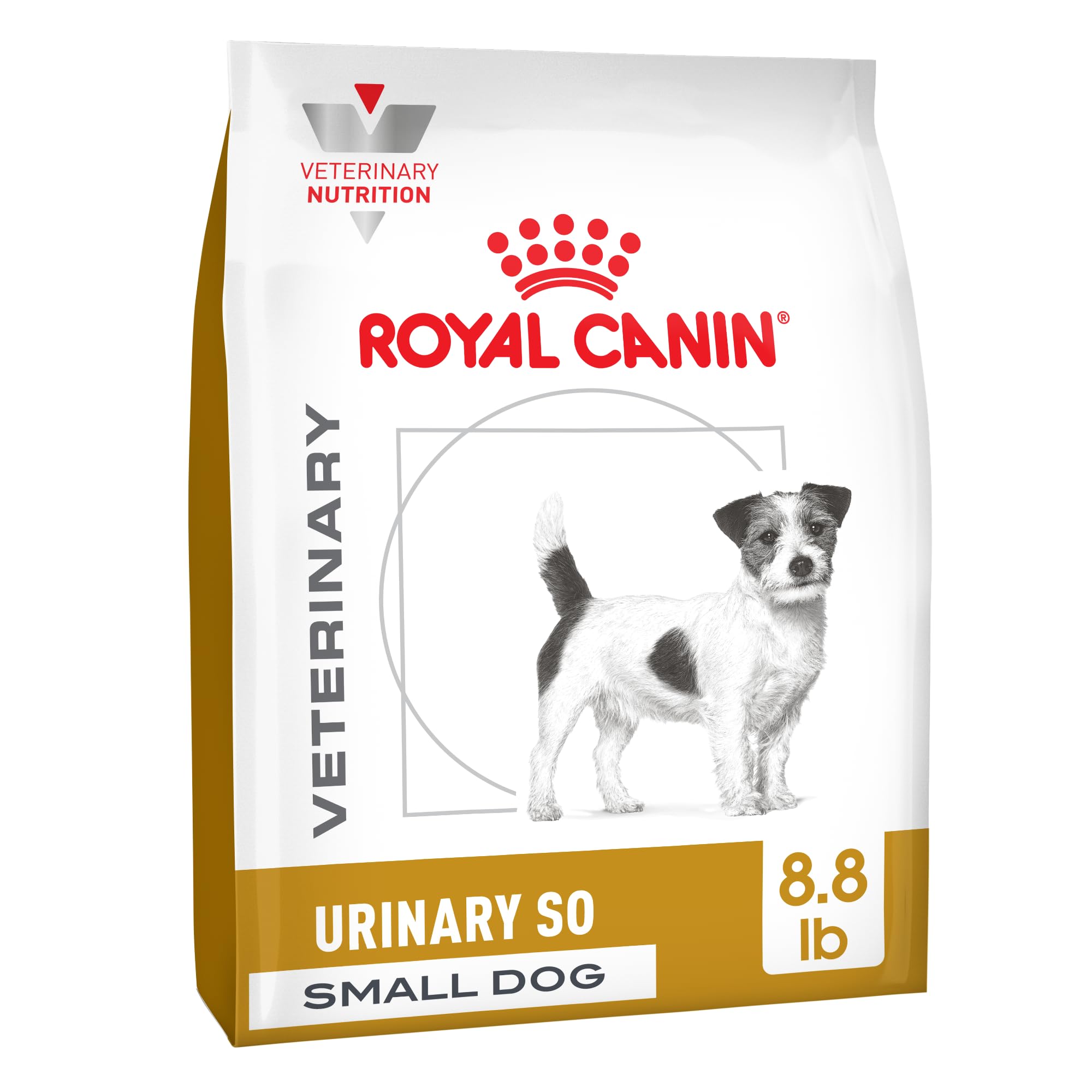
Royal Canin Urinary SO Small

Royal Canin Urinary SO Small

Small dogs

Our Score 8.6/10
Check Price

Worth Noting

  • Premium price for the bag
Bag Size
8.8 lb
Dog Size
Under 22 lb
Food Form
Dry food
Urinary Target
Struvite and calcium oxalate
Read the full review

Small dogs have a different version of the urinary-food problem. They eat less, their kibble needs to be manageable, and an 8.5-pound bag can sit around long enough to become a storage question. Royal Canin's Urinary SO Small is built around that set of constraints: it is for adult small dogs under 22 pounds, with an adapted kibble size and the urinary job of helping dissolve pure struvite stones and prevent calcium oxalate stones.

The S/O index is Royal Canin's name for the bladder environment the formula is meant to create. In practical terms, the food is not just a smaller bag of a large-dog formula; the nutritional target is specific to urinary stone risk. We also noted the kibble is shaped for small mouths, which matters more than it sounds: a dog that gulps or struggles with large pieces may leave a therapeutic food behind even when the flavor is right.

We place this behind the Hill's and Purina dry picks for most households because its advantage is narrow. If your dog is over 22 pounds, this is not the right bag, and a formula intended for a larger dog makes more sense. For a small dog that has struggled with kibble size, though, the focus earns its keep. It is a specialist pick, not the default for every urinary case.

Bottom line: We point small-dog households to Royal Canin Urinary SO Small when the vet has confirmed a struvite or oxalate problem, because the kibble and formula are built for dogs under 22 pounds.

How We Tested Urinary-Health Dog Foods

We started with labels, not reviews. Every formula had to carry a complete-and-balanced nutritional adequacy statement for a named life stage and a urinary claim specific enough to verify — a target urine pH, restricted magnesium, phosphorus, and calcium, or added moisture. Bags promising only vague urinary support didn't make the cut. From about 30 candidates we bought 12, spanning wet and dry, veterinary-channel and over-the-counter, and a wide spread of cost per day for a 50-pound dog.

Each food got a slow two-week transition, then at least eight weeks in the regular rotation, fed in the dog's own bowl at the usual times. We logged how fast the bowl emptied and whether the dog walked away and came back, since a food nobody finishes is a food that does nothing. We refilled a marked water bowl at the same hour each morning and recorded how much was gone, because pushing water intake is half the point. Kibble from the bottom of the bag got checked at week six — some stayed crisp, some went stale and crumbly, and a few bags resealed better than others.

Vet-collected urine samples at the start, midpoint, and end of the six months gave us pH, specific gravity, and crystal counts to compare against each formula's claims, and we noted stool quality and coat condition along the way. Finally, we priced a month of feeding for a mid-size dog against a single recheck, because value here is measured against what the food is supposed to prevent.

How to Choose the Right Dog Food for Urinary Health

Start With the Stone Type

Urinary diets are not interchangeable. Hill's c/d and Purina UR Ox/St are built around struvite and calcium oxalate risk; Royal Canin's Urinary SO Small does the same broad job for small dogs. A dog with urate or cystine stones needs a different formula, so ask your vet for the stone or crystal type, not just a yes-or-no on urinary food. If your dog is dissolving a stone, the follow-up plan matters too: prevention and dissolution can call for different feeding durations.

Write down the diagnosis and the food's target before you order. The label should match the problem your vet is managing, and if it does not, stop and ask rather than splitting the difference between two bags.

Choose Wet, Dry, or Both

Wet food contributes water to the meal, which is useful for a dog that leaves the bowl dry, and it is often easier to get a reluctant eater started. Hill's c/d wet and Purina UR wet both carry a struvite-and-oxalate formula in canned form. Dry food is more convenient to store and portion, and the right dry formula can be complete on its own. The trap is assuming that adding water to ordinary kibble creates a urinary diet. It does not. Choose a formula your vet approves, then use the format your dog will eat consistently.

Match the Package to the Dog

A six-pound bag is a sensible trial for a small dog or a cautious first order; the same bag disappears quickly in a large-dog household. An 8.5-pound bag can be economical for a medium dog but a long commitment for a toy breed. Cans bring their own math: 13.3-ounce cans suit bigger bowls and multi-dog homes, while smaller dogs need portioning and refrigeration after opening. Match the format to how fast your dog will finish it, not just to the price on the listing.

Plan for Palatability and Cost

Prescription urinary food is a recurring cost, and a bag your dog refuses is the most expensive outcome of all. If your dog is picky, start with the smallest format that lets you test acceptance, or ask your vet whether a wet version is appropriate. A slow transition helps, but you should confirm the approach with your vet rather than mixing in a different food indefinitely. Once a formula works, compare cost per feeding rather than bag price alone; a larger bag can be cheaper per meal, while a smaller one limits waste.

Frequently Asked Questions

Final Verdict

After testing the set, we recommend Hill's c/d Multicare dry as the default for dogs whose vet has confirmed struvite or calcium oxalate risk. It puts the broad stone-targeted formula in the most practical everyday format, and the 8.5-pound bag suits regular feeding for most medium dogs.

If your dog refuses kibble or needs more moisture, choose the c/d wet instead. For a dog under 22 pounds, Royal Canin's small-breed formula is the more tailored fit.