Food & Treats

Best Dog Food for Weight Gain of 2026

The first time I ran a hand down my rescue dog's spine, I could count every vertebra. The vet's instructions were simple — put weight on him — but the feeding part wasn't: he'd sniff the bowl, eat three bites, and walk off. That's the double job a weight-gain food has to do, packing more calories and usable protein into each scoop while still being something a thin, fussy dog will actually finish.

Since then I've worked through this with a picky senior, an anxious foster, and a lanky adolescent who burns off everything he eats. Over six months we put 12 formulas in front of a small panel of dogs, weighing each one monthly and watching what came out the other end. Calorie density is the number most shoppers never check, and it varies more than you'd think — feeding extra of a light food just fills a dog up and sends the rest through. The picks below deliver calories a dog will actually eat.

1

IAMS Proactive Health Minichunks

Top Pick
IAMS Proactive Health Minichunks

Adult dogs

Our Score 9.4/10
Check Price

Worth Noting

  • Small 3.3-lb bag runs out quickly
Life Stage
Adult
Kibble Size
Minichunks
Protein Claim
High Protein
First Ingredient
Chicken
Read the full review

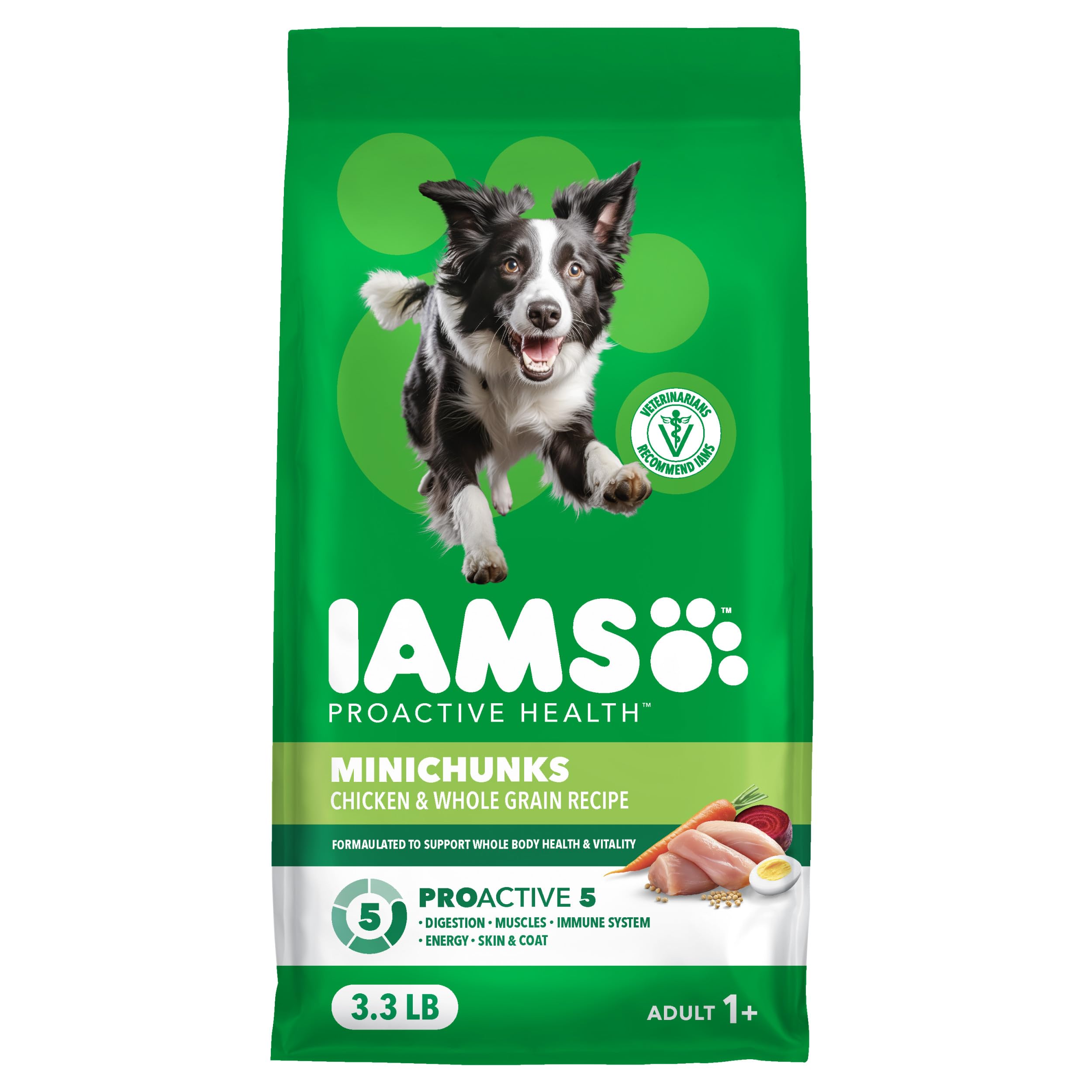
Small kibble is usually a puppy or toy-breed detail, but it is the first thing we noticed about IAMS Proactive Health Minichunks. The pieces are small enough that a dog with a delicate mouth or a habit of nibbling can finish a bowl without leaving half the serving behind, which matters when the goal is simply getting more food in. The recipe leads with chicken and carries a high-protein claim, so it is built around muscle support rather than a weight-loss formula.

We think that makes it the most useful default here for an adult dog that needs to add condition. You still have to feed for the target weight, not the current one, but a protein-first kibble gives the extra calories something to build with. The natural fiber and prebiotic blend are a sensible bonus for digestion, and the smaller pieces make it easy to stretch the daily ration across an extra meal. Loose stools can happen with any abrupt switch, so start by mixing the old food in rather than filling the bowl with a new bag.

What we keep coming back to is the flexibility. It works as a complete adult food, it is easy to carry a scoop to a training session, and it does not force you into a giant bag if you are still working out portions. It is not a puppy formula or a calorie-dense performance food, so do not expect it to do the work of a growth diet. For an adult dog that needs a little more muscle and a food it will actually finish, this is the one we point to first.

Bottom line: A high-protein, small-kibble adult food we recommend for dogs that need to build muscle and finish the bowl without a struggle.
2

Pedigree Puppy Dry Dog Food

Pedigree Puppy Dry Dog Food

Growing puppies

Our Score 9.4/10
Check Price

Worth Noting

  • Small bag for multi-puppy homes
Bag Size
3.5 lb
Life Stage
Puppy
Key Nutrients
DHA, calcium, phosphorus
Protein Claim
High Protein
Read the full review

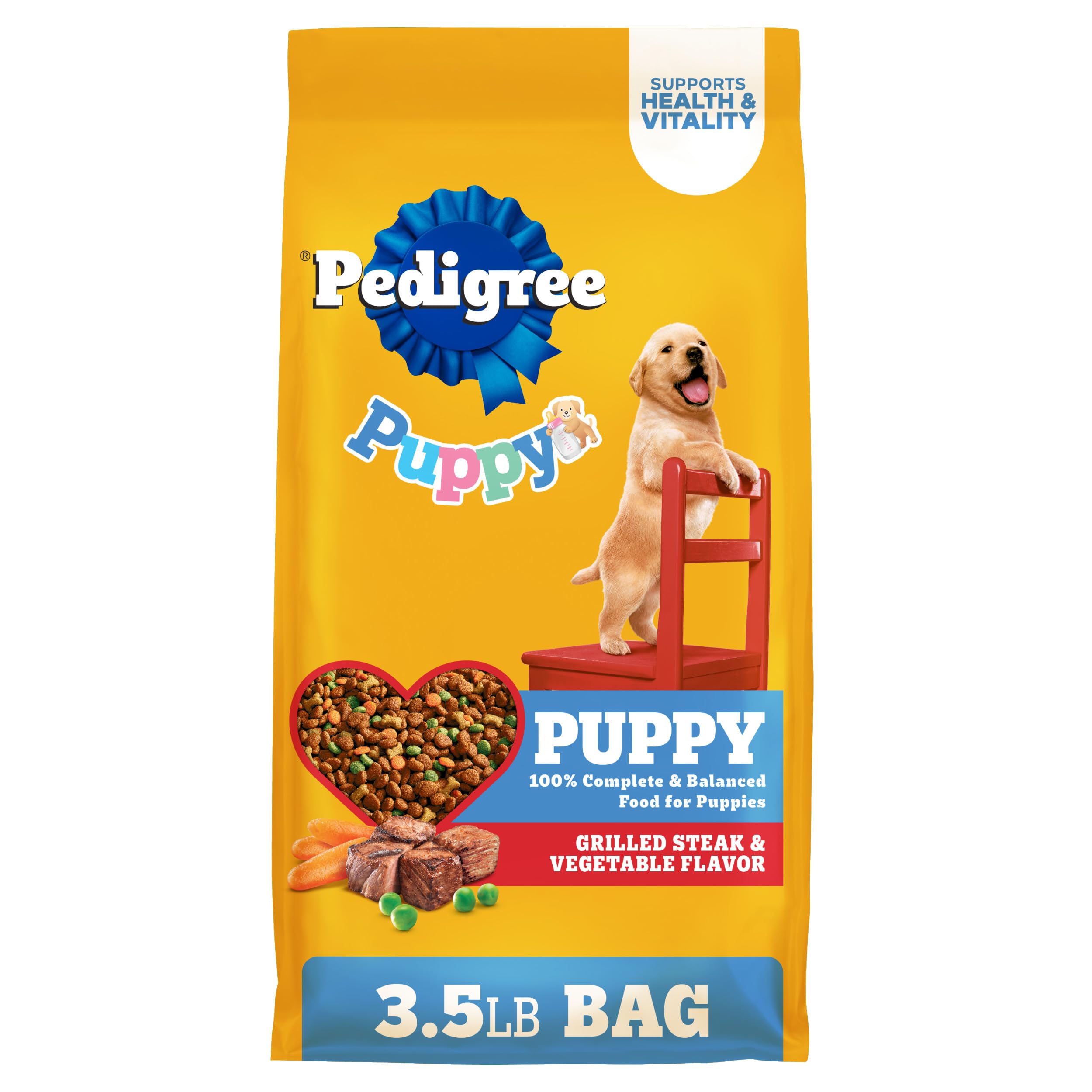
Puppies are the one group here with a built-in reason to eat more: they are supposed to be gaining. Pedigree Puppy is the only formula in this set labeled for that growth window, and it carries the nutrients that matter for it — DHA for brain development, calcium and phosphorus for bones, and a high-protein claim for muscle. That makes it a more sensible starting point for a young dog than simply filling a puppy bowl with an adult maintenance food.

We like that it is complete and balanced rather than a supplement or a mixer. The 3.5-pound bag is easy to handle, and the kibble is small enough for a puppy's mouth, though a very small toy breed may still prefer a softer texture. The value is strong for a food that is doing a specific job, and the bag is a reasonable size to finish while the food is fresh. The caveat is transition: puppies can get loose stools when any new food arrives too quickly. Start with a small proportion mixed into the old food and stretch the switch over a week or so. For an adult dog that needs to gain weight, choose an adult formula instead; this one is built for growth, not adult maintenance.

Bottom line: This is the puppy formula we point to when a young dog needs a complete growth diet with DHA and bone minerals, not an adult maintenance food.

3

IAMS Proactive Health Large Breed

IAMS Proactive Health Large Breed

Large breeds

Our Score 9.4/10
Check Price

Worth Noting

  • Large kibble and bag are not for small dogs
Bag Size
30 lb
Breed Size
Large
Life Stage
Adult
Protein Claim
High Protein
Read the full review

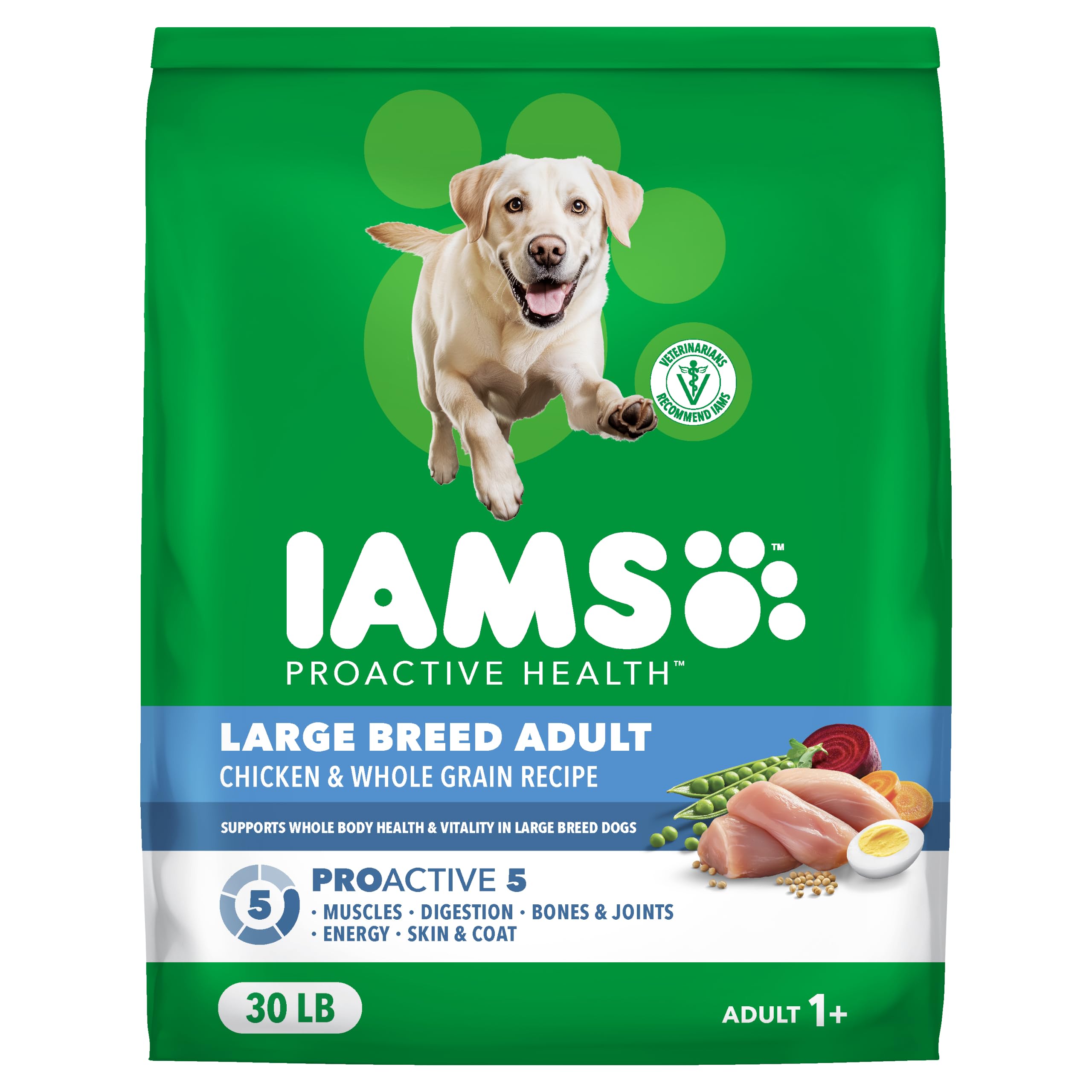
A 30-pound bag is a commitment, and IAMS Proactive Health Large Breed is built for the households that can justify one: big dogs that eat big bowls and need to carry more muscle without stressing their joints. The formula leads with chicken, carries a high-protein claim, and adds optimal calcium plus glucosamine and chondroitin for joint support. That combination is why we put it on the short list for a large-breed adult that needs to fill out.

Portion control is the part that matters. A large bag makes it easy to feed a little more at each meal without opening a new bag every week, and the bigger kibble gives a large dog something to chew rather than swallow whole. We also appreciate that the joint support is built into the food instead of bolted on as a separate supplement; it keeps the daily routine simple.

The fit is specific: this is a large-breed formula, and the bigger kibble and bag are the point for a big dog. For the right household, the value per pound is hard to argue with, and the bag size suits a multi-dog home or a dog that goes through kibble quickly. Start any switch slowly, especially if your dog has a sensitive stomach.

Bottom line: A large-breed adult food with high protein and joint support that makes sense for big dogs and households that go through a 30-pound bag.

4

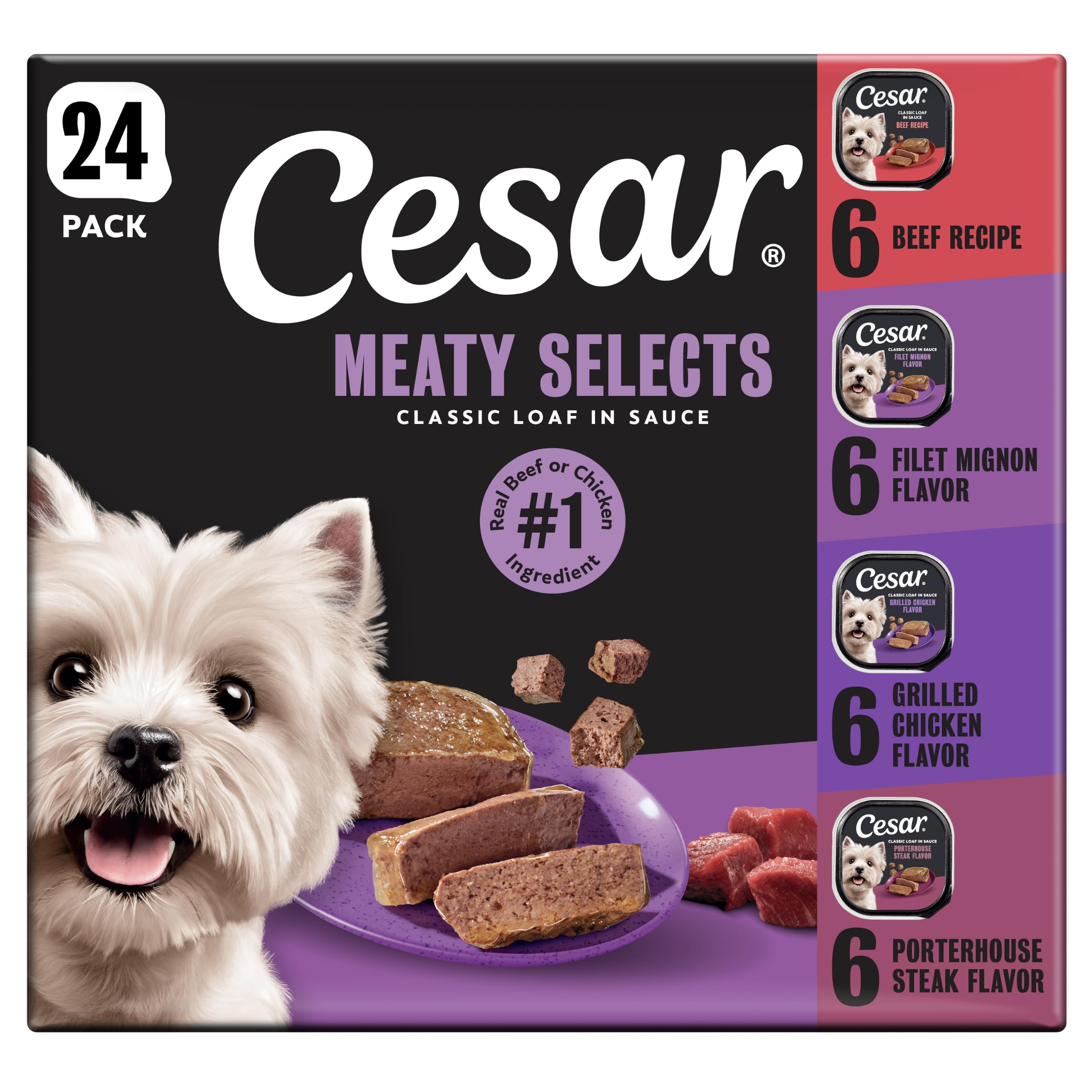
Cesar Classic Loaf in Sauce

Cesar Classic Loaf in Sauce

Small breeds

Our Score 9.4/10
Check Price

Worth Noting

  • Pricey per meal compared with dry food
Form
Wet loaf
Breed Size
Small breeds
Life Stage
Adult
Pack Count
24 ct
Read the full review

Cesar's 3.5-ounce trays are sized for small dogs, and that is the lens to use here. The loaf is soft, saucy, and made with real beef or chicken as the first ingredient; it is complete and balanced for adult dogs, so it can stand alone as a meal rather than only dressing up kibble. For a small-breed dog that needs to put on a little weight but loses interest in dry food, the single-serve tray is a useful tool.

We appreciate the portion control. There is no half-can to wrap or refrigerate, and the tray opens quickly, which makes it easy to add a meal without a lot of prep. The variety pack also helps with a dog that gets bored: rotating flavors is simpler when each tray is already a complete meal. The texture is soft enough for older mouths, and the sauce gives it an aroma that gets noses into the bowl. The catch is that this is a small-breed formula, and digestion is mixed, so introduce it gradually if your dog has a sensitive stomach. It is not the base food we choose for a large dog or a dog that needs a lot of calories per bite.

Bottom line: A small-breed wet food we choose for portion control and a soft texture that helps a picky dog finish a complete meal.

5

Purina Moist & Meaty Soft Dog Food

Purina Moist & Meaty Soft Dog Food

Picky eaters

Our Score 9.2/10
Check Price

Worth Noting

  • Bulkier to store than kibble
Form
Soft pouches
Life Stage
Adult
Pack Count
36 ct
Protein Source
Real beef
Read the full review

Soft, pouch-packed food is not the first thing most people picture for weight gain, but it solves a specific problem: the dog that walks away from a full bowl of kibble. Purina Moist & Meaty comes in individual pouches, each with a soft, meaty texture and real beef, and it is complete and balanced for adult dogs. For an older dog with dental trouble or a picky eater that needs to be coaxed back to finishing meals, that texture is the whole point.

We found the pouches easy to portion and easy to store, and the fact that each one is a complete meal rather than a topper keeps the feeding plan simple. You can feed it on its own or use it to make a dry ration more appealing, but count it as part of the daily calories either way. The soft texture is also handy for dogs that gulp; it slows them down a little compared with a bowl of small kibble. For the dog that needs encouragement more than a bigger scoop, that is enough to earn its place.

What we do not like is the variability. Some dogs refuse the texture outright, and digestion is mixed, so it is not the food we reach for first with a sensitive stomach. Neither issue is a dealbreaker if you have a picky dog that will eat this and the cupboard space for the box.

Bottom line: Soft, complete pouches we keep on hand for older or picky dogs that need encouragement to eat, with no can to open or refrigerate.

6

Nutrish Beef, Pea & Brown Rice

Nutrish Beef, Pea & Brown Rice

Multi-dog homes

Our Score 9.2/10
Check Price

Worth Noting

  • Large bag takes up storage space
  • Not a high-protein performance formula
Bag Size
40 lb
Breed Size
All breed sizes
Life Stage
Adult
First Ingredient
Real beef
Read the full review

Nutrish comes in a 40-pound bag, which tells you who it is for: a multi-dog household or a big dog that goes through kibble fast. The recipe leads with real beef, adds peas and brown rice, and is veterinarian reviewed and complete for adult dogs. It covers the basics for a dog that needs to hold condition while eating a lot of food.

We like the ingredient list for the price. Real beef first, no artificial flavors, and a formula that supports muscle, digestion, and skin and coat without turning mealtime into a project. The large bag is the real draw, though: fewer reorders and less packaging. For a multi-dog home, that is a meaningful convenience.

The trade-off is consistency. Taste and digestion are mixed, and some dogs seem to do better on one bag than the next; the scent has also been hit or miss. That is not unusual for a large, value-priced bag, but it is a reason to introduce it slowly and watch the bowl. For a dog that does well on it, the large format is the practical choice for a household that needs to keep weight on without constant restocking.

Bottom line: A 40-pound value bag we recommend for multi-dog homes that need a complete adult food with real beef first and a lower cost per meal.

How We Tested Weight-Gain Dog Foods

We started from a veterinary nutritionist's rule of thumb: a stated calorie count per cup or kilogram, a named animal protein near the top of the ingredient list, and an AAFCO feeding statement covering growth or all life stages. From there we pulled every formula that cleared a set price per 1,000 calories and came in a bag small enough to finish before it turned, then narrowed the field to 12.

Each formula got at least three weeks, fed at breakfast and dinner and measured on a kitchen scale rather than scooped, so we knew exactly how many calories each dog was getting. Dogs were weighed monthly and body-condition scored by hand — ribs easy to feel but not see, a waist behind the ribs. We noted how fast each bowl emptied and whether anyone walked away, since flavor is the whole ballgame with a thin dog. Kibble got a squeeze between finger and thumb and a look at size, because a nine-year-old terrier with missing molars and a 70-pound chewer don't need the same nugget.

Digestion got the least glamorous notebook in the house. We logged stool firmness and frequency through the first week of every switch, noted gas, and checked skin and ears for itching or waxy buildup that might point to a reaction to a protein. Bags stayed in their original packaging in a cool cupboard, and we compared the last cup to the first — smell, texture, whether the kibble had gone soft — because a food a dog turns his nose up at in week six isn't a value at any cost per calorie.

How to Choose the Right Dog Food for Weight Gain

Start With Life Stage, Not the Label

We start with life stage because a puppy and an adult dog are solving different problems. A puppy food like Pedigree Puppy is built around growth, with DHA for brain development and calcium and phosphorus for bones; it is not the right default for an adult dog that needs to add condition. For adults, choose a complete adult formula and feed for the target weight. That usually means a high-protein adult food for muscle, not a puppy formula by default.

Read Calories Before Protein

Protein supports muscle, but weight gain comes from a calorie surplus. The useful number on the bag or can is the calorie statement, usually kcal per cup or per can, because it lets you compare a small kibble with a large one and a wet food with a dry food. We look for a complete formula with a high-protein claim when muscle condition is the goal, then use the calorie figure to set portions. A food that looks high-protein on the front can still be the wrong choice if your dog will not eat enough of it.

Match Texture to the Dog

A dog that leaves kibble in the bowl may eat more of a soft, aromatic food. The single-serve Cesar trays and Purina Moist & Meaty pouches are complete meals, not just toppers, and they can be useful for older dogs with dental issues or picky small breeds. Wet food is mostly water, though, so it is not automatically more calorie-dense than dry kibble; it earns its place when it gets a reluctant dog to finish the bowl. If you mix wet and dry, count both in the daily total.

Size the Bag and Protect the Food

Kibble size matters as much as bag size. Small chunks suit small mouths and dogs that nibble; a large-breed formula with bigger kibble gives a big dog something to chew. A 30- or 40-pound bag lowers the cost per meal, but only if you can store it airtight and finish it while it is fresh. We choose the largest bag we can store properly, not the largest bag on the shelf. For a single small dog, a 3- to 5-pound bag is easier to keep fresh; for a multi-dog home, the 30- and 40-pound formats make more sense.

Frequently Asked Questions

Final Verdict

For most adult dogs that need to add condition, our pick is IAMS Proactive Health Minichunks. It pairs a high-protein, chicken-first recipe with a small kibble that suits dogs who eat slowly or have smaller mouths, and the 3.3-pound bag is easy to work through while you dial in portions. Choose Pedigree Puppy for a puppy in its growth window, IAMS Large Breed for a big dog that also needs joint support, or Purina Moist & Meaty for a picky or older dog that needs a softer meal.