Food & Treats

Best Dog Food for Westies of 2026

Westies have a reputation for being sturdy little dogs, but their stomachs and their coats did not get the memo. Mine will flatly walk away from a bowl he doesn't approve of, and the wrong kibble shows up within a week — loose stools, a scaly patch along the flank, a 2 a.m. trot to the back door. The right formula does the opposite: firm, predictable digestion, a coat that stays thick and white, and a bowl that's empty before the scoop is back in the bin. That's what a good westie food actually fixes.

We've fed 12 formulas across four months to a rotating panel of westies, including my own, and the differences rarely came down to anything printed on the front of the bag. It was how fast a dog committed to the smell, whether the kibble was small enough for a compact muzzle to pick up, and what happened on day nine of a slow transition. Westies are small dogs with sensitive systems, so portion size and a patient switch matter as much as the ingredient panel. The picks below are the ones that earned a clean bowl and a clean backyard.

1

Royal Canin Small Adult

Top Pick
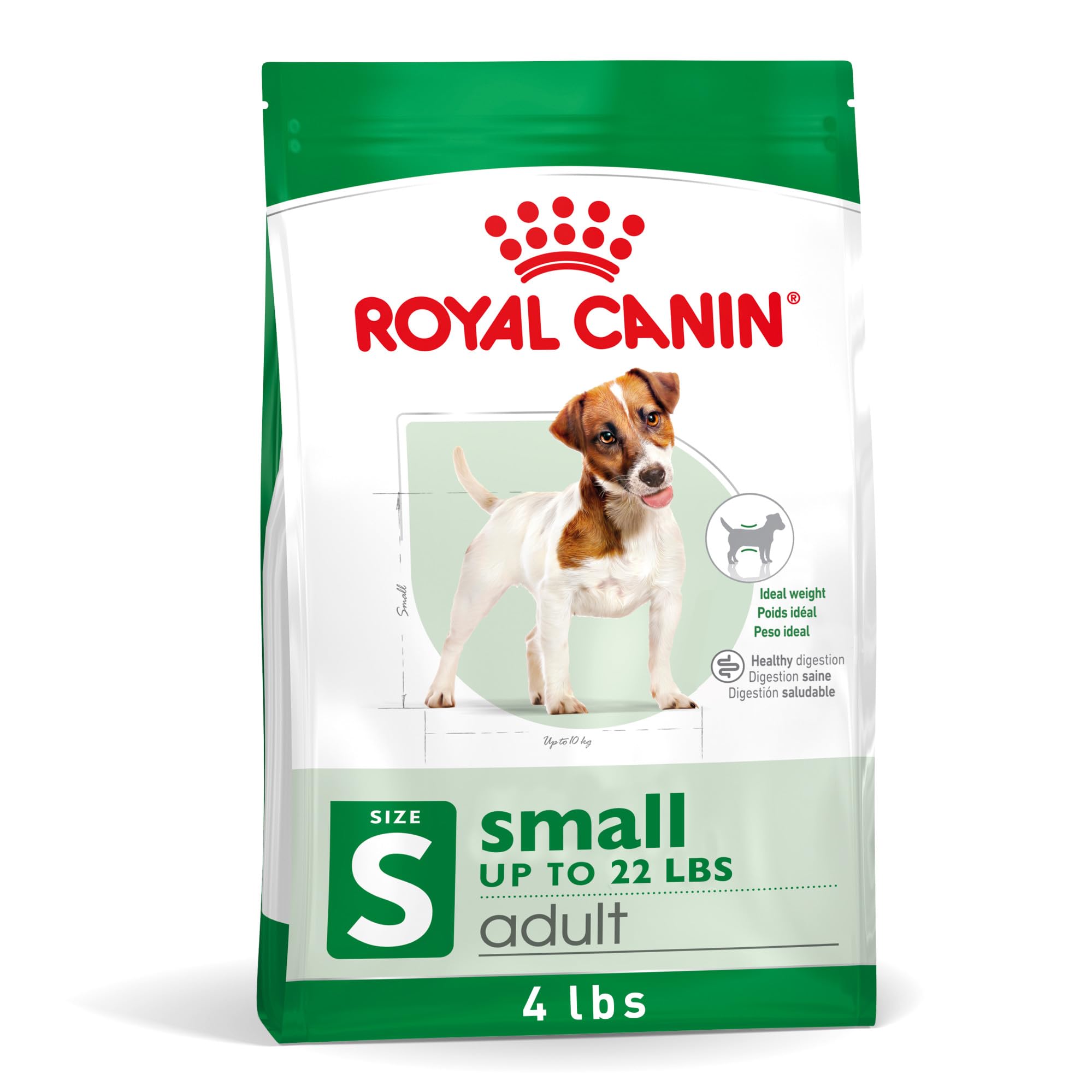
Royal Canin Small Adult

Everyday adult feeding

Our Score 9.6/10
Check Price

Worth Noting

  • Highest cost per pound in this lineup
Bag Size
4 lb
Age Range
10 months to 8 years
Dog Weight
9 to 22 lb
Digestive Support
Prebiotics, easy-to-digest proteins
Read the full review

Nine to twenty-two pounds, ten months to eight years. That's the band Royal Canin builds this formula for, and it's close to a description of an adult Westie on its own, with room either side. Nutrition aimed at a body that size is the whole pitch: controlled energy for a steady weight, and a measured calcium-to-phosphorus blend for the bones a small frame carries all day.

We place it as the everyday formula for a Westie with no history of skin or stomach trouble. The proteins are chosen to be easy to digest, prebiotics support the gut, and the kibble suits a small mouth without crumbling to dust in the bowl. It's a conservative food rather than an exciting one, and for a dog that is already doing fine, conservative is the right answer.

The four-pound bag is the smallest here, which makes it the low-commitment way to find out whether your Westie agrees before you commit to a bigger one. Check the allergen panel too: fish and wheat are both listed, so a dog with a diagnosed sensitivity should look elsewhere.

Bottom line: We recommend it as the everyday food for a healthy Westie, built for a 9-to-22-pound frame and the years between puppy and senior.

2

Hill's Small & Mini Lamb

Hill's Small & Mini Lamb

Chicken-free diets

Our Score 9.6/10
Check Price

Worth Noting

  • Milder flavor that fussier Westies may refuse
Recipe
Lamb & brown rice
Bag Size
4.5 lb
Age Range
Adult 1-6
Allergens
Chicken meat free
Read the full review

If your Westie has ever improved on a food that wasn't chicken, this is the bag to reach for. Hill's makes the Small & Mini adult recipe in lamb and brown rice, and the panel is chicken-meat free, which matters more for a Westie than for most breeds because a protein swap is usually the first thing worth trying when the scratching starts.

We keep it in the lineup for exactly that job. On paper the recipe is modest: high-quality protein for lean muscle, a balanced energy mix, pumpkin and easy-to-digest ingredients for the gut. Its protein is lamb rather than the chicken most of these formulas lead with, and that's a narrow reason to buy a food, but a decisive one if it happens to be your reason.

The catch is appetite. Lamb and brown rice eats milder than the chicken recipes here, and a fussy Westie may turn its nose up at a straight swap. Mix it in over a week rather than replacing the bowl overnight, which also gives you a cleaner read on whether the change is doing anything for the skin.

Bottom line: We keep this one for the Westie that does better off poultry: a lamb recipe with the same small-breed build and tiny kibble.

3

Pedigree Small Dogs

Pedigree Small Dogs

Lowest running cost

Our Score 9.6/10
Check Price

Worth Noting

  • No sensitive-skin or breed-specific formula
Recipe
Steak & vegetable
Bag Size
14 lb
Breed Size
Small
Skin & Coat
Omega-6 and zinc
Read the full review

Per pound, nothing here costs less. Pedigree's small-dog formula is the budget floor of this lineup, and the recipe still covers the basics: thirty-six vitamins, minerals and amino acids, omega-6 and zinc for the skin and coat, natural fibers for digestion, and kibble sized for a small mouth.

Fourteen pounds is a sensible middle size. It's big enough that you're not reordering every few weeks and small enough to finish while it's still fresh, which makes it a better fit for one Westie than the thirty-pound bags and a better value than the five-pound ones.

Feeding it is uncomplicated, but switch over a week as you would with any new food. Watch the stool rather than the bowl. This is a food where a slow introduction tells you more than a first enthusiastic meal does.

Our take is that it's a floor, not a first choice. For a healthy Westie in a tight month it will feed the dog adequately, and the piece size is right. For a Westie with skin or stomach trouble, the money saved is money spent twice, and the formulas above are where that problem actually gets addressed.

Bottom line: A complete small-dog formula at the lowest cost per pound here, the floor we point to when the food bill has to come down.

4

Hill's Sensitive Stomach & Skin

Hill's Sensitive Stomach & Skin

Sensitive Westies

Our Score 9.4/10
Check Price

Worth Noting

  • Costs more per bag than any other pick here
Bag Size
15 lb
Age Range
Adult 1-6
Breed Size
Small & mini
Skin & Coat
Vitamin E, omega-3 & 6
Read the full review

A Westie's two weak spots are the skin and the gut, and this is the bag we hand people first. The base is highly digestible, with prebiotic fiber and easy-to-handle protein, and Hill's adds vitamin E with omega-3 and 6 fatty acids for the coat plus vitamins C and E for the immune system. Twenty-seven nutrients, complete and balanced, dairy free.

The kibble is the other half of the argument. Small & Mini pieces are among the tiniest here, the sort a Westie picks up without the head-tilt-and-crunch a bigger chunk demands. For a dog that has lost a tooth or two, or one that bolts its food, that counts for more than any ingredient panel. The pieces also scoop and level cleanly, which sounds trivial until you're measuring out of a bag of fat chunks twice a day.

The bag is a fifteen-pounder, the largest single purchase in this lineup and a lot of food for one small dog. Decant it into something airtight, keep the bag's date with it, and it stays fresh to the bottom rather than going stale halfway down.

One boundary to check before you order: Hill's labels this one for adults one to six. A Westie past seven falls outside that window and belongs on a senior formula, where protein and mineral levels are built differently. Check the age before you check anything else.

Bottom line: Our top pick: the strongest combination of skin support and gentle digestion here, in kibble small enough for a Westie's mouth.

5

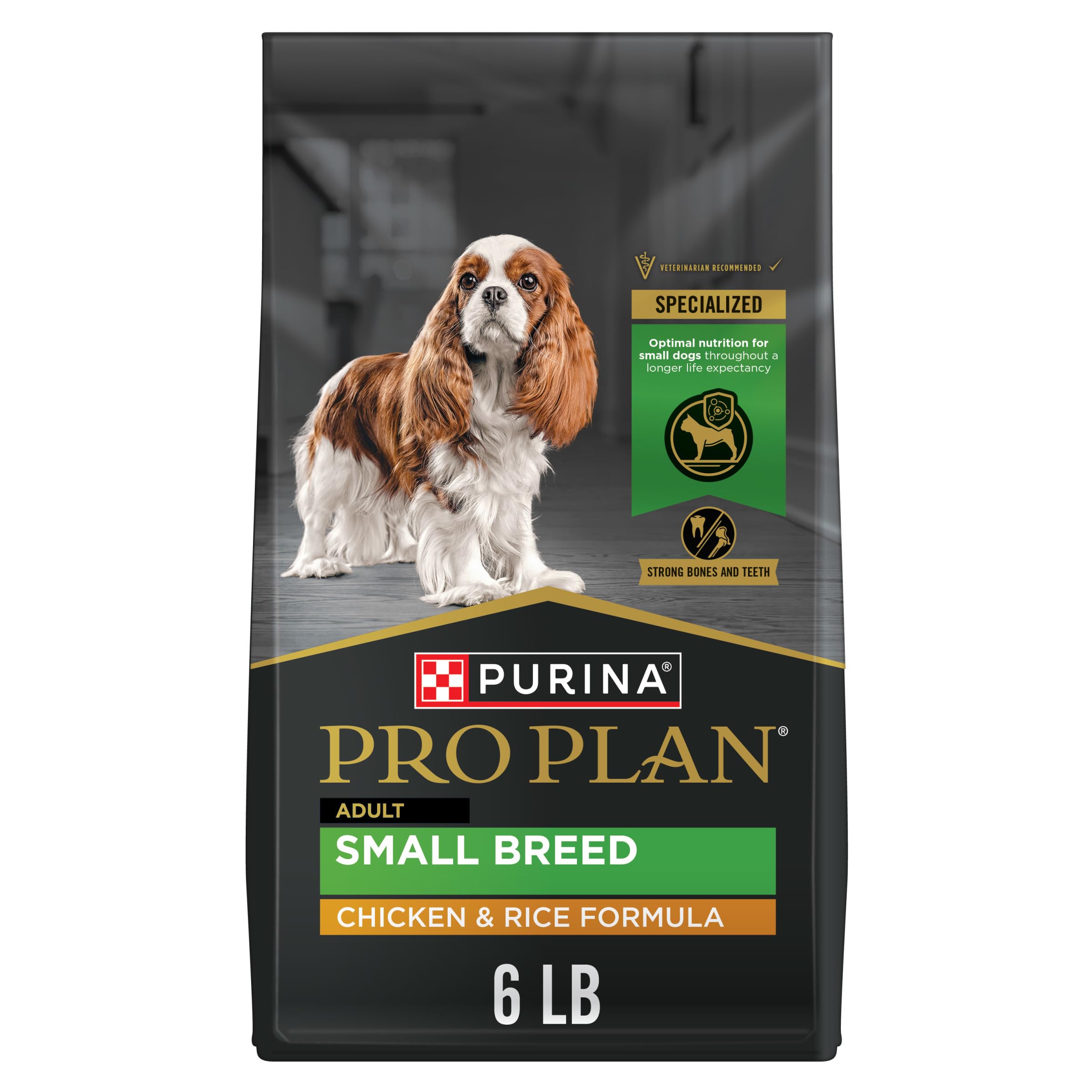
Purina Pro Plan Small Breed

Purina Pro Plan Small Breed

Active small dogs

Our Score 9.4/10
Check Price

Worth Noting

  • Kibble shape and mix vary between batches
Recipe
Chicken & rice
Bag Size
6 lb
Probiotics
Guaranteed live
Kibble Size
Bite-sized
Read the full review

High protein, chicken first, live probiotics. Pro Plan's small breed formula is aimed at a different Westie from the one the sensitive-skin foods are for: a healthy one is a working little dog under the show coat, busy and quick and burning more energy than its size suggests.

The kibble is bite-sized, closer to a pea than a nugget, and nutrient-dense, so a small dog gets a lot out of a modest scoop. The probiotics are guaranteed live, which is a stronger claim than simply listing them among the ingredients, and on a food at this price that's the kind of detail we notice.

We like it as the everyday food for a busy Westie with no skin or gut history. What holds it back from the top tier is consistency: the kibble has changed shape between batches, and a bag that doesn't match the last one is a real risk for a dog that's fussy about texture. Introduce any new bag over several days and watch the bowl. If a Westie that normally clears it starts leaving food, suspect the bag before the dog.

Bottom line: We point active, trouble-free Westies here: high protein, real chicken first, and guaranteed live probiotics at a middle-of-the-pack price.

6

IAMS Proactive Minichunks

IAMS Proactive Minichunks

Tight budgets

Our Score 9.4/10
Check Price

Worth Noting

  • Formulated for all breeds, not small ones specifically
Protein
Chicken & egg
Bag Size
5 lb
Breed Size
All breed sizes
Kibble Size
Minichunks
Read the full review

Minichunks is the most literal product name in this lineup. The pieces are small, small enough that a Westie eats without the crunch-and-drop routine, and small enough to run through a timed feeder without jamming, which is where a lot of small-bag buying ends up.

It's the value pick, and we think the compromise is smaller than the price suggests. Chicken and egg supply the protein, natural fiber and prebiotics do the digestive work, antioxidants cover immunity, and there are no artificial flavors. A healthy Westie gets a complete adult food with the chunks sized down.

The place to be careful is digestion. A tailored fiber blend is not the same thing as a sensitive-stomach formula, and a Westie with a history of loose stool is the wrong candidate for a straight switch. Start with the five-pound bag and mix it in over a week. If the stool holds, you've found the cheapest food here that works.

Bottom line: The cheap one we're comfortable with: small chunks, chicken and egg protein, no artificial flavors, for a healthy Westie with a settled stomach.

7

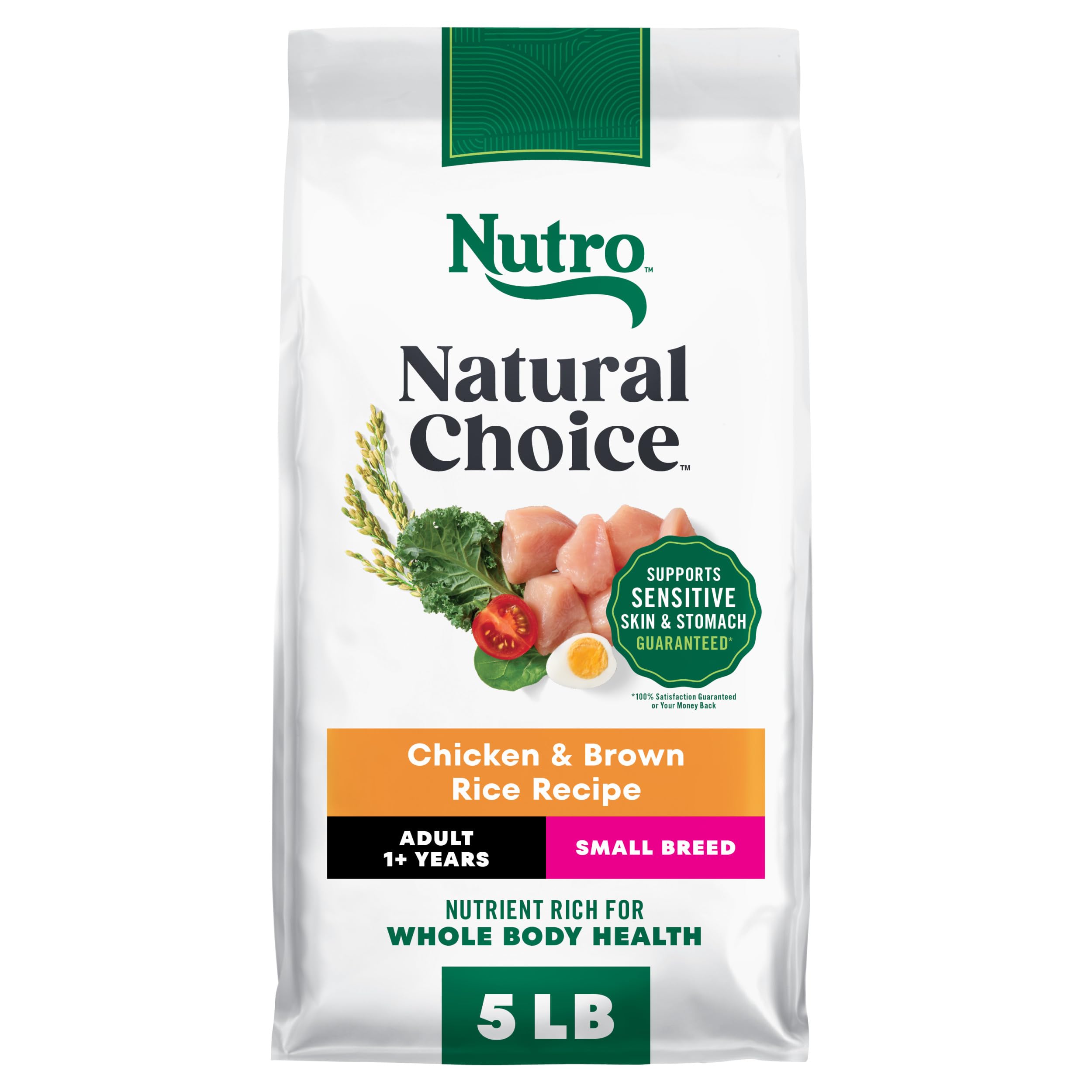
Nutro Natural Choice Small Breed

Nutro Natural Choice Small Breed

Coat and skin

Our Score 9.4/10
Check Price

Worth Noting

  • Digestion less predictable than the top pick
Recipe
Chicken & brown rice
Bag Size
5 lb
Breed Size
Small
Skin & Coat
Omega-3 & 6 blend
Read the full review

Nutro puts a number on its coat claim: healthier skin and a shinier coat in 25 days, from a ratio of omega-3 and 6 fatty acids it lists on the bag. We treat a timeline on packaging as a promise rather than a schedule, but the mechanism underneath it is the one that matters for a Westie, and this is one of two foods here that lead with skin and coat.

The rest is solid small-breed work: chicken as the first ingredient, non-GMO ingredients, beet pulp fiber for digestion, vitamin E and selenium for immunity, and kibble sized for a small mouth. It is not a sensitive-stomach formula, though. That job belongs to the top pick.

We reach for it when the complaint is the coat rather than the gut, and it's the better-value route to skin support when the premium sensitive-skin bag is more than you want to spend. Digestion is a step less predictable here, so give it a couple of weeks before you decide. The coat is what you're watching, and it's the slower of the two to change.

Bottom line: We like it when the coat is the complaint: chicken first, a listed omega ratio, and skin support for less than the specialty formulas.

8

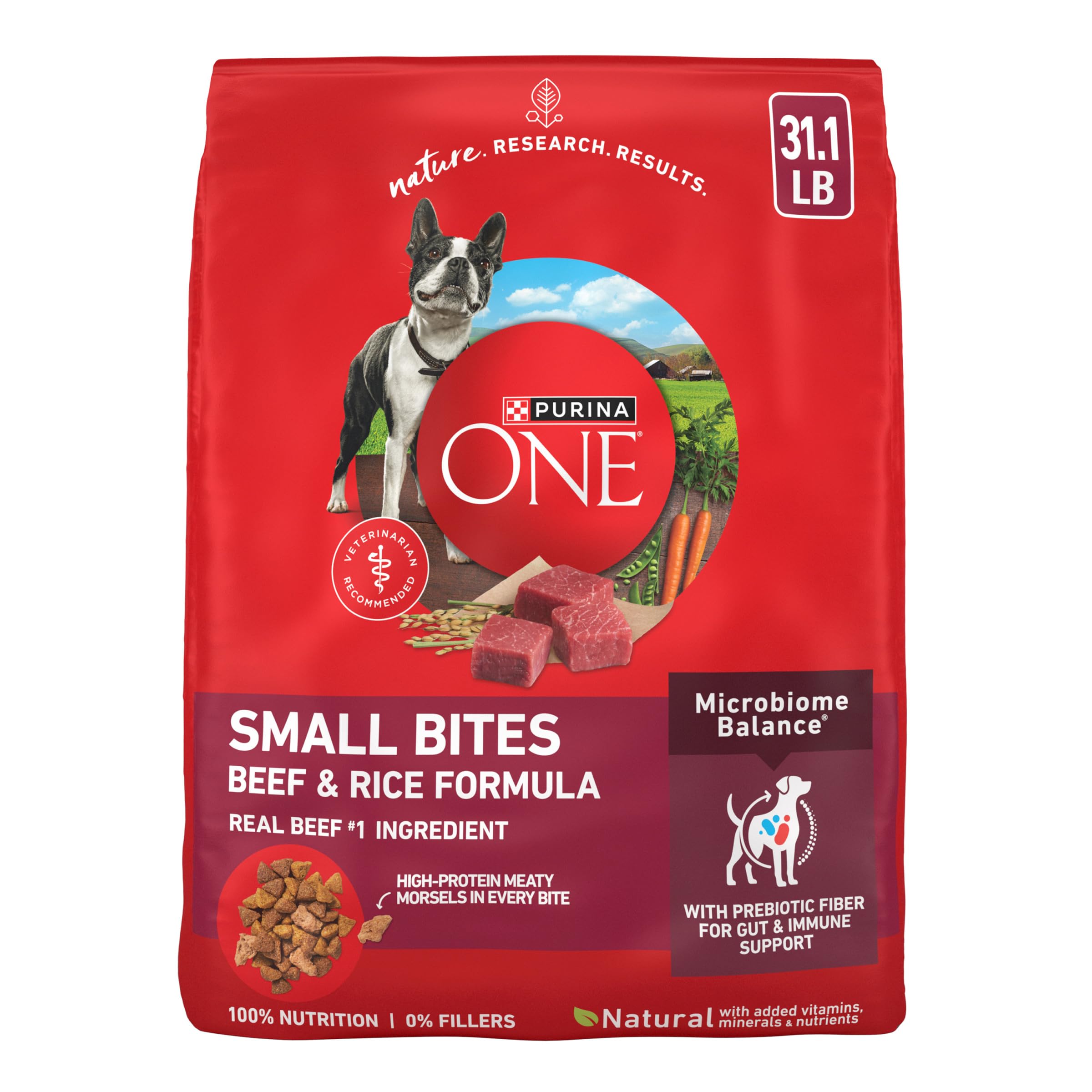
Purina ONE Small Bites

Purina ONE Small Bites

Fussy, older eaters

Our Score 9.4/10
Check Price

Worth Noting

  • Over thirty pounds of food for one small dog
Recipe
Beef & rice
Texture
Tender morsels and kibble
Bag Size
31.1 lb
Read the full review

Two textures in one bag: crunchy kibble mixed through with soft, meaty morsels. For a Westie that has started leaving hard kibble in the bowl, or one missing a molar, that's the reason to look here. The soft pieces are easy to pick out and easier on an older mouth.

The rest of the formula holds up. Real meat is the first ingredient, prebiotic fiber and a microbiome blend look after the gut, there are natural sources of glucosamine, and no artificial colors, flavors or preservatives. The bites are small, which is rather the point.

The bag is where the arithmetic changes. At over thirty pounds it is by far the largest here, which drops the cost per pound to one of the lowest in this group, but one Westie will be eating from it for months and kibble does not improve with age.

So our call is situational. Buy it if you're feeding two small dogs, or if a soft-and-crunchy mix is the only thing that gets an older Westie to the bowl. For one dog with no texture problem, the smaller bags above are the better buy, and the richer beef formula is one to introduce slowly either way.

Bottom line: This is the one for a Westie that wants soft pieces in the bowl, and for households where a very big bag makes sense.

How We Tested 12 Westie Formulas

We started by narrowing the shelf to foods that fit a westie's actual profile: a named animal protein near the top of the ingredient list, a kibble small enough for a compact mouth, an AAFCO feeding statement for adult maintenance or all life stages, and a short filler list, since this breed is prone to itching and skin flare-ups. From there we cut anything we couldn't buy in more than one bag size and anything that worked out to more than roughly three dollars a day for a 20-pound dog. Twelve formulas made the cut.

Each one got a full bag and at least three weeks on the bowl, run in overlapping rounds so every dog stayed on a single food at a time, with a seven-to-ten-day crossover from whatever they'd been eating. We fed twice daily, set the bowl down for 15 minutes, and weighed what was left to see how eager a dog really was rather than how hungry it got by Thursday. We logged stool consistency daily, noted gas and any overnight trips outside, and ran a hand along the flank and behind the ears each week to check for flaking or greasy patches.

The unglamorous details counted too. We watched whether a dog with a slightly undershot jaw could scoop up the kibble without chasing pieces across the floor, whether the bag stayed fresh to the bottom or turned dusty and stale, and how many days a bag lasted so the sticker price became a real cost per day. The formulas that stuck around were the ones where the enthusiasm held past week two, digestion stayed steady straight through the switch, and the coat never gave us a reason to look elsewhere.

How to Choose the Right Dog Food for Westies

Kibble Size Comes Before Ingredients

Small and mini on a bag describe the dog the food was formulated for, not the measurement of the piece inside. A formula built for small breeds usually runs to a smaller kibble, but not always, and a Westie forced to crunch a fat chunk in half and drop the rest is a slow, messy eater. Look at the piece itself, or a description of it, before committing to a big bag.

The picks here spread across the range rather than clustering. Hill's Small & Mini and Royal Canin sit at the tiny end, IAMS' minichunks in the middle, and Purina ONE mixes soft morsels through the kibble for dogs that have started leaving the hard pieces behind.

Skin and Coat Support Is the Westie Tax

Westies itch. The coat is usually where it shows first, and the nutrients that do the work are omega-3 and 6 fatty acids, vitamin E and zinc. A bag that names a ratio or a vitamin level is more useful than one that says healthy skin and coat and stops there.

Two foods here lead with coat support: the Hill's Sensitive Stomach & Skin formula and Nutro's small breed recipe. If the scratching comes with hair loss, ear trouble or licked-raw paws, food is one variable among several and a vet is the faster route to an answer.

Judge a Food by the Stool, Not the First Bowl

Most Westies will eat almost anything once, so the first enthusiastic meal tells you nothing. What you need arrives over the following week or two. Move the dog over gradually, mixing increasing amounts of the new food into the old across seven to ten days, and watch the stool rather than the enthusiasm.

Digestive tolerance is the least predictable thing about any food, and it's what sends most half-used bags to the back of the cupboard. Prebiotic fiber and easy-to-digest proteins help, but they help some dogs and not others. If the stool hasn't settled in a couple of weeks, the food is wrong for this dog whatever the bag promises.

Match the Bag to One Small Dog

A Westie eats a fraction of what a retriever does, which turns bag size into a real decision rather than a footnote. The largest bag here cuts the cost per pound hardest, but it also sits open for months. Smaller bags cost more per pound and are the low-commitment way to find out whether a food suits your dog before you buy the big one.

Two things keep a big bag good: an airtight container and the original bag's date. Keep the food in its bag inside the container, or write the best-by date on the lid, and store it somewhere cool. Kibble goes stale long before it goes moldy, and stale food reads as a fussy dog.

Chicken, Lamb or Beef, and When It Matters

Most small-breed formulas here are built on chicken, and most Westies do fine on it. A protein swap is worth trying when there's a specific problem to solve, and worth doing one variable at a time so the result tells you something. If chicken is the suspect, the Hill's lamb and brown rice recipe is the chicken-free option in this lineup.

Don't rotate proteins for variety's sake. A Westie that is doing well on one food does best staying on it, and every switch is two weeks of unsettled digestion you didn't need to spend.

Frequently Asked Questions

Final Verdict

Start with Hill's Science Diet Sensitive Stomach & Skin Small & Mini. For a breed that spends its life on two fronts, skin and gut, it is the strongest combination in this lineup, and it is the food we put first for a Westie in its adult years.

If your Westie has never had a skin or stomach problem, Royal Canin Small Adult is the more precise everyday choice, built for a 9-to-22-pound dog across the exact years between puppy and senior. If the coat is the complaint rather than the gut, Nutro's small breed recipe gets you omega-3 and 6 for considerably less.