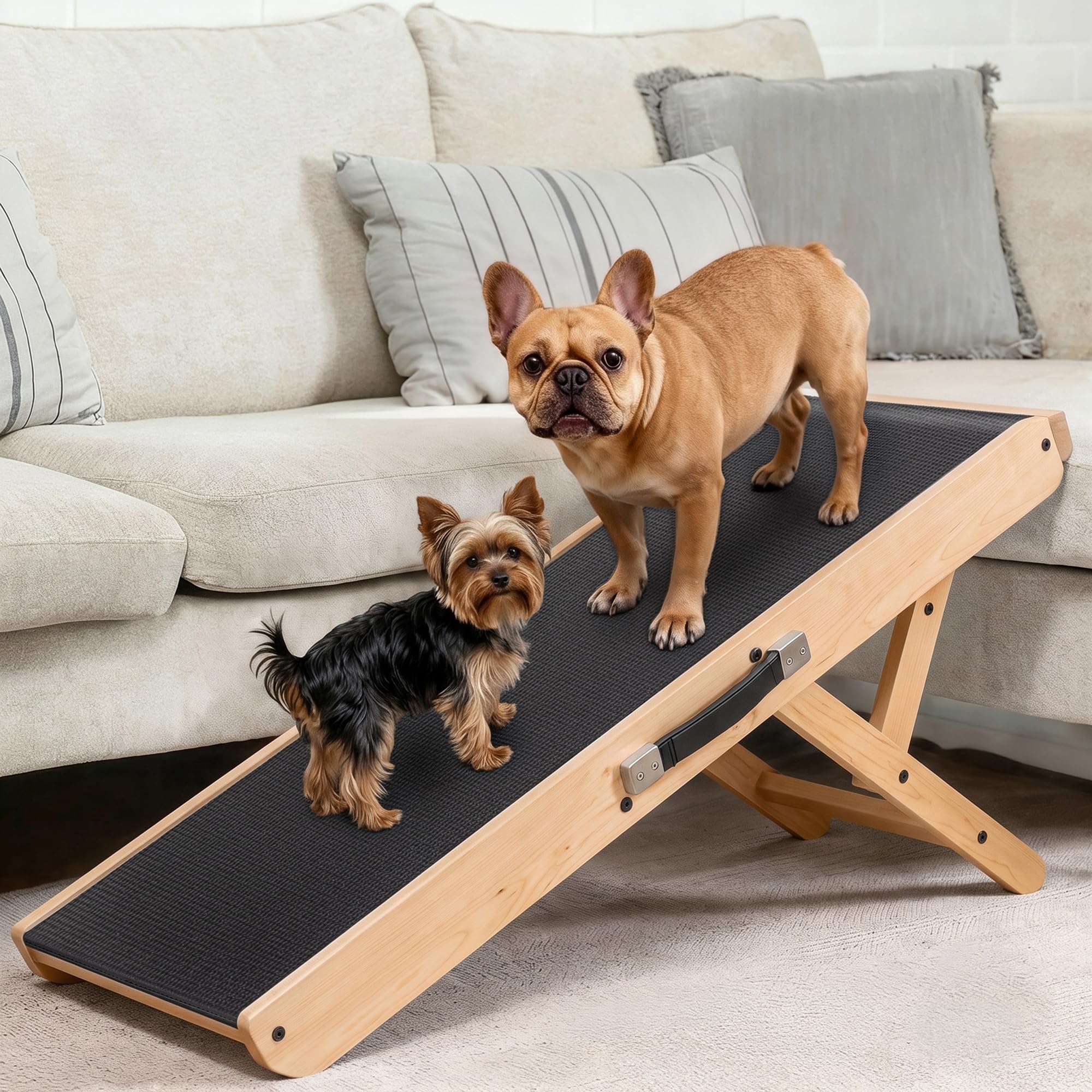
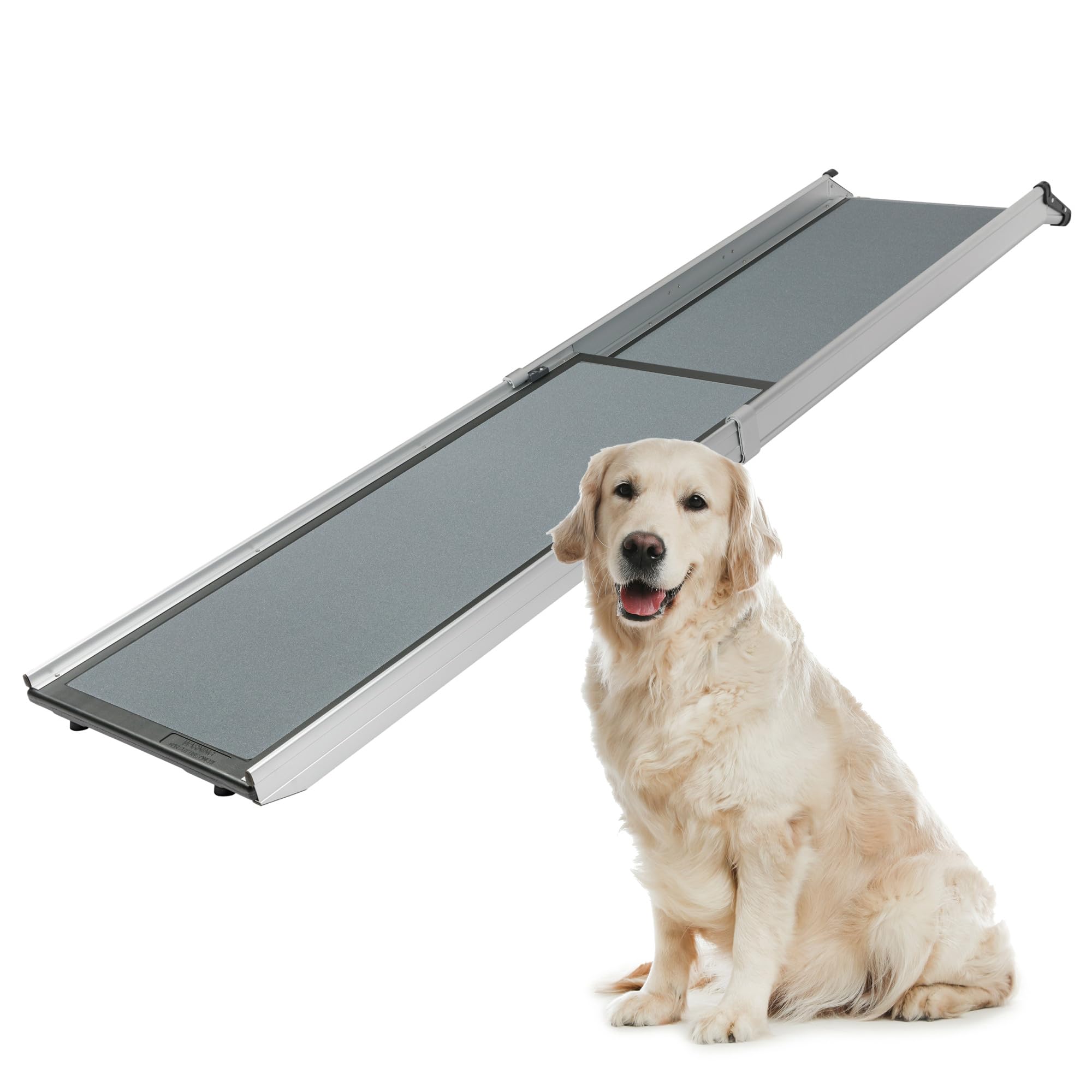
Beds & Furniture

Best Dog Ramps of 2026

A dog ramp only earns its place if your dog trusts it. My 10-year-old Labrador mix has planted his paws at the edge of a ramp and refused to go further; on a stable one, he trots up without a second thought. The difference comes down to traction, a surface that doesn't flex, and a length that creates a gentle slope instead of a steep chute. Get those right and the ramp does two jobs: it protects your dog's joints and saves your back from lifting a 60-pound passenger into the SUV.

Over eight months, we put 12 dog ramps through car trips, porch steps, and vet visits. They set up quickly with one hand, stayed put when a dog shifted weight, and were light enough to stash behind the seat without a wrestling match. We also noted assembly (some arrived with more bolts than a bookshelf), fit across different vehicles, and how the surface held up after repeated folding. The ramps below earned a permanent spot in the car—and my dog's approval.

1

Pawaboo Extra-Wide Car Ramp

Top Pick
Pawaboo Extra-Wide Car Ramp

Broad dogs in cars

Our Score 9.4/10
Check Price

Worth Noting

  • 200-pound limit undercuts the wide deck
Assembly
None required
Deck Width
20 in
Deck Length
67 in
Weight Limit
200 lb
Read the full review

Twenty inches across is the number that separates this ramp from every other one in the guide. A dog that spreads its paws, drifts sideways or stops halfway has room to correct itself, and the effect on a hesitant loader is bigger than the three inches over a 17-inch deck would suggest. Length is 67 inches, which gives a shallow climb into a crossover or a standard SUV.

It is a three-fold design that arrives assembled, and the frame is metal with crossbeams under the deck rather than a single hinge line. In practice it opens flat in one movement and lies straight without you wrestling the hinges, and the deck is a thick PVC pad with a textured surface rather than a thin mat laid over bare metal.

The catch is the rating. A 20-inch deck suggests big dogs, but 200 pounds is the ceiling, and a giant breed on a steep driveway is exactly the combination that turns a wide deck into a false promise. For a 60- to 120-pound dog and an owner who does not want to assemble anything, we think it is one of the better values here.

Bottom line: Twenty inches of deck is the widest here, and we like it for a broad dog that is not a giant breed, as long as you respect the 200-pound rating.

2

PetRuna Folding Dog Ramp

PetRuna Folding Dog Ramp

Budget car access

Our Score 9.2/10
Check Price

Worth Noting

  • 250-pound limit rules out giant breeds
Deck Width
17 in
Deck Length
63 in
Ramp Weight
13 lb
Weight Limit
250 lb
Read the full review

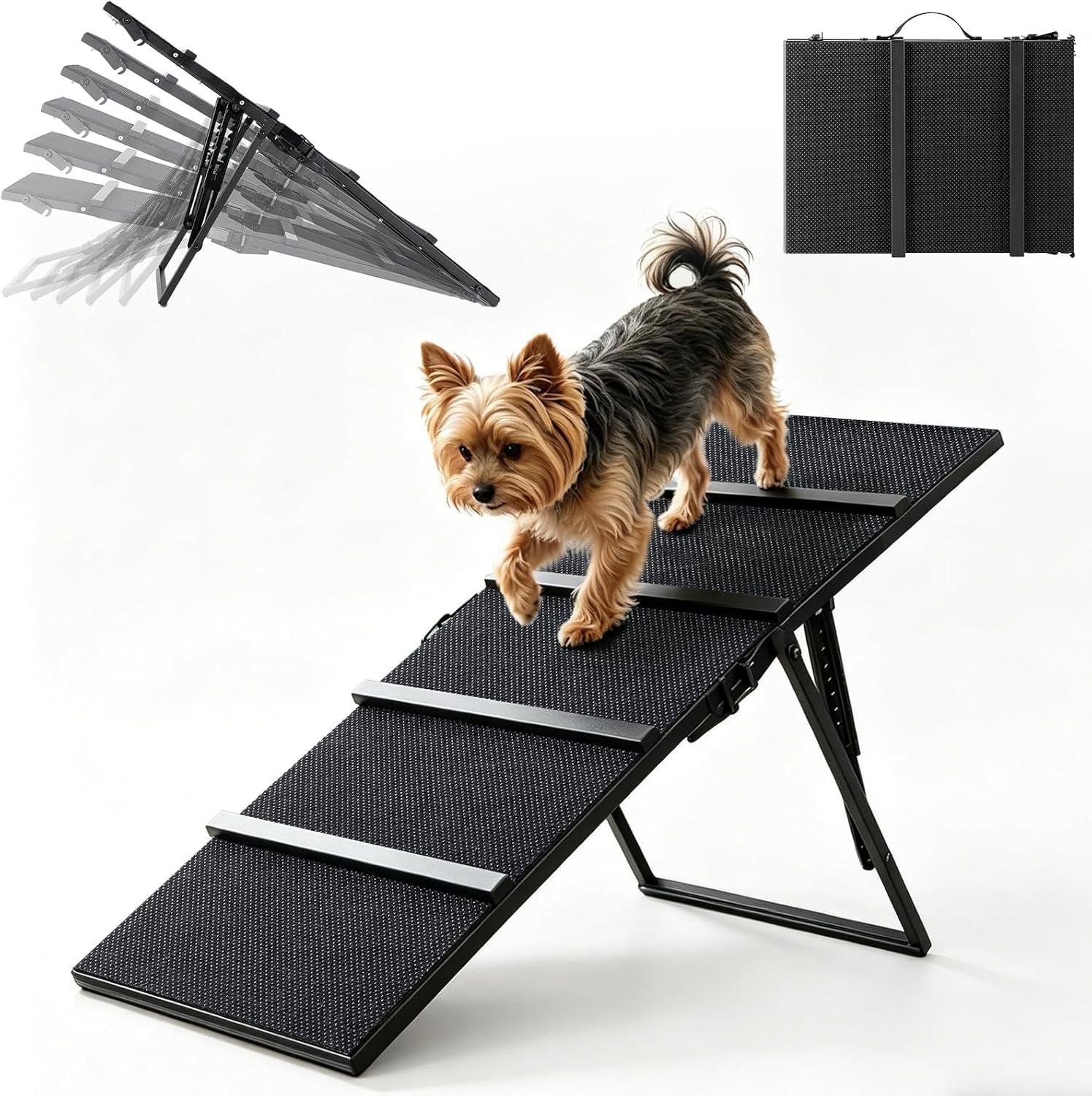
The price is the first thing you notice, and the second is that nothing about the ramp feels built down to it. This is the least expensive full-length car ramp in our set, and it still arrives with a 63-inch deck, a 250-pound rating and an aluminum frame that stays quiet when a dog trots up.

Sixty-three inches is the sweet spot for most buyers. It gives a gentle enough angle into a crossover, a minivan or a standard SUV, and it is short enough to handle and store without a second person. Where it runs out of road is a lifted truck or a very high tailgate, where the same deck becomes a steep climb and a telescoping ramp is the better answer.

The surface is a dense carpeted fiber with a rough, loofah-like texture rather than a smooth mat, so nails have something to catch. The four-fold hinge collapses the whole thing to a flat bundle about five and a half inches thick, which means it fits a footwell rather than demanding the whole trunk, and the handle built into the frame makes it a one-hand carry at 13 pounds. Nothing here needs assembling, the sort of thing you only appreciate on the morning of a vet appointment.

Bottom line: For a normal-height car or crossover, we think this is the smart buy: 63 inches, 250 pounds of rating, and a folding deck for noticeably less than the premium picks.

3

VavoPaw Metal Couch Ramp

VavoPaw Metal Couch Ramp

Small dogs, low seats

Our Score 9.2/10
Check Price

Worth Noting

  • 100-pound limit rules out most large dogs
Deck Width
12 in
Deck Length
32.7 in
Weight Limit
100 lb
Height Settings
7.5 to 19.7 in
Read the full review

It folds down to 16.3 inches and stands on a metal frame rather than a wooden one, which makes it the easiest indoor ramp in this guide to tuck behind a couch when guests arrive. Six height settings run from 7.5 to 19.7 inches, the deck is silicone rather than carpet, and four non-slip tubes sit under the frame. Nothing needs assembling.

It is also the least expensive indoor ramp we recommend, which matters when the job is getting a small dog onto a low couch. The silicone surface wipes down in seconds, the metal feels more solid than the folded size suggests, and there is no training guide or assembly to work through before the dog can use it. Point it at a couch and the short run makes sense; point it at a tall bed and the angle stops being kind.

Bottom line: The least expensive indoor ramp in this guide, and we like it for a small dog on a low couch: a metal frame that folds to 16 inches and wipes clean.

4

WeatherTech PetRamp

WeatherTech PetRamp

All-rounder for cars

Our Score 9.0/10
Check Price

Worth Noting

  • 15-inch deck is tight for giant breeds
Deck Width
15 in
Deck Length
67 in
Ramp Weight
16 lb
Weight Limit
300 lb
Read the full review

Thirty-three and a half inches folded, 16 pounds, and a 300-pound deck: those three numbers are why this is the ramp we point most people toward. It stows behind a seat or flat in a truck bed without swallowing the cargo space, then opens into a 67-inch run that a 120-pound dog walks up without the deck flexing underneath.

The two ends are where a ramp earns a nervous dog's trust, and we paid close attention to them here. Rubber feet grip at the ground end, and the top lip is shaped to sit on a flat load floor rather than hook over a bumper, which is the arrangement that keeps the ramp from skating when a dog puts its weight on the upper third. The textured deck is a better surface for nails and wet paws than carpet, and it wipes clean instead of holding mud.

Fifteen inches of width is the concession. That is the narrowest deck in this guide, and it is why the owner of a Mastiff or a Newfoundland should look at the 20-inch Pawaboo instead. A Lab-sized dog has room to walk straight; a very broad dog will feel the edges, and a dog that is unsure of the ramp will drift toward one side.

What we appreciated most is how little ceremony it requires. There is no assembly to fumble with, the hinge opens in one movement, and 16 pounds is a comfortable carry from the garage to the driveway. It also works indoors against a couch or a low bed, which is more than most vehicle ramps manage.

Bottom line: We recommend the WeatherTech as the default because it folds to 33.5 inches, carries a 300-pound rating, and grips at both ends, one ramp for the SUV, the truck bed and the couch.

5

PRIORPET Wooden Couch Ramp

PRIORPET Wooden Couch Ramp

Couches and chairs

Our Score 9.0/10
Check Price

Worth Noting

  • Couch and chair height only, not beds or cars
Deck Width
14 in
Folded Size
39.6 x 14 x 3 in
Weight Limit
200 lb
Height Settings
14 to 20.5 in
Read the full review

Seven settings between 14 and 20.5 inches is more adjustability than anything else in this set, and it is adjustable in the way that matters: you can dial the deck until it sits flush with the couch arm, so the dog steps across rather than up. A ramp that ends two inches below the cushion is a ramp a small dog will refuse.

The deck is rubber rather than carpet, and we think that is the right call indoors. Rubber wipes clean, it does not hold hair the way pile does, and nails get a positive grip instead of digging in. The birchwood frame is solid enough that the 200-pound rating does not feel optimistic, and the whole thing folds flat with a handle on the side for carrying between rooms.

It arrives assembled, which sounds like a small thing until you have spent an evening with an Allen key and a half-built ramp while an older dog waits. There is a training guide in the box, folding takes a second rather than a dismantling, and the whole piece is light enough to move from the den to the bedroom when the household routine changes.

Bottom line: If the furniture your dog is jumping off is a couch, we think this is the one: seven heights, a rubber deck that grips, and no assembly out of the box.

6

PetSafe CozyUp Bed Ramp

PetSafe CozyUp Bed Ramp

Bed access indoors

Our Score 8.8/10
Check Price

Worth Noting

  • 120-pound limit excludes large and giant breeds
  • 26.6-pound wooden frame is not meant to move
Deck Width
16 in
Deck Length
70 in
Ramp Weight
26.6 lb
Weight Limit
120 lb
Read the full review

Carpet sounds like the safe choice for a ramp deck, and this is the ramp that shows how much depends on the carpet. The pile here is smooth enough that a dog with hip trouble can get its front paws up and then stall with its back legs still on the floor. A rubber-backed runner laid over the deck changes that, and it is the first thing we mention to anyone buying this for an arthritic dog.

What you get for the trouble is the best-looking ramp in this guide. It is furniture-grade wood in cherry or white, 70 inches long, and it stands tall enough to meet a standard bed rather than a couch, the gap nothing else here fills. Assembly runs on the included hex key and wrench, and the finished piece reads as a bench rather than pet gear.

Dogs take to it. The long run gives a shallow, steady climb, the 16-inch deck is wide enough for a dachshund or a terrier to walk up straight, and the height lines up with a mattress instead of stopping short of one. It is rated for 120 pounds, which covers a mini dachshund through a mid-size retriever.

Where it earns its keep is the middle of the night. A senior dog that can get off the bed on its own does not stand at the edge whining at three in the morning, and a ramp that matches the mattress is the difference between a dog using it and refusing it. Set it once against the bed frame and it stays there, which is exactly what you want from something that has to look like it belongs in the room.

Bottom line: It is the only ramp here built to stand at bed height, and the furniture-grade wood looks like it belongs in a bedroom, so budget for a rubber-backed mat if your dog has hip trouble.

7

PetSafe Happy Ride Extra Long

PetSafe Happy Ride Extra Long

Tall trucks, SUVs

Our Score 8.6/10
Check Price

Worth Noting

  • Adhesive tread can peel with heavy use
  • Long folded footprint is awkward to stow in a trunk
Deck Width
20 in
Ramp Weight
18 lb
Length Range
47 to 87 in
Weight Limit
300 lb
Read the full review

Lean this ramp against the curved sill of a sedan and you find its weak spot in about ten seconds: there is nothing square for the deck to bite on, and the whole thing rocks while a dog shifts its weight. On a tailgate, a flat load floor or a set of running boards it is a different animal, planted and quiet enough that an 85-pound shepherd walks up without hesitating.

The reach is why it earns a place. It telescopes from 47 to 87 inches and locks with a safety latch, so a lifted truck that turns a 63-inch ramp into a ladder gets a genuinely gentle climb instead. The deck is 20 inches across, the widest of the telescoping ramps here, and the aluminum frame carries a 300-pound rating while staying lighter than its length suggests.

We think of it as a specialist rather than a default. If your vehicle's load floor is genuinely high, this is the ramp that solves the problem properly, and the extra length is worth the space it takes up in the bed. If you drive a normal-height crossover, the WeatherTech does the same job with less bulk for less money.

Twenty inches of deck makes a real difference to a broad dog: there is room for a wide stance and a little drift without a paw going over the edge. Between that and the reach, this is the ramp we hand to the owner of a big, arthritic dog and a tall vehicle.

Bottom line: We keep this one for tall vehicles: 87 inches of telescoping aluminum brings the climb angle down to something a senior dog will accept, as long as the sill it rests on is square.

How We Tested Dog Ramps

We started by researching the ramps that kept showing up in reviews and fitting the most common needs: folding models for cars, longer ramps for SUVs and trucks, and shorter ones for porch steps. From that pool, we ordered 12 ramps across a range of sizes, materials, and weight capacities, then spent eight months living with them. Each ramp was assembled straight out of the box—we timed the process and noted whether it took one person or two, and whether the instructions matched the hardware.

The testing happened where ramps actually get used: loading into an SUV and a hatchback for weekend trips, navigating the back porch steps on rainy mornings, and hopping in and out at the vet. I ran each ramp with my 65-pound Labrador mix, and friends brought over a 25-pound terrier and a 90-pound shepherd to see how the same ramp handled different sizes and gaits. We watched whether paws slipped on the surface, whether the ramp shifted sideways when a dog turned, and whether the base stayed planted on gravel, grass, and concrete—and whether the dog actually used it without a lift.

For weight and ease of use, I carried each ramp from the garage to the car and tried folding and unfolding it with one hand while holding a leash in the other. We checked fit by setting each ramp against the tailgate of a mid-size SUV and a lower sedan, noting the angle it created and whether the length left a steep drop-off. Durability got the long view: after eight months of weekly use, we inspected hinges, seams, rubber feet, and the walking surface for fraying, cracking, or loosening.

How to Choose Dog Ramps

Start With the Height, Then Pick the Length

Measure from the ground to the surface your dog climbs to: a sedan's trunk lip, a crossover's load floor and a lifted truck's tailgate are three different problems. The longer the ramp relative to that height, the shallower the climb. A 63-inch ramp into a 30-inch tailgate works out to roughly a 28-degree slope; an 87-inch ramp to the same height lands nearer 20 degrees, which is often the difference between a dog that walks up and one that balks.

The trap is forgetting the runway. A long ramp needs clear, level floor behind the vehicle, and a sloping driveway or a workbench in the way undoes the advantage of the extra length. Check the space you actually have before you fall for the longest deck in the guide.

Width Decides Whether a Dog Commits

Decks here run from 12 to 20 inches, and the right figure depends on the dog's stance more than its weight. A dachshund is fine on 12 inches. A Labrador wants 17 or more. A giant breed wants the full 20, which is where the extra-wide Pawaboo earns its place.

Two inches sounds trivial until you watch a dog drift toward one edge and stop dead. A narrow deck makes a dog rush, because stopping feels less secure than getting it over with, and rushing is how paws go over the side. Then check the fit on the vehicle: a wide deck can foul a wheel arch or leave no room to open the door beside it.

A Weight Rating Is Not a Stability Rating

Capacity tells you the frame will hold. It tells you nothing about bounce, creep, or whether the top edge stays where you put it. The top of the ramp needs a flat, solid lip to sit on, such as a tailgate, a load floor or the side of a mattress, and a curved sedan sill is the hard case because there is nothing square for the deck to bite.

Before a dog goes near it, set the ramp in place, press down hard on the top third and watch the bottom feet. If it creeps, folds or lifts at the top, change the angle or the surface underneath before you add a nervous animal to the equation. Level ground is not optional.

Grip Comes Down to the Surface

Carpet, rubber, textured resin and adhesive tread strips all get called non-slip, and they behave differently. Carpet is warm underfoot and kind to elbows, but pile polishes smooth under nails and holds mud. Rubber and textured resin wipe clean and handle wet paws better. Adhesive strips are the most variable, working well until they lift at the edges.

If the look of a carpeted wooden ramp is what you want, plan on a rubber-backed runner from the start. It costs little, it solves the grip problem, and it beats returning a ramp your dog has already refused.

Indoor Ramps and Vehicle Ramps Are Different Shapes

A couch ramp is short and steep because a living room allows nothing else. A vehicle ramp is long and shallow because a tailgate is high and a driveway is open. Some indoor ramps are furniture-only by design, and a 63-inch car ramp makes a poor bed ramp once you subtract the space between the bed and the wall.

If the ramp will live in the car, folded size and weight matter as much as the deck. A 33-inch fold slides behind a seat; a telescoping ramp that collapses to 47 inches wants a truck bed wall or a cargo corner. Decide where it sleeps before you decide how long it should be.

Frequently Asked Questions

Final Verdict

If you want one ramp that handles the SUV, the truck bed and the occasional couch, we recommend the WeatherTech PetRamp: 67 inches of deck, a 300-pound rating, rubber at both ends and a fold that disappears behind a seat.

Buy the PetSafe Happy Ride Extra Long instead if your load floor is genuinely high, on a lifted truck or a tall tailgate, where 87 inches of telescoping reach turns a scramble into a walk. That extra length and weight are the price of a gentleman's climb, and for a big dog with sore hips it is the right trade.