Health & Wellness

Best Dog Toothpaste of 2026

You can have all the good intentions in the world about brushing your dog's teeth, but the routine lives or dies on one question: will he let the brush anywhere near his mouth? I've had a dog who took it sitting down and another who acted like I'd personally betrayed him, and the difference between those two reactions was almost always the paste on the bristles. The right one turns dental care into a thirty-second habit you'll actually keep up, and the wrong one can set the whole effort back a month.

Dog toothpaste isn't just toothpaste in a smaller tube. It doesn't foam, it isn't meant to be rinsed, and the formulas worth buying lean on enzymes that need time against the gumline to do anything at all. We spent four months working through 14 of them with a very opinionated pack of dogs, weighing taste and tolerance against how much paste landed on the floor and how breath held up by morning. The picks below are the ones that got used up instead of buried at the back of the cabinet.

1

C.E.T. Enzymatic Toothpaste

Top Pick
C.E.T. Enzymatic Toothpaste

Most dogs

Our Score 9.2/10
Check Price

Worth Noting

  • Poultry is the only flavor
For
Dogs and cats
Size
2.5 oz
Flavor
Poultry
Formula
Enzymatic paste
Read the full review

The first thing we check in a dog toothpaste is whether it makes brushing easier or adds a step. C.E.T. does the former: the paste is non-foaming, so there is no rinsing battle afterward, and the poultry flavor is savory enough that most dogs will at least investigate the brush. The enzyme system is the functional core, and the tube is labeled for both dogs and cats. That combination is why we make it our default for most households.

We also appreciate that the formula contains no foaming agents, which means it is designed to be swallowed rather than rinsed away. That matters with a dog who already dislikes having their mouth handled: one less step is one less chance for the routine to fall apart. The paste has a soft texture that squeezes out of the tube without running, and the screw cap is easy to deal with when your hands are full.

The 2.5-ounce tube suits a single dog or a multi-pet home with a cat, but it is not the bulk-value option here. Petrodex gives you more toothpaste for a lower outlay, and we reach for that one when two dogs are sharing a routine. C.E.T. remains the better first tube when you want a trusted name and a formula that works with a brush rather than asking you to skip it. The detail we keep coming back to is the texture: it stays on the bristles long enough to reach the back teeth, which is where brushing usually gets abandoned.

Bottom line: We recommend C.E.T. as the default tube for most dogs: the poultry paste is enzymatic, non-foaming, and easy to work into a brushing routine, with a formula labeled for cats too.

2

ZYMOX Oratene Brushless Gel

ZYMOX Oratene Brushless Gel

Brush-resistant dogs

Our Score 9.2/10
Check Price

Worth Noting

  • Costs more than paste alternatives
For
Dogs and cats
Form
Brushless gel
Size
2.5 oz
Application
Finger or brush
Read the full review

Some dental routines fail at the toothbrush, not the toothpaste. ZYMOX Oratene is built for that dog: a clear gel you can smear on a finger and rub along the gumline, with no brushing or rinsing required. It is labeled for dogs and cats, and the formula is non-drying rather than a thick, chalky paste.

We found the brushless format genuinely useful for a dog that clamps their mouth shut around a brush. The gel goes exactly where your finger goes, and because you do not need to rinse, the session ends when you stop, not when the dog stops struggling. It does not cause excess salivation, which is a small detail that makes a real difference with a drooly dog.

The trade-off is that the flavor is deliberately mild. This is not the tube to choose if your dog needs a strong meaty taste to cooperate; C.E.T. or Petrodex is the easier sell. The 2.5-ounce tube also runs out faster in a multi-dog home. What we like most is the control: you can feel the gumline with your finger and apply a little more where plaque tends to collect, which is harder to do with a brush and a wriggling dog.

Bottom line: For a dog that clamps its jaws at the sight of a brush, we reach for ZYMOX: the clear gel goes on with a finger, needs no rinsing, and is labeled for dogs and cats.

3

Arm & Hammer Vanilla Ginger

Arm & Hammer Vanilla Ginger

Picky eaters

Our Score 9.2/10
Check Price

Worth Noting

  • Small tube for multi-dog homes
For
Dogs and puppies
Size
2.5 oz
Flavor
Vanilla ginger
Formula
Enzymatic with baking soda
Read the full review

Vanilla ginger sounds like a dessert, not a dog toothpaste, which is exactly why it stands out. The flavor is a break from the poultry, beef, and peanut butter that dominate this shelf, and the baking-soda formula is aimed at breath rather than masking it with a stronger meaty smell.

The paste is enzymatic and contains baking soda, and the tube is labeled for dogs and puppies. At 2.5 ounces, it matches C.E.T. in size and sits at the budget end of the group. The flavor is mild and slightly sweet, and the texture is a standard paste that works with a brush or a finger brush.

We choose it when a meaty paste makes brushing a frenzy or when the smell of chicken breath is too much for a small apartment. It is also a useful alternative for a dog that has gone off poultry. The flavor is still a gamble: some dogs love it, and others are indifferent. If your dog is indifferent, a poultry paste is the safer first buy. What we appreciate is the option: not every dog needs bacon breath.

Bottom line: Arm & Hammer's vanilla-ginger paste is the best non-meat flavor here for dogs that get overexcited by poultry or beef, and the baking-soda formula is a solid budget choice.

4

Petrodex Enzymatic Toothpaste

Petrodex Enzymatic Toothpaste

Multi-dog homes

Our Score 9.0/10
Check Price

Worth Noting

  • Only one flavor option
Size
6.2 oz
Rinse
No-rinse, non-foaming
Flavor
Poultry
Formula
Enzymatic paste
Read the full review

A 6.2-ounce tube is a different kind of commitment. It is more than twice the size of C.E.T.'s 2.5-ounce tube, so it takes up more shelf space and asks you to be comfortable with the same poultry flavor for a long stretch. For a single small dog, that can feel like a lot of toothpaste; for a two-dog household, it is the sensible size.

The formula is straightforward: poultry flavor, enzymatic cleaning, and a non-foaming, no-rinse design. The label suggests brushing two to three times a week, which is a realistic starting point for a dog that is still learning the routine. The paste is thick enough to stay on the brush without being stiff, and the flavor is the familiar savory kind most dogs accept more readily than mint or beef.

Where Petrodex earns its place is value. We keep it as the everyday tube for multi-dog homes because the larger size makes the routine less about rationing the last squeeze and more about actually brushing. It is not as polished as C.E.T. and it does not offer a brushless option, but it covers the basics at a price that makes consistent use easier. If you brush two dogs back-to-back, the bigger tube is the one that saves you a mid-routine trip to the cabinet.

Bottom line: Petrodex is the tube we choose for multi-dog homes and cost-conscious routines: the 6.2-ounce poultry paste is enzymatic, non-foaming, and easy to keep in steady supply.

5

Petsmile VOHC Toothpaste

Petsmile VOHC Toothpaste

Vet-recognized care

Our Score 9.0/10
Check Price

Worth Noting

  • Premium price
  • Loose texture can slide off a dry brush
Size
4.2 oz
Flavor
London Broil
Formula
Calprox calcium blend
Recognition
VOHC accepted
Read the full review

The VOHC Accepted seal is the first thing we look at on Petsmile, because it is rare in this category. The Veterinary Oral Health Council reviews products for plaque and tartar control, and that seal gives a shopper a third-party shortcut that most dog toothpastes here do not offer. It does not mean every dog will love the paste, but it does mean the formula has been reviewed for the job.

The formula is built around Calprox, a non-abrasive blend of calcium, phosphates, magnesium, and other minerals, and the London Broil flavor is designed to taste like a treat. The 4.2-ounce tube is larger than C.E.T. and smaller than Petrodex, and the product is labeled for dogs and cats. For a dog that already sees the toothpaste as a snack, that beefy flavor does a lot of the training work.

Application is straightforward: use a dry brush, load a dab, and go straight to the mouth. The paste is labeled for dogs and cats, and the beefy flavor is strong enough to keep a food-motivated dog interested. The 4.2-ounce tube gives you more room than C.E.T. but less than Petrodex, so it sits in the middle for households with one or two dogs.

We recommend Petsmile when third-party review matters more to you than cost per ounce. Petrodex is the smarter value for a multi-dog home, and C.E.T. is the easier first tube for most people. Petsmile earns its premium place as the pick for an owner who wants a recognizable dental standard and a flavor that makes brushing feel less like a chore. The beef flavor is the closest thing here to a training treat, which can make a reluctant dog forget what is happening.

Bottom line: Petsmile is the pick for owners who want a VOHC-accepted formula and a treat-like beef flavor; it costs more, but the Calprox formula and 4.2-ounce tube make it a serious premium option.

6

Vet's Best Enzymatic Gel

Vet's Best Enzymatic Gel

Sensitive gums

Our Score 9.0/10
Check Price

Worth Noting

  • Not labeled for cats
For
Dogs
Form
Dental gel
Size
3.5 oz
Key Ingredients
Aloe, neem oil, grapefruit seed extract, baking soda, and enzymes
Read the full review

A gel can be easier to spread than a paste, and Vet's Best leans into that with a formula built around aloe, neem oil, grapefruit seed extract, baking soda, and enzymes. We choose it for dogs that dislike a gritty paste: the gel glides along the gumline and does not need rinsing. The 3.5-ounce squeeze tube is bigger than C.E.T. and smaller than Petrodex, which makes it a reasonable middle size for one dog.

The flavor is mild rather than meat-forward, which is a plus for a dog that gets overexcited by poultry or beef. It does not foam, so you can apply it and let the dog swallow without a rinsing step. The ingredient list is the reason to consider it: aloe and neem give it a soothing feel, while baking soda and enzymes do the cleaning work.

It is not the most proven formula in this set. The flavor will not win over every dog, and some dogs simply refuse gel textures. If your dog is picky, a poultry paste such as C.E.T. or Petrodex is the safer first buy. For a dog that tolerates gel and dislikes a chalky paste, Vet's Best is a comfortable everyday option. The aloe and neem make it feel more like a gum-soother than a toothpaste, which is why we keep it for dogs that resent a gritty brush.

Bottom line: Vet's Best is our pick for a soothing gel texture: aloe, neem, and baking soda make it a gentle-feeling option for dogs that dislike gritty paste, though the flavor will not win over every dog.

7

Arm & Hammer Puppy Peanut Butter

Arm & Hammer Puppy Peanut Butter

Puppy routines

Our Score 9.0/10
Check Price

Worth Noting

  • Large tube for a first trial
For
Puppies
Size
6.2 oz
Flavor
Peanut butter
Formula
Enzymatic with baking soda and calcium
Read the full review

Puppies are not small adult dogs, and their first dental routine sets the tone for years. Arm & Hammer's Complete Care puppy toothpaste is built around that idea: a peanut butter flavor, a fluoride-free and dye-free formula, and a 6.2-ounce tube that gives you room to practice without running out.

The formula combines baking soda for breath and added calcium for enamel support. It is an enzymatic paste, so it works with a toothbrush or finger brush. The peanut butter flavor is familiar enough to make a puppy curious, and the paste is thick enough to stay on the brush during a short session.

The 6.2-ounce tube is the same size as Petrodex and more than twice the size of C.E.T. That is generous for a puppy, and it makes the puppy paste a good value for a household that is also brushing an adult dog. The tube is labeled for puppies, and the formula is designed for that stage.

We recommend it for a puppy household that wants a gentle, familiar flavor and does not mind a larger tube. The peanut butter scent is not as strong as you might expect, and some puppies refuse it, so start with a dab on a finger before you commit to a second tube. If your puppy turns up their nose, a poultry paste is the more reliable fallback. The larger size is the real advantage: you can practice without treating every session like the last one.

Bottom line: Arm & Hammer's puppy peanut-butter paste is the starter tube we choose for puppies: the 6.2-ounce size is generous, the flavor is familiar, and the formula is fluoride-free and dye-free.

8

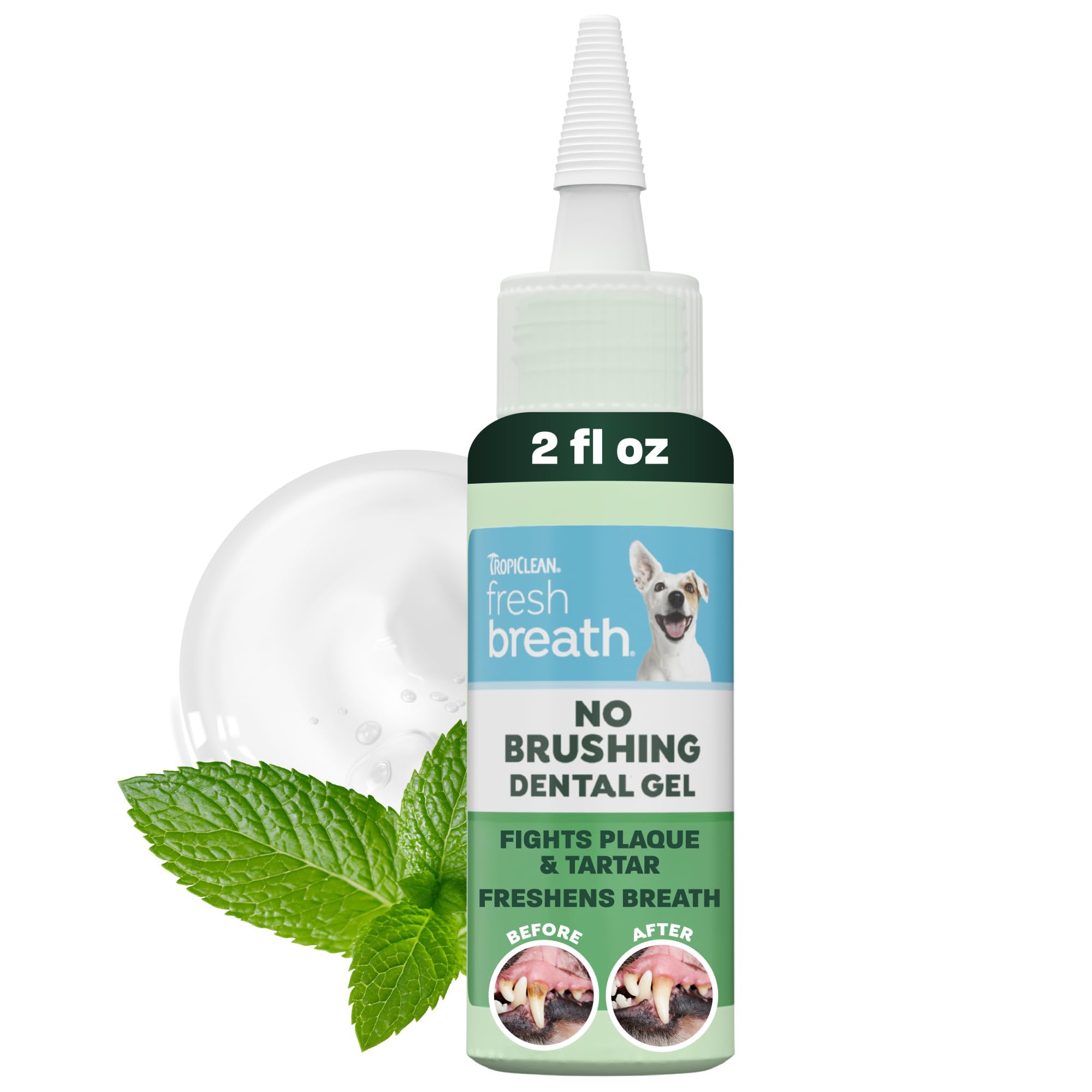
TropiClean Clean Teeth Gel

TropiClean Clean Teeth Gel

Mint lovers

Our Score 8.8/10
Check Price

Worth Noting

  • Small 2-fluid-ounce bottle
  • No brushing means less scrubbing action
Form
No-brush gel
Size
2 fl oz
Flavor
Mint
Application
Apply directly
Read the full review

Mint is the most divisive flavor in this set. Dogs that already steal mint leaves or hang around toothpaste tubes may love it; dogs that turn away from strong smells will not. TropiClean's Clean Teeth Gel is for the first group: a minty no-brush gel that you apply directly to the teeth, with no toothbrush required.

We like it for the dog that will let you wipe their teeth but not brush them. The gel stays where you put it, so you can work along the gumline with a finger or a soft applicator and stop before the dog gets fed up. It does not need rinsing, and the 2-fluid-ounce bottle is easy to control. The catch is that the mint flavor does as much gatekeeping as the brushing does.

The no-brush format is a convenience, not a free pass. You still need contact with the teeth and gums, and you still need to do it regularly. If your dog hates mint, this is the wrong tube no matter how easy the application is. If your dog tolerates it, TropiClean is a low-friction way to keep the routine going between brushings. The mint also leaves the breath smelling fresher to us, even when the dog disagrees.

Bottom line: TropiClean is the mint option we keep for dogs that already tolerate mint and owners who want a no-brush gel; if your dog turns up their nose at mint, choose a poultry paste instead.

How We Tested, With Plenty of Help From the Dogs

We built the shortlist the way a careful shopper would: reading ingredient panels, checking veterinary dental guidance, and filtering out anything that needed rinsing, since dogs can't spit. That narrowed the field to 14 toothpastes in three formats — standard tubes, thicker gels, and a couple of foams meant to be worked on with a finger brush. We made sure the group included poultry-free and lightly flavored options for dogs with allergies or sensitive stomachs.

Fourteen dogs did the judging over four months, from a six-month-old puppy to a twelve-year-old with a loose molar. Brushing happened on the bathroom floor after the last walk and, more often, on the couch during whatever we were watching. Each dog started on a paste with a finger brush, moved to a standard dog toothbrush after the first week, and every paste went through at least two dogs so one stubborn animal couldn't sink a tube unfairly.

For taste and tolerance we counted seconds — how long the brush stayed in before the first head turn — and logged lip curls, drooling, and whether the dog came back to lick the bristles. Ease of use came down to clumsy hands: whether the cap opened one-handed, how cleanly the paste loaded without globbing, and whether the tube turned tacky and hard to seal between uses. We sniffed every tube on its own, because a fishy paste makes you dread the routine as much as the dog does. Breath was checked by two people an hour after brushing and again the next morning, and cost per brushing came from tube size measured against how much paste we actually used.

How to Choose the Right Dog Toothpaste

Start With the Format Your Dog Will Tolerate

A traditional enzymatic paste is the most familiar choice: you squeeze it onto a toothbrush and work it along the gumline. If your dog already accepts a brush, C.E.T. or Petrodex makes the routine straightforward. If the brush is the fight, a brushless gel such as ZYMOX or TropiClean lets you apply with a finger or directly to the teeth. The catch is that brushless still means contact: you need to get the gel onto the teeth and gums, not just let the dog lick it off the tube.

Use Flavor as a Training Tool

Poultry is the safest first flavor because it is familiar and savory, which is why it dominates this set. Beef and peanut butter are close seconds for food-motivated dogs. Mint and vanilla ginger are more polarizing. Mint can freshen breath, but many dogs dislike it; vanilla ginger is useful if meaty smells make your dog frantic. Buy the smallest tube that makes sense when you are testing a new flavor, then move to a larger size once you know your dog accepts it.

Check the Swallow-Safe Basics

Dog toothpaste is designed to be swallowed, so the label should say non-foaming and no-rinse. Avoid human toothpaste entirely; fluoride and detergents are not meant for dogs. The enzymatic ingredients do their work over time, but they do not replace the mechanical action of a brush or finger. Follow the label's frequency: some formulas specify daily use, others two to three times a week. A consistent routine matters more than a perfect one.

Match Tube Size to Your Household

A 2.5-ounce tube is manageable for one small dog and lets you try a flavor without committing to a giant tube. A 6.2-ounce tube such as Petrodex or Arm & Hammer Puppy makes more sense in a multi-dog home or after you have found a flavor your dog accepts. Larger tubes take up more shelf space and can be awkward to squeeze near the end, but they save you from rationing the last dab. Start small while you are experimenting; buy big once the routine sticks.

Know What VOHC Acceptance Means

The Veterinary Oral Health Council seal is a useful shortcut when you want a formula reviewed for plaque or tartar control. Petsmile carries it, and that is a big part of why it commands a premium. Most good dog toothpastes here do not carry the seal, so its absence is not a red flag. If you want third-party review, choose Petsmile; if you want value, Petrodex or Arm & Hammer does the job for less.

Frequently Asked Questions

Final Verdict

For most dogs, C.E.T. is the tube we recommend first: the poultry paste is enzymatic, non-foaming, and easy to work into a brush routine, and it is labeled for cats too. If your dog fights the brush, choose ZYMOX's brushless gel. If you want the lowest cost per ounce for multiple dogs, Petrodex is the practical pick, and Petsmile is the premium choice when VOHC acceptance matters.

Start with the format your dog will tolerate; the best toothpaste is the one you will actually use.