Training & Behavior

Best Dog Whistles of 2026

A dog whistle is really just a small tube that makes a tone at a pitch we can barely hear and dogs pick up from across a field — and the difference between a good one and a dud comes down to whether the frequency adjusts, how far the sound genuinely carries, and whether it survives a season in your coat pocket. What it fixes is simple: getting your dog's attention at 40 yards without shouting yourself hoarse or waving a treat bag over your head like a lunatic.

I've blown through a drawerful of these with my own two dogs and handed plenty to friends with young puppies, and the pattern holds — pitch matters more than raw volume. A whistle that's piercingly loud can spook a nervous dog, while a quieter one at the right frequency cuts straight through wind. Over the past four months, my team and I put 14 whistles through daily walks, park recalls, and a few chaotic backyard sessions; the ones that earned a permanent spot on the lanyard are below.

1

Logan A1 Sheepdog Whistle

Top Pick
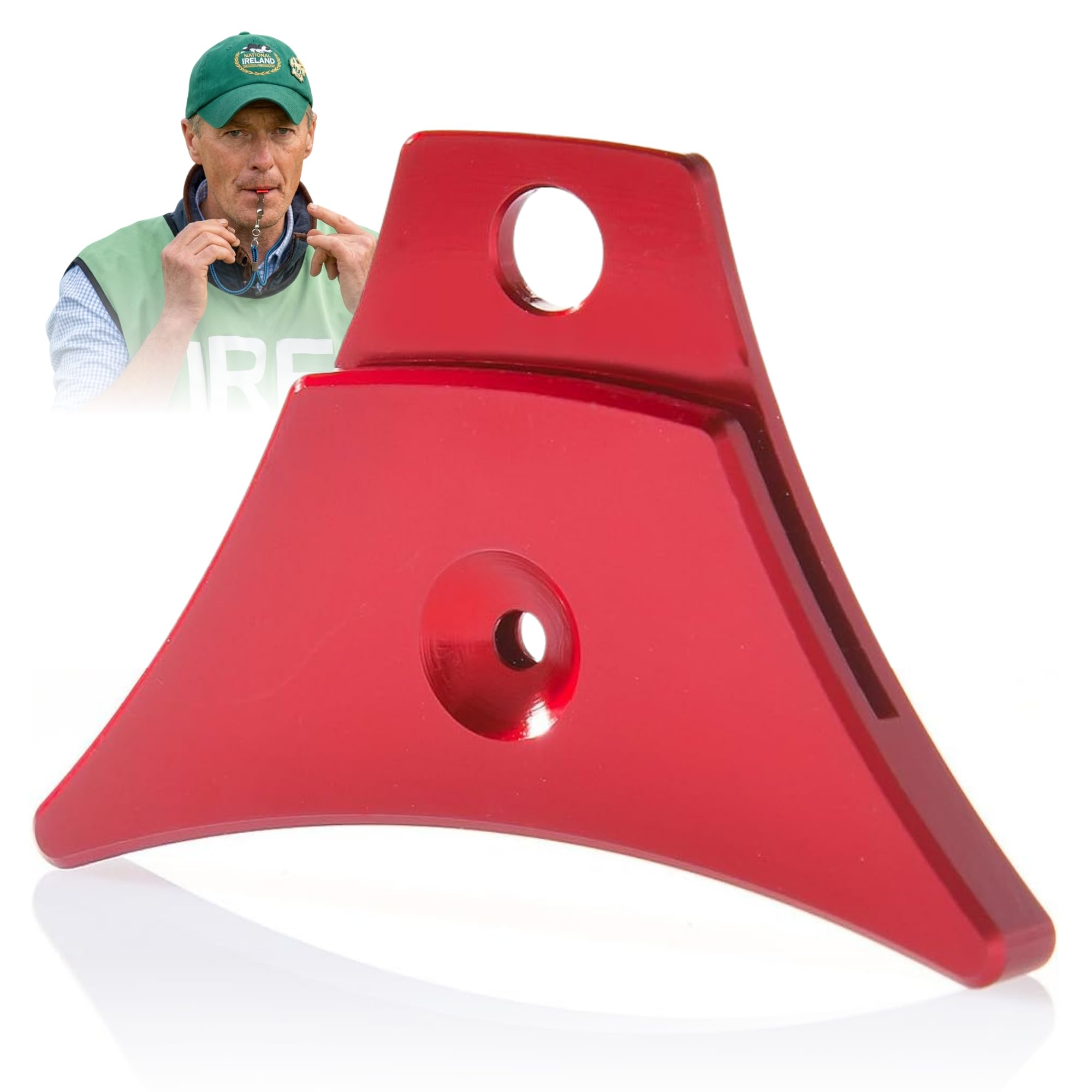
Logan A1 Sheepdog Whistle

All-around training

Our Score 9.2/10
Check Price

Worth Noting

  • Premium price compared with plastic picks
Tone
Multi-tone
Finish
Hand-finished
Weight
0.7 oz
Material
Anodized aluminum alloy
Read the full review

The Logan A1 looks like a tool rather than a party favor. It's a multi-tone sheepdog whistle cut from anodized aluminum and hand-finished in the UK, and at 0.704 ounces it carries lightly on a lanyard. The shape and metal body make it feel like something you keep for years, not something you replace after a season. It's the most substantial whistle in this group, and that's obvious as soon as you pick it up.

What earns it the top spot is the multi-tone range. You can build distinct long and short commands instead of relying on one blast, which is useful for sit, come, and direction changes. The tone is clear and loud enough to carry, and the anodized aluminum body is built for field use and feels ready for weather and knocks. We also like that it doesn't rely on a pea, so there's no rattle or cold-weather sticking.

The trade-off is handling: a multi-tone whistle asks you to practice until the cue is clean and repeatable. That's a fair exchange for a handler who wants one dependable whistle for varied commands, because the payoff is a cue language rather than a single noise. If you only need one recall blast, a simpler plastic whistle will do. If you want a tool that can handle more, the Logan earns its place at the top of this group.

Bottom line: We recommend the Logan A1 as the best all-around whistle for handlers who want one durable tool for varied commands.

2

Browning Dog Whistle Blaze

Browning Dog Whistle Blaze

Budget backup

Our Score 8.6/10
Check Price

Worth Noting

  • Tone can be plain or inconsistent
Design
Pealess
Length
1.97 x 0.47 inches
Weight
0.53 oz
Included
Two lanyards
Read the full review

The Browning Blaze is the cheapest way to get a whistle and two lanyards in one package. It's a pealess plastic whistle, so it won't freeze or rattle, and the blaze color is easy to find in a pack. The whistle itself is small—1.97 by 0.47 inches—and weighs 0.528 ounces. The retractable lanyard and adjustable nylon lanyard are the useful parts: you can clip one to a vest and keep the other as a spare.

As a backup or a casual walking whistle, we like it. The two lanyards make it easy to keep one on a vest and the other in a bag as a spare, and the whistle is small enough to lose in a pocket, which is exactly why the lanyards matter. For the money, it's a useful kit to have around. It won't replace a dedicated training whistle, but it's a sensible spare for a hunting bag or a rental cabin.

That's also the limit of what it does. It isn't the whistle we choose for a dog learning a precise recall, but as a cheap, visible second whistle it has a clear job. Keep it in the truck, the treat bag, or the pocket of a jacket you wear on walks.

Bottom line: Keep the Browning Blaze as a spare or a cheap lanyard kit; it isn't the whistle we choose for serious training.

3

ACME Alpha 211.5

ACME Alpha 211.5

Long-distance recall

Our Score 8.4/10
Check Price

Worth Noting

  • Pricier than basic plastic whistles
Range
Approx. 450-500 yards
Weight
0.16 oz
Frequency
5400Hz standardized
Sound Level
110 dBA
Read the full review

The Alpha 211.5 is built around a fixed 5400Hz tone, and that number is the reason to consider it. A standardized frequency keeps the pitch consistent, so the cue sounds the same even when another handler blows the same model. The listed range is 450 to 500 yards, with a 110 dBA sound level and a BPA-free body with an ergonomic grip. At 0.16 ounces, it disappears in a pocket.

For open-ground recall, that combination makes sense. The patented sound chambers are meant to use air efficiently, so you can produce short one-, two-, or three-blip cues without emptying your lungs. We found the fixed pitch easier to build a routine around than a whistle that invites lots of variation. It's weatherproof, too, which matters on a wet walk.

The catch is that this is a conventional whistle, not an ultrasonic one. People around you will hear it, and the tone is sharp enough to notice. That's fine on a field or a busy trail where a carry whistle is expected, but it's not the choice for quiet suburban evenings. If you need a long, consistent cue and can live with the audience, the Alpha is our long-range pick.

Bottom line: For long-distance recall, we choose the Alpha 211.5, provided you expect a whistle people nearby can hear.

4

SportDOG Roy Gonia Special

SportDOG Roy Gonia Special

Close-range training

Our Score 8.4/10
Check Price

Worth Noting

  • Clear tone depends on precise blowing
Sound
High-pitched
Design
Pealess, no trill
Weight
0.96 oz
Attachment
Key ring connector
Read the full review

The Roy Gonia Special is the whistle we reach for when the work is close and the weather is cold. It's pealess, so there's no pea to rattle or stick, and the high pitch is aimed at puppies and close-range work rather than long-field recall. A key ring connector keeps it on a clip, and the plastic body weighs under an ounce. It's an easy whistle to keep in a pocket or training bag.

For puppies and close work, the high pitch cuts through without the volume of a field whistle. We used short puffs to mark a check-in and kept the cue consistent; the pealess design gives you a clean, single note rather than a trill. The key ring connector is the practical detail we appreciate most, because a training whistle only helps if it's with you when the dog breaks.

This is not the whistle for a dog working the far side of a field; the high pitch is designed for close-in communication. If your recall happens at the end of a long field, choose a long-range model. For puppies, yard work, and cold mornings, the Roy Gonia is the budget pick we trust.

Bottom line: We reach for the Roy Gonia Special with puppies and close-range work, especially when cold weather rules out a pea.

5

SportDOG Competition Mega

SportDOG Competition Mega

Field training

Our Score 8.4/10
Check Price

Worth Noting

  • Slightly large for pocket carry
  • Takes more air than pealess picks
Design
With pea
Weight
1.6 oz
Warranty
Limited warranty
Sound Direction
Forward-projecting
Read the full review

The Competition Mega is the pea whistle in this group, and that changes how it behaves. It's built to direct sound forward and protect the handler's ear, with a long-range design for field dogs. The body is black with orange accents, and at 1.6 ounces it has more heft than the pocket whistles here. That weight makes it feel like a field tool rather than a giveaway.

For retrievers and other dogs working at distance, the pea gives you a rolling trill that carries. That forward direction is the part we appreciate most; it sends the sound toward the dog instead of back into your face. The ear protection is a real consideration if you blow often. The orange mouthpiece is easy to spot when you set it down in grass, and the whistle feels at home on a lanyard.

It's not the whistle we choose for a puppy's first lessons; this one is for a handler who already has a cue and works open country. If you want a pea and you need projection, the Competition Mega earns its place. It's a specialized tool, and it makes no apology for that.

Bottom line: We recommend the Competition Mega for field handlers who prefer a pea whistle and want forward projection with ear protection.

How We Chose and Tested Dog Whistles

We started with a shortlist of roughly 40 whistles from established training brands, then filtered by the things that actually change how one performs: adjustable versus fixed frequency, pea or pea-less construction, and what the body is made of. That left 14, from basic plastic models to brass ones that cost as much as a decent leash. Price never won an argument on its own — a cheap plastic whistle my dog answered every single time beat a pricier model he consistently ignored.

Testing ran four months, across morning walks around the neighborhood, weekend off-leash recalls in a windy park, and rainy afternoons in the hallway practicing a settle cue. Every whistle got the same opening test: one blast from about 40 feet while the dog was distracted, and we noted whether he turned on the first blow, the third, or not at all. We also took turns being the human — one of us blew while the other stood downwind to judge how the tone carried, and whether it made either of us wince indoors.

Ease of use got checked the way it happens in real life: leash in one hand, whistle in the other, pitch adjusted with a thumb. We noted which dials drifted in a pocket, which lanyards popped off, and which shapes disappeared into a palm versus banged against a thigh mid-walk. Then we dropped each one on pavement, ran a few under the tap, and listened for a pea that swelled, a tone that went sour, or a seam that cracked. The ones still clipped to our keys are the ones that survived all of it.

How to Choose Dog Whistles

Match the Cue to the Distance

A high-pitched whistle is easier to aim at a puppy or a dog working close, while a long-range design gives you more reach across open ground. The ACME Alpha 211.5 is rated for 450 to 500 yards and uses a fixed 5400Hz tone for that job; the Logan A1 uses multi-tone commands for handlers who want several cues from one whistle. Start training at short distances and extend only when your dog is reliable. A long-range claim doesn't teach recall by itself.

Decide Between Pea and Pealess

A pealess whistle gives you a clean single note and avoids the rattle of a pea, which is why it's the better choice for cold weather and close work. The SportDOG Roy Gonia Special and Browning Blaze both use that design. A pea whistle produces a rolling trill and can project sound forward, as the Competition Mega does. Neither design is automatically better; choose the sound your dog responds to and the one you can blow cleanly. Don't assume a pea makes a whistle louder; the shape and your breath matter as much.

Test the Blow, Not Just the Specs

A whistle that takes too much air can tire you before your dog tires, especially on a long walk. Look for a mouthpiece that sits comfortably and a design that produces a clean note with a short puff. The ACME Alpha 211.5 uses patented sound chambers to use air efficiently; the Competition Mega asks for more air in exchange for its projection. Practice three short blips before you rely on any whistle. Loudness alone doesn't give you control, and a shrill blast can be unpleasant up close.

Plan for Carry, Weather, and Consistency

A training whistle only works if it's with you, so decide whether you want a key ring, a lanyard, or both. The Roy Gonia Special has a key ring connector; the Browning Blaze includes two lanyards. Metal bodies such as the Logan A1's anodized aluminum feel more durable, while plastic whistles are lighter and cheaper. If more than one person handles the dog, a standardized frequency helps keep the cue consistent. Pick a bright color, too, because grass and gravel swallow dark whistles.

Frequently Asked Questions

Final Verdict

The Logan A1 is the whistle we recommend first because it gives you a durable, multi-tone tool that can handle more than a single recall blast. It's the pick for a handler who wants one whistle for sit, come, and direction changes, and who doesn't mind practicing the cue. If your dog works at distance, the ACME Alpha 211.5 is the better fit; its fixed frequency and long-range design suit open ground. For puppies and close work, the SportDOG Roy Gonia Special is the budget choice we reach for.