Food & Treats

Best Dry Dog Food of 2026

There's a particular look a dog gives a bowl of food they've decided they don't want: a sniff, a step back, then a flat stare in your direction. Clearing that bar is only half of it. What you actually want is a formula that keeps digestion predictable, holds up from the first scoop to the last, and works out to a sensible cost per day rather than per bag.

I've fed my own dogs both grocery-store bags and fancy boutique ones, and the price tag has never been what decided it. Over the past six months, our team fed 14 formulas to a panel of dogs of very different sizes, and the gaps showed up fast — at the bowl, in the yard a day later, and in how the kibble held up once the bag was half gone. One thing I wish I'd known sooner: the guaranteed analysis on the back matters more than the copy on the front, and kibble size quietly rules out otherwise good food if you have a small dog. The picks below are the ones our panel finished without a fight.

1

Hill's Science Diet Small & Mini

Top Pick
Hill's Science Diet Small & Mini

Small breed adults

Our Score 9.6/10
Check Price

Worth Noting

  • Only sold in 4.5 lb bags, so frequent reorders
Flavor
Chicken and brown rice
Bag Size
4.5 lb
Breed Size
Small, up to 25 lb
Life Stage
Adult 1–6
Read the full review

This bag is built for dogs 25 pounds and under, which is worth knowing before you reach checkout. Inside that limit it's the most convincing small-breed formula here: pieces small enough that a six-pound dog doesn't have to work at them, and a recipe built around easy-to-digest ingredients, pumpkin among them, with balanced protein and fat for lean muscle and steady energy.

Small kibble solves a problem that flavor marketing can't. Dogs that nibble a few pieces and walk away, or older dogs that have lost a couple of teeth, do better when the piece fits the mouth — and the bag is small enough that you aren't committing to six months of food while you find out whether it works.

The economics deserve a fair hearing. Per pound it costs more than the big bags, but a ten-pound dog eats very little in a day, so a 4.5-pound bag lasts a small dog weeks rather than days. Framed that way it's a reasonable premium rather than a splurge, and it's also one of the calmer formulas here on the digestion front.

Bottom line: If your adult dog is under 25 pounds, this is the formula we point to first: kibble a small mouth can manage and a recipe that stays gentle on digestion.
2

Purina ONE SmartBlend Lamb & Rice

Purina ONE SmartBlend Lamb & Rice

Most adult dogs

Our Score 9.4/10
Check Price

Worth Noting

  • One bag size here, and it's 31.1 pounds
Kibble
Crunchy kibble and tender morsels
Bag Size
31.1 lb
Life Stage
Adult
First Ingredient
Lamb
Read the full review

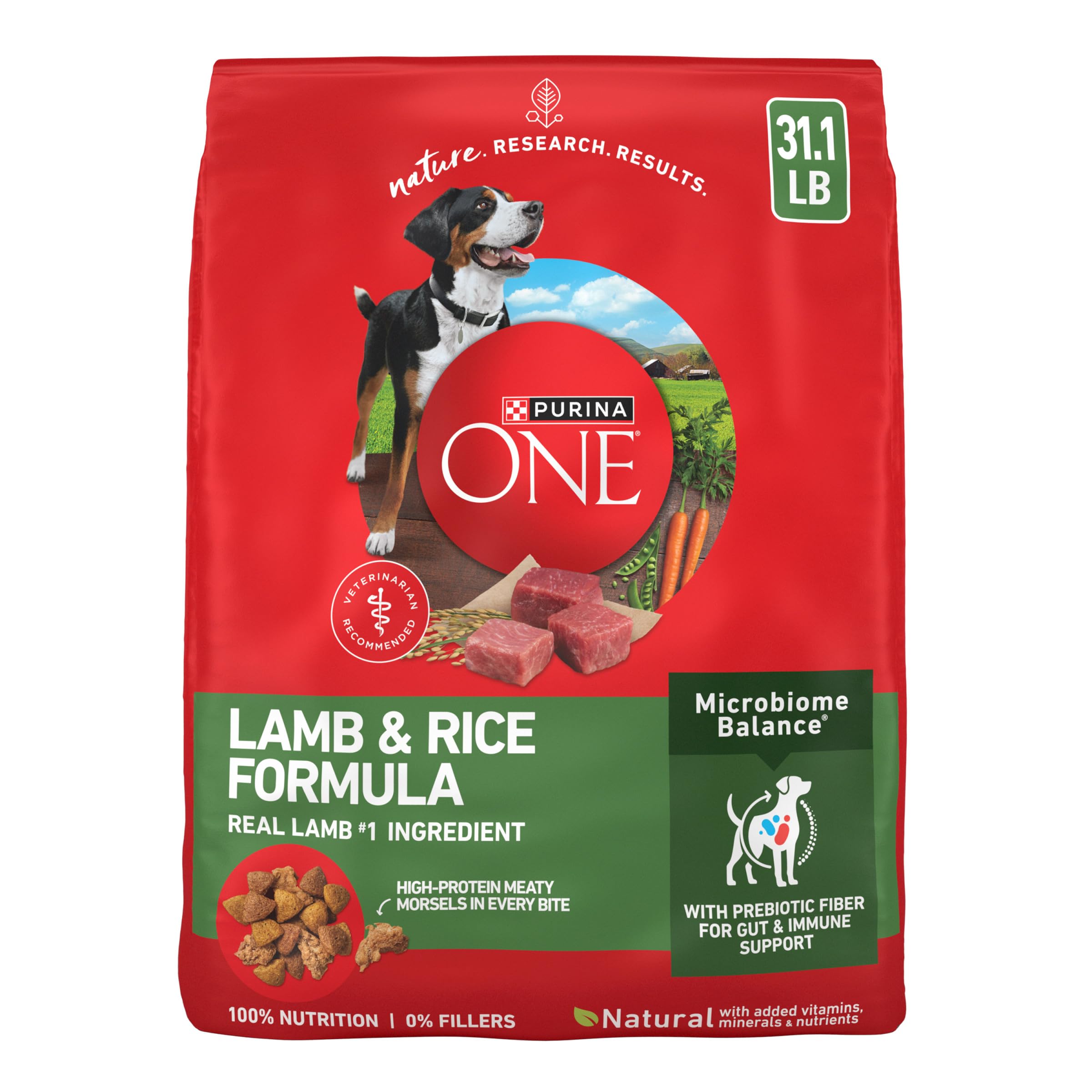
Lamb leads the recipe, and that alone earns this bag a place: it's the formula we reach for when a dog has gone off chicken or does better on a red-meat protein. Behind the lamb sits prebiotic fiber and a gut-and-immune blend, plus glucosamine for joints and omega-6 for skin and coat — a fuller panel than most formulas at this price bother with, and the reason it's our overall pick.

The 31.1-pound bag is the other half of the argument. It's the largest format here, which makes it the sensible buy for a big dog or a two-dog house, and it's the one we keep on subscription. If you have a single ten-pound dog, though, that bag will be open for months, and kibble does not improve with time.

Texture is the quiet advantage. Purina mixes crunchy kibble with tender, meaty morsels, so a dog that usually picks through a plain bowl has something to hunt for. That mix does more for a fussy eater than any flavor claim on the front of the bag.

Digestion is where we temper expectations. This formula suits a lot of dogs and disagrees with a few, so mix it into the old food over a week and judge at the three-week mark rather than the third day.

Bottom line: We recommend it as the default bag for most adult dogs: lamb first, gut-friendly fiber, and a big format that keeps a large dog fed without a premium price tag.

3

IAMS Proactive Health Minichunks

IAMS Proactive Health Minichunks

Mixed-size households

Our Score 9.4/10
Check Price

Worth Noting

  • Basic recipe with no joint or coat extras
Flavor
Chicken
Kibble
Minichunks
Bag Size
15 lb
Life Stage
Adult
Read the full review

A house with a ten-pound dog and a seventy-pound dog has a feeding problem: kibble sized for the big one is a chore for the small mouth, and kibble sized for the small one disappears in a single gulp. Minichunks splits the difference — small, dense pieces a toy breed can pick up and a Labrador still has to chew.

We rate it as the practical everyday choice for that setup. Chicken and egg supply the protein, a fiber-and-prebiotic blend is aimed at digestion, and the 15-pound bag is easy to store without dedicating a cupboard to it. Small pieces like these also drop through a timed feeder without jamming, which matters if you're out of the house at mealtimes.

What it isn't is a problem-solver. There's no meaningful joint support and no novel protein for a dog that reacts to chicken, so a dog with a diagnosed intolerance or a touchy gut belongs on one of the formulas built for that job. Digestive tolerance varies from dog to dog regardless, so we still transition over a week rather than swapping overnight.

Bottom line: We keep this one for houses where a Chihuahua and a Lab eat from the same bin — small enough for tiny mouths, sturdy enough for big ones, and simple to keep on hand.

4

Hill's Science Diet Sensitive Stomach & Skin

Hill's Science Diet Sensitive Stomach & Skin

Sensitive stomachs

Our Score 9.4/10
Check Price

Worth Noting

  • Chicken-based, so it isn't a chicken-allergy solution
Flavor
Chicken
Bag Size
15.5 lb
Life Stage
Adult 1–6
Formulated For
Sensitive stomach and skin
Read the full review

Loose stools, an itchy patch, and a coat that has gone flat tend to arrive together. Hill's builds this formula for that cluster: a highly digestible recipe with prebiotic fiber, vitamin E, omega-3 and omega-6 fatty acids, and vitamins C and E for immune support.

The formula is plain by design, and that's the point — fewer moving parts, a fiber source the gut can use, and a fat profile aimed at the skin. The coat is usually what changes first, then the stool, which is why we give it a month rather than a week.

It's the switch we suggest first when a dog's digestion has been uneven and the vet has ruled out anything medical. Nothing here is dramatic; this is a formula that removes irritants rather than adding hero ingredients, and for a dog that has been uncomfortable for weeks that's the more useful approach.

The catch is the price — this is one of the priciest bags per pound in this guide — and the fact that it's still chicken, so a dog with a real chicken allergy needs a different route entirely. Buy the smallest bag that carries you through a two-week trial before committing to the big one.

Bottom line: We try this one when a dog's digestion has been unpredictable and the vet has cleared anything medical; it's the gentlest formula here on stomach and skin.

5

Blue Buffalo Life Protection Chicken

Blue Buffalo Life Protection Chicken

Chicken-first feeding

Our Score 9.4/10
Check Price

Worth Noting

  • Costs more than the other chicken formulas here
Bag Size
15 lb
Free From
Corn, soy, and wheat
Life Stage
Adult
First Ingredient
Chicken
Read the full review

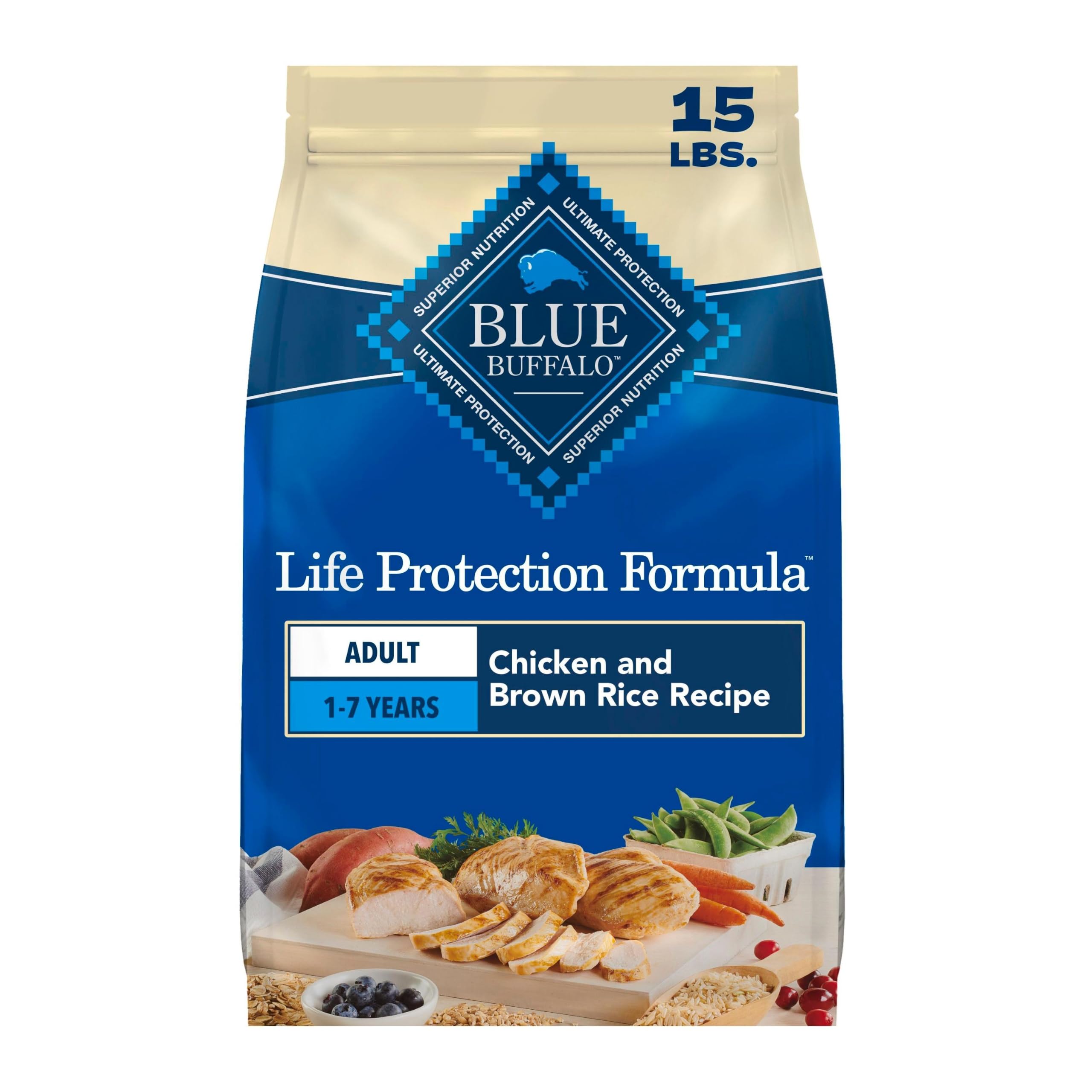
The dark, almost charcoal-colored pieces scattered through this kibble are LifeSource Bits, a separate blend of antioxidants, vitamins, and minerals added to the bag. They're the most distinctive thing about it, and you'll see them in the bowl at every meal.

Underneath them sits a straightforward chicken-and-whole-grain recipe: real chicken first, then brown rice, barley, and oatmeal, with no corn, soy, or wheat. For a dog that has done fine on poultry and grains, that's a sensible everyday profile — and it's the bag we hand to someone who wants an ingredient list they can read without a glossary.

Where we land is that this is a maintenance formula, not a fix. It holds weight and coat steady in a dog that's already doing well; it won't resolve an itch or a sensitive stomach that has another cause. If your dog is already thriving, that's exactly the job you want done.

Richness is the thing to plan for. This is a denser formula than the budget picks, and it's the one here we transition slowest — a week at half and half, then three weeks before we judge. Buy a size you'll finish in about a month rather than the biggest bag on the shelf.

Bottom line: We choose this for a healthy adult dog that does well on chicken and grains — real chicken first, no corn, soy, or wheat, and a steady maintenance profile.

6

IAMS Proactive Health Large Breed

IAMS Proactive Health Large Breed

Large breed adults

Our Score 9.4/10
Check Price

Worth Noting

  • Refusals and loose stools during the switch
Bag Size
30 lb
Breed Size
Large
Life Stage
Adult
First Ingredient
Chicken
Read the full review

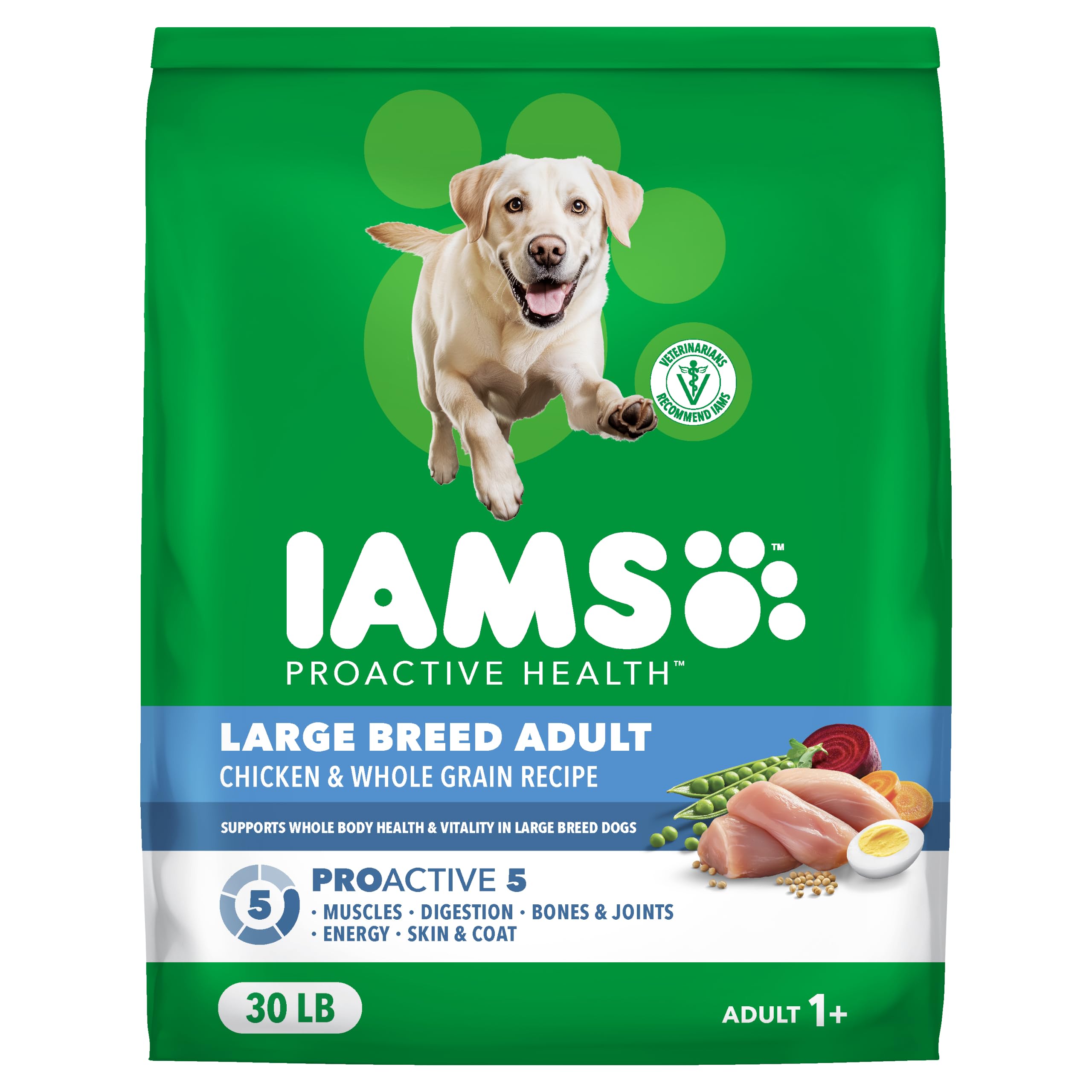
Big dogs need bigger kibble, and not for looks. A piece sized for a terrier barely registers in a Rottweiler's mouth, and a dog that bolts its dinner without chewing pays for it later. This bag is built around that: large pieces, optimal calcium levels for bone, and glucosamine with chondroitin for joints carrying a lot of dog.

Real chicken is the first ingredient, there are no fillers or artificial flavors, and the recipe covers the basics a big dog needs — muscle protein, joint support, and a kibble that takes a moment to chew.

Appetite is the variable. Some big dogs dive in; others turn their nose up after years on a richer food, so plan a slow mix rather than a cold swap. The same goes for digestion: give it a week of transition, then judge the stool, not the first bowl.

For a dog over fifty pounds, this is the formula here where the arithmetic works without a premium — a 30-pound bag that a big dog actually gets through, at a cost per pound the household budget can carry. If your dog is much smaller than that, both the joint support and the oversized kibble are wasted on it.

Bottom line: For a dog over fifty pounds, this is the value pick: large kibble, calcium for bone, and glucosamine for joints at a per-pound cost that makes a thirty-pound bag repeatable.

7

Purina ONE Plus Senior 7+

Purina ONE Plus Senior 7+

Dogs seven and older

Our Score 9.4/10
Check Price

Worth Noting

  • 8 lb bag goes fast in a big-dog house
Kibble
Crunchy bites and tender morsels
Bag Size
8 lb
Life Stage
Senior 7+
First Ingredient
Chicken
Read the full review

Seven is the age Purina draws the line at, and it's a reasonable one. Somewhere around there a dog's activity usually falls off before its appetite does, and the job shifts from building muscle to holding on to it.

The formula is built for that shift: real chicken first, omega-6 for coat, natural glucosamine for joints, and calcium for teeth. Nothing exotic — just the pieces that start to matter more at seven than they did at three.

The addition that makes it more than a calorie adjustment is an MCT-rich vegetable oil; Purina's own claim is that it supports mental sharpness in dogs seven and older. We take the claim at face value and judge it on what we can see — a dog that stays interested in meals, holds muscle along the spine, and gets up without a hitch after a nap. It's a maintenance formula rather than a weight-control one, so a senior putting on pounds still needs measured portions.

For a healthy dog entering its senior years, this is the easiest switch here: it changes what needs changing and leaves the rest alone, and it's the one we reach for at the first sign of slowing down.

Bottom line: We move a dog onto this around age seven, when activity drops before appetite does: real chicken first, joint support, and an oil aimed at mental sharpness.

8

Pedigree Adult Complete Nutrition

Pedigree Adult Complete Nutrition

Tight budgets

Our Score 9.4/10
Check Price

Worth Noting

  • Contains soybean meal and wheat
Flavor
Grilled steak and vegetable
Kibble
Kibble with Vitamin Goodbites
Bag Size
18 lb
Life Stage
Adult
Read the full review

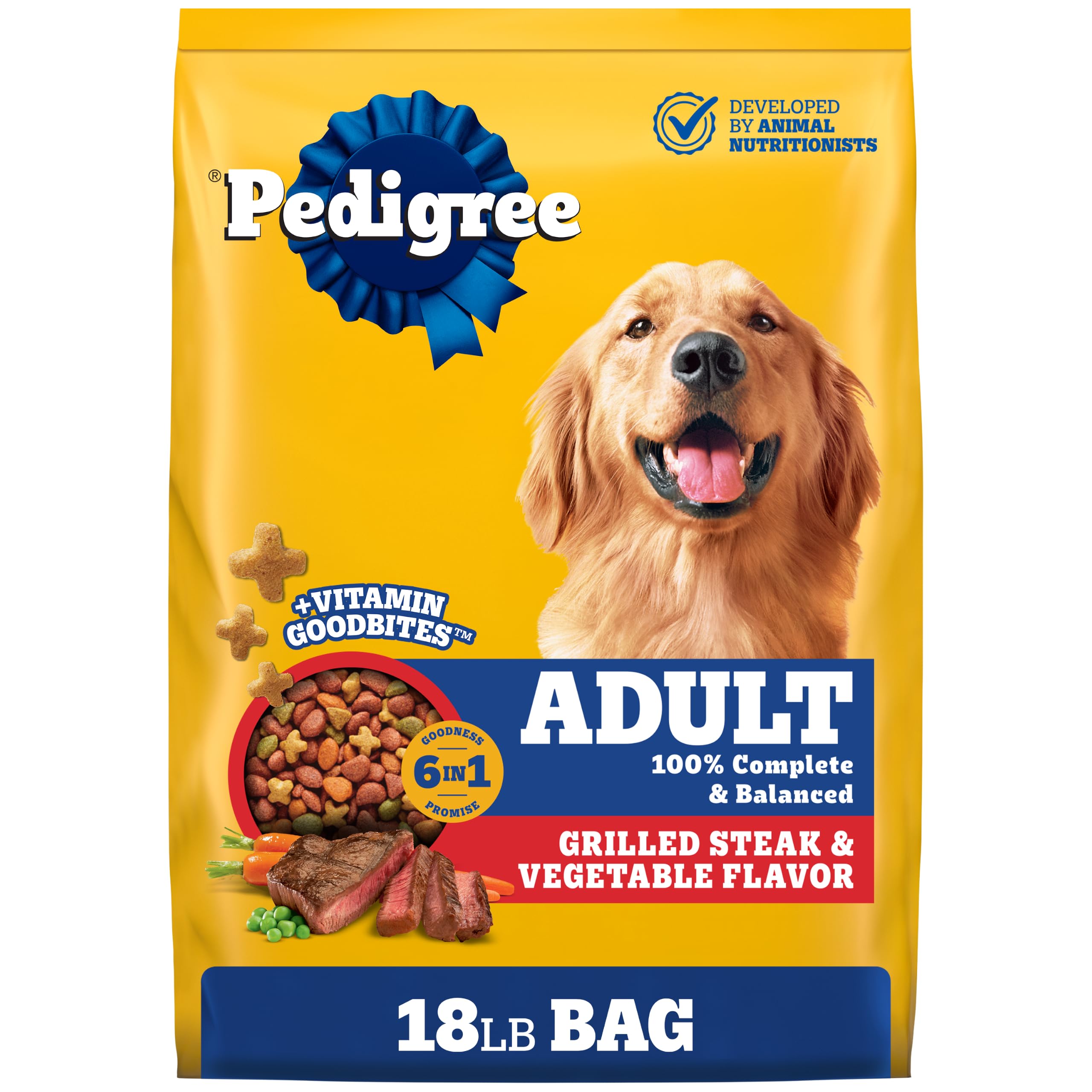
Per pound, nothing else here comes close, and that matters when you're feeding two or three dogs. The 18-pound bag carries prebiotic fiber for digestion, added vitamins and minerals for immunity, and Pedigree's Vitamin Goodbites — pieces formulated with elevated levels of essential vitamins rather than just another flavor.

We're not going to pretend it's a premium formula, because it isn't. What we will say is that a complete-and-balanced food a dog digests well beats a boutique bag that a family stretches with table scraps. If the choice is this or cutting the portion, this is the answer.

The practical catch is turnover. An 18-pound bag is a long commitment for a single small dog, so plan a cool, sealed spot before it arrives rather than leaving it open in a warm kitchen. In a two-dog house it disappears fast enough that freshness stops being a question.

Bottom line: It's the cheapest complete food here per pound, and that's the whole case: a dog does better on a budget kibble it tolerates than on a premium bag you can't sustain.

How We Tested 14 Dry Dog Foods Over Six Months

We built the shortlist from guaranteed analyses, AAFCO life-stage statements, and the first five ingredients on each label, then cross-checked recall histories and asked a few vet techs which formulas they see dogs actually thrive on. We priced every one per day for a 50-pound dog and a 15-pound dog rather than per bag, since a cheap bag that lasts nine days isn't cheaper than a pricier one that lasts three weeks, and we dropped anything that wouldn't stay fresh through a normal bag once opened. That left 14.

Each of the 14 was fed as the sole diet for at least three weeks, twice a day, in our own kitchens, to dogs ranging from a 12-pound terrier mix to a 90-pound retriever. We switched every dog over seven days and logged each meal: how fast the bowl emptied, whether a dog walked away and came back, whether anyone nosed the pieces onto the floor and ate around them. Kibble got measured against a frozen pea, because a size that's fine for a retriever means a skipped meal for a Yorkie.

Digestion got the closest look, since that's where budget formulas tend to show themselves. For the first two weeks of each trial we scored every stool for firmness and noted volume, frequency, gas, and loose days. We refilled water on a set schedule to see whether a food made a dog drink more, weighed each dog monthly, and watched coats and afternoon energy across the full trial. Value was counted in scoops per bag and cost per day at the end of the month, not at the register, and we checked the last third of every bag for dust, stale smell, and clumping — a food that turns on week three isn't a bargain at any price.

How to Choose the Right Dry Dog Food

Match the Formula to Life Stage and Size

Adult, senior, large breed, and small breed aren't marketing splits. A large-breed formula usually carries different calcium levels and joint support, a small-breed formula packs more nutrition into a smaller cup because a small dog eats less at a sitting, and a senior formula trims calories while adding joint and brain support. Getting the life stage right matters more than the brand on the bag.

If your dog sits on a boundary — a 24-pound dog, a dog turning seven — choose by weight and body condition rather than the number on the front of the bag, and give the new formula three or four weeks before you judge it.

Read the First Ingredient, Then Read Past It

Real chicken first is a good sign, but it isn't the whole story: fresh chicken is mostly water, so a named meat meal further down the list can contribute more actual protein. What matters more is the whole panel — a named protein, a digestible grain or fiber source, and a statement that the food is complete and balanced for your dog's life stage.

If you suspect your dog reacts to chicken, a lamb formula like our top pick is a reasonable place to start. A diagnosed allergy needs a vet and a limited-ingredient diet, not a different bag off the shelf.

Check the Kibble Size Against Your Dog

Kibble size is the specification nobody reads and everybody notices. Tiny pieces suit toy breeds and dogs that have lost teeth; larger pieces slow down a dog that inhales dinner. Small kibble also drops through a timed feeder without jamming, and a household with very different dog sizes can feed one bag if the pieces work for both mouths.

Pour a handful out before committing to a big bag. If the pieces look like more than your dog can comfortably pick up, you've got the wrong formula no matter what the front of the bag promises.

Buy the Bag You'll Finish

Cost per pound falls as bags get bigger, but kibble starts declining the day you open it. A thirty-pound bag is a few weeks of food for a Labrador and several months for a Chihuahua, and a bag that's been open since spring is not the bargain it looked like. Aim for roughly six weeks of food per bag.

Store it in the original bag, folded and clipped, inside a cool, dry cupboard rather than a warm garage. Check the bag when it arrives too — webbing, live insects, or a musty smell means it goes back.

Switch Slowly, Then Leave It Alone

Most of the digestive trouble blamed on a food comes from the switch, not the formula. Mix a quarter of the new food into the old for three or four days, then half, then three-quarters, and give the whole thing three weeks before deciding.

Slightly softer stools in the first week are normal. Vomiting, a dog that refuses meals for days, or blood in the stool are not — stop and call your vet. Once a food is working, resist the urge to rotate: every switch is another three weeks of adjustment.

Frequently Asked Questions

Final Verdict

Our default for most adult dogs is Purina ONE SmartBlend Lamb & Rice: lamb first, fiber that supports digestion, joint and coat support, and a big bag that keeps the cost per pound sensible. If digestion has been the problem, Hill's Science Diet Sensitive Stomach & Skin is the one we try first. If the budget is genuinely tight, Pedigree Complete Nutrition keeps a dog fed for the least money per pound here.

Everything else on this list is a fit question — size, age, or appetite.