Food & Treats

Best High Protein Dog Food of 2026

The promise on the front of a high-protein bag is easy to sell: more muscle, more energy, a dog that stays full between meals. What the label doesn't tell you is that the protein percentage is a lab measurement of the food, not a promise your dog can absorb all of it. A formula that races past 30% without enough fat and fiber behind it can leave you with a gassy, loose-stooled dog and a bag you dread opening.

That gap between the number and the reality is where most of the disappointment lives. After scrubbing a crate at 2 a.m. following an overzealous food switch, I care more about what comes out the other end than about a flashy protein claim. Over the past six months, my team and I fed 10 high-protein formulas to dogs across ages, sizes, and appetites, tracking how eagerly they ate, how well they digested, and whether the results justified the price per pound. The picks below are the formulas that cleared that bar without turning your dog's stomach into a daily gamble.

1

Purina Pro Plan Sport 30/20

Top Pick
Purina Pro Plan Sport 30/20

Active adult dogs

Our Score 9.4/10
Check Price

Worth Noting

  • Adult-only formula, so puppies need another food
  • 48 lb bag needs airtight storage
Fat
20%
Protein
30%
Life Stage
Adult
First Ingredient
Chicken
Read the full review

A 30/20 formula is a statement of intent: 30 percent protein, 20 percent fat, chicken as the first ingredient. We keep coming back to this one because it treats protein as fuel rather than a badge — the amino acids are aimed at muscle repair after hard exercise, and the extra fat carries a dog through a long day in the field. It's the bag we recommend to anyone with a working dog, a weekend athlete, or a lean youngster who burns off breakfast by nine.

In the bowl it behaves the way you want. Nothing we've fed it to has needed coaxing, and the kibble is small enough that an eager eater doesn't scatter half of it on the floor. Only Bully Max matches its 20 percent fat, and the 48-pound bag makes it one of the better values per meal in this group. The protein sits slightly under the two 32 percent Taste of the Wild formulas, so fat, not protein, is where this one leads.

It is rich, though, and a fast switch will loosen things up. Give it a week of mixing and most dogs settle; if yours has a history of a sensitive stomach, stretch that to two. Plan for storage as well — 48 pounds of kibble needs an airtight bin to stay fresh to the bottom of the bag.

Bottom line: For an active adult dog that needs more protein than a maintenance kibble delivers, this is the bag we reach for: 30 percent protein, chicken first, and a big bag that keeps the math sensible.
2

Pedigree High Protein Dry

Pedigree High Protein Dry

Budget feeding

Our Score 9.4/10
Check Price

Worth Noting

  • Contains soy and wheat
Bag Size
18 lb
Protein Claim
25% more than Pedigree Adult
First Ingredient
Real beef
Vitamins And Minerals
36
Read the full review

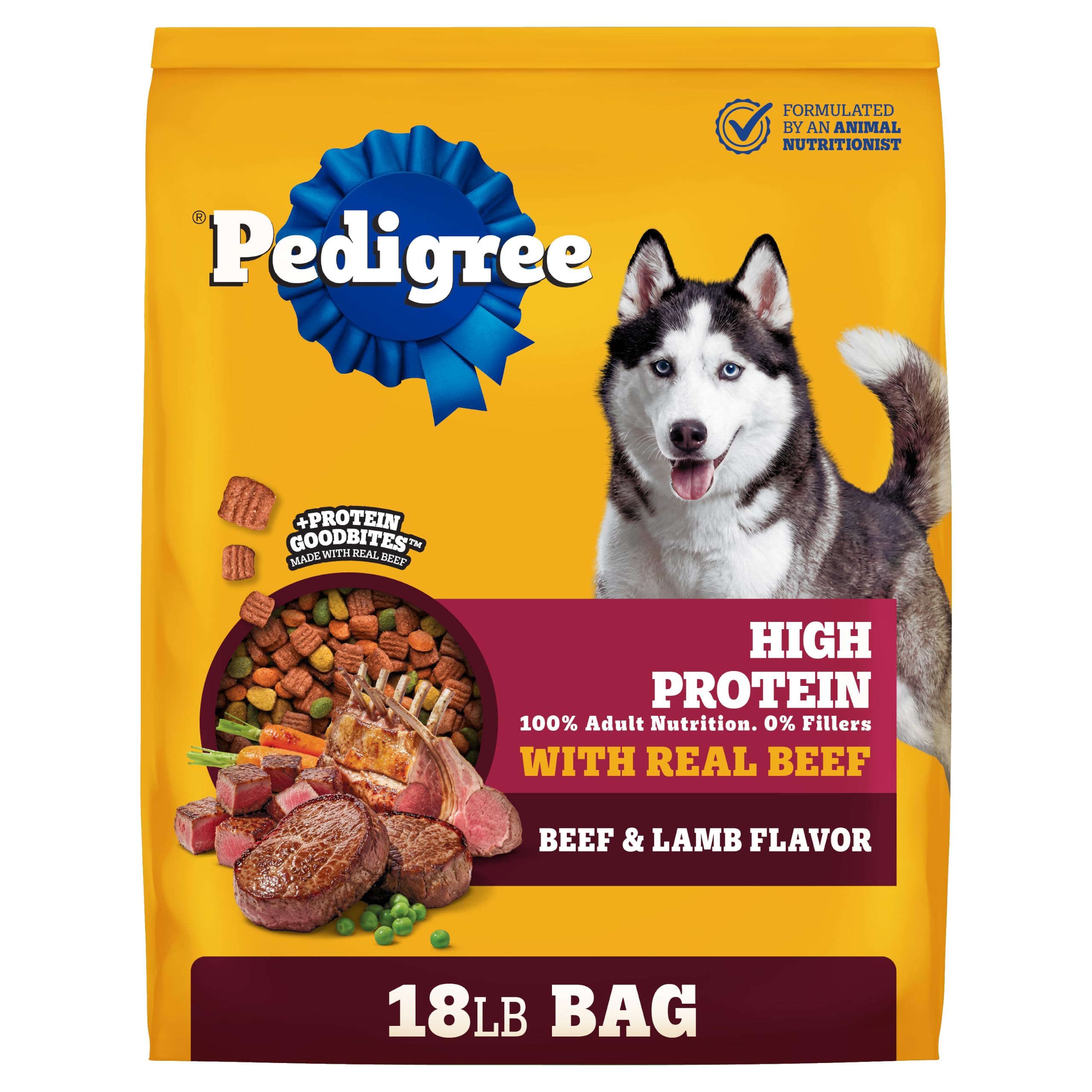
Cheap dog food usually asks you to accept something. Here the compromise is mostly in the paperwork: Pedigree claims 25 percent more protein than its Adult Grilled Steak and Vegetable formula, plus 36 vitamins and minerals and prebiotic fiber, but the bag never prints a protein percentage. That's not a dealbreaker. It does mean you can't line this up against the 30 and 32 percent formulas above — this is a value pick, judged on how the dog does and what it costs per meal.

For a household feeding two or three dogs, it's the one we point to first. The kibble is a workable size, the meaty Goodbites get fussy dogs to the bowl, and prebiotic fiber is a real inclusion at this tier rather than decoration. It's complete and balanced for adults, so it holds up as a sole diet without supplements.

Read the allergen line before you commit: this formula contains soy and wheat, so a dog with sensitivities to either needs a different bag. Everyone else gets straightforward adult nutrition in an 18-pound sack that's easy to carry and easy to store.

Bottom line: When budget decides the purchase, this is the bag we hand over: real beef, 36 vitamins and minerals, and a protein step up from Pedigree's standard kibble.

3

Blue Buffalo Wilderness

Blue Buffalo Wilderness

Trial feeding

Our Score 9.4/10
Check Price

Worth Noting

  • Premium price for the bag size
Grains
Oats, barley, brown rice
Protein
1.38 oz
Bag Size
4.5 lb
First Ingredient
Real chicken
Read the full review

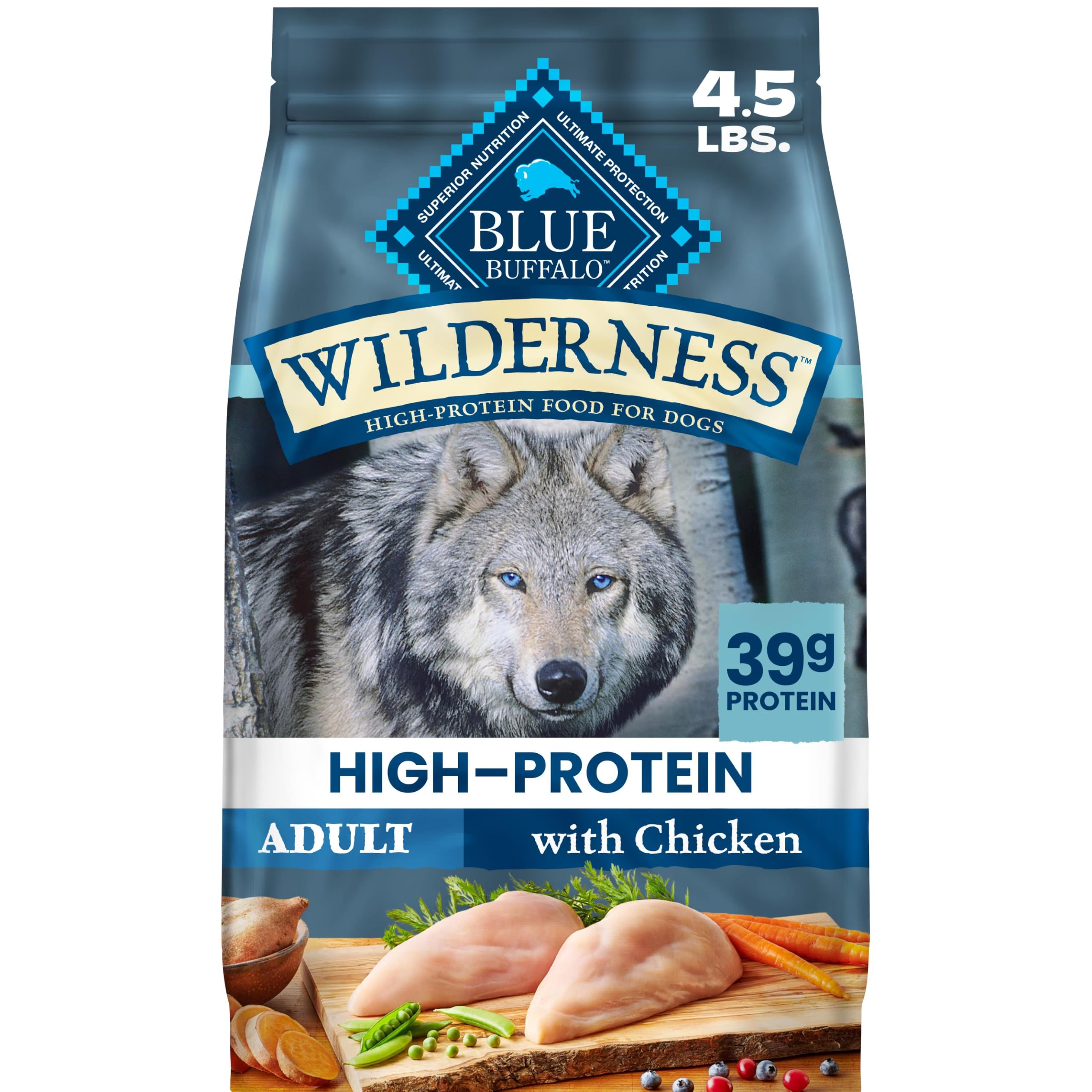
The bag is the point. Four and a half pounds won't last a Labrador long, but it's enough to find out how a richer formula sits before you commit to a big sack of something your dog won't touch.

Inside is a chicken-first adult recipe with oats, barley and brown rice on the grain side, peas and sweet potato alongside, and the LifeSource Bits Blue Buffalo adds for antioxidants and vitamins. The 39 grams of protein is a serving figure rather than a percentage, so it doesn't line up against the 30 and 32 percent formulas here — different unit, different question, and worth knowing before you compare labels in a store.

This is the one for someone moving a small dog onto more protein, or for a household that wants a bag in the cupboard rather than a bin in the garage. Digestibility decides whether the trial succeeds, so mix it with the old food for the first several days and judge on the stool over two weeks rather than on day-one enthusiasm.

Bottom line: We hand this to anyone trialling a richer formula — four and a half pounds is enough time to learn whether 39 grams of protein agrees with your dog.

4

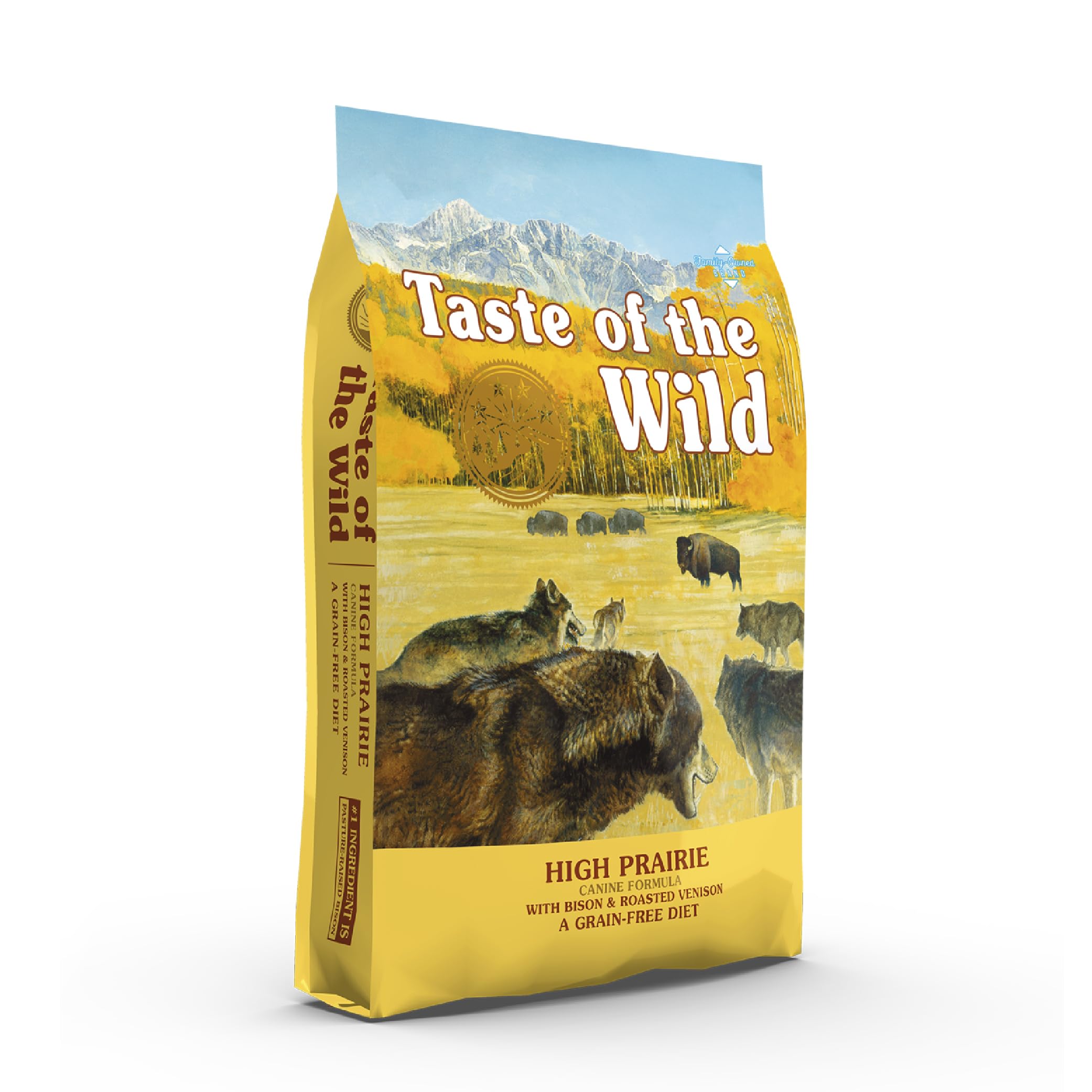
Taste of the Wild High Prairie

Taste of the Wild High Prairie

Grain-free feeding

Our Score 9.2/10
Check Price

Worth Noting

  • 14 lb bag empties fast in a big-dog house
Diet
Grain-free
Protein
32%
Bag Size
14 lb
First Ingredient
Real meat
Read the full review

Thirty-two percent protein against the top pick's 30 is close enough that the percentage alone doesn't decide it. What separates them is the rest of the recipe: no grains, a proprietary probiotic blend, and a formula built around meat, sweet potato and peas with omega fatty acids added for coat.

One detail worth knowing before you buy: bison and venison are on the label, but neither is the first ingredient. Real meat is, and the roasted bison and venison sit further down the list behind lamb meal, chicken meal and sweet potato. That's normal for a named-protein recipe and not a knock — it just means you're paying for a meat-first grain-free formula, not a bison-first one. We send anyone rotating off chicken or trying grain-free for the first time to this bag before the pricier options.

Grain-free isn't a free pass. Legume-heavy formulas are the ones that produce gas in the first fortnight, so introduce this slowly and keep an eye on the stool for the first ten days rather than judging it after two meals.

Bottom line: We point grain-free households here: 32 percent protein, real meat first, and a 14-pound bag that keeps the commitment small.

5

Pedigree High Protein Cuts in Gravy

Pedigree High Protein Cuts in Gravy

Wet meals

Our Score 9.2/10
Check Price

Worth Noting

  • Costs more per calorie than kibble
Pack
12 cans, 13.2 oz each
Format
Wet, in gravy
Protein
40 g+ per can
Life Stage
Adult
Read the full review

Cans solve problems kibble can't. A 13.2-ounce can of this is soft enough for a dog with missing teeth, wet enough to get moisture into a dog that doesn't drink, and pungent enough to bring a bored eater back to the bowl.

The protein claim deserves reading properly: more than 40 grams per can, carried across a lot of water. Per calorie it isn't denser than a 30 percent kibble, so it's not a shortcut to more protein — it's a way to make the food your dog already eats more appealing, or a complete wet meal if that's what your dog needs. Both pairings, beef and lamb or chicken and turkey, come in the case.

We keep a case on the shelf for topping and for the older dogs, and half a can through a bowl of kibble does more for a fussy appetite than any amount of coaxing. The gravy is rich, so start with half a can rather than a whole one; served by the can, it can loosen stools in a dog that isn't used to it.

Bottom line: We keep a case of these for dogs that need coaxing — more than 40 grams of protein a can, and a texture older mouths can manage.

6

Bully Max 30/20

Bully Max 30/20

Weight gain

Our Score 9.2/10
Check Price

Worth Noting

  • Highest cost per pound in this group
  • 5 lb bag empties fast
Fat
20%
Protein
30%
Calories
535 per cup
Life Stage
All life stages
Read the full review

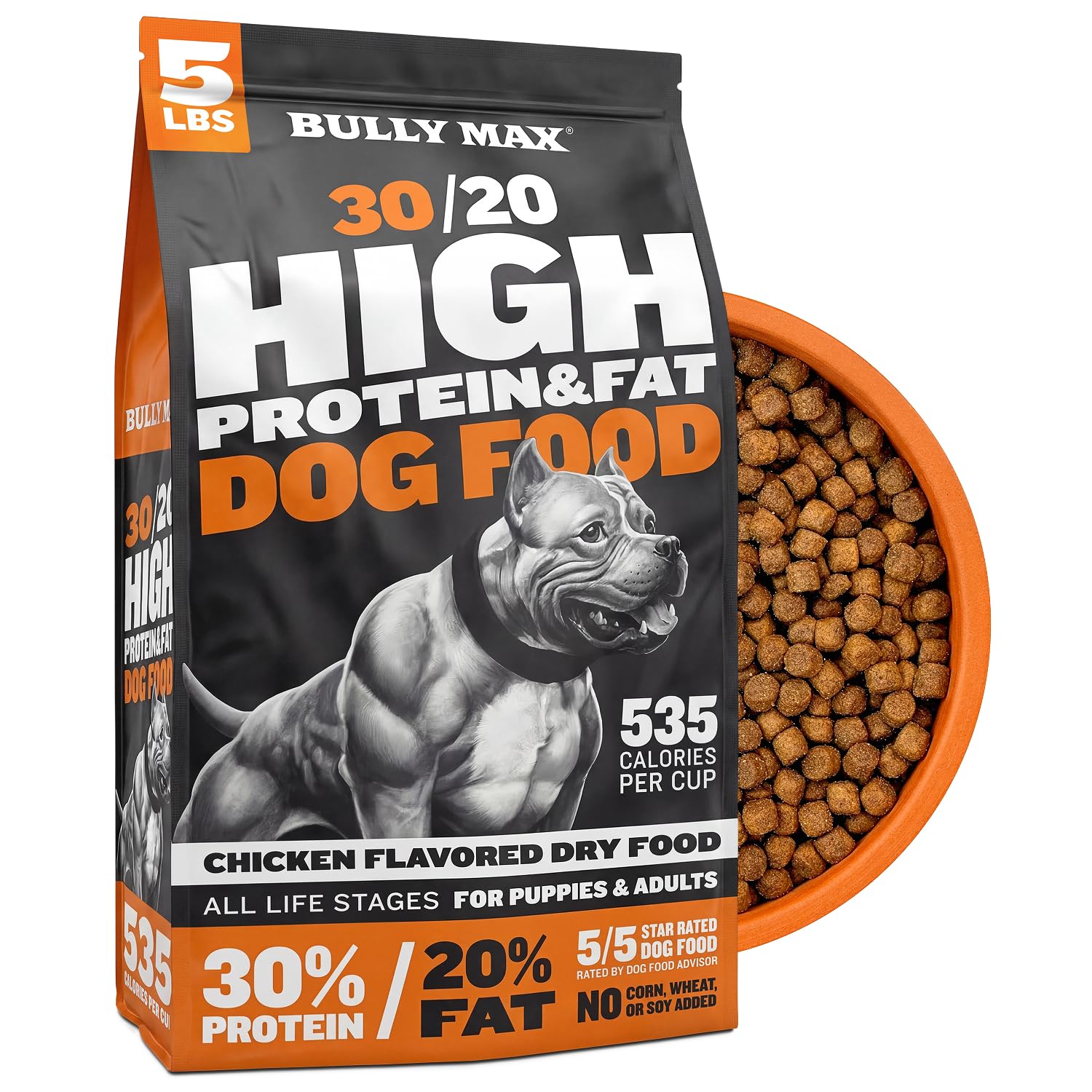
Five hundred and thirty-five calories in a cup is the number that matters. Standard kibble lands well below that, so one scoop here does the work of a scoop and a half of most food — exactly what a hard keeper, a dog coming back from a rough stretch, or a big youngster still filling out needs. It's why we reach for it when a dog has to gain rather than maintain.

The rest of the formula supports the job: 30 percent protein from chicken meal and white fish, 20 percent fat, and no corn, soy or wheat. It's labeled for all life stages, which is worth a conversation with your vet if you're feeding a large-breed puppy rather than an underweight adult, since growth diets are their own calculation.

Two things to expect. Palatability is the wildcard — some dogs take to it straight away, others turn their nose up at the smell, and a few get loose stools in the first week. Introduce it slowly and don't buy two bags before you know which dog you have.

Bottom line: Our pick for the dog that can't keep weight on: 535 calories per cup and 30 percent protein, dense enough that a small scoop does the work.

7

ACANA Red Meat

ACANA Red Meat

Premium red-meat diets

Our Score 9.2/10
Check Price

Worth Noting

  • Some dogs refuse the disc-shaped kibble
  • Premium price tier
Diet
Grain-free
Bag Size
25 lb
Kibble Shape
14 x 6 mm disc
Animal Ingredients
60%
Read the full review

Sixty percent animal ingredients is the headline, and it's the highest proportion of animal material in this group. The remaining 40 percent is fruit, vegetables and fiber, plus a freeze-dried coating that does most of the work on aroma.

The kibble is a flat disc roughly 14 millimeters across and 6 thick, not a round pellet. Small enough for a medium dog to pick up comfortably, unusual enough that some dogs take a meal or two to accept it.

That's the pattern with this one: dogs tend to either take to it or refuse it outright, and the ones that refuse refuse hard. Loose stools turn up too when the switch is fast, which is worth planning for at this price.

We keep it in the lineup for the household that has already settled on a premium formula and wants red meat rather than poultry — a dog that scratches on chicken, or one that has simply done better on beef and bison. If neither applies, the cheaper picks here do the same job with less risk.

Bottom line: We keep this in the lineup for dogs that do better on red meat: 60 percent animal ingredients, grain-free, and priced like it.

8

Taste of the Wild Ancient Prairie

Taste of the Wild Ancient Prairie

Grain-inclusive diets

Our Score 9.2/10
Check Price

Worth Noting

  • Taste is hit or miss with picky dogs
Grains
Ancient grains
Protein
32%
Bag Size
28 lb
Allergen Info
Pea-free
Read the full review

Grain-free has had a long run, and plenty of dogs are on it for reasons that have nothing to do with their digestion. Ancient Prairie is the counter-argument from the same family: 32 percent protein, real meat first, and ancient grains doing the carbohydrate work instead of relying on legumes.

The detail we didn't expect is the allergen line: pea-free. Its grain-free sibling in this guide lists peas and pea flour high in the ingredients, so if legumes are what you're trying to avoid, this is the version that avoids them while still hitting 32 percent protein. The K9 Strain probiotics and omega fatty acids carry over.

Taste is where it splits. Dogs that love the High Prairie don't always love this, and a fast switch brings the loose stools most rich formulas bring, so give it ten days before you form an opinion.

We point to it for the multi-dog house that wants one bag everyone can eat, and for anyone who has been told to put grains back in the bowl. It's all life stages on the label, so follow the feeding guide by weight rather than assuming the adult portions above apply to a puppy or a senior.

Bottom line: We send people here when grains are the point: 32 percent protein, real meat first, and a pea-free recipe in an all-life-stages formula.

How We Chose and Tested the Best High-Protein Dog Foods

We started by pulling the guaranteed analysis and ingredient deck for roughly 40 formulas sold in pet specialty stores and online, then cut anything that leaned on unnamed meat meals or vegetable proteins to inflate the protein number. We also checked the AAFCO statement on each bag to confirm the food was complete for the life stage we were feeding, and calculated price per pound and cost per day using calories per cup, since a cheap bag that's light on calories can cost more to feed. Ten formulas made the cut.

For six months, those 10 foods were the sole diet for a panel of dogs that ranged from a 12-pound terrier to a 90-pound retriever mix, with puppies, adults, and seniors in the mix. Each switch happened over 7 to 10 days, mixing increasing amounts of the new food into the old, because nearly every "this food made my dog sick" story we heard traced back to a fast transition rather than the formula itself. We fed twice a day from a measured cup on a kitchen scale, and logged every meal: how fast the bowl was emptied, whether the dog walked away, and how much was left behind.

After each meal and on every walk, we noted stool firmness, volume, and frequency, plus gas and any change in appetite. Dogs with known sensitivities to chicken or beef were fed formulas that avoided those proteins, and we watched for itching, ear redness, and paw licking over the first month. Monthly weigh-ins and body condition scores tracked whether the extra protein was actually building lean mass, while energy on walks and begging between meals told us whether the food kept them satisfied. We also kept a running cost-per-day figure, because value in dog food is measured in bowls, not bags.

How to Choose the Right High Protein Dog Food

Know whether you're reading a percentage or a weight

Most of the formulas here state protein as a share of the whole diet: 30 percent for the Pro Plan Sport, 32 percent for both Taste of the Wild bags. Blue Buffalo's 39 grams is a weight per serving, and Pedigree's kibble only claims 25 percent more than another Pedigree formula. Those numbers can't be ranked against each other, so compare percentages with percentages and treat a gram figure as a portion detail.

Keep dry and wet apart as well. A canned food's protein percentage looks low mostly because most of the can is water, which is why the Pedigree cans are described in grams rather than percentages. If you're feeding both, do the arithmetic on the dry food and treat the can as an addition.

Match the formula to the dog in front of you

The same 30 percent protein means something different for a three-year-old working dog and a nine-year-old who naps through the afternoon. Higher protein usually arrives with higher fat — 20 percent in the Pro Plan Sport and Bully Max formulas — and fat is the part that puts condition on a lean dog and the part that quietly adds weight to an idle one.

Life stage is the harder line. Adult-only bags like the Pro Plan Sport, the Pedigree kibble and the Blue Buffalo Wilderness are not puppy foods. If there's a puppy in the house, look for an all-life-stages formula and feed by the bag's weight chart, and ask your vet about large-breed growth before you settle on any one bag.

Compare cost per meal, not cost per bag

Calorie density decides how far a bag actually goes. Bully Max states 535 calories per cup, which is high enough that the same scoop delivers considerably more energy than a standard kibble, so a small bag can outlast a bigger one. The cheap bag is not automatically the cheap meal, and the expensive bag is not automatically the expensive one either.

Run the sum once for your own dog: cups in the bag, times calories per cup, divided by the daily ration. It takes two minutes and it is the only price comparison that survives a change in bag size.

Switch slowly and let the stool decide

A 30 percent protein, 20 percent fat formula is richer than most dogs are eating now, and the first week is where nearly every complaint starts. Mix a quarter of the new food with three quarters of the old for three or four days, then go half and half, then fully over by about day ten.

Loose stools mean slow down, not give up. If a dog refuses the new kibble outright — which happens with the disc-shaped ACANA and, for some dogs, the pea-free Ancient Prairie — drop back to a 90/10 mix for a few days rather than pushing through.

Dry, wet, or a bit of both

Kibble is the practical default: it stores, it costs less per calorie, and it gives a dog something to chew. Cans earn their place for older dogs, missing teeth, poor drinkers and fussy appetites — the Pedigree version carries more than 40 grams of protein per can and works as a complete meal or a half-can topper.

If you use wet food as a topper, cut the kibble back rather than piling the can on top. That's the step people skip, and it's how a helpful addition turns into a slow weight gain nobody notices until the collar gets tight.

Frequently Asked Questions

Final Verdict

Purina Pro Plan Sport 30/20 is the bag we point most people to. Thirty percent protein with real chicken first and 20 percent fat is enough for a working or sporting dog without going to the extreme end of this group, and the 48-pound bag keeps the cost per meal sensible.

If your dog does better without grains, the Taste of the Wild High Prairie is the swap, at a slightly higher protein percentage and a bag you can actually store. If you're feeding several dogs on a tight budget, the Pedigree High Protein bag does the job for a fraction of the outlay — just check the soy and wheat line first.