Food & Treats

Best Senior Dog Food of 2026

My old Labrador, Gus, used to finish dinner before I'd put the scoop away. Then, somewhere around his eleventh birthday, he started walking off with the bowl still half full, and I started reading ingredient panels at 11 p.m. with a flashlight. That's the part nobody warns you about with senior dogs: the appetite dulls first, and everything else follows — weight, muscle, energy on the morning walk. The right food won't turn back the clock, but it can keep a picky, tender-stomached older dog eating enough to hold his weight and stay comfortable.

Over the past six months, my team and I fed 14 senior formulas to a small, opinionated pack of older test dogs, and the differences were not subtle. One thing worth knowing before you shop: "senior" isn't a regulated term, so some bags are just adult food in different packaging while others genuinely shift protein, fat, and fiber for a dog that moves less and digests more delicately. What follows is what the dogs actually ate — and what held up after the bowl was empty.

1

Hill's Senior 7+ Small Bites

Top Pick
Hill's Senior 7+ Small Bites

Small dogs

Our Score 9.6/10
Check Price

Worth Noting

  • Five-pound bag only, at the highest cost per pound here
Bag Size
5 lb
Age Range
Senior Adult 7+
Kibble Size
Small bites
Main Ingredients
Chicken, brown rice, and barley
Read the full review

Tip a handful out of the bag and half the argument makes itself: the kibble is genuinely small, closer to a lentil than the chunky pieces most adult foods use. For a dog who has lost a few teeth, or a small breed whose mouth never had much room, that's the difference between a bowl finished and a bowl picked at. It's small without tipping into a choking hazard, which is the line a tiny kibble has to walk.

Small bites solve half the problem; the other half is a formula a dog will actually eat, and this is the bag we hand to small-dog households first. Chicken, brown rice and barley is a plain, digestible base, and the mineral balance aims at heart, kidney and bladder health rather than whatever ingredient is fashionable this year. For a thin older dog who needs to keep eating, boring and reliable beats exciting every time.

It won't fix a specific medical problem — this is maintenance food, not a therapeutic diet — but as an everyday bowl it's the one that most reliably comes back empty. For a small dog with a sensitive stomach and a mouth that has seen better days, that's the whole recommendation.

Bottom line: If your senior is small, struggles with chunky kibble, or is down to a few teeth, this is the food we hand over first.

2

Purina ONE Senior 7+

Purina ONE Senior 7+

Most senior dogs

Our Score 9.4/10
Check Price

Worth Noting

  • 16.5 lb bag runs short in multi-dog homes
Bag Size
16.5 lb
Age Range
Adult 7+
Kibble Form
Crunchy bites with tender morsels
First Ingredient
Real chicken
Read the full review

Most older dogs don't need an exotic diet. They need a complete food they'll finish, with the joint and coat support a senior body actually uses, and that's the job Purina ONE Senior 7+ does better than anything else in this group. Real chicken leads the ingredient list, natural sources of glucosamine cover hips and joints, omega-6 handles skin and coat, and an MCT-rich vegetable oil is in there for mental sharpness. Across our feeding, this was the bowl that came back empty without coaxing, and the dogs on it held their weight and condition.

The texture is doing quiet work. Crunchy kibble mixed with tender meaty morsels gives an older dog two reasons to keep eating, and that matters once a dog starts sniffing dinner and walking away. The pieces run small, which suits a mouth with a few loose teeth — a big dog doesn't need bigger kibble, whatever the old rule says — though a fast eater will swallow these whole, so watch the first few meals.

What we appreciated most is the guarantee. If the bag doesn't work out, Purina asks for the date box and your receipt rather than a sack of uneaten food, and refunds the purchase price. On a food your dog might refuse, that's a real reason to try this one first. The one boundary worth naming: it's a chicken-based formula, so a dog with a diagnosed poultry allergy needs a different pick.

Bottom line: Our default for the ordinary senior: a chicken-first 7+ kibble that most dogs eat without fuss and that doesn't wreck the monthly budget. Buy it unless your dog needs tiny bites or a wet food.

3

IAMS Healthy Aging Senior

IAMS Healthy Aging Senior

Tight budgets

Our Score 9.4/10
Check Price

Worth Noting

  • Joint support isn't backed by named glucosamine or chondroitin
Bag Size
29.1 lb
Age Range
Senior
First Ingredient
Real chicken
Cognitive Support
DHA Gold
Read the full review

Work out the cost per pound and this is the cheapest dry food in the group to keep a big dog on. The 29.1 lb bag is sized for a household rather than a week, and the formula isn't a stripped-down version of a better one: real chicken leads, DHA Gold is in there for mental and visual sharpness, L-carnitine for lean body mass, and a fiber blend with beet pulp for digestion. For two aging Labradors and one income, that combination is the whole argument.

It suits the dog who is slowing down but not sick — the one who sleeps more, takes longer to get up, and still empties the bowl. The Proactive 5 framing on the bag is marketing, but the pieces behind it, an antioxidant blend and prebiotic fiber among them, are the things we look for in a maintenance senior food anyway.

The wildcard is appetite. Senior dogs lose some of their sense of smell, and a food that gets ignored on day one can be a food that gets ignored for a month. Introduce it by mixing a handful into what your dog eats now and building up over a week; if the bowl is still full at the end of it, you've learned something cheap.

Bottom line: Two big dogs and a fixed monthly food budget is exactly who this bag is for — it feeds a household for less per pound than anything else here.

4

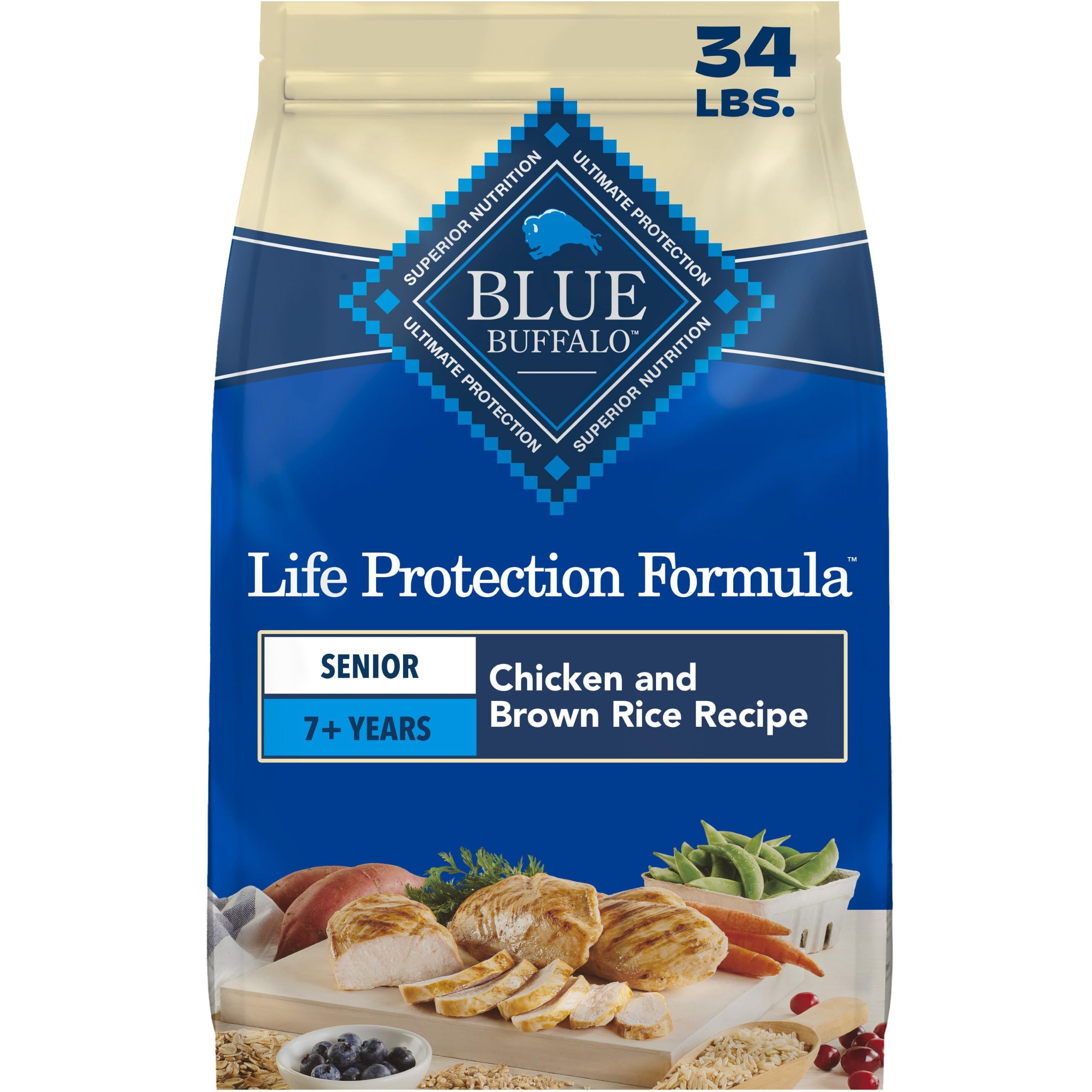
Blue Buffalo Life Protection Senior 7+

Blue Buffalo Life Protection Senior 7+

Large households

Our Score 9.4/10
Check Price

Worth Noting

  • Powdery fines can collect at the bottom of the bag
Bag Size
34 lb
Age Range
Senior 7+
Joint Support
Glucosamine and chondroitin
First Ingredient
Real chicken
Read the full review

Blue Buffalo built this bag around two promises: a real chicken first ingredient and no corn, soy or wheat. We're skeptical of absence claims as a selling point — a food isn't better because of what's missing — but for a dog who has spent years on a corn-heavy kibble with a dull coat and itchy skin, the switch is worth one bag. The dark LifeSource Bits carry the antioxidants and vitamins, and they're also the part some dogs eat around.

The joint side is more concrete: glucosamine and chondroitin, named on the label, at the age when stairs start becoming a negotiation. The 34 lb bag makes it the practical choice for a house with two large seniors, and it's the bag we point big-dog owners toward when they're tired of reordering small bags.

Where it can go wrong is the bowl. A senior who takes to it does well on it; a senior who doesn't will pick out the soft pieces and leave the rest, and that's an expensive way to find out. If your dog is already fussy, start small and watch the first week before you clear shelf space for a second bag.

Bottom line: Worth it for a large-dog household that wants a corn-free, soy-free formula in a big bag, as long as your dog will actually eat it.

5

Pro Plan Senior Shredded Blend

Pro Plan Senior Shredded Blend

Picky eaters

Our Score 9.4/10
Check Price

Worth Noting

  • Near the top of this group on price
Bag Size
34 lb
Age Range
Senior
Kibble Form
Hard kibble with tender meaty pieces
Joint Support
EPA omega-3 and glucosamine
Read the full review

Two textures in one bag sounds like a gimmick until you've spent a week coaxing a dog through a bowl of plain kibble. The hard pieces give a senior something to chew; the tender shredded chicken pieces throw off the smell that gets an old nose working again. For the dog who leaves half of dinner every night, that difference is the entire purchase decision.

Behind the texture the formula is solid: real chicken first, guaranteed live probiotics for digestive and immune support, EPA omega-3 and glucosamine for joints, and the same 34 lb bag size as the other big pick here. It used to be sold as Savor Shredded Blend, so if you're coming from that name, you're getting the same food.

The extras are named rather than implied, which is the sort of label we trust more than a wall of adjectives. There's a behavioral trap, though: dogs learn fast that the tender pieces are the good ones, and a clever senior will start leaving the hard kibble behind. Mix it through rather than scattering it on top, and the bowl stays honest.

Bottom line: The pick when appetite is the problem: those tender shreds get a reluctant dog back to the bowl, and the big bag makes it a practical staple.

6

Nutro Natural Choice Senior Small Breed

Nutro Natural Choice Senior Small Breed

Small-breed seniors

Our Score 9.4/10
Check Price

Worth Noting

  • Five-pound bag only
Bag Size
5 lb
Age Range
Senior
Breed Size
Small breed
First Ingredient
Chicken
Read the full review

Put this next to the other small-dog bag here and the difference is intent: Nutro formulates this one for small breeds specifically, not just for small mouths. The kibble is tiny, chicken is the first ingredient, and it's a non-GMO recipe with natural prebiotic fiber from beet pulp — the sort of label people go looking for after a bout of itchy skin or a dull coat.

The formula is built around a good coat and a settled stomach: an omega-3 to omega-6 ratio the packaging ties to visible coat improvement, beet pulp for digestion, and calcium with phosphorus for bones. What convinced us it belongs on this page is that the two things small seniors most often struggle with, skin and stool, are the two things the recipe addresses.

The narrowness is deliberate and it's also the limit. It's a small-breed formula, so a medium or large senior shouldn't be eating it, and that's why it sits here as an alternative rather than a main recommendation. For a small dog with a sensitive gut and a fussy appetite, though, it's a very good fit.

Bottom line: The narrow one, and deliberately so: a small-breed senior with a sensitive stomach and a picky appetite is exactly who it suits.

7

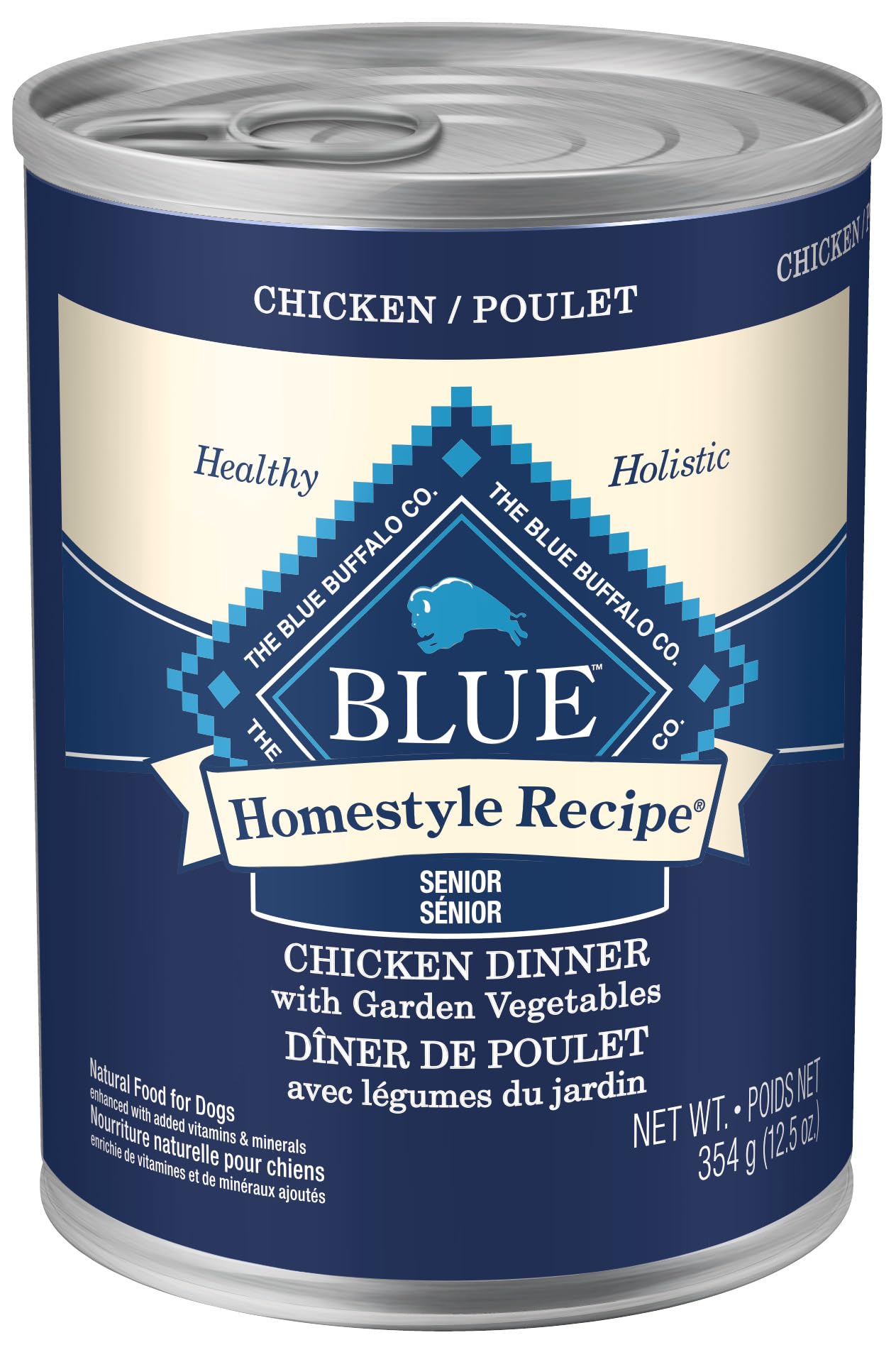
Blue Buffalo Senior Wet

Blue Buffalo Senior Wet

Fussy appetites

Our Score 9.2/10
Check Price

Worth Noting

  • Pricier per meal than any dry food here
Form
Pate
Age Range
Senior 7+
Pack Size
12.5 oz, 12 ct
Joint Support
Glucosamine and chondroitin
Read the full review

There's a stage with an old dog where dinner comes back half eaten, and the answer usually isn't another dry food — it's something that smells like food. A spoonful of this pate stirred through kibble does more for a fading appetite than any bag redesign, and on the days when chewing is too much work, it's a complete meal on its own.

It's a serious formula, not a treat: real chicken first, carrots, peas, sweet potatoes, blueberries and cranberries, brown rice, barley and oatmeal for fiber and complex carbohydrates, flaxseed for omega-3, and glucosamine with chondroitin for joints. The cans are 12.5 ounces, twelve to a case.

How we use it: a heaped spoon over dry food for a dog who needs persuading, a whole can when teeth or appetite make kibble unrealistic, and a reliable fallback after dental work. An opened can goes in the fridge and wants finishing within a few days, so open one deliberately rather than just in case.

For the senior who has stopped finishing dinner, this is the first thing we pull out of the cupboard, and the smell does most of the work before the bowl even hits the floor. Keeping a case rather than switching a dog onto it entirely has bought us more good evenings than anything else on this page.

Bottom line: A case of this in the cupboard is how we handle a senior who has stopped finishing dry food; it's a topper and a full meal in one can.

How We Tested Senior Dog Food (With a Lot of Help From the Dogs)

We started with more than 30 senior and all-life-stages formulas sold in the U.S., then narrowed the field using the AAFCO nutritional adequacy statement on the bag, named animal protein among the first ingredients, calorie density, cost per day for a 50-pound dog, and whether the food was consistently in stock. That left 14 formulas, which we rotated through real kitchens rather than a lab.

Each formula got a two-week run, served at the same times in the same bowl, with the order shuffled so no dog always ate the same food first. We weighed portions, timed how long each dog stayed at the bowl, and checked back at the 15-minute mark to see what was left. We also watched how they chewed: whether a dog with worn teeth picked up the kibble cleanly or dropped pieces, and whether anyone nosed the smaller bits to the side.

Digestion got the least glamorous and most thorough attention. Every formula was introduced over seven to ten days, and we logged when stools firmed up, how often the dogs went out, and whether gas or overnight restlessness followed a meal. Two of our testers have historically sensitive stomachs, so any loose stool or stomach irritation got flagged and the food re-tested. Weigh-ins and body condition checks happened monthly, alongside notes on water intake and coat.

Value came down to arithmetic rather than price tags: we calculated cost per 1,000 calories and how much a 50-pound senior would eat in a day, which is where a few premium-looking bags quietly fell apart.

How to Choose the Right Senior Dog Food

Match the Age Label to Your Dog's Size

A 7+ formula suits a medium dog at seven, but a giant breed is already old at five or six, while a small dog may not be a senior until eight or nine. What changes at that point is less dramatic than the marketing suggests: joint support, a smaller or softer piece of food, and slightly fewer calories than the dog was burning at four.

Pick the senior formula that matches your dog's breed size and current condition, and let a vet's diagnosis override the bag. If your dog is on a complete adult food and doing well, the switch is worth making, but it is not an emergency.

Kibble Size and Texture Decide Whether Dinner Gets Eaten

You can read a lot from a single meal. A dog who picks up a piece, drops it, and tries again is telling you the kibble is too big or the teeth are too worn — go smaller, or stir a spoon of wet food through to soften the bowl.

Don't assume small kibble is only for small dogs. A large senior with a sore mouth does better on small bites than on chunky pieces, while a dog who gulps may do worse. And a crunchy kibble is not a substitute for brushing, whatever the bag implies.

Which Support Ingredients Are Worth Paying For

Glucosamine and chondroitin aim at hips and joints; EPA and DHA, the omega-3s, work the same problem from another angle. MCT oil and DHA are the cognitive side, for the dog who seems disoriented in the evening. Probiotics and prebiotic fiber are about stool quality.

These are support ingredients inside a complete food, not treatment. Choose the one or two that match your dog's actual issue rather than paying for all four at once, and if a joint, heart or kidney problem has been diagnosed, the prescribed diet wins.

The First Bag Is a Test, Not a Stock-Up

Senior dogs lose some of their sense of smell, and a food that works for one is refused by the next. That makes the biggest bag the wrong way to try anything new: start with the smallest size available, mix it into the current food over about a week, and watch the stool.

A loose day at the start is common enough to expect. Diarrhea that runs past a couple of days, or vomiting, is a reason to stop and try something else. Once the bowl comes back empty for a week, buy big.

Compare Cost Per Pound, Not Price Per Bag

A five-pound bag and a thirty-four-pound bag are not the same purchase, and the small one can cost well over twice as much per pound of food. Divide the price by the weight before you decide which is the better buy.

Buy the size your household will finish while the kibble is still fresh; an open bag loses its appeal after a few weeks. One small dog: five to fifteen pounds at a time. Two large seniors: thirty pounds and up, and you will still be reordering.

Frequently Asked Questions

Final Verdict

Purina ONE Senior 7+ is the bag we point most people toward: chicken first, glucosamine and omega-6 in the formula, a bowl that comes back empty, and a guarantee that refunds you if it doesn't. If your senior is small or struggling with chunky kibble, Hill's Small Bites is the better fit, and IAMS is the one to choose when two big dogs have to be fed on a budget.

Buy the smallest bag first, give it a week, and let the bowl make the final call.