Food & Treats

Best Wet Dog Food of 2026

Wet food is the fastest way to get a picky dog excited about dinner — and the fastest way to waste money if your dog disagrees. What separates a good can from a bad one isn't the photo on the label; it's whether the bowl comes back clean, whether a can stretches past one meal for a big dog, whether your dog's stomach stays settled for the week that follows, and, honestly, how it smells when you pull the lid.

I have two dogs, one who would eat a shoe and one who turns his nose up at anything short of warm chicken, so I've opened a lot of cans. Over the past three months, we put 15 formulas in front of a wider panel of dogs, including a senior with a sensitive stomach. Here's what I wish more people knew: wet food is often 75 to 80 percent water, so a can that's mostly broth can cost more per calorie than the dense pâté beside it. Watch cost per day, and the picks below make a lot more sense.

1

Beneful High Protein Tubs

Top Pick
Beneful High Protein Tubs

Leftovers and variety

Our Score 9.4/10
Check Price

Worth Noting

  • Some dogs refuse it outright
Pack
16 tubs, 10 oz each
Protein
High protein; chicken, beef, lamb or salmon
Container
Re-closable tubs
Vitamins And Minerals
23
Read the full review

The tub is the whole argument. Sixteen ten-ounce tubs that snap shut mean you can spoon half into a bowl for a small dog, press the lid back down and put the rest in the fridge without hunting for a container or wrapping a half-can in foil. We think that is the most useful format in this roundup, more than any single ingredient claim, because it is the part of wet feeding you deal with twice a day.

Inside is a high-protein recipe built on real chicken, beef, lamb or salmon, with pieces of vegetable and grain you can see, 23 vitamins and minerals, and no artificial colors, flavors or preservatives. Each tub is complete and balanced for adult dogs, so it can be the whole meal rather than a mixer. The shreds sit in a savory sauce that loosens when you stir it, which makes it easy to work through kibble if that is how you feed.

What we can't settle is your dog's opinion. Some dogs walk away from this one, and a sixteen-tub case is a long apology if yours turns out to be one of them. Start with a single tub when you are switching a fussy eater and save the case for a dog that is already keen.

Bottom line: The resealable tub is why we keep this one in rotation: spoon half, snap the lid, and no half-can goes brown at the back of the fridge.

2

Cesar Filets in Gravy

Cesar Filets in Gravy

Toy and small breeds

Our Score 9.4/10
Check Price

Worth Noting

  • Costs more per ounce than big cans
Pack
12 trays, 3.5 oz each
Texture
Meat strips in gravy
Breed Size
Small breeds
First Ingredient
Real beef
Read the full review

Three and a half ounces is about one meal for a toy breed, and the tray takes the guesswork out of it: peel the seal, tip it into the bowl, and there is nothing left to refrigerate. No measuring cup, no half-can going dark at the back of the shelf.

The recipe is real beef in a soft, shreddy gravy — no fillers, no added sugar, no artificial flavors — and it is complete and balanced, so a tray can be dinner on its own. The strips hold their shape, which is why this one suits dogs that bolt their food: there is something to chew rather than a puddle to lap.

That texture is the real difference from the loaf trays, and it is why this is our small-breed pick. A Chihuahua or a Yorkie gets a full meal in one tray with nothing left over, and a dog that has lost a few teeth can still manage the strips. The trade-off is cost per ounce, which runs higher than the big cans because you are paying for portioning and packaging. With one small dog in the house, that trade is usually worth it; introduce it over several days and the switch stays uneventful.

Bottom line: Our pick for toy and small breeds: a peel-and-serve tray that is the right size for one meal, with real beef and a texture most little dogs attack.

3

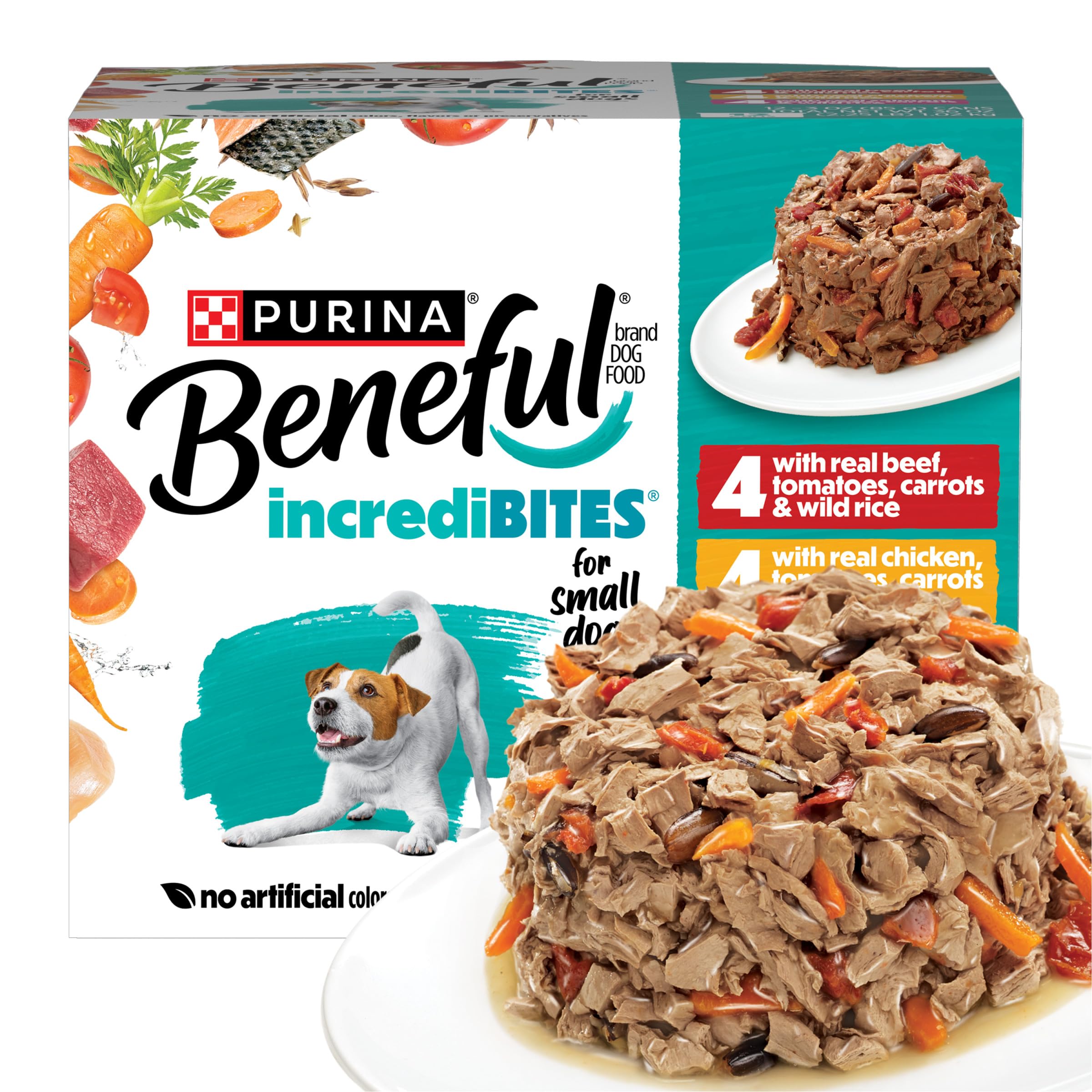
Beneful IncrediBites

Beneful IncrediBites

Budget small-breed feeding

Our Score 9.4/10
Check Price

Worth Noting

  • Small cans are a poor fit for big dogs
Pack
24 cans, 3 oz each
Protein
High protein; beef, chicken or salmon
Breed Size
Small breeds
Vitamins And Minerals
23
Read the full review

Twenty-four three-ounce cans is a stock-up, not a sampler. It is aimed squarely at small breeds: the meat is minced fine, the pieces are tiny, and a can is roughly one meal, so you are not decanting half of it into a container every evening.

We rate it as the value option for little dogs, mostly because a case of 24 small cans covers everyday feeding without the per-meal packaging of a tray. Real beef, chicken and salmon all appear across the variety pack, and 23 vitamins and minerals plus the high-protein claim mean you are not trading nutrition for convenience. The gravy is generous, which helps if you stretch a can over kibble.

The catch is size. These are small-breed cans by design; a big dog would need most of the pack at one sitting, and a medium dog needs two. Digestion splits as well — plenty of dogs do fine, others get constipated — so give it a week of mixing before you judge it. The first bowl is not the verdict.

Bottom line: For a small dog that eats wet food twice a day, this case is the sensible stock-up: minced small-breed portions in three proteins, with nothing to measure.

4

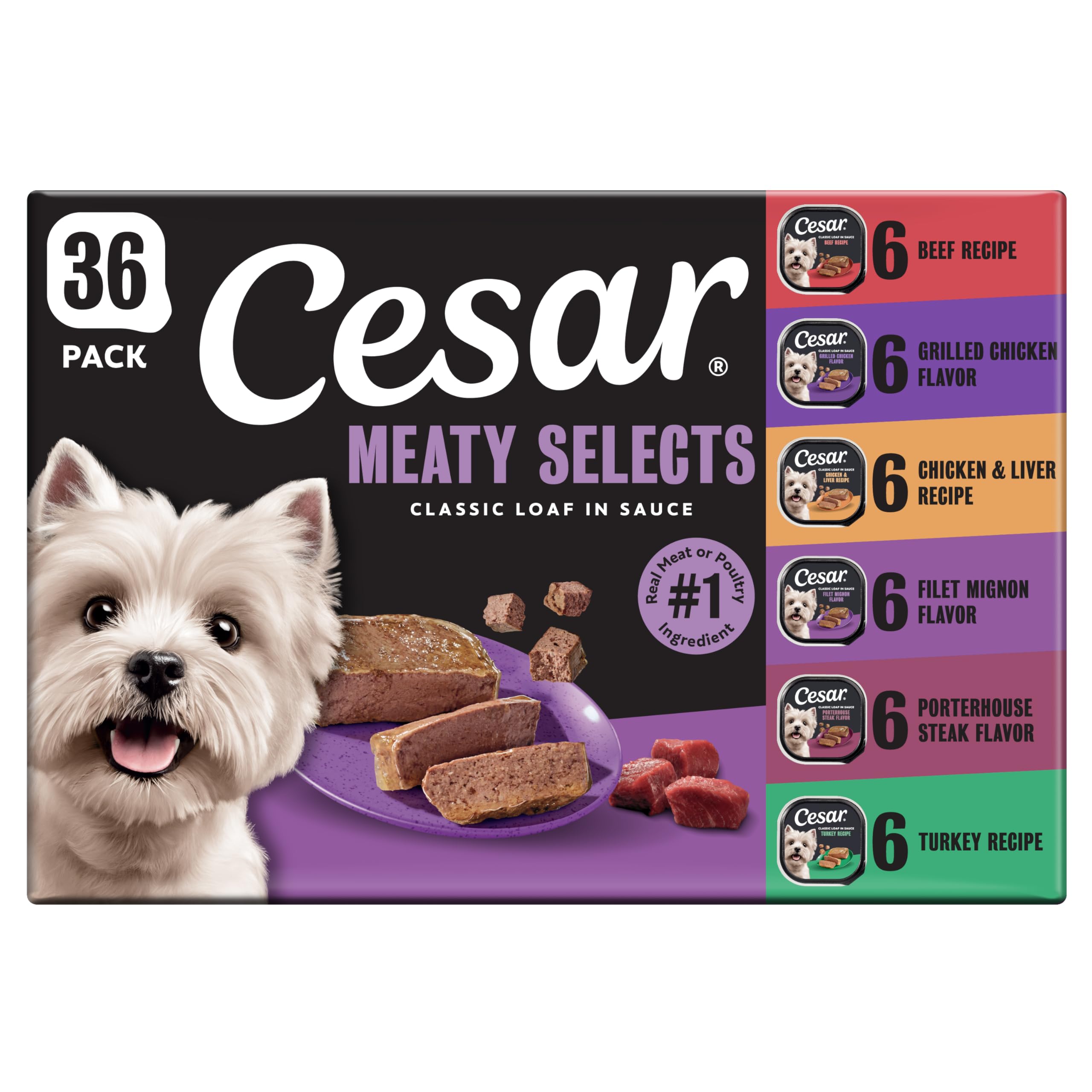
Cesar Classic Loaf in Sauce

Cesar Classic Loaf in Sauce

Senior small dogs

Our Score 9.4/10
Check Price

Worth Noting

  • Nothing for a dog that likes to chew
Pack
36 trays, 3.5 oz each
Grain
Formulated without grains
Texture
Loaf in sauce
First Ingredient
Real meat
Read the full review

Texture settles more wet-food arguments than flavor does. Loaf is the answer for the dog that licks the sauce and leaves the chunks: Cesar presses this one into a firm pate with a thin sauce around it, and it forks apart into soft pieces with nothing to chew through.

Meat is the first ingredient, with no fillers, no artificial flavors and no added sugar, and the recipe is formulated without grains — the label notes trace amounts can turn up from cross-contact during manufacturing. The trays peel cleanly, the portion suits a small dog, and the 36-count case is the largest single-serve supply here.

This is the one we hand to the senior with missing teeth, or the little dog that has started walking away from dinner: it is the easiest of these to eat and the portion does not overwhelm a small stomach. What it won't do is give a chewer anything to work at, so a dog that likes resistance is better off with the strips in the Cesar Filets trays.

Bottom line: For a senior small dog that licks the gravy and leaves the chunks, this loaf is the easier meal: soft, portioned, and simple to fork apart.

5

Purina ONE Tender Cuts

Purina ONE Tender Cuts

Multi-dog households

Our Score 9.2/10
Check Price

Worth Noting

  • Big cans leave leftovers for small dogs
  • Gravy smell lingers on bowls
Pack
12 cans, 13 oz each
Life Stage
Adult
By-products
No poultry by-products
First Ingredient
Chicken
Read the full review

Thirteen ounces is a lot of food in one can, and that number decides who this is for. A Labrador, a pair of beagles, a house where one can disappears across two bowls at dinner — that's the buyer. For a ten-pound dog it is several meals, which means a lid and a shelf in the fridge.

We made it the top pick because it handles the everyday job with the fewest compromises. Chicken leads the ingredient list, there are no poultry by-products, and the formula claims complete nutrition with no fillers — the three things we check first in this category. It also works out to the lowest cost per ounce in this roundup, which matters when wet food is the whole diet rather than a topper. The tender cuts flake apart in the gravy, so a dog that gulps does not have to work at dinner.

Digestion is where the confidence dips. Some dogs take to a new wet food in a day; others need a week of mixing it into the old food before things settle, and a can this size makes a hasty switch annoying to undo. Start with a smaller format if yours has a delicate stomach. The gravy also leaves a smell on the bowl, so rinse it before it goes in the sink.

Bottom line: We recommend it as the default bowl for most dogs: complete nutrition without by-products or fillers, the best value per ounce here, and cans that suit a serious appetite.

6

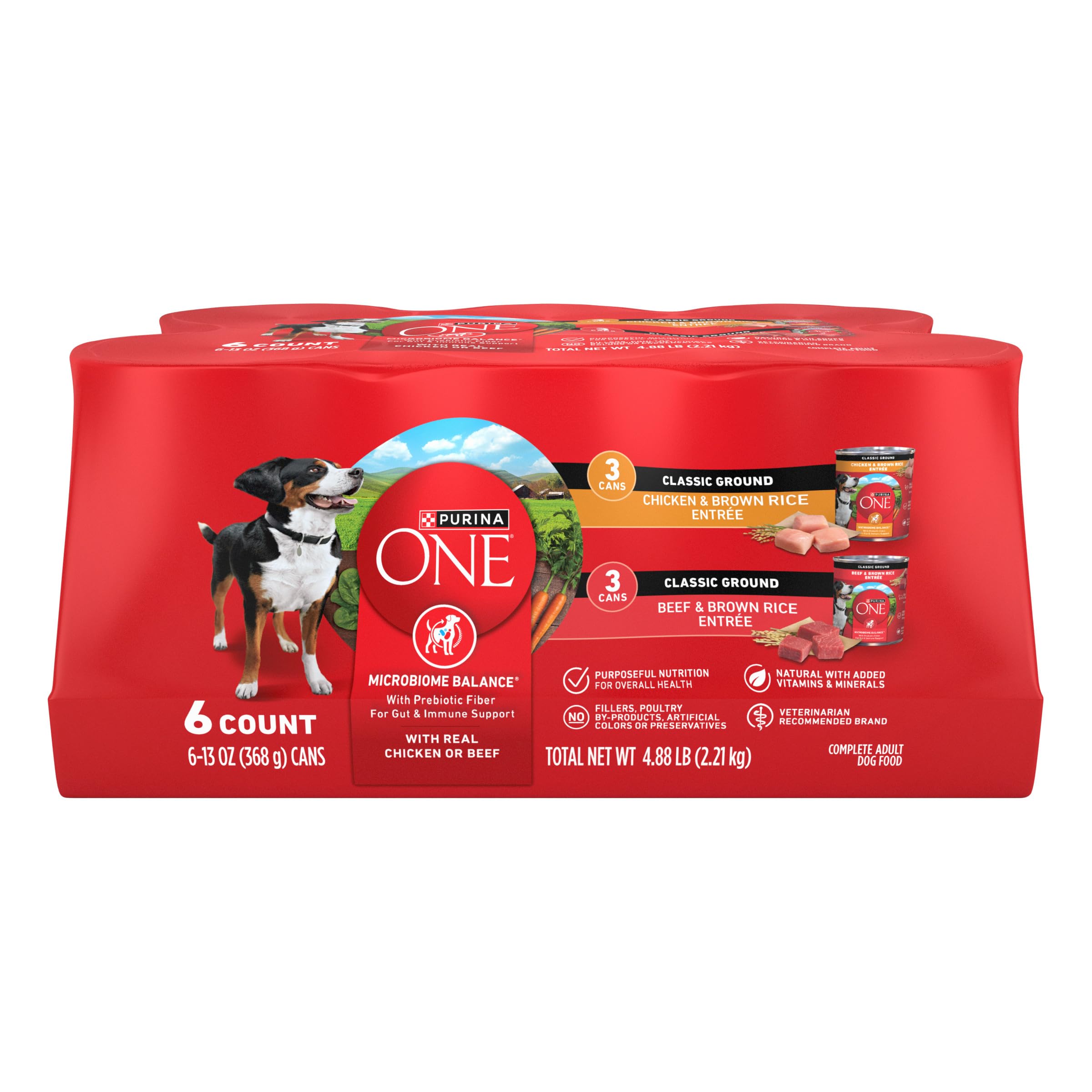
Purina ONE Classic Ground

Purina ONE Classic Ground

Trying before committing

Our Score 9.2/10
Check Price

Worth Noting

  • Pate texture divides dogs that like chunks
  • Only two recipes in the pack
Pack
6 cans, 13 oz each
Recipes
Chicken and beef, with rice
Free From
No corn, wheat or soy
First Ingredient
Real beef or chicken
Read the full review

Six cans is the smallest commitment here, and that is why we point people to this pack when they are moving a dog off kibble. Two recipes, chicken and beef, both with rice, in the same thirteen-ounce can as our top pick — enough to learn whether your dog likes the food without a month of it on the shelf if he doesn't. It also stores easily: six cans take up one shelf.

The formula carries the same promises Purina ONE makes across the range: real beef or chicken as the first ingredient, no poultry by-products, no corn, wheat or soy, and antioxidants for immune support. The ground texture is closer to a pate than a stew, which makes it easy to mash through kibble or press into a slow feeder for a dog that eats too fast.

Two things hold it below the bigger pack. The ground texture is the most divisive here — dogs raised on shreds and chunks sometimes walk away from a pate — and a thirteen-ounce can is a lot to open for a small dog. As a trial, though, six cans is enough to learn something and little enough to forgive.

Bottom line: Think of it as the low-risk trial: two recipes, no corn, wheat or soy, and only six cans to get through if your dog turns out to be fussy.

7

Nutrish Savory Favorites

Nutrish Savory Favorites

Label-conscious rotation

Our Score 9.0/10
Check Price

Worth Noting

  • Costs more per ounce than the big cans
  • Six-tub pack runs out quickly
Pack
6 tubs, 8 oz each
Recipes
Three stews
Free From
No corn, wheat, soy or gluten
First Ingredient
Real beef
Read the full review

No corn, wheat, soy or gluten, and real beef at the top of the list — the panel is what this one leads with, and it is a real difference from most of the cans and trays here. For a household already reading labels, that alone earns Nutrish a look.

Six eight-ounce tubs, three recipes — Hearty Beef Stew, Chicken Paw Pie and Savory Lamb Stew — and enough variety in one pack to rotate without buying three cases. These are complete meals rather than toppers, and the chunks of meat and vegetable are visible, closer to stew than to a uniform paste.

Eight ounces is a friendlier size than a big can for a medium dog, and it splits neatly between two small ones. The texture is the other draw: shredded meat and recognizable vegetable pieces in a light sauce, which reads as food rather than ration. If your dog is bored with pate, this is the one to try.

Where we get cautious is richness. A whole tub in one sitting can be a lot for a smaller dog, and loose stool is the usual sign you moved too fast — start with half and see what the next day looks like. That is why we treat these as a rotation rather than the everyday bowl in a house that wants one cheap staple.

Bottom line: Nutrish earns its place on the ingredient panel and the stew-like texture, and it suits a dog that handles a richer food in smaller portions.

How We Chose and Tested the Best Wet Dog Food

The shortlist started with close to 60 cans, trays, and pouches, winnowed down by label reading before any dog got a taste. Anything without a clear statement that it's complete and balanced for a specific life stage came off first, followed by formulas where broth or water led the ingredient list — you're paying by the ounce, and water is the cheapest thing in the can. Price was the last filter, not the first. Fifteen made the cut.

Each of the 15 was fed for at least seven consecutive days, some for three weeks, across a three-month stretch. The panel was my two dogs plus eight others, from a 12-pound terrier to a 90-pound lab mix, all eating in their own kitchens at their usual breakfast and dinner times so nothing about the routine felt strange. We rotated flavors within a brand the way an owner does when a can runs out midweek.

Palatability got timed rather than guessed: a 10-minute window at each meal, noting whether the dog went straight in, sniffed and walked away, or ate the chunks and left the pâté behind. Portion sizes were checked against the label — how far a 12.5-ounce can actually stretched for a 50-pound dog, and whether the suggested amount left anyone begging an hour later. After a five-to-seven-day transition onto each food, we logged stool firmness, gas, and any 2 a.m. trips outside. We also smelled each can at the moment of opening and the results in the yard a day later; a food that clears the room twice doesn't get a pass for being cheap.

Value came last, worked out from calories per can against what each dog actually needed per day rather than the number on the shelf. The ones that stuck were eaten without negotiation, produced a boring week of digestion, and made sense by the day instead of the can.

How to Choose the Right Wet Dog Food

Match the container to your dog

Single-serve trays and three-ounce cans are built for dogs that finish a small portion in one sitting: nothing to refrigerate, nothing to measure. Ten-ounce tubs split cleanly for a medium dog or two small ones, and thirteen-ounce cans make sense when a big dog or a pair of dogs empties one at a meal. The trap is buying the cheapest-per-ounce format for a small dog and binning half of it every night. Choose the largest container your dog finishes within a day or two and the cost math takes care of itself.

Texture: loaf, strips, chunks or ground

Loaf and pate are the easiest textures for a senior, a dog with missing teeth, or one that licks the sauce and leaves the meat. Shreds and strips give a fast eater something to work at, and chunky recipes with visible vegetables suit a dog that has gone bored on smooth food. Ground formulas mash into kibble or press into a slow feeder better than anything else. Texture, not flavor, is the most common reason a dog refuses a food that is otherwise perfectly good, so buy one tub or tray before a case.

What the protein claim is worth

Real chicken or beef as the first ingredient, and no poultry by-products, tell you more than any adjective on the front of the can. Every pick here is complete and balanced for adult dogs, which means it can be the whole diet; a food that only claims to be a topper needs kibble alongside it. Artificial colors, flavors and preservatives are easy to avoid in this company, and several foods here skip corn, wheat and soy as well. Read the first three ingredients, then stop reading.

Do the math per ounce, then per meal

A big can costs less per ounce than a small tray, but the saving disappears if half of it goes in the bin. For a single small dog, single-serve trays and tubs can be the cheaper way to feed because you use all of it. For two dogs or a large breed, thirteen-ounce cans are the sensible buy. Work out how many meals a container covers, not how many containers a case holds.

Plan the switch before you open the first can

Moving a dog onto wet food is a bigger change than swapping one kibble for another, and loose stool in the first week usually means the change happened too fast. Mix a spoonful into the old food, increase it over a week, and keep the previous food on hand until things settle. That is the argument for starting small: a six-can pack or a single tub costs little and tells you a lot before you commit to a case.

Frequently Asked Questions

Final Verdict

For most dogs the answer is Purina ONE's Chicken & Brown Rice Tender Cuts: complete adult nutrition, chicken first, no poultry by-products, and the lowest cost per ounce in this roundup. It suits a big dog or a two-dog house best, and a single toy breed ends up refrigerating half of every can.

That is the one case where format beats value. Beneful's resealable tubs and Cesar's single-serve trays cost more per ounce and leave nothing to store, which is what a small dog actually needs.