Food & Treats

Best Dental Chews for Dogs of 2026

Dog breath is one of those problems you don't notice until it's an inch from your face. Mine hit me mid-cuddle on the couch one night — that warm, slightly fishy exhale that means something is going on back by the molars. Brushing helps, but very few of us are getting a toothbrush into a reluctant dog's mouth every night, which is exactly where dental chews earn their spot: a few minutes of gnawing that scrapes at plaque, freshens breath, and gives the dog something to do.

Over the past three months, my team and I worked through 13 different chews with our own dogs — the picky one, the one who inhales anything, and the senior with a sensitive stomach. The pattern that emerged: texture and size matter far more than whatever flavor is printed on the bag. A chew that's too soft disappears in under a minute and does nothing; one that's too hard gets abandoned on the rug. The picks below are the ones that got finished, kept breath fresher, and didn't cause trouble the next morning.

1

Greenies Teenie Original

Top Pick
Greenies Teenie Original

Small dogs

Our Score 9.6/10
Check Price

Worth Noting

  • Contains wheat
Count
43 chews
Texture
Bone-shaped, chewable
Dental Claim
Clinically proven; 47% less tartar
Dog Weight Range
5–15 lb
Read the full review

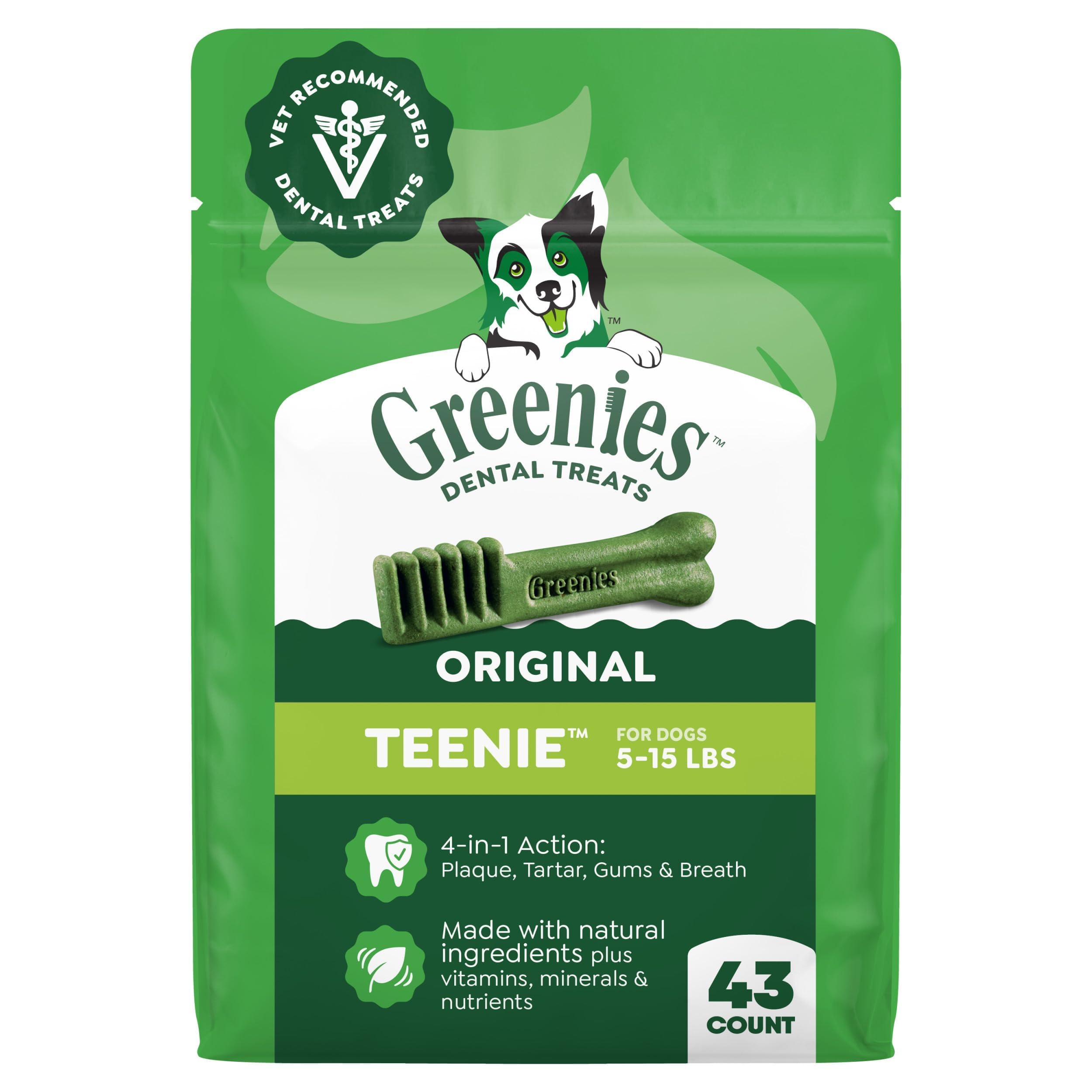
A dental chew only becomes a habit if the dog can actually finish it, and Greenies Teenie is built for that small-dog-sized job. The 5-to-15-pound band gives a little dog a chew it can work through without a struggle, and the texture is firm enough to feel like a treat without turning into a wrestling match. We also appreciate the rawhide-free formula and the resealable tub, because a daily chew needs to stay fresh between Mondays.

The dental case is stronger than the bone shape suggests. Greenies says the texture cleans down to the gumline and supports 47% less tartar accumulation, and the brand is veterinarian-recommended. We are careful about claims like that, but this is one of the few chews here with a specific clinical number and a size band matched to the dog. The chicken flavor does most of the persuading; picky small dogs tend to take this one without a negotiation.

The teenie size is exactly that—teenie. If your dog is over 15 pounds, this is the wrong bag, not a lesser version of the right one. For the right small dog, the 43-count tub makes the daily routine feel ordinary, which is the point.

Bottom line: For a small dog, Greenies Teenie is the daily dental chew we trust most: proven tartar control, a size that fits 5-to-15-pound dogs, and a chicken flavor that keeps the routine easy.
2

Pedigree Dentastix Large Breed

Pedigree Dentastix Large Breed

Large-breed variety

Our Score 9.6/10
Check Price

Worth Noting

  • Can be finished quickly by strong chewers
Count
51 chews
Flavors
Original, beef, fresh
Dental Claim
Triple-action tartar control
Dog Weight Range
40+ lb
Read the full review

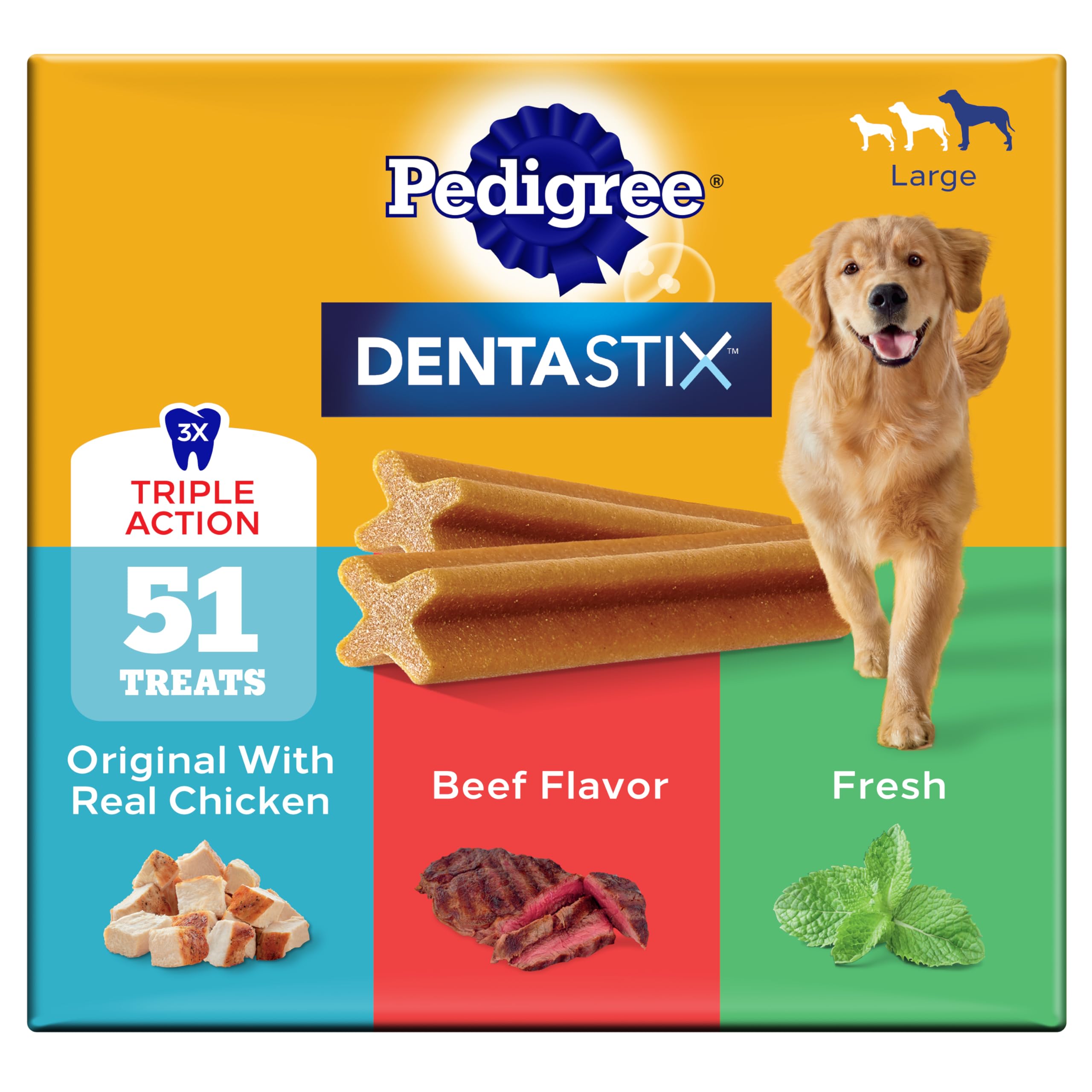
Three flavors in one bag sounds like a marketing trick until you live with a dog who turns his nose up at the same chew five days running. Pedigree Dentastix Large Breed puts Original, Beef, and Fresh in the same 51-count bag, and the X-shape gives a big dog something to grip while the chewy texture works at plaque. The sticks are long enough to feel like a real treat rather than a training bite.

The large-breed formula is sized for dogs 40 pounds and up, and there is no added sugar, which we appreciate in a daily item. The texture is soft enough that most dogs can work through one without a struggle, and the X-shape is the practical part: the grooves give the teeth more edges to scrape against than a plain stick. It is a simple chew, but the simplicity is why it fits into a morning routine.

This is not the most clinically documented chew here—DentaLife has the stronger paper case—but it is the one we reach for when a large dog is picky or when a household wants variety without buying three bags. The three flavors are distinct enough to matter, and the bag is big enough to make the routine feel less monotonous. For a dog that gets bored, that variety is worth more than a fancier claim.

Bottom line: For a large dog who gets bored with routine, Pedigree Dentastix Large Breed is the variety-pack pick we recommend: three flavors, a grippy X-shape, and a size built for 40-pound-plus dogs.

3

DentaLife Large

DentaLife Large

Large dogs

Our Score 9.4/10
Check Price

Worth Noting

  • Not a long-lasting chew
Count
18 chews
Shape
Eight-ridge stick
Dental Claim
VOHC accepted; 57% tartar reduction
Dog Weight Range
40+ lb
Read the full review

The first thing we check on a dental chew is whether it has a real oral-care claim behind it. DentaLife comes with VOHC acceptance and a stated average tartar reduction of 57 percent, plus eight ridges built to reach the gumline. That is a more specific case than most chews make, and it is the reason this one starts the large-dog conversation.

We think that makes DentaLife the best value for large dogs in this set. The 40-pound-and-up size is substantial enough for a big jaw, and the chicken flavor is mild enough that picky dogs tend to accept it. It is also one of the cheaper daily chews here, which matters because dental care is a routine, not an occasional splurge.

The 18-count pouch is easy to keep in a treat drawer, and one a day is the whole routine. If you have more than one large dog, you will go through it quickly, but that is a function of the daily pace rather than the chew itself. For a single large dog, it is a straightforward daily habit with no fuss.

Bottom line: For large dogs, DentaLife is the value pick we recommend when you want a VOHC-accepted daily chew with a clear tartar-reduction claim and a sensible routine.

4

Milk-Bone Brushing Chews Large

Milk-Bone Brushing Chews Large

Very large dogs

Our Score 9.4/10
Check Price

Worth Noting

  • Strong smell some people dislike
Count
25 chews
Shape
Twist with nubs and ridges
Dental Claim
VOHC accepted
Dog Weight Range
50+ lb
Read the full review

If you share your home with a dog who clears 50 pounds, the chew has to look like a project, not a snack. Milk-Bone Brushing Chews Large are built for that dog: a thick twist with nubs and ridges, a chicken flavor, and VOHC acceptance for daily cleaning. We recommend them for very large dogs because the size is honest—this is not a small chew stretched into a big bag—and the twist gives a big jaw something to work against.

The VOHC seal is the part that matters most. It means the chew has been reviewed for plaque and tartar control, and the nubs and ridges are designed to scrub as the dog chews. The chicken flavor is mild, and the twist shape takes some work to break down, which is what you want from a chew for a big dog. The bag is generous enough that one a day does not feel like a constant reorder.

Bottom line: For dogs 50 pounds and up, Milk-Bone Brushing Chews are the substantial, VOHC-accepted daily chew we recommend when size and cleaning design matter.

5

Whimzees Value Pack Medium

Whimzees Value Pack Medium

Grain-free medium dogs

Our Score 9.2/10
Check Price

Worth Noting

  • Premium price
Diet
Grain-free, vegetarian
Count
44 chews
Dental Claim
Reduces plaque and tartar
Dog Weight Range
25–40 lb
Read the full review

A grain-free dental chew is not automatically better for every dog, but for the dog who reacts to wheat or chicken, it can be the difference between a daily routine and a stomach ache. Whimzees Value Pack is built around that buyer: a vegetarian, grain-free chew for medium dogs, with no artificial colors, flavors, or preservatives. The 44-count box is sized for a 25-to-40-pound dog, and the shape gives the teeth and gums something to work against.

We like it most for the dog with a sensitive ingredient list, not because grain-free is magic. The texture gives a medium dog something to work at, and the vegetarian formula avoids the meats and grains that rule out some other chews. If your dog has been fine on wheat and chicken, you can skip the specialty formula and choose a simpler daily chew; this one earns its place when the ingredient list is the problem.

The caveat is tolerance. Some dogs do not settle on Whimzees, and a sensitive stomach can show up as vomiting or loose stool, so start with one chew and watch the next day. If your dog already does well on a simpler chew, there is no reason to switch; if wheat or meat is the issue, this is the one we keep in the rotation.

Bottom line: For a medium dog who needs to avoid grains or meat, Whimzees is the grain-free vegetarian chew we recommend, provided you introduce it slowly and watch digestion.

6

C.E.T. Veggiedent Fr3sh Small

C.E.T. Veggiedent Fr3sh Small

Plant-based small dogs

Our Score 9.2/10
Check Price

Worth Noting

  • Contains soy
  • Premium price
Count
30 chews
Calories
48 kcal per chew
Dental Claim
Z-shape plaque and tartar control
Dog Weight Range
11–22 lb
Read the full review

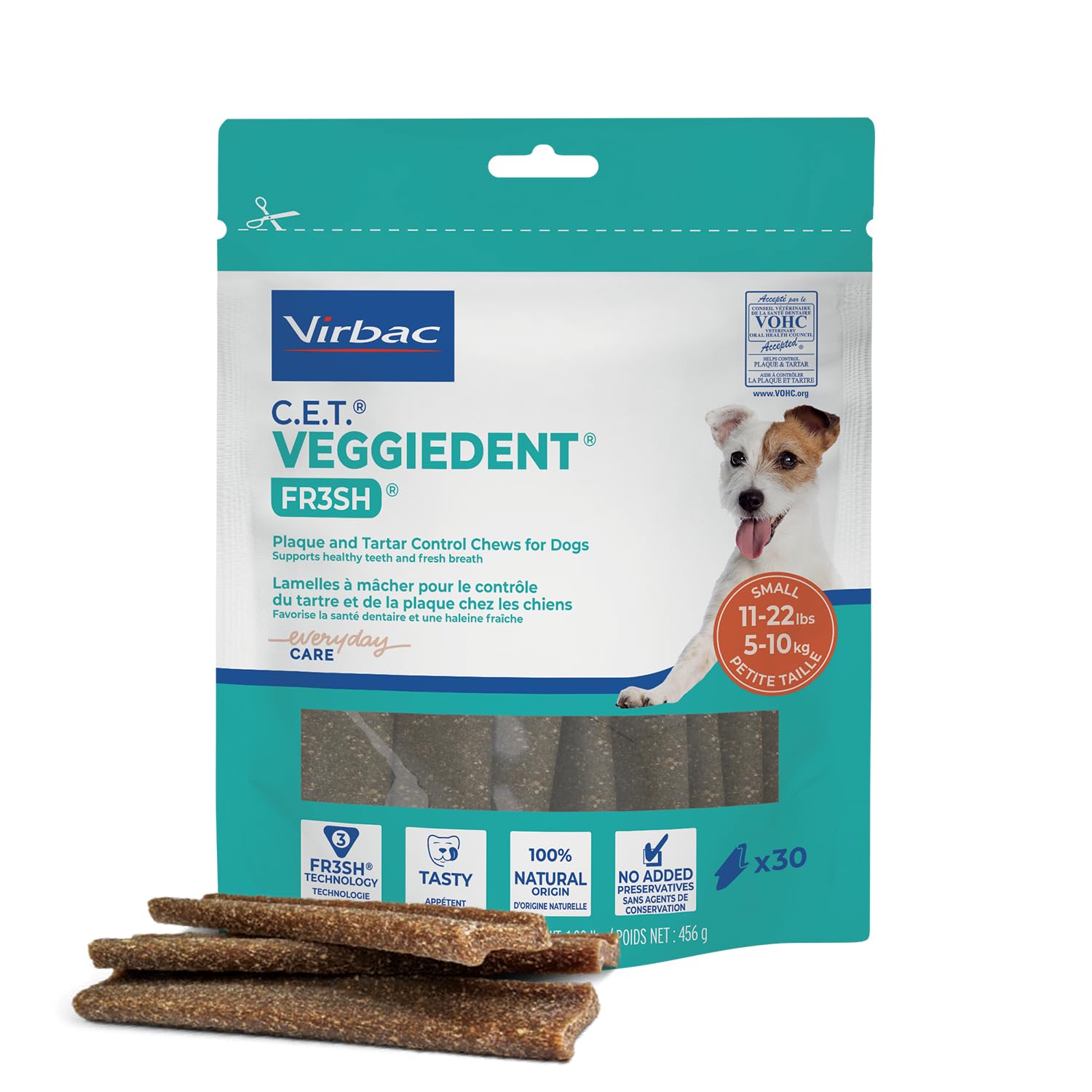
The Z shape is the first thing you notice about C.E.T. Veggiedent Fr3sh, and it is not just a design flourish: the angles are meant to reach the sides and back teeth that a straight stick can miss. For a small dog in the 11-to-22-pound range, that shape gives the chew a job beyond keeping the dog busy. The plant-based formula is gluten-free and includes a prebiotic for digestion.

Each chew is moderate in calories at 48 kcal, so it fits into a daily routine without blowing up the treat budget. The texture asks for some chewing, and the veggie flavor is not universal—some small dogs take to it immediately, others walk away. That is worth knowing before you commit to a 30-count bag, because this is a chew you buy for a reason, not a casual treat.

We recommend C.E.T. as the plant-based specialist, not the everyday default. The formula only earns its place if your dog needs the plant-based, gluten-free approach; otherwise a simpler chew does the same daily job. The Z-shape and prebiotic package are considered, and the 48-kcal count makes it easy to slot into a small dog's day.

Bottom line: C.E.T. Veggiedent is the plant-based pick we recommend for small dogs when gluten or meat is the issue, though the premium price and soy allergen make it a specialty buy.

How We Tested the Best Dental Chews for Dogs

We started with the chews that carry a Veterinary Oral Health Council seal — the only third-party stamp that means anything for plaque and tartar — then added the popular bags from pet stores and big retailers so we weren't only testing the clinical stuff. From there we filtered by calorie count per chew, size options for small through large dogs, and ingredient panels, skipping anything built on rawhide or loaded with dyes. Price per chew went on the spreadsheet alongside everything else, because a bag that costs twice as much and lasts half as long is a bad deal.

Thirteen chews went home with the team for three months and got handed out at the same time each evening, after dinner, on the living room rug. We timed each one from first bite to gone, and noted whether the dog worked at it or tried to swallow a chunk whole — the gulpers got watched closely. We also checked what was left behind: greasy marks on the rug and blanket, crumbs versus a gluey paste stuck to the roof of the mouth, and how strongly the chew itself smelled out of the bag (one made the whole kitchen reek).

The next 48 hours mattered as much as the chew. We logged stool quality, gas, and any vomiting after each new one, and pulled the chews that caused trouble even when the dog loved them. Breath got checked before the morning walk, and teeth got checked with a flashlight — specifically the back molars, where tartar builds first. Our pickiest dog was the real taste test: if she walked away, the chew was out. Value came down to cost per minute of actual chewing, not cost per bag.

How to Choose Dental Chews for Dogs

Start with the weight band

Before flavor or price, match the chew to your dog's weight. A chew that is too small gets swallowed too quickly; one that is too large can be hard for a smaller dog to work through. The bands here are specific—Greenies Teenie for 5 to 15 pounds, DentaLife and Dentastix for 40-plus, Milk-Bone for 50-plus, Whimzees for 25 to 40. That is not marketing fussiness; it is the difference between a chew that scrubs and one that disappears.

Read the cleaning claim

Look for a specific oral-care claim, not just a bone-shaped picture. VOHC acceptance is the clearest shorthand, and a stated tartar-reduction percentage is more useful than 'helps clean teeth.' DentaLife and Milk-Bone carry VOHC acceptance here; Greenies cites clinical tartar reduction. That does not make an unsealed chew useless, but it tells you how much of the pitch is documented. If the claim is vague, treat the chew as a treat first and a dental aid second.

Match texture to your dog's chewing style

A daily dental chew should take a little work, not vanish in one gulp. Softer sticks suit older dogs and small mouths; firmer twists and Z-shapes give a determined chewer more edges to work against. Watch your dog with the first one: if it is gone in seconds, the chew is not doing much scrubbing, and you may need a larger size band. If your dog coughs it down whole, stop and choose a different shape rather than cutting a chew into pieces that can be swallowed.

Check ingredients and digestion

Dental chews are food, so the ingredient list matters as much as the shape. Wheat, soy, and meat are common bases; grain-free and vegetarian options exist for dogs that react to them. Introduce any new chew one at a time and watch for vomiting or loose stool. A sensitive dog may do better with a simpler formula, while a dog with a known allergy needs a chew that avoids that ingredient entirely. The specialty options cost more, so buy the smallest pack that lets you test tolerance.

Frequently Asked Questions

Final Verdict

Greenies Teenie is the dental chew we recommend first for small dogs. It has a specific tartar-reduction claim, a size band that fits 5-to-15-pound dogs, and a texture that makes the daily routine easy to keep.

For a large dog, start with DentaLife if you want the clearest VOHC-backed value, or Dentastix if variety is what keeps your dog interested. The right choice is the one that matches your dog's weight and chewing style—not the biggest bag.