Food & Treats

Best Rawhide-Free Dog Chews of 2026

The whole reason you're reading this is probably a small panic — a chewed-off knot of rawhide, a dog who swallowed instead of spat. Rawhide-free chews are meant to remove that fear while still giving your dog something that takes actual work to get through: the busy jaw, the cleaner teeth, the ten quiet minutes on the rug. What the bag won't tell you is whether your dog will stay interested past the first sniff or whether the thing will be gone in ninety seconds.

Over the past three months, my team and I put 16 rawhide-free chews in front of a panel of very opinionated dogs — a lab mix who destroys everything, a nine-pound terrier, a puppy mid-teething, and a senior with a sensitive stomach. Here's the thing first-time buyers don't know: rawhide-free says nothing about hardness, and a chew too dense for your dog's jaw is a dental risk dressed up as a dental aid. The picks below are the ones that got finished, got asked for again, and didn't cause a single upset stomach.

1

Purina Busy Bone Tiny

Top Pick
Purina Busy Bone Tiny

Tiny breeds

Our Score 9.4/10
Check Price

Worth Noting

  • Too firm for dogs with worn teeth
Count
60 bones
Texture
Firm
Dog Size
Up to 15 lb
Chew Type
Bone
Read the full review

Purina builds this one for dogs up to 15 pounds, and the narrowness is the point. Most chews sold as long-lasting are sized for a Labrador, which is how a Chihuahua ends up with something it cannot get its teeth around. These bones are small and firm, shaped like a bone rather than a stick, which gives a little dog something to hold down with a paw.

We were struck by how much chewing a small dog gets out of one. Chew time still varies — a fast eater can be through a bone in a few minutes — but even the quick ones take more work than a soft twist stick, and the firm texture does a bit of tooth-scraping on the way. The center is real meat, there is no rawhide, and the shape keeps a dog engaged rather than bored.

The firmness cuts both ways. A dog with worn or missing teeth may look at one and walk away, and that is not a dog to push it on; the soft Nutrish bones cover that ground better. For a healthy toy breed, a pouch of sixty means you never have to ration a daily chew.

Bottom line: We keep this one for dogs under fifteen pounds: firm, properly small, rawhide-free, and sold sixty to a pouch.

2

Purina Busy Beggin' Twist'd

Purina Busy Beggin' Twist'd

Large dogs

Our Score 9.4/10
Check Price

Worth Noting

  • Too firm for some dogs to take to
Count
10 twists
Flavor
Real bacon
Dog Size
30 lb and over
Chew Type
Twisted chew
Read the full review

Thirty pounds and over — that is the dog Purina had in mind for this twist, and it is one of only two chews here sized for a big jaw. The shape is a firm twist with a Beggin' bacon wrap, there is no rawhide anywhere in it, and it has enough substance that a large dog has to work at it rather than swallow it in one go.

Fifteen minutes is a fair estimate of how long one lasts a serious chewer, and a slower dog stretches it further. Either way it is a much better fit for a big dog than a pouch of tiny bones, and it keeps them busy enough to settle afterwards — engagement is what this one does best.

Buying them is a rhythm rather than a stockpile: a big dog works through a pouch faster than you expect, and this is the sort of chew you end up reordering monthly. A twist this dense is also a real addition to the day's calories, so count it if your dog is on a diet.

Bottom line: For a big jaw, this is the twist we choose: firm, bacon-wrapped, rawhide-free, and sized for dogs thirty pounds and over.

3

SmartBones Chicken-Wrapped Sticks

SmartBones Chicken-Wrapped Sticks

Trying a chew

Our Score 9.4/10
Check Price

Worth Noting

  • Only eight sticks per bag
  • Too small to occupy a strong chewer
Count
8 sticks
Flavor
Chicken and peanut butter
Chew Type
Chicken-wrapped stick
Enriched With
Vitamins and minerals
Read the full review

Eight sticks, which makes this the cheapest way to find out whether your dog will eat a chicken-wrapped chew at all. The wrap is real chicken, the flavor is peanut butter, the core is rawhide-free with vegetables, and the whole thing is enriched with vitamins and minerals.

What we found is a genuinely chewy little stick, small enough for a picky toy dog and quick enough that it will not hold a serious chewer for long. The wrap is the part that gets a dog's attention — it is what they go for first — and the core underneath is a milder chew, so do not expect this to outlast the fifty-count bags.

The honest limitation is evidence: there is less of it for this pack than for the big bags here, which is exactly why the small size makes sense. Buy eight, watch how your dog handles them, and size up only if the answer is yes. In a two-dog house, eight goes fast.

Bottom line: The pack we hand people who want to try a chicken-wrapped chew before committing: eight sticks, real chicken and peanut butter, no rawhide.

4

DreamBone Twist Sticks

DreamBone Twist Sticks

Everyday chewing

Our Score 9.2/10
Check Price

Worth Noting

  • Texture varies from bag to bag
Count
50 sticks
Dog Size
All breed sizes
Chew Type
Twist stick
Made With
Real vegetables and chicken
Read the full review

Fifty sticks in a bag that weighs under ten ounces tells you most of what you need to know: each stick is small, so this is a chew you hand out often rather than one that occupies a dog for an hour. That suits us fine for everyday use. The sticks are rawhide-free, made with real vegetables and chicken and enriched with vitamins and minerals, and they are listed for all breed sizes and all life stages — broader than the size-specific picks further down.

Small is also why they disappear. A determined chewer will finish one in a couple of minutes, and a dog that gulps will finish it faster, so watch the first few rather than assuming a stick buys you quiet. The trade is worth naming: an edible chew built to come apart in soft pieces is not going to last like a pressed hide chew, and that is the whole point of buying rawhide-free. If duration is what you are after, the Purina twists below are firmer and hold a big dog longer.

Feeding one a day is where most households land with a bag this size. Introduce it slowly — one stick, then a normal day, then another — because stomach tolerance varies and a chew that suits one dog can upset the next. Two dogs in the same house can disagree about them entirely, and that is worth knowing before you commit to the big bag twice.

Bottom line: The bag we point most people to: fifty rawhide-free sticks, real vegetables and chicken, and a size that suits most dogs, at a cost per chew that makes daily treating easy.

5

Nutrish Soup Bones

Nutrish Soup Bones

Older dogs

Our Score 9.2/10
Check Price

Worth Noting

  • Gone in minutes for a strong chewer
  • Only six bones per bag
Count
6 bones
Texture
Easy on teeth and gums
Chew Type
Soft bone
Made With
Real beef and barley
Read the full review

Six bones to a resealable bag, which sounds thin until you see them: these are big, dense bones rather than slim sticks, made with real beef and barley and free of by-product meal, added corn and soy. And no rawhide, which is the only reason they are on this page.

Soft is the operative word. The texture is easy on teeth and gums, which makes these the useful choice for an older dog, a small dog, or one whose molars have had work done — and easy enough to cut down when a whole bone is too much. They are dense rather than hard, closer to a thick biscuit than a chew to leave a dog alone with.

For us the appeal is fit rather than endurance. This is the chew to reach for once a dog has stopped managing the firm ones, and a bag costs little enough to keep on hand. Digestion is the caution: these are rich, dense treats, and a dog with a sensitive stomach can bring one back up, so give a single bone and wait a day before deciding.

Bottom line: The one we reach for when a dog cannot handle a hard chew: soft, meaty, rawhide-free bones that are easy on old teeth.

6

Virbac Veggiedent Fr3sh

Virbac Veggiedent Fr3sh

Dental care

Our Score 9.2/10
Check Price

Worth Noting

  • Only sold in a size for dogs over 66 pounds
Count
30 chews
Calories
105 kcal per chew
Dog Size
Over 66 lb
Chew Type
Z-shaped dental chew
Read the full review

The Z shape is the first thing you notice, and it is not decoration. A dog working a straight stick chews one spot; the angles on this chew push it around the mouth and into the back teeth, where tartar builds up fastest. Virbac sells it as a daily dental routine rather than a treat, and the formula backs that up.

It is plant-based, with no hide and no rawhide, a prebiotic included for gut flora, and gluten-free. Each chew runs about 105 calories, a number worth knowing if your dog's weight is being watched.

The dental results are the most convincing in this group: less tartar along the gumline and better breath between brushings, from a chew dogs look forward to rather than tolerate. That combination is rarer than it sounds — most dental chews are treats with a claim attached.

The catch is cost. This is the priciest chew here by some distance, and the comparison that matters is not another bag of sticks — it is what a dental cleaning costs. If your dog is a big breed with tartar building along the gumline, that math works out quickly. If you just want something to keep a dog busy after dinner, it does not.

Bottom line: We buy this one for teeth rather than entertainment: a plant-based daily dental chew with the most convincing tartar results in this group.

7

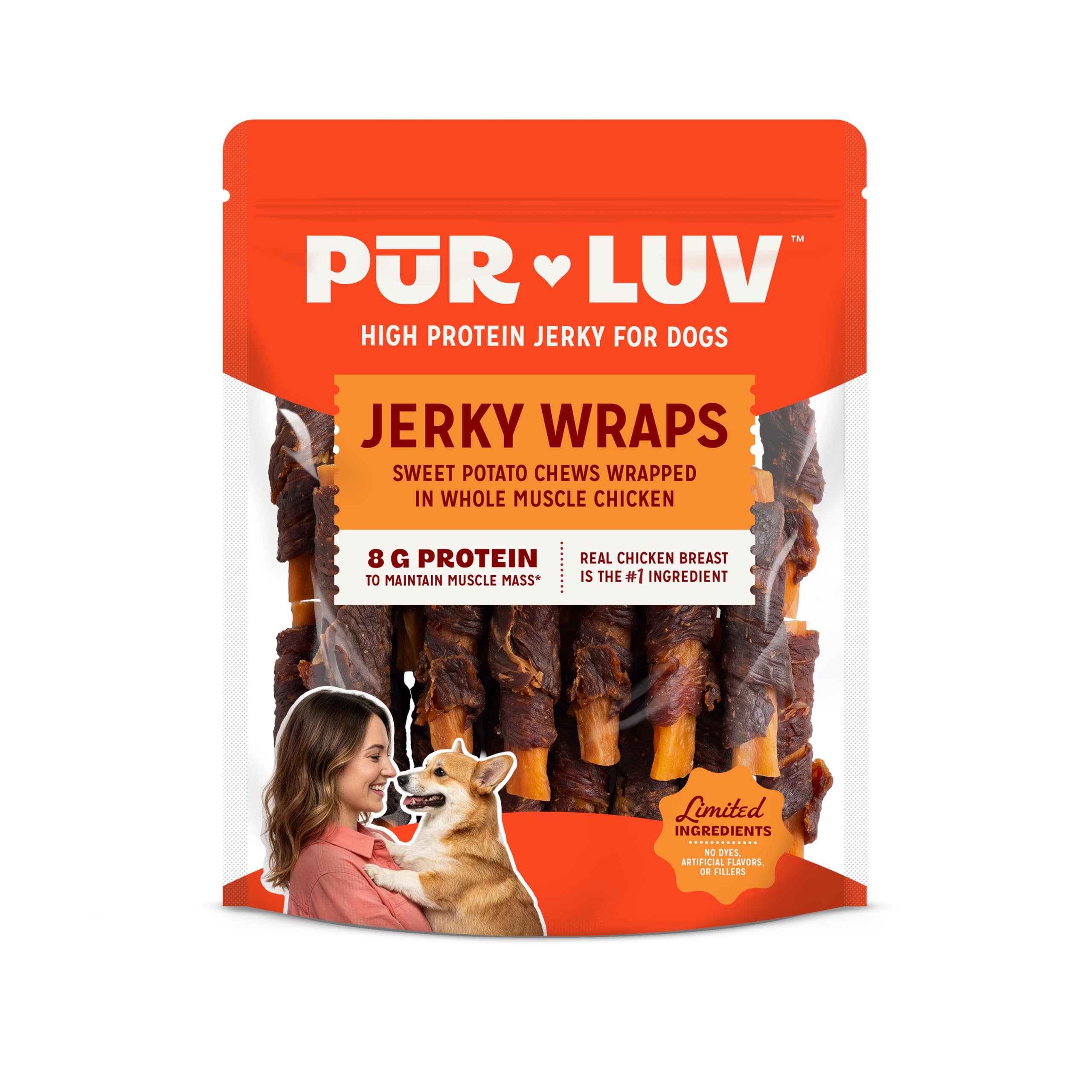
Pur Luv Chicken & Sweet Potato

Pur Luv Chicken & Sweet Potato

Short ingredient lists

Our Score 9.2/10
Check Price

Worth Noting

  • Texture ranges from soft to hard between bags
Chew Type
Chicken-wrapped stick
Bag Weight
16 oz
First Ingredient
Chicken
Read the full review

Chicken is the first ingredient, and the middle of the stick is real sweet potato rather than a starch blend with a meat flavor painted on. The deck is short, there is no rawhide, and the bag holds a full pound of sticks — enough to use one daily rather than save them for occasions.

The texture sits between jerky and a soft chew: firm enough to take a few minutes of work, soft enough to cut with scissors for a small dog. That range is genuinely useful, because the same bag works for a ten-pound terrier and a forty-pound mix without changing products.

Where it falls short of the top tier is consistency. Texture ranges from soft to hard between bags, and digestion is where the risk sits — some dogs handle a stick without trouble and others do not. Introduce them one at a time rather than making them the nightly routine on day one, and the bag will tell you what you need to know.

Bottom line: Our pick for label readers: chicken first, real sweet potato in the middle, a short rawhide-free deck, and sticks soft enough to cut.

How We Tested 16 Rawhide-Free Chews (With a Little Help From Seven Dogs)

We started with a few dozen chews on big retailer shelves, then crossed off anything that listed hide, rawhide, beef hide, or "natural hide" on the ingredient panel, plus anything sold in a single size that couldn't be matched to a dog's weight. That left 16 chews, which went out one at a time to a panel of seven dogs in four households — from a nine-pound terrier to a ninety-pound lab mix — over three months of ordinary life: after-dinner chew sessions on the living room rug, alone time in the crate, a few long car rides, and the exact moment a dog started in on a chair leg.

Every session went in a notebook. We noted whether a dog picked the chew up unprompted or needed it wiggled under his nose, how many minutes he stayed with it before walking away, and whether he came back to it after a water break. We weighed each chew before and after and timed it to the minute it became a stub, then divided the price by the number of chewing minutes it bought — which is where a few expensive-looking chews turned out to be the cheapest per hour and a couple of bargains vanished in a single evening.

For the dental side, we pressed a thumbnail into each chew and bent it to judge give, then checked teeth and breath the morning after a heavy session to see whether plaque along the gumline had shifted. Size mattered most: we matched every chew to the dog's weight and watched for the moment it got small enough to swallow whole, which is when it went in the bin. Since digestibility is the whole point of leaving rawhide behind, we also kept a 48-hour log after each new chew and marked any stool that came back loose or unusually large.

How to Choose Rawhide-Free Dog Chews

Read the ingredient line, not the front of the bag

Beef hide and pork hide are rawhide under another name, and a triple-flavor chew wrapped around them is a rawhide chew with better marketing. What you want instead is a chew built on a starch or vegetable base with a meat wrap, and a pack that actually says rawhide-free rather than simply implying it.

The test takes about ten seconds: find the first ingredient. If it is a hide, put the bag back, however long-lasting the front claims it is.

Match the chew to your dog's weight, not the breed label

Size decides more than brand does. A chew that is too big gets carried around and abandoned; one that is too small gets swallowed. This group shows how specific the ranges get — Purina sizes one bone for dogs up to 15 pounds and a twist for dogs 30 pounds and over, while Virbac's dental chew is made for dogs over 66 pounds.

When your dog sits between two sizes, size down and watch the first chew rather than sizing up to be safe. A dog that has to work at a chew gets more out of it than one that gives up.

Expect minutes, not hours

Every edible chew here is finished faster than the bag implies. A strong chewer can clear a twist stick in a couple of minutes, and the chews that do last are the firm, dense ones — often the same ones a dog with worn teeth will refuse.

If you want an hour of quiet, a chew is not the tool. If you want a daily ritual that does a little for the teeth along the way, minutes are the right expectation, and moving up to a bigger format is the simplest way to buy more time.

Treat stomach tolerance as the real test

Easily digestible is a claim printed on a bag, not a promise to your dog. Vomiting and diarrhea come up on every one of these, including the ones with the cleanest labels, so introduce a new chew as a single event and then wait a day before making it routine.

Texture matters too. Several of these bags arrive soft and chewy on one order and hard and stale on the next, and a stale chew is one a dog is more likely to gulp or walk away from.

Weigh count against calories and dental claims

Two numbers decide value: how many chews a bag holds, and what each one adds to the day in calories. The dental chews are where a premium can pay for itself, because a chew designed as a daily routine, like the Z-shaped Virbac, is competing with a professional cleaning rather than with another bag of sticks.

For everything else, buy the count. A bag of 50 sticks or 60 small bones stretches across weeks in a way a six-count bag of big bones simply does not.

Frequently Asked Questions

Final Verdict

Our default is the DreamBone Twist Sticks: rawhide-free, small enough for most dogs, and cheap enough per chew to hand out every day without thinking about it.

Change one thing about your dog and the answer changes. Under 15 pounds, the Purina Busy Tiny bones give a small jaw more real work. Over 66 pounds with tartar building along the gumline, the Virbac Veggiedent is worth the premium.