Travel & Carriers

Best Dog Carriers of 2026

The first time I zipped my terrier mix into a cheap carrier for a vet visit, he was halfway out of it before we reached the sidewalk — one paw through a seam, the zipper pull hanging by a thread. A carrier has to do two jobs that fight each other: hold a wriggling animal securely and stay light enough that you'll actually carry it up three flights of stairs or squeeze it under a seat. That's the tension. What you're buying, really, is a small portable room your dog can't panic his way out of.

Fit is where most shoppers get burned: measure your dog nose to tail, add a couple of inches, and check the interior dimensions, not the exterior. Airlines and car seats measure the outside; your dog lives in the inside. Over the past five months, my team and I have run 14 carriers through vet appointments, subway rides, and one memorable airport terminal, and the good ones share the same handful of details. The picks below are the ones I'd hand to a friend without a caveat.

1

Vceoa Pet Carrier

Top Pick
Vceoa Pet Carrier

Small dogs, daily

Our Score 9.6/10
Check Price

Worth Noting

  • Cramped for long-backed dogs near 16 pounds
  • Under-seat fit depends on your airline
Entry
Top and side, locking zippers
Dimensions
17.5"L x 11"W x 11"H
Max Weight
16 lb
Base And Pad
Removable insert, washable fleece bed
Read the full review

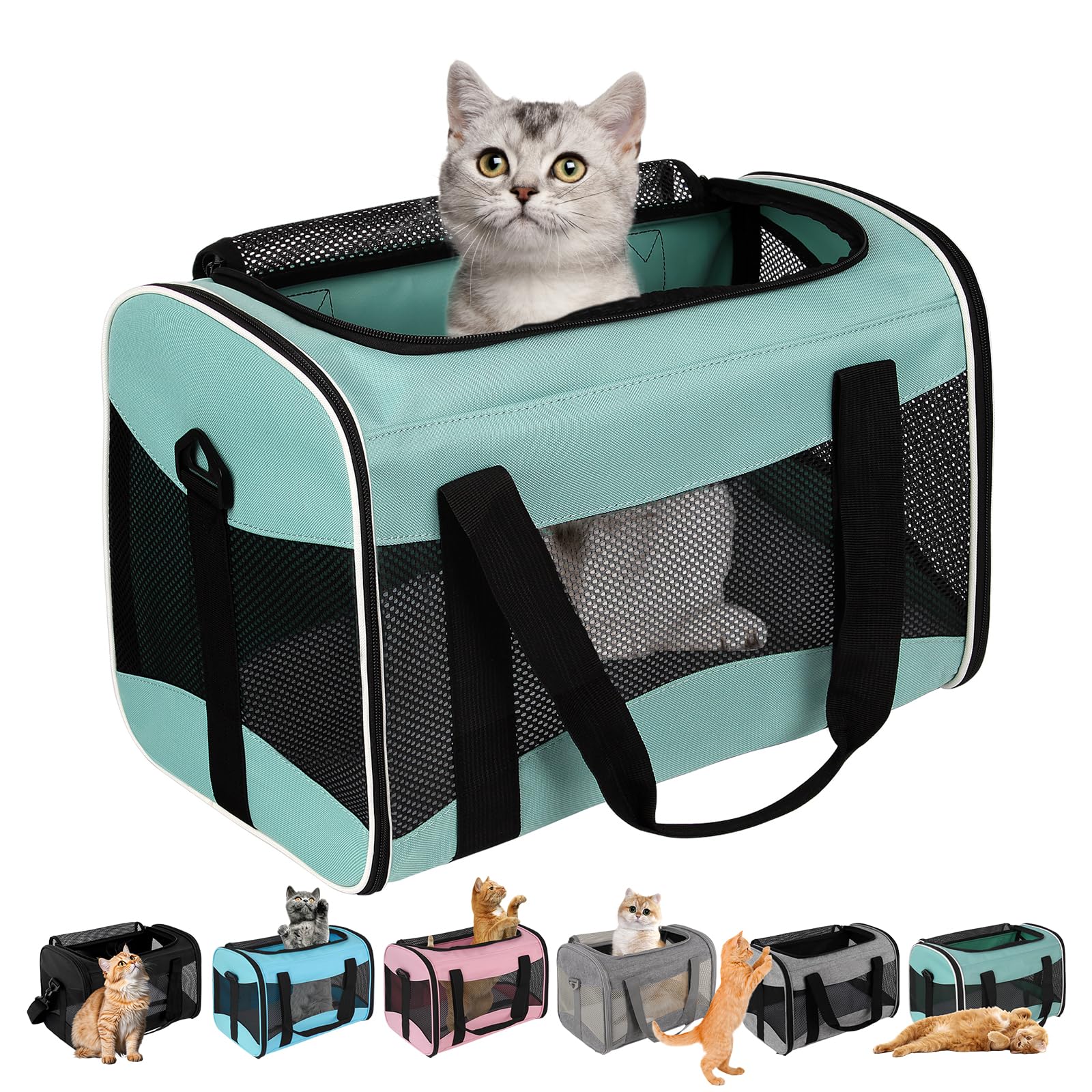
The Vceoa is the carrier we point most people toward, and the reason is boring in the best way: it has the highest rating in this group and sits in the lowest price tier, which almost never happens in the same bag. At 17.5 by 11 by 11 inches with a 16-pound limit, it is sized for a Yorkie, a Chihuahua, a Maltese or a small terrier, and the top door is the part we appreciate most. A dog that plants its feet against a front opening will walk straight down into a top one.

The details are better than the money suggests. Both zippers lock, which matters when the bag is on your shoulder and the dog has decided it wants out, and the base insert gives the floor some structure — a soft bag without one sags under a 14-pound dog and the animal ends up riding in a hammock. The fleece bed lifts out and washes, and the shoulder strap can double as a seatbelt strap in the car.

Two things to settle before you order. The 16-pound limit is generous for a 17.5-inch interior, so a long-backed dog near the top of that range will not be able to turn around — measure chest to rump and to the top of the head instead of trusting the scale. And fits-under-most-airline-seats is the seller's reading of the rules, not your airline's; confirm the under-seat dimensions for your aircraft. Leave the bag out at home with the bed inside and most dogs stop treating it as a vet-only box.

Bottom line: For a dog under about 15 pounds, this is the carrier we point people to: the best-rated bag here, the cheapest, and the easiest to load.
2

Top tasta Pet Carrier

Top tasta Pet Carrier

Budget vet runs

Our Score 9.4/10
Check Price

Worth Noting

  • Tight headroom for a dog near 15 pounds
  • Zippers are not always smooth when new
Entry
Top and side, metal zippers
Warranty
2 years
Dimensions
17"L x 11"W x 11"H
Max Weight
15 lb
Read the full review

Two years of warranty and metal zippers on the openings — on a carrier in the same price tier as our top pick, that is worth a second look. The Top tasta measures 17 by 11 by 11 inches with a 15-pound limit, and it comes with a detachable wool mat that lifts out for washing.

The steel ring frame is what we noticed first. It holds the bag square when you set it down, so a dog that dislikes a floppy carrier gets a floor and four walls instead of a sack. Top and both end openings give you options with a dog that has opinions about which direction it enters, and the whole thing folds flat when the trip is over.

It is the sleeper of this group. The rating lands within a tenth of our top pick, the frame makes it feel stiffer than the money suggests, and the two-year cover is the longest in this set. The trade-offs come with a snug bag: 11 inches of height is tight for a dog near the 15-pound limit, and the metal zippers are not always smooth on the first few runs. For a calm small dog and a carrier with more structure at about the same money, this is the one to beat.

Bottom line: A stiffer alternative to our top pick, with metal zippers and the longest warranty here — best for a calm dog under 15 pounds.

3

Sherpa Original Deluxe

Sherpa Original Deluxe

Cabin flights

Our Score 9.2/10
Check Price

Worth Noting

  • Zipper sliders are the part to watch
  • Tight headroom for a tall dog near 22 pounds
Entry
Top and side, locking zippers
Frame
Spring wire, compresses several inches
Dimensions
19"L x 11.5"W x 11.8"H
Max Weight
22 lb
Read the full review

The Sherpa earns its place with a piece of wire. The spring frame in the rear of the bag compresses several inches, so when the space in front of your feet looks a size too small, you load the dog first and then push the back of the carrier down and slide it under. That flexibility is why this is the carrier we take when a trip involves a cabin, and the 19-inch length with a 22-pound limit covers the dog that has outgrown a 17-inch bag but still rides in the cabin.

It is the priciest carrier in this group, and we think it is worth that for one buyer: someone flying two or three times a year with a dog that needs the space. Everything else is shaped around travel — a large outside pocket, a strap on the back that slides over a rolling bag's handle and doubles as a seatbelt pass-through, locking zippers, and a liner that comes out for washing.

The weak point is the zipper. A slider that has jumped its teeth will open under load, so run it around the full track before every flight and treat a stiff spot as a reason to stop loading. Read the height as carefully as the weight, too: 11.8 inches is generous for a cat and tight for a dog that likes to sit upright the whole trip.

Bottom line: If your dog flies in the cabin, this is the one we take: the frame compresses under a seat and a 22-pound dog still has room.

4

Petmate Two-Door Kennel

Petmate Two-Door Kennel

Car and vet

Our Score 9.2/10
Check Price

Worth Noting

  • Heavy and bulky at 24 inches and 5.2 pounds
  • Cargo-approved only, not a cabin carrier
Entry
Front and top doors
Material
Plastic
Dimensions
24.1"L x 16.8"W x 14.5"H
Max Weight
15 lb
Read the full review

Every carrier collection needs one for the dog that will not go in, and this is ours. The Petmate's top door opens wide enough to lower a squirming 12-pound terrier in from above, and the front door is there for the dog that walks in on its own. The top opening is the feature we care about most, because it is the difference between a two-person job in the vet's parking lot and one person doing it calmly.

It is rigid plastic with steel wire doors, and the two halves screw together, which is why it feels like a den rather than a sack. Assembly takes minutes and comes with spare bolts; the whole thing comes apart again for hosing out. At 24 inches long and 5.2 pounds empty, it is the carrier you carry by the handle from the house to the car, not the one you shoulder across an airport.

For car trips and vet visits we prefer it to any of the soft bags here: the dog can stand, the crate stays put on the back seat, and there is nothing to chew through. Just know that the 15-pound limit is real — plenty of cats and small dogs live in this size, but a 20-pound dog needs a bigger kennel — and that airline approved on this listing refers to cargo specs, not the cabin.

Bottom line: For a dog that fights a soft bag, this rigid kennel is the calmer choice: top-load access, easy cleaning, and it stays put in the car.

5

Texsens Bubble Backpack

Texsens Bubble Backpack

Hands-free walks

Our Score 9.2/10
Check Price

Worth Noting

  • Mesh tears under scratching or chewing
  • Zippers can open mid-carry
Carry
Backpack straps with chest buckle
Panels
PVC mesh on three sides
Dimensions
12.6"L x 11.4"W x 16.5"H
Max Weight
15 lb dog, 18 lb cat
Read the full review

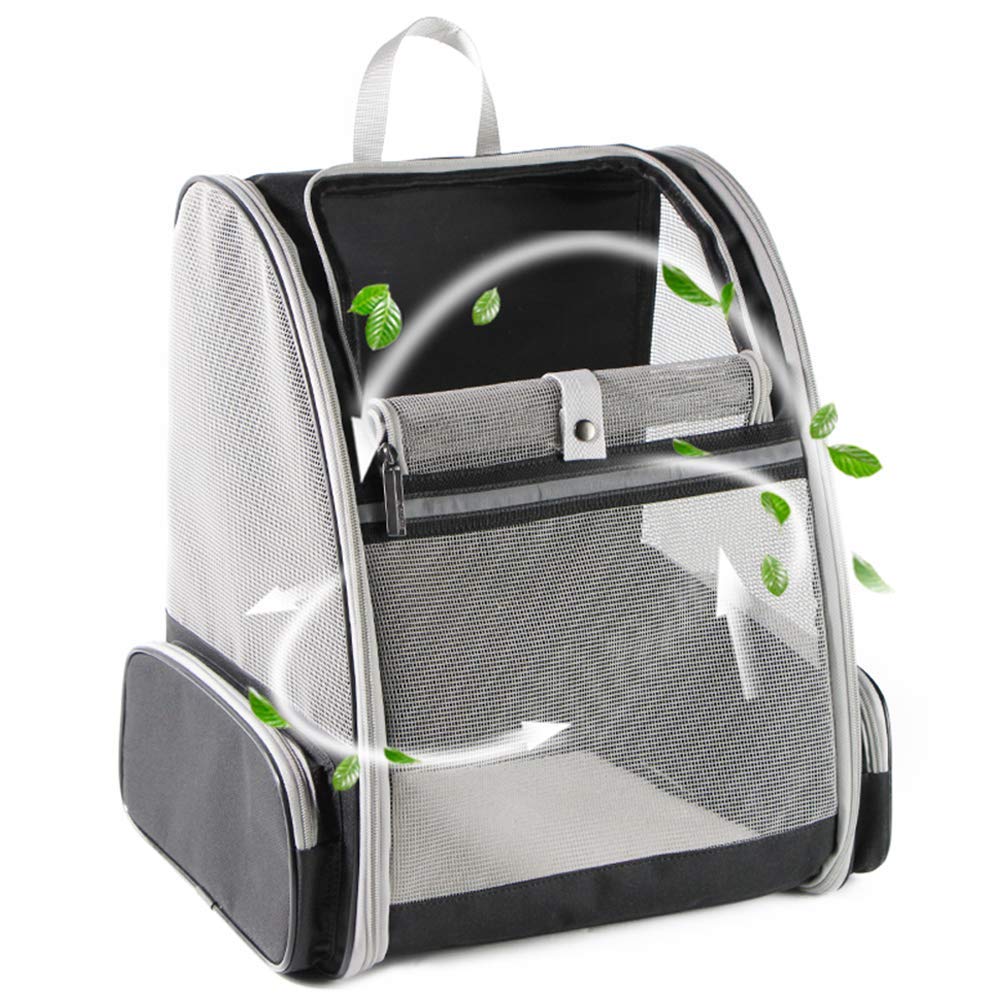
A backpack is the one carrier form that makes a long walk possible, and this Texsens is the version we reach for: 12.6 by 11.4 by 16.5 inches, rated to 15 pounds of dog or 18 pounds of cat, with straps that put the weight across both shoulders instead of one. The chest buckle is the detail that makes it work, because without it the bag swings every time the dog shifts and you spend the walk counterbalancing.

Three sides are clear PVC mesh, so the dog can see out and you can check on it without unzipping anything. We like that it stands up on its own when you set it down and that the mat lifts out for washing. On a bus, a crowded street, or a trail where a leash is impractical, it is a genuinely better experience than a shoulder bag.

The caveat is the fabric and the closures. The mesh is the first thing to give with a dog that scratches or chews, and the zippers do not always stay put — a slider that opens mid-carry is a fall, not a nuisance. For a calm, curious small dog on a walk, it is a good buy. For a panicker or a determined chewer, put the money into a rigid kennel instead.

Bottom line: Our backpack pick for a small, calm dog — hands-free on a walk, with mesh they can see through, as long as the zippers behave.

6

Morpilot Soft Carrier

Morpilot Soft Carrier

Road trips

Our Score 9.2/10
Check Price

Worth Noting

  • Mesh and zippers are the weak points
  • Size runs smaller than the large label suggests
Included
Foldable bowl, dual-sided cushion
Dimensions
17.3"L x 12.2"W x 13.4"H
Max Weight
16 lb
Mesh Coverage
40%
Read the full review

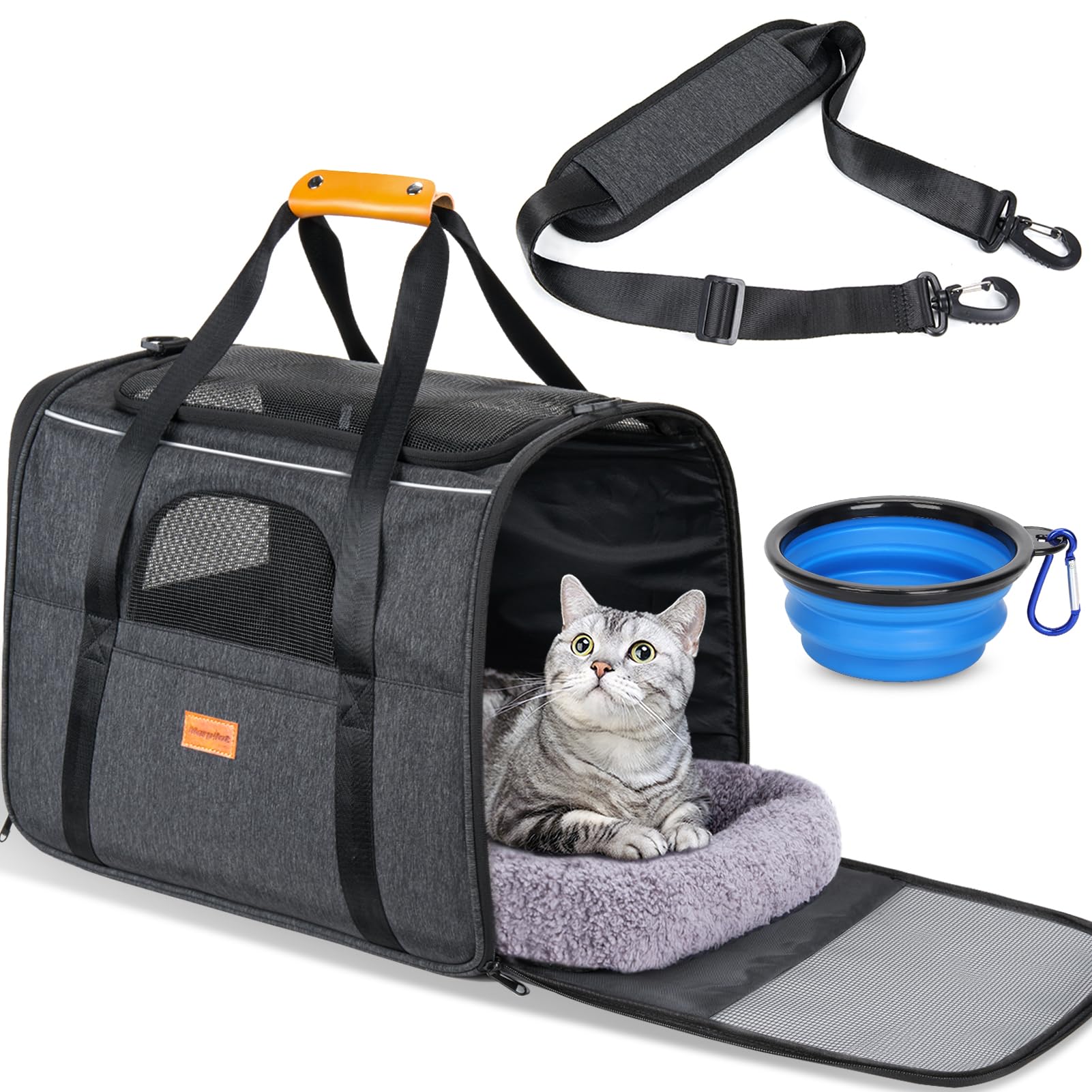
The Morpilot is the only carrier here that comes with a bowl, and the bowl is the reason to look at it. It collapses flat, holds 20 ounces of water, and attaches to the outside of the bag, so you can water a dog at a rest stop without unzipping the carrier and risking an escape. There is also a two-sided cushion — a cool side and a fleece side — that flips with the season.

At 17.3 by 12.2 by 13.4 inches with a 16-pound limit, this is the soft carrier we point to for a dog that wants to sit up rather than lie down, because 13.4 inches is the most headroom in this group at that length. The mesh covers roughly 40 percent of the surface, which we think is the right balance of airflow and a view, and a security buckle backs up the zippers on a door a clever dog might work at.

Where it gives ground is the fabric. Mesh and zippers are where soft bags at this level tend to fail, and this one is no different — a determined dog can find a seam, and the large label flatters a carrier this size. Folded, it stores flat, and the 12-month warranty is longer than most here. Treat it as a road-trip and vet-visit bag rather than a daily commuter and the trade-offs land on the right side.

Bottom line: We choose it for the extras: a clip-on bowl and a flip cushion in the tallest soft bag here, sized for a 16-pound dog.

7

Amazon Basics Hard Kennel

Amazon Basics Hard Kennel

Secured car travel

Our Score 9.2/10
Check Price

Worth Noting

  • Top-door latches are stiff and can lift free
Entry
Front and top doors
Material
Plastic with steel wire doors
Dimensions
22.8"L x 15"W x 13"H
Max Weight
20 lb
Read the full review

The top door on this Amazon Basics kennel is the best and the worst thing about it. We like it with an animal that will not walk in the front: open the lid, lower the dog in, close it, done. It is less pleasant one-handed, because the latches are stiff and the top panel can lift free if you have relied on the side clips instead of the screws.

Otherwise there is a lot of kennel here: 22.8 by 15 by 13 inches, rated for a 12- to 20-pound dog, with steel wire doors, ventilation on the sides, top and back, and spring latches that open with one hand once you have practiced. It goes together in minutes and comes apart for cleaning, and the rigid shell means a dog cannot claw its way out the way it can through mesh.

We rate it just behind the Petmate among the hard-sided carriers, and the top door is why: the Petmate's opening is easier to work with a wriggling animal and its latches feel more positive. If you want the extra length and the lower price, this is still a solid buy — put the screws in, then press down on the top panel before you pick the kennel up by the handle.

Bottom line: A roomy, sturdy kennel with a genuinely useful top door; screw the halves together and it is a dependable car and vet carrier.

8

Amazon Basics Soft Carrier

Amazon Basics Soft Carrier

Bigger small dogs

Our Score 8.8/10
Check Price

Worth Noting

  • 22-pound rating overstates the 12-inch height
  • Lowest buyer rating in this group
Pad
Removable, machine washable
Entry
Front and top zippered
Dimensions
19.7"L x 12"W x 12"H
Max Weight
22 lb
Read the full review

Twenty-two pounds is the number on the listing, and 12 inches is the number that decides it. This is the largest soft-sided carrier here by weight rating, but the interior height matches bags rated for 15 pounds, so a 22-pound dog has to be short and low-slung to be comfortable. A 15-pound beagle or a big cat fits well; a 22-pound anything will be lying down for the whole trip.

What we like is the practical stuff. The fleece pad comes out and goes in the machine, the front and top zippered openings give you two ways in, and the top handles sit over the extended handle of a rolling suitcase so the bag rides on your luggage instead of your shoulder. That gap between the claim and the shape is also why it sits in the also-consider tier rather than higher up.

It is the lowest-rated carrier in this group, and the size surprise explains most of that: it gets ordered for the weight rating and arrives 19.7 inches long. Judged as a roomier alternative to a 17-inch tote for a large cat or a small dog, it is good value with a pad you can actually wash. Judged by the 22-pound label, it will disappoint.

Bottom line: A well-padded bag for a large cat or a 15-pound dog — not the 22-pound carrier the label promises.

How We Tested 14 Dog Carriers

We started by gathering every carrier we could find that came in multiple sizes and published a clear weight limit, then read through the one- and two-star reviews looking for patterns: zippers that split, bottoms that sagged, dogs that outgrew the bag in a month. That filtering left 14 carriers — tote-style bags, backpacks, slings, and a couple of wheeled models — which we tested over five months.

Testing happened where carriers actually go: vet appointments, a crowded Saturday farmers market, subway and bus rides, car trips, an airport terminal, and one muddy weekend hike. My 22-pound terrier mix and a colleague's 12-pound senior dog did the riding. We timed how long each carrier took to assemble out of the box — unclipping frames, threading support rods, fitting the liner — because a bag that takes ten minutes to set up is one you'll leave in the closet.

Zippers got the closest scrutiny. We opened and closed every one 50 times, watching for snags, skipped teeth, and pulls that started to feel loose, then ran a five-minute escape test with a treat at the far end of the bag to see whether seams bulged or mesh flexed. We carried each loaded carrier by every handle and strap it had, checked how the padding sat on a shoulder after 20 minutes, folded each one flat, and weighed it against its listed spec. Fit got judged inside and out — whether a dog could stand and turn, and whether the bag cleared an under-seat space. After five months of use we compared stitching, hardware, and bottom panels across the group to see which carriers earned their price and which just looked the part.

How to Choose Dog Carriers

Measure the dog, not the weight rating

A weight limit is a starting point, not a fit guarantee — 16 pounds means nothing to a long-backed dog in a 17.5-inch bag. Measure your dog from chest to rump and from the floor to the top of the head, then compare those numbers against the interior, not the outside of the carrier. Take an inch off for padding and frame.

Two dogs at the same weight can need different carriers: a dachshund needs length, a pug needs height, and a dog that panics needs enough room to turn around. If your dog sits within a couple of pounds of a rating, move up a size or change the form rather than squeezing in.

Soft-sided, hard-sided, or a backpack

The form should follow your most common trip, not your most ambitious one. Soft-sided bags are light, collapse flat for storage, and are the only kind that compresses under an airline seat — but they are fabric, and fabric loses to teeth. Hard-sided kennels hold their shape, wipe clean, and give a nervous animal walls, which makes them the better car, vet and chewer choice.

Backpacks put the load across both shoulders with the dog behind your head. That is genuinely better on a long walk and worse for a dog that wants to see your face. If you mostly drive to the vet, the rigid kennel wins; if you fly twice a year, the soft bag wins; if you walk, the backpack does.

What airline approved actually means

No carrier is approved by every airline. The phrase usually means the bag's dimensions fit under the seat on the airlines the seller checked, and cabin rules vary by aircraft as well as by carrier: a regional jet has less floor space than the mainline plane you booked. A flexible frame buys you margin; a rigid bag does not.

Look up your airline's pet page for current under-seat dimensions, then check your seat — window seats lose a little floor space to the wall. Expect staff to want to see the dog stand up and turn around inside the carrier before you board.

Zippers, mesh, and screws are where carriers fail

Nearly every failure that matters is a closure: a zipper slider that jumps its teeth, a mesh panel that tears at the seam, a top half that lifts off because only the side clips were used. Look for metal zippers with locking sliders, reinforced stitching around the mesh, and a hard-sided design whose halves screw together.

On a soft bag, run the slider around the full track before you load the dog; a slider that has skipped a tooth on one side will open under load. On a hard carrier, fit the screws even when the clips seem to hold. If your dog chews or panics, skip fabric altogether.

Plan the carry, not just the trip

Twenty minutes with a 15-pound dog on one shoulder is a different purchase from a five-minute walk to the car. A padded strap, a second handle for two-handed lifting, and a band that slides over a rolling suitcase handle all matter more than an extra pocket. For long walks, a backpack spreads the load across both shoulders.

Check that the pad lifts out before you buy. The liner is what holds the smell, and a washable one turns a chore into a laundry load — a sewn-in liner is a bag you replace sooner.

Frequently Asked Questions

Final Verdict

For most people with a dog under about 15 pounds, the Vceoa is the answer: it is the best-rated carrier here, the least expensive, and the top door saves a wrestling match every time you use it. If you are flying, pay for the Sherpa and its compressible frame. If your dog fights a soft bag, or you mostly drive, the Petmate's top-load kennel is the calmer choice.

Everything else is a form factor chosen around those three — a backpack for walks, a roomier tote for a big cat or a low-slung dog, a bowl-and-cushion bag for road trips. Pick the form your week actually calls for and the rest follows.