Food & Treats

Best Dog Food for Colitis of 2026

Colitis in dogs has a way of making you feel like you're guessing. One week a food sits fine, the next you're standing in the yard at 2 a.m. while the dog paces, and the pattern starts over with a bland diet and a slow climb back. The right food won't cure colitis, but it can mean fewer 2 a.m. trips, firmer pickups on the evening walk, and a dog who stops turning their nose up at dinner — and that's the bar I held every formula to.

Over the past four months, my team and I fed 13 colitis-friendly formulas to a panel of dogs, including my own two, and wrote down everything from how fast the bowl emptied to what we found in the yard the next morning. The formulas that worked weren't the priciest or the most heavily marketed — they were the ones built around a single, boring protein and a fiber source the dog could handle. And because this is a food you'll buy for years, we counted cost per day, not cost per bag. If your dog is mid-flare, call your vet first, then start with the shortlist below.

1

Hill's GI Biome Prescription Diet

Top Pick
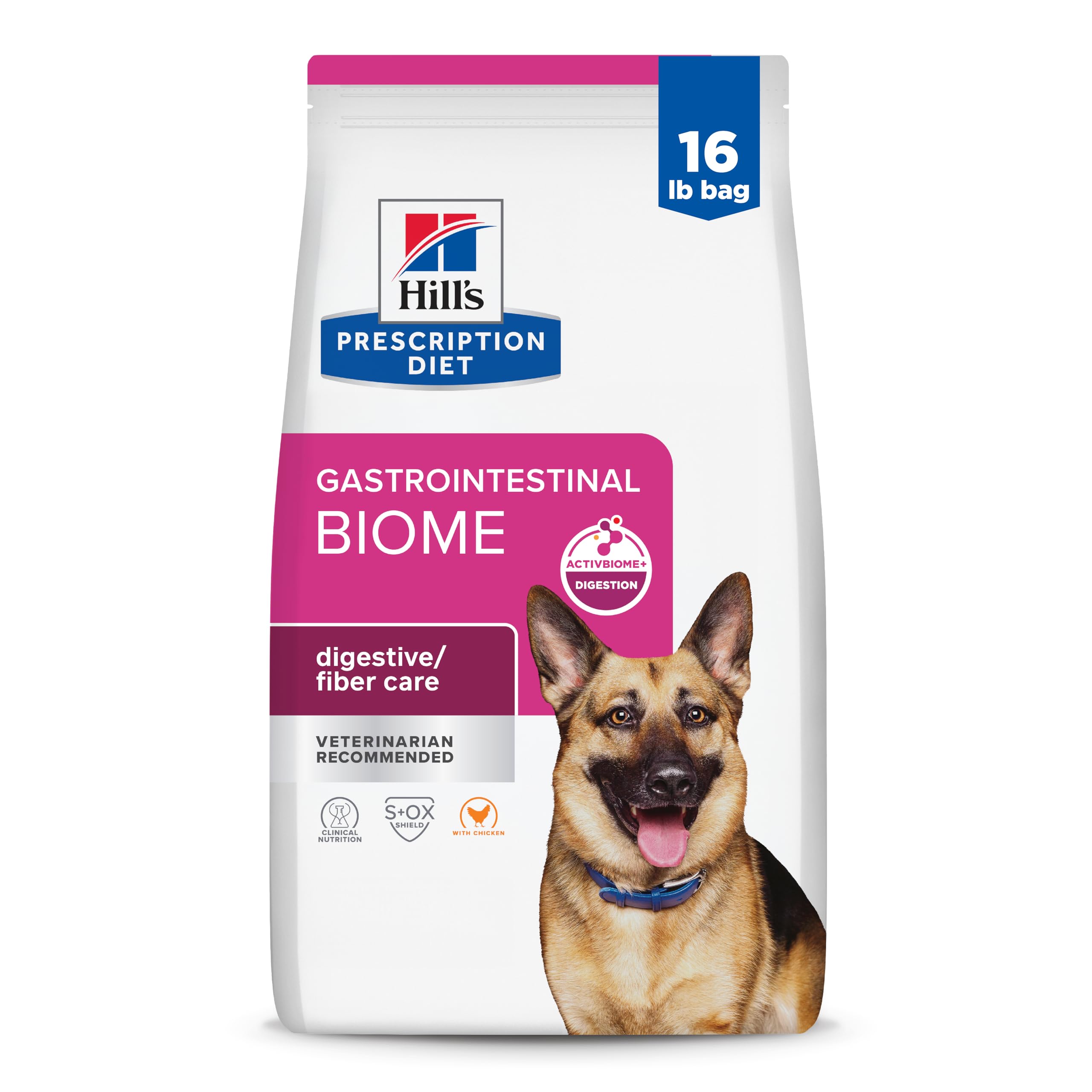
Hill's GI Biome Prescription Diet

Vet-diagnosed colitis

Our Score 9.6/10
Check Price

Worth Noting

  • Needs a vet's authorization before you can buy
  • Priciest food here per pound
Flavor
Chicken
Omega-3
High DHA & EPA
Bag Size
16 lb
Diet Type
Prescription only
Read the full review

The claim on the bag is a bold one: firmer stool within 24 hours, and less chance of it sliding back. That figure comes from the maker's studies rather than a stopwatch we kept, but the design behind it is the most colitis-specific on this list.

ActivBiome+ is Hill's name for a prebiotic fiber blend, and the job it does is feed the bacteria in the colon rather than simply adding bulk. The formula also carries high levels of omega-3 fatty acids, DHA and EPA, which is the part we care about most for a dog whose colon is inflamed rather than just irritable. Fiber to normalize transit, fat quality to calm things down: that combination is why we're comfortable calling this the strongest option here for a diagnosed case.

It's also a diet to feed as the whole bowl, not a topper. Mixing it half-and-half with a bargain kibble spends the money without getting the effect, and if you're going to run this formula, run it properly. Dogs tend to eat it readily, which is not a small thing when you're managing a dog who feels lousy, and the 16-pound bag lasts a medium dog a good while. If your vet's read is that fat is the problem rather than fiber, a low-fat GI diet is the right prescription instead of this one.

Bottom line: If your vet has diagnosed colitis and the stools are still loose, this is the one worth the paperwork: a fiber-and-omega-3 prescription diet built to firm things up and keep them there.
2

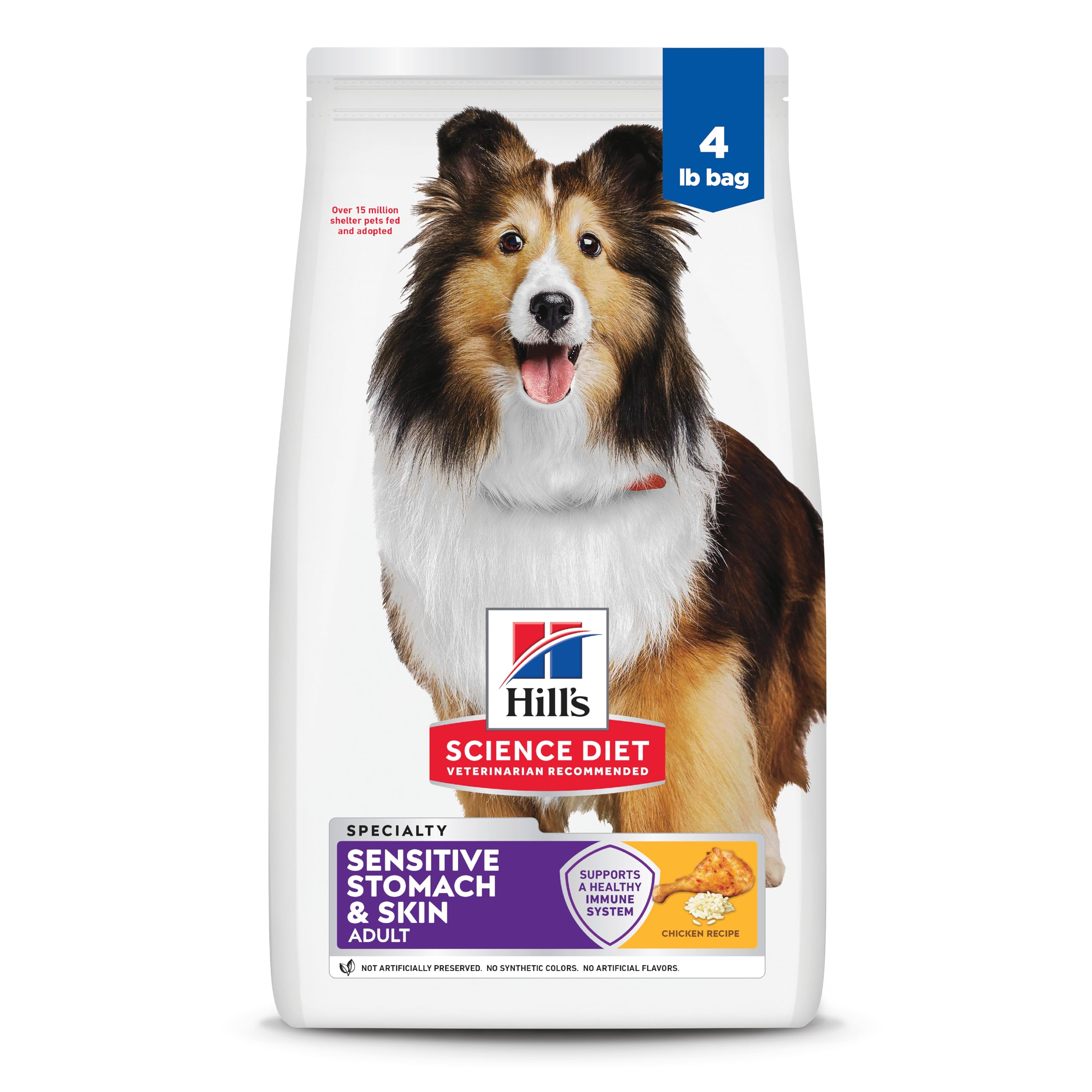
Hill's Sensitive Stomach & Skin Dry

Hill's Sensitive Stomach & Skin Dry

Everyday sensitive-gut feeding

Our Score 9.4/10
Check Price

Worth Noting

  • Small 4 lb bag for medium and large dogs
  • Costs more per pound than grocery brands
Form
Dry pellet
Fiber
Prebiotic fiber
Flavor
Chicken
Bag Size
4 lb
Read the full review

If your dog's gut is why you're reading this, start here. This is the food we point people to first when a dog has a touchy stomach and no prescription in hand: a highly digestible chicken kibble built around prebiotic fiber, with vitamin E and omega-3 and omega-6 fatty acids for the dull coat that usually arrives with a bad stretch of digestion. Nothing in the formula is trying to be clever. It's a short, digestible recipe that sensitive dogs have been eating for years without drama, and that record is why it leads our list.

The pellet is uniform from bag to bag, which sounds like small praise until you're midway through a switch during a flare and don't want a texture change on top of everything else. We also like that it works on two fronts at once. The same bag that settles a stomach carries the fatty acids and vitamin E that bring the coat back, so if your dog's skin and gut flare together — and plenty do — you aren't buying two foods.

One thing to know before you commit: not every dog takes to it. If yours turns his nose up at the first bowl, don't spend a week hoping he'll cave; try a different texture instead. And this is not a prescription diet. If your vet has already named colitis and asked for a specific fat or protein target, that instruction outranks anything on this page.

Bottom line: For most dogs with a touchy gut, this is the bag we reach for first: highly digestible chicken kibble with prebiotic fiber, and no prescription required.

3

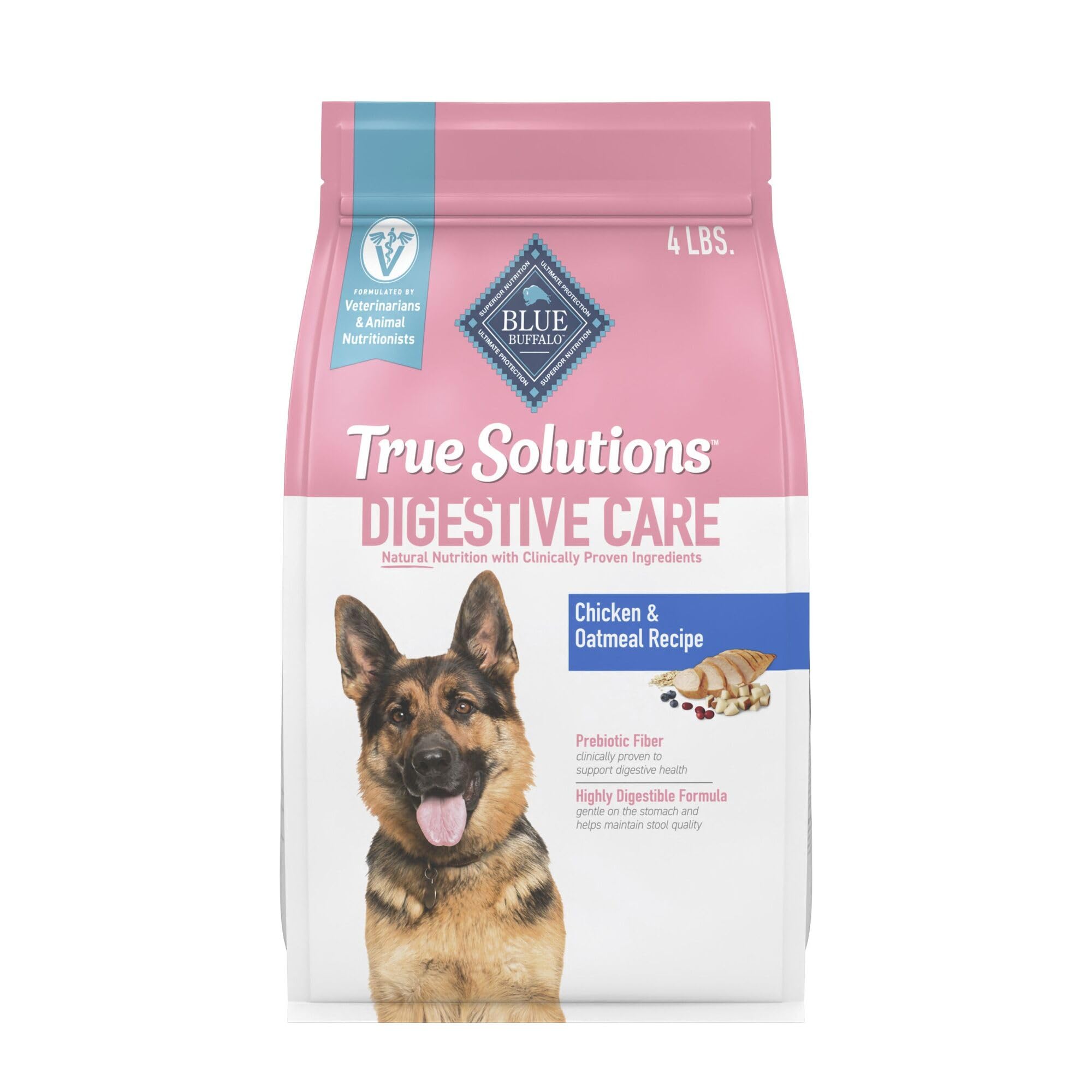
Blue Buffalo True Solutions Digestive Care

Blue Buffalo True Solutions Digestive Care

First low-cost trial

Our Score 9.4/10
Check Price

Worth Noting

  • 4 lb bag empties fast in a bigger dog
Fiber
Clinically proven prebiotic fiber
Flavor
Chicken
Bag Size
4 lb
Free From
No corn, wheat or soy
Read the full review

Same 4-pound trial size as our top pick, less money, and built around the same idea: a clinically studied prebiotic fiber meant to hold stool quality steady. If you want to test a dedicated digestive food without much risk, this is the bag we put in the cart first.

Chicken is the first ingredient and there's no corn, wheat or soy, which matters if you've been reading labels and finding the same three fillers in everything else on the shelf. Dogs go for it — this was one of the easiest bags to get eaten in our testing, with no coaxing and no half-finished bowls. Firm, easy-to-pick-up stool followed, and that's the whole point of a food like this.

Where it fits: a first, low-risk trial, or a dog who needs corn, wheat and soy out of the bowl. Where it doesn't: a dog whose colitis is already diagnosed and being managed on a prescription diet. This isn't that, and it shouldn't stand in for one.

Bottom line: Our pick if you want to test a digestive formula cheaply: same small bag as the top pick, chicken first, no corn, wheat or soy, and prebiotic fiber aimed at stool quality.

4

Purina ONE Lamb & Rice

Purina ONE Lamb & Rice

Chicken-free feeding

Our Score 9.4/10
Check Price

Worth Noting

  • Loose stools or vomiting in some dogs
Flavor
Lamb & rice
Texture
Tender morsels and crunchy kibble
Bag Size
16.5 lb
First Ingredient
Real lamb
Read the full review

This is the pick where the digestive picture is most divided, so we'll say so up front: for some dogs, lamb and rice is exactly the gentle formula they needed, and for others it's a bag of loose stools. Nothing in the ingredient list explains the split, which usually means the answer is the individual dog.

What isn't in doubt is the value. A 16.5-pound bag, real lamb first, and a mix of tender morsels and crunchy kibble that gets fussy eaters to the bowl — the texture is a big part of why this one gets finished rather than left. There's glucosamine in it for joints and omega-6 for the coat, so it's doing more than one job for an older dog.

It earns its place as a chicken-free option for a big dog when budget matters, from a brand that has been making grocery-store kibble long enough that the basics aren't a gamble. Buy it knowing you may be donating half a bag if your dog is one of the ones it doesn't suit, and ask about a smaller size before you commit to the big one.

Bottom line: A chicken-free lamb formula for big dogs on a budget, from a brand that has been making grocery-store kibble long enough to trust the basics.

5

Purina Pro Plan Sensitive Skin & Stomach

Purina Pro Plan Sensitive Skin & Stomach

Small breed dogs

Our Score 9.2/10
Check Price

Worth Noting

  • Small-breed formula, so not for larger dogs
Flavor
Salmon & rice
Bag Size
4 lb
Breed Size
Small breeds
Probiotics
Guaranteed live probiotics
Read the full review

If chicken is the thing you suspect, this is the swap. Salmon is the first ingredient, the kibble is small enough for a little mouth, and the formula carries guaranteed live probiotics — worth checking, because 'with probiotics' on a bag doesn't always mean live cultures at the end of the shelf life.

For a small dog, it's a fair trade. The pieces are tiny, which suits a Yorkie or a dachshund, and the bowls we put down were emptied without coaxing. Tolerance is where it gets less settled: some dogs do beautifully on it, others bring it back up. If your dog has vomited on a new food before, this isn't the one to switch to mid-flare. And open the bag expecting salmon — the smell is strong and it lingers.

One distinction worth making: this is a sensitive-skin-and-stomach food, not a GI diet. If your vet is managing colitis with a prescription, this doesn't replace it. It's for the small dog with a delicate system — loose stools on and off, itchy patches to match — and for that dog it's a good everyday bag. The 4-pound size suits a small appetite, so you aren't opening a sack that goes stale before it's finished.

Bottom line: For a small dog who does better on salmon than chicken, this is the sensitive-stomach bag we keep coming back to, with live probiotics and kibble sized for little mouths.

6

IAMS Advanced Health Healthy Digestion

IAMS Advanced Health Healthy Digestion

Multi-dog households

Our Score 9.2/10
Check Price

Worth Noting

  • Chicken-first, so out for chicken-sensitive dogs
  • A large bag to buy before you know it suits
Fiber
Beet pulp and prebiotics
Flavor
Chicken
Bag Size
13.5 lb
First Ingredient
Real chicken
Read the full review

Thirteen and a half pounds for a budget price is the whole pitch, and it's a good one if you're feeding more than one dog or buying small bags every couple of weeks. Chicken is the first ingredient and the formula leans on beet pulp fiber and prebiotics — the same approach the pricier bags take, in a shorter ingredient list.

The honest caveat is tolerance. This is the pick where dogs split most in what we saw: some firm up within a week, others don't settle at all. Ease into it over seven to ten days, keep the old food mixed in, and judge on the stool rather than on the first bowl. The kibble is small, which older dogs and little dogs manage more easily than a big crunch.

Where it wins is volume. A bag this size at a budget price makes GI feeding affordable for a household with two or three dogs, and a food you can keep feeding is worth more than a perfect formula you have to ration. Just don't make it the first experiment for a dog who's mid-flare and already refusing meals.

Bottom line: The budget pick: a big bag of chicken-and-beet-pulp kibble that makes a two-dog household affordable, as long as your dog's gut agrees with chicken.

How We Chose and Tested Colitis-Friendly Dog Food

We built the shortlist from the ingredient panel rather than the front of the bag — guaranteed analysis, fiber type (psyllium, beet pulp, or a grain), fat percentage, and whether a formula was actually designed for digestive support or simply labeled that way. Anything with a long ingredient list, several protein sources, or a cost that only made sense in a small bag got cut early. That left 13 formulas, which we fed over four months to a panel of dogs with diagnosed colitis, plus two sensitive-stomach dogs who acted as a control group.

Each formula got a minimum of two weeks, longer if a dog was mid-flare when we started. We fed on the household's normal schedule — morning and evening, measured with the same scoop — and logged how eagerly each dog went to the bowl, whether they finished in one go, and whether they walked away and came back. Then came the unglamorous part: picking up after every walk and every trip to the yard, scoring stool firmness on a simple scale, and noting the things owners actually live with, like gas, stomach gurgling, and how often a dog needed out overnight.

We watched skin as closely as we watched the bowl, checking for scratching at the ears, licking at paws, and redness on the chin and belly, since plenty of colitis dogs turn out to be reacting to something in the food. Body condition and weight got checked every couple of weeks, and we recorded cost per day rather than cost per bag, because a cheaper food a dog eats twice as much of isn't cheaper. The formulas that made the cut were the ones where the dog stayed eager for the food, the stool stayed predictable, and the itching settled instead of flaring.

How to Choose the Right Dog Food for Colitis

Prescription Diet or Off-the-Shelf?

A prescription GI diet such as Hill's GI Biome is formulated for a specific problem — fiber to normalize the colon, or fat restriction for a dog whose gut can't handle rich food — and it needs a vet's authorization. An off-the-shelf sensitive-stomach food is a reasonable first move for a dog with occasional soft stools and no diagnosis.

The trap is the wording on the front of the bag. 'Digestive health' and 'sensitive stomach' aren't regulated terms, and plenty of ordinary adult foods carry them. If your dog has had repeated episodes, blood or mucus in the stool, or weight loss, get the diagnosis before you spend on food.

What the Fiber Is Doing

Fiber is the lever most GI diets pull, but the type matters. Beet pulp, psyllium and the named prebiotic blends — ActivBiome+ on the Hill's formulas, for instance — feed the bacteria in the colon, which is what produces firmer, more regular stool. Insoluble fiber adds bulk and speeds transit, and too much of it can make diarrhea worse.

So more fiber isn't automatically better. It's the right fiber at the right level for your dog, which is why we'd rather see you change one thing at a time than stack a fiber supplement on top of a new food.

Read the Fat and the Protein

Two numbers on the guaranteed analysis decide more than the marketing does. Fat is the one to watch if your vet has flagged fat sensitivity; a low-fat GI diet is a different prescription from a fiber-forward one, and choosing the wrong one wastes both money and weeks. Protein source is the other: if chicken looks like the trigger, our salmon and lamb picks are the swaps.

The trap is assuming a food is gentle because the bag says so. Check the fat percentage and the first ingredient instead.

Buy Small, Switch Slowly, Judge on Stool

Start with the smallest bag you can find — three of our picks come in a 4-pound size for exactly this reason — and mix it with the old food over seven to ten days, shifting the ratio a little each day. Switching overnight produces the loose stool you're trying to fix.

Then keep a simple log for two to four weeks: firmness, frequency, and whether your dog is eager at mealtimes. A food that firms the stool and gets eaten is a keeper. One that doesn't, isn't, however good the label looks.

Frequently Asked Questions

Final Verdict

If you're starting without a prescription, Hill's Science Diet Sensitive Stomach & Skin is the bag we point to first: a highly digestible chicken kibble with prebiotic fiber that suits most dogs with a sore gut, and one you can buy today.

If your vet has already diagnosed colitis and loose stool keeps coming back, the Prescription Diet GI Biome is worth the authorization — it's the most targeted formula here, built around prebiotic fiber and high omega-3 for a colon that's inflamed rather than just irritable. And if you're feeding two or three dogs, the IAMS bag is the one that makes GI feeding affordable.