Food & Treats

Best Dog Food for Weight Loss of 2026

A dog on a diet is not a happy camper. The wrong weight-loss food makes it worse—a refused bowl, a hungry stare, a stomach that rumbles all night. The right formula helps your dog shed pounds without misery: it keeps them full, delivers enough protein and fiber, and tastes good enough that they don't stage a hunger strike. Over five months, I tested 12 weight-management formulas with a rotating pack of dogs—a senior beagle, a spayed terrier, and a couple of treat-obsessed Lab mixes—and the gap between the best and the rest showed up on the scale and in the yard.

The formulas that worked best were the ones my picky testers ate, kept them satisfied between meals, and produced firm, less-odorous stools. Value matters too—weight-loss food only helps if you can keep buying it, and a bag that costs twice as much but lasts half as long is a false economy. Portion size, kibble size, and how well each formula survived a slow transition mattered as much as calories. The picks below earned their place.

1

Hill's Science Diet Perfect Weight Dry

Top Pick
Hill's Science Diet Perfect Weight Dry

Most reliable weight loss

Our Score 9.4/10
Check Price

Worth Noting

  • Kibble too small to slow a big dog
  • Highest price per pound of the dry foods
Flavor
Chicken & Brown Rice
Bag Size
4 lb
Life Stage
Adult 1-6
Weight Claim
Visible results in 10 weeks
Read the full review

Hill's puts a number on the bag — visible results in 10 weeks — and that is the sort of promise we usually discount. This one earns it better than anything else in our set. It has the deepest record of dogs actually slimming down on it, the dogs keep eating while they do, and for an overweight dog whose family wants one straightforward answer, that combination is the whole argument.

The mechanism is sensible. Rather than simply shrinking the bowl, the formula pairs a lower calorie load with the protein and nutrients an adult dog needs at full strength, so the dog loses fat without losing muscle or missing out on what belongs in the kibble. Chicken and brown rice, small dense pieces, and a 4-pound bag that stores easily on a shelf.

The small kibble is the detail to flag. In a beagle's or a pug's mouth it is ideal — a proper mouthful rather than a mouthful and a half. On a 90-pound retriever the pieces are gone before they have been chewed, and the 4-pound bag empties fast at that size. It is also the priciest dry food here per pound, and the smallest bag of the eight.

Two habits make it work better in practice. Weigh the day's portion on a kitchen scale instead of judging by eye, and weigh the dog every couple of weeks, because the 10-week claim is only meaningful against a number. Then stretch the switch over a week or so if your dog has ever had a touchy stomach — a fast change is the usual culprit, not the food.

Bottom line: We recommend Hill's Perfect Weight first: it pairs the strongest weight-loss results in this set with a formula dogs actually finish. The premium price per pound is the only real tax.

2

Purina Pro Plan Weight Management Dry

Purina Pro Plan Weight Management Dry

Protecting muscle

Our Score 9.4/10
Check Price

Worth Noting

  • Shreds leave crumbs in the bag
  • Six-pound bag goes fast for a big dog
Flavor
Chicken & Rice
Bag Size
6 lb
Additions
Guaranteed live probiotics
Kibble Style
Crunchy kibble with shreds
Read the full review

The bowl looks different straight away: crunchy kibble with soft shreds of chicken worked through it. That texture does more work than any claim on the packaging. A dog that turns its nose up at plain diet kibble tends to clean this up, and bowl-clearing is most of the battle when you are cutting portions.

We rate it the best of these for a food-motivated dog that has to lose weight without losing muscle. Real chicken leads the ingredient list, the protein-to-fat ratio is built for precisely that job, and guaranteed live probiotics help the gut settle. In a category where the hard part is a hungry dog feeling shortchanged, that is what earns it a place near the top of our list.

Two practical notes. The shreds make crumbs, and the bottom of a 6-pound bag is dusty — no fault in the food, but don't shake it out over the bowl and expect a clean floor. At 6 pounds, a lab-sized dog works through a bag quickly, so plan on buying this one more often than the big-bag foods here. And if your dog has a sensitive gut, stretch the changeover across a week; a splash of warm water makes the shreds smell stronger and stretches a small portion on the days the bowl empties too fast.

Bottom line: If your dog lives for dinner, Pro Plan's weight formula is the one to try — high protein, shreds that get eaten, and a portion that still looks like a meal.

3

Pedigree Healthy Weight Dry

Pedigree Healthy Weight Dry

Cheapest dry option

Our Score 9.4/10
Check Price

Worth Noting

  • Contains soy and wheat
Flavor
Chicken & Vegetable
Bag Size
14 lb
Fat Level
Low fat
Nutrients
36 vitamins and minerals
Read the full review

Per pound, this is the cheapest dry food in our set, and it gets there without turning into a bag of filler: real chicken, a low-fat recipe, and the full panel of 36 vitamins, minerals and amino acids that a dieting dog still needs. If the question is how to slim a chunky dog down without wrecking the grocery budget, this is the answer we give.

The catch is the grain bill. This recipe lists soy and wheat, which most dogs handle without incident and some do not. If you have already spent money learning that your dog itches or runs loose on wheat-heavy food, skip this bag rather than retesting the theory on a dog that is also hungry.

Otherwise the practicalities are friendly. The kibble is small enough for almost any mouth, the 14-pound bag is a comfortable size to store and to finish before it goes stale, and the portions weigh out easily. Low-fat formulas like this one mean a slightly larger scoop than a standard food, so measure by weight for the first week until the scoop size settles.

Bottom line: On a budget, Pedigree's healthy weight bag does the job: low fat, complete nutrition, and cheap enough per pound to keep a dog on it long term.

4

IAMS Healthy Weight Large Breed

IAMS Healthy Weight Large Breed

Large-breed households

Our Score 9.4/10
Check Price

Worth Noting

  • No smaller bag to try first
Flavor
Chicken
Bag Size
29.1 lb
Breed Size
Large breed
Key Ingredient
With L-Carnitine
Read the full review

Twenty-nine pounds is a lot of dog food, and it tells you who this bag is for. This is a large-breed formula, bought by households with a big dog or two and sized so you are not reordering every ten days. Planning where it lives is worth two minutes before it arrives.

The formula is straightforward and does what a weight food should: real chicken first, L-carnitine to support a healthy metabolism, whole grains for energy, and no fillers or artificial flavors. That is a sensible package for a dog whose joints would rather it carried less weight, and it is complete nutrition rather than a supplement sprinkled into a maintenance food.

We rate it the best big-dog value here. The cost per pound is among the lowest in this group, the kibble is large enough that a retriever has to actually chew it, and the formula is built around the two things a dieting large breed needs: protein to hold muscle and L-carnitine to keep the metabolism working. You can pay far more in this guide for a smaller bag and a fancier ingredient panel.

Storage is the only real friction. Twenty-nine pounds takes weeks to work through for a single dog, so keep the bag sealed and somewhere cool between scoops, and don't decant it into a bin that traps the last two pounds at the bottom where nobody feeds them.

Bottom line: For a big dog that needs to slim down, we buy the IAMS bag: large-breed kibble, L-carnitine, and a price per pound that makes a long diet affordable.

5

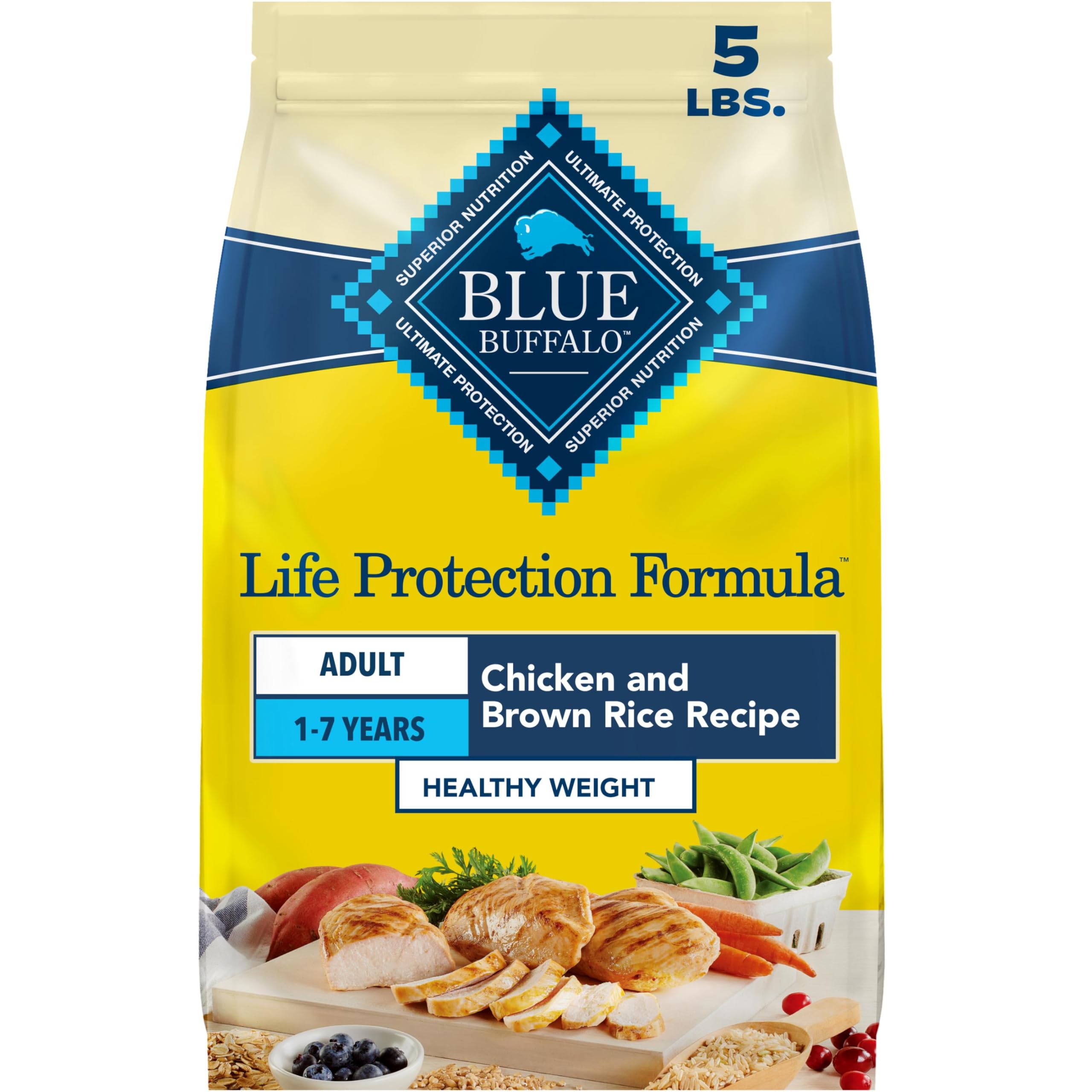
Blue Buffalo Life Protection Healthy Weight

Blue Buffalo Life Protection Healthy Weight

Picky-dog trial

Our Score 9.4/10
Check Price

Worth Noting

  • Picky dogs may refuse it
  • Vomiting in some dogs
Flavor
Chicken & Brown Rice
Bag Size
5 lb
Free From
Corn, soy, wheat
Key Extra
LifeSource Bits
Read the full review

The formula isn't the question with this one; your dog is. Blue's healthy weight recipe has the ingredients and the results to earn a place in this guide, but acceptance is genuinely hit or miss. Plenty of dogs clean the bowl, and enough walk away that we won't pretend it is a safe bet for a fussy eater.

What is in the bag reads well: real chicken first, brown rice, and no corn, soy or wheat, which makes it the label to look at if grain-heavy recipes have caused trouble before. The dark LifeSource Bits carry a blend of antioxidants, vitamins and minerals, and the formula is complete for adult dogs rather than a calorie-cut version of a maintenance food.

Where dogs do eat it, the healthy-weight results are strong — this is one of the better records in our group for holding a dog at a sensible weight. Digestion is the other split: some dogs do fine, others vomit. Introduce it slowly and stop if the stomach doesn't settle within a few days, because a food the dog can't keep down is not a diet.

Which brings us back to the bag. At 5 pounds it is small enough to be a trial rather than a commitment, and given the acceptance risk, that is how it earns its place: the bag you buy to find out. If your dog eats it, the formula delivers. If they don't, you have lost a small bag rather than a month's supply.

Bottom line: Worth trying if your dog isn't fussy — real chicken, no corn, soy or wheat, and a small bag that lets you test acceptance before committing.

6

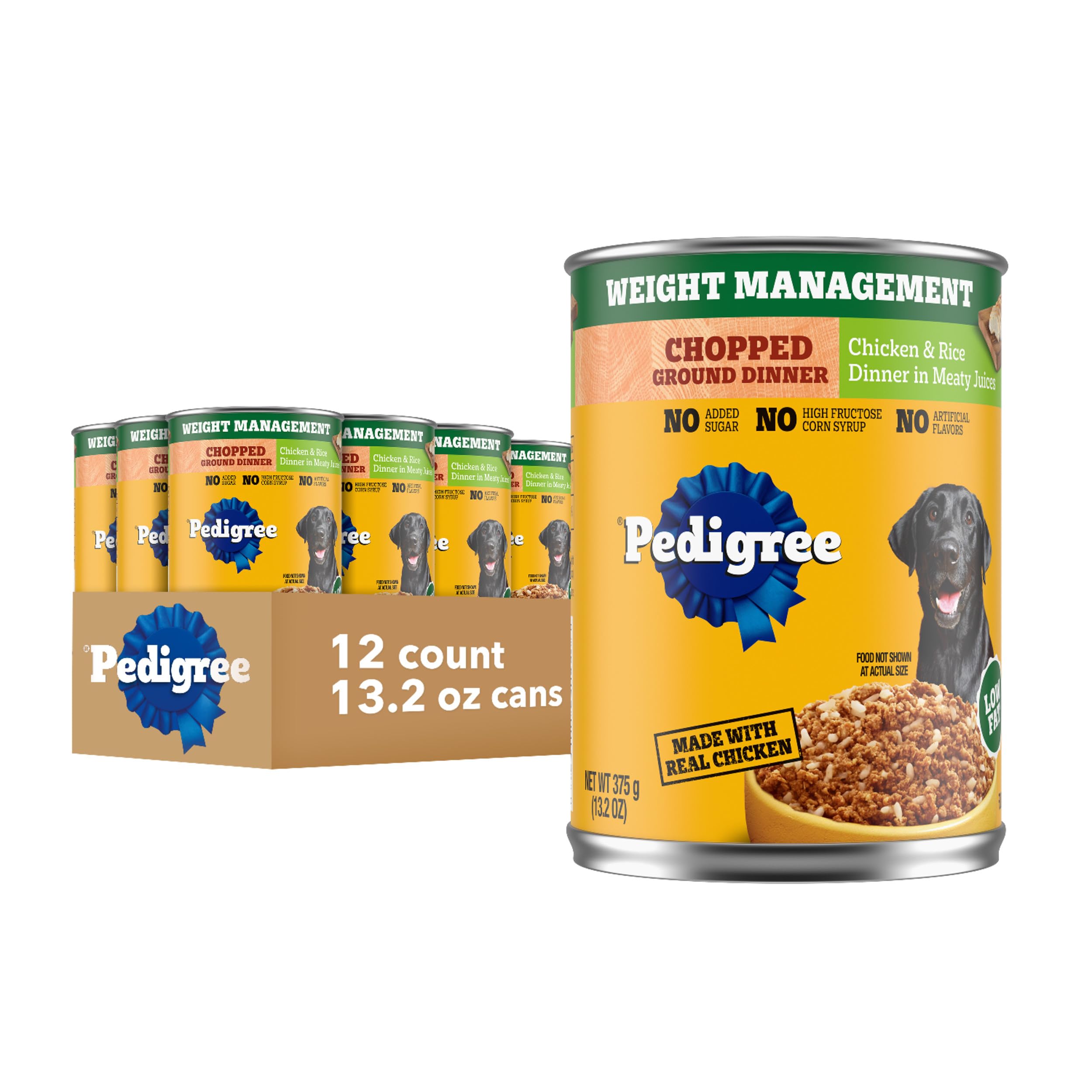
Pedigree Chopped Weight Management Wet

Pedigree Chopped Weight Management Wet

Fat-restricted diets

Our Score 9.4/10
Check Price

Worth Noting

  • Twelve-can case, no single can to try
Pack
12 cans, 13.2 oz each
Flavor
Chicken & Rice
Serving
Alone or as topper
Fat Level
Low fat
Read the full review

When a dog needs fat cut rather than just calories, the options thin out fast. This is the can in our set that answers that brief: Pedigree's weight management dinner is low in fat, made with real chicken, and served chopped in meaty juices instead of as a dense pate, so it goes down easily for a dog that has been feeling hard done by.

It is complete and balanced, so it can be the whole meal, but it does its best work as the wet half of a mixed diet — half a can over measured kibble turns a diet portion into something with gravy on it, and the chopped texture mixes in rather than sitting in a lump at the bottom. It also carries less of the gelatinous filler than the standard Pedigree cans, which is why the meat reads as meat.

Two things make it worth a place here: it is the low-fat option in this guide that dogs actually finish, and it is the least expensive wet food here per ounce. The 13.2-ounce can is generous — a small dog gets two or three meals from one, so plan on a lid — and for a dog that only needs fewer calories rather than less fat, a light dry food does the job with less fuss.

Bottom line: For a dog whose vet wants fat cut rather than just calories, this is the low-fat can we keep on the shelf, and the cheapest wet food here.

7

Purina ONE Healthy Weight Wet

Purina ONE Healthy Weight Wet

Mixing with kibble

Our Score 9.2/10
Check Price

Worth Noting

  • 13 oz cans are oversized for small dogs
Pack
12 cans, 13 oz each
Flavor
Lamb & Brown Rice
Life Stage
Adult
Protein Claim
High protein
Read the full review

The gravy hits before the meat does — lamb and rice in a soft, wet mound that most dogs start on before the bowl is fully down. The chunks hold their shape out of the can rather than collapsing into paste, which is part of why a dog on a smaller scoop still behaves as though dinner happened properly.

We like it best as a tool rather than a whole diet. A third of a can spooned over a measured cup of kibble adds bulk, moisture and smell for very few calories, and that is the cheapest way to stop a dieting dog feeling robbed. It is complete nutrition, so it can stand alone for a dog that needs the volume more than it needs crunch.

The 13-ounce can is the catch. That is a big can — right for a 50-pound dog's dinner, three meals for a 15-pound one, which means a lid and a fridge shelf. Its weight-management results are good, but the trail behind them is shorter than behind the dry foods here, so with a small dog we treat it as the helper rather than the whole plan.

Bottom line: A big dog on a diet gets more out of this can than any other wet food here: real lamb, gravy worth licking, and volume that makes a small portion convincing.

8

Diamond Naturals Light Adult

Diamond Naturals Light Adult

Multi-dog value

Our Score 9.2/10
Check Price

Worth Noting

  • Lamb is the only flavor
  • Large kibble won't suit small mouths
Flavor
Lamb Meal & Rice
Bag Size
30 lb
Probiotics
K9 Strain blend
Joint Support
Glucosamine added
Read the full review

Diamond labels this one for less active dogs, and that is the honest way to read it: a light formula for the dog whose exercise is a slow walk around the block rather than a run in the field. If your dog is genuinely sedentary, that is the profile you want, and the portion stays satisfying because the fiber and bulk do some of the work.

Lamb meal leads the list, followed by brown rice, oatmeal and barley, with a species-specific probiotic blend, glucosamine for joints, L-carnitine, and the fruit-and-vegetable panel Diamond likes to talk about. It is a more interesting formula than the price suggests, and the 30-pound bag is the largest in this guide.

The kibble runs large — good news for a dog that inhales dinner, less good for a small mouth. Lamb is also the only flavor in this recipe, so a dog that turns its nose up at lamb has nowhere to go within it. And the switch matters more here than usual: start slowly, because a fast change onto a lamb formula is the usual reason a diet goes wrong.

Where it wins is at the scale of a whole household. Thirty pounds at one of the lowest costs per pound here, with joint support and probiotics built in, makes it the pick for multi-dog homes and big dogs facing a long, slow diet. A single small dog will be sealing that bag for months, which is the one buyer this bag does not serve.

Bottom line: Multi-dog homes get the most from Diamond Naturals Light: thirty pounds, joint support and a low cost per pound in one bag.

How We Tested the Best Dog Food for Weight Loss

We started with 26 weight-management formulas sold in pet stores, big-box retailers, and online, then narrowed it to 12 based on guaranteed analysis, calorie density, AAFCO statements, and cost per day for a 40-pound dog at target weight. Over five months, I brought the shortlist home and fed each formula for two weeks, rotating through a senior beagle, a recently spayed terrier, and two Labrador mixes. Meals happened in our own kitchens, in slow feeders for the gulpers, and on weekend trips where the routine got messy; I weighed every dog weekly on the same scale and checked body condition with a vet tech monthly.

At each meal I watched whether the dog dove in, sniffed and walked away, or needed a topper—that was our real read on palatability and pet preference. I measured kibble against a quarter and timed how long small dogs took to finish, since oversized pieces can slow or discourage a smaller eater. I also logged each kibble's smell straight from the bag and whether backyard cleanup got more or less pungent over the first week, which told me more about digestibility than any label claim.

Every transition started with a seven-day mix, and I noted loose stools, gas, vomiting, or a dog that turned up its nose after day three—stomach sensitivity showed up fast in some formulas. Effectiveness came down to the numbers: I tracked weekly weight loss against a safe target of roughly 1 to 2 percent of body weight per week, plus whether the dogs seemed hungry between meals. Value was calculated by cost per day at the correct portion, not sticker price, and I checked whether each bag was easy to buy in stores or online without a subscription. The formulas that passed all of that are the ones below.

How to Choose the Right Dog Food for Weight Loss

Read the calories, not the word light

A light or healthy-weight formula spreads complete nutrition over fewer calories, so the scoop still looks generous while the energy comes down. What it does not do is stop at one scoop. We weigh the day's kibble on a kitchen scale, tip it into a cup, and feed from that cup — free-feeding a diet food is the most common reason a diet stalls, because a dog will happily eat maintenance calories of a light formula.

Treats come out of the same total. A handful of biscuits in the afternoon can quietly cancel the deficit the kibble created, and it is worth measuring a day's treats into the cup once to see how much room they take up.

Dry, wet or a mix

Wet food is mostly water, which is why a small amount of it makes a far bigger-looking dinner than the same calories of kibble. That volume is genuinely useful for a dog that gulps and then stands by the bowl looking hopeful, and it is why a spoonful of a weight-management can over measured kibble works so well: the bowl gets fuller, the calories don't.

Wet costs more per calorie, and the cans here run 13 ounces, which is more than a small dog needs at one sitting. A mixed diet — measured kibble plus part of a can — gets the volume benefit without turning wet food into the main expense.

Protect the muscle while the fat goes

When you cut portions of an ordinary adult food, you cut protein, vitamins and minerals along with the calories. A purpose-built formula keeps the micronutrients at full strength in a smaller scoop, and the better ones push protein up so the dog loses fat rather than muscle. Pro Plan's protein-to-fat ratio and the L-carnitine in IAMS are both aimed at that.

It matters more than it sounds. Skimping on protein is how a dieting dog ends up looking thin and tired instead of lean, and it is the reason a slightly more expensive formula can be the cheaper choice over a whole diet.

Size the kibble and the can to the dog

Small mouths need small kibble — a tiny piece is easier for a pug to pick up and harder for a retriever to bother chewing. Big pieces slow a gulper down, which is a real advantage for a dog that empties a bowl in seconds. Neither is better in the abstract; it depends entirely on the dog in front of the bag.

Cans work the same way. A 13-ounce can is a sensible dinner for a fifty-pound dog and two or three meals for a ten-pound one, so refrigerate what is left rather than leaving it down. A small dog on a big-can food needs a lid and a routine.

Switch slowly and budget the treats

Give any new food about a week of mixing, starting with a quarter of the new kibble and building up. A fast change is the usual reason a diet ends in loose stools, a cancelled bag and a dog back on the old food.

Then be honest about the extras. A weight-loss food does not outrun a biscuit habit, and the dogs that lose weight steadily are usually the ones whose households measured the whole day rather than just the bowl.

Frequently Asked Questions

Final Verdict

Hill's Science Diet Perfect Weight is where we start. It has the most convincing weight-loss results in this group, a formula dogs finish rather than push around the bowl, and a results claim you can hold it to at the ten-week mark. You pay for that per pound, and the bag is small enough to be annoying with a big dog.

Change the priority and the answer changes. A hungry, food-motivated dog that needs to hold muscle does better on Pro Plan's shredded weight formula, and a big dog in a big household gets more from the IAMS or Diamond bags. If the budget is the deciding factor, Pedigree's healthy weight bag costs the least per pound here and does the same job — with soy and wheat in the recipe, which is the only thing to check first.