Food & Treats

Best Dog Food with Grain of 2026

Grain took a strange detour through the dog world. For a few years, "grain-free" on a bag worked like a health claim, and plenty of us paid a premium for it, but veterinary nutritionists have largely pushed back: oats, barley, and brown rice bring fiber, B vitamins, and steady energy, and most dogs digest them without a second thought. What a grain-inclusive food actually has to get right is everything else — a kibble your dog finishes rather than noses around, a bag that still smells fresh near the bottom, and a cost per day that doesn't quietly climb.

I've split more kibble than I'd like to admit between my own two dogs and a rotating cast of very willing volunteers, and the real verdict comes from the bowl and from what shows up in the yard a day later. My team and I fed 12 grain-inclusive formulas to a panel of dogs over six months, weighing scoops, logging leftovers, and watching coats and energy along the way. One thing first-time buyers get wrong: price per bag means little, because calorie density decides how long that bag actually lasts. The picks below are the ones that held up on every count.

1

Hill's Science Diet Small & Mini

Top Pick
Hill's Science Diet Small & Mini

Small breeds

Our Score 9.6/10
Check Price

Worth Noting

  • Most expensive per pound in this lineup
  • 4.5-pound bag empties fast with two dogs
Flavor
Chicken and brown rice
Bag Size
4.5 lb
Breed Size
Small and mini, up to 25 lb
Adult Age Range
1–6 years
Read the full review

The kibble here is genuinely tiny — small enough that a Yorkie or a Maltese eats without working at it, which is the whole point of a formula built for dogs up to 25 pounds. We noticed it most in how quickly a bowl empties: this is food that disappears, rather than food that gets nudged around the kitchen floor.

Behind the size is a short, calm recipe: chicken and brown rice, pumpkin for digestion, no synthetic colors and no artificial flavors. The 1–6 age band is specific — this isn't a puppy food and it isn't a senior formula — and the feeding chart on the bag is where to start, rather than a scoop carried over from another brand.

Cost is the trade-off. Per pound this is the most expensive bag in our lineup, and 4.5 pounds goes quickly with two small dogs or one at the top of the weight range. What the money buys is consistency: the pieces get eaten, coats look good, and a dog that turns its nose up at chunky kibble usually takes these without a fight.

If your dog is over that 25-pound ceiling, look at the large-breed IAMS instead — this formula simply isn't built for that dog, and the pieces will be gone in a bite.

Bottom line: The small-dog specialist to buy if your toy breed needs a piece it can actually pick up, and you don't mind paying the most per pound here.

2

IAMS Proactive Health Minichunks

IAMS Proactive Health Minichunks

Multi-dog homes

Our Score 9.4/10
Check Price

Worth Noting

  • Thirty-pound bag can go stale for one small dog
Bag Size
30 lb
Breed Size
All breed sizes
Life Stage
Adult
Grains And Fiber
Wholesome grains, natural fiber and prebiotics
Read the full review

Thirty pounds of kibble is the first thing you notice about this bag, and it's the reason it became our default: it keeps a multi-dog house in food without a reorder every other week, and the cost per pound lands among the lowest in this group. What's inside is straightforward in a way we appreciate — chicken and egg for protein, natural fiber and prebiotics for digestion, and whole grains for energy rather than a long list of extras.

The minichunks in the name do more work than they sound like they do. The pieces are small enough for a terrier to pick up comfortably and still substantial enough for a retriever, which is why this is the bag we point to when one bowl has to serve dogs of very different sizes. They also dispense cleanly from an automatic feeder, a small detail that matters if you're out of the house at mealtimes.

Digestion is the one place this food asks something of you. Loose stools show up mostly around the switch rather than in steady feeding, so run the change over a full week — a quarter new kibble, then half, then three-quarters — instead of pouring a fresh bowl on day one. Once a dog settles, the bowl comes back empty, and that holds for fussy eaters as well as easy ones.

For a single small dog, the thirty-pound bag is the argument against it: kibble stales long before the bag empties, and a five- or six-pound bag serves that household better. For two dogs, a big dog, or a house that goes through a bag a month, this is the one we keep coming back to.

Bottom line: The grain-inclusive bag we recommend first: all breed sizes, whole grains, and prebiotic fiber in a size that keeps a busy house fed.

3

Blue Buffalo Life Protection Chicken

Blue Buffalo Life Protection Chicken

All-size households

Our Score 9.4/10
Check Price

Worth Noting

  • Digestion is uneven for some dogs
  • Only a 5-pound bag for all-breed feeding
Bag Size
5 lb
Life Stage
Adult
Grain Sources
Brown rice, barley, oatmeal
First Ingredient
Real chicken
Read the full review

Real chicken is the first ingredient, and the grains are named rather than lumped together as cereal grains: brown rice, barley, and oatmeal all appear in the recipe. For a shopper who wants grain-inclusive food without corn, wheat, or soy, that combination is the cleanest answer in this group.

The dark LifeSource Bits scattered through the kibble are the other visible difference — antioxidants, vitamins, and minerals added after cooking rather than baked through. Dogs often hunt them out first, which does no harm; they're part of the complete formula, not a topper you need to add separately.

Five pounds at a midrange price makes this a bag to try rather than a commitment, and that suits a formula where digestion is the open question. A dog with a cast-iron stomach usually does well here, and on ingredients this is one of the better all-breed options in the lineup. If the last two foods you tried ended in loose stools, start small and switch slowly before buying the bigger bag.

One thing to know before ordering: the five-pound bag is the size here, so a Labrador will empty it fast and you'll be reordering constantly.

Bottom line: The pick for shoppers who read ingredient panels: real chicken first and three named grains, in a five-pound bag that's easy to trial.

4

IAMS Proactive Health Large Breed

IAMS Proactive Health Large Breed

Big dogs

Our Score 9.4/10
Check Price

Worth Noting

  • Plain chicken-and-rice flavor; picky dogs may balk
Bag Size
30 lb
Breed Size
Large breeds
Joint Support
Optimal calcium, natural glucosamine and chondroitin
First Ingredient
Real chicken
Read the full review

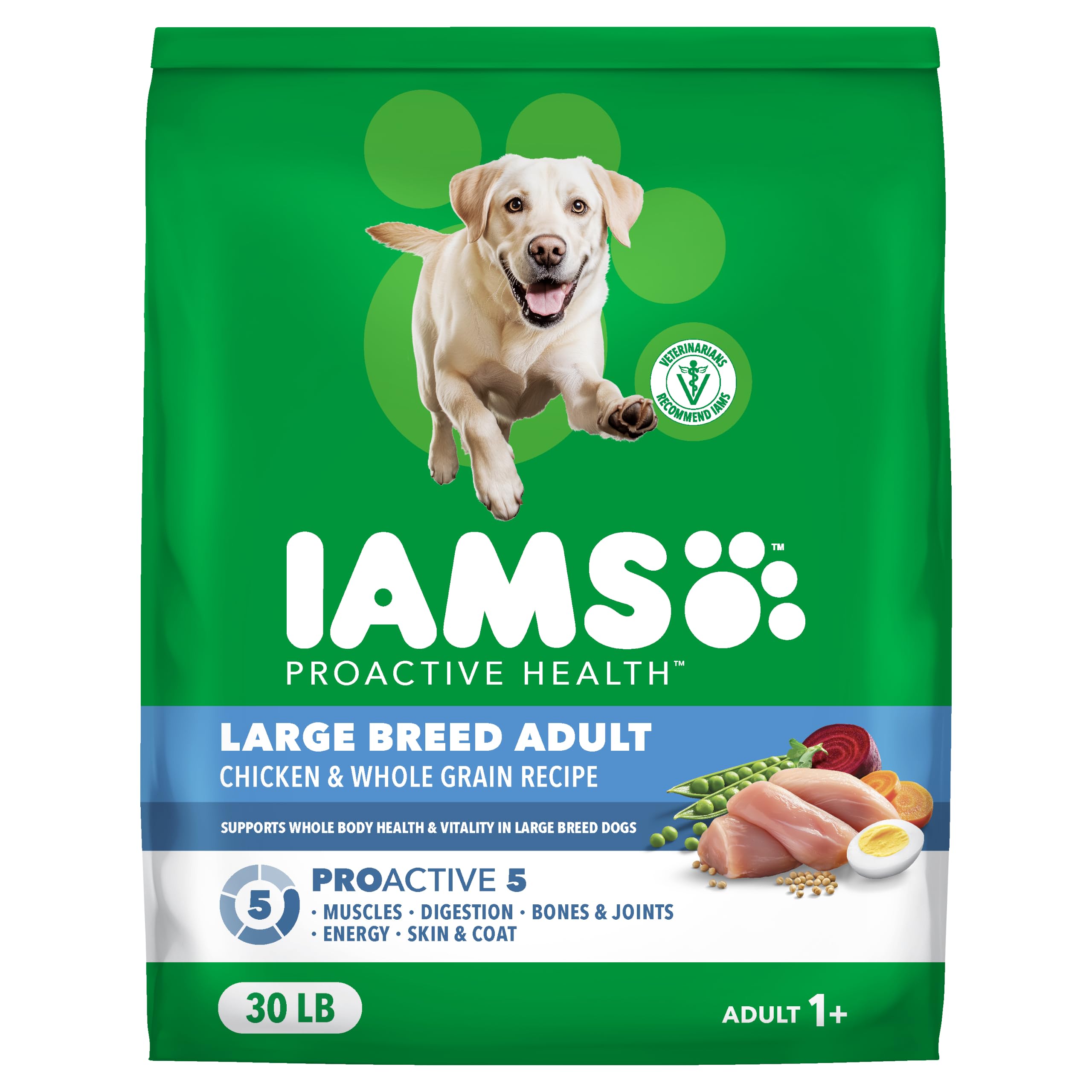
Big dogs get their own formula here rather than an all-breed bag scaled up: larger kibble that takes a little more chewing, optimal calcium levels, and natural sources of glucosamine and chondroitin for hips and joints. If dinner currently disappears in four seconds flat, the bigger pieces are the first thing you'll notice.

The thirty-pound bag matches our top pick in size and roughly in price, and it delivers real chicken as the first ingredient with no fillers or artificial flavors. For a household with one large dog, that's about the most straightforward value in this lineup: one bag, one reorder a month, nothing to measure beyond the chart.

Taste is the softer spot. Chicken and rice is a plain flavor, and a dog used to a shredded or meatier formula may take a meal or two to commit. The switch matters here too — this is big kibble going into a big dog, and a fast eater needs the slow mix rather than a full bowl on day one.

One practical detail for a mixed house: these pieces are too big for a small dog, so keep a small-breed bag alongside rather than trying to make one bag do both jobs.

Bottom line: The straightforward buy for a big dog: large-breed kibble, joint nutrients, and real chicken first in the same value format as our top pick.

5

Purina Pro Plan Shredded Blend Small Breed

Purina Pro Plan Shredded Blend Small Breed

Fussy small dogs

Our Score 9.4/10
Check Price

Worth Noting

  • One of the pricier bags per pound here
  • Six-pound bag only
Texture
Bite-sized kibble plus shredded pieces
Bag Size
6 lb
Breed Size
Small breeds
Probiotics
Guaranteed live probiotics
Read the full review

Two textures in one bag: firm bite-sized kibble plus soft, shredded chicken pieces. That mix is why this is the bag we hand to someone whose small dog has stopped finishing meals — the shreds carry more smell and give a fussy eater something to hunt through instead of a bowl of identical pellets.

What lifts it above a gimmick sits underneath the texture. It's a high-protein formula with real chicken first, and it carries guaranteed live probiotics, which is unusual at this price and the part we care about most for a dog that has had loose stools on other foods. The kibble is small enough for a Chihuahua and firm enough that it doesn't turn to paste while the dog decides.

The trade-off is cost. This is one of the pricier bags per pound here, and six pounds goes quickly with more than one small dog. For a single dog under twenty pounds, though, it's an easy size to store and a fair amount to pay for a formula that gets a fussy eater back to the bowl.

Bottom line: Worth the premium if your small dog walks away from the bowl: two textures and live probiotics in a bag sized for one little dog.

6

Purina ONE Chicken & Rice

Purina ONE Chicken & Rice

Everyday all-breed value

Our Score 9.4/10
Check Price

Worth Noting

  • Eight-pound bag only
  • Costs more per pound than our top pick
Texture
Crunchy kibble and tender morsels
Bag Size
8 lb
Life Stage
Adult
First Ingredient
Real chicken
Read the full review

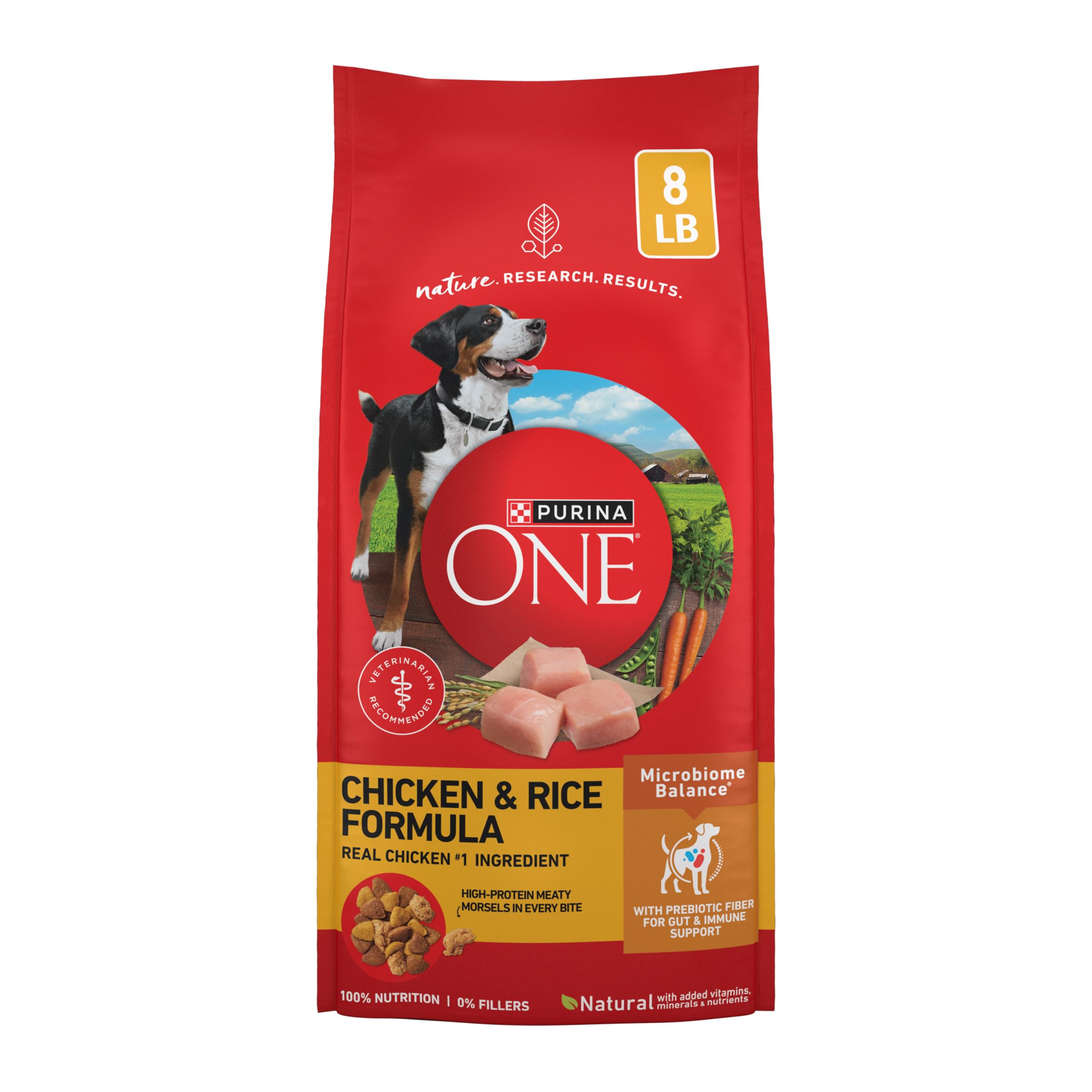
Against our top pick, this is the smaller and more expensive-per-pound way to feed an all-breed house — eight pounds instead of thirty, with a money-back guarantee behind it. What the difference buys you is a more textured bowl: crunchy kibble mixed with soft, meaty morsels, which is the detail that turns a picky dog around.

Real chicken is the first ingredient, prebiotic fiber supports digestion, and there are omega-6 fatty acids plus four antioxidant sources for skin, coat, and immunity. Purina also lists natural sources of glucosamine for joints, which you don't often see in an all-breed formula at this level, and the food is made in Purina-owned U.S. facilities.

The formula isn't the weak point — the bag can be. Kibble can arrive stale or infested, which is a shipping and storage problem rather than a recipe one, so we check the bag before we open it and buy from a seller with an easy return. The guarantee backs that up: Purina refunds a bag that doesn't meet expectations if you send the date box and receipt within 60 days.

Eight pounds is also a sensible trial size for a dog moving off a food that wasn't working — enough to judge a month of meals, small enough that you're not stuck with a thirty-pound mistake.

Bottom line: A solid all-breed formula in a smaller, guarantee-backed bag, and the one to try if your dog wants texture rather than plain kibble.

7

Pedigree Complete Nutrition Adult

Pedigree Complete Nutrition Adult

Bulk-buy households

Our Score 9.4/10
Check Price

Worth Noting

  • Soybean meal and wheat lead the ingredient list
Bag Size
18 lb
Breed Size
All breed sizes
Life Stage
Adult
Main Ingredients
Soybean meal, wheat
Read the full review

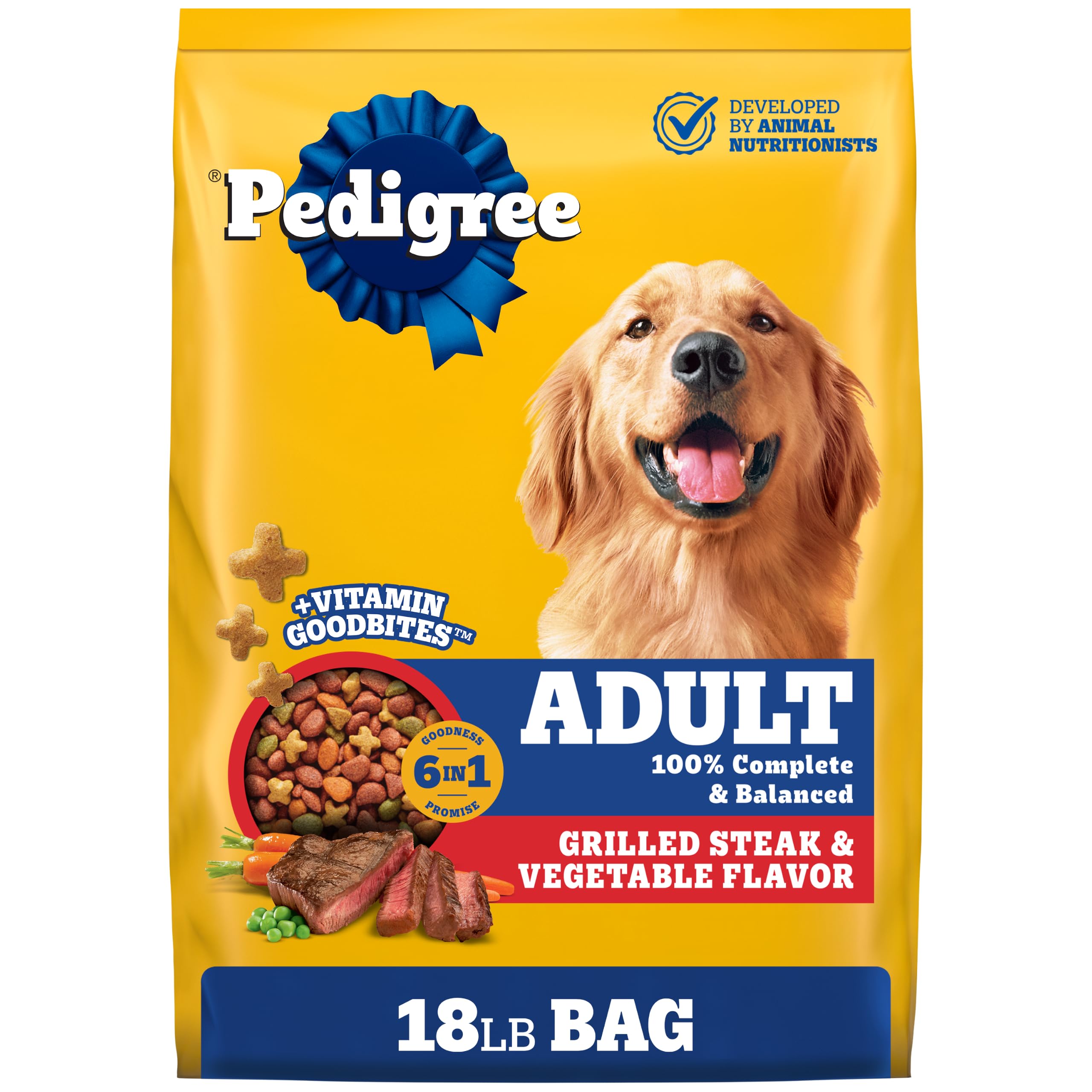
Eighteen pounds is the size that changes a routine: one bag on the shelf, one scoop twice a day, and a reorder that doesn't sneak up on you. Nothing here costs less per pound, and for a house with two or three dogs that arithmetic is most of the decision.

Pedigree leans on prebiotic fiber for digestion, adds Vitamin Goodbites pieces with elevated vitamins, and fortifies with minerals for immunity. The grilled steak and vegetable flavor is a strong smell that gets dogs to the bowl, and the kibble is an everyday shape rather than a breed-specific one, which suits a bag meant to be shared across a household.

We keep it in the list for the household where dog food is a line item — two big dogs, a bag a month, no interest in paying for LifeSource Bits or shredded chicken. What you're buying is bulk and consistency rather than a premium recipe, and a dog with a sensitive stomach will show you during the switch whether it works. Buy the bag, watch the first week, and you'll know.

Bottom line: Buy it when the monthly number is the deciding factor: eighteen pounds at the lowest cost per pound here, for dogs that handle soy and wheat.

8

Nutrish Chicken & Veggies

Nutrish Chicken & Veggies

Budget feeding

Our Score 9.2/10
Check Price

Worth Noting

  • Digestion is hit or miss
  • Contains wheat and soy, a problem for sensitive dogs
Bag Size
5 lb
Breed Size
Small, medium, and large
Life Stage
Adult
Grain Sources
Barley, wheat
Read the full review

This is the least expensive bag in our lineup, and the ingredient list still starts with real chicken rather than a grain or a by-product meal. For a household feeding two medium dogs on a fixed budget, that's the whole case: you're not paying for a premium label, and you're not starting the bowl with something you have to look up.

Barley and wheat supply the grain, the formula is veterinarian reviewed, and there are no artificial flavors. It's labeled for small, medium, and large adult dogs, so one bag can cover a mixed household — a genuine convenience if you've been buying two foods for a Chihuahua and a Lab.

Digestion is where a budget bag usually shows its cost, and this one is no exception. Introduce it over a full week and judge it on the small bag before committing to a bigger one; if the stool stays firm and the bowl comes back clean, you've saved real money. If not, you've spent very little finding out.

Where it earns its place is the arithmetic. A grain-inclusive food with chicken first, at this price, is a better outcome than stretching for a premium bag you can't keep buying month after month. Treat it as the everyday bag, not a treat-day upgrade.

Bottom line: The budget bag we'd actually buy: real chicken first and grain from barley and wheat, as long as your dog's stomach agrees.

How We Tested the Best Dog Food With Grain

We built the shortlist from ingredient panels rather than shelf placement, setting aside formulas without a named meat near the top of the list and ones padded with so much fiber that the guaranteed analysis read like a laxative. From there we filtered by cost per day rather than cost per bag, by whether the bag size fit a normal kitchen bin, and by whether the food was reliably in stock online and in stores — a kibble you can't reorder is no use halfway through the month. That left 12 formulas.

For six months, each food went to at least two dogs, from a bottomless-labrador type to a senior who turns his nose up at anything new. Owners scooped with the same measuring cup each time, timed how quickly bowls emptied, and noted who walked away from a full bowl. Twice a week they logged stool quality through the transition week and after, along with gas, loose stools, or a gurgling stomach, and by week six we were judging coats and energy on walks as closely as we were judging the bowl.

Because a 25-pound bag lives in a kitchen for weeks, we kept every bag in its original packaging inside a sealed bin and inspected it at the two- and four-week marks for a stale or rancid smell, clumping at the bottom, and any sign of grain moths or weevils in the pantry — the kind of infestation that starts in a forgotten bag and spreads to the flour. We also reordered a bag of each finalist to see how it arrived: crushed kibble, split seams, or a date code already half gone.

How to Choose the Right Dog Food with Grain

Start With the Grain List, Not the Front of the Bag

Front-panel phrases like wholesome grains tell you less than the ingredient list does. Look for named grains — brown rice, barley, oatmeal, wheat — and notice where they sit. After the named meat is normal and fine; before it means you're paying mostly for carbohydrate. Corn, wheat, and soy aren't villains, but they are inexpensive, so a formula that leans on them should also be inexpensive.

Our picks split cleanly on this. Blue Buffalo names three grains and leaves out corn, wheat, and soy; IAMS cites whole grains alongside prebiotic fiber; Pedigree builds on wheat and soybean meal and prices accordingly. Grain-free isn't a step up unless your vet has identified a specific reason for your dog.

Match the Kibble to the Mouth in Front of You

A toy breed needs a piece it can pick up without effort, and a big dog that inhales dinner benefits from something larger to slow it down. Hill's Small & Mini runs genuinely tiny; the large-breed IAMS runs a bigger chunk with joint nutrients behind it. A word in the product name isn't a guarantee — check the breed-size line as well as the kibble description.

Texture matters for the dog that walks away from the bowl. Purina Pro Plan mixes firm kibble with soft shredded chicken, and Purina ONE pairs crunchy bites with tender morsels, both aimed at dogs that get bored. If you use an automatic feeder, smaller kibble dispenses more evenly.

Size the Bag to the Household, Then Store It Well

Bag size is a freshness decision as much as a price one. A 4.5- to 6-pound bag suits one small or medium dog; 18- and 30-pound bags only make sense with several dogs or a large breed, because kibble goes stale long before a big bag empties in a single-dog house.

Check the bag the day it lands. A torn seam, a stale or sour smell, or pests means return it rather than scoop around the problem. Decant into a container with a good seal, keep the best-by date, and note the day you opened it so you're not guessing months later.

Plan the Switch and Read the Stool

Most of the loose-stool trouble in this category comes from switching too fast rather than from the food itself. Mix about a quarter of the new kibble into the old for a few days, then half, then three-quarters, over roughly a week. If stool loosens, hold at the current ratio for longer before pushing on.

Once a dog is settled and eating well on a grain-inclusive food, changing for the sake of change rarely helps. Judge a new formula on a small bag first — firm stool, a clean bowl, and steady energy are the signals worth trusting.

Frequently Asked Questions

Final Verdict

Our default is IAMS Proactive Health Adult Minichunks: whole grains, prebiotic fiber, chicken-and-egg protein, and a 30-pound bag that keeps a multi-dog house fed without a reorder every week. For a single small dog, Hill's Science Diet Small & Mini is the better fit despite the higher cost per pound, and if a fussy eater is leaving food in the bowl, the shredded texture of Purina Pro Plan earns its premium.

Feeding a big dog? IAMS Large Breed delivers the same value in a kibble built for the mouth in front of it.