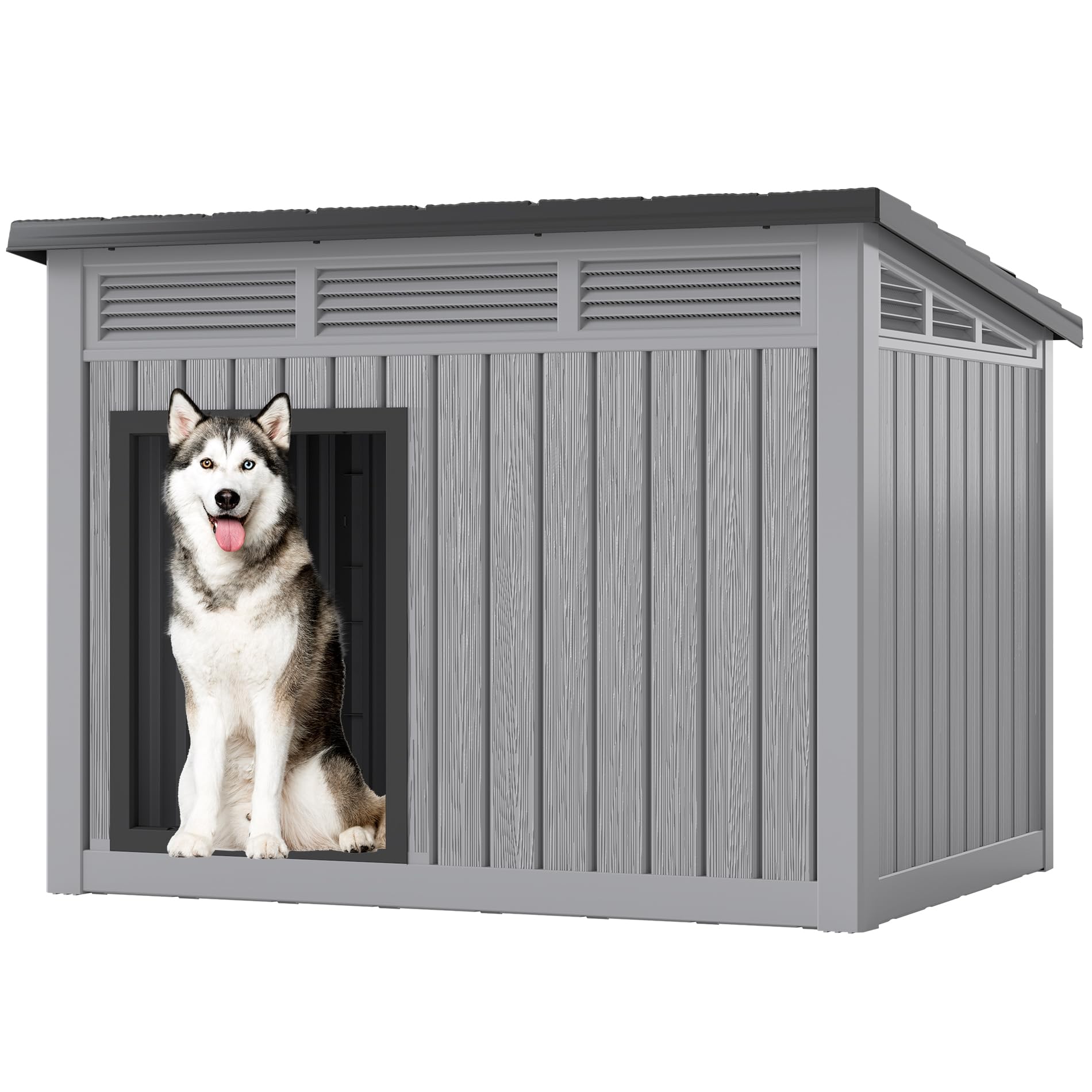
Crates & Gates

Best Dog Houses of 2026

A dog house should be a place your dog chooses to nap—not a backyard decoration that warps, leaks, or scares them off. The wrong one turns into a Saturday project: missing screws, misaligned panels, a door that sticks. The right one gives shade in July, dry shelter in a downpour, and a quiet corner your dog can claim as their own. Over the past eight months, we've tested eight dog houses in real backyards, with real dogs, to see which ones earn that spot.

Assembly is where most of them lose me—a hex key and a pile of panels can eat a whole weekend. But once they're up, the differences show: sturdier frames, thicker floors, better ventilation, and doors that actually latch. Size matters more than the box suggests; too big can feel drafty, too small is a kennel. We watched whether our test dogs went in on their own—a beautiful house your dog ignores is just expensive lawn art. The picks below got the basics right: build quality, value, and a dog willing to use them.

1

DRATO Large Dog House

Top Pick
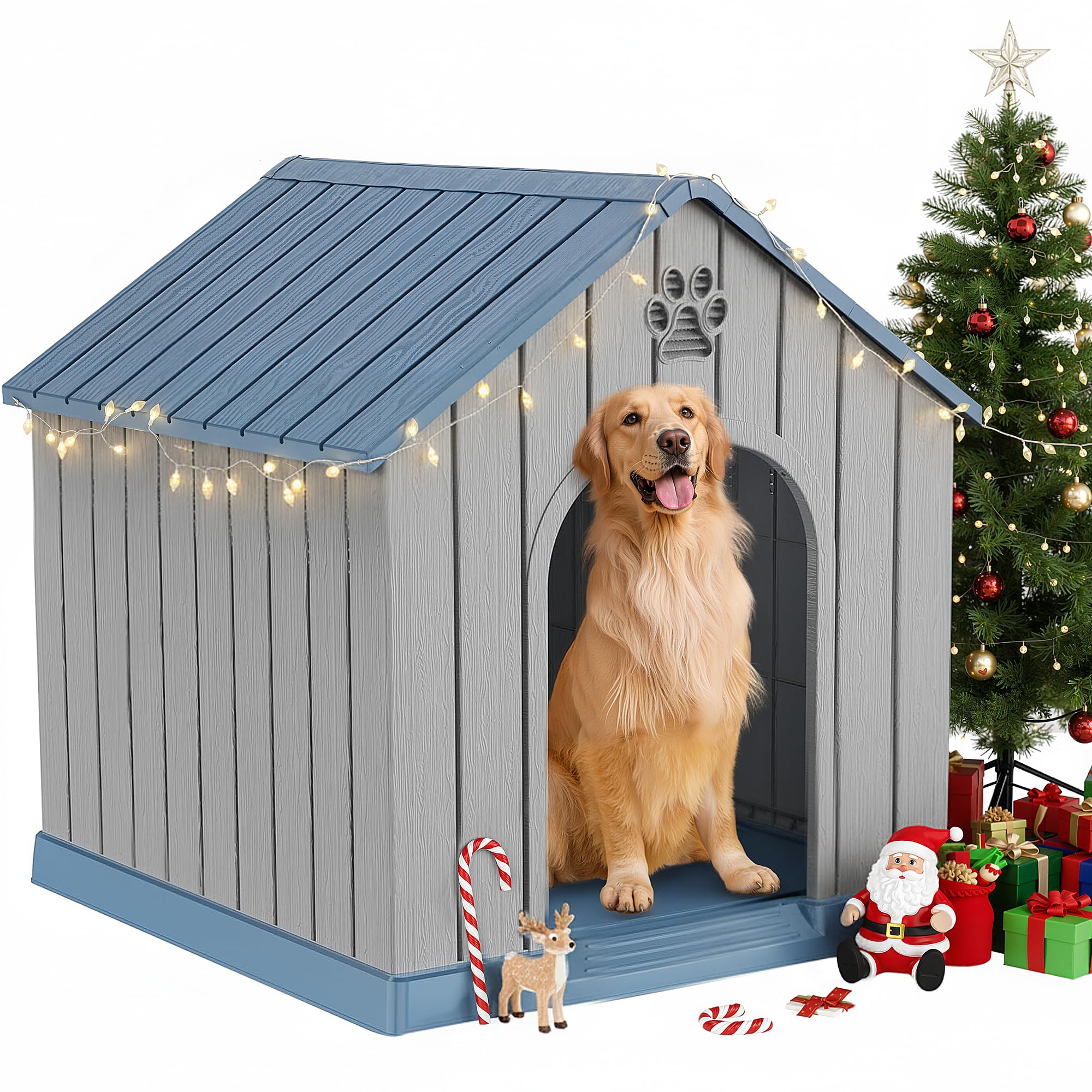
DRATO Large Dog House

Most yards

Our Score 9.2/10
Check Price

Worth Noting

  • No manufacturer warranty is listed
  • Open front door lets wind-driven rain reach the entrance
Floor
Elevated, with hidden vents
Shell
Waterproof polypropylene
Assembly
No tools required
Footprint (D × W × H)
38.62" × 36.26" × 38.07"
Read the full review

The part nobody photographs is the part that won us over. Panels line up, the instructions read like someone wrote them for a person standing in a yard, and there are no tools in the box because none are needed — the house is standing on its pad the same afternoon it arrives. Anyone who has wrestled a flat-packed plastic shelter knows that is not a given, and it is the reason this one is the default here.

What you get once it is up is a genuinely large, rigid box. At 38.62 inches deep, 36.26 wide, and 38.07 tall, the interior takes a Labrador with room to turn, and two 50-pound dogs lie down together without stacking. The elevated floor and hidden vents do the quiet work: air moves through the house, and the dog is not pressed against cold ground in November.

The shell behaves the way polypropylene should — water beads and runs off rather than soaking in, and the raised floor lets it drain away underneath. The open doorway is the one weak point in wind-driven rain, so set the door away from the prevailing weather and the front of the floor stays dry. That is a siting decision, not a flaw to fix with caulk.

Where it fits best is a suburban yard where the dog spends the day outside and comes in at night. The interior is smooth and seamless, so cleaning is a cloth and a bucket rather than a scrub brush jammed into a corner, and a washable mat over the floor is the only extra you need.

Bottom line: This is the house we point most people to: no tools, panels that line up, a dry floor, and room for two medium dogs.

2

Pelemee Indoor Dog Cave

Pelemee Indoor Dog Cave

Indoor small dogs

Our Score 9.2/10
Check Price

Worth Noting

  • Fabric shell is indoor-only
  • Frame flexes when you move it
Cover
Polyester and velvet, washable
Frame
Full-perimeter PVC
Extras
Reversible cushion, glow-in-the-dark print
Footprint (L × W × H)
29" × 29" × 29"
Read the full review

Some dogs want to be under something, and this is the indoor house we recommend for them. The full-perimeter PVC frame is the detail that makes it work: the walls hold their shape instead of folding onto the dog when it circles three times before lying down, which is what most soft pet tents do.

At 29 inches on each side it is a bed with a roof rather than a room — a Frenchie, a pug, or a pair of Yorkies. The listing stretches to 66 pounds, and in a 29-inch cube that is a dog that flattens out and stays flat.

The details are charming rather than gimmicky. A curtain and door flap let the dog choose between closed and open, the cushion reverses for warm and cool weather, the cover comes off for the wash, and the glow-in-the-dark stars and moon on the shell are faint enough to be sweet rather than lurid. The washability is what we keep coming back to: an indoor bed that cannot go in the machine becomes a nuisance by March.

Bottom line: We like this best as indoor furniture for a small dog that likes to burrow; it is a bed with a roof, not a yard shelter.

3

Bifanuo Small Dog House

Bifanuo Small Dog House

Porches and patios

Our Score 9.2/10
Check Price

Worth Noting

  • Bare plastic floor needs a mat
  • Interior suits only small breeds
Floor
Elevated, hidden vents
Weight
11.9 lb
Assembly
Tool-free snaps
Footprint (L × W × H)
26" × 23.6" × 25.8"
Read the full review

Just under twelve pounds. That is the whole argument for this one: you can pick it up with one hand and move it from the porch to the garage when the weather turns, which is more than you can say for any other rigid house here.

It goes together with snaps and no tools, and the parts line up the way they should, so it is the house you set up in the shade in July and shift under the overhang in November. Hidden vents keep air moving without the louvered look, and the floor is raised clear of the ground.

We think it is the right house for a dog that lives on a porch rather than in a yard. It is small — 26 inches long, 23.6 wide, 25.8 tall — sized for a terrier, a dachshund, or a shih tzu, and not much more.

One thing to sort before the dog moves in: the floor is bare molded plastic with nothing to grip, and a dog on a slick floor scrabbles. A flat mat or a bed with a non-slip base turns it into somewhere a dog will actually settle.

Bottom line: Its 11.9-pound body makes this the house we move from porch to garage without a second person, provided your dog is genuinely small.

4

Pet Republic Plastic Dog House

Pet Republic Plastic Dog House

Tight budgets

Our Score 8.8/10
Check Price

Worth Noting

  • Smaller inside than the medium label implies
  • Screw-and-buckle assembly needs time and help
Vents
Front and back
Warranty
1 year
Floor Height
2.7"
Footprint (L × W × H)
27" × 25.5" × 27"
Read the full review

Twenty-seven inches long, 25.5 wide, and 27 tall. Read those before the breed list. This is a small house wearing a medium label: a Jack Russell turns around in it, a beagle is a squeeze, and a Labrador is not happening. If your dog already curls up in a crate one size down, that is the dog this fits.

For that dog, we think it is the best value in this roundup. The roof slopes to shed rain, the floor sits 2.7 inches clear of the ground, and vents at the front and back keep air moving — which is what actually stops a plastic house turning into a damp box. A one-year warranty is listed, and not every house here offers one.

The compromise is in the build. Panels are held with buckles and screws rather than snapping together, and they need coaxing into line, so plan an evening, a screwdriver, and a second pair of hands. It is also the house where the fit is most likely to fight you.

Put it under the eaves with a washable mat inside and it does everything a small dog asks of a shelter. What it will not do is grow.

Bottom line: We reach for this one when the dog is small and the budget is tight — buy it for a terrier, not the medium breed the label suggests.

5

Hovicaed Indoor Dog Tent

Hovicaed Indoor Dog Tent

Indoor large dogs

Our Score 8.8/10
Check Price

Worth Noting

  • Zipper and seams wear first
  • Indoor only
Cover
Removable and washable
Frame
Metal with foam walls
Cushion
Egg-crate orthopedic foam
Footprint (L × W × H)
36" × 26" × 26"
Read the full review

There is a metal frame inside the fabric, and that is the difference between this and the floppy pet tents that end up as a pile of nylon by February. The frame holds the roof up, foam walls give the sides some body, and the weighted base keeps it where you put it.

At 36 inches long, 26 wide, and 26 tall, it is built for a big dog to stretch out in — a border collie, an Aussie, the herding breeds the listing names. Because it is a bed with a canopy, what matters is the footprint on your floor rather than headroom for standing.

The cushion is egg-crate foam rather than loose stuffing, the cover lifts off for washing, and the semi-enclosed shape gives a dog a wall behind it — the thing that lets a nervous dog settle when the house is noisy.

We recommend it for the large dog that sleeps indoors and wants to be covered. It is the only pick here that gives a big dog real structure and a washable cover in one piece, and it moves from room to room under one arm.

Bottom line: We recommend it for the large dog that sleeps indoors and wants a wall at its back — treat the cover and zips as the wear parts.

6

Fancyango XL Outdoor Dog House

Fancyango XL Outdoor Dog House

Large dogs

Our Score 8.6/10
Check Price

Worth Noting

  • Thin panels flex when a dog leans on them
  • Unlatched roof can lift in a strong wind
Roof
Hinged, lifts off
Shell
Polypropylene
Weight
32.3 lb
Footprint (L × W × H)
42.8" × 33" × 31.5"
Read the full review

The roof lifts off. That sounds like a small thing until you have knelt in the doorway of a plastic house with a hose in one hand, trying to reach the back corner. Here you lift the top and rinse the whole floor in a minute. It is not latched, so a steady wind can take it — a brick or a strap settles that.

The interior is genuinely big: 42.8 inches long, 33 wide, 31.5 tall, enough for a German shepherd to stretch out. The doorway is the tighter measurement, and a dog that is tall at the shoulder ducks going in.

Snap-together assembly is quick, and the panels are thin enough that you can feel a wall give under your palm. That is the trade for a house this size that one person can still shift around the yard.

It is the best of these for a big dog in a yard you can see from the kitchen, and the lift-off roof is what makes it easy to live with. If your dog hits the walls on the way in, the Petmate dome is the better buy.

Bottom line: If you want to hose the inside out without kneeling in the doorway, we think the lifting roof earns its premium here.

7

Petmate Husky Dog House

Petmate Husky Dog House

Exposed, windy yards

Our Score 8.6/10
Check Price

Worth Noting

  • Low roofline suits dogs that curl up
  • Most expensive house in this roundup
Shape
Dome with offset door
Origin
Made in USA
Ventilation
Rear vent
Footprint (D × W × H)
33.2" × 40" × 26"
Read the full review

Every other rigid house on this list is a box. This one is a dome with the door pushed off to one side, and that shape does two real things: weather hits the solid wall instead of the opening, and there is no flat panel for a dog to bow outward when it leans.

We trust it on a windy corner more than anything else here. The roof is one heavy molded piece that overlaps the walls, the floor is raised, and there is a vent at the back. It is built like a piece of farm equipment rather than patio furniture.

The catch is height. Twenty-six inches is the outside of the whole house; subtract the roof and the raised floor and there is not much headroom left. This is a shelter a dog lies down in, not one it stands up in, and dogs past about 50 pounds are a crouch-and-curl fit whatever the weight rating claims.

Assembly is three pieces, and the risk sits in shipping rather than in the instructions — a cracked tab on a molded panel turns a short job into a return. Run a finger around the door edge before the dog uses it; heavy plastic can arrive with a rough spot that a minute of sandpaper fixes.

Bottom line: The dome and offset door make this the shelter we trust on an exposed corner — as long as your dog lies down to rest.

8

RYpetmia Wooden Indoor Dog House

RYpetmia Wooden Indoor Dog House

Living room decor

Our Score 8.6/10
Check Price

Worth Noting

  • Sliding door latch is stiff to work
  • Particle board chips and dislikes being moved
Door
Sliding panel
Assembly
Tool-free interlocking
Material
Wood
Footprint (D × W × H)
22.7" × 17.5" × 23.9"
Read the full review

Set this in the corner of a living room and it reads as furniture — a little house with a pitched roof, cutout windows, and a bone on the front. That is the whole reason to buy it, and it is also the reason it does not belong in a yard.

It interlocks without tools, and the parts go together in minutes with no hardware to lose. The sliding door gives a cat or a small dog somewhere to get away from a busy household, and the side windows keep the inside from feeling like a cupboard.

The build is the trade. The panels are particle board rather than solid wood, so they are light, they chip at the corners, and they do not enjoy being moved once assembled. Treat it as furniture that stays where you put it.

For a shih tzu, a chihuahua, or a pair of cats, it is the nicest-looking indoor option here by a wide margin, and the 22.7 by 17.5 inch footprint tucks into corners no plastic box will fit. Buy it to look at as much as to use.

Bottom line: It earns its place in a living room rather than a yard: the wood look is the point, and the particle board is the trade.

How We Tested the Best Dog Houses

We started by pulling together more than 30 dog houses from pet suppliers, home improvement stores, and direct-to-consumer brands, then filtered by size range, material (wood, plastic, and composite), price, and whether the manufacturer published clear exterior dimensions. That left us with eight houses to test over eight months. We assembled each one in a backyard with a cordless drill and a stopwatch, first solo and then with a second person, noting missing hardware, misaligned panels, and whether the instructions matched the parts in the box.

Once built, each house stayed outside through rain, wind, and a summer heat wave. We checked for warped panels, water pooling on the floor, fading, loose hinges, and screws that backed out. We measured interior floor space and door height against dogs ranging from a 15-pound terrier to a 95-pound shepherd, then watched whether they entered on their own, needed treats, or ignored it for a week. We also tested door latches—some stayed shut in wind but opened easily from outside; others stuck or popped open.

To judge sturdiness, we leaned on the roof and nudged the walls to see how much they flexed. We inspected joints, roof panels, and floor materials for splinters, gaps, and thin plastic. And we compared what each house cost against its build quality, assembly time, and how it looked in the yard—because a dog house shouldn't be an eyesore. The ones that scored best were the ones our dogs used without coaxing, and that still looked solid after eight months.

How to Choose Dog Houses

Measure the Dog, Then Read the Label

Breed sizes on a listing run optimistic. Measure your dog standing at the shoulder, then lying down stretched out, and hold both numbers against the interior. A shelter should let the dog stand without crouching, turn without scraping its sides, and lie flat with an inch or two to spare.

We check roof height first now. The Petmate dome is 26 inches tall on the outside, and once you subtract the roof and the raised floor there is not much headroom left — it is a shelter a dog lies down in, not one it stands up in. When a label says medium and the tape says 27 inches long, believe the tape, and check the door opening against the widest part of your dog's chest.

Match the Shell to Where It Sits

Rigid polypropylene or resin is the outdoor answer: it sheds rain, wipes clean, and does not degrade in sun the way fabric does. Wood and soft-sided houses belong indoors, where they are warmer, quieter, and out of the weather entirely — our wooden and fabric picks would not last a season in a yard.

On an exposed site, shape matters more than vents. A dome with the door offset puts a solid wall between the opening and the wind; a flat-fronted box takes rain straight into the entrance. Wherever you put the house, turn the door away from the prevailing wind and most of your weather problems disappear.

Plan the Build Before the Box Arrives

Snap-together panels need firm, even pressure and a flat surface; screw-and-buckle kits take longer and reward a second pair of hands. Either way, build it where it will sit. A 30-pound plastic house is awkward to carry once it is assembled, and dragging one across a lawn puts stress on the joints.

Count the parts and read the instructions through before you start, and keep a rubber mallet and a screwdriver within reach even for a tool-free kit. Ten minutes of preparation saves an hour of swearing.

Airflow, Floors, and the Cleaning Job

A raised floor does more for a dog than thick walls: it keeps the animal off cold, wet ground, and vents at the front and back let humid air out instead of trapping it. Every pick here has one, and an outdoor house without one is a box with a damp floor.

Then think about cleaning, because you will do it more often than you expect. A roof that lifts off turns a hose-out into a two-minute job; a fixed roof means kneeling in the doorway with a cloth. Smooth interiors wipe clean, and bare plastic floors are slick, so add a mat that can go through the wash.

Frequently Asked Questions

Final Verdict

Of everything we set up, the DRATO 38-inch house is the one we point most people to. It goes together without tools, holds two medium dogs without a fight over floor space, and with the door turned away from the weather it keeps the inside dry. That combination is why it carries the top spot.

If your dog is terrier-sized, the Pet Republic is the smarter buy — the same idea in a much smaller shell, with a listed warranty. And if you want to hose the interior out without kneeling in the doorway, the Fancyango XL's lifting roof is worth the step up.