Crates & Gates

Best Indoor Dog House of 2026

A dog bed gets kicked into a corner and nobody thinks about it again. An indoor dog house is a different commitment — it takes up real floor space in a room you actually live in, and it has to look like it belongs there. The good ones do two jobs at once: they give your dog a den of its own to retreat to when the house gets loud, and they get the wire crate out of your sightline for good.

The catch is that dogs don't care how a house looks. They decide in about four seconds, usually based on how the opening feels and whether the inside already smells like them. We spent seven months with nine indoor dog houses — assembling them, hauling them between rooms, and watching four dogs of very different sizes vote with their paws. Measure your dog curled up, nose to tail, before you buy anything; the interior footprint is almost always smaller in person than it looks online. The picks below are the ones that got used without bribing.

1

Pelemmee Glow Dog Cave

Top Pick
Pelemmee Glow Dog Cave

Tiny dogs

Our Score 9.2/10
Check Price

Worth Noting

  • Soft fabric is not chew-resistant
Door
Curtain and flap
Frame
PVC frame
Dimensions
18"D x 18"W x 18"H
Size Range
8-20 lbs
Read the full review

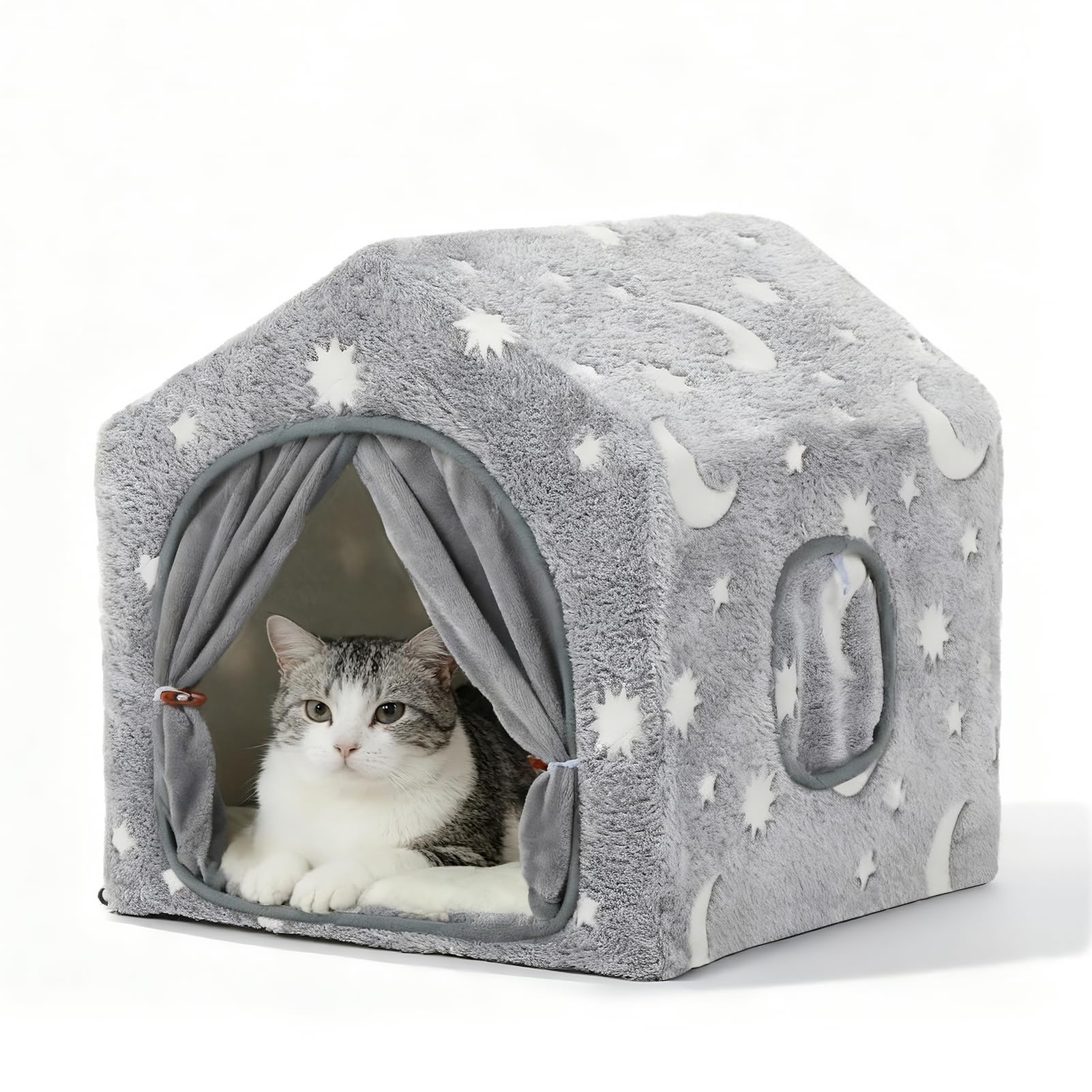
The curtain and flap are the reason to look at the Pelemmee. You can leave the flap up for airflow or drop it for a darker, warmer cave, which matters in a bedroom or a drafty corner. At 18 inches square, it is squarely a tiny-dog house; it is built for 8- to 20-pound pets, and that range feels right for the cushion and frame.

We think it is the best tiny-dog pick here because it gives you privacy control without a rigid box. The reversible cushion is an all-season touch, and the glow-in-the-dark stars are more than decoration: they make the house easy to spot in a dark room without turning on a light. The PVC frame keeps the shape, though it is still a soft house, not a crate.

The cover and cushion are washable, which is the difference between a cozy cave and a smelly one. The trade-off is size: a 20-pound dog is at the top of the range, and the 18-inch cave leaves little spare room. For a calm small dog that wants to burrow, it is a lovely little room.

Bottom line: For tiny dogs, we reach for the Pelemmee: the curtain-and-flap door gives you privacy control in an 18-inch cave that still looks playful.
2

Fancyango Large Dog House

Fancyango Large Dog House

Large dogs

Our Score 9.2/10
Check Price

Worth Noting

  • Hard plastic can crack if knocked
Floor
Elevated
Weight
26.7 lb
Material
Polypropylene (PP)
Dimensions
36.2"D x 38"W x 38"H
Read the full review

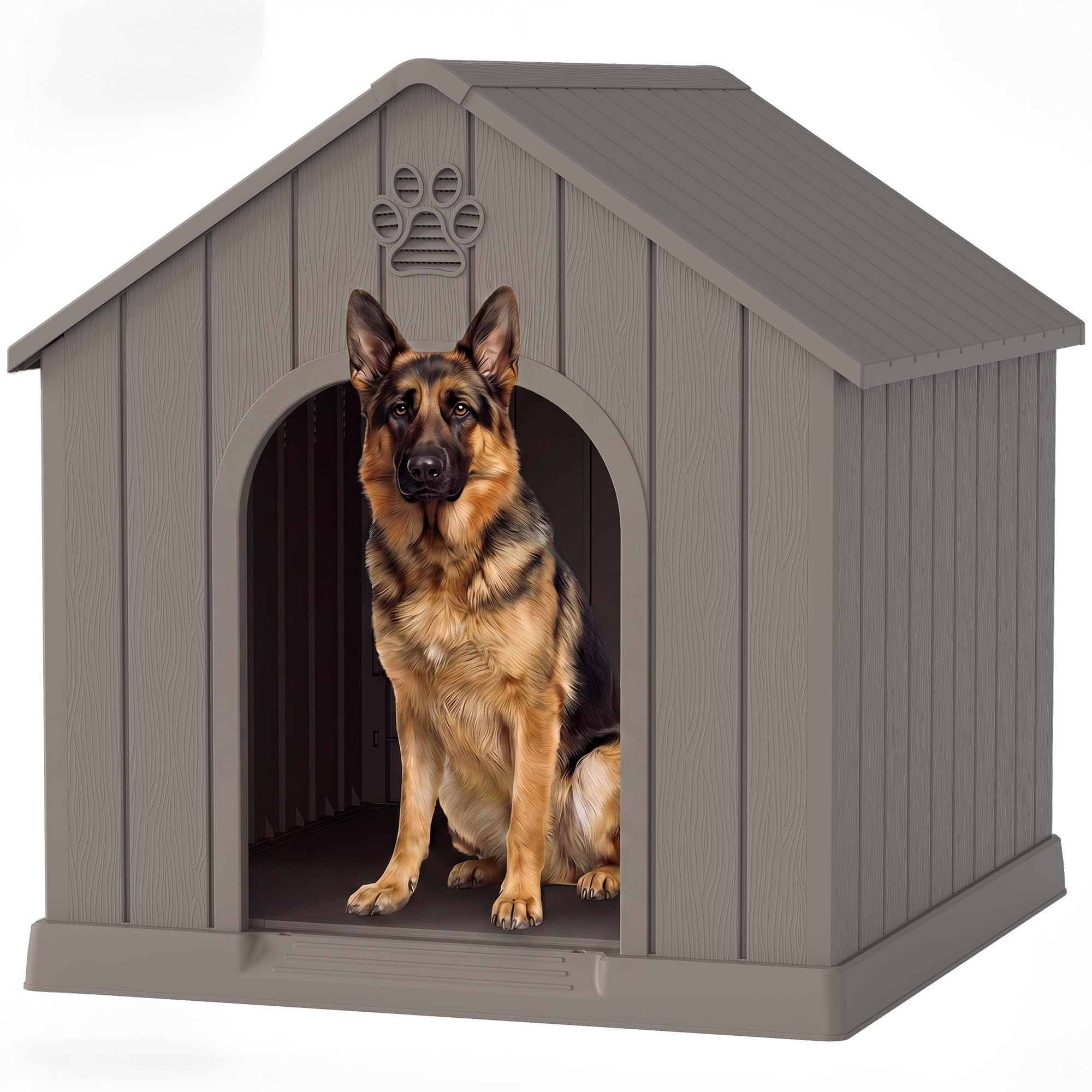
A 38-inch cube is a lot of dog house. The Fancyango earns its place when the dog is large enough that a soft cave is not an option, but it also asks for a chunk of floor space and a willingness to live with a plastic kennel in the room. This is not the house you tuck behind a chair.

The polypropylene shell is waterproof and wipes clean, and the elevated floor keeps the dog off a cold slab or a damp carpet. The air vents help with stale air, and the 26.7-pound weight is manageable for two people but not something you move around casually. The roof is the fiddly part of assembly, so build it where it will live rather than in the middle of the room. The smooth panels are also easy to wipe after a muddy walk.

We recommend it for large dogs and households that value wipe-clean practicality over furniture looks. In this group, it is the best hard-sided option for room, but it is not the one for a small apartment or a dog that needs a soft den. It is the choice for the dog that needs space, not the room that needs a showpiece.

Bottom line: The Fancyango is our large-dog answer: a wipe-clean, hard-sided house for a dog that needs room and a household with the floor space to give it.

3

Jiupety Pink Dog Tent

Jiupety Pink Dog Tent

Pint-size pups

Our Score 9.2/10
Check Price

Worth Noting

  • Cover can be tight over frame
Door
Curtain
Frame
15-side support frame
Dimensions
17"D x 17"W x 17"H
Size Range
8-16 lbs
Read the full review

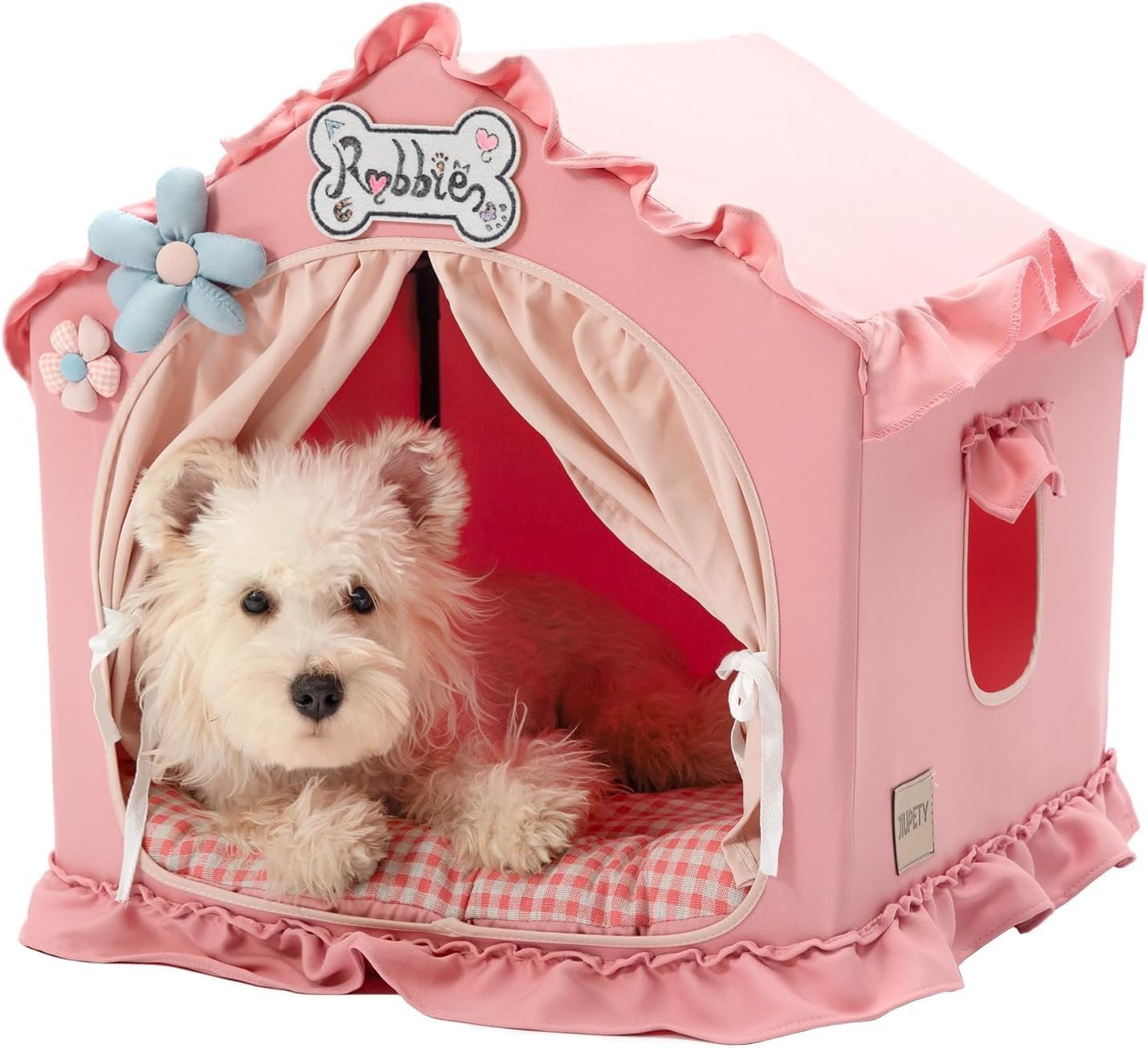
The little felt name plate and the pink canopy are the first things you notice, and that is fine: this is a dog house bought as much for the look as for the shelter. The 17-inch frame is built for a tiny dog, not a small one—the 8-to-16-pound range is the number to trust.

We find it a charming pick for a pint-size dog that likes to burrow. The 15-side frame keeps the tent from collapsing, the door curtain gives it a cave feel, and the double-sided cushion is washable. Once it is up, the size is the real boundary: a 17-inch cube is perfect for a Yorkie or a Chihuahua, but it will feel cramped to a 20-pound dog that likes to stretch.

For the right tiny dog, it is a sweet den that looks like a gift. The pink fabric is the point; if you want a house that disappears into a neutral room, this is not it. The cover and cushion come off for washing, which keeps the pretty look from becoming a pet-hair trap.

Bottom line: Our pick for a tiny dog and a household that wants a playful pink hideaway, not a roomy or chew-proof house.

4

Hovicaed Indoor Dog House

Hovicaed Indoor Dog House

Small dogs

Our Score 9.0/10
Check Price

Worth Noting

  • Fabric cover is not chew-proof
Cover
Removable and washable
Frame
Metal frame with foam walls
Style
Semi-enclosed cave
Dimensions
26"D x 20"W x 20"H
Read the full review

The 26-inch footprint is what makes the Hovicaed the one we reach for first. It gives a small dog enough depth to turn around and settle without turning the corner of a room into a kennel. The semi-enclosed shape is the other half of the appeal: it feels like a den, but the opening keeps air moving. For small dogs that want a cave with room to turn, it is the roomiest soft cave here that still has a washable cover and a frame that holds its shape.

We like the metal frame and foam walls because they keep the cave from collapsing when a dog leans on it, and the cover comes off for washing. The zipper is the part to watch: it carries the tension when the cover is pulled tight, so a strained zipper is the detail most likely to shorten the house's life. That is a manageable trade-off for a calm dog.

The 26-inch depth also leaves room for a favorite blanket without crowding the dog, and the removable cover means a muddy paw does not turn the whole house into a cleaning project. It fits a bedroom corner better than a hard-sided kennel, and it looks less utilitarian than a plastic box. We kept coming back to it because it gives a dog the den feeling without asking for a whole room.

Bottom line: For small dogs that want a cave with room to turn, the Hovicaed is the indoor house we recommend: structured, washable, and easy to live with.

5

Scnbom Pet Teepee

Scnbom Pet Teepee

Small pets

Our Score 8.8/10
Check Price

Worth Noting

  • Pole connectors can work loose
Style
Teepee
Cushion
Thick, non-slip
Material
Cotton canvas and pine poles
Pet Size
Up to 20 lbs
Read the full review

The teepee shape is the whole point of the Scnbom. It looks more like a piece of canvas furniture than a dog house, which is why it works in a living room or a bedroom where a plastic kennel feels out of place.

The cotton canvas and pine poles are light enough to move from room to room—the whole teepee weighs about 3.1 pounds—and the cushion has a non-slip back. The 20-pound limit is real; a 15-pound dog can fit, but this is not a house for a dog that likes to sprawl. The canvas is machine washable, which helps, and the cushion is thick enough to work as the dog's bed.

We like it as an aesthetic alternative for a calm cat or small dog, not as a rugged den. The teepee looks better than it feels in the hand, and that is the honest trade-off for the look. If your pet is gentle and you want something that looks good in the corner, it earns the spot. If you need a house for a chewer or a dog that launches itself in, choose the hard-sided Fancyango instead.

Bottom line: We like the Scnbom for a calm small pet when the house has to look good in the room, provided you can live with a fabric teepee rather than a rugged den.

Seven Months, Nine Dog Houses, and Four Dogs With Opinions

We started with roughly 40 indoor dog houses on the market and cut anything whose interior dimensions couldn't comfortably fit a 50-pound dog, anything built from board thin enough to flex under a cushion, and anything priced well past what the materials justified. Nine made the cut, and each one lived in a real home for seven months — a living room corner, a bedroom, a home office — with dogs ranging from a nine-pound terrier to a lab mix.

I assembled every unit alone using only the hardware in the box, timing the build and counting how many steps genuinely needed a second pair of hands, then checking whether the roof panels sat flush without shims and whether the whole thing wobbled when a dog leaned on it. Each house then went into the room where it would actually live and stayed there untouched for a week, because a house your dog won't walk into is just furniture. We noted which dogs entered on their own and which needed a treat trail. Appearance got judged the slow way: months of looking at the thing from the sofa in a normal, slightly cluttered room.

Fit got its own pass. We measured the interior footprint against each dog's curled-up length, then watched them turn around inside, lie down, and climb back out. Houses with a doorway too narrow or a ceiling too low were eliminated quickly, no matter how good they looked in photos.

Over the seven months we wiped down exteriors, washed every cushion cover twice, checked hinges and roof panels for wobble, and let the chewers work on the door frames. Cushions were pressed and re-pressed to see how fast they flattened. At the end we weighed what each house cost against how often the dog actually chose it over the sofa.

How to Choose the Right Indoor Dog House

Measure the Dog and the Floor Space

An indoor dog house has to fit two things: the dog and the room. A soft cave around 18 inches square is a tiny-dog house; a 26-inch cave is roomier but still a small-dog shelter; a hard-sided house around 38 inches is a large-dog commitment. Measure the dog standing and curled up, then tape the footprint on the floor. Leave enough clearance to reach the cushion and walk past. The trap is treating a low weight rating as a small footprint—18-inch caves and 38-inch plastic houses occupy very different corners.

Choose a Cave, Teepee, or Hard-Sided House

Soft caves and teepees give a dog privacy and a furniture-friendly look; hard-sided plastic houses give more room and wipe-clean surfaces for large dogs or messy sleepers. The trade-off is durability: fabric can be chewed, zippers can strain, and teepee poles can work loose. If your dog chews or launches into the house, choose hard-sided. If your dog is calm and likes to burrow, a soft cave is the better fit.

Check the Frame, Cover, and Airflow

A soft house needs a frame that keeps its shape when the dog leans on it, a cover that comes off for washing, and a door that lets you balance privacy with airflow. Look for a metal or PVC frame and a removable cushion; a curtain or flap is useful in a draft but should not trap stale air. For a hard-sided house, vents and an elevated floor do the same work. We put more weight on a washable cover and a frame that stays upright than on a fancy door flap, because those are the details that decide whether the house gets used.

Plan Assembly and Placement

Fabric houses usually go together without tools; hard-sided plastic houses can take two people and a clear space, especially when the roof panels are involved. Build a hard-sided house where it will live rather than assembling it in one room and dragging it to another. Check doorway clearance and leave a wall gap for airflow. If the house is going in a bedroom, think about the sound of a plastic shell being bumped in the night as well as the look.

Frequently Asked Questions

Final Verdict

We recommend the Hovicaed for small dogs: it is the roomiest soft cave here that still has a washable cover and a frame that holds its shape. For a tiny dog under 20 pounds, the Pelemmee's curtain-and-flap door and 18-inch cave make it the cozier choice; for a large dog, the Fancyango's hard-sided, wipe-clean shell is the one that fits the job. If the house has to look like furniture, the Scnbom teepee is the aesthetic pick, with the caveat that it is a gentler shelter.