Training & Behavior

Best Dog Treat Pouches of 2026

A treat pouch looks simple until you're halfway around the block with a fistful of kibble and a bag that won't stay closed. The right one keeps rewards within reach, stays put on your waistband, and doesn't leave a trail of crumbs in the car. I've used everything from a ziplock in my jacket to a bulky training vest, and the difference comes down to how the closure works, how the belt clip attaches, and how much it holds without swinging around. What it really fixes is the fumbling — the pause between asking your dog for a behavior and actually rewarding it.

Over four months, my team and I tested 16 pouches on daily walks, in obedience classes, and on weekend hikes. We loaded each with kibble, freeze-dried liver, and shredded cheese, then watched what happened at the belt clip, the closure, and the seams. Capacity is a Goldilocks problem: too small and you're refilling mid-session, too large and the pouch bounces. The picks below are the ones that held up.

1

eBasics Treat Pouch

Top Pick
eBasics Treat Pouch

Everyday training

Our Score 9.4/10
Check Price

Worth Noting

  • Plastic clips holding the pouch to the belt can work loose
Weight
4.9 oz
Closure
Magnetic with cord pull
Capacity
3 cups
Belt Length
50 in, fixed to pouch
Read the full review

A training session is a race between the cue and the reward, and the pouch is usually what loses it. The eBasics gets that part right with the plainest solution here: a magnetic mouth that parts with a thumb while your other hand holds the leash, then seats itself shut as your fingers come out. Of every closure in this group, that self-closing flap is the one that kept a session moving.

Three cups is more capacity than one session needs, which is exactly why it works. We fill it at the start and stop thinking about treats, and the black lining shows the last few pieces at the bottom instead of hiding them. The 900-denier shell takes a wipe, and the zip pocket up front keeps the clicker and a roll of bags away from the food.

That front pocket is bigger than it looks — wide and deep enough to swallow a spare leash or a fistful of treats — so the main compartment stays food and the odds and ends stay out of it.

The belt is the honest compromise. It is sewn to the pouch rather than clipped on, so getting ready is a two-step fanny-pack move, and the strap tops out near 50 inches — worth a tape measure if you are broad through the waist. What that buys is a pouch that sits exactly where you put it for a full session, which the clip-only designs here do not manage quite as well.

Bottom line: The best default for regular training: a magnetic mouth that seals itself one-handed, three cups of capacity, and a belt that keeps it steady through a whole session.
2

Gobeigo Magnetic Treat Pouch

Gobeigo Magnetic Treat Pouch

Compact training kit

Our Score 9.4/10
Check Price

Worth Noting

  • Front pocket will not take a phone
Closure
Two magnetic pairs
Capacity
2 cups
Dimensions
6.5 x 2 x 5.5 in
Wear Options
Belt 25-47 in or metal clip
Read the full review

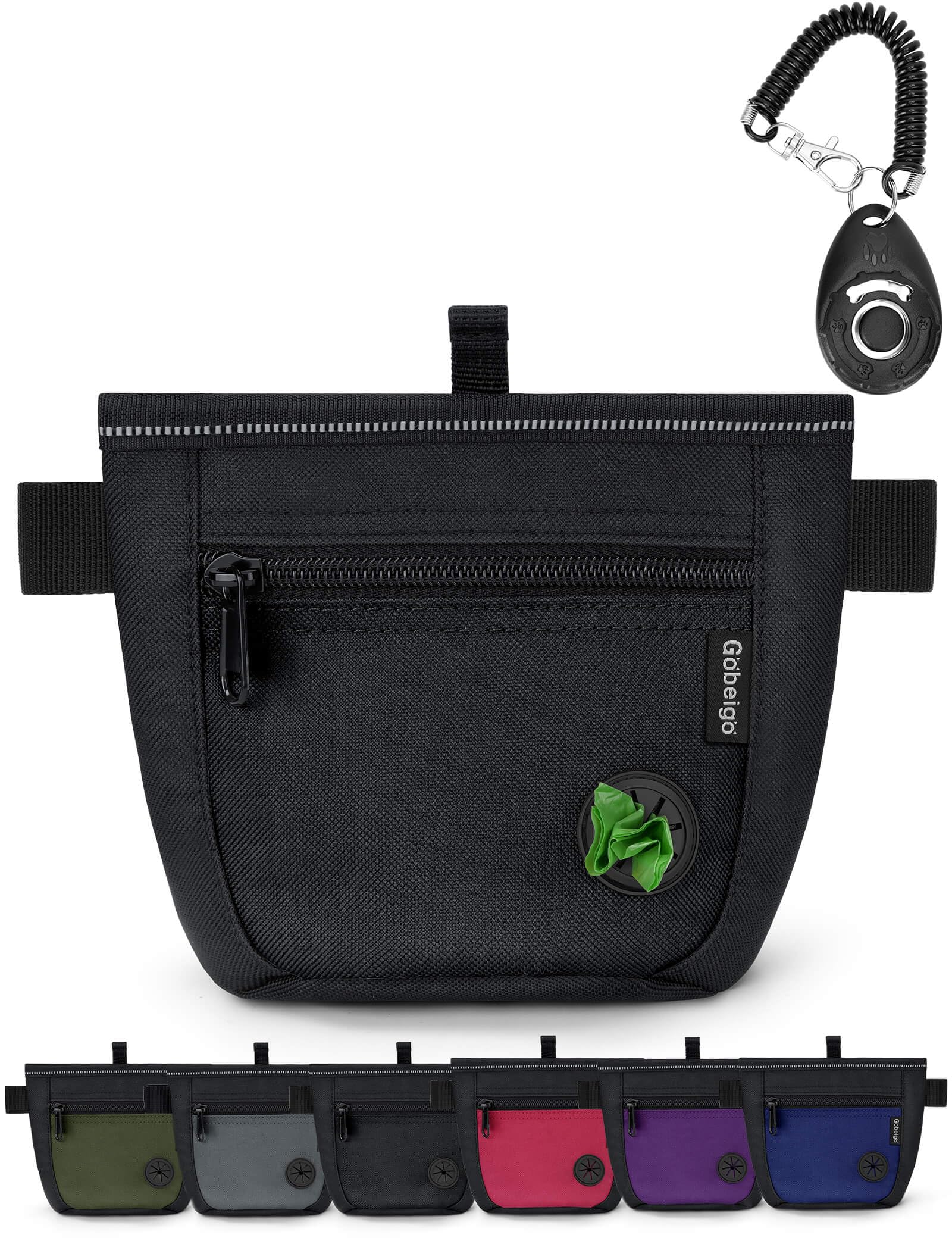
Two pairs of magnets, one toward each end of the mouth, are what separate the Gobeigo from the single-magnet pouches here. Take your hand out and the flap settles flat instead of folding over at a corner and staying there. It is a small thing that decides whether the pouch is still sealed when you bend down to pick up a leash.

Six and a half inches wide and two inches deep, it holds two cups — a full session with room to reach past the top layer — and sits flat enough on the hip that you stop noticing it. The lining is water-resistant, which matters more than the phrase suggests: a damp treat wipes out and leaves nothing behind, and after two weeks of cheese treats we could not smell the bag.

The belt detaches and runs 25 to 47 inches, so the same pouch rides at the waist on a no-pocket day and hangs from the metal clip on a jeans day. There is a zip pocket in front and a clicker in the box. Worn on the belt for class and clipped to a pocket for a recall session in the yard, it does two jobs without doing either one badly.

Bottom line: The compact pouch we point to when you want a magnetic mouth, a detachable belt, and a belt clip in one bag that disappears on your hip.

3

LANNEY Dog Treat Pouch

LANNEY Dog Treat Pouch

Long walks

Our Score 9.4/10
Check Price

Worth Noting

  • Heaviest pouch here at 9.6 ounces
Weight
9.6 oz
Closure
Drawstring with cord lock
Pockets
Mesh front plus bag dispenser
Wear Options
Belt, belt clip, shoulder strap
Read the full review

Some pouches are for a ten-minute session in the kitchen; the LANNEY is for the two hours after it. The main compartment takes a day of kibble, there is a mesh pocket across the front, a slot and a dispenser opening for waste bags, and room left for keys and a phone — a walk's worth of gear in one place instead of spread across four pockets.

It comes with a waist belt, a metal clip, and a shoulder strap, and the strap is the part we appreciate most. With a leash in one hand and a clicker in the other, carrying the pouch across your body beats adding another band to a waist that is already working.

The drawstring asks for patience. Press the cord lock and pull, and the mouth opens wider than any magnetic pouch here — a whole hand goes in without a scrape — but closing it takes a second deliberate pull, and mid-session, with a dog waiting on its release, that pull is the thing you skip. This is the pouch for someone who opens it once at the start of a walk and again at the end, not for clicker timing.

Treat it as a treat-and-phone bag rather than a hiking pack. The belt strap and the front zip pocket are where this one shows wear first, and both sit right where a stuffed pouch puts its stress; keep the load light and the seams have an easier life. What the bulk buys is the most storage in this set, plus a clicker with a wristband in the box.

Bottom line: For long walks and full-day outings we point people here: it swallows treats, bags, keys, and a phone, and the shoulder strap keeps it off a crowded waistband.

4

OllyDog Goodie Treat Bag

OllyDog Goodie Treat Bag

Everyday carry

Our Score 9.2/10
Check Price

Worth Noting

  • No waste bag dispenser built in
  • Compact body holds a session, not a day
Closure
Magnetic
Warranty
Lifetime
Dimensions
4.25 x 5.25 x 3 in
Wear Options
52 in waist belt or belt-loop clip
Read the full review

Three recycled plastic bottles go into the fabric of every Goodie, which is the sort of detail that gets a bag bought once and then has to earn its place on every walk after. Here it does: the nylon is water-resistant, the clip takes a belt loop in one motion, and it is light enough that you stop noticing which hip it is on.

It hangs from a 52-inch waist belt or clips straight onto a belt loop, and the clip is the one we used most — one motion on, one motion off, no buckle to fight when the dog is already at the door. The magnetic mouth opens with one hand and holds shut in between.

The lifetime warranty is what makes the premium easy to accept. None of the others here carry one, and a treat bag is exactly the kind of purchase you want covered for longer than a season.

What we did not expect to care about is how it looks. The Raven fabric reads as a small bike bag rather than dog gear, which matters the morning you walk into a coffee shop with it still on your belt.

Bottom line: A well-made, light pouch for someone who wants one bag that clips on and stays on, backed by a lifetime warranty.

5

heouvo Silicone Treat Pouch

heouvo Silicone Treat Pouch

Messy treats

Our Score 9.0/10
Check Price

Worth Noting

  • Tight mouth for larger hands
Closure
Magnetic
Capacity
1.67 cups
Material
Food-grade silicone
Dimensions
5 x 4 x 2 in
Read the full review

Silicone is the whole argument for this one. Where the fabric pouches here need a wipe and a night to air, the heouvo's food-grade shell goes under the tap and comes back clean, and it does not hang on to the smell of liver the way cloth does. It is the pouch we reach for after a session with anything moist.

Five by four by two inches holding about one and two-thirds cups: a session and a bit for a spaniel, a top-up for a big dog working for kibble. The waist belt adjusts and the pouch sits close against the hip, which is the whole point of a compact bag — nothing swinging while you walk a figure eight.

The size is what makes it useful as a second pouch. One for the kitchen and the garden where the mess is, one for walks, and no argument about which one needs washing. For a small dog and a short session it stands on its own, and the clicker in the box saves buying one separately.

Bottom line: The easiest of these to keep clean, and a smart fit for small dogs, short sessions, and anyone who trains with wet or smelly treats.

6

Chuckit! Treat Tote

Chuckit! Treat Tote

First pouch

Our Score 9.0/10
Check Price

Worth Noting

  • Drawstring cord frays with steady use
Weight
1.6 oz
Closure
Drawstring
Capacity
2 cups
Attachment
Belt clip only
Read the full review

There is nothing clever about the Chuckit! Treat Tote, which is why it is the least expensive pouch here and still a sensible first buy. A tall, narrow bag of pack cloth, a drawstring at the top, a metal clip on the back: it holds two cups, weighs 1.6 ounces, and does the one job — hand in, treat out — without any fuss.

The rip-stop liner is the underrated part. A chunk of hot dog, a fistful of cheese, a damp training treat: the coated cloth takes them and wipes down, where an unlined bag would be soft and sour by the end of the week. It also packs flat into a coat pocket when you are not wearing it, which is more than we can say for the structured pouches here.

It needs something to clip to, though — there is no belt in the box, so it hangs from a waistband, a pocket edge, or the strap of another bag. On a coat pocket during a puppy class it does everything the belt pouches do, minus the belt, and it is the one to hand someone who is not sure yet whether they will keep training.

Bottom line: The cheapest, simplest pouch here and still a sensible first buy: two cups, a washable liner, and a clip that grips a waistband.

How We Tested Dog Treat Pouches

We started by pulling together the most-recommended pouches from training forums, retailer best-seller lists, and a few favorites from our own dog-walking routines. We filtered for reasonable price, useful capacity, and the attachment and closure styles that show up most in real training: belt clips, waist straps, magnetic flaps, drawstrings, and zippered tops. That left us with 16 pouches, which we tested over four months on daily walks, in obedience classes, and on weekend hikes.

Each pouch got clipped to jeans, leggings, and a training apron, then worn through sit-stand-sit sequences and a short jog to see whether the belt clip held or the pouch swung. We practiced opening and closing every closure one-handed while holding a leash — the real test of functionality — then turned each pouch upside down and shook it to see what spilled. We filled them with a measured cup of kibble, freeze-dried liver, and shredded cheese, noting how much fit, how easy it was to reach in, and whether crumbs worked into seams.

Every week we checked stitching, fabric wear, and hardware. We looked for frayed seams, bent clips, weakened magnets, and zippers that caught. Durability mattered most at the closure and attachment points, since those are the parts that fail first. The pouches that rose to the top opened smoothly, held a full training session's treats, stayed put on the waistband, and kept contents secure — without turning a simple reward into a two-handed wrestling match.

How to Choose Dog Treat Pouches

Magnets, drawstrings, and the half-second that matters

A magnetic flap opens with a thumb and closes itself as your hand comes out, which is why it wins for leash work: your other hand is busy and the pouch reseals without being asked. A drawstring with a cord lock opens wider — a whole hand disappears into the biggest ones — but closing takes a second deliberate pull, and mid-session that pull is the first thing you skip. What counts is not the number of magnets but whether the flap lands shut from a slightly off-centre drop instead of folding over at one corner.

The trap is a magnet strong enough to need two hands. Test it before the first session: if you cannot get a treat out with your weaker hand while holding a leash, it is the wrong pouch for training, however pleasant it is on a walk.

Capacity, and whether your hand fits

Cup counts get quoted as though they settle the question, but the opening matters more. Somewhere between one and a half and two cups covers a session for most dogs; three cups is for a big dog, a long class, or a household that would rather refill once a day. A two-cup fabric pouch with a wide mouth is easier to use than a silicone one of the same capacity with a tighter neck, especially if you have large hands.

Buy for the dog in front of you. A puppy working for kibble in ten-minute bursts does not need a day bag, and a full pouch of treats left in a warm car all week helps nobody.

How it rides: belt, clip, or strap

A waist belt works over anything, including leggings with no pockets, and the belts in this set run from about 25 to 52 inches — check the top of that range against your own waist before ordering, because a fixed belt cannot be swapped for a longer one. A belt clip needs a waistband or a pocket edge, and takes one second to move from jeans to a coat. A shoulder strap is for a heavy load on a long walk, when another band around the waist is one thing too many.

Fixed versus detachable is the detail people miss. A pouch sewn to its belt goes on like a fanny pack — steady, but all or nothing; a detachable one wears at the waist on Monday and hangs from a pocket on Tuesday.

Pockets, clickers, and what you will actually carry

Waste bag slots and dispensers earn their place if you pick up on walks; on a training-only pouch they are dead weight. A front zip pocket is usually a bag-and-clicker pocket rather than a phone pocket, so check the listed dimensions against your phone before counting on it. A clicker in the box is a convenience, not a reason to choose: they cost very little on their own.

Then look at what touches the treats. Coated fabric and silicone wipe clean and resist odor; unlined nylon does neither, and a pouch that smells of old cheese is one you stop carrying.

Frequently Asked Questions

Final Verdict

For most people the eBasics is the one to buy: a magnetic mouth that closes itself behind your hand, and enough capacity that you stop thinking about treats halfway through a session. The requirement that changes it is carrying. If you want one pouch that moves from a waist belt to a jeans clip, take the Gobeigo; if a walk means bags, keys, and a phone as well, take the LANNEY.