Health & Wellness

Best Hot Spot Treatments for Dogs of 2026

You hear it before you see it: a wet, rhythmic slurp at 2 a.m., and by morning there's a raw, oozing patch on your dog's flank that wasn't there yesterday. Hot spots bloom fast — a small itch turns into an angry, moist circle within hours, and every lick makes it worse. A treatment won't replace a vet visit for a bad one, but the right spray, gel, or wipe calms the itch, dries the surface, and gets your dog comfortable again while the skin knits.

I've spent the past three months living with 14 of these on my own two dogs — a spot-prone retriever mix and a very patient terrier — and the differences show up fast. Some mists dry clean; others leave a sticky film that catches every dust bunny, and a couple smell so strongly of tea tree that the dog sulks off. One thing worth knowing: hot spots heal from the edges in and fur comes back last, so judge a treatment on how the skin looks, not on whether the coat has caught up. These are the ones we kept reaching for.

1

Zymox Topical Hot Spot Spray

Top Pick
Zymox Topical Hot Spot Spray

Fast itch relief

Our Score 9.2/10
Check Price

Worth Noting

  • Small 2-ounce bottle
Form
Spray
Size
2 fl oz
Lick Safety
Safe if licked, per label
Active Ingredients
1% hydrocortisone, LP3 enzyme system, aloe vera
Read the full review

Zymox is the one we reach for first when a hot spot is still angry and the dog is already trying to lick it. The formula pairs 1% hydrocortisone with an LP3 enzyme system and aloe vera, and the label says it is safe if a pet licks the application site. That combination is why it earns the top spot: it goes after both the itch and the surface germs that keep a hot spot rolling, and it does not require a full-body bath or a pre-cleaning routine.

The no-pre-cleaning instruction is a real convenience when the spot is tender and the dog is already unhappy about being touched. We also like that the spray is meant to go directly onto the skin; you can part the coat, give a short burst, and let it dry. The 2-ounce bottle is easy to keep in a first-aid kit, though it disappears faster on a large or stubborn area.

The trade-off is that this is still a treatment, not a force field. A dog that can reach the spot will lick at it, and the label still calls for preventing that, so a cone or a light cover belongs in the plan.

If the skin is clearly infected, yeasty, or spreading, Vetnique's chlorhexidine-and-ketoconazole spray is the more targeted choice. For the common raw, itchy spot that has not turned into a bigger skin problem, Zymox is the balance we prefer: strong enough to matter, gentle enough to use without a fight.

Bottom line: We recommend Zymox as the default hot spot spray for a raw, itchy spot: the no-sting hydrocortisone and enzyme formula is easy to apply and labeled safe if licked, though the bottle is small.

2

Silver Honey Hot Spot Spray Gel

Silver Honey Hot Spot Spray Gel

Sensitive raw spots

Our Score 9.2/10
Check Price

Worth Noting

  • Leaves a sticky residue
  • Consistency can vary
Form
Spray gel
Size
8 fl oz
Formula
Honey-based spray gel
Application
Touch-free
Read the full review

Silver Honey is a spray gel, which sounds like a compromise until you use it on a sore that is too tender to touch. It goes on touch-free, then thickens enough to stay on the spot instead of running down the leg. The honey-based formula is meant to soothe hot spots, wounds, rashes, and paw irritation, and the spray-gel format is the reason we include it.

We recommend it for a raw, sensitive area where a plain spray drips away and a jar of gel hurts to apply. It is not the tidiest product here: the gel leaves a sticky residue, and the consistency can be thicker or runnier than expected. The honey scent is pleasant to some noses and too sweet to others.

The 8-ounce can is larger than most, so it suits a dog with a recurring spot or a household that wants one bottle for several animals. A little goes far, but the stickiness is real, especially on long fur. If your dog hates anything tacky in the coat, choose a plain spray instead.

Bottom line: We recommend Silver Honey for a raw, sensitive hot spot that needs touch-free application; the spray gel stays put, but it leaves a sticky residue.

3

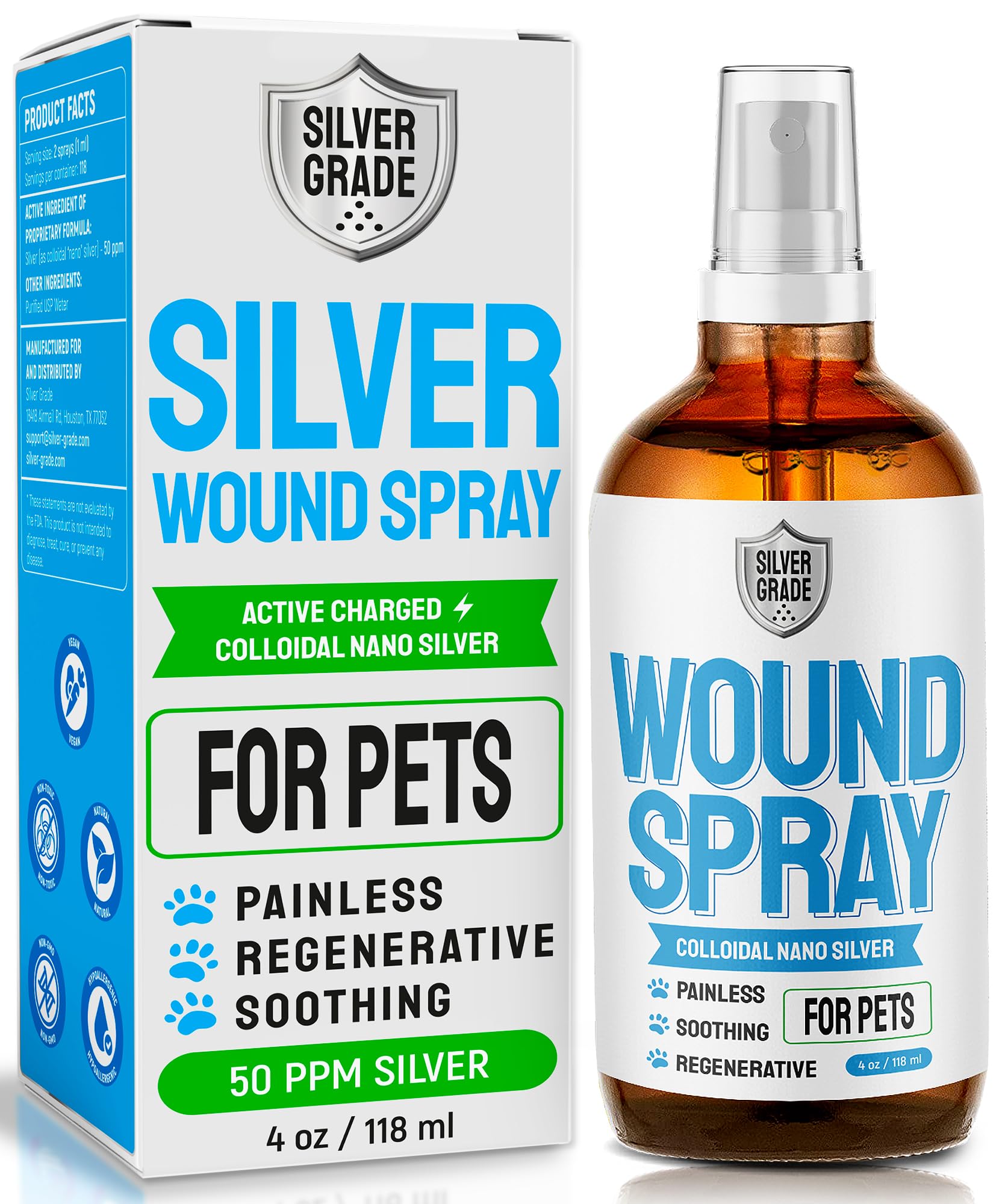
Silver Grade Wound Spray

Silver Grade Wound Spray

Simple, scent-free

Our Score 9.0/10
Check Price

Worth Noting

  • Not a medicated infection treatment
Form
Spray
Size
4 fl oz
Scent
Odorless
Active Ingredients
Colloidal silver, deionized water
Read the full review

Silver Grade is the simplest formula in this group: colloidal silver and deionized water, nothing else. It is odorless, non-staining, and thin enough to spray directly on a hot spot or a scrape without leaving a perfumed cloud in the room. That simplicity is the appeal.

It works best as a gentle first-aid spray for mild irritation, a small scrape, or a spot you are keeping clean while you wait for a vet appointment. The label describes it as complementary to veterinary care, and that is the right way to think about it: it is not a medicated itch or infection treatment.

We recommend it for a dog with sensitive skin or a household that wants a fragrance-free, low-ingredient spray, not for a hot spot that is already infected or spreading. The 4-ounce bottle is easy to tuck into a kit, and the lack of scent makes it easy to use indoors. It is a support product, not the heavy hitter.

Bottom line: We recommend Silver Grade as a simple, scent-free first-aid spray for mild irritation; the two-ingredient formula is gentle, but it is not a heavy-duty infection treatment.

4

Pet MD Topical Spray

Pet MD Topical Spray

Skin folds

Our Score 9.0/10
Check Price

Worth Noting

  • Mist can drift during application
Use
Skin folds and between baths
Form
Spray
Size
8 fl oz
Claim
Non-stinging
Read the full review

Pet MD is the one we reach for when the hot spot is in a crease rather than out in the open: a skin fold, an armpit, or between the toes. The spray is meant for topical cleansing between baths, and the non-stinging claim makes it easier to use on those tender spots. The 8-ounce bottle is easy to aim and does not need to be rinsed off.

It is not a medicated knockout. The formula is less specific than our targeted picks, so we treat it as a general cleansing spray rather than a bacteria-and-yeast treatment. That is fine for mild redness or a fold that needs cleaning, but it is not the bottle to reach for when the skin is oozy, smelly, or spreading.

The pump is handy, though the mist can drift where you do not want it, especially on a wriggling dog. The spray is easiest to use on a small area with the nozzle close to the skin, rather than a broad cloud from a distance.

We recommend Pet MD for a dog with fold-related irritation or a mild hot spot that needs cleaning between baths, not for a deeply infected sore. If the skin is raw and spreading, choose a targeted medicated spray and call your vet.

Bottom line: We recommend Pet MD for cleaning fold-related irritation and mild hot spots between baths; it is easy to apply, but the formula is less targeted than our medicated picks.

5

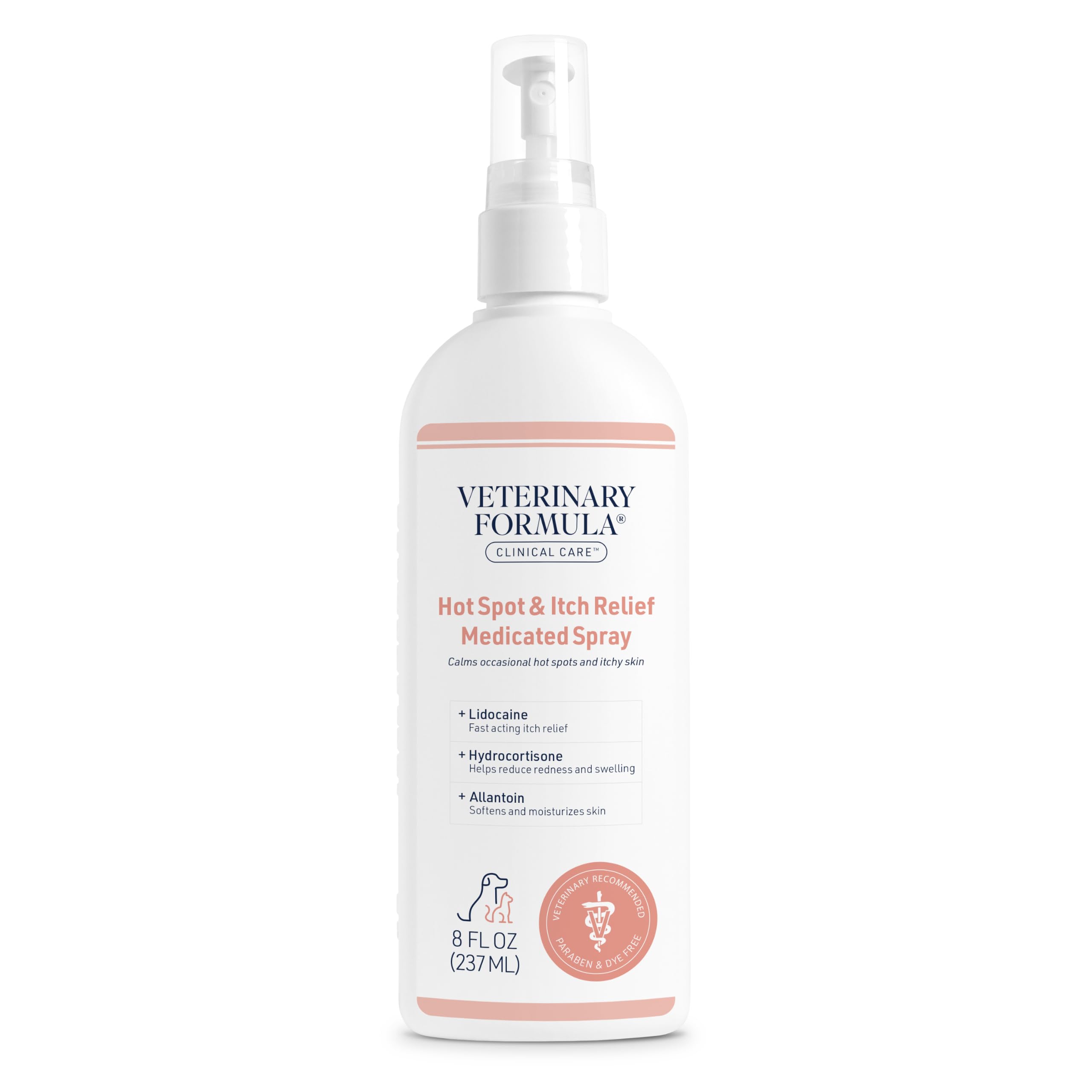
Veterinary Formula Clinical Care Hot Spot Spray

Veterinary Formula Clinical Care Hot Spot Spray

Budget multi-symptom

Our Score 8.8/10
Check Price

Worth Noting

  • Labeled for pets over 12 weeks
Form
Spray
Size
8 fl oz
Age Limit
Pets over 12 weeks
Active Ingredients
Lidocaine, hydrocortisone acetate, allantoin, wheat germ oil
Read the full review

Veterinary Formula is the bottle that makes the most sense for a multi-dog house or a hot spot that needs repeated spraying. It comes in an 8-ounce size and combines lidocaine, hydrocortisone acetate, allantoin, and wheat germ oil, so it is aimed at itching, scratching, and the dry, flaky skin around a hot spot. The spray is labeled for dogs and cats over 12 weeks and can be used between baths.

We recommend it when you need broad coverage without rationing sprays. The formula calms a lot of everyday itch, and the bigger bottle is easier to keep using for several days. The catch is comfort: the spray can sting or make sensitive skin itchier, especially on broken skin, so test a small area first and stop if the dog guards the spot. The trigger also delivers a firm, wide spray, which can startle a nervous dog.

Against Zymox, this one gives you more liquid for less money and a stronger medicated feel. We still prefer Zymox on a raw, newly opened spot because the no-sting, lick-safe formula is easier to live with. For a crusty patch on a short-haired dog, or for a household treating more than one pet, Veterinary Formula earns its place.

Bottom line: We recommend Veterinary Formula when you need an affordable, large bottle for broad or repeated use; it calms itch with lidocaine and hydrocortisone, but test sensitive skin first.

6

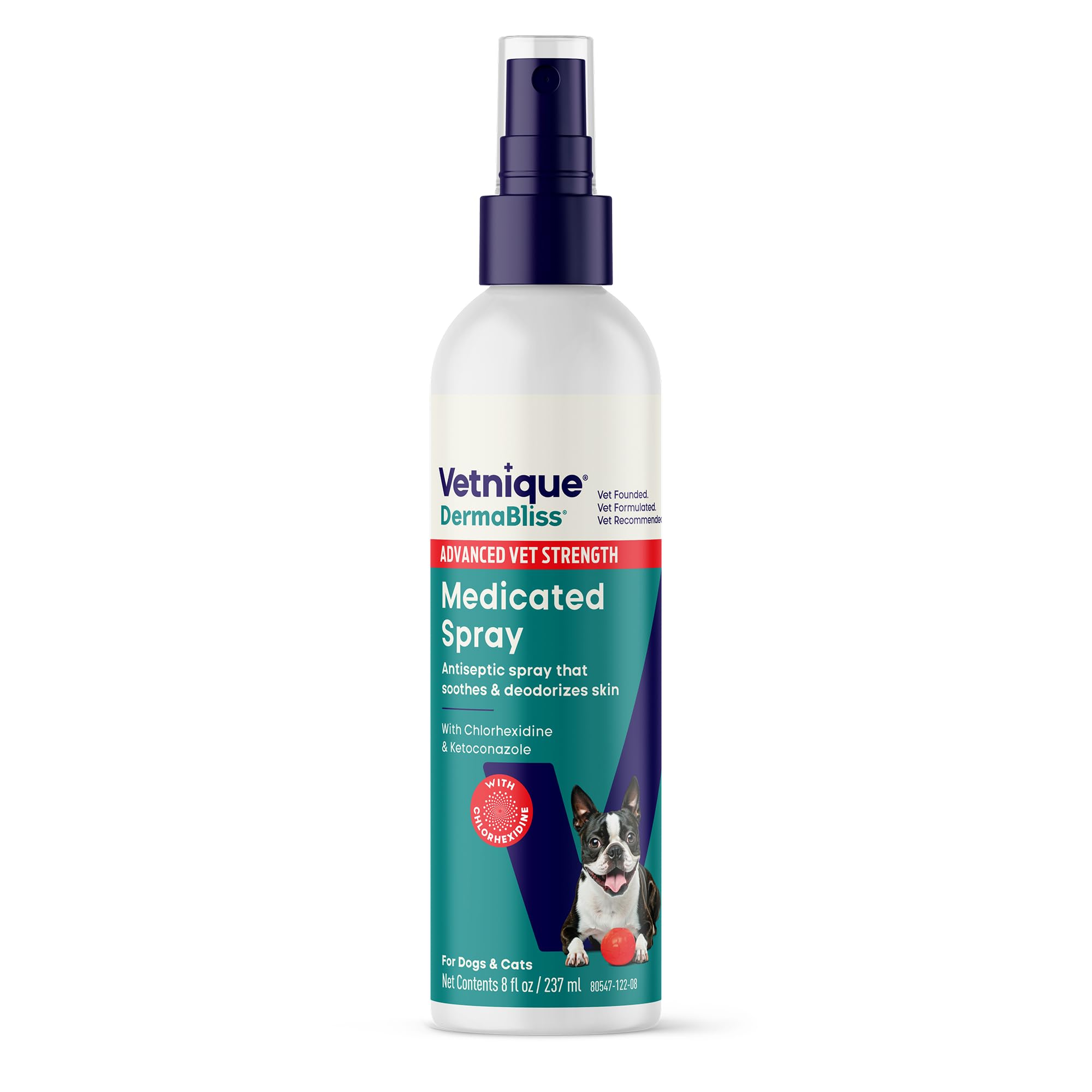
Vetnique Dermabliss Medicated Spray

Vetnique Dermabliss Medicated Spray

Bacterial or yeast

Our Score 8.8/10
Check Price

Worth Noting

  • Stronger scent than other picks
  • Not the first choice for simple itch
Form
Spray
Size
8 fl oz
Alcohol-free
Yes
Active Ingredients
2% chlorhexidine, 1% ketoconazole
Read the full review

Vetnique Dermabliss is the pick for a hot spot that looks infected or yeasty rather than simply itchy. It pairs 2% chlorhexidine with 1% ketoconazole, two actives that go after bacteria and yeast, and the alcohol-free formula adds aloe so it does not burn on contact. That targeted combination is why we recommend it for the angry, smelly, oozy spot.

The 8-ounce bottle is generous, and the no-sting claim holds for most dogs, but this is still a medicated spray. The scent is stronger than the other picks here, and sensitive skin can still react. Test a small area, keep it out of the eyes, and stop if the skin looks more inflamed after application.

This is not the first bottle for a generic itchy spot. Zymox is gentler for a raw, newly opened spot, and Veterinary Formula is easier on the budget. Vetnique earns its place when the skin looks infected, smells yeasty, or keeps flaring in the same fold or paw.

The spray is alcohol-free, which matters on raw skin, and the formula is designed for paw pads, ear flaps, skin folds, and wrinkly areas as well as flat hot spots. That makes it more versatile than a spot-only gel, as long as the problem is actually bacterial or yeast-driven.

Bottom line: We recommend Vetnique when a hot spot looks infected or yeasty; its chlorhexidine and ketoconazole pair is targeted and no-sting, but the scent is stronger than most.

7

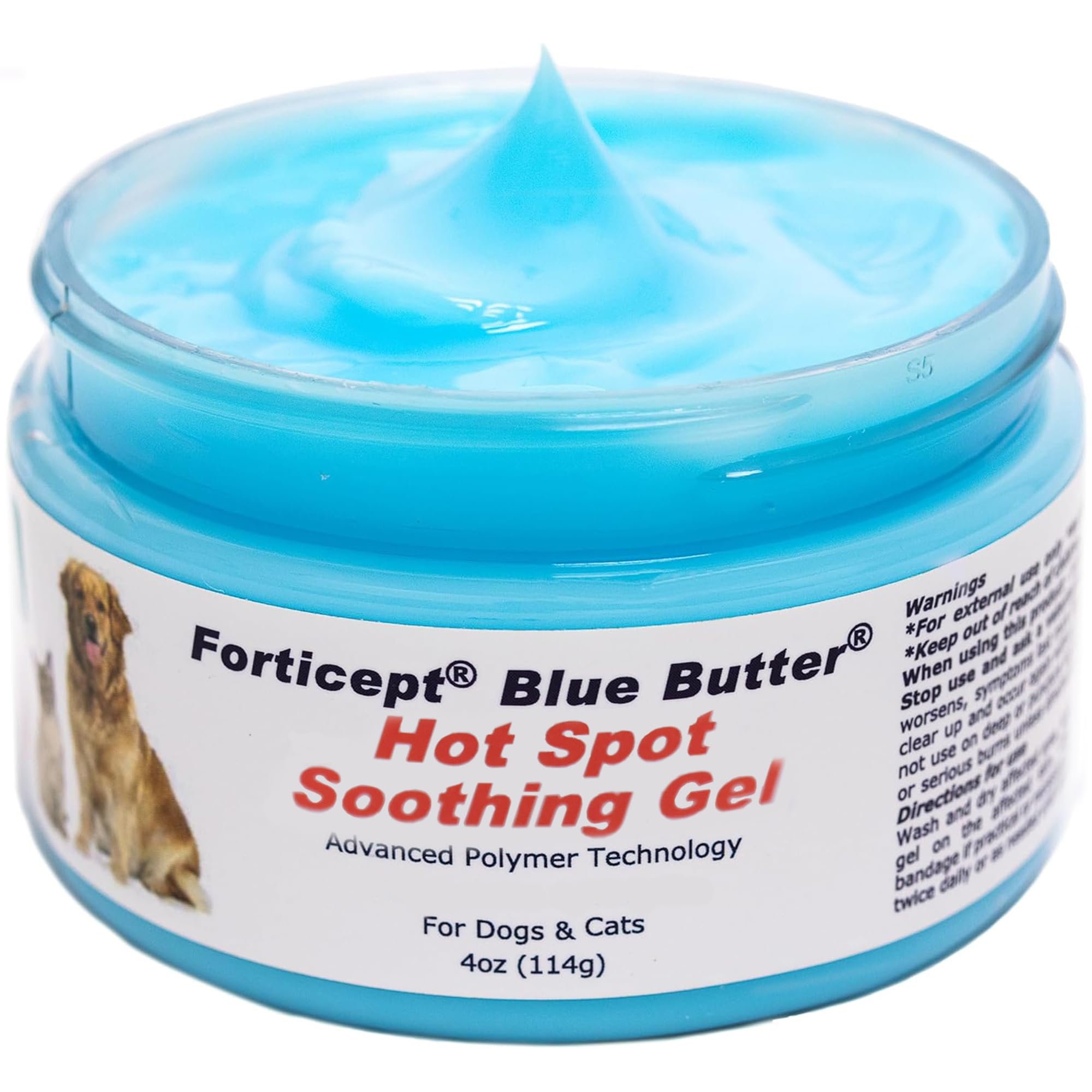
Blue Butter Hot Spot Gel

Blue Butter Hot Spot Gel

Stubborn spot gel

Our Score 8.6/10
Check Price

Worth Noting

  • Blue tint can color pale fur
  • Thyme scent is strong and divisive
Form
Gel
Size
4 oz
Color
Blue
Key Ingredient
Thyme oil
Read the full review

Blue Butter is the odd one out in this group, and that is why we like it. It is a thick blue gel rather than a spray, so it sits where you put it on a defined hot spot, especially one on a leg or tail where a thin spray runs off. The thyme scent is noticeable, and the color is unmistakable.

The gel is easy to dab on with a finger or a swab, and the directions call for a thin layer twice daily. A little goes a fair way, but the jar is not the tidiest thing to carry in a pocket. You still need to keep the dog from licking it off, because the gel stays visible and a determined dog will go after it. The blue tint can show up on pale fur around the spot, and the thyme smell is one of those scents a household either likes or doesn't.

We recommend it for a stubborn, well-defined hot spot where a spray keeps missing, and for a dog that will hold still for a quick dab. It is not the cleanest option, and a large, weepy area is easier to cover with a spray or spray gel. The staying power is the point: the gel does not vanish into the coat the way a mist can.

Bottom line: We recommend Blue Butter for a stubborn, well-defined hot spot where a spray runs off; the thick gel stays put, though the blue tint and thyme smell are noticeable.

8

Vetericyn Plus Hot Spot Spray

Vetericyn Plus Hot Spot Spray

Lick-prone dogs

Our Score 8.6/10
Check Price

Worth Noting

  • Milder than the medicated picks
Form
Spray
Size
8 fl oz
Lick Safety
Safe if licked, per label
Active Ingredient
Hypochlorous acid
Read the full review

Vetericyn takes a different route: hypochlorous acid, a pH-balanced solution the label says is safe if licked. That makes it the spray we suggest for a dog that will not sit still for a medicated product, or for a household that wants a gentle first pass before a vet visit.

It is not the strongest option for a raging infection. The results are more mixed than our top pick's: some hot spots calm down, while others need something more targeted. We treat it as a mild-spot and lick-prone-dog spray, not as a replacement for an antibacterial when the skin is oozy or spreading.

The 8-ounce bottle lasts through repeated use, and the lack of sting makes it easy to apply several times a day as the label allows. The value is in the peace of mind: you can spray a spot without worrying as much about licking. It is not the fastest-acting product in this group, and a severe hot spot will need more.

We recommend Vetericyn for a lick-prone dog with a mild, angry spot, especially when a medicated spray turns every application into a wrestling match. If the spot is already infected or spreading, choose Vetnique or call your vet.

Bottom line: We recommend Vetericyn for a lick-prone dog with a mild, angry spot; the hypochlorous formula is gentle and safe if licked, but it is not the strongest for infection.

How We Picked and Tested 14 Hot Spot Treatments

We started with ingredient panels rather than front labels, sorting the field into a few families — hydrocortisone, chlorhexidine, colloidal oatmeal and honey, and the botanical sprays — then cut anything listing alcohol near the top, since it stings on broken skin, along with anything priced so high you'd hesitate to use it twice a day. That left 14 treatments, which have now lived in our bathrooms, dog bags, and car consoles for three months.

Every morning started the same way: a warm cloth on the spot, a photo against a paper ruler, then the product. We noted each dog's reaction to the first application — a flinch, a head shake, or a scramble to lick it off tells you a lot about how something feels on raw skin — and then how long it took before the nibbling stopped.

Through the day we watched for side effects: fresh redness, more licking rather than less, and any stomach upset from a dog who got a lick in before the spray dried. Stickiness got tested with a tissue pressed to the spot five minutes after application, and spray performance with a count of pumps to cover a palm-sized patch, plus whether the nozzle spat, dripped, or clogged by the second day.

Each week we re-measured the spot edge, since healing runs from the outside in, and checked for fuzz returning at the margins — the last thing to happen and the easiest to mistake for a product that isn't working. Two of us rated scent independently, and we divided each bottle's cost by the number of applications it delivered to see which ones were worth keeping stocked.

How to Choose Hot Spot Treatments for Dogs

Match the formula to the stage of the hot spot

A fresh hot spot is usually red, moist, and incredibly itchy. That is the moment for a soothing anti-itch formula, often one with hydrocortisone, aloe, or a no-sting carrier. Zymox is the clearest example in this group: 1% hydrocortisone plus enzymes, labeled safe if licked. Once the skin is smelly, oozy, or spreading, the question changes from itch to infection. That is when a targeted antibacterial and yeast formula such as Vetnique's chlorhexidine-ketoconazole spray makes more sense, and when a vet call is worth making.

Pick the form by coat and location

A spray is fastest for a short-coated dog and a broad area, but it can startle a nervous dog and drift where you do not want it. A gel is better for a defined spot on a leg or tail because it stays where you put it; Blue Butter is the thick, blue example here. A spray gel splits the difference for a sore area that needs touch-free application, which is where Silver Honey fits. Match the form to the dog's patience and the spot's location, not to the label's boldest claim.

Take sting and licking seriously

Raw skin reacts to alcohol, strong scent, and a forceful spray. An alcohol-free, no-sting formula is worth paying for when the hot spot is open or the dog already flinches at the bottle. The lick-safe labels on Zymox and Vetericyn are reassuring, but they are not a substitute for a cone. If the dog can reach the spot, cover it or use a cone; licking removes the treatment and keeps the skin wet, which is exactly what a hot spot does not need.

Look past the first spray: bottle, nozzle, and residue

A big bottle is only a bargain if the nozzle works and the formula is pleasant enough to use. Check the spray pattern before you need it, especially on a nervous dog; a firm stream can scare a pet, while a fine mist can drift into eyes. Scent and residue matter too: a thyme gel or a honey spray gel can leave a strong smell or a sticky film, while a plain colloidal silver spray is odorless and non-staining. Buy for the routine you can keep, not the one on the label.

Frequently Asked Questions

Final Verdict

Zymox is the hot spot spray we recommend first for most dogs: the 1% hydrocortisone and enzyme formula is no-sting, labeled safe if licked, and easy to apply on a raw spot. The small bottle is the main compromise. If you need a bigger bottle for repeated use, Veterinary Formula is the budget choice. If the spot is a defined, stubborn patch that a spray keeps missing, Blue Butter gel is the one that stays put.