Food & Treats

Best Puppy Food for Basset Hounds

A basset hound puppy is a lot of things: long ears, heavy paws, a nose that runs the household. What they are not is a dog with a cast-iron stomach. Between the gas, the loose stools, and the dramatic sighs at mealtime, feeding a basset puppy can feel like a puzzle where the pieces keep changing. The right food doesn’t just fill the bowl—it supports steady growth, keeps digestion calm, and gets eaten without a negotiation.

Over the past six months, my team and I have tested 14 puppy foods with a basset hound puppy, tracking everything from how eagerly he ate to what his stools looked like the next day. I learned quickly that a beautiful ingredient list means nothing if your puppy turns his nose up at it, spends the night with a rumbling stomach, or the bag goes stale before you reach the bottom. The picks below are the ones that balanced taste, digestibility, and cost without asking you to choose between them.

1

Hill's Science Diet Puppy Small Bites

Top Pick
Hill's Science Diet Puppy Small Bites

Sensitive stomachs

Our Score 9.6/10
Check Price

Worth Noting

  • Small 4.5-pound bag means frequent reorders
Bag Size
4.5 lb
Breed Size
All breed sizes
DHA Source
DHA and fish oil
Kibble Size
Small bites
Read the full review

Small kibble is not a marketing detail on a young puppy. At eight weeks a basset's teeth are small even though the head around them isn't, and a puppy that has to work at every piece eats slowly, scatters half of it on the floor, or simply gives up. Hill's small-bite puppy formula is the bag we reach for when a puppy is coming off weaning, when mealtimes have turned into a twenty-minute negotiation, or when the litter is young enough that chewing is still new.

The rest of the spec sheet is standard puppy nutrition done properly: DHA and fish oil for brain and eye development, balanced minerals for growing bones and teeth, an antioxidant blend for the developing immune system, and high-quality protein for muscle. The detail most shoppers miss is that small bites describes the kibble, not the dog. The breed recommendation is still all sizes, so nothing about this bag limits it to a small breed — a basset puppy is squarely in scope.

What earns it a place here is digestion. Puppies with sensitive stomachs are where this formula earns its reputation: dogs that struggled on richer food tend to settle on it, and the small pieces are easy to chew through a teething phase. We were pleasantly surprised by how much the kibble size changed the way a young puppy approached the bowl — less circling, more eating.

The catch is cost. Per pound this is the most expensive bag in this guide, and for a puppy that is already doing fine on a cheaper formula it buys nothing you can see. For a puppy with a genuinely sensitive gut — soft stools on two other foods, a slow and reluctant eater — that premium buys a settled household, and it is a trade worth making.

Bottom line: If your basset puppy is a slow, fussy eater with a touchy stomach, this is the bag we point to: small kibble, a mild formula, and stools that stay where they should.

2

Purina Pro Plan Chicken & Rice Puppy

Purina Pro Plan Chicken & Rice Puppy

Best overall

Our Score 9.4/10
Check Price

Worth Noting

  • Six-pound bag only, so reorders come often
Bag Size
6 lb
Breed Size
All breed sizes
DHA Source
Fish oil
First Ingredient
Chicken
Read the full review

Two specifications on the back of this bag settled the top spot for us: DHA from fish oil, and live probiotics in a formula built to be highly digestible. Chicken is the first ingredient, the calcium and phosphorus for bone growth are present, and omega-6 does the coat work — but you'll find that combination on several bags in this guide. What Pro Plan adds is gut support sitting alongside growth nutrition in the same kibble, and for a puppy that grows slowly while carrying a lot of weight on very short legs, a steady stomach is worth more than any single headline ingredient.

Basset puppies are rarely fussy, which cuts both ways. A puppy that finishes every meal is easy to feed and easy to overfeed, and the first sign you've pushed too much or changed food too fast shows up on the lawn. We watched stool quality closer than anything else during our time with this formula, and it stayed consistent from the first scoop to the bottom of the bag. The coat is where the omega-6 earns its keep, and a basset has a lot of skin to cover.

Nothing here is dressed up: no breed label, no grain-free badge, nothing but a chicken-and-rice puppy formula that does the basics properly. If your basset is tracking toward the top of the breed's weight range, or your vet has raised growth as a concern, the large-breed version of this same formula is the one to look at instead.

Bottom line: We recommend this one without much hedging: chicken first, fish-oil DHA, and live probiotics in a formula that's easy on a growing basset's gut. It's the default we point new basset owners to.

3

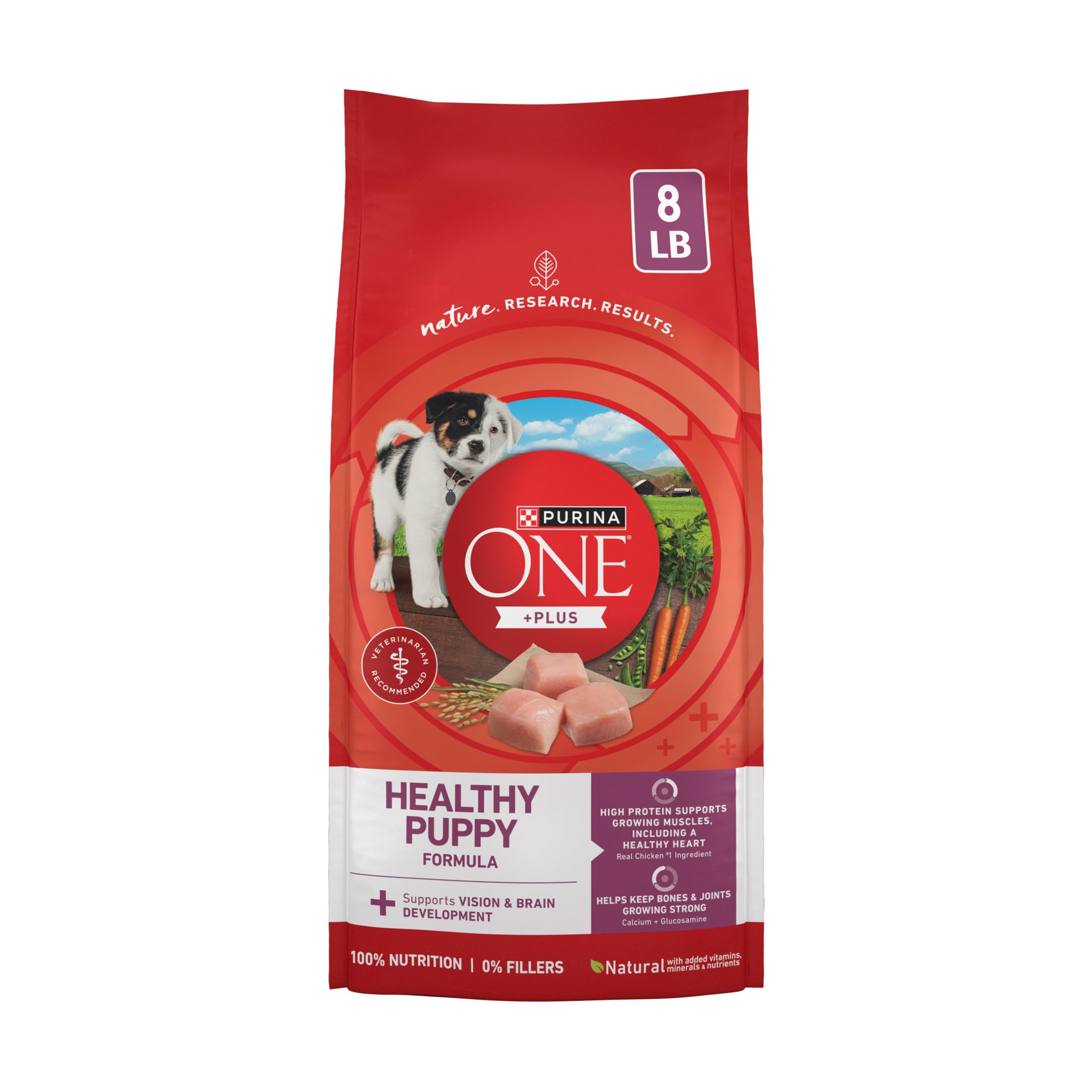
Purina ONE Healthy Puppy Chicken

Purina ONE Healthy Puppy Chicken

Budget daily feeding

Our Score 9.4/10
Check Price

Worth Noting

  • One flavor and one bag size only
Bag Size
8 lb
Breed Size
All breed sizes
Kibble Texture
Crunchy kibble plus morsels
First Ingredient
Chicken
Read the full review

Set this bag beside our top pick and the gap is narrower than the cost per pound suggests: real chicken first, DHA for brain and vision development, four antioxidant sources, omega-6 for skin and coat, and no artificial flavors or preservatives. Purina ONE pitches the formula as complete nutrition with no fillers, and the ingredient list supports the pitch. For a basset puppy whose main nutritional trick is turning a modest bowl into a substantial dog, that is plenty.

The texture is the detail we didn't expect to care about. Part of the bag is standard crunchy kibble; the rest is soft, meaty morsels, and the mix does something a uniform kibble doesn't — it puts a meaty smell in the bowl before the puppy's nose gets there. Bassets eat nose-first, and a puppy already interested in what's in front of it is a puppy you don't have to coax through dinner. We noticed the difference most on the days when a young puppy's appetite wobbled for no obvious reason.

What you give up is mostly choice: a single flavor and a single bag size in this listing, with no large-breed or grain-free variant. None of that matters for a basset sitting in the middle of the breed's weight range. What you get back is a formula you can feed for a full year without watching the per-pound number every time you reorder, and that is the whole case for it.

Bottom line: This is the bag we hand to anyone feeding a basset on a budget: chicken first, DHA included, and a texture that gets a scent hound's nose into the bowl.

4

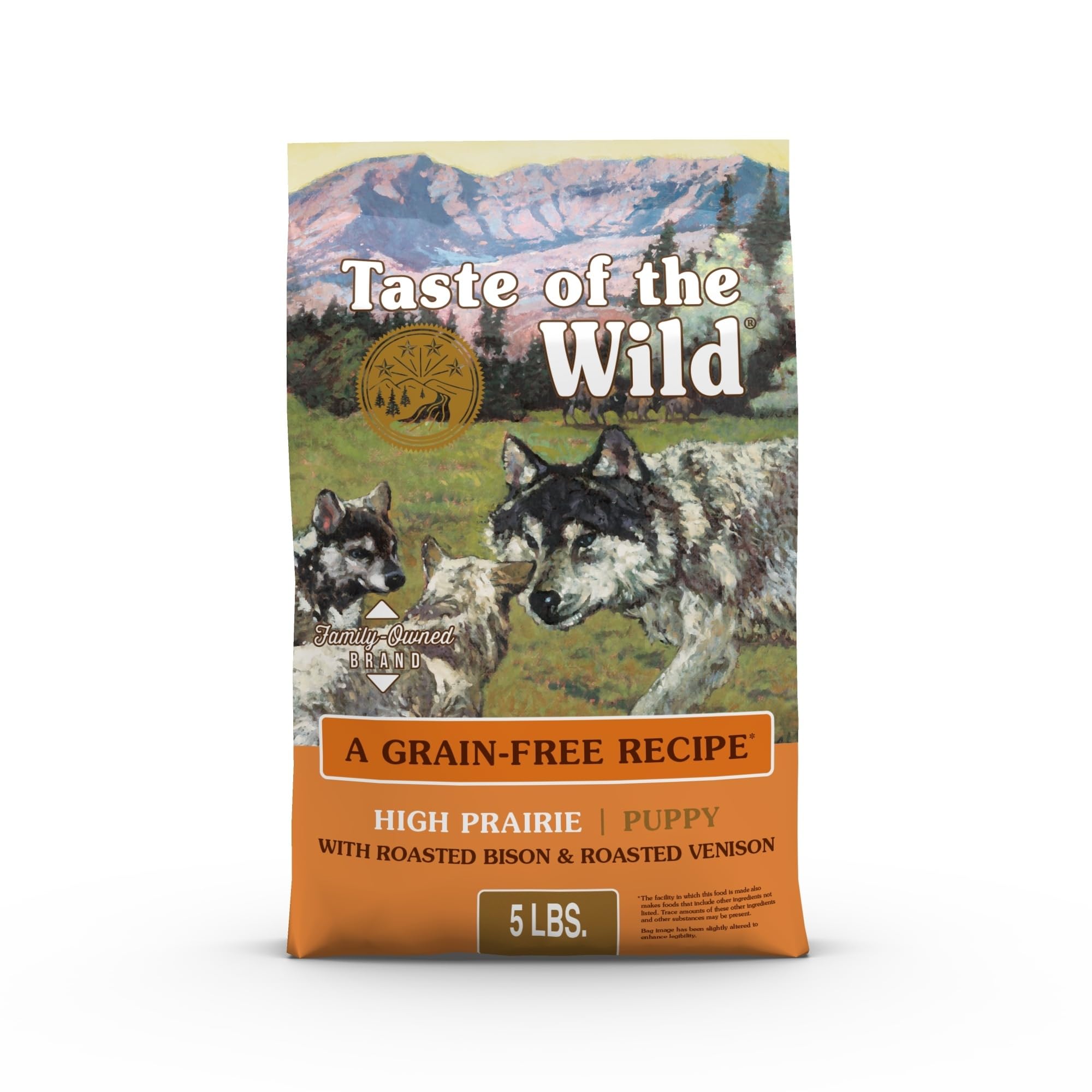
Taste of the Wild High Prairie Puppy

Taste of the Wild High Prairie Puppy

Grain-free diets

Our Score 9.4/10
Check Price

Worth Noting

  • Costs more per pound than the chicken picks
  • Five-pound bag only
Formula
Grain-free
Bag Size
5 lb
Probiotics
K9 Strain added
Crude Protein
28% minimum
Read the full review

The grain-free question deserves a straight answer: bassets do fine on grains, and nothing here suggests otherwise. Grain-free is a preference — sometimes a solution for a dog that does better on a higher-protein formula, sometimes simply the direction you have chosen to feed. If you're in either group, this is the strongest grain-free bag in this guide: bison and venison first, 28% minimum protein, 17% minimum fat, and a declared dose of species-specific probiotics.

The protein level is the headline and it is real rather than decorative, with omega fatty acids covering skin and coat and prebiotics alongside the probiotics. What we paid attention to was the other end of the dog. High-protein puppy food is where digestion usually goes wrong, and this is one of the few formulas in this set where results stay boring — regular, solid stools and no mid-bag surprises.

Two things to know before you commit. It costs more per pound than the chicken-based picks here, and the bag is small enough that a growing basset works through it quickly. Both are the ordinary price of a niche formula rather than a mark against it, but they shape how you buy: this is a bag you reorder often rather than stock up on.

Whether it's worth it comes down to why you're here. If a vet has suggested a grain-free trial, or you have already settled on feeding higher protein, this is the bag to do it with, and the probiotic blend is the insurance policy. If you are choosing between this and a chicken-and-rice puppy formula on merit alone, the cheaper bag wins and you should not feel bad about it.

Bottom line: Buy this if you have already decided on grain-free and want the highest protein in this set: bison and venison first, 28 percent protein, and probiotics built in.

5

Purina Pro Plan Large Breed Puppy

Purina Pro Plan Large Breed Puppy

Large-breed growth

Our Score 9.4/10
Check Price

Worth Noting

  • Thirty-four pounds takes real storage space
Bag Size
34 lb
Breed Size
Large breeds
Joint Support
Glucosamine
First Ingredient
Chicken
Read the full review

A basset hound is not a large breed, at least not by the definition these formulas use. Large-breed puppy food is built for dogs heading past 70 pounds as adults, and most bassets top out between 40 and 65. So this bag is not the default for the breed. It is here because a minority of male bassets do run big, and because it is the only formula in this guide with glucosamine in it.

For the dog it fits, the case is decent. Glucosamine supports developing joints and cartilage, which counts for something on a breed that spends its life carrying a deep chest and a heavy frame on four short legs. The formula is built to support an appropriate growth rate rather than maximum speed, chicken is the first ingredient, and DHA from fish oil covers brain and vision.

What we kept coming back to is the bag itself. Thirty-four pounds is a commitment: it is the lowest cost per pound of the premium formulas here, and it is also a sack that needs somewhere dry and a container wide enough to hold it. If you are splitting it between two dogs, or you have a male tracking toward seventy pounds, the math works. If you have one average basset and a small kitchen, buy a smaller bag and put the difference toward whatever your vet recommends.

Bottom line: Worth it only if your basset is heading for the top of the breed's weight range — then the glucosamine and controlled growth rate earn the big bag.

6

IAMS Proactive Health Puppy

IAMS Proactive Health Puppy

No-frills feeding

Our Score 9.4/10
Check Price

Worth Noting

  • Palatability splits
  • One flavor and one bag size only
Bag Size
15 lb
Breed Size
All breed sizes
DHA Source
Omega-3 DHA
First Ingredient
Chicken
Read the full review

There is nothing fashionable about this bag. Real chicken is the first ingredient, the recipe is free of fillers and artificial flavors, omega-3 DHA covers brain and vision development, and the calcium level is set to support bones and joints in a growing dog. No grain-free badge, no breed label, no shredded morsels — just a chicken-and-whole-grain puppy kibble that covers the five basics IAMS builds its pitch around.

We found the appeal in the simplicity. This is the bag for a household that wants one food, a sensible cost per pound, and a puppy that eats without ceremony. The mineral side matters more than the marketing for a basset, because a heavy puppy on short legs builds its frame early, and getting calcium and phosphorus right in the first six months is most of the job.

Where it shows its price is detail. There is no glucosamine, no probiotic claim, and no breed-size variant to step up to later, so a basset that ends up on the large side of the range has nowhere to go within this formula.

The open question is whether your puppy agrees. Palatability is the one place this bag draws a genuine split — some puppies clean the bowl and others walk away and leave you stirring in wet food to get dinner down. Keep a can on hand for the first week. If your basset eats it, there is very little reason to pay more, and that is the highest compliment a budget food can earn.

Bottom line: The plain, affordable bag we keep as a fallback: chicken first, DHA, calcium, and no drama — as long as your puppy will actually eat it.

7

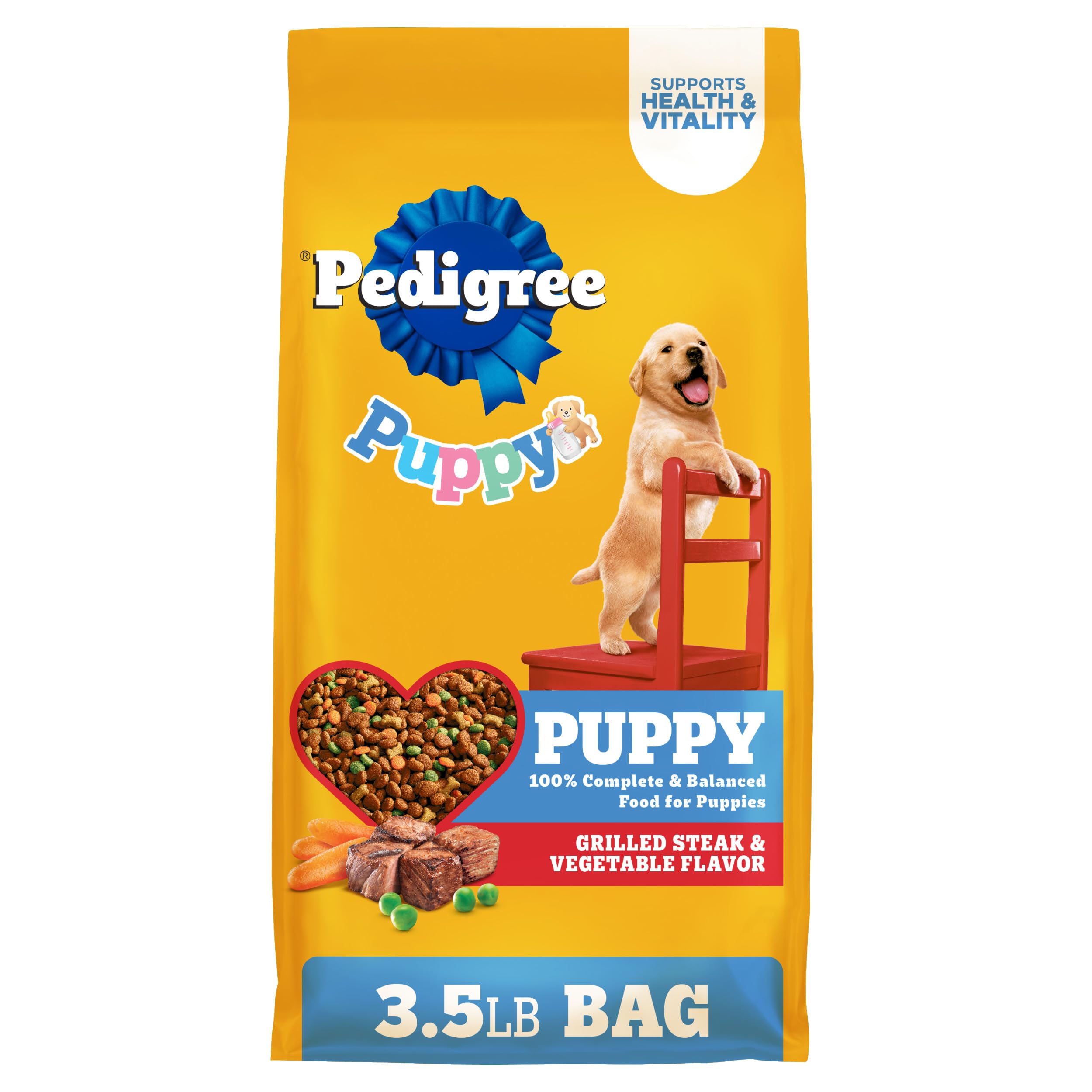
Pedigree Puppy Grilled Steak & Vegetable

Pedigree Puppy Grilled Steak & Vegetable

Trial-size bag

Our Score 9.4/10
Check Price

Worth Noting

  • Protein mix leans on soybean meal
  • Small bag only
Flavor
Grilled steak & vegetable
Bag Size
3.5 lb
Key Nutrients
36 vitamins, minerals, and amino acids
Read the full review

Here is the cheapest way to find out whether your basset puppy will eat a food: buy the smallest bag you can. Pedigree's puppy kibble comes in a 3.5-pound sack that costs less out of pocket than any other bag in this guide, and it is complete and balanced for puppies, with DHA for brain development, calcium and phosphorus for bones, and 36 vitamins, minerals, and amino acids in the mix.

We liked it best as a tester and a topper rather than a year-long diet. Grilled steak and vegetable is a strong smell in the bowl and a useful way to get a hesitant puppy started, and the kibble is small enough for young mouths. What you give up at this price is the polished spec sheet: the protein comes partly from soybean meal, and there is no joint or probiotic story here. For a puppy with a normal gut that is fine. As a first bag it is an inexpensive way to learn what your dog likes before you spend on the food you will actually keep buying.

Bottom line: The cheapest way to learn what your basset puppy will eat: complete puppy nutrition in a small bag, with a steak smell strong enough to start a reluctant eater.

8

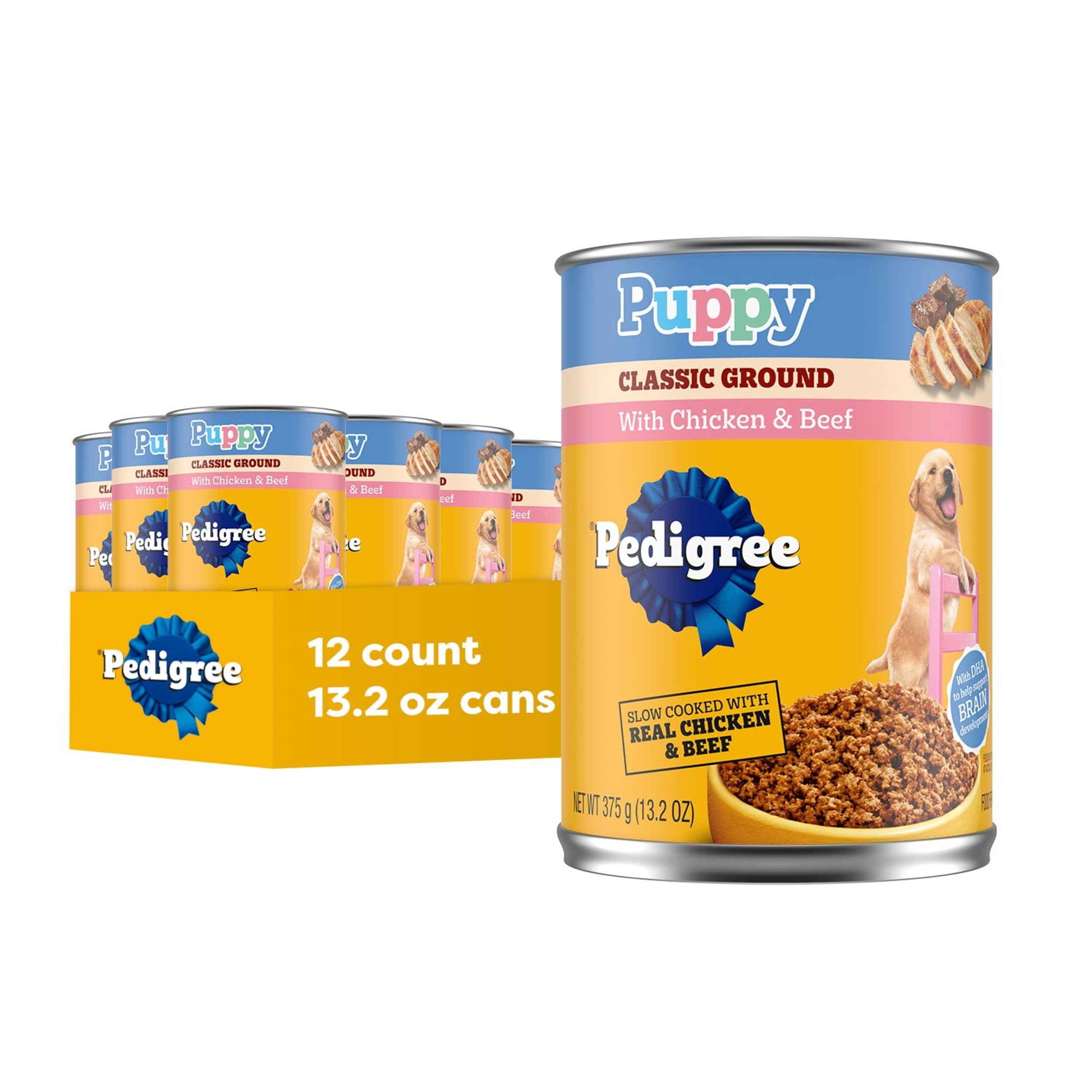
Pedigree Puppy Chopped Ground Wet

Pedigree Puppy Chopped Ground Wet

Picky-eater topper

Our Score 9.2/10
Check Price

Worth Noting

  • Expensive if fed as the whole diet
Form
Wet, chopped ground
Pack Size
13.2 oz, 12 count
Life Stage
Puppy, excluding large-size growth
Read the full review

Wet food does not have to be a lifestyle. For most basset puppies the canned stuff is a tool: a topper that gets a reluctant eater started, a mix-in that softens a dry ration for a puppy just off weaning, or a way to make a bowl smell like dinner on a day when nothing else lands. Pedigree's chopped chicken and beef puppy cans are the budget version of that tool, and one 13.2-ounce can stretches across several meals when it is used as a topper.

The formula is complete and balanced for puppies, with one honest caveat printed right on it: it is not intended for puppies expected to reach 70 pounds or more as adults. A basset sits under that line, so feeding it as a full diet is a cost decision rather than a suitability one. DHA for brain development and calcium for teeth and bones are both in the can, and the chopped ground texture mixes through kibble far more easily than a firm pâté would.

Where it earns its keep is the switch. A spoonful stirred through unfamiliar kibble does more for a hesitant puppy than any amount of coaxing, and the smell carries across the whole bowl. We appreciated having a case on the shelf for exactly that reason. Some puppies will make their opinion of it clear on the first spoonful, which is true of every wet food and impossible to predict from a label.

Bottom line: A case worth keeping in the cupboard: complete puppy food in a chopped texture that gets a hesitant basset through a food change or a fussy week.

How We Tested Puppy Food for Basset Hounds

We started with a list of 30 puppy foods formulated for medium-to-large breeds or all life stages, then filtered by protein source, kibble size, calorie density, ingredient quality, and cost per pound. That left 14 formulas, which we fed to a basset hound puppy over six months—first in a slow transition, then as his sole diet for at least eight weeks per formula. We logged every meal, timed how long he took to finish, and noted whether he sniffed and walked away or cleaned the bowl and looked for more.

Digestion was the main event. We scored stools on a 1–7 scale, counted gas episodes per day, and watched for stomach rumbling or vomiting after meals. We also tracked how quickly each formula moved through him during the transition week, since basset puppies are prone to loose stools when switching proteins. Weight gain against our vet’s growth chart, coat condition, and energy levels served as our read on effectiveness and overall healthiness.

Bag quality mattered more than I expected: we checked whether the resealable zipper held up after a dozen openings, whether the kibble stayed fresh-smelling for a month, and whether the bag was easy to scoop from without tipping. For value, we calculated cost per day based on his expected adult weight and the bag’s feeding chart, not just the shelf price. The formulas that made our list were the ones that stayed fresh, kept him comfortable, and didn’t break the budget.

How to Choose the Right Puppy Food for Basset Hounds

Match the formula to the dog, not the badge

Basset hounds sit in the middle of the size chart, with most adults landing somewhere between 40 and 65 pounds. That puts them below the 70-pound line where large-breed puppy formulas begin, so an all-breed puppy food is the sensible default and 'large breed' on a bag is not an upgrade — it's a growth-rate and mineral adjustment for a much bigger dog.

We treat all-breed as the standard for this breed and move to a large-breed formula only when a specific dog justifies it: a male tracking toward the top of the range, or a puppy a vet has flagged for fast growth. Everyone else should spend that money on a bigger bag of the right food.

Kibble size, texture, and how your puppy eats

At eight weeks a basset's teeth are small even though the head around them is not. A puppy working hard at every piece eats slowly, drops food on the floor, and sometimes quits — which is why small kibble earns its place for the first few months. Note the trap: 'small bites' describes the kibble, not the dog. The Hill's bag in this guide is still recommended for all breed sizes.

Texture is the other half. A mix of crunchy kibble and soft meaty morsels gives a scent hound something to smell before it commits, and a uniform kibble with a stronger meat aroma does the same job. If your puppy leaves the bowl half full on one texture, try the other before you decide the food is wrong.

Expect a messy week when you switch

Every formula here is complete and balanced for puppies, and any of them can produce loose stools if you pour the new bag straight into the old one. Spread the change over seven to ten days, mixing increasing proportions of the new food into the old, and keep meals small and frequent while your puppy adjusts.

Judge a food at week three, not day three. Tolerance is individual — a puppy that struggles on one formula may be perfectly settled on another with a near-identical ingredient list — and no label predicts which. If loose stools run past two weeks, or arrive with vomiting or lethargy, that's a vet call rather than a reason to keep swapping bags.

Joints, weight, and the basset build

A basset carries a deep chest and a lot of mass on four short legs, and that build is the reason weight matters more for this breed than for most. Keeping a puppy lean through its first year does more for its joints than any single ingredient, and it is entirely in your control.

Glucosamine has a place — the Pro Plan large-breed bag is the one here that includes it — but it is a supporting actor. We put more faith in a lean puppy on a plain formula than a heavy one on a joint-supplemented bag, and a vet can tell you at the twelve-month check whether a supplement is worth adding.

Bag size, freshness, and cost per pound

Cost per pound falls quickly as bags get bigger, which makes the largest sack look like the smart buy. It isn't, at least not first. A 34-pound bag is the most expensive object in this guide if your puppy refuses it, and kibble starts losing its appeal once a bag has been open for weeks.

Our order of operations: smallest bag of the formula you actually intend to feed, three weeks to confirm firm stools and a clean coat, then the largest size your storage and your puppy's appetite can absorb. A bag that needs an airtight bin you don't have is a bag that will go stale.

Frequently Asked Questions

Final Verdict

Purina Pro Plan's chicken and rice puppy formula is the bag we keep recommending, and the reason is unglamorous: fish-oil DHA, live probiotics, and a chicken-first recipe that keeps a slow-growing, heavy-boned basset steady through its first year. Give it three weeks and judge it on what you find in the yard.

If your puppy's stomach turns out to be the sensitive kind, Hill's small-bite formula is the next thing to try. If you have already decided on grain-free, Taste of the Wild is the one worth the premium.