Grooming

Best Deshedding Brushes for Dogs of 2026

The first time I ran a deshedding brush down my cat's back, she flattened her ears and walked off, and the next day there was a pink stripe along her spine. That's the trap with this category: the teeth that pull the most loose undercoat are also the ones that can dig into skin, and the wrong pick gives you a pet who hides whenever you open the drawer. The right one lifts the fur that's already shedding before it lands on your couch, your leggings, and your car seats, without a fight.

Coat type matters more than any brand claim — a brush that works magic on a husky's double coat does almost nothing for a short, dense lab coat. Over three months, my team and I put 14 brushes through shedding season with one dog and two cats, weighing the fur each one pulled and timing how long each animal sat still. Ease of use mattered as much as the teeth; if releasing the fur is fiddly, you'll quietly stop brushing. Start with the coat in your house and the picks below will make sense.

1

FURminator Large Dog Tool

Top Pick
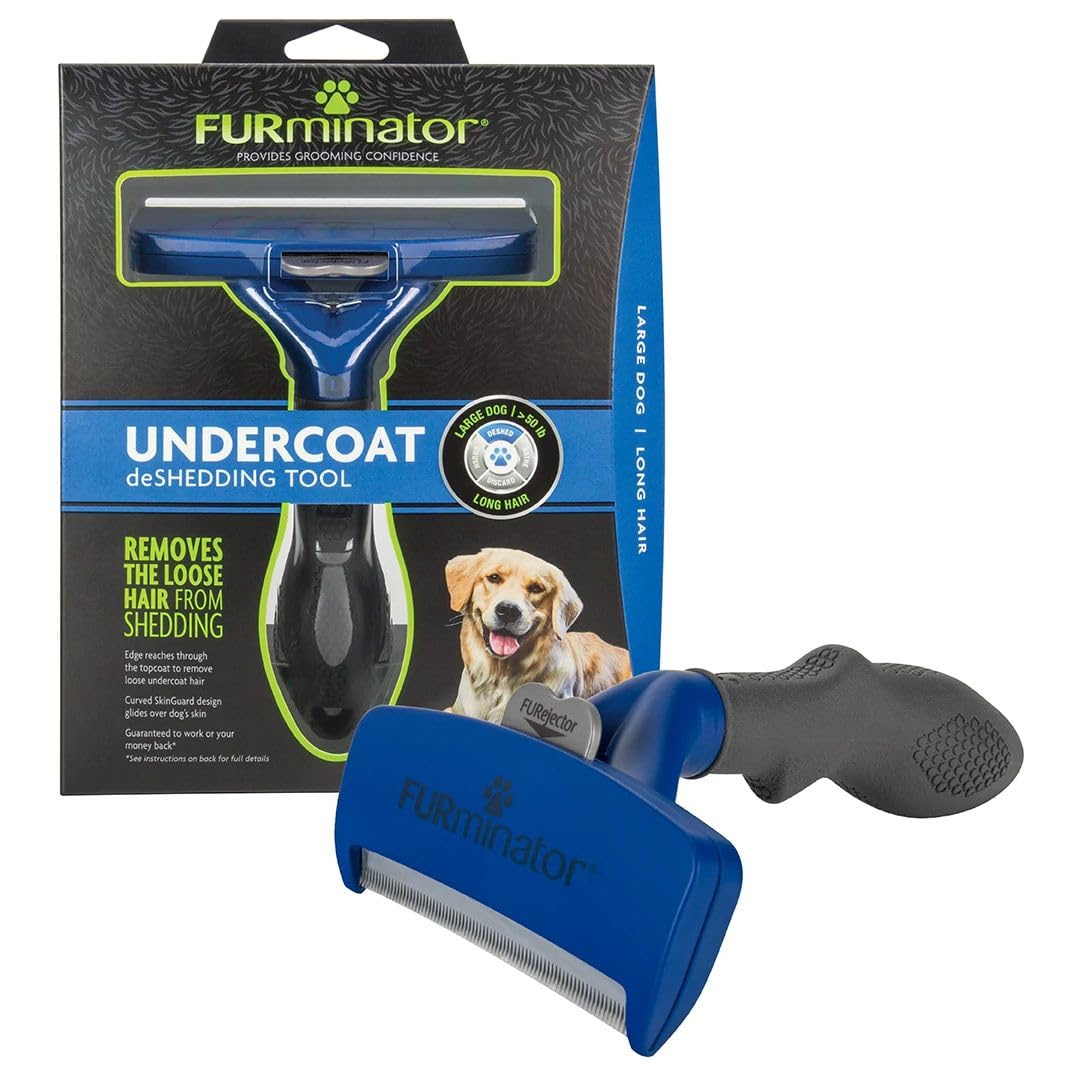
FURminator Large Dog Tool

Large long-haired dogs

Our Score 9.4/10
Check Price

Worth Noting

  • Premium price for a single-purpose tool
  • Not for short coats or small dogs
Weight
9.17 oz
Dog Size
Over 50 lb
Coat Type
Long hair
Hair Release
FURejector button
Read the full review

The FURminator is the specialist for a big dog with a long coat. Its size guidance is refreshingly direct: this version is for dogs over 50 pounds with long hair, not a universal brush you buy and hope fits. The stainless-steel head and metal handle give it a more substantial feel than the plastic-bodied slickers here, and the blue oblong shape is easy to spot in a grooming drawer.

The blade is designed to reach through the topcoat and pull loose undercoat, and the FURejector button pushes the collected hair off the edge in one move. That button matters on a large dog because you spend less time picking a felted strip out of the teeth. Used flat and with light pressure, as directed, it covers a lot of body with fewer passes than a small slicker.

We think it earns its place for a household that has already tried a basic brush and wants to spend less time per session. The head covers a large dog quickly, and the ejector button keeps the rhythm going. If your dog fits the brief, this is the premium option we recommend.

Bottom line: If you have a large, long-haired dog and want a premium deshedder that covers ground fast, this is the one we recommend.

2

Augwind 3-Piece Kit

Augwind 3-Piece Kit

Mixed-coat households

Our Score 9.4/10
Check Price

Worth Noting

  • Bulkier to store than a single brush
Rake
9- and 17-tooth sides
Weight
12.7 oz
Warranty
2 years
Kit Contents
Slicker, rake, flea comb
Read the full review

The Augwind set is the one to consider if you want a whole grooming drawer in a single box. It includes a self-cleaning slicker, a double-sided rake with nine- and seventeen-tooth sides, and a fine flea comb. For a household with more than one coat type, that range is more useful than a single specialist brush.

The rake is the workhorse: the nine-tooth side for tangles, the seventeen-tooth side for loose undercoat, and enough spacing to move through a thick coat. The slicker handles the surface hair and cleanup, and the flea comb is handy for small debris around the face and ears. The whole set weighs 12.7 ounces, so it is a drawer kit rather than something you carry in a pocket.

The two-year warranty is a nice vote of confidence, though the kit asks you to choose among three tools rather than committing to one shape. If you have one dog with one coat type, a dedicated rake or blade will feel more direct. If you are starting from nothing, or you groom several dogs with different coats, having the three tools together saves a lot of shopping.

We like it most as a starter kit or a second set for the car and the house. It covers the common jobs without pretending that one head does everything, and the separate tools let you switch approach when the coat changes. That flexibility is why it earns a place, even though it is not our first pick for a single dog.

Bottom line: If you want one box for slicking, raking, and fine combing, we recommend this kit; it suits mixed coats and new grooming routines.

3

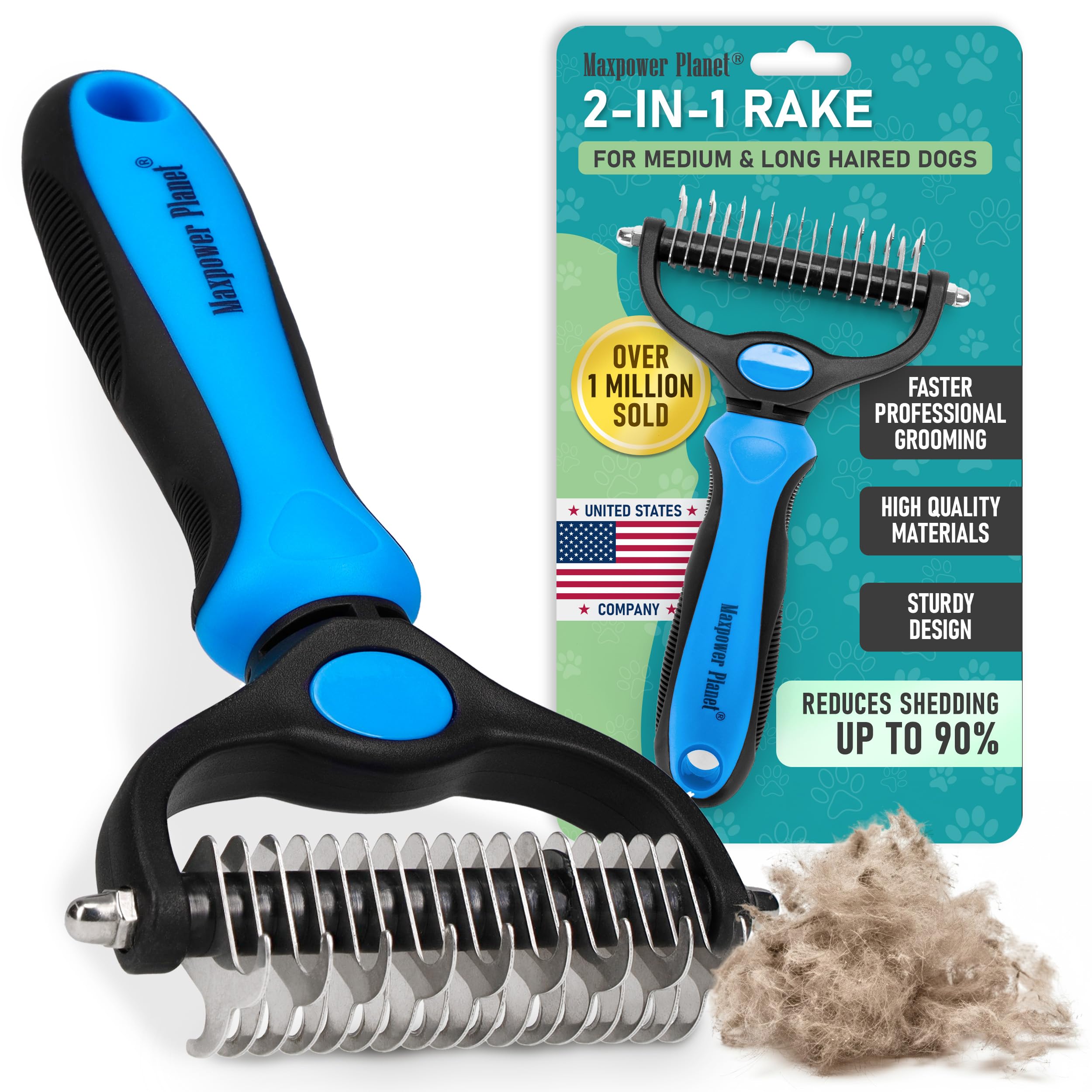
Maxpower Planet Grooming Rake

Maxpower Planet Grooming Rake

Everyday deshedding

Our Score 9.2/10
Check Price

Worth Noting

  • Wide head is awkward around faces and paws
  • Very short coats give it little to catch
Teeth
9-tooth mat side; rounded tips
Handle
Non-slip rubber base
Weight
4 oz
Tool Type
Dual-sided undercoat rake
Read the full review

The dual-sided head is why this rake earns our top pick. One side has nine teeth for working through tangles and light mats; flip it over and you get a second tooth pattern for routine undercoat removal. That versatility matters because most dogs are not one job. A coat can be fine across the back and still have a knot behind an ear, and one tool that handles both keeps you from stopping to hunt for another brush.

The teeth are sharpened but rounded at the tips, and the handle sits on a non-slip rubber base. In use, that combination lets you pull through loose undercoat without the rake feeling as if it is scraping. At 4 ounces, it is light enough to keep moving on a big dog, and the 6.6-inch body gives you enough reach for the back and flanks. We also appreciate that the teeth are open enough to release hair as you work instead of packing it into a solid felt.

It is a deshedder first and a light dematter second, not a rescue tool for a solid pelt. On a coat with real mats, use the nine-tooth side in short strokes and let the rake do the lifting. The price is the other part of the case: it is the cheapest tool here that still feels purpose-built. If you want one brush to start with, this is the one we point to.

Bottom line: For most dogs, we recommend starting here: the dual-sided rake clears undercoat and light mats without the premium price, and it suits medium to long coats best.

4

SleekEZ Dog Brush

SleekEZ Dog Brush

Short, smooth coats

Our Score 9.2/10
Check Price

Worth Noting

  • Not a dematting tool
Weight
3.53 oz
Coat Type
Short, medium, and long
Tool Type
Patented deshedding blade
Blade Width
5 inches
Read the full review

On a short, smooth coat, a toothed rake can skate across the surface while the loose hair stays put. The SleekEZ takes a different approach: a five-inch blade edge that catches hair at the tips and lifts it away. That makes it a better match for Labradors, pit bulls, and other close-coated dogs than a deep rake, and it is the tool we reach for first when the coat is short rather than thick.

The edge sits flat against the body, so you use light, even strokes rather than digging in. The payoff is that loose hair comes away without the tugging that makes some dogs duck out of a grooming session. We also like the size: at 3.53 ounces, it is easy to control around shoulders and hindquarters. It earns its keep beyond the dog, too, because the same edge pulls hair off a couch or car seat.

The edge can scratch if you catch a corner on skin, so keep the blade flat and use short strokes. That is a technique issue, not a reason to avoid the tool. For routine shedding on a short coat, it is the most direct tool in this group.

Bottom line: For short, smooth coats, this is the deshedding tool we pick first; it strips loose hair quickly and doubles as a furniture brush.

5

FURminator Grooming Rake

FURminator Grooming Rake

Dense double coats

Our Score 9.2/10
Check Price

Worth Noting

  • Not a dematting tool
  • Less effective on fine, silky coats
Teeth
Rotating metal teeth
Weight
6.56 oz
Coat Type
Thick, dense double coats
Tool Type
Grooming rake
Read the full review

Dense double coats need a tool that can get under the wool without dragging the topcoat. The rotating metal teeth on this FURminator rake are the feature that makes it interesting: they move with the coat rather than locking into it, which helps the head follow the shape of a shoulder or haunch. This is the pick we prefer for huskies, Akitas, and other dogs with a genuinely thick undercoat.

The head is narrower than the broad dual-sided rake that takes our top spot, and that is an advantage around the rump and behind the front legs. At 6.56 ounces, it has enough substance to feel controlled without being tiring. The non-slip handle is shaped for a normal grooming grip, and the teeth are spaced for dense fur.

It works best in short, overlapping passes, and it is not a finishing brush; a quick pass with a slicker lifts the surface hair this rake leaves behind. That is a normal handoff rather than a flaw. For a dense coat, the rotating teeth are the reason this one stays in the grooming bag.

Bottom line: For thick double coats, we recommend this rake: rotating teeth work through dense fur and the narrower head reaches where broad rakes struggle.

6

Swihauk Self-Cleaning Slicker

Swihauk Self-Cleaning Slicker

Gentle daily slicking

Our Score 9.2/10
Check Price

Worth Noting

  • Pin length is short for very thick long coats
  • Bristles can bend under heavy pressure
Weight
8.82 oz
Bristles
Rounded stainless steel
Tool Type
Self-cleaning slicker
Hair Release
Push-button retraction
Read the full review

The self-cleaning button is the first thing you notice, and it is more than a gimmick. Press it and the bristles retract, letting the collected hair slide off in one piece. That turns cleanup from a pick-and-pull job into a two-second step, which is the difference between brushing the dog on a busy morning and skipping it.

The bristles are stainless steel with rounded plastic tips, so the brush is gentle enough for a dog that dislikes a metal rake. We treat it as a maintenance and finishing slicker rather than a heavy undercoat stripper. On a short or medium coat it lifts loose hair nicely, and on a longer coat it works best after a rake has broken up the undercoat. The TPR handle is comfortable and the 8.82-ounce body feels balanced.

It is a brush for upkeep, not a rescue tool for a coat that has already packed into mats. For a dog that tolerates brushing but hates being tugged, or for a household that wants a quick daily tidy-up, the gentle action and easy cleanup make it an easy brush to keep within reach.

Bottom line: For gentle everyday slicking and genuinely easy cleanup, we recommend this self-cleaning brush; it suits short to medium coats and dogs that dislike rakes.

7

Docrok Grooming Combo

Docrok Grooming Combo

Matted long coats

Our Score 9.0/10
Check Price

Worth Noting

Comb
2-in-1 wide and dense sides
Rake
2-in-1 wide and dense sides
Material
Stainless steel teeth
Tool Type
Rake and comb combo
Read the full review

A matted long coat asks for a different kit from a routine shedding brush. Docrok pairs a two-sided rake with a two-sided metal comb: the rake's wide side works at tangles, the dense side lifts loose undercoat, and the comb has matching wide and fine sides for legs, head, and tail. It is a compact set rather than a single tool, and that is the point.

The comb is the piece we appreciate most. Its two tooth spacings let you start on a knot and finish the same section without switching to another product, and the metal teeth feel firm enough to comb through a long coat. The rake's TPR handle is comfortable in the hand, and the stainless-steel teeth are aimed at medium and long hair rather than smooth coats.

For a dog with a heavy double coat, the dense side of the rake does the deshedding work; the wide side is for the tangles that build up behind the ears and under the collar. This is not a five-minute job on a badly matted dog, and no comb should be forced through a solid knot. Work in small sections and stop if the skin looks irritated.

We recommend it when mats and tangles are the reason you are shopping, not when you just want a basic shedding brush for a short coat. The two tools cover more ground together than either one alone, and the combo is easier to justify than buying a rake and a separate finishing comb.

Bottom line: For long coats that tangle, this two-piece set gives you a rake and a comb in one buy; we reach for it when mats and detail work are the problem.

8

MIU COLOR Grooming Brush

MIU COLOR Grooming Brush

Budget and travel

Our Score 9.0/10
Check Price

Worth Noting

  • Can clog on dense undercoat
Extras
Safety blade cover
Weight
3.53 oz
Tool Type
Detachable deshedding comb
Comb Width
4 inches
Read the full review

The MIU COLOR is the simplest tool here: a four-inch stainless-steel comb on a plastic and silicone handle, with a detachable head and a cover for the teeth. That detachable head is the detail we appreciate most. It makes the brush easier to pack, easier to rinse, and less likely to stab the inside of a grooming bag.

The comb teeth are spaced to pull loose undercoat from short, medium, and long coats, and the anti-slip handle gives you a secure grip when the dog shifts. It behaves more like a blade-style deshedder than a slicker: you use light, flat strokes and let the teeth gather the hair. Keep the angle shallow and work in the direction of the coat.

This is the one we point to for a second brush, a travel kit, or a household that wants to spend very little on the first try. It does not have the broad coverage of the larger tools, but it is compact and easy to live with. For a short-coated dog and a simple routine, that is enough.

Bottom line: For a spare, a travel kit, or a tight budget, we recommend this simple comb; it removes loose coat without the bulk or cost of the premium tools.

How We Tested the Best Deshedding Brushes

We started by gathering every brush we could find that was actually built for undercoat removal rather than everyday tidying, reading through specs for tooth spacing and blade type, checking whether the edges were rounded or sharp, and filtering out anything that felt flimsy for its price or offered no way to clear the head. That left 14 brushes, from small single-row combs to larger multi-blade models, and we spent three months with them in a house with one short-coated dog who sheds year-round and two cats with very different tolerances for being handled.

Each brush got the same run: five minutes on the living room floor on a Sunday, then a second session on the porch after the evening walk. We weighed the fur we pulled off each brush on a kitchen scale, then rubbed a black fleece swatch over the couch cushions to see what had been left behind. Pet preference we measured the only way it can be measured — whether the animal stayed, leaned into the strokes, or walked off, and how many strokes it took before that happened.

For hair removal, we counted strokes until the head filled, noted whether fur packed into the teeth or released in a sheet, and rinsed each brush under the tap to see how much stayed stuck. Quality showed up later: we tracked whether teeth bent, edges scratched, or the fur-eject button jammed by week six. Ease of use came down to whether we could work the brush one-handed with a treat in the other, and value was simply how each one held up against what it cost after three months of near-daily use.

How to Choose Deshedding Brushes for Dogs

Match the tool to the coat

Start by parting the coat. If you see a dense, woolly undercoat, a rake or a blade-style deshedder is the tool that reaches it; a slicker mostly works the surface. Short, smooth coats usually do better with a blade or a firm slicker, while long coats need a rake plus a comb for the legs and head. The trap is buying a slicker because it looks gentle, then finding it glides over the undercoat without lifting it.

Check the teeth and the edge

Rounded tips matter more than tooth count. Run a finger along the teeth before the first session; any burr or sharp corner will be felt on a dog's skin. Wider spacing suits thick coats, closer spacing suits fine hair, and a blade edge needs to sit flat so it lifts hair rather than scraping. Use light strokes, and stop if the skin reddens or the dog pulls away. No brush needs pressure to work.

Think about reach, not just coverage

A wide head covers a big back quickly, but it is clumsy around ears, legs, and the tail. That is why a narrow rake or a two-sided comb earns a place even when you own a broad deshedder. Weight matters too: a four-ounce tool is easy to keep moving, while a heavier rake can feel more controlled in dense fur. If you groom a large dog, look for a handle that fills your hand and a head you can angle without fighting the coat.

Cleaning is part of the job

A self-cleaning button is genuinely useful: it turns a mat of hair into a piece you can drop in the bin. It does not remove the need to wipe the teeth or wash the head occasionally, especially if the dog has been outside in dirt. Check that the button moves freely and that the bristles retract evenly. If hair packs into the mechanism, clear it before the next session rather than pressing harder.

Build a short, regular routine

Deshedding works best in frequent short sessions, not one marathon before guests arrive. During a heavy shed, two or three ten-minute passes a week will do more than an hour on Sunday; the rest of the year, once a week is often enough. Stop when the tool comes away with little hair, because more strokes do not equal less shedding. A good rake, a comb, and a little consistency beat a drawer full of brushes.

Frequently Asked Questions

Final Verdict

The Maxpower Planet rake is our default because it handles the common middle ground: a medium or long coat with loose undercoat and occasional tangles, and it does it without a premium price. If your dog has a short, smooth coat, the SleekEZ is the better shape; if you have a large long-haired dog or a dense double coat, the FURminator tools justify the step up. Start with the rake, then add a comb for faces and feet.