Food & Treats

Best Puppy Food for Pitbulls of 2026

A pitbull puppy can inhale a bowl of food before you set it down, which makes it tempting to grab the first bag with a big protein number and a sturdy-looking kibble. But the right puppy food has to do more than disappear fast: it needs to support steady growth, keep digestion calm, and still be something your dog wants to eat. I've learned that with a foster pup who turned every new formula into either a clean bowl or a very long night. What you're really buying is a daily ration that balances nutrition and ingredients with palatability, digestibility, and a kibble size a young dog can chew without gulping.

Over six months, we worked through 14 formulas with a panel of pitbull and pitbull-mix puppy households. We watched how eagerly puppies ate, how their stools held up during transitions, and whether their energy and growth stayed on track. Some foods were easier on sensitive stomachs; others were a hard sell after the first sniff. The picks below earned clean bowls and calm digestion, not just label claims.

1

Purina Pro Plan Large Breed Puppy

Top Pick
Purina Pro Plan Large Breed Puppy

Large-breed puppies

Our Score 9.4/10
Check Price

Worth Noting

  • Bag can arrive damaged or stale
Bag Size
34 lb
Life Stage
Large-breed puppy
Key Nutrients
DHA, glucosamine
First Ingredient
Chicken
Read the full review

Large-breed puppy food is not a marketing upgrade; it is a different growth plan. The Pro Plan Large Breed formula is built around a controlled growth rate, with glucosamine for developing joints and DHA for brain and vision, and that is exactly the combination we want for a pitbull puppy that may finish well into the large side of the range. The 34-pound bag is the practical size for a puppy that eats like a growing pitbull, and the chicken-first recipe gives us a protein source we can recognize.

What keeps this at the top of our list is the balance: it is not the most calorie-dense food here, and we count that as a feature. A pitbull puppy needs steady growth, not a sprint to maximum size. The taste and effectiveness feedback are strong, the coat results are consistent, and the formula does not rely on a grain-free label to make its case. It is a straightforward chicken-and-rice puppy food with joint support.

The adjustment we plan for is the switch. Introduce it over several days so the gut has time to catch up, and expect a little looseness if you rush the transition. That is true of most puppy foods, but it matters more when you are moving a big puppy onto a big bag. Check the bag when it arrives; if the kibble smells stale or the seal is broken, return it before feeding.

Bottom line: We recommend the large-breed Pro Plan as the default for a pitbull puppy headed for the bigger end of the range: it supports steady growth and joint development without turning mealtime into a calorie race.
2

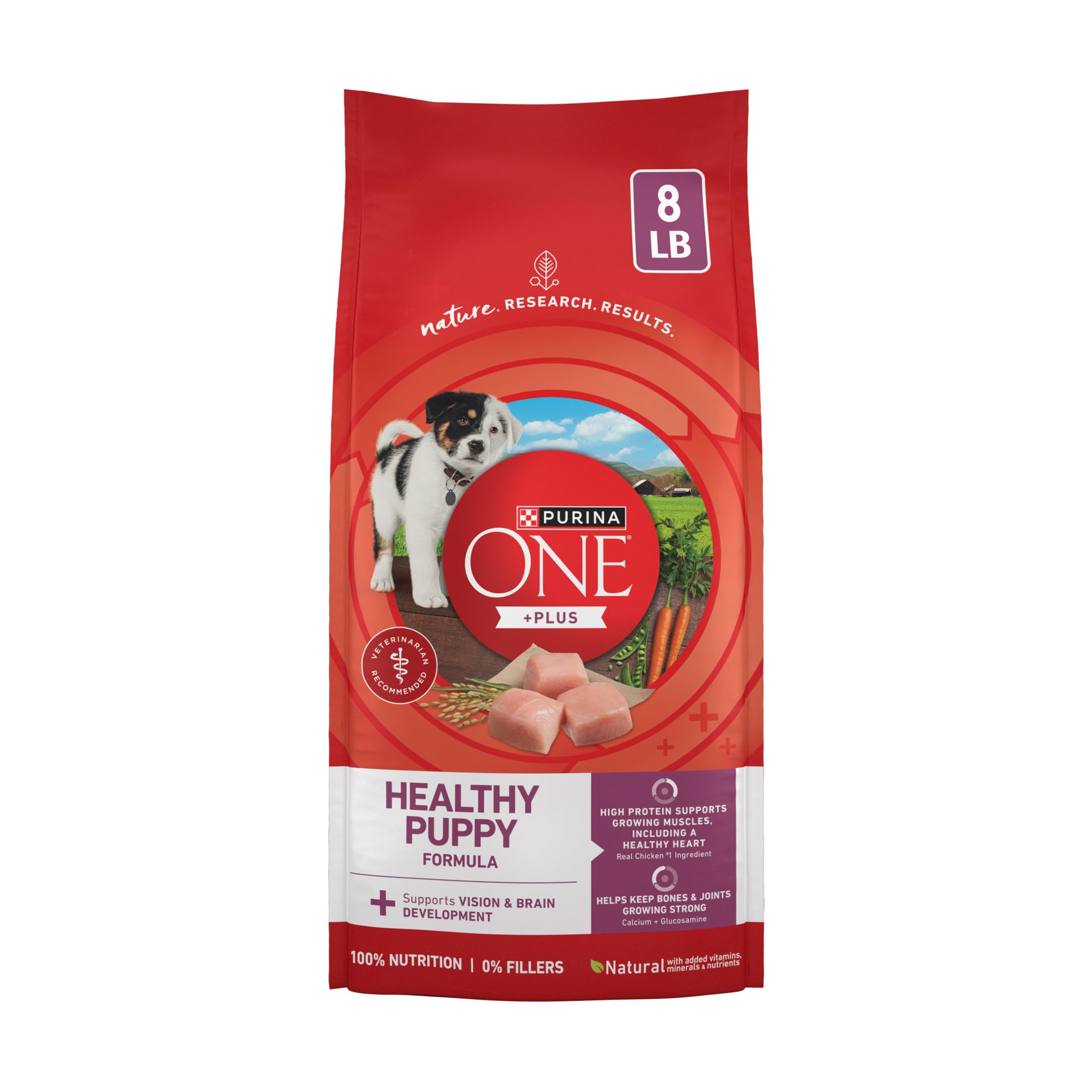
Purina ONE Healthy Puppy

Purina ONE Healthy Puppy

Budget-minded homes

Our Score 9.4/10
Check Price

Worth Noting

  • 8 lb bag goes fast for a big puppy
Bag Size
8 lb
Life Stage
Puppy
Key Nutrients
DHA, omega-6
First Ingredient
Chicken
Read the full review

A pitbull puppy can go through a bag of food faster than almost any other line item in the house, so the price on the shelf matters. Purina ONE Healthy Puppy comes in an 8-pound bag with real chicken first, DHA for brain and vision, and a mix of antioxidants and omega-6 for skin and coat. It is not a large-breed formula, which is the first thing we check, but it is a complete puppy food with a sensible nutrient package for the money.

This is the one we recommend when the top pick's upfront cost is more than you want to spend. The 8-pound bag is easier to store and try, and the formula has strong pet-preference feedback, including pitbull-specific notes. We do not call it a large-breed formula, because it is not; for a puppy headed for the larger end of the range, the Pro Plan Large Breed is the safer default. But if your pitbull is on the smaller side or you are feeding a foster puppy on a budget, this is a strong, complete choice.

The caveat is digestion. Some puppies do fine from the first bowl; others need a slower transition and firmer stools before you commit to a bigger bag. Start with the 8-pound size, mix it with the current food for several days, and judge from there.

Bottom line: We reach for Purina ONE when the budget is tight but the puppy still needs a complete, chicken-first formula with DHA and antioxidants; it is the value pick that does not feel like a compromise.

3

Purina Pro Plan Sensitive Skin & Stomach Puppy

Purina Pro Plan Sensitive Skin & Stomach Puppy

Sensitive skin/stomach

Our Score 9.4/10
Check Price

Worth Noting

  • Fishy odor lingers on breath
Bag Size
4 lb
Life Stage
Puppy
Key Nutrients
Probiotics, DHA
First Ingredient
Salmon
Read the full review

The first thing to notice is what is missing: chicken. The Pro Plan Sensitive Skin & Stomach puppy formula starts with salmon and rice, adds probiotics and prebiotic fiber, and uses fish oil for EPA and DHA. For a puppy that scratches after chicken-based kibble or has loose stools on richer formulas, that is a useful change of variables.

The trade-off is that this is not a large-breed formula. It is designed for all breed sizes, with a medium-breed recommendation, so a pitbull headed for the larger end of the range still needs portion control and a vet's eye on growth. The 4-pound bag is also a trial size for a puppy that eats well; it is the right way to find out whether salmon agrees with your dog, not the most economical way to feed a big adolescent.

Where this formula earns its place is the combination of skin and stomach support. The salmon-and-rice base is gentle, the probiotics are a deliberate addition, and the feedback around itching and stool quality is stronger than we see on most chicken-free puppy foods. We still transition slowly and give it a couple of weeks before deciding; a single bag is not enough to judge a food allergy, but it is enough to see whether the stools settle.

Bottom line: We keep the salmon Pro Plan on the list for pitbull puppies with itchy skin or a touchy stomach: it is chicken-free, salmon-first, and built around gentle digestion rather than novelty.

4

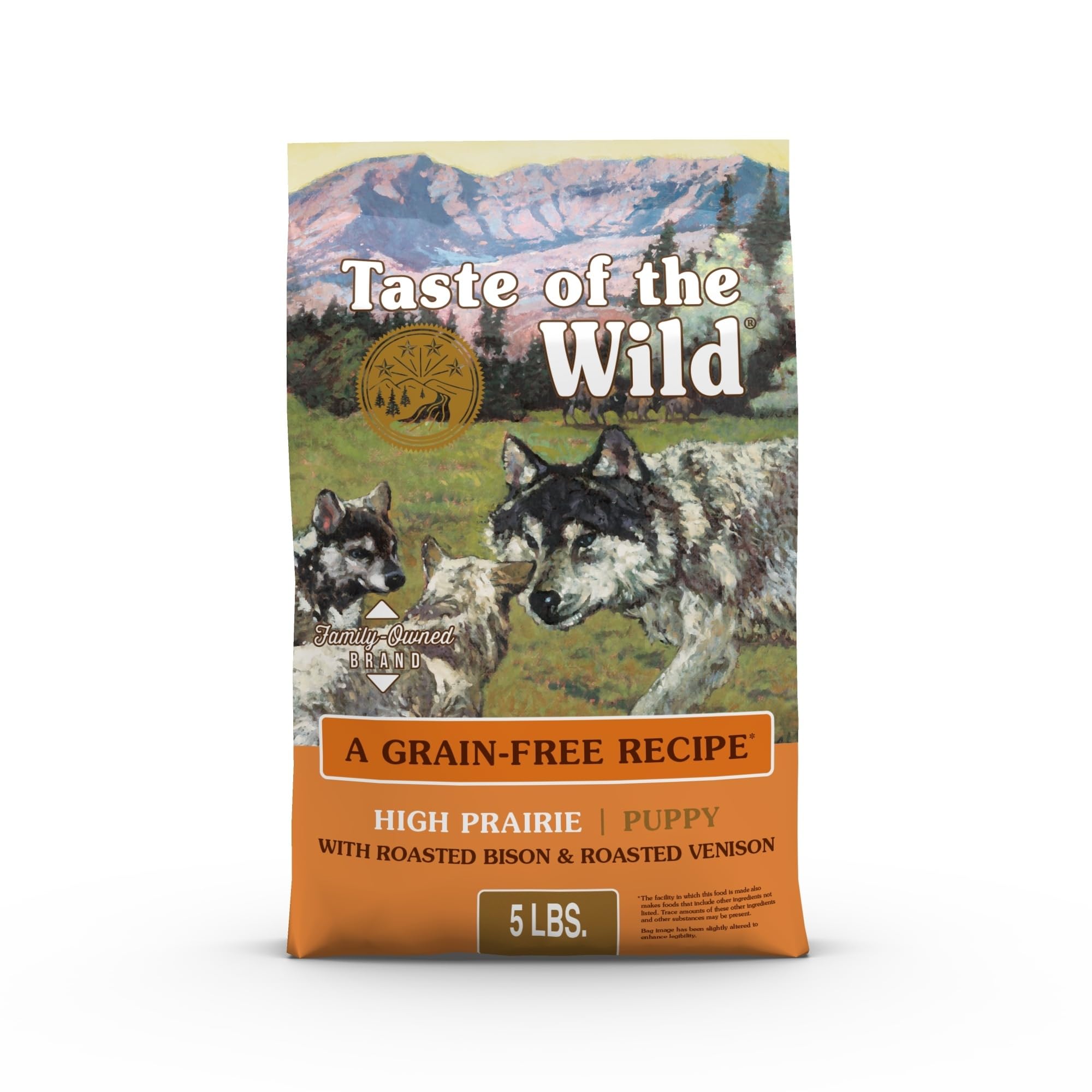
Taste of the Wild High Prairie Puppy

Taste of the Wild High Prairie Puppy

Grain-free feeding

Our Score 9.4/10
Check Price

Worth Noting

  • Costs more per pound than chicken options
Fat
17% min
Protein
28% min
Bag Size
5 lb
Life Stage
Puppy
Read the full review

Taste of the Wild's High Prairie puppy recipe is the grain-free option we keep coming back to because it does not skimp on the parts that matter: real bison is the first ingredient, the formula carries 28% protein and 17% fat, and it includes probiotics and omega fatty acids. For a pitbull puppy that does better without chicken or grain, that is a useful combination, and the bison-and-venison flavor gives picky eaters something different from the usual chicken-and-rice lineup.

The grain-free label is not a health upgrade by itself. We treat it as a tool for a specific puppy: one that has been itchy or loose on chicken-and-grain formulas, or one whose vet has suggested a novel protein. If your puppy is doing well on a grain-inclusive food, there is no reason to pay more for this one. The 5-pound bag is a trial size, so it is a way to test the formula rather than a long-term value play.

What we like is the simplicity of the ingredient story and the digestive feedback. The formula is built around bison and venison, with probiotics and prebiotic fiber, and the puppy-specific recipe includes DHA for development. We still transition slowly; a novel protein is not a shortcut around a proper switch.

Bottom line: We point grain-free shoppers to Taste of the Wild when they want a novel protein and a straightforward puppy formula; bison and venison make it useful for chicken-avoiding puppies, though it costs more per pound.

5

IAMS Proactive Health Large Breed Puppy

IAMS Proactive Health Large Breed Puppy

Budget large breeds

Our Score 9.4/10
Check Price

Worth Noting

  • Large bag takes up storage space
Bag Size
30.6 lb
Life Stage
Large-breed puppy
Key Nutrients
DHA, calcium
First Ingredient
Chicken
Read the full review

A 30-pound bag of large-breed puppy food for less than the premium picks is a real advantage when you are feeding a puppy that seems to double in size every week. IAMS puts chicken first, adds DHA for brain and vision, and includes calcium and phosphorus for bones and joints. The kibble is sized for large-breed puppies, and the bag is big enough to get you through more than a handful of meals.

This is the budget large-breed option we mention when the top pick is out of reach. It checks the large-breed boxes and the price per pound is among the lowest here. But the digestion picture is not as clean: loose stools and stomach upset are the caveat that keeps it from the top of this list. If your puppy has a sensitive gut, we start with a smaller bag or choose the Pro Plan Large Breed instead.

For a puppy that does well on it, the value is hard to argue with. The formula is complete, the kibble is appropriate for a bigger mouth, and the bag size suits a multi-dog house or a puppy that is already eating well. We still transition slowly and watch stools for the first week.

Bottom line: We keep IAMS Large Breed in the conversation as the budget large-breed bag, but we treat its digestion feedback as the deciding caveat rather than a footnote.

6

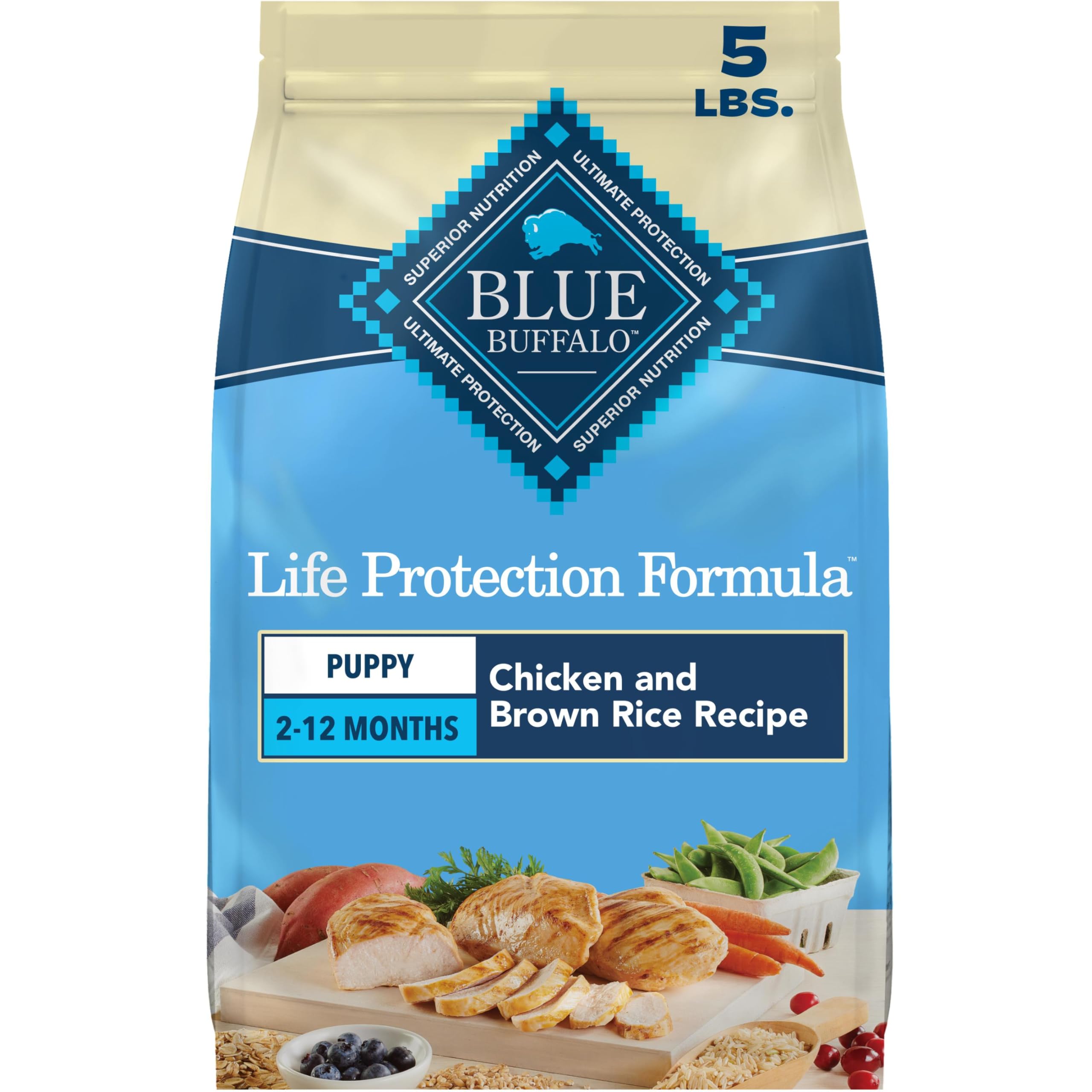
Blue Buffalo Life Protection Puppy

Blue Buffalo Life Protection Puppy

Grain-inclusive feeding

Our Score 9.4/10
Check Price

Worth Noting

  • 5 lb bag is small for a growing pitbull
Grains
Brown rice, barley, oatmeal
Bag Size
5 lb
Life Stage
Puppy 2-12 months
First Ingredient
Chicken
Read the full review

Blue Buffalo's Life Protection puppy formula is the grain-inclusive, chicken-and-brown-rice option in this group. It starts with real chicken, adds brown rice, barley, and oatmeal for gentle digestion, and includes the brand's LifeSource Bits, a blend of antioxidants, vitamins, and minerals. The 5-pound bag is a reasonable trial size for a smaller pitbull puppy or a household that wants to test a formula before committing to a bigger bag.

The ingredient story is the draw. Chicken is first, the grains are familiar, and the formula is free of corn, wheat, soy, and preservatives. The LifeSource Bits are not a magic ingredient, but they are a deliberate antioxidant addition, and the formula covers the basics for puppy growth, brain development, and immune support. For a household that wants a grain-inclusive food without a large-breed label, it is a sensible place to start.

The caveat is digestion. Loose stools are the issue that shows up most around this formula, and it is not a one-off complaint. Some puppies do fine, especially with a slow transition, but we do not choose this as the first food for a puppy with a sensitive gut. The 5-pound bag is the right size for a trial; if stools do not settle within a week or two, move on rather than pushing through.

Where it fits is the household that wants a familiar chicken-and-brown-rice recipe and does not need a large-breed formula. The price is midrange for the group, the bag is easy to store, and the ingredient list is straightforward. We treat the first bag as a test and keep the receipt.

Bottom line: We keep Blue Buffalo as a grain-inclusive chicken-first option for smaller pitbull puppies, but the loose-stool caveat is strong enough that we do not make it the first bag for a sensitive puppy.

7

Diamond Naturals Large Breed Puppy

Diamond Naturals Large Breed Puppy

Bulk feeding

Our Score 9.2/10
Check Price

Worth Noting

  • Heavy bag needs cool, dry storage
Bag Size
40 lb
Life Stage
Large-breed puppy
Key Nutrients
Probiotics
First Ingredient
Lamb
Read the full review

Forty pounds is not a bag you buy on a whim. It is the size that makes sense when you have a large-breed puppy, a second dog, or a foster setup, and Diamond Naturals prices it aggressively for what it is. The formula starts with pasture-raised lamb, adds probiotics for digestion, and is built for large-breed puppy growth.

The lamb-and-rice recipe is a useful change for puppies that do not do well on chicken, and the large-breed formula includes the mineral balance and protein level we look for in a growth diet. The trade-off is that lamb is not a magic bullet: some puppies still get loose stools, and the kibble is not as widely loved as the chicken-based picks. We treat the first week as a test, not a commitment.

Where this earns a place is value at scale. If your puppy is already doing well on lamb and you can store the bag properly, the cost per pound is hard to beat. If you are still trialing foods, buy a smaller bag; a 40-pound commitment is for a puppy you already know tolerates the formula.

Bottom line: We use Diamond Naturals as the bulk-bag alternative for large-breed puppies: lamb first, 40 pounds, and a price per pound that makes it a practical choice for a big eater.

8

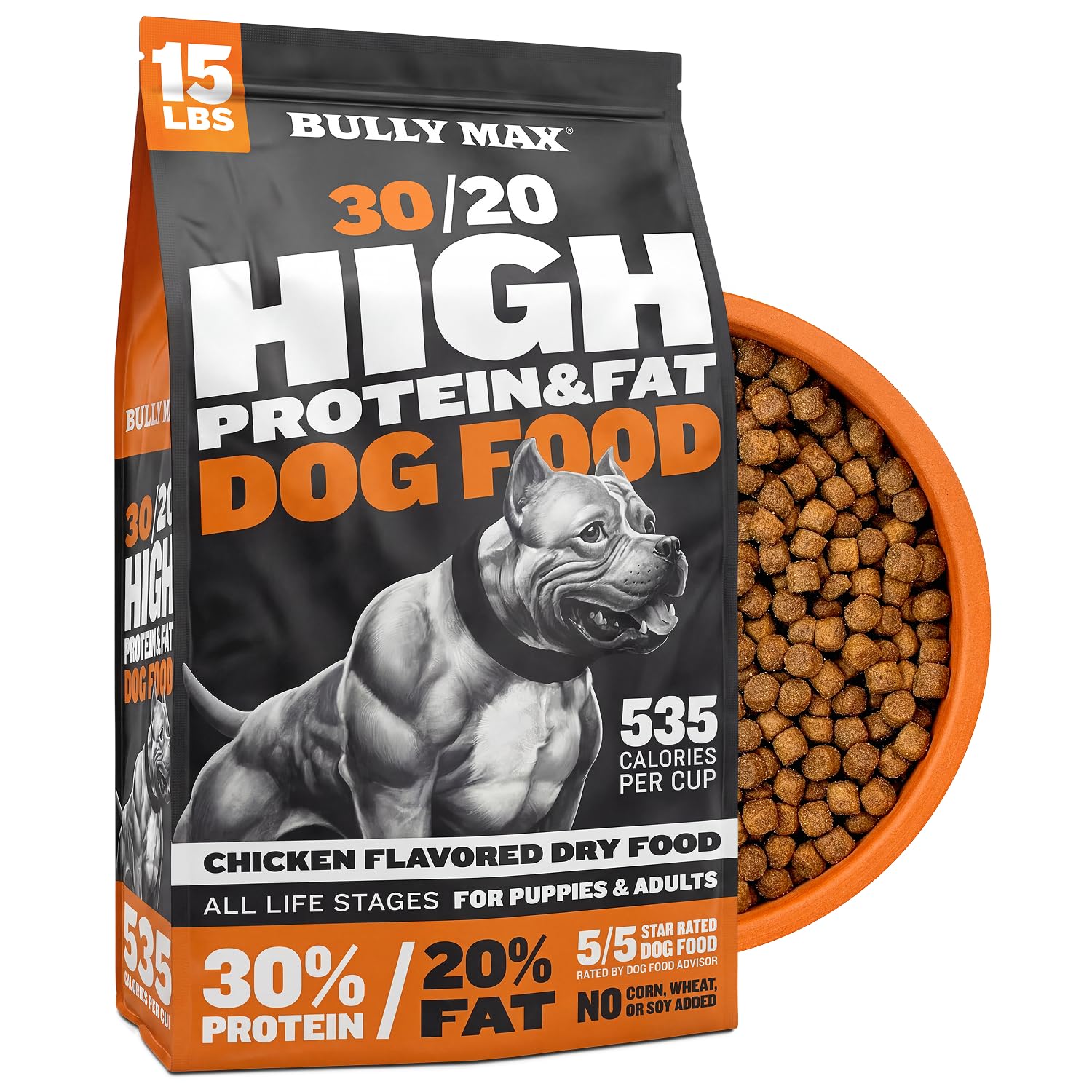
Bully Max High Protein Puppy & Adult

Bully Max High Protein Puppy & Adult

Underweight puppies

Our Score 9.2/10
Check Price

Worth Noting

  • Premium price for a performance food
Bag Size
15 lb
Calories
535 per cup
Life Stage
Puppies 4 weeks and older
Protein/fat
30/20
Read the full review

Bully Max leads with numbers: 30% protein, 20% fat, and 535 calories per cup. That is a performance-food profile, and the marketing around muscle and weight gain is aimed squarely at bully breeds. It is also an all-life-stages food, not a large-breed puppy formula, which is the distinction we care about most.

For a puppy that is underweight after a rough start, that calorie density can be useful. The chicken meal and white fish base gives it a meat-heavy ingredient list, and the formula is designed for dogs from four weeks and older. But a healthy pitbull puppy on a normal growth curve does not need the most calorie-dense food on the shelf; large-breed puppies do better with controlled growth than with a push for maximum bulk.

The other issue is digestion. The feedback is split between puppies that eat it eagerly and those that get loose stools. We do not use it as a first puppy food for a dog that is already thriving; we use it for a specific underweight situation, with a vet's guidance and a slow transition.

That makes Bully Max a narrow pick, but a real one. If you are rehabbing a skinny puppy and your vet wants more calories, this is the formula in this group built for that job. If you are simply raising a healthy pitbull puppy, the large-breed Pro Plan is the more sensible default.

Bottom line: We see Bully Max as a targeted weight-gain food, not a default puppy diet: it is calorie-dense and high-protein, useful for an underweight rescue puppy under vet guidance.

How We Tested Puppy Food for Pitbulls

We started by narrowing a long list of puppy foods to formulas with complete-and-balanced statements for growth, then filtered by protein and fat levels, DHA, calcium-to-phosphorus ratio, first ingredients, kibble size, and cost per day. Fourteen formulas made the cut. Over six months, our panel of pitbull and pitbull-mix puppy households fed each one for at least three weeks, transitioning slowly over seven to 10 days.

At morning and evening feedings, we measured portions and timed how quickly each bowl was finished, noting whether puppies walked away, came back for more, or needed encouragement. We also watched whether they chewed their kibble or gulped it whole. During every switch, we logged stool firmness, gas, and any diarrhea; foods that produced loose stools or midnight cleanups got marked down.

We read guaranteed analyses and ingredient lists for named meats, adequate protein and fat for growth, and a calcium-to-phosphorus ratio suited to growing puppies. Weekly weight and body-condition checks helped us judge whether puppies were thriving, not just filling out. Finally, we calculated cost per day from bag price and feeding guidelines, since a cheaper bag that requires larger servings is no bargain.

How to Choose the Right Puppy Food for Pitbulls

Start with life stage, then breed size

A puppy formula is the starting point for a growing pitbull. The next question is breed size. If your puppy is headed for the larger end of the pitbull range, a large-breed puppy formula is the safer default because it is built around a controlled growth rate and joint support. If your puppy is on the smaller side, an all-breed puppy formula can work, but we still check calorie density and portion guidance rather than assuming every puppy bag fits every puppy.

Read the first ingredient and the guaranteed analysis

We look for a named meat first, but we do not stop there. The guaranteed analysis tells you more about the diet than the front of the bag: protein and fat levels, and whether DHA is included for brain and vision development. A higher protein number is not automatically better; the balance of fat, calcium, and phosphorus matters more for a large-breed puppy. Use the first ingredient as a starting point, then check the nutrients that support growth.

Watch calories and growth rate

The pitbull trap is the muscle-and-weight-gain pitch. A high-calorie performance food can be useful for an underweight rescue puppy, but it is not the right default for a healthy large-breed puppy. Rapid growth puts stress on developing joints. We prefer a formula with a controlled-growth claim and a calorie level you can portion accurately, then we adjust the amount based on body condition rather than the biggest number on the bag. If you are rehabbing a skinny puppy, involve your vet before switching to a performance food.

Match the formula to the stomach and coat

If your puppy scratches after chicken-based food or has loose stools on richer formulas, a chicken-free salmon recipe or a lamb-based formula is worth a trial. Probiotics and prebiotic fiber are useful additions, but they are not a cure-all. Give any new food several days of gradual transition, and judge by stools, itchiness, and energy rather than by the first enthusiastic bowl. A food that works for one pitbull puppy may not work for another; the trial is the point.

Bag size and cost per pound

A 5-pound bag is a trial size for a pitbull puppy; a 30- to 40-pound bag is the practical size once you know the formula works. Big bags usually cost less per pound, but they only save money if you can store them sealed and cool and use them before the food goes stale. We prefer to buy a smaller bag, confirm the stools are firm and the puppy is thriving, and then move to the bulk size than save a little per pound on a food the puppy refuses.

Frequently Asked Questions

Final Verdict

Our default is the Purina Pro Plan Large Breed Puppy. It gives a growing pitbull the controlled growth, joint support, and DHA we look for, and the 34-pound bag suits a puppy that eats a lot.

If the upfront cost is the hurdle, Purina ONE Healthy Puppy is the value choice; if chicken seems to be the trigger, go with the salmon-based Pro Plan Sensitive. For a grain-free household, Taste of the Wild is the alternative we reach for.