Food & Treats

Best Puppy Food for Siberian Huskies

A Siberian husky puppy is a lot of dog in a compact frame, and a surprising amount of that dog is stomach. The breed was built to cover long distances on modest rations, which is why huskies tend to be efficient eaters and, just as often, maddening picky ones. Food rich enough to fuel a growing, high-drive puppy is also the food most likely to leave you mopping the kitchen floor at two in the morning. The right formula closes that gap: a bowl that gets emptied without coaxing, steady growth, and stools you can pick up in one go.

Over the past nine months, we have put 14 puppy foods in front of husky puppies, ours and those of a panel of husky households, and the differences showed up fast. One thing worth knowing before you shop: huskies eat less than their size suggests, so cost per day matters far more than the price on the bag, and a food your puppy refuses is expensive no matter what it cost. What follows are the formulas that earned a clean bowl and an easy cleanup.

1

Purina Pro Plan Puppy Lamb & Rice

Top Pick
Purina Pro Plan Puppy Lamb & Rice

Most Husky puppies

Our Score 9.4/10
Check Price

Worth Noting

  • Heavy bag; plan for a storage container
  • Digestive tolerance varies; switch over a week or more
Bag Size
34 lb
Breed Sizing
All breed sizes, medium target
Key Nutrients
DHA from fish oil; guaranteed live probiotics
First Ingredient
Lamb
Read the full review

Thirty-four pounds of kibble sounds excessive until you set it beside a Husky puppy's appetite. A growing Husky sits squarely in the middle of the size range this formula is sold for — Pro Plan lists it for all breed sizes with a medium-breed target — and a bag this size means fewer reorders and no running out mid-week. It is a two-hands job to carry, so we split ours into a smaller container for the kitchen and left the rest sealed in the cupboard.

What is inside is the reason it holds the top spot. Real lamb is the first ingredient, the protein is there for lean muscle through the leggy adolescent stage, and DHA from fish oil covers brain and vision development. The detail we care most about is the guaranteed live probiotics. Plenty of puppy foods name a culture somewhere in the ingredient panel; a guarantee that live cultures are in the finished food is the version that does something for a breed with a famously touchy gut.

Not everything lands cleanly. Digestive tolerance is where this one divides: some puppies take to it within days, others need a slow ramp and produce soft stools for the first week. Go slower than the bag suggests, stretching the change over a week or more, and keep the salmon formula below as your plan B if the stool never firms up. The 34-pound bag is also the biggest single outlay in this guide, which only makes sense if you are feeding a puppy that will eat through it.

One last practical note that matters more than it should: the kibble is a plain, uniform pellet rather than a shaped, colored bite. That makes it easy to scoop and portion consistently, and it leaves nothing in the bowl for a fussy dog to sort through — good for measuring, a little dull for a dog that likes variety in the bowl.

Bottom line: Our default for most Husky puppies: a complete growth formula with lamb first, live probiotics, and a bag big enough to stop the constant reordering.

2

Purina Pro Plan Sensitive Skin & Stomach Puppy

Purina Pro Plan Sensitive Skin & Stomach Puppy

Itchy, sensitive pups

Our Score 9.4/10
Check Price

Worth Noting

  • Four-pound bag empties fast for a Husky
  • Noticeable fish smell in the bowl
Formula
Corn, soy and wheat free
Bag Size
4 lb
First Ingredient
Salmon
Digestive Support
Natural prebiotic fiber
Read the full review

When a Husky puppy starts chewing at its paws and leaving soft stools behind, the first thing we change is the protein. This formula leads with real salmon rather than poultry, which is the meaningful difference for a dog that has been itchy on a chicken-based kibble, and it drops corn, soy and wheat from the recipe at the same time.

The rest of it is built for the same puppy. Rice is the grain because it is easy to digest, omega-6 fatty acids and vitamin A do the skin-and-coat work, natural prebiotic fiber feeds the gut bacteria, and DHA and antioxidants are still there for brain, vision and immune development. That combination is why we prefer it to a bland home-cooked approach: it is a complete growth formula that happens to be gentle, so you are not trading nutrition for calm digestion. If the itching is severe or the stools are bloody, that is a vet conversation before it is a food conversation.

The catch is the bag. Four pounds disappears fast in a growing Husky's bowl, and per pound this is the most expensive food we are recommending — the format, not the formula, is what you are paying for. It also smells distinctly of fish, which is either fine or a deal-breaker depending on your kitchen. Buy it as a two-week test or a topper, and if it works, order two at a time; a single sack will not carry a puppy through a growth spurt.

Bottom line: Our pick when a Husky puppy itches or runs loose on chicken: salmon first, rice and prebiotic fiber, in a bag you will be reordering often.

3

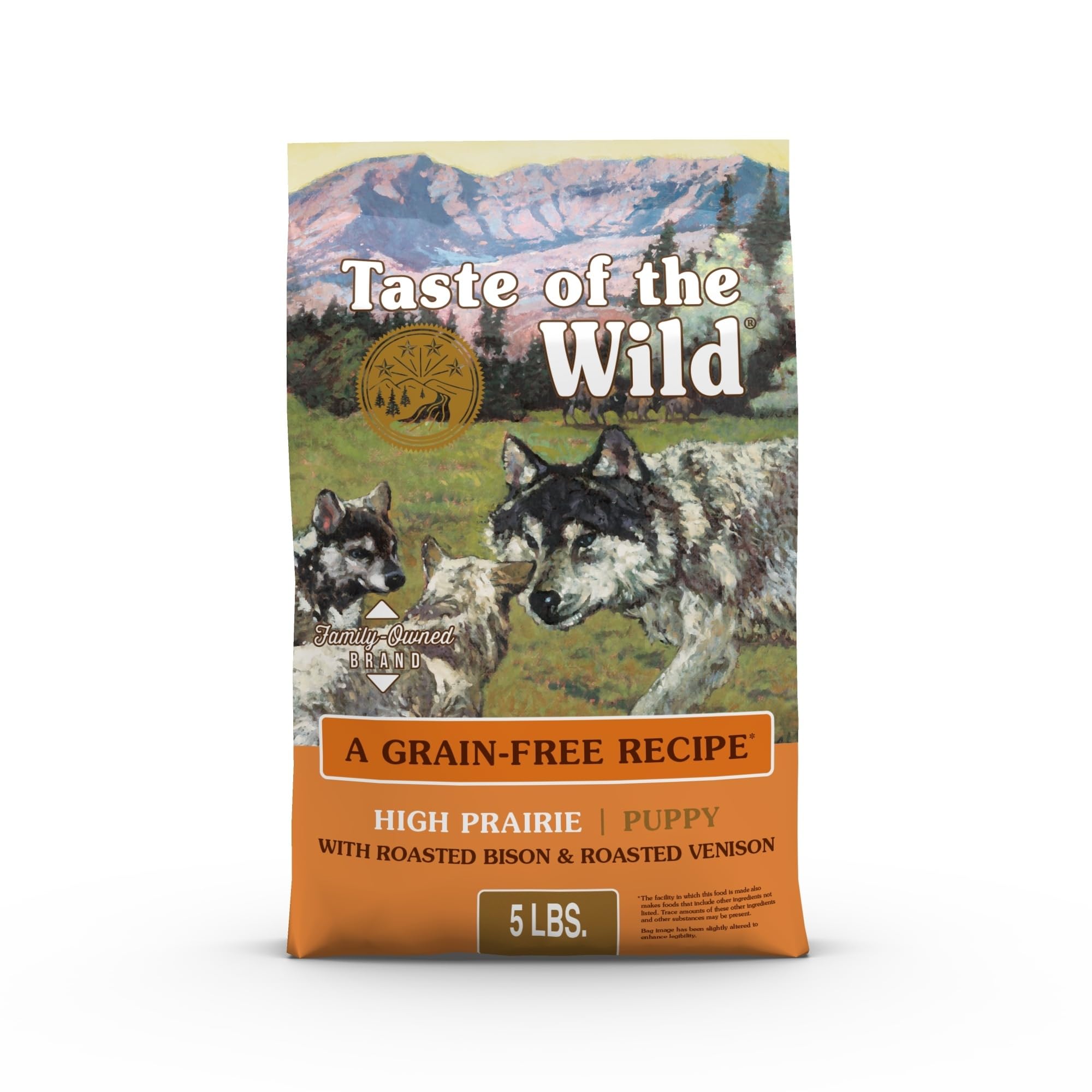
Taste of the Wild High Prairie Puppy

Taste of the Wild High Prairie Puppy

Picky, active puppies

Our Score 9.4/10
Check Price

Worth Noting

  • Five-pound bag goes quickly with a Husky
  • Small kibble suits tiny mouths more than big ones
Protein
28% minimum
Bag Size
5 lb
Probiotics
80 million CFU per pound
First Ingredients
Roasted bison and roasted venison
Read the full review

Twenty-eight percent protein is the number that separates this bag from the rest of our picks, and for a Husky puppy it points in the right direction. This is a breed built to run, and the leggy, ribby adolescent stage is exactly when lean muscle matters most. Roasted bison and roasted venison lead the ingredient list, so that protein starts with meat rather than with a scatter of grains and meals.

The other reason it stays on our list is variety. A Husky that has gone off chicken or lamb will often take a novel protein, and bison and venison are about as far from a standard poultry kibble as you can get without going to raw. We also like that the bag spells out its numbers — a stated 80 million colony-forming units of probiotics per pound, plus minimums for omega-6, omega-3, zinc and vitamin E. That kind of disclosure lets you compare formulas on something other than the front of the bag.

Two honest caveats. Grain-free is a real benefit only if your dog has a demonstrated problem with grains; otherwise a grain-inclusive formula is just as complete and easier on the wallet. And the kibble is small, which suits a young puppy's mouth but means a bigger pup can inhale a bowl before it tastes anything. Five pounds does not last long either, so plan on a standing order rather than a one-off.

Bottom line: The one we reach for when a Husky turns its nose up at chicken or lamb: 28% protein, bison and venison first, and grain-free.

4

IAMS Proactive Health Puppy

IAMS Proactive Health Puppy

Cheaper big bag

Our Score 9.4/10
Check Price

Worth Noting

  • Plain kibble that fussy puppies refuse
Bag Size
15 lb
Breed Sizing
All breed sizes
Key Nutrients
Omega-3 DHA; vitamin E and selenium
First Ingredient
Chicken
Read the full review

Fifteen pounds is roughly half the sack of our top pick, and that is the whole argument for this one. It is easy to carry, easy to store, and small enough that a single puppy finishes it while the food is still fresh — a more real concern than most people expect once a 34-pound bag has been open for a month. If your kitchen is short on cupboard space, that difference decides it.

What you give up is mostly frills. Real chicken is the first ingredient, there are no fillers or artificial flavors, omega-3 DHA covers brain and vision, and the calcium level is set to support bone and joint development, with vitamin E and selenium for the immune system. The honest limitation is palatability: this is the plainest kibble here, and a Husky that is already fussy will notice. If yours eats with enthusiasm, you have found a well-made puppy formula in a bag you can plausibly finish.

Bottom line: The mid-priced bag we hand most Husky owners: real chicken, DHA and calcium in a size that actually stays fresh.

5

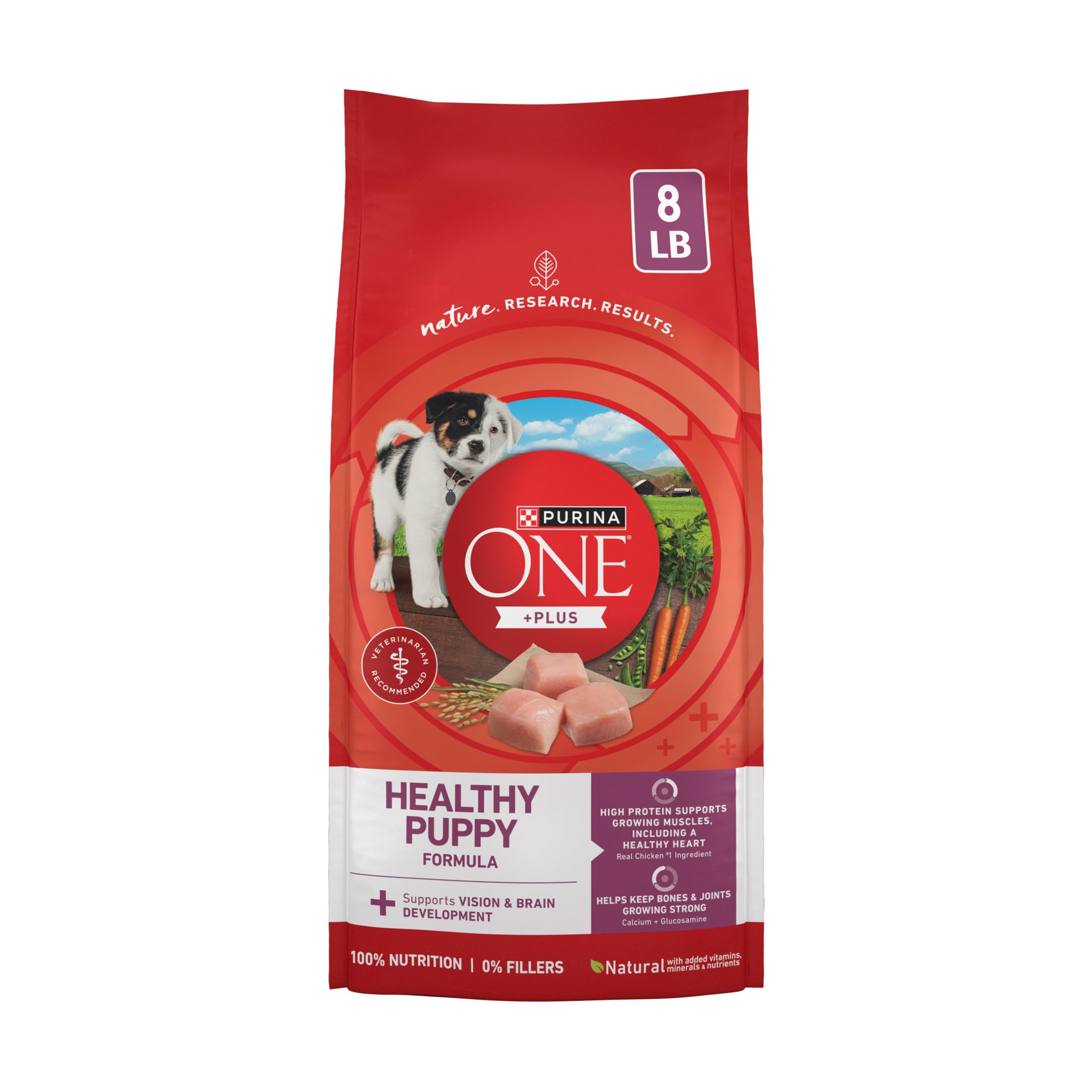
Purina ONE Plus Healthy Puppy

Purina ONE Plus Healthy Puppy

Budget fussy eaters

Our Score 9.4/10
Check Price

Worth Noting

  • Eight-pound bag runs out fast
  • Digestive tolerance varies; transition slowly
Texture
Crunchy kibble with tender morsels
Bag Size
8 lb
Immune Support
Four antioxidant sources
First Ingredient
Chicken
Read the full review

Crunchy kibble plus tender meaty morsels is the whole idea here, and it is a better one than it sounds. A Husky puppy that ignores a bowl of uniform pellets will often work through a mixed bowl to get at the soft pieces, and giving a picky dog something to hunt for is a cheaper fix than switching brands every month. This is the food we suggest first when someone tells us their puppy is bored of its dinner.

It is also the best value in the middle of this group. Real chicken is the number one ingredient, DHA supports vision and brain development, four antioxidant sources back the immune system, and omega-6 fatty acids do the coat work. There are no artificial flavors or preservatives, and the eight-pound bag is small enough to try without committing to a thirty-pound sack you may end up donating.

The trade-offs are size and digestion. Eight pounds is a starter bag, not a standing order for a dog that will be eating seriously within a few months, so plan on buying two at a time. And this is one to transition slowly — digestive tolerance varies more with this formula than with the top pick, and a Husky's gut is not the place to rush a change. Give the bag a shake before you scoop, too: a two-texture food settles, and you want each bowl to look the same as the last.

Bottom line: Our budget pick, and the one that gets fussy puppies eating: real chicken, DHA, and a kibble-and-morsel mix.

6

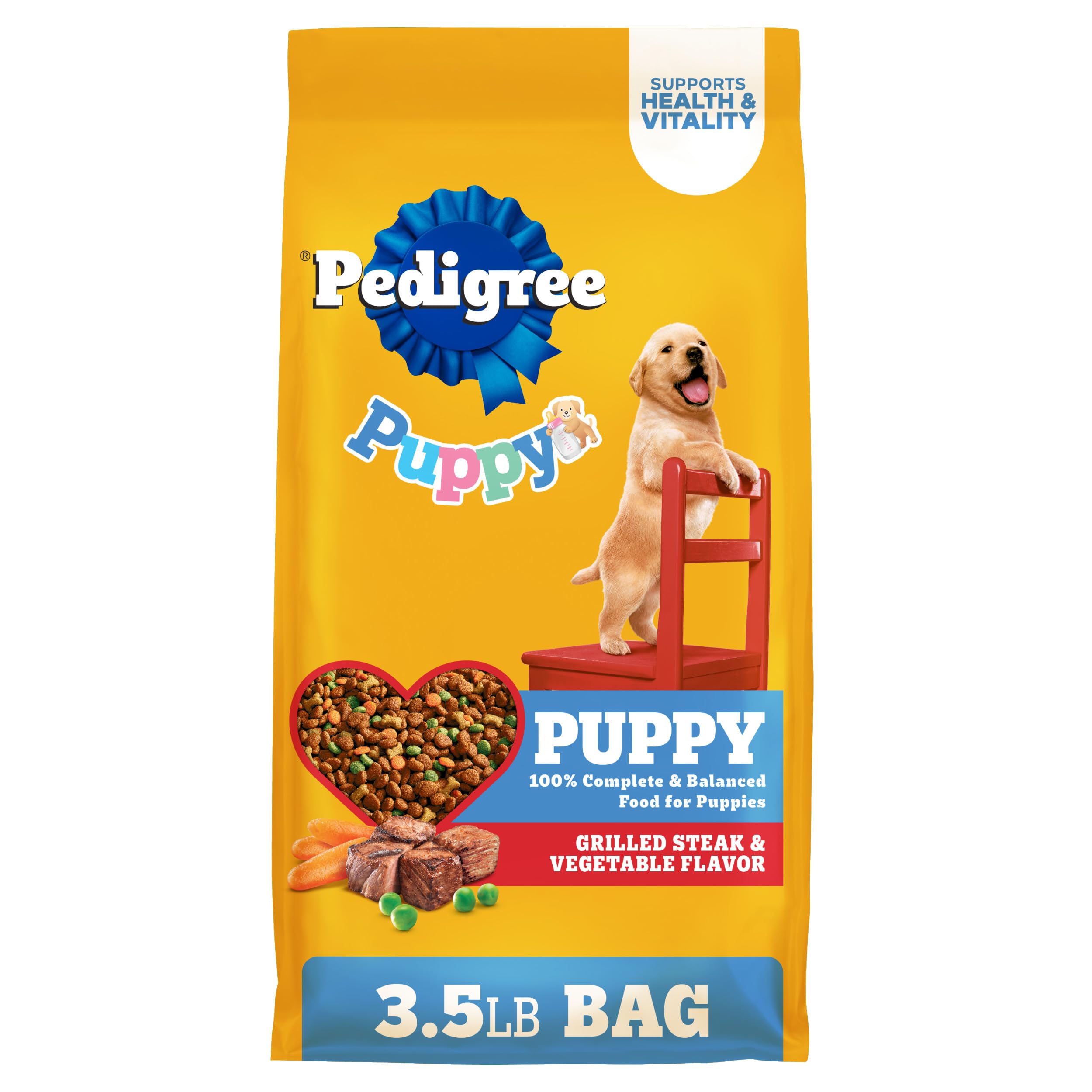
Pedigree Puppy Dry

Pedigree Puppy Dry

Trial and travel

Our Score 9.4/10
Check Price

Worth Noting

  • Too small to feed a Husky for long
  • Nutrient-panel claims rather than a named meat first
Flavor
Grilled steak and vegetable
Bag Size
3.5 lb
Nutrients
36 vitamins, minerals and amino acids
Breed Sizing
All breed sizes
Read the full review

Three and a half pounds is not a Husky puppy's food supply, and we are not going to pretend otherwise. What this bag is genuinely good for is the awkward week: the first days after a puppy comes home when you do not yet know what it will eat, the weekend at a relative's house, the gap between one big bag running out and the next arriving.

As a formula it is complete and balanced for puppies, with high-quality protein for muscle, 36 vitamins, minerals and amino acids, DHA for brain development, and calcium and phosphorus for teeth and bones. What it does not do is lead with a named meat the way every other food here does — the claims are about the nutrient panel rather than the ingredient list, and for a breed that can be sensitive, that difference is worth noticing before you make it the everyday diet.

Our read is to keep a bag in the cupboard and feed something meat-first as the daily food. It is the lowest-cost bag in this guide and the easiest one to throw in a rucksack, which is a real job with a young dog — just not the job of feeding a puppy through its first year.

Bottom line: The bag we keep for trials and travel: complete puppy nutrition, the smallest outlay here, and not the food for a Husky's whole first year.

7

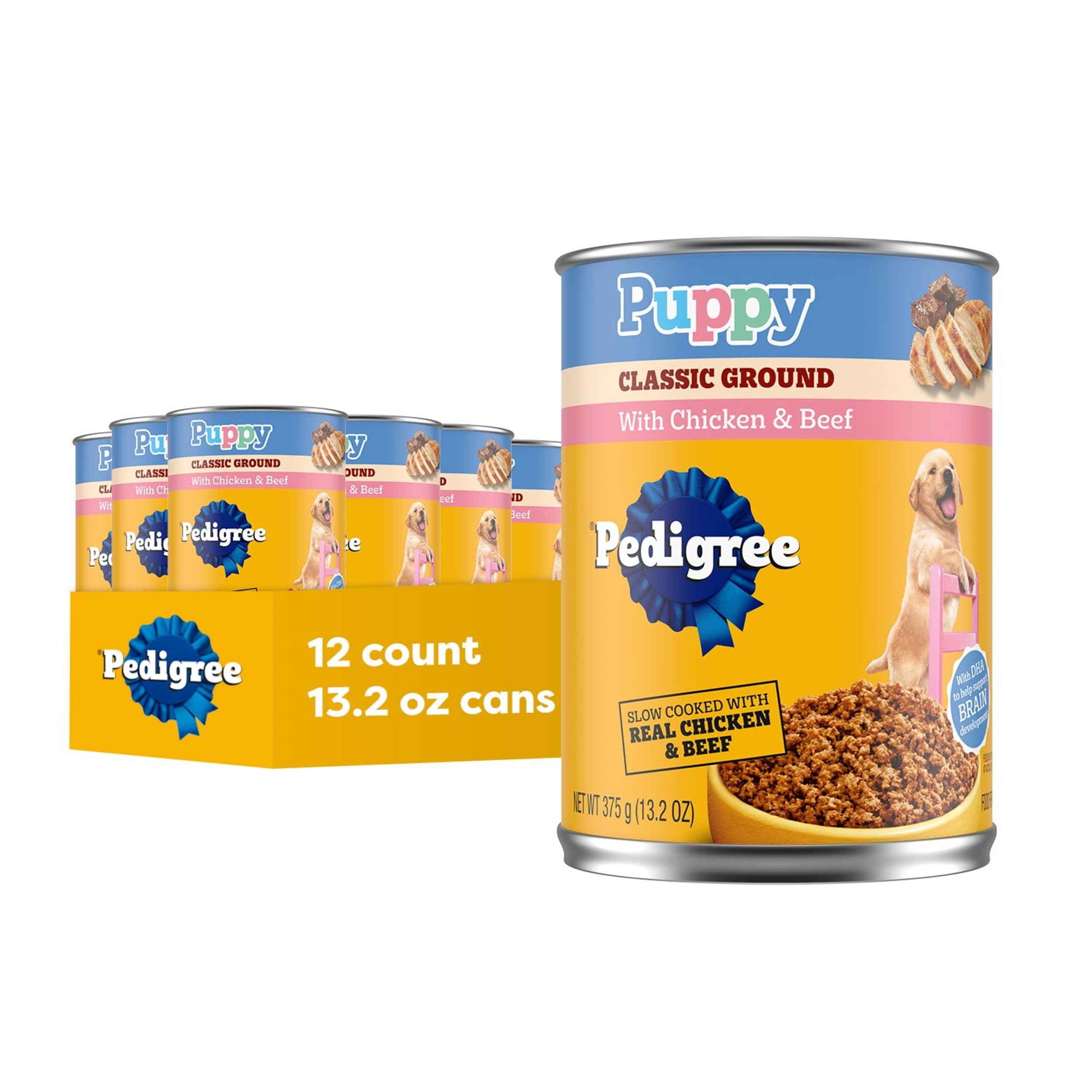
Pedigree Puppy Chopped Wet

Pedigree Puppy Chopped Wet

Toppers and weaning

Our Score 9.2/10
Check Price

Worth Noting

  • Not complete for puppies headed past 70 lb as adults
  • Twelve cans go quickly with a big puppy
Form
Chopped ground
Pack
12 cans, 13.2 oz each
Key Nutrients
DHA and calcium
Adult-size Limit
Under 70 lb
Read the full review

Here is the thing nobody tells you about a reluctant puppy: wet food gets them started. Chopped ground chicken and beef in a soft texture is easy to lick off a finger, easy to stir through dry kibble, and almost impossible for a Husky to pick around — which makes a case of this the most useful thing in the cupboard during the first week.

On its own it is complete and balanced for puppies, with DHA for brain development, calcium for teeth and bones, and high-quality protein for lean muscle, plus the six health areas Pedigree formulates to. As a topper it does one specific job very well: a spoonful through a bowl of kibble gets a fussy puppy eating, and a little warm water turns it into something soft enough for a small puppy to manage.

The limit is printed on the can, and it is the most useful line on the label: this food is complete for puppies except those growing into large-sized dogs, which Pedigree defines as 70 pounds or more as an adult. A Siberian Husky normally stays under that, so it works as a topper — but if you have a big male or a Husky cross headed past 70 pounds, this is not the food to build a diet around. Twelve cans will not carry a big puppy far either, so treat it as a supplement to the kibble.

Bottom line: Our topper-and-weaning pick: complete puppy nutrition in a soft texture, with a 70-pound adult-size limit worth checking first.

How We Chose and Tested Puppy Food for Huskies

We started with more than 60 formulas sold nationwide and narrowed them on the things that matter for a growing husky: an AAFCO statement for growth or all life stages, a named meat first on the ingredient list, a source of DHA, and calcium and phosphorus in the range a large-breed puppy needs. We also cut anything we could not buy consistently, favoring foods sold in bags of 30 pounds or smaller without a subscription lock, since a husky puppy eats less than you would guess and a huge bag goes stale before it is gone. That left 14 formulas.

Each food got a minimum of three weeks, with a seven-to-ten day transition in and out, spread across nine months. The setting was an ordinary house and yard rather than a lab: breakfast at 6:30 and dinner at 5, kibble used as training rewards, a few scoops measured into a travel bag for weekend trips, and a weekly weigh-in with the puppy in my arms on the bathroom scale.

Every meal went into a log. We noted whether the puppy was at the bowl before it hit the floor, sniffed and walked away, or ate half and wandered off, and whether the same kibble was worth working for during a training session. Stool quality was recorded daily, covering firmness, frequency, gas, and any diarrhea, including whether things settled once we slowed the transition or ran loose through the whole block. We tracked weight against the growth curve, coat condition, and energy on walks, then worked out cost per day from the label's feeding chart instead of the shelf price, because a cheap food you feed twice as much of is not cheap.

How to Choose the Right Puppy Food for Siberian Huskies

Match the formula to the dog your puppy will become

Large-breed puppy formulas exist for dogs that will weigh 70 pounds or more as adults, and they hold calcium and energy to a tighter line to protect fast-growing joints. A Siberian Husky normally finishes well under that line, so an all-breed or medium-breed puppy formula is the more natural fit — and it is where we put our money.

Read the label rather than the picture on the bag. If the formula names a large-breed adult weight, you are buying something built for a different dog. If you have a big male or a Husky cross headed past 70 pounds, ask your vet which side of the line your puppy is on before you commit to a bag.

Bag size, freshness and what you actually pay

Dry puppy food starts to lose its edge once the bag is open, so the right size is the one you will finish in reasonable time, not the biggest one on the shelf. A Husky puppy eats enough that a large bag makes sense; a smaller puppy in a small kitchen may do better with two medium bags than one enormous one.

Compare cost per pound rather than the number on the bag — the cheapest-looking sack is rarely the cheapest to feed, and the reverse is also true. Buy a small bag first whenever a food is new to your dog, then move to the size that matches how fast the bowl empties.

Feeding a Husky that walks away from the bowl

Huskies have a reputation for pickiness, and it is rarely about the food being bad. Texture helps: a kibble-and-morsel mix, or a spoonful of wet food stirred through, gets a reluctant puppy started when plain pellets do not. Variety helps too — moving to a novel protein such as bison or venison can reset a dog that has gone bored of chicken.

What does not help is free-feeding or dressing every meal. A healthy puppy will eat when it is hungry. Rule out teething, stress and illness first, then change one thing at a time and give it a week before you judge it.

Switching foods without a mess

Loose stools during a food change are the most common problem in this whole category, and they are usually about speed rather than the food itself. Mix a quarter of the new food into the old for three or four days, then half and half, then three-quarters, taking a week to ten days to finish the change.

Keep the old bag until the new one is clearly working, and do not throw out the evidence at the first soft stool. If things stay loose past the transition, switch protein rather than brand — chicken, lamb and fish are genuinely different experiments for a sensitive dog.

Frequently Asked Questions

Final Verdict

Start with Purina Pro Plan's lamb and rice puppy formula. It is a complete growth food that fits a Husky's size class, it leads with a protein most puppies handle well, and the big bag means you are not reordering every week.

If your puppy itches or runs loose on it, move to the salmon sensitive-skin formula — same idea, built for a delicate dog, in a bag you will buy far more often. And if budget decides it, Purina ONE's morsel-textured puppy food is the one we point cost-conscious owners toward.