Collars & Leashes

Best Puppy Harness of 2026

A puppy can back out of a harness faster than you can tighten a strap — one startled hop at a passing skateboard and you're standing there holding an empty clip while your dog heads for the neighbor's lawn. A good harness closes that gap. It holds a narrow-chested, wiggly puppy securely without pulling on the throat, and it goes on and off without a wrestling match on the front porch. The right one also grows with the puppy wearing it, because the dog you fit today will be a different shape six weeks from now.

We've fitted 14 harnesses on puppies from a 6-pound fluffball to a 24-pound legs-for-days teenager over four months of daily walks, and the differences show up immediately. One thing I've learned the hard way: ignore the weight range on the package and measure the chest girth instead. Puppies are narrow and deep rather than round, and a harness that gaps at the chest is the one they slip. Adjustability matters more than the size printed on the label, and velcro is a fur magnet that stops gripping once it gets fuzzy. The picks below earned their spot the hard way.

1

Ruffwear Front Range Harness

Top Pick
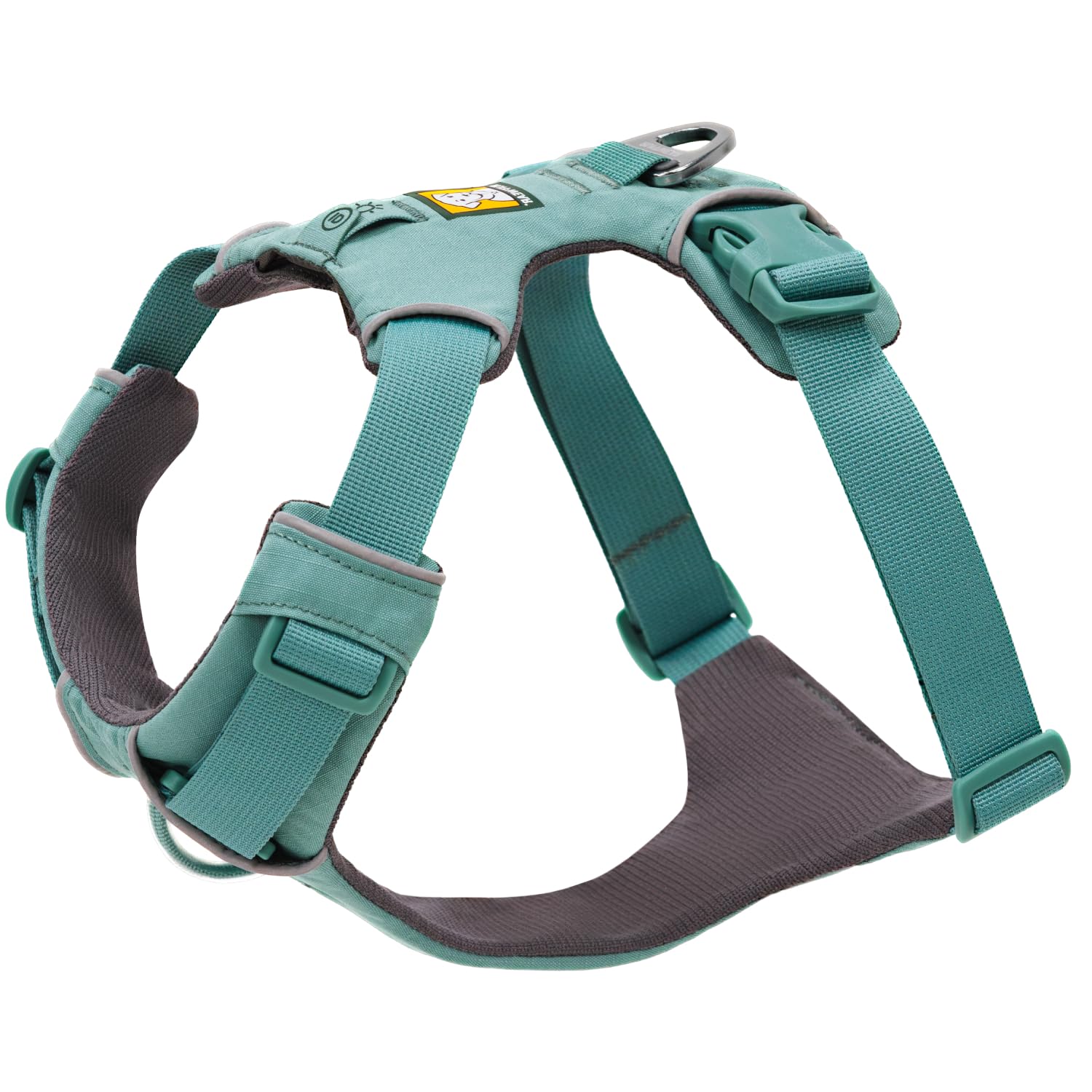
Ruffwear Front Range Harness

Long-term fit

Our Score 9.2/10
Check Price

Worth Noting

  • Premium price for a size a puppy will outgrow
Weight
5.44 oz
Padding
Closed-cell foam
Adjustment Points
4
Leash Attachments
Back V-ring and chest webbing
Read the full review

The Front Range sits at the top of this group on price, and the difference turns up in the parts you handle: an aluminum V-ring instead of a stamped hook, closed-cell foam through the chest and belly panels, and webbing that stays flat where it bends. Four straps adjust at the neck and behind the front legs, the same count as our top pick over a narrower range.

Where the money goes is a fit that does not move. Set it once on a dog close to adult size and the padding keeps the chest panel from digging in behind the shoulders on a long walk. The harness effectively disappears, which is the best thing we can say about a piece of dog kit.

The fit decides whether the premium is worth paying. On a narrow-chested puppy with a slack neck strap, this is a harness a determined dog can back out of, so measure, take up the neck adjustment, and check it will not come off over the head before you trust it on a pavement. If your puppy will outgrow the size in a season, that is a lot of harness for a stage it passes through quickly; for a breed that is nearly done at eight months, this is the one here built to keep going after the puppy stage.

Bottom line: Worth it for a puppy that is nearly full-grown, or an owner who wants padding and hardware that outlast the chewing stage, as long as the neck straps are dialed in.
2

rabbitgoo Step-In Harness Set

rabbitgoo Step-In Harness Set

Small puppies

Our Score 9.2/10
Check Price

Worth Noting

  • Little growth room past a 16.5-inch chest
Weight
4.23 oz
Closure
Hook-and-loop with buckle
Included
Harness and 5.12 ft leash
Chest Girth
15.1-16.5 in
Read the full review

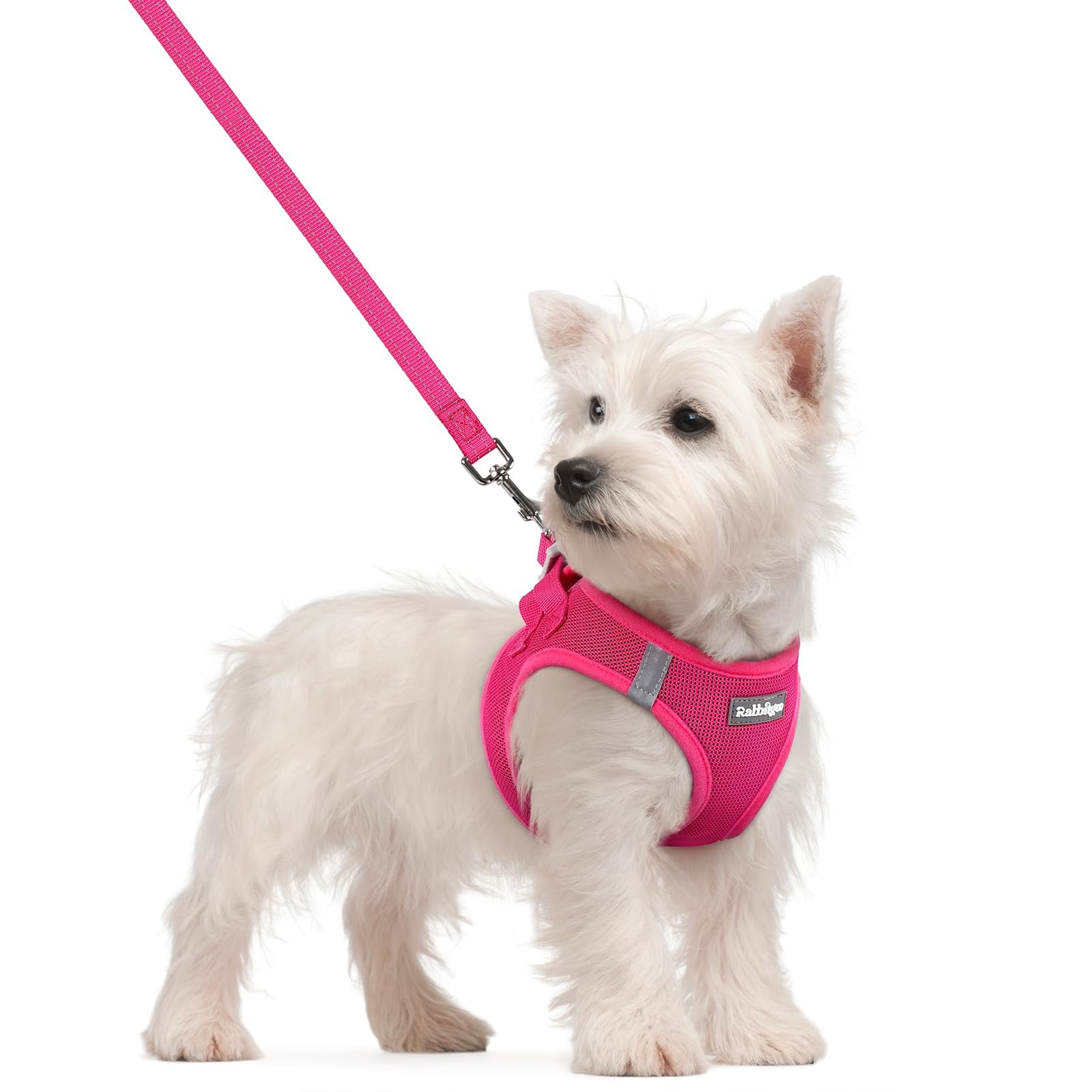
At 120 grams, this is the lightest harness in the group, and on a small-breed puppy that is most of the argument. Padding, a handle and four straps add up to a lot of garment on a young dog; this one is closer to a second skin. It also arrives with a matching 5.12-foot leash, which is one less thing to buy before a first walk.

The step-in shape, hook-and-loop then a buckle then two D-rings, is quick on a puppy that has learned to stand still for four seconds, and reflective bands run across the chest. The limit is the sizing: the small covers 15.1 to 16.5 inches of chest, a narrow window, so measure first and expect to pass it on after a growth spurt. Treat it as the first harness rather than the last one.

Bottom line: For a small-breed puppy's first few months, the low weight and the included leash make this the easiest complete set here to start with.

3

rabbitgoo No Pull Dog Harness

rabbitgoo No Pull Dog Harness

Puppies that pull

Our Score 9.0/10
Check Price

Worth Noting

  • Webbing is stiff to set the first time
  • Hand wash only
Weight
8.82 oz
Chest Girth
15-27.8 in
Leash Clips
Front and back
Adjustment Points
4
Read the full review

Fifteen to 27.8 inches of chest is the number that settles this one for us. That is the widest fit range in the group, spread across four adjustment straps, so the same vest that closes around a scrawny four-month-old still fits a dog that has filled out. For a purchase you would otherwise make two or three times before the puppy is grown, that range is the whole argument.

The two leash points do the rest of the work. Back clip for an ordinary walk; front clip when your puppy starts throwing itself at hedges, because a lead on the chest redirects the pull instead of feeding it. There is a handle on top too, and we used it more than we expected, since lifting a young dog over a stile or into the car by a handle is far less awkward than hauling it up by the lead.

Mesh sits under the fabric panels, which keeps the vest from turning into a coat on a warm walk, and the reflective strips run across the chest and over the back for early starts. Our one ongoing niggle is that the straps can creep, so give the chest straps a tug before you set off, particularly in the first weeks when the puppy is changing shape fast.

Where it asks for patience is the ongoing fit. Check the chest measurement every couple of weeks as the puppy fills out, and this stays the harness you reach for. A loose vest is where slipping out starts, and no amount of adjustment range rescues a fit you have not taken up.

Bottom line: The harness we suggest to most puppy owners: four straps cover the whole growth curve, and the front clip earns its keep the first time your puppy lunges.

4

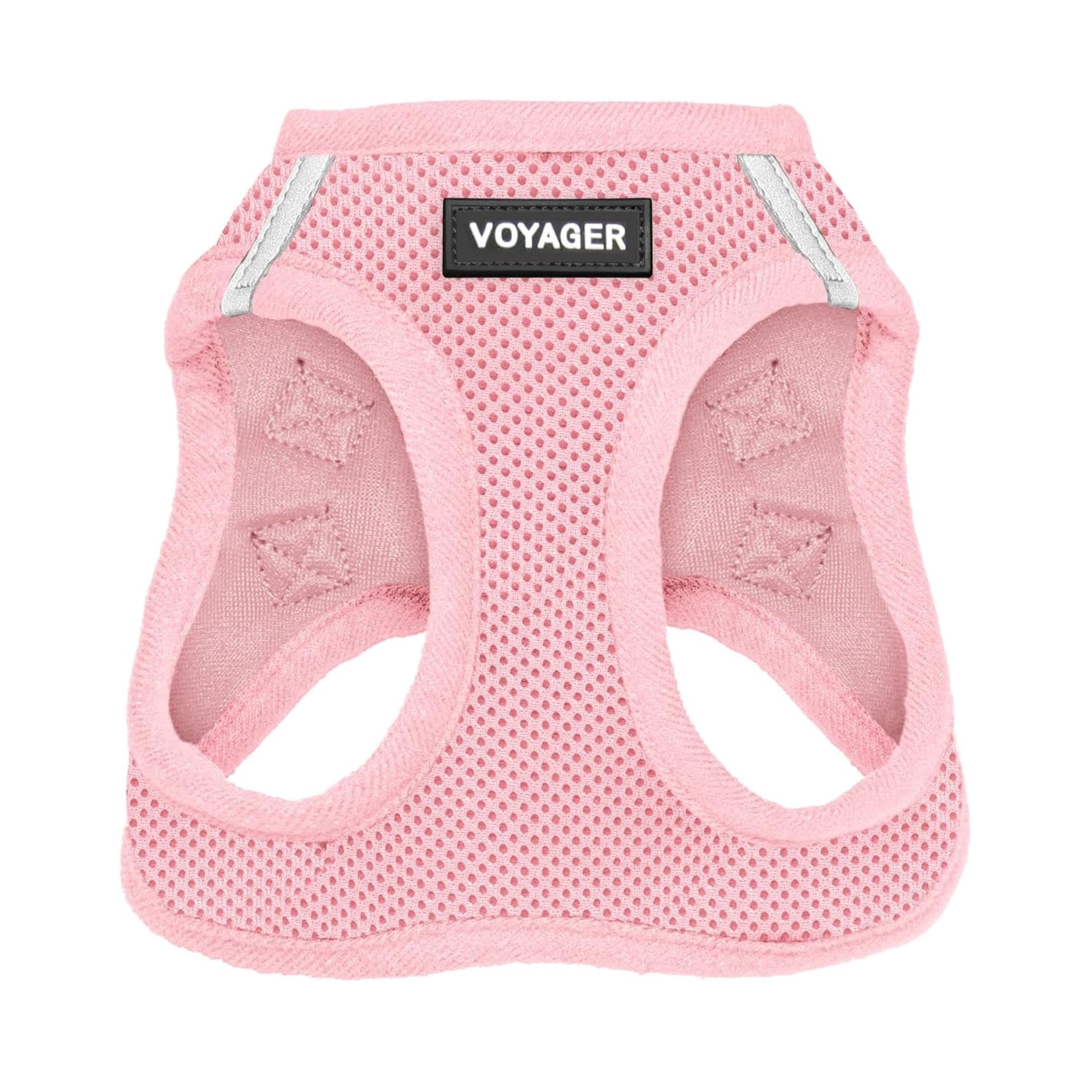
Voyager Step-In Air Harness

Voyager Step-In Air Harness

Quick walks

Our Score 9.0/10
Check Price

Worth Noting

  • Light mesh will not survive a chewer
  • Sizing runs both small and large
Care
Machine wash
Closure
Hook-and-loop, buckle, D-rings
Reflective
2 bands
Chest Girth
14.5-16 in
Read the full review

Lay it on the floor, let the puppy walk into it, close one buckle. That is the whole routine, and on a wriggling eight-week-old it is worth more than any feature on the box. The step-in shape also means nothing passes over the head, which is the part most puppies object to first.

Air mesh keeps the weight down and two reflective bands sit on the sides for dark walks. The fastening is unusually thorough for the money: a hook-and-loop panel, then a buckle, then a double D-ring for the lead, so three things have to fail before a puppy is loose. It also goes in the machine on a cold cycle, which several pricier vests here will not.

Sizing is where it gets messy. This one runs both small and large depending on which size you land on, so ignore the weight band and buy from the chest measurement. The small covers 14.5 to 16 inches, and if your puppy measures at the top of a range, take the size above rather than hoping it loosens.

So it is the harness for a small puppy on short, familiar walks, and the one we hand to anyone whose morning starts with a wrestling match. Be realistic about the mesh: a determined chewer will get through it, and there is less strap here than on a four-point vest, so it will not see out a big growth spurt. Easiest on, first to be replaced, and that is the trade at this end of the group.

Bottom line: For a small puppy who fights the harness, this one closes with a single buckle and comes out of the machine ready for the next muddy walk.

5

PHOEPET No Pull Dog Harness

PHOEPET No Pull Dog Harness

Head-shy puppies

Our Score 9.0/10
Check Price

Worth Noting

  • Straps are stiff to set the first time
Weight
7.68 oz
Buckles
3, one lockable at neck
Material
Oxford cloth and nylon
Leash Clips
Front and back
Read the full review

Plenty of vests ask a puppy to push its head through a loop before anything else happens, and for a dog already unsure about the whole business, that is the moment it decides it hates walks. This one opens completely flat: two chest buckles and a lockable neck buckle, so you lay it over the dog and close it rather than threading anything through.

Two metal loops, front and back, do the same no-pull job as our top pick, and the body is Oxford cloth over nylon rather than mesh, which stands up better to branches and brick corners. The straps do not wander once you have set them. The buckles can bind when grit gets in, which a muddy field will do, so rinse them and work the clip a few times before the next walk.

What we like is that the whole design is organised around getting the harness on and off without a struggle, which is the first milestone a young dog has to pass before any of the rest of walking gets easier. It is cut for medium-sized dogs, so trust the chest measurement over the breed list, and expect the tenth fitting to take a fraction of the time the first one did.

Bottom line: If your puppy backs away from anything going over its head, this is the harness that fixes it: three buckles open it flat, and the neck clip locks once it is on.

6

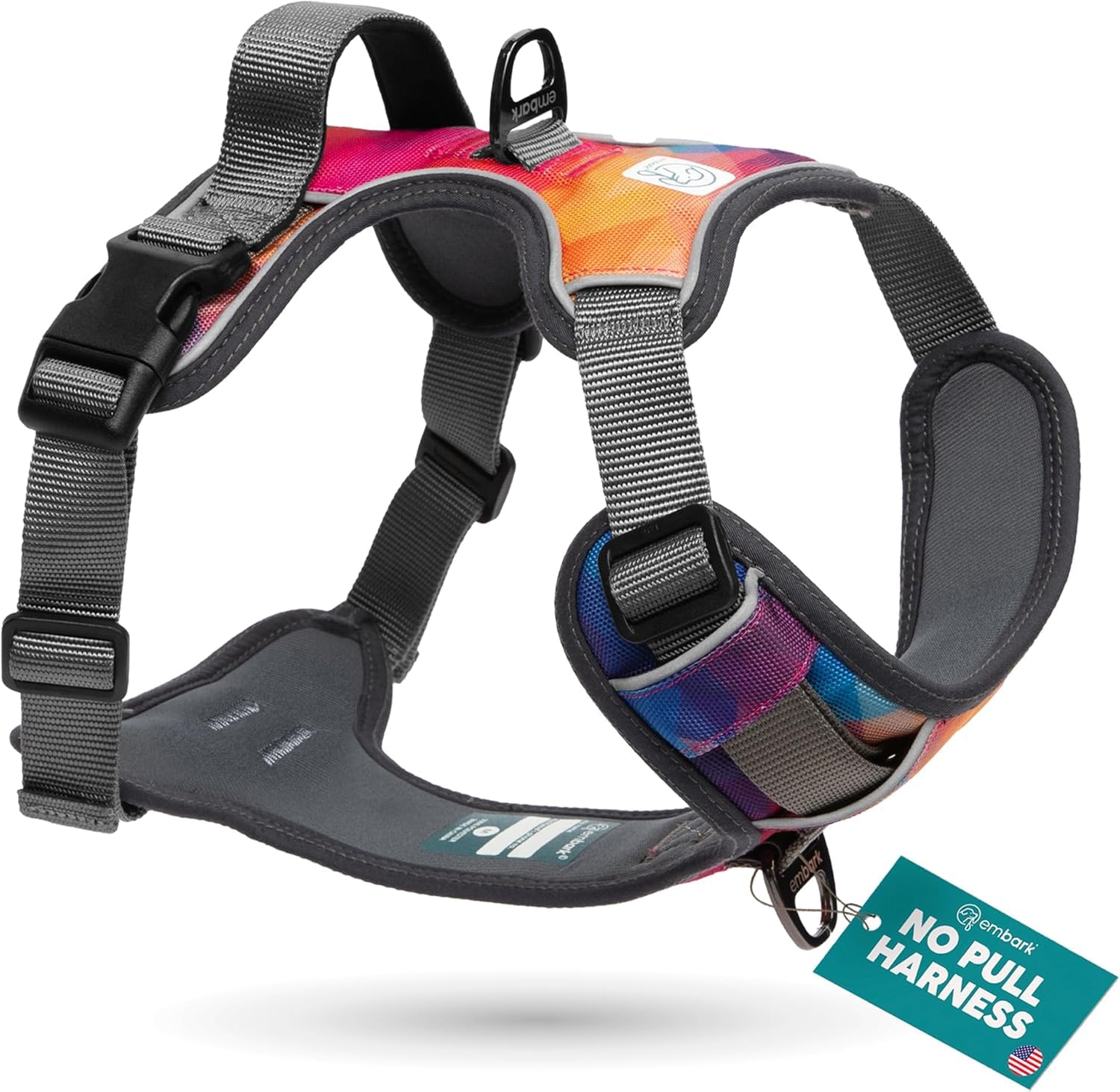
Embark No Pull Dog Harness

Embark No Pull Dog Harness

Evening walks

Our Score 9.0/10
Check Price

Worth Noting

  • Heaviest harness here at 10.56 ounces
Handle
Gel handle
Weight
10.6 oz
Reflective Trim
360 degrees
Adjustment Points
4
Read the full review

The handle is the detail we did not expect to lean on: this one is a gel-covered grip rather than a strip of webbing, and on a puppy that needs a steadying hand at kerbs it is noticeably easier on your palm than the flat handles elsewhere in this group.

Visibility is where it separates itself. The reflective trim wraps the vest in a continuous band rather than sitting in two stripes on the chest, so a dog stepping off a kerb at dusk is outlined from the side, which is the angle a driver actually sees. For anyone walking before work or after dinner through the winter, that is worth more than the padding you give up.

The build is Oxford and heavy nylon with double stitching at the stress points, and it is machine washable. It is also the heaviest harness here at 10.56 ounces, fine on a terrier or a bulldog puppy and a lot on a toy breed. The medium is cut for dogs of that sturdier shape, so check where your puppy's chest lands before assuming this size is yours.

Bottom line: For dark-season walks with a puppy that already has some chest on it, the wrap-around reflective trim and the padded handle make this our pick after sunset.

7

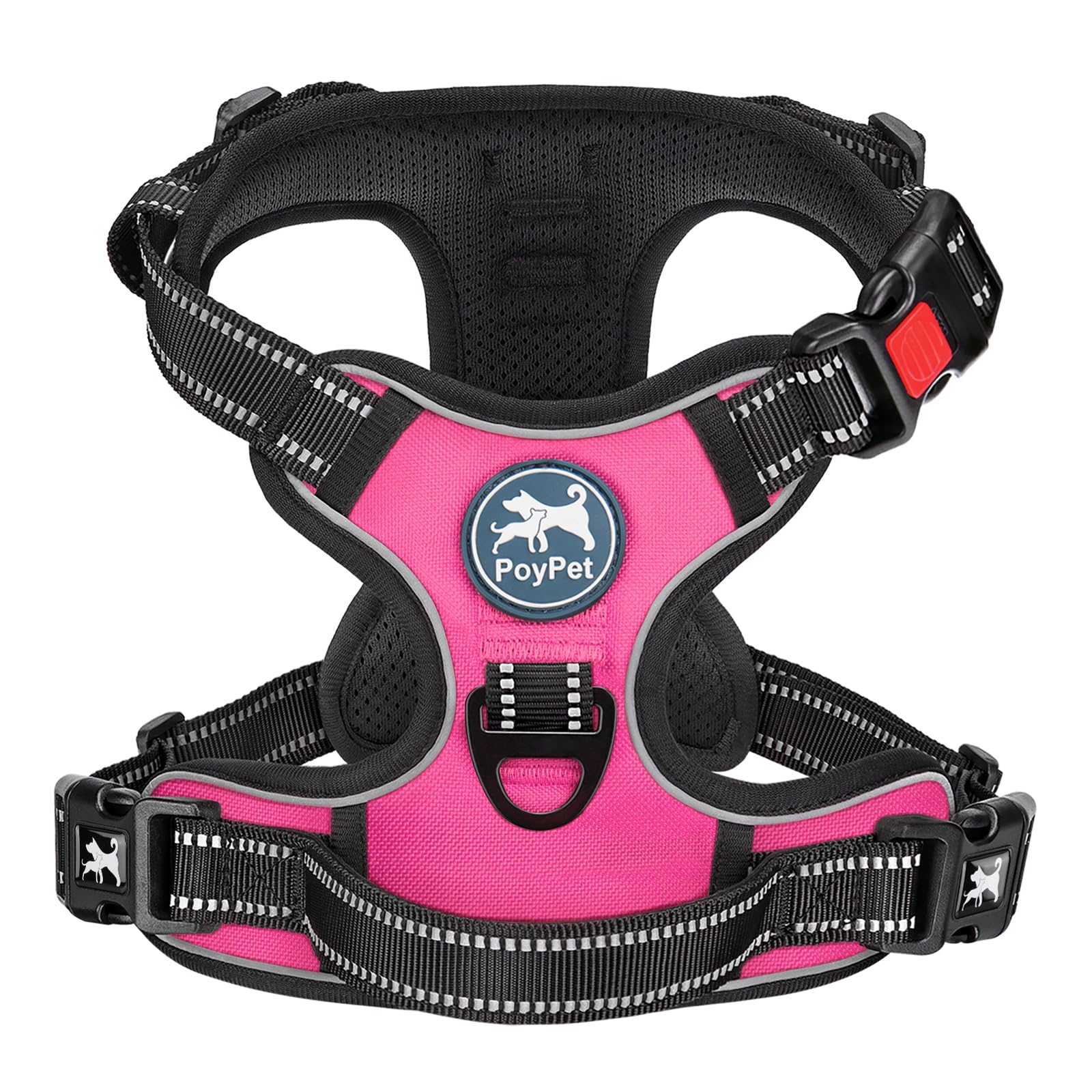
PoyPet No Pull Dog Harness

PoyPet No Pull Dog Harness

Pulling puppies

Our Score 9.0/10
Check Price

Worth Noting

  • Straps take patience to set the first time
Weight
7.68 oz
Leash Clips
Front and back
Neck Buckle
Lockable quick-snap
Belly Straps
Dual elastic
Read the full review

The belly straps are elastic, which sounds like a footnote until a puppy hits the end of the lead: the give absorbs the first part of the jolt instead of passing all of it through the chest and up your arm. On a dog that lunges first and thinks later, that is a kinder walk for both of you.

Three buckles, two at the belly and one lockable quick-snap at the neck, mean nothing goes over the head, and four slide clips set the fit. The neck lock is the piece to keep an eye on, because it is the part that wears, and a harness that opens mid-walk is a puppy loose near traffic. Check that it has clicked home before every walk and you will catch the problem long before it matters.

None of that makes it the default here. The adjustment range is narrower than our top pick's, and the fit takes patience to dial in. But if your puppy is already a hard puller, the elastic belly straps are an advantage nothing else in this group offers.

Bottom line: For a strong puppy that slams into the end of the lead, the elastic belly straps and the padded handle make this the more forgiving harness to hold.

8

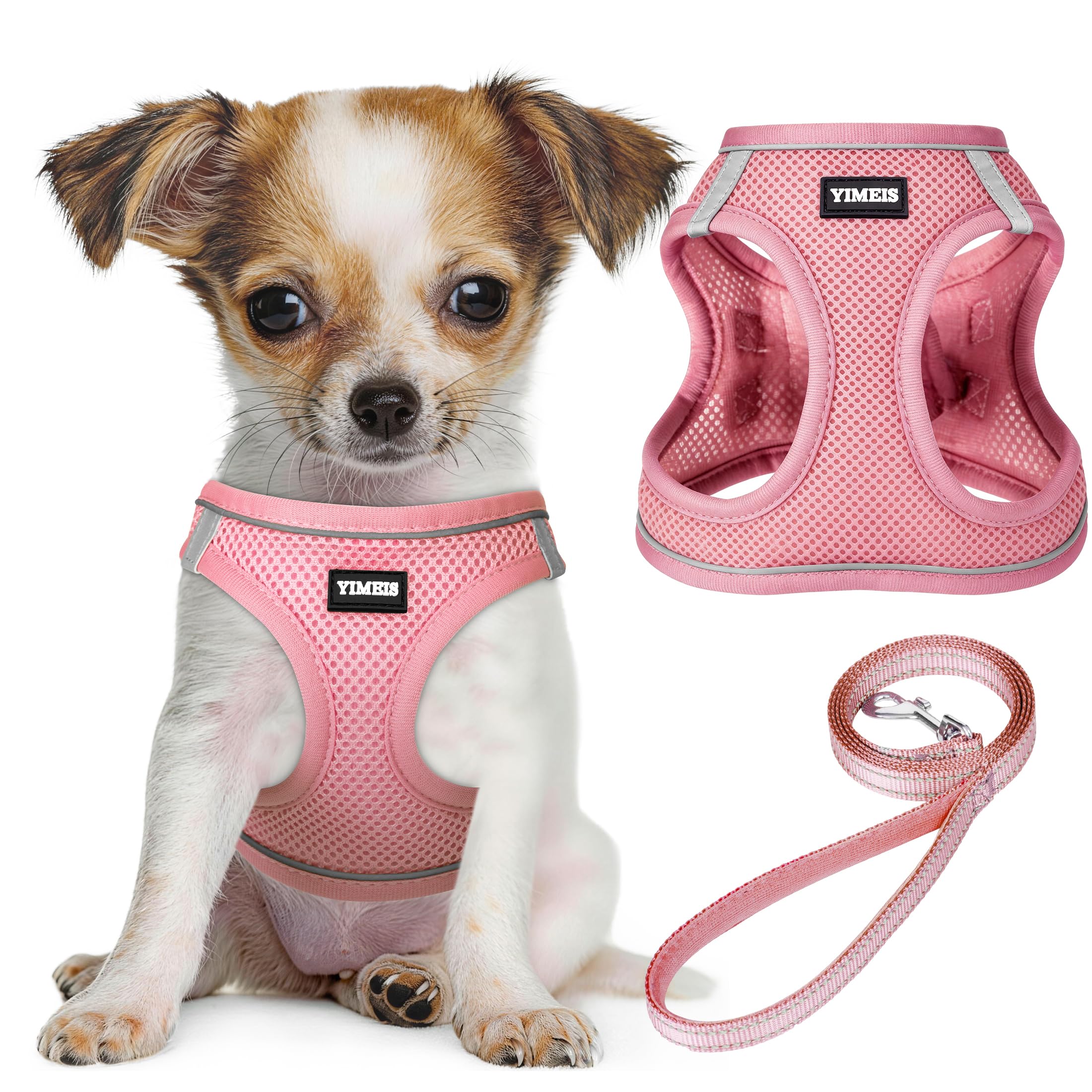
YIMEIS Puppy Harness and Leash

YIMEIS Puppy Harness and Leash

Toy-breed puppies

Our Score 8.8/10
Check Price

Worth Noting

  • Chest tops out at 12.5 inches, so it is a short stay
Weight
2.88 oz
Included
Harness and reflective leash
Neck Girth
9.5-10 in
Chest Girth
11-12.5 in
Read the full review

Eleven to 12.5 inches of chest is the smallest fit here, and that alone earns it a place: a toy-breed puppy has nothing else in this group that will close around its ribcage. Check the neck figure too, 9.5 to 10 inches, because a harness can be right at the chest and still sit too high at the throat.

At 2.88 ounces it barely registers, the mesh is thin and breathable, and the set includes a matching reflective leash. For the first month of short walks that is a sensible package: light enough that a tiny puppy does not walk differently in it, and visible enough for an evening.

Fit is the thing to get right. The weight guidance on the listing is optimistic, and a puppy can land inside it with a chest that will not close, so buy from the tape measure and go up a size if your puppy measures at the top. The closure is a velcro panel plus a plastic side clip; it is quick, and it is also the part that wears, so press the velcro down and check the clip has clicked before you head out.

We treat it as a starter harness for the smallest puppies rather than a long-term one. The chest window is narrow, the closure is the weak point, and a puppy grows out of it within a season, but as an inexpensive way to get a toy breed walking while you work out its adult size, it does the job.

Bottom line: If your toy-breed puppy is too small for everything else here, this is the harness that closes around an 11-inch chest and comes with a matching leash.

How We Chose and Tested the Best Puppy Harnesses

We started with the harnesses shoppers actually buy for puppies, then filtered that list by chest girth ranges that genuinely reach down to small sizes, hardware that doesn't feel flimsy in the hand, padding at the chest and under the front legs, and closure systems a single person can manage. Anything that only came in adult-dog sizing, or that required a second pair of hands to buckle, came off the list. That left 14 harnesses, which we fitted and walked with over four months.

Each fitting started with a tape measure around the neck and the widest part of the chest, then we adjusted every strap and noted how much room was left to take in or let out. We checked whether the harness sat clear of the shoulder blades and whether straps stayed where we set them after a walk. On and off was timed, solo, with a puppy actively trying to bite the buckle. Velcro closures got particular attention: we watched how much puppy fur and lint they collected and whether the grip weakened once the hook side got fuzzy.

In the field, these went on daily walks, to puppy class, through wet grass and mud, and past the squirrels that trigger a sudden lunge. We ran a deliberate escape test — puppy backing up and twisting while we held the leash — and noted which harnesses held their shape and which rotated or loosened. After each walk we checked the skin under the front legs for rubbing and watched gait for stiffness or reluctance. Over four months we logged frayed webbing, popped stitches, chewed straps, and hardware that dulled or stuck, and we washed each harness twice to see how the fabric and color held up.

How to Choose the Right Puppy Harness

Start With the Chest, Not the Weight

Every harness here is sized by chest girth, and the weight range on the packaging is a rough proxy at best. Run a soft tape around the widest part of the ribcage, just behind the front legs, and write the number down before you open a size chart. Then match that number to the chest range and ignore the breed list.

The picks here run from an 11 to 12.5 inch chest at the smallest to a 15 to 27.8 inch range on the widest, which is the difference between a toy breed and a herding puppy at four months. If your number sits at the very top of a size, take the next one up: a harness that only just closes has no room for the chest a puppy puts on in a few weeks.

How Much Growth Room to Buy

A wide adjustment range buys months, and it is why our top pick wins: four straps cover roughly 15 to 28 inches, so the same harness fits a skinny adolescent and the dog it becomes. The cost is bulk and more strap to manage on a small frame.

If your puppy is a small breed already close to adult size, a narrower step-in design will sit closer and take less fiddling. If it is a large breed at eight weeks, buy for the chest you expect rather than the one you measured, but stay inside the range the harness actually lists.

Step-In, Over-the-Head, or a Neck Buckle

Three ways in, and the choice matters more with a puppy than with an adult dog. Step-in vests are laid flat and closed with one or two buckles, which is fastest for a wriggler. Over-the-head vests ask the puppy to push its head through a loop first, fine for a laid-back dog and a daily argument with a nervous one.

A harness that opens completely flat on a neck buckle is the one to choose if your puppy already backs away when it sees the harness coming. Put it on before the walk, not ten minutes before, so it predicts something good.

Front Clips, Handles, and Trim

A front leash point is a training aid, not a cure: it redirects a puppy that surges forward, and it is why most vests here carry two rings. Expect it to make a pull harder to complete, and keep rewarding the puppy for walking on a loose lead.

A handle on the back is worth having while your dog is small enough to lift over a stile or into a car, and it stops earning its place once the dog is heavier than you want to carry one-handed. Reflective trim matters if your walks happen in the dark half of the year, and coverage that wraps the sides shows up at the angle a car approaches from.

Washing, Chewing, and the Parts That Wear

The harness that survives a puppy is the one you can clean. Machine-washable mesh is a genuine advantage in a wet climate, and several vests here are hand wash only, which is ten minutes you will resent in February. Watch two parts: velcro, which clogs with hair and loses grip, and plastic side clips, which do not survive being stood on.

Take the harness off indoors rather than leaving it on all day. A bored puppy chews what it can reach, and a harness left on sits at exactly mouth height.

Frequently Asked Questions

Final Verdict

If we were buying one harness for an eight-week-old puppy today, it would be the rabbitgoo no-pull vest. The chest range is the widest here, so it survives the growth that makes most first harnesses obsolete, and the front clip gives you a training tool the day your puppy discovers squirrels.

Buy the Ruffwear Front Range instead if your puppy is close to adult size and you want padding and hardware that keep going after the puppy stage. For a toy breed whose chest measures under 13 inches, the YIMEIS set is the only one here that closes around it.