Food & Treats

Best Chewy Dog Treats of 2026

A chewy dog treat has one job: keep a dog interested long enough to actually chew, without turning into a choking hazard or a stomachache. I’ve learned the hard way that “chewy” can mean anything from pillowy soft to jaw-cracking tough, and the wrong texture either gets dropped on the rug or gulped down whole. What you’re really after is a treat that bends before it breaks, tastes good enough for a picky dog to finish, and feels well made enough to hand over more than once.

We’ve spent the past three months putting 16 chewy treats through everyday life with a picky terrier mix and a senior dog who does not appreciate surprises in his dinner bowl. We watched which ones got eaten versus politely spat out, how soft they stayed after the bag was opened, and whether they held together under a real chew session instead of crumbling into pocket lint. The keepers were the ones that balanced taste, texture, and value without leaving either dog with an upset stomach. The picks below are the ones that earned a repeat request and left the rug relatively clean.

1

Canine Carry Outs Beef Flavor

Top Pick
Canine Carry Outs Beef Flavor

Multi-dog homes

Our Score 9.6/10
Check Price

Worth Noting

  • Flavor-led recipe rather than meat-first
Flavor
Beef
Texture
Soft and chewy
Bag Size
47 oz
Read the full review

Forty-seven ounces is the biggest bag here by a wide margin, and it changes what the product is for. This is the treat you keep in the pantry and hand out all day: a two-dog house, a foster, anyone tired of rebuying a small bag every other week.

The pieces are small, soft sticks, and nothing needs breaking before you hand one over. That sounds minor until you've stood in the rain snapping a biscuit into fours. With these, the reward is already the right size for a medium dog, and they're tender enough that a dog who has lost most of her teeth can work through one without help. They also hold together in the bag, with no dust at the bottom and no pieces welded into a lump.

We keep this one on the list for households rather than single-dog apartments. The cost per treat is the lowest of the picks, the pieces are already portioned, and the beef flavor is a crowd-pleaser. It's a plain treat rather than a careful one, and for everyday rewarding that is exactly the point.

Bottom line: The bag to buy when treats disappear fast: soft, already bite-sized pieces at the lowest cost per treat in this roundup.
2

Covetrus Nutrisential Lean Treats

Covetrus Nutrisential Lean Treats

Weight management

Our Score 9.6/10
Check Price

Worth Noting

  • Highest cost per ounce of the picks
Fat
Low-fat formula
Form
Bite-size chunks
Pack
Three 4 oz bags
First Ingredient
Chicken
Read the full review

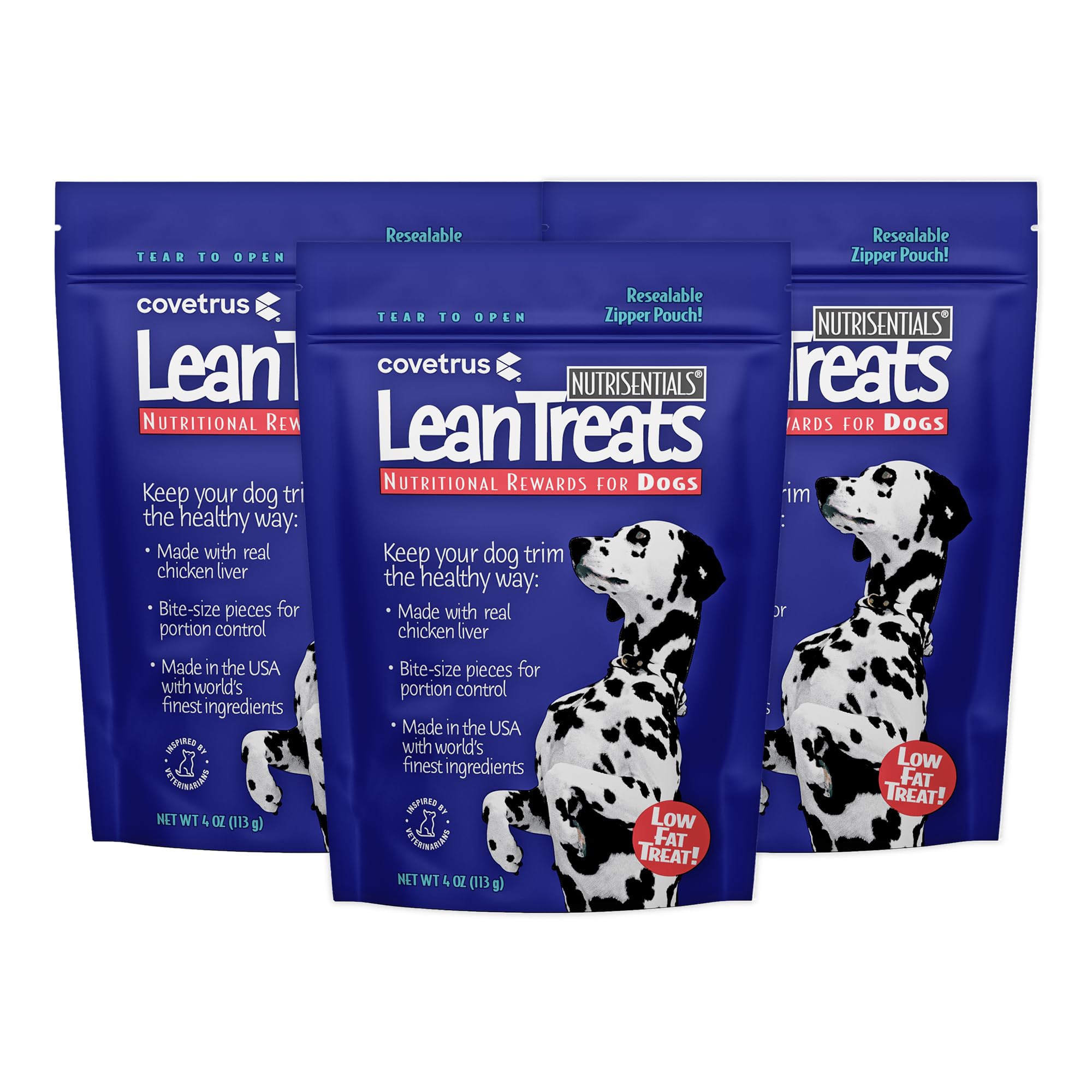
Lean is the pitch: a low-fat chicken chunk small enough to hand out twenty times a day without tipping a diet. That's a different job from a treat you give for being good, and it's why this one has a place in a roundup of chewy treats even though it's the least indulgent thing here.

Where it wins is frequency. The chunks are small, firm-soft and already portioned, so you're not tearing anything mid-session; you reach in, reward, and keep moving. Real skinless chicken leads the recipe, the formula is low-fat, and it's made in the USA, which is the combination people look for when a dog is carrying a few extra pounds or needs a reward every time the mail carrier walks past. It's the bag we reach for when we want a lot of rewards and no arithmetic.

The catch is condition on arrival. These are the firmest, driest-style soft treats here, and a bag that has lost moisture turns crumbly, with pieces that shatter instead of bending. Squeeze one through the bag when it lands; if it powders, ask for a replacement, because a fresh bag is pliable and a stale one is a nuisance to use.

Bottom line: For a dog on a diet or one who earns rewards all day, these lean bite-size chunks let you keep rewarding without doing calorie math.

3

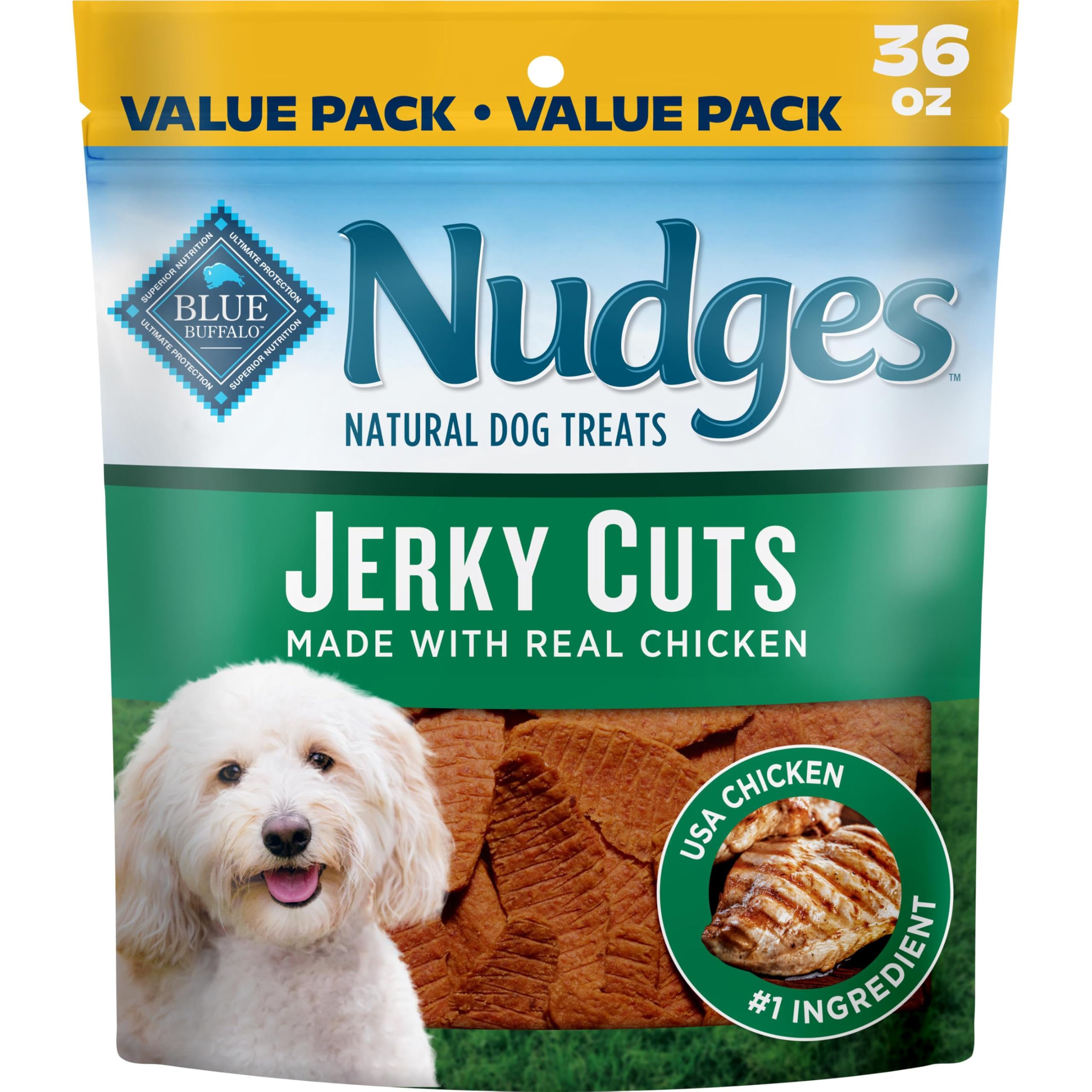
Blue Buffalo Nudges Jerky Cuts

Blue Buffalo Nudges Jerky Cuts

Chewy rewards

Our Score 9.6/10
Check Price

Worth Noting

  • Arrives with broken strips and crumbs
Texture
Soft, tearable jerky cuts
Bag Size
36 oz
First Ingredient
Chicken
Read the full review

A jerky cut buys you a few seconds. Where a soft stick disappears in one gulp, a strip gives a dog something to work at, and these tear along the grain so one piece still becomes three rewards when you need it to.

Chicken is the first ingredient, and the strips are much softer than the jerky most of us picture, closer to thick fruit leather than to a dried stick. That's what makes them work for an older dog who still wants something to chew on, and for a dog who inhales anything smaller than a postage stamp.

This is the one we reach for when a reward needs a little duration. The strips are big enough for a large dog to take seriously and soft enough to break down for a small one, and a 36-ounce bag goes further than the little jerky pouches in the grocery aisle. If you want guaranteed softness every single time, Milo's meatballs are the squishier option.

Bottom line: Our pick for a reward with some chew time: soft jerky strips that tear into three and slow down a dog who usually inhales treats.

4

Milk-Bone Soft & Chewy

Milk-Bone Soft & Chewy

All-around rewards

Our Score 9.4/10
Check Price

Worth Noting

  • Canister is pantry storage, not pocket-friendly
Flavor
Beef and filet mignon
Protein
18%
Texture
Soft and chewy sticks
Canister Size
25 oz
Read the full review

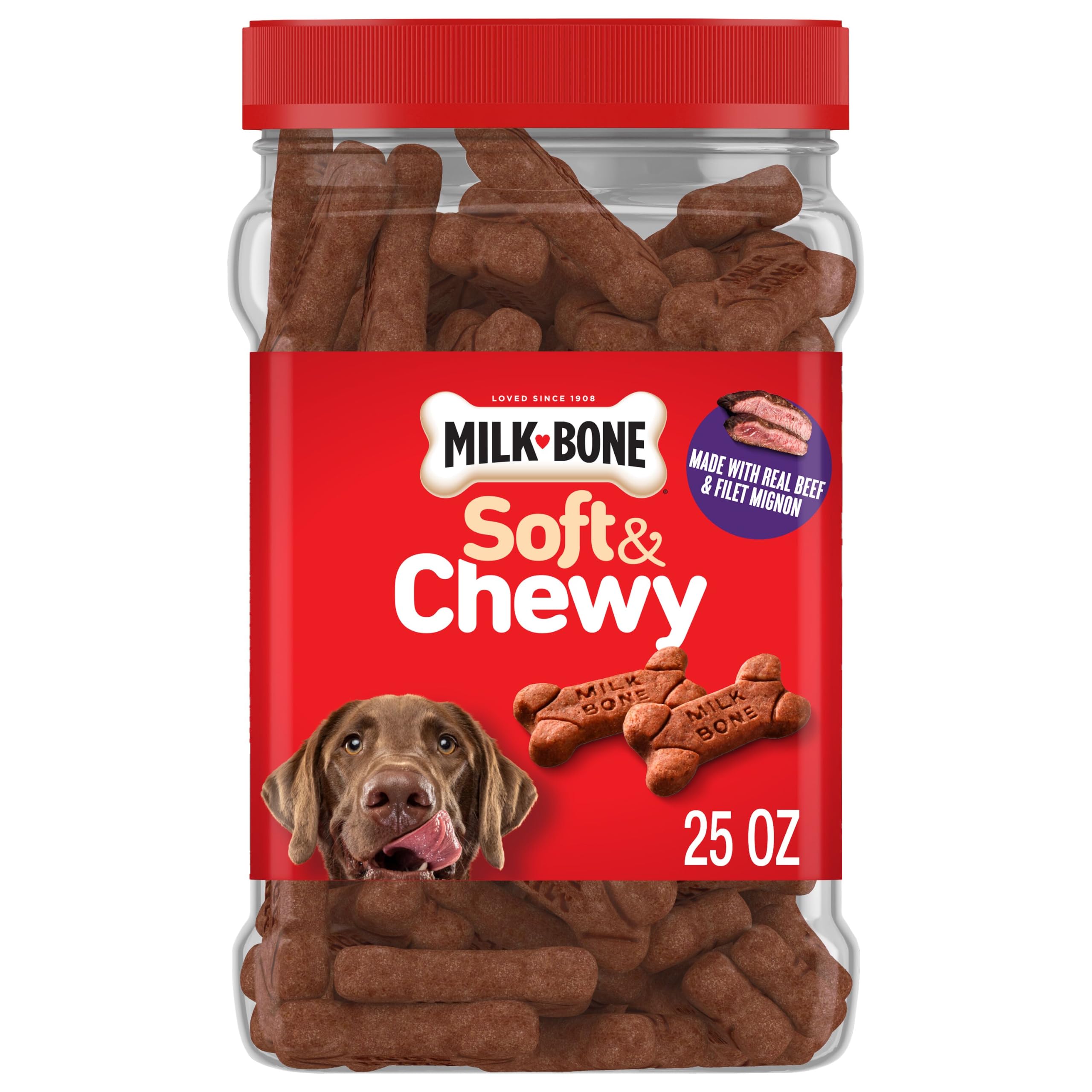
Snap one of these sticks in half and the break is clean: two pieces in your hand, no dust on the floor. That small piece of behavior is why the canister sits at the top of our list. Soft is easy to print on a label; what matters in practice is whether a treat gives way under your fingers or has to be wrestled, and these give way every time.

The other reason is range. These sticks are tender enough for a dog who has lost most of her teeth and big enough that snapping one turns a single reward into three for a puppy, so a house with a senior and a young dog buys one bag instead of two. The recipe carries 18% protein plus 12 vitamins and minerals, which makes a handful more than pure flavor, and the beef and filet mignon smell arrives the second the lid comes off. Great for getting a distracted dog's attention; less great if you open it in a small car.

What we don't love is the container. A 25-ounce canister lives in the pantry, not in a jacket pocket, and the sticks are shaped for a medium dog, so a small dog needs them broken every time. For a reward you can carry on a walk, look at Blue Bits instead.

Bottom line: Soft enough for a senior with missing teeth, firm enough to snap into training pieces, and big enough to cover every dog in the house.

5

Blue Buffalo Bits Chicken

Blue Buffalo Bits Chicken

Training sessions

Our Score 9.4/10
Check Price

Worth Noting

  • Meaty smell lingers on hands
Texture
Soft, tender, bite-sized
Bag Size
19 oz
Added Nutrients
DHA and omega fatty acids
First Ingredient
Chicken
Read the full review

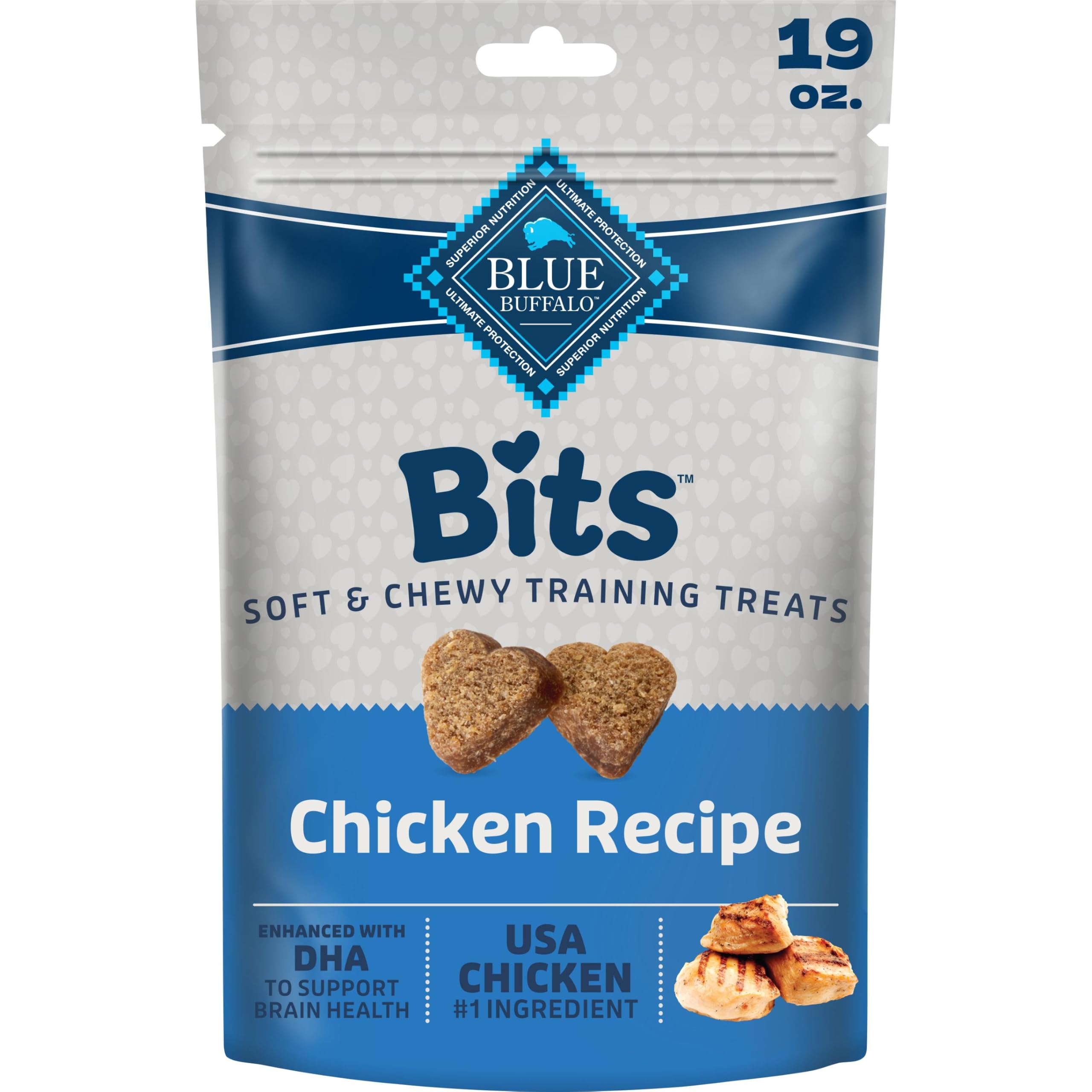
A piece is closer to a kernel of kibble than to a biscuit, which is the size a training session wants: ten rewards in five minutes don't add up to a meal, and a puppy swallows one and gets straight back to work instead of stopping to crunch. Of the picks here, this is the one built for that job.

Chicken is the first ingredient, and the recipe adds DHA plus omega-3 and omega-6 fatty acids from flaxseed, which the bag ties to skin, coat and cognitive development. It's corn-, soy- and wheat-free and labeled for all life stages. A 19-ounce bag is a lot of repetitions, more than a puppy class will use up.

One thing to plan for: these are rich enough that a dog with a sensitive stomach can take a day or two to adjust. Start with a couple of pieces and build up rather than handing over a handful on day one. If your dog has reacted to new proteins before, Milk-Bone's beef sticks are the milder swap.

Bottom line: The training treat we hand to anyone starting puppy class: small enough to repeat, soft enough to swallow, and cheap enough to use freely.

6

Milo's Kitchen Chicken Meatballs

Milo's Kitchen Chicken Meatballs

High-value rewards

Our Score 9.4/10
Check Price

Worth Noting

  • Crumble in the bag with rough handling
Form
Chicken meatballs
Bag Size
18 oz
Free From
Artificial flavors and fillers
First Ingredient
Chicken
Read the full review

A meatball is a big reward, and that's the whole case for it: for a recall in the park or a nail trim on the kitchen floor, one piece is an event rather than a nibble, and dogs treat it accordingly. It's also why this bag won't suit every dog, because for a five-pound dog one meatball is several rewards in a single bite.

Real chicken leads the recipe, with no artificial flavors or fillers and no added corn or wheat, and the texture stays soft after the bag has been open a while, which isn't true of every soft treat here. An 18-ounce bag covers a couple of weeks of high-value moments, and the smell when you open it is genuinely appetizing, more roasted chicken than pet aisle.

Plan around the size. For a small dog, quarter them; a whole meatball is more than a small dog needs in one bite, and cutting them up stretches the bag. For a big dog, it's a clean, complete reward with nothing to snap off, which is exactly what you want at the end of a good recall.

Bottom line: A meatball is the reward that ends a training argument, as long as you're willing to cut it down for a small dog.

7

Waggin' Train Chicken Jerky

Waggin' Train Chicken Jerky

Label readers

Our Score 9.2/10
Check Price

Worth Noting

  • Labeled for adult dogs only
Diet
Grain- and corn-free
Protein
High protein
Pouch Size
30 oz
Ingredients
Chicken breast and vegetable glycerin
Read the full review

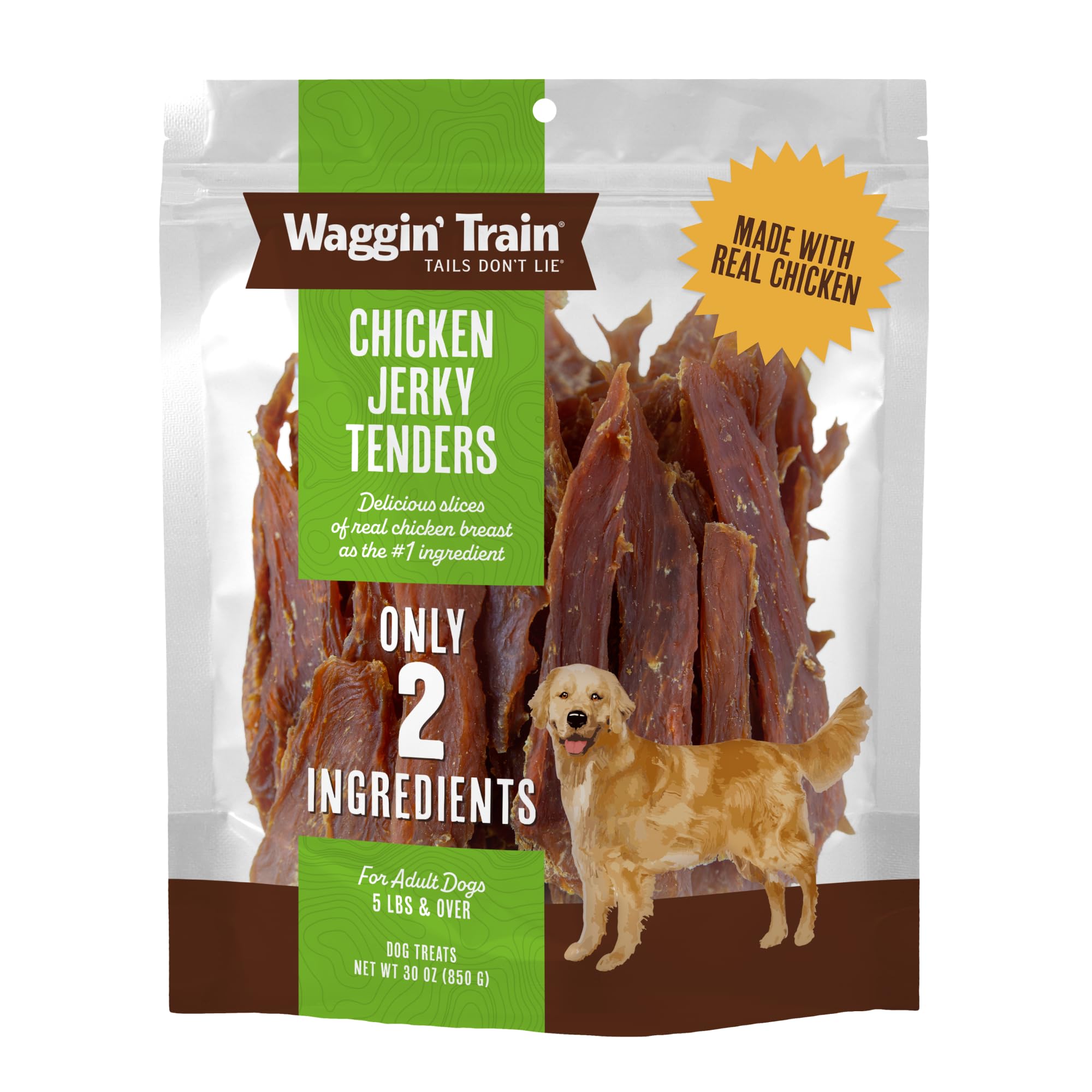
Chicken breast and vegetable glycerin. That's the whole ingredient list, and it's the shortest one here by a wide margin.

The simplicity is real rather than a marketing line. The tenders are grain-free and corn-free, carry no artificial colors or flavors, and are high in protein, which is what makes this the pick for a household that reads labels before it buys anything, for a dog or for themselves.

They're chewy rather than soft, closer to a strip of jerky than to a cookie, and they break into two or three pieces along the grain. A 30-ounce pouch covers a lot of rewards, and this is the one here for a dog who actually likes working at a chew instead of swallowing it whole.

So the recommendation comes with a practical warning. A bag can arrive hard and brittle rather than pliable, and a rock-hard tender defeats the point of buying a chewy treat. Squeeze the top of the pouch before you open it and buy where a return is easy; the bags that arrive soft are excellent, and the ones that don't are why this sits below the picks above.

Bottom line: Buy it for the two-item ingredient list and a chew that lasts longer than a swallow, provided you're ready to check the bag on arrival.

How We Tested Chewy Dog Treats

We started by pulling together a shortlist of chewy treats sold in common sizes and textures, then narrowed it by reading ingredient panels, calorie density, and the maker’s own description of how soft or tough the treat should be. We ruled out anything that looked more like a brittle biscuit than a chewy treat, and we favored options that came in resealable bags because freshness matters once a chewy treat is exposed to air. That left us with 16 treats to test over three months.

Testing happened where treats actually get used: during morning training sessions, before walks, during nail trims, and after dinner when both dogs expect a handout. I offered each treat to a picky terrier mix first, then to a senior dog with a sensitive stomach, noting whether they sniffed and walked away, took it gently, or tried to swallow it whole; taste was a dog-only verdict, and repeats were the only vote that counted. I squeezed each one between my fingers, tore it in half, and dropped one on the kitchen tile to see whether it crumbled, bounced, or held its shape. I also carried a few in a jacket pocket on walks to check for greasy marks and pocket crumbs.

For chewability and durability, I watched how long each treat lasted with a determined chewer and whether it broke into risky chunks or softened into a manageable piece. For digestibility and digestive effects, I introduced one new treat at a time and kept notes on gas, stool changes, and appetite over the following few days. Freshness got its own check: I stored each bag as directed, then revisited the texture a week after opening. Value came down to how many treats in the bag were intact and how long a bag lasted with two dogs, not just the number on the shelf.

How to Choose Chewy Dog Treats

Softness Is a Range, Not a Category

The soft treats here fall into two families. Baked soft chews, like the Milk-Bone sticks, are springy and break cleanly by hand. Glycerin-based jerky and meatball styles are leatherier or squishier and tear along the grain. For an old dog with missing teeth, what matters is whether a treat yields to gum pressure, so press one between your thumb and forefinger before you commit a whole bag to a dog who can't manage it.

The trap is trusting the word soft on the front. A bag that arrives hard and brittle has failed at the one thing you bought it for, so squeeze the top of the pouch when it lands and send back anything that feels like gravel.

Piece Size Decides How You'll Use It

Training wants small rewards given often; a big piece slows the session and adds calories. If you're rewarding a puppy ten times in five minutes, a kibble-sized piece like Blue Bits does the job with no prep. If you want one reward that lands, a meatball does something a pellet can't. Breaking a large treat down works, but it's fiddly with cold hands and messy in a pocket.

The mistake is buying the format you like the look of. A bag of meatballs for a five-pound dog means cutting every single reward, and a bag of pellets for a Labrador means handing over three at a time.

Read the First Ingredient, Then the Fat Line

Two treats can both say chicken on the front and be built very differently. Check the ingredient list: chicken or beef first is a different product from a bag whose name says beef flavor and whose recipe leads elsewhere. Then look at fat. If your dog is carrying extra weight or earns a lot of rewards in a day, a low-fat formula like the Covetrus chunks lets you keep rewarding without recalculating dinner.

If your dog is fine, protein and extras such as the vitamins in Milk-Bone matter more than the leanest possible recipe. The trap is treating the front of the bag as the ingredient list.

Match the Bag to the Household

Soft treats lose moisture once the bag is open, so how fast you'll finish it matters as much as the cost per ounce. A 47-ounce bag makes sense for two or three dogs, a foster, or a house that rewards constantly. For one small dog, a 10- to 19-ounce bag is a better fit, and the treats at the bottom will still be soft when you get to them.

The savings on a bulk bag are real, but only if you'll get through it. A giant bag that goes brittle has cost more, not less.

Frequently Asked Questions

Final Verdict

Buy the Milk-Bone Soft & Chewy canister if you want one bag that works for the whole house. It is soft enough for the oldest dog, snaps into pieces for the youngest, and costs midrange money for a generous 25 ounces, which is why it is the one we point people to first.

If you're training a puppy, the bite-size Blue Bits are the better tool. If you have several dogs and go through treats fast, the Canine Carry Outs bag is the cheapest per treat here by a wide margin, as long as nobody in the house needs a meat-first recipe.