Food & Treats

Best Low Calorie Dog Treats of 2026

A training session is mostly repetition, and repetition means your dog is eating whatever's in your pocket — a lot of it. Twenty reps in ten minutes is twenty calories in, and a bag of rewards running 30 calories apiece quietly undoes the reason you're rewarding at all. The right low-calorie treat keeps the reward worth working for while leaving room in the day's intake, so a handful of them doesn't turn a good training habit into a weight problem. Reading guaranteed analyses in a pet store aisle convinced me that "low calorie" on the front of a bag means far less than you'd hope, so I started checking the calories per treat myself before anything else.

Treats also have to be practical, and that's where most of them fall apart. Too big and every walk turns into a stop-and-chew, too hard and the older dog spits it onto the rug, too fragrant and your training pouch perfumes the whole car. We put 14 low-calorie treats through three months of real reps with a panel of dogs of wildly different enthusiasm levels, and the ones still in rotation are the ones that were easy to break, easy to carry, and worth getting up for. Below are the ones that earned their spot in the pouch — for the picky eater, the senior with worn molars, and the dog who'd work for a piece of cardboard.

1

Bil-Jac Little-Jacs

Top Pick
Bil-Jac Little-Jacs

Soft high-value rewards

Our Score 9.6/10
Check Price

Worth Noting

  • Strong liver scent
Texture
Soft and chewy
Bag Size
16 oz
First Ingredient
Chicken liver
Calories Per Treat
Less than 3 calories
Read the full review

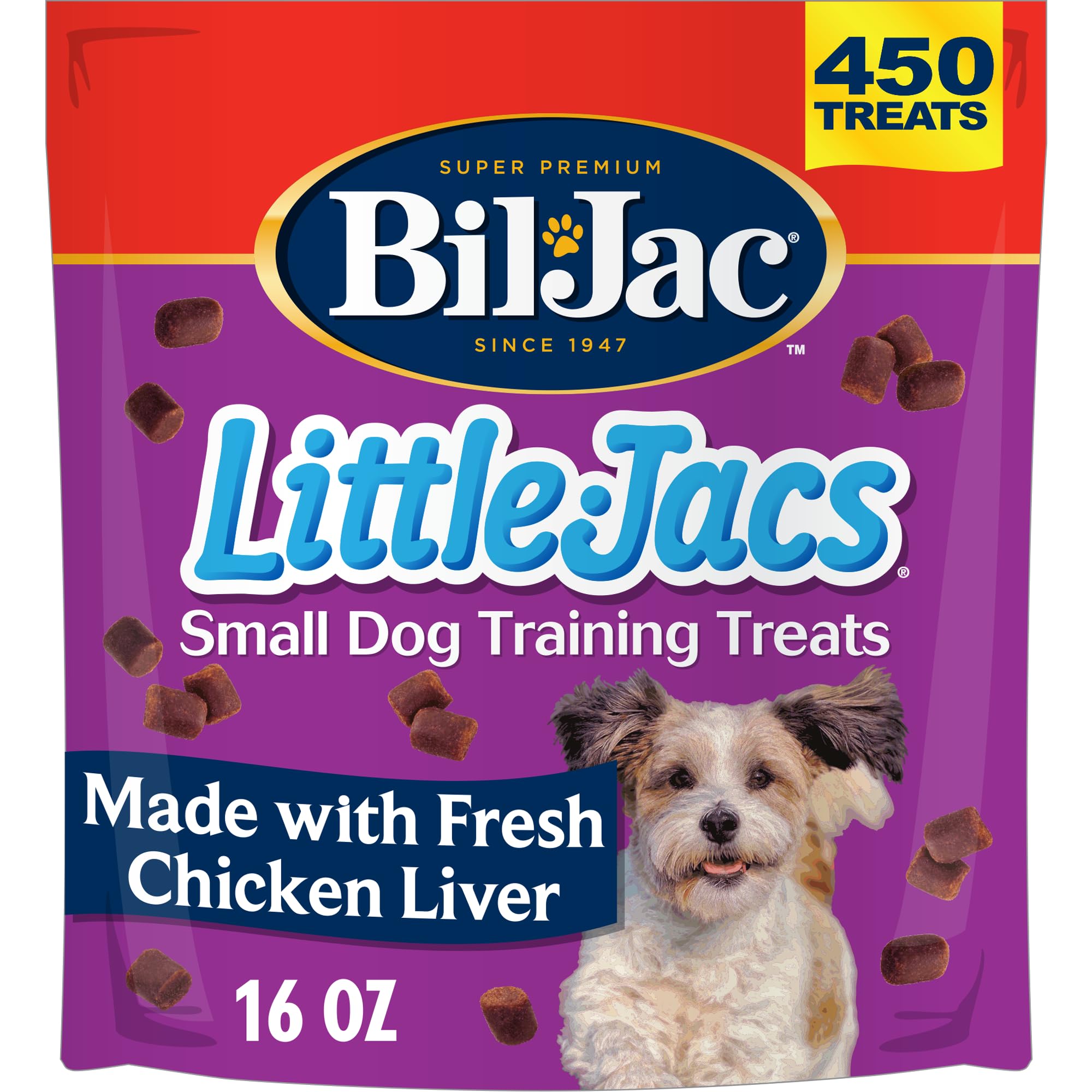
The first thing we noticed about Little-Jacs is how soft they are, more like a tiny piece of paste than a biscuit, and at under three calories each they fit the low-calorie brief without feeling like a punishment.

We reach for these when a dog needs a higher-value reward than a plain biscuit. Chicken liver is the first ingredient, the pieces are small enough for a puppy or a senior, and the soft texture makes them easy to eat quickly in a training session. They also pinch apart cleanly if you want to make one treat last for two rewards.

The texture is the selling point, so storage matters: a dry bag loses the softness that makes them useful. Keep the bag sealed and use them within a reasonable time. Compared with Pet Botanics, Bil-Jac is the softer, more pungent choice; Pet Botanics gives you more treats per bag.

Bottom line: Our pick when a dog needs a soft, high-value reward: chicken liver, under three calories, and a texture that works for puppies and seniors.
2

Greenies Weight Management

Greenies Weight Management

Dental and weight

Our Score 9.6/10
Check Price

Worth Noting

  • Petite size only fits 15-25 lb dogs
Size
Petite, for 15-25 lb dogs
Count
45 count
Primary Use
Dental care and weight management
Calorie Positioning
Low calorie
Read the full review

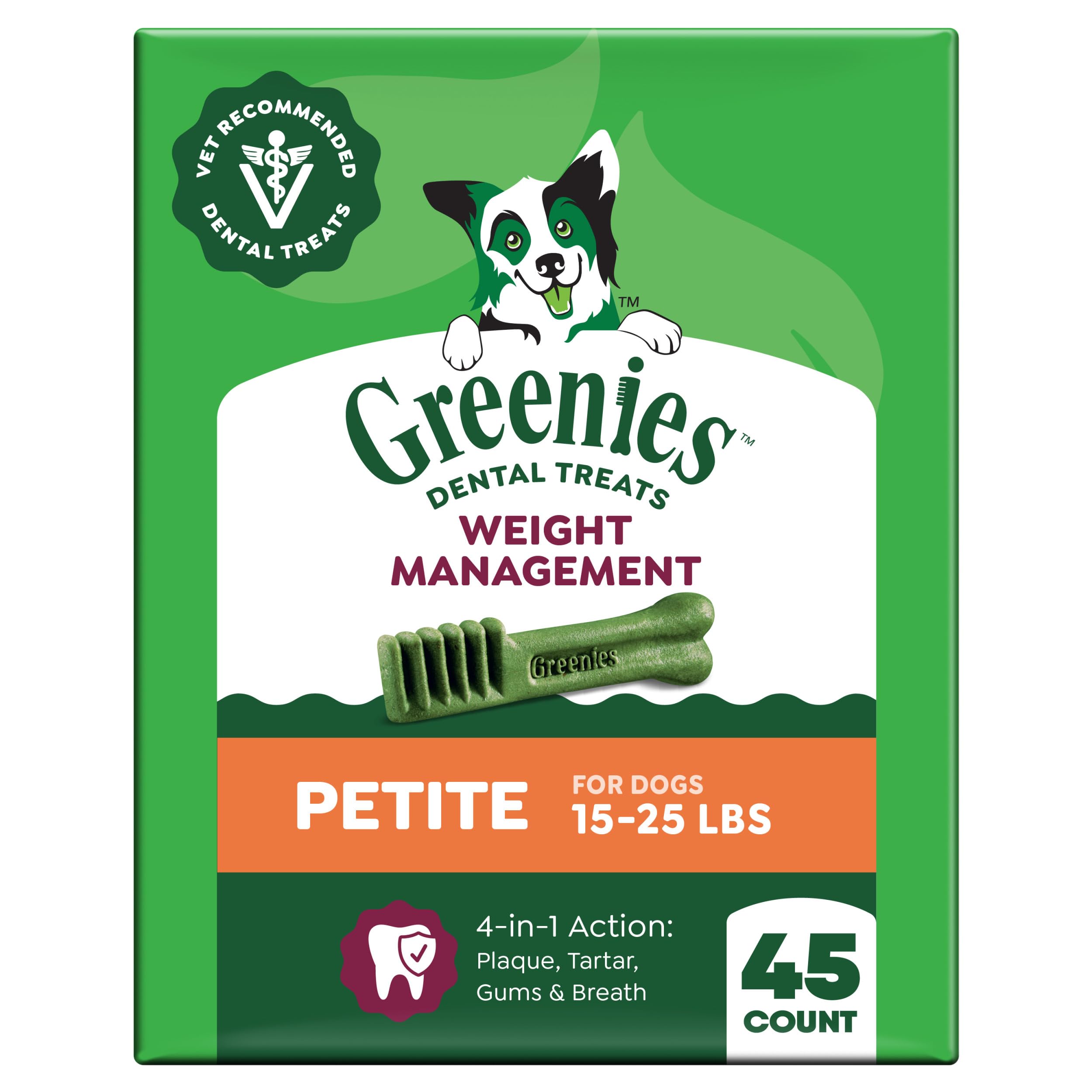
Greenies are not a training treat, and that is exactly why we keep a bag. The weight-management petite chew is a once-a-day dental routine for dogs 15 to 25 pounds, not a reward you hand out ten times in a session.

The chew has the firm, chewy texture that makes a dog work at it, and the weight-management formula gives you a lower-calorie way to add dental care to the day. The 45-count pouch lasts about six weeks if you use one a day, which makes it a routine purchase rather than a training supply.

We recommend it for the dog who already gets a daily dental chew and needs the weight-management version, not as a substitute for training treats. The size restriction is real: petite is for 15-25 lb dogs, so check the next size up if your dog is bigger.

Bottom line: We keep Greenies in the daily dental slot, not the training pouch: low-calorie weight management in a petite chew for 15-25 lb dogs.

3

Charlee Bear Crunchy Treats

Charlee Bear Crunchy Treats

Crunchy variety

Our Score 9.6/10
Check Price

Worth Noting

  • Not soft enough for seniors
Flavors
3 flavor variety
Texture
Crunchy
Pack Size
3 x 8 oz
Calories Per Treat
3 calories
Read the full review

The crunch is the first thing you notice about Charlee Bear, and for some dogs that is the whole appeal. These are small, dry, three-calorie bites that leave no grease in a pocket and come in a three-flavor pack.

We like the variety for training because treat fatigue is real; rotating bacon-blueberry, turkey-sweet potato, and chicken-pumpkin keeps a dog interested without changing the calorie math. The pieces are small enough for a toy breed and sturdy enough to carry in a pouch.

The crunch also gives a dog a couple of seconds of chewing, which can help a dog focus in a session. It is a different rhythm from a soft treat, and some dogs work better with that pause.

We reach for these when we want a clean, low-calorie reward for a small dog or a pocket-sized training walk. The three bags also let us keep one in the training pouch and one in the kitchen drawer.

Bottom line: If your dog can handle crunch, these three-calorie bites are the cleanest, most pocket-friendly way to reward a small dog without piling on calories.

4

Covetrus Lean Treats

Covetrus Lean Treats

Vet-guided weight

Our Score 9.6/10
Check Price

Worth Noting

  • Small 4 oz bag
  • Can arrive dry or crumbly
Fat
Low fat
Texture
Soft bite-size chunks
Bag Size
4 oz
Calorie Positioning
Low calorie
Read the full review

The first thing to know about Covetrus Nutrisential Lean Treats is the size: a 4-ounce pouch, not a training-bag refill. The formula is low-fat and low-calorie, with real chicken and a soft bite-sized chunk.

That small pouch makes sense for a targeted use. These are positioned for weight management, and the low-fat profile is why they show up in vet clinics; for a dog with pancreatitis or another medical condition, ask your vet before making any treat part of the plan.

The texture is soft enough to break, and the chicken flavor is appealing to dogs. The pieces are small, so they work as a quick reward.

We see these as a targeted low-fat option, not the default bag for everyday training. They earn a place when fat reduction matters more than cost per reward, and they are best used as a short-term or vet-guided choice.

Bottom line: A targeted low-fat option for weight-conscious dogs, best kept as a small-bag reward rather than your everyday training supply.

5

Pup-Peroni Lean Beef

Pup-Peroni Lean Beef

Lean soft sticks

Our Score 9.6/10
Check Price

Worth Noting

  • Can arrive stale or hard
Fat
90% fat free
Texture
Slow-cooked soft sticks
Bag Size
22.5 oz
Ingredients
Real beef; no Red 40 or fillers
Read the full review

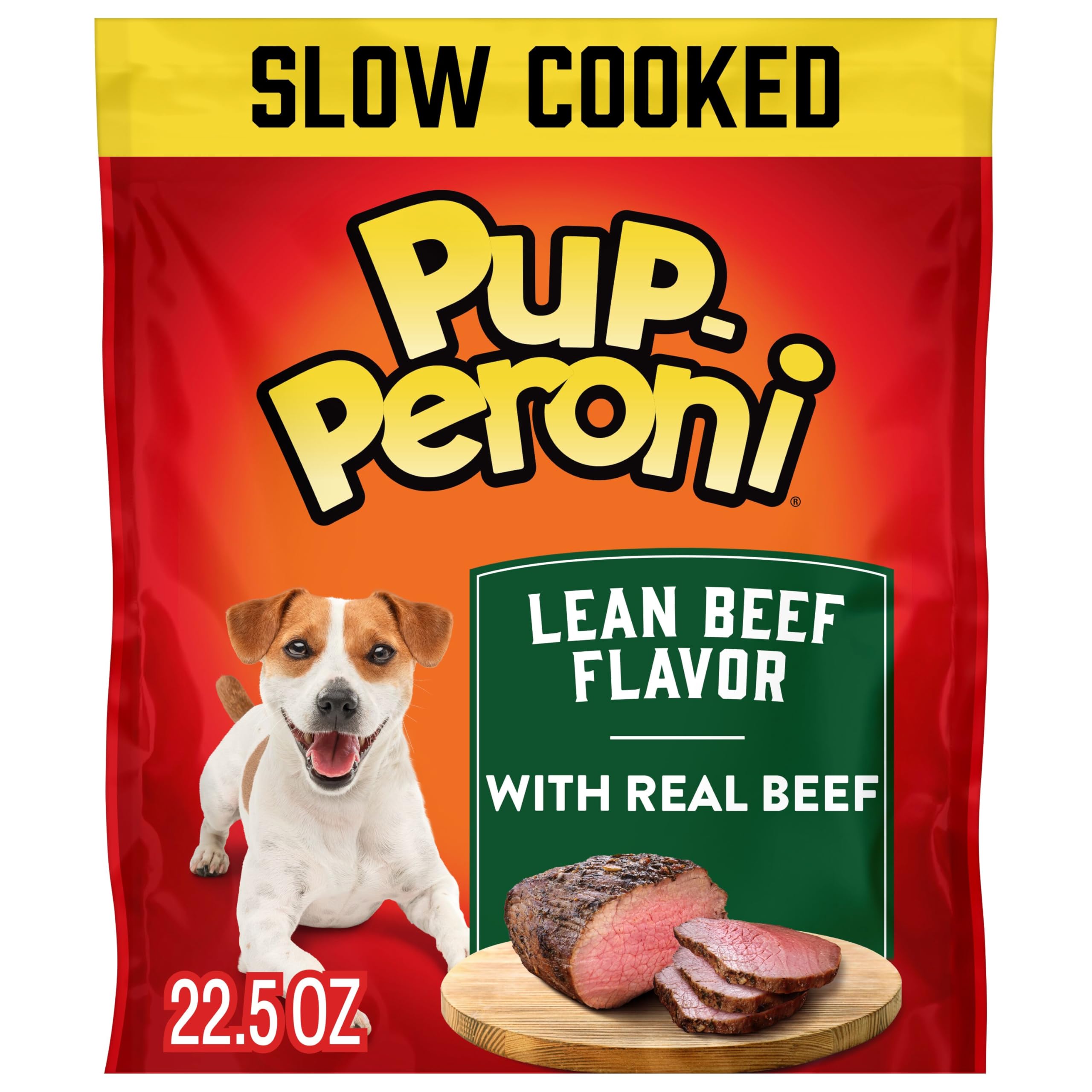
Pup-Peroni Lean is a soft stick, not a kibble-sized training bite, and that changes how you use it. The 22.5-ounce bag is built for breaking into pieces, and the formula is 90% fat free with real beef.

Fat-free is not the same as calorie-free. The lean label tells you about fat, not the calories per piece, so we break each stick into several rewards and count them like any other treat.

Dogs tend to love the meaty texture, and the soft stick is easy to tear by hand. The big bag is a good value for a household that already uses this style of treat.

The bag is large, so it suits a household that already uses this style of treat. We keep a few sticks in a smaller pouch and the rest sealed.

Pup-Peroni Lean is the soft, meaty choice for dogs that prefer sticks, but treat it as a lean everyday snack, not a calorie-counted training bite. If you need a precise calorie count per reward, choose one of the 1.5- to 3-calorie picks instead.

Bottom line: Pup-Peroni Lean is the soft, meaty choice for dogs that prefer sticks, but treat it as a lean everyday snack, not a calorie-counted training bite.

6

Pet Botanics Training Rewards

Pet Botanics Training Rewards

Frequent training

Our Score 9.4/10
Check Price

Worth Noting

  • Strong bacon-liver smell
Texture
Soft and chewy
Bag Size
20 oz
Treats Per Bag
About 500
Calories Per Bite
3 calories
Read the full review

A 20-ounce bag with roughly 500 three-calorie bites is the arithmetic that makes Pet Botanics our top pick. For a dog who gets rewarded constantly, the difference between a three-calorie treat and a larger biscuit adds up fast, and these are soft enough to pinch smaller when we want to stretch a session.

In a training session, the size is the useful part. They are small enough to deliver one after another without the dog stopping to chew, and the soft texture makes them easy to break again for a puppy or a small dog. They get a dog's attention quickly, and the bag is big enough that we do not ration them like a special occasion.

The bag holds about 500 treats, so it works for a multi-dog household or a class. We did find that some dogs with sensitive stomachs may do better with a single-protein treat; introduce these slowly rather than switching a whole routine at once. The 20-ounce bag is large, so we decant some into a smaller pouch and keep the rest sealed.

What keeps them at the top is the combination: low calorie, quick to eat, and sold in a quantity that makes daily training feel normal. They are the ones we reach for when the goal is a lot of repetitions without a lot of math.

Bottom line: We recommend Pet Botanics first for most dogs: three calories a bite, about 500 soft pieces, and a training-first design that makes frequent rewarding genuinely easy.

7

Zuke's Mini Naturals

Zuke's Mini Naturals

High-frequency sessions

Our Score 9.4/10
Check Price

Worth Noting

  • Some dogs refuse the flavor
Texture
Soft and chewy
Bag Size
16 oz
Ingredients
No corn, wheat, or soy
Calories Per Treat
2 calories
Read the full review

Two calories per treat is the headline, and for a dog who does a lot of repetitions, that number matters more than the bag size. Zuke's Mini Naturals are soft, pea-sized, and made without corn, wheat, or soy.

We used these as a high-frequency reward where we wanted to keep the calorie count low; the peanut butter flavor is a strong motivator for many dogs. The texture is the weak point: some bags run firm or dry, which makes one-handed breaking harder.

Compared with Pet Botanics, Zuke's gives you a lower calorie per bite but fewer treats per bag and more texture inconsistency. If your dog likes them, they are a good everyday training treat, and the lower calorie count is the reason to try a bag.

Bottom line: Two calories a treat and a soft mini size make Zuke's a strong choice for high-frequency sessions, as long as your dog likes the texture.

8

Natural Balance Mini Rewards

Natural Balance Mini Rewards

Sensitive stomachs

Our Score 9.4/10
Check Price

Worth Noting

  • Small 5.3 oz bag
Diet
Grain-free, limited ingredient
Protein
Salmon single animal protein
Bag Size
5.3 oz
Calorie Positioning
Low calorie
Read the full review

Salmon is the single animal protein in these Mini Rewards, and that is the reason to notice them. The recipe is limited-ingredient, grain-free, and built around salmon and sweet potatoes, which makes it a useful option for a dog who does not do well on chicken.

They are small, semi-soft, and low-calorie, so they work as a training reward without turning into a meal. We found the size easy to split for a puppy, and the salmon smell is mild enough for a pocket.

For a dog with food sensitivities, these are the low-calorie treats we reach for first; the limited formula is the point, not the calorie count alone. They are also easy to break in half, which helps a small dog stay within a sensible treat budget.

A hard bag is the risk; if the treats arrive rock-hard, they lose the soft texture that makes them easy to break. Keep them sealed and use them while they are still pliable.

Bottom line: For dogs who need a single-protein, limited-ingredient treat, these salmon minis are a thoughtful low-calorie choice, though the bag is small.

9

Buddy Biscuits Trainers

Buddy Biscuits Trainers

Lowest-calorie rewards

Our Score 9.2/10
Check Price

Worth Noting

  • Some dogs refuse them
Texture
Soft and chewy
Bag Size
10 oz
Treats Per Bag
500
Calories Per Treat
1.5 calories
Read the full review

At 1.5 calories per treat, Buddy Biscuits Trainers are the lowest-calorie option in this group, and the bag holds about 500 of them. That combination is hard to beat for a dog who needs a lot of repetition.

They are soft, chewy, and bacon-flavored, with no corn, soy, or artificial flavors. The small size is right for quick rewards, and the bag is a sensible size for a training pouch.

We recommend these when calorie math is the priority and your dog already likes soft, smoky treats. The bacon smell is strong, which gets attention but lingers on fingers. The 1.5-calorie count is the reason to put up with the variability.

Bottom line: Buddy Biscuits wins on calorie math: 1.5 calories per soft bite and 500 in a bag, ideal for long training sessions with a tolerant dog.

10

Fruitables Skinny Mini

Fruitables Skinny Mini

Tiny dog rewards

Our Score 9.2/10
Check Price

Worth Noting

  • Some dogs refuse the flavor
Texture
Soft
Bag Size
5 oz
Ingredients
No wheat, corn, or soy
Calories Per Treat
Fewer than 4 calories
Read the full review

Fruitables Skinny Mini treats are tiny, closer to a cat treat than a biscuit, and each one has fewer than four calories. For a small dog, that size is the whole point.

The texture is soft, and the apple-bacon flavor has a smoky smell that is pleasant to people, which is not always true of training treats. They are made without wheat, corn, or soy, and sweet potato is a named ingredient.

The 5-ounce bag is small, so these are best for a training pouch or a small dog rather than a multi-dog household. We found they break easily, which helps stretch a handful through a short session.

For a big dog, the tiny piece and small bag make these a poor value per reward. For a toy breed or a puppy, the portion is right, and the soft texture is easy to chew.

We like these for tiny dogs and quick rewards: under four calories, soft, and small enough to keep a handful in your pocket. The apple-bacon smell is the detail that makes them pleasant to carry.

Bottom line: We like these for tiny dogs and quick rewards: under four calories, soft, and small enough to keep a handful in your pocket.

How We Picked and Tested Low-Calorie Dog Treats

We started by pulling every bag we could find that claimed to be low-calorie, then narrowed by reading the guaranteed analysis rather than the marketing copy. Anything that listed calories per ounce instead of per treat got weighed and recalculated so the numbers compared honestly, and anything whose first ingredients were sweeteners or unnamed byproducts dropped down the list. We also noted bag size and counted how many treats were actually inside, since a bag that looks generous can hold 40 pieces or 200 depending on how the manufacturer cuts them.

Testing ran three months with 14 treats and a rotating panel of dogs: my own two, a picky rescue who turns her nose up at anything fishy, and a friend's Labrador who has never refused a single thing in his life. The treats lived where dogs actually live — ten-rep sit and stay drills on the kitchen floor after dinner, loose-leash work on evening walks, a handful loose in a jacket pocket on weekend hikes. We counted how many pieces came out of a quarter-cup measure so we knew what a pocketful actually costs you.

Each treat got weighed on a kitchen scale and measured across its widest point, then pressed with a thumbnail to judge how it broke; the senior dog with missing molars settled the hardness question faster than any of us could. Fragility got tested by leaving a handful in a pocket for an afternoon and seeing what came out. We also zipped a bag shut and left it a week to check whether the treats stayed crisp or went soft, sniffed a closed pouch sitting in a warm car, and gave each dog a full week on a single bag while tracking how things came out the other end. Value was calculated per treat, not per bag.

How to Choose Low Calorie Dog Treats

Calories per treat, not the front of the bag

A treat can be low-fat and still calorie-dense, so the number that matters is calories per piece. We start there, then compare the size of the piece: a three-calorie treat is useful only if it is small enough to hand out repeatedly. For a dog on a weight-management plan, measure the daily treat allowance and subtract it from meals rather than adding it on top. The lowest count here is 1.5 calories; the highest is under four.

Texture and size for the session you actually run

Soft treats are faster to deliver, which matters in a fast recall or puppy class; crunchy treats take a couple of seconds and leave less mess in a pocket. Neither is better in the abstract. A senior or a dog with dental trouble does better with a soft, breakable bite, while a dog who gets overexcited may settle better with a crunchy one. Match the texture to the dog, then choose a piece you can break with one hand. Bil-Jac Little-Jacs are the soft end of this group; Charlee Bear is the crunchy end.

Training, dental care, and weight management are different jobs

A training treat needs to be small, low-calorie, and quick to eat. A dental chew needs to last long enough to work on the teeth and is usually a once-a-day item. A weight-management treat is positioned for dogs who need to cut back, but it still counts toward daily calories. We do not use a dental chew as a training reward, and we do not expect a training treat to clean teeth. Greenies Weight Management is the clear dental example here; Pet Botanics and Buddy Biscuits are training-first.

Ingredients and sensitive stomachs

If your dog has a sensitive stomach or a known allergy, the protein source and the length of the ingredient list matter more than a difference of one calorie. A single-protein salmon treat can be a better fit than a chicken-liver one, even if it costs more per reward. Introduce any new treat slowly, and stop if loose stools or vomiting follow. Natural Balance Rewards Minis are the limited-ingredient option here; Bil-Jac is the chicken-liver choice.

Bag yield and cost per reward

A big bag is not automatically a bargain if the treats are too large or your dog refuses them. We look at how many rewards a bag actually gives: about 500 in the Pet Botanics and Buddy Biscuits bags, three 8-ounce bags in the Charlee Bear pack, and a 4-ounce pouch for Covetrus. For a small dog, a smaller bag can be the smarter buy because it stays fresher. For a multi-dog house, the 500-count bags earn their shelf space.

Frequently Asked Questions

Final Verdict

Pet Botanics Training Rewards is the bag we recommend first for most dogs because it gets the everyday job right: three calories a bite, about 500 soft pieces, and a size that keeps a training session moving.

If your priority is the absolute lowest calorie count, Buddy Biscuits Trainers at 1.5 calories are the better fit; if you need a daily dental chew with weight-management positioning, Greenies is the one to add. Start with the job your dog needs, not the biggest bag.