Food & Treats

Best Small Dog Treats of 2026

A six-pound dog hands you two contradictory jobs. A treat has to be small enough to dole out a dozen times in a training session without wrecking dinner, and sturdy enough to do something for the teeth at the back of a very small mouth. Small breeds are also famously opinionated — plenty will sniff a biscuit once and walk away — and "small" on a bag usually means small for a Labrador. The right treat fixes all three: pea-sized, actually chewed, and fragrant enough to be worth crossing the kitchen for.

I've spent the last three months working through 16 treats with a panel of small-dog owners, and the pattern was blunt: the winners were the ones the dogs came back for on day two. One thing worth knowing before you buy: check calories per piece, not per bag, because a treat habit can quietly become a meal. The picks below earned their place in the pocket.

1

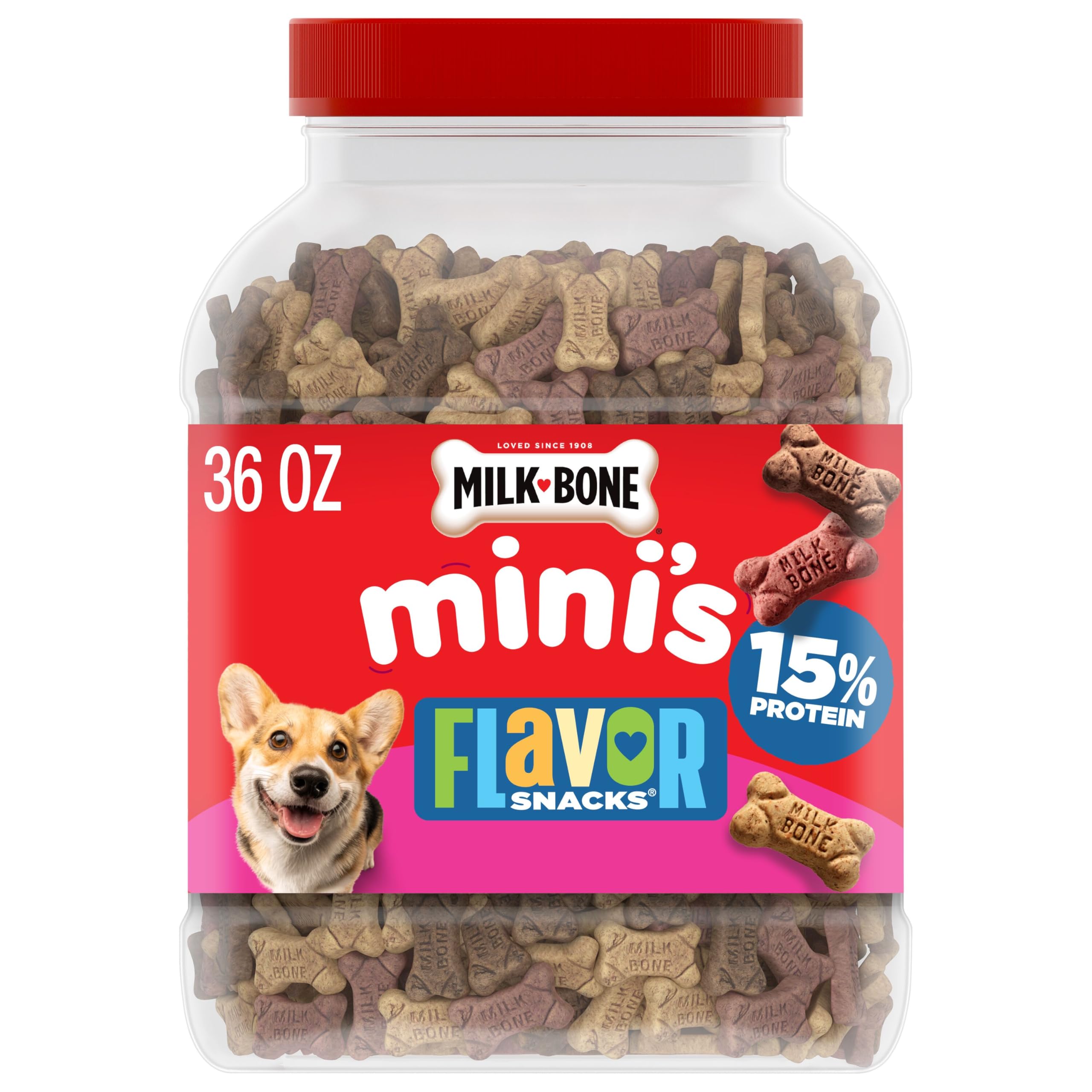
Milk-Bone Flavor Snacks Mini's

Top Pick
Milk-Bone Flavor Snacks Mini's

Everyday small-dog rewards

Our Score 9.6/10
Check Price

Worth Noting

  • Can dry out and crumble after opening
Flavors
Beef, chicken, bacon
Protein
15%
Package Size
36 oz
Calories Per Treat
5
Read the full review

Five calories is the number that makes these the treats we reach for first. A small dog can have several mini biscuits across a training session without turning a reward into a meal, and the 36-ounce canister is big enough to keep one by the door and one in the car.

The mini size is the other half of the appeal. These are small biscuits, not full-size bones, and they snap in half cleanly when a toy breed needs an even smaller bite. The canister holds three flavors—beef, chicken, and bacon—so a picky dog gets variety without opening three bags.

For training, the crunch is quick enough to keep a session moving. The biscuit has 15% protein and added calcium and phosphorus, which makes it feel more substantial than a soft puff, though it is still a treat rather than food. The crunch also helps with breath and tartar, but we treat that as a small bonus, not a reason to skip brushing.

The texture is where these lose a little ground. A dog with delicate teeth or a very small mouth may find the biscuit too hard. We break them for older dogs and keep a soft option on hand for anyone who turns away from crunch.

That still leaves these as the best default here for everyday small-dog rewards. The 5-calorie size, the clean snap, and the three-flavor canister solve the most common problem: rewarding a small dog often without overdoing it. If your dog has sensitive teeth, go soft; otherwise this is the box we keep filled.

Bottom line: For small dogs who need frequent, low-calorie rewards, these mini biscuits are our default: five calories each, easy to snap, and packed in a canister that lasts.
2

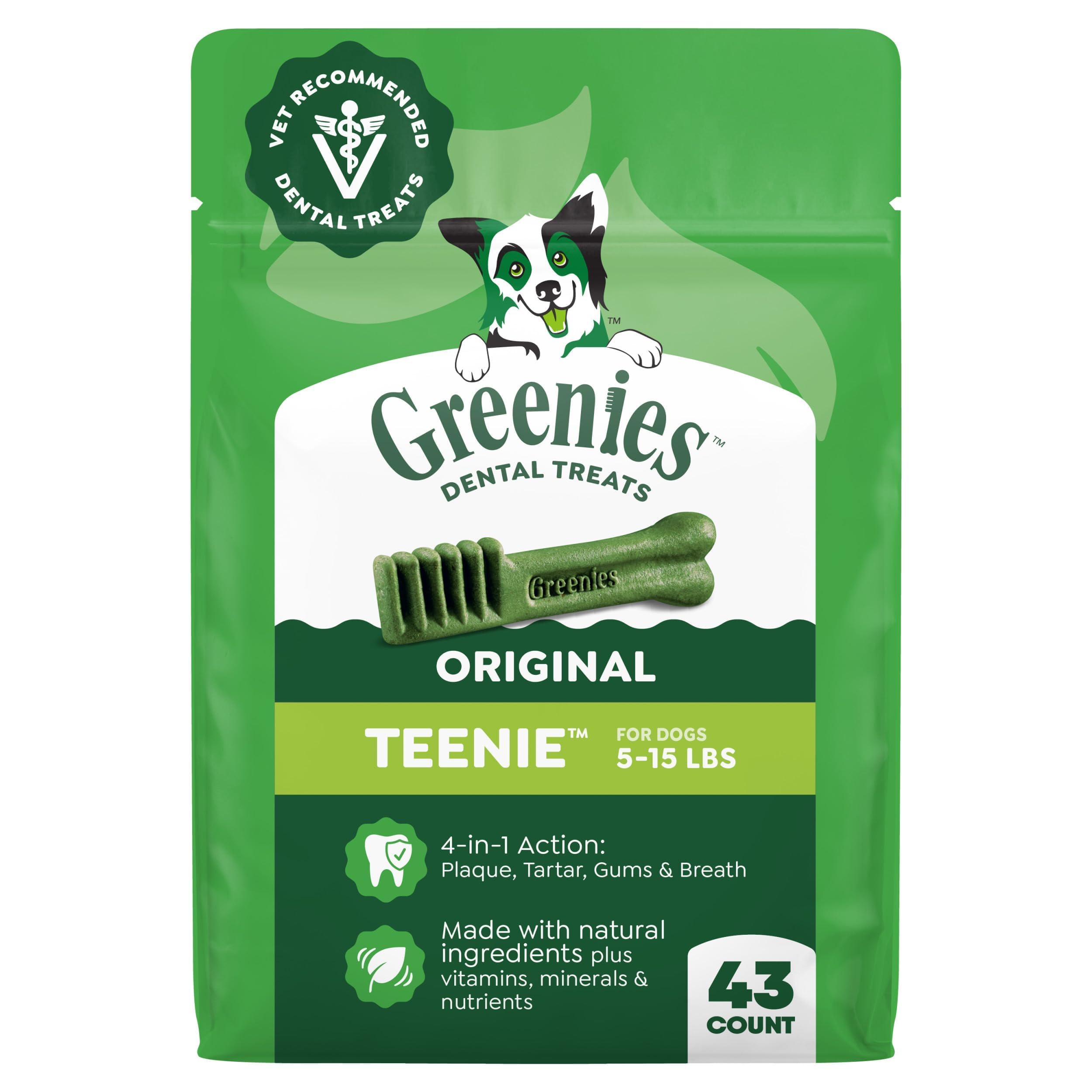
Greenies Teenie Dental

Greenies Teenie Dental

Daily dental care

Our Score 9.6/10
Check Price

Worth Noting

  • Not sized for dogs under 5 lb
Count
43 treats
Breed Size
5-15 lbs.
Key Benefit
Dental care
Package Weight
12 oz
Read the full review

The Teenie size is the detail that makes Greenies work for a small dog. The chew is built for dogs from 5 to 15 pounds, so it is a daily dental chew rather than a big bone that has to be gnawed down. We like the routine it creates: one chew after the last meal, then the bowl goes up. The texture is firm enough to press against the gumline, and the shape gives a small mouth something to work on. It takes a few minutes, which is enough time for the chew to do its job without becoming a project.

We do not treat these as training rewards. One a day is the job, and the dental benefit is the reason to buy them; using them as a handful of rewards adds calories without adding much training value. For the right small dog, this is the easiest dental habit on the page. The firm texture is part of that, but it is also why a puppy with baby teeth needs a different chew. Choose a chew sized for that dog rather than forcing this one.

Bottom line: For daily dental care in a small dog, Greenies Teenie earns its place: the 5-15 lb size and firm texture make one chew a day feel routine.

3

Purina Beggin' Fun Size

Purina Beggin' Fun Size

Soft high-value rewards

Our Score 9.6/10
Check Price

Worth Noting

  • Some dogs refuse the flavor
Texture
Soft strip
Package Size
25 oz
First Ingredient
Real meat
Calories Per Strip
7
Read the full review

The first thing we noticed about Beggin' Fun Size is how much smaller they are than the full-size strips. That is the point: a small dog gets the bacon aroma and soft chew without a strip the length of its head. At seven calories each, they are modest calories as treats go, and the strip tears lengthwise so you can halve it for a five-pound dog without hunting for scissors. Real meat is the first ingredient, and there are no artificial flavors.

The aroma is strong, which is exactly why dogs lock on and why you may want to keep the pouch sealed. Fresh from the bag, the strips are soft enough for small mouths. We move them into a jar after opening because the resealable top is not reliable, and a strip that dries out turns firmer than a small dog may want.

Bottom line: When a small dog needs a soft, high-value reward, Beggin' Fun Size delivers seven-calorie strips that tear down to tiny-mouth size.

4

Covetrus Lean Treats

Covetrus Lean Treats

Weight management

Our Score 9.6/10
Check Price

Worth Noting

  • Premium price
Texture
Soft chicken
Fat Claim
Low fat
Pack Format
10 pouches
Total Weight
40 oz
Read the full review

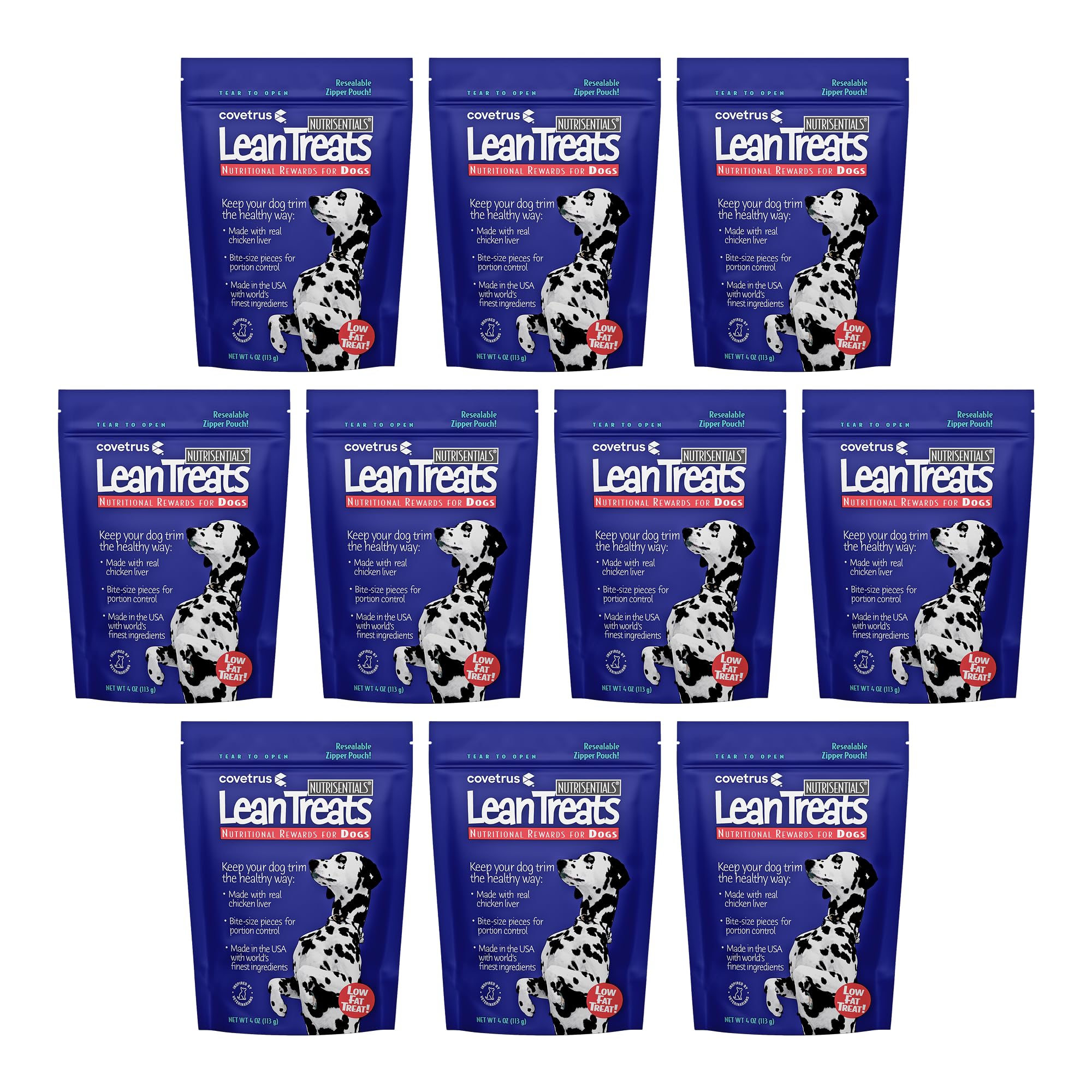
The ten-pouch format is what makes Covetrus Lean Treats different from the rest of the list. Each pouch holds four ounces of soft chicken-flavored bites, so you can keep one in the car, one at a training class, and one in the kitchen without exposing the whole supply to air. The formula is low-fat and portion-controlled, which is the reason it turns up in veterinary settings.

The bites are soft and break into smaller pieces, which makes them useful for a dog on a weight-management plan or one who needs a daily medication wrapped in something. They are a specialist treat, not the first bag we reach for during a basic training session.

Freshness is the variable. Some pouches arrive moist and pliable, while others are dry and crumbly. That matters if you are relying on them to wrap a pill or if your dog is picky about texture. We check each pouch before committing it to a medication routine.

For a small dog who needs a low-fat reward and pre-portioned bags, the convenience is the reason to buy. For everyday training, a mini biscuit or a soft strip is the simpler choice. This is a specialist pick, not the default.

Bottom line: Covetrus Lean Treats make sense for weight-conscious small dogs and medication routines: low-fat chicken bites in ten portioned pouches.

5

Pup-Peroni Lean Beef

Pup-Peroni Lean Beef

Lean soft treats

Our Score 9.6/10
Check Price

Worth Noting

  • Can cause digestive upset in sensitive dogs
Texture
Soft stick
Fat Claim
90% fat free
Package Size
22.5 oz
First Ingredient
Real beef
Read the full review

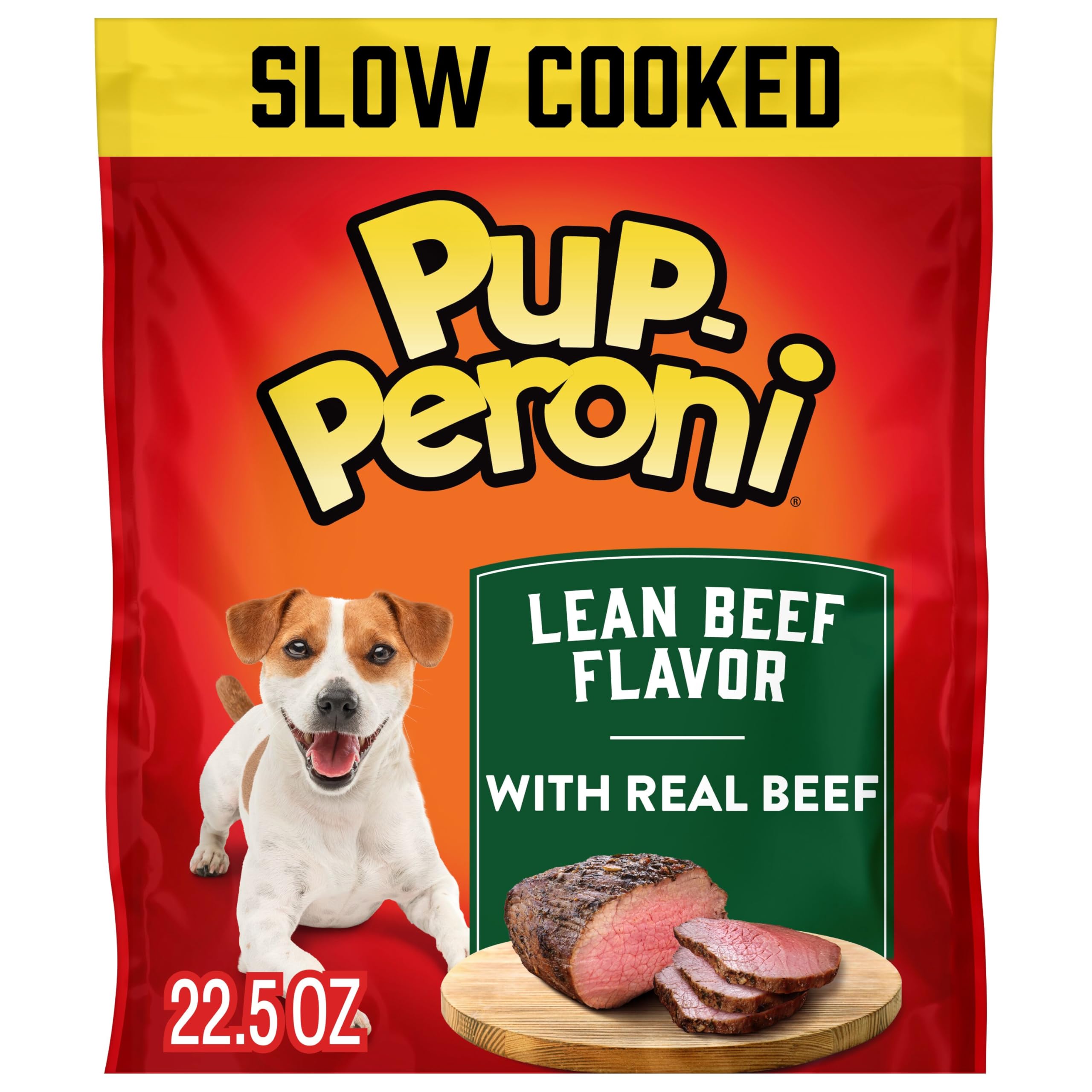
Pup-Peroni Lean Beef looks like a soft stick, not a small-dog treat, and that is the first thing to understand. The strips are long enough that a small dog should not get one whole; tear them into thirds and you have a soft, meaty reward. The formula is 90% fat free, with real beef and no Red 40 or fillers.

The softness is the draw. These tear easily, they are easy for an older dog to chew, and the meaty scent gets a picky dog interested. They are also more forgiving than a crunchy biscuit for a dog with missing teeth. This is a good lean option for a small dog who needs a softer reward, as long as you portion the long strip.

Freshness and hardness vary from bag to bag, and a strip that should be tender can arrive stiff. We squeeze a piece before giving it to a senior dog; if it is hard, we do not use it for a dog with delicate teeth. The long shape also means portioning is on you, but that is a small trade for a treat that breaks so easily.

This is a good soft treat for a household that already likes the Pup-Peroni flavor, not the first pick for a toy breed. The lean formula and tearable texture earn it a place as an also-consider; the inconsistency keeps it from the top tier.

Bottom line: Pup-Peroni Lean Beef is a lean, soft strip for small dogs once you tear it into pieces; the whole strip is too long for a toy breed.

6

Blue Buffalo Bits

Blue Buffalo Bits

Repetitive training

Our Score 9.4/10
Check Price

Worth Noting

  • Strong smell
Texture
Soft
Package Size
19 oz
Added Nutrient
DHA
First Ingredient
Real chicken
Read the full review

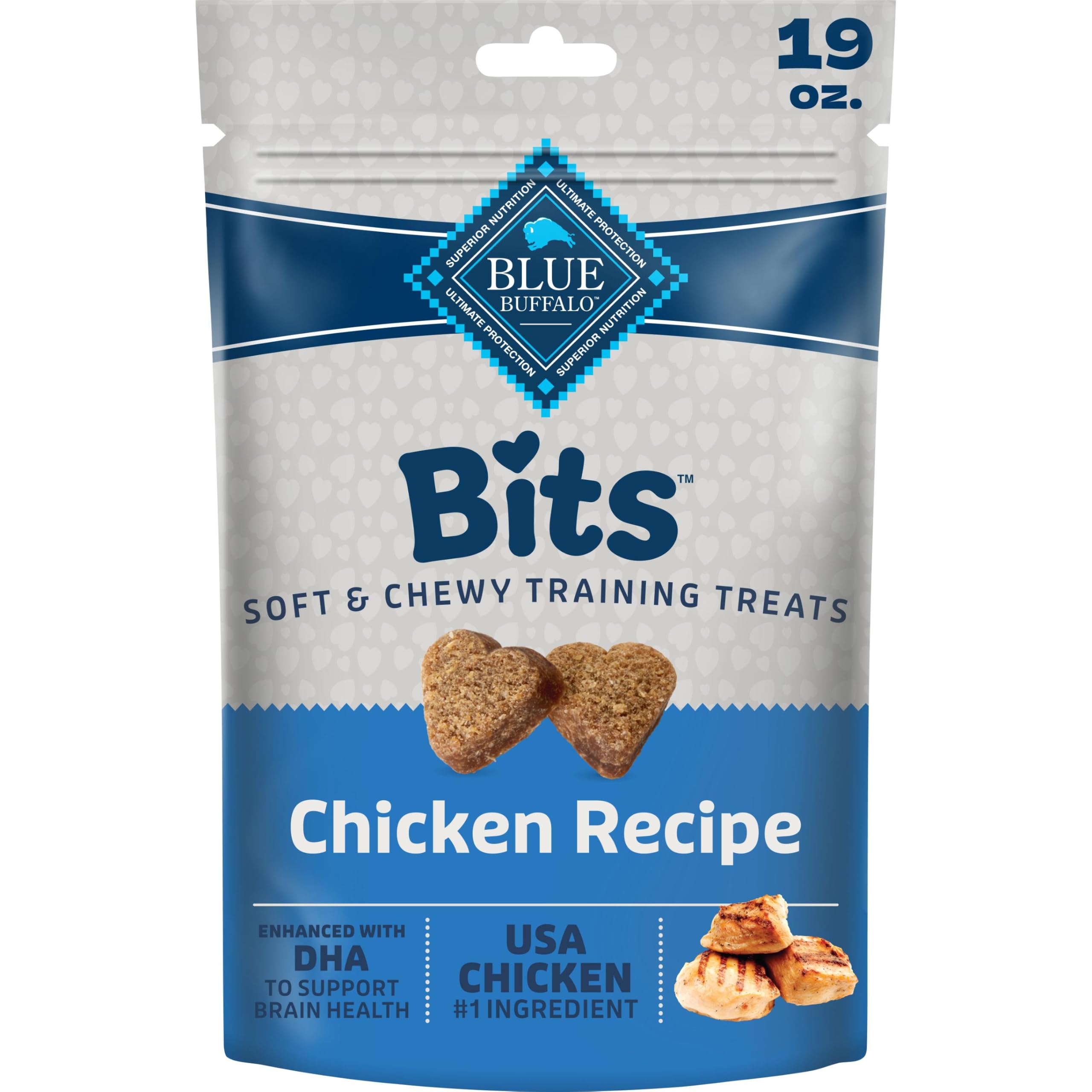
Blue Bits are about the size of kibble, which is exactly what we want for a dog who needs a reward every few seconds. The pieces are soft, so a small dog can swallow them without a long crunch, and they are small enough to carry in a pocket without turning into crumbs. Real chicken is the first ingredient, and the formula includes DHA and omega fatty acids.

The texture is the reason to choose these over a biscuit. A senior dog with missing teeth or a puppy still learning to chew can handle them, and they break in half if you want to stretch the bag. The 19-ounce bag is a sensible size for a training class or a week of serious practice.

We keep these in the rotation for repetitive training, not for every dog. A sensitive stomach can react to them, and the pieces are small enough that a greedy dog may swallow without chewing. But when the goal is fast, repeated rewards without a mouthful of biscuit, the kibble-sized pieces do the job.

Bottom line: Blue Buffalo Bits are our pick for fast repetitions: kibble-sized soft pieces that puppies and older dogs can handle without a long crunch.

7

Milk-Bone Soft & Chewy

Milk-Bone Soft & Chewy

Senior dogs

Our Score 9.4/10
Check Price

Worth Noting

  • Not a dental chew
Flavor
Beef and filet mignon
Protein
18%
Texture
Soft and chewy
Package Size
25 oz
Read the full review

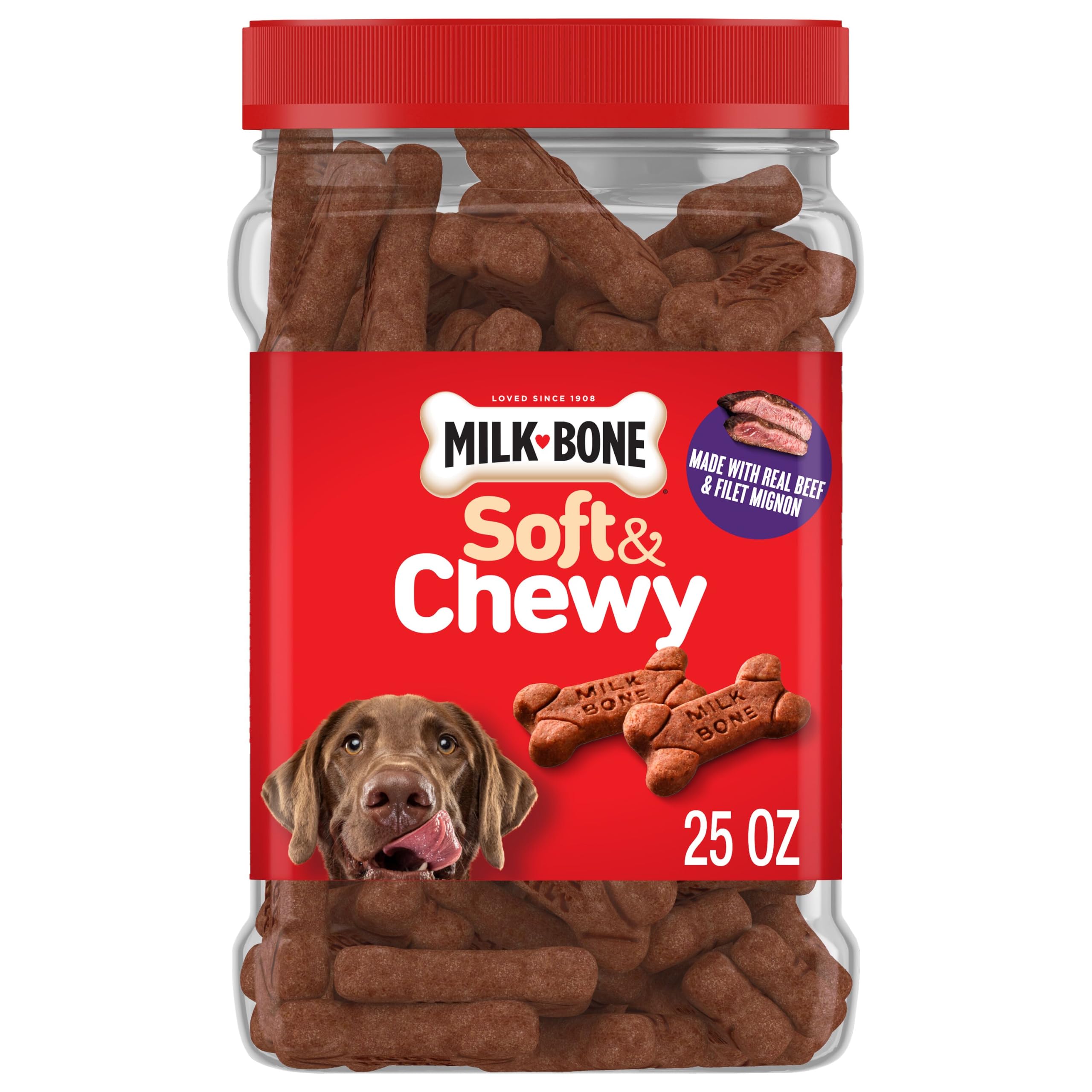
Soft & Chewy is the Milk-Bone we give when a dog has earned something that does not require crunching. The pieces are tender, the flavor is beef and filet mignon, and the formula has 18% protein plus 12 vitamins and minerals. For an older dog with worn teeth or a small dog that turns away from hard biscuits, that softness is the whole point.

The 25-ounce canister is a good value in the Milk-Bone lineup, but the pieces are not mini. We break them into smaller bites for a toy breed. They are a comfort treat and a good option for a household with an older dog and a smaller one sharing the same jar. The canister is easy to keep by the back door, and the soft pieces do not shatter in a pocket the way a dry biscuit can.

Bottom line: Older dogs and small dogs with delicate teeth get an easy chew from Milk-Bone Soft & Chewy, with 18% protein and a tender texture.

8

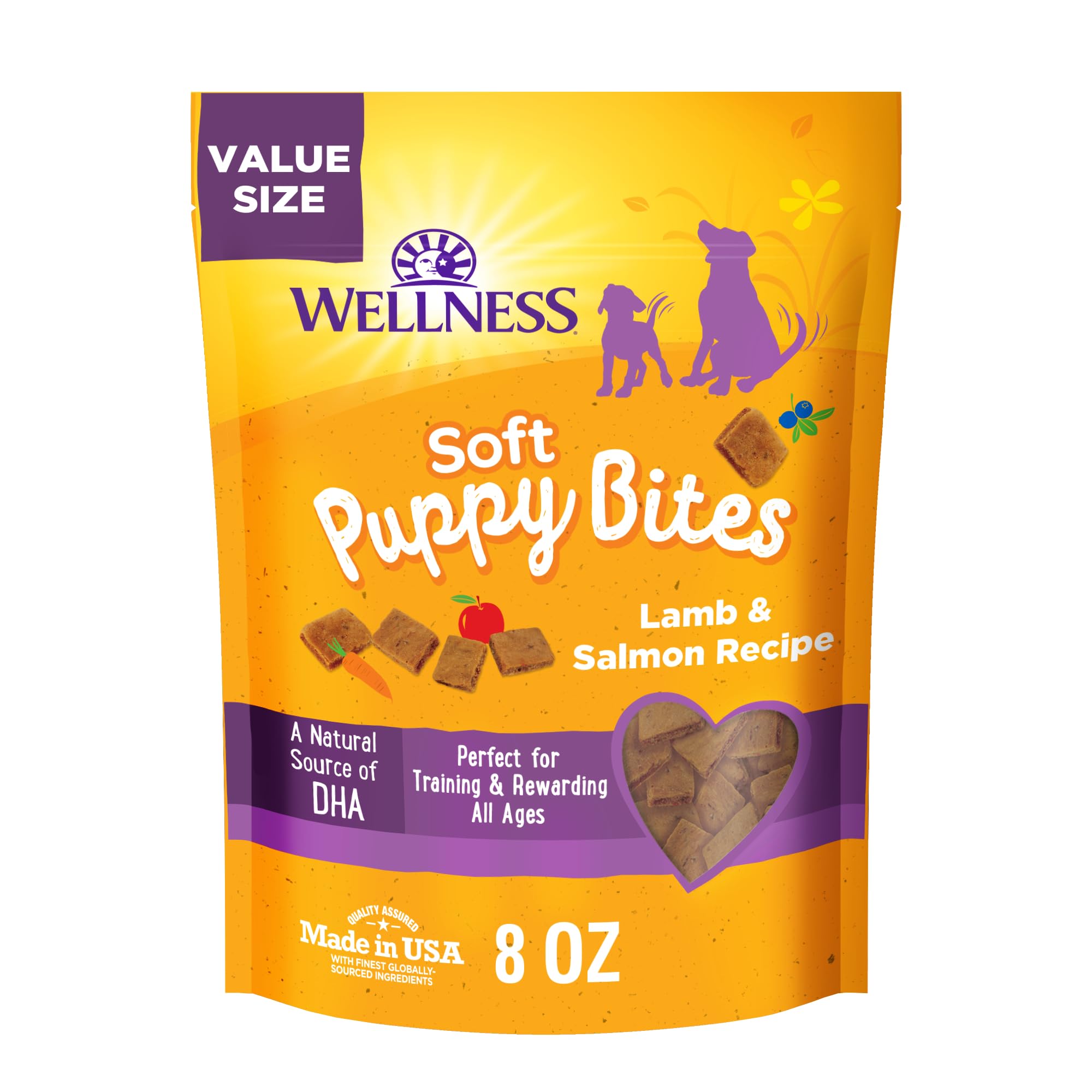
Wellness Soft Puppy Bites

Wellness Soft Puppy Bites

Puppy training

Our Score 9.2/10
Check Price

Worth Noting

  • Eight-ounce bag goes fast during training
Diet
Grain-free
Recipe
Lamb and salmon
Package Size
8 oz
Added Nutrient
DHA
Read the full review

Puppy training is a volume business: you need a reward small enough to repeat ten times in five minutes and soft enough that a young dog does not stop to crunch. Wellness Soft Puppy Bites fit that job well. The pieces are tender, they pinch apart easily, and the lamb-and-salmon recipe is grain-free with DHA added for brain development.

The pieces are not uniformly tiny; some puppies need each bite cut in half or quarters. We keep a pair of scissors in the treat drawer for that reason. The softness is a real advantage for baby teeth, and the salmon and lamb give a puppy a different protein profile from the chicken-heavy treats on this list.

This is the pick for the puppy stage, not the forever treat. Once training settles down, a lower-calorie biscuit or a dental chew makes more sense. But for a young dog learning sit, come, and crate games, the soft texture and tearable size are what keep the session moving. The grain-free formula is a bonus for households already avoiding wheat, corn, and soy.

Bottom line: Puppy training calls for soft, tearable rewards, and Wellness Soft Puppy Bites deliver that with a grain-free lamb-and-salmon formula and added DHA.

9

DreamBone Twist Sticks

DreamBone Twist Sticks

Rawhide-free chewing

Our Score 9.2/10
Check Price

Worth Noting

  • Some dogs experience digestive upset
Form
Twist stick
Count
50 sticks
Recipe
Chicken and vegetables
Rawhide
Rawhide-free
Read the full review

DreamBone Twist Sticks are the rawhide-free option we reach for when a small dog wants something to hold and chew, not just swallow. The twist shape gives little jaws something to grip, and the chicken-and-vegetable recipe is enriched with vitamins and minerals. The 50-count bag is generous for a small dog.

They are a quick chew, not a long project. That is the role: a rawhide-free snack for a dog who wants something to hold for a few minutes, not a chew that occupies an afternoon. We keep them for short sessions and choose a different shape when we need a longer distraction.

The sticks have a noticeable smell, which is normal for this kind of chew but worth knowing before you open the bag in a small room. They are soft enough to bend, which makes them a better fit for a dog who finds harder chews frustrating.

For a small dog who cannot have rawhide and needs a soft, quick chew, the 50-count bag is useful. It is not the pick for a power chewer, and it will not replace a long-lasting chew. That is why these sit in also-consider rather than the top tier.

Bottom line: DreamBone Twist Sticks suit a small dog who wants a soft, rawhide-free chew, though they are a quick snack rather than a long-lasting project.

How We Picked and Tested the Best Small Dog Treats

The shortlist started with ingredient panels, read back to front: named protein first, calorie density per piece, and whether the listed size was genuinely small or just a mini version of a big biscuit. From roughly 40 candidates I pulled 16, spreading them across soft training bites, freeze-dried pieces, and crunchy dental chews, then handed the bags to a rotating panel of small-dog owners — a Chihuahua, a dachshund, two terriers, and a shih tzu — for about three months.

Everything happened where treats actually get used. In the kitchen, we ran ten reps of sits and stays before the morning walk and noted which treats the dogs worked for and which they took out of politeness. On the rug after dinner, we timed how long a six-pound dog stayed with a chew before wandering off, and pressed each piece between thumb and counter to see whether it resisted or shattered on the first bite. On walks, the bag rode loose in a jacket pocket so we could see which ones crumbled to dust by day three.

Pet preference got tested twice: a side-by-side offer, then the same two again 24 hours later to rule out first-day novelty. Freshness was a reseal-and-revisit job, opening each bag again at week three and week six to check for brittle biscuits or tacky soft bites. We noted aroma whenever a bag opened in the next room, watched the following day for how each one sat, and did the math on cost per treat rather than cost per bag.

How to Choose Small Dog Treats

Size the reward before you size the bag

A big canister is only useful if the pieces inside are small enough for a five-pound dog. Look for mini, teenie, or bite-size pieces, and expect to break larger biscuits and soft strips into halves or thirds. The treat should be easy to swallow after a quick chew, not something the dog has to gnaw down while the training moment passes. Calorie count matters just as much: a five- to seven-calorie reward lets you repeat a behavior several times without blowing the day's budget.

Match texture to teeth and chewing style

A crunchy biscuit can help scrape teeth, but it is the wrong choice for a puppy with baby teeth, a senior with missing molars, or a toy breed that turns away from hard food. Soft treats are easier to break and swallow, though they dry out faster and can become firm in an open bag. If your dog gulps treats without chewing, tear soft strips smaller and avoid any chew that breaks into pieces large enough to swallow. Watch the dog, not just the label.

Separate training treats from dental chews

Training rewards need to be small, quick, and low enough in calories to repeat. Dental chews are a different job: they are sized by body weight and meant for a daily routine, not a handful during a lesson. Using a dental chew as a training reward usually adds calories and slows the session. Keep one daily dental chew if your dog fits the size range, and use mini biscuits or soft bits for the repetitions.

Read the formula for sensitive stomachs and weight

Small dogs can be sensitive to rich or high-fat treats, and a tiny dog does not need much to tip the calorie balance. A low-fat formula, a short ingredient list, or a single protein can make treats easier to fit into a weight plan. Introduce any new treat one small piece at a time and give it a day before you commit to a full bag. If your dog has a medical condition, ask your veterinarian before changing the treat routine.

Choose a package you can keep fresh

Soft treats are the ones that suffer most from a bad resealable bag. A canister or a set of small pouches keeps the supply fresher than a large zip bag that fails after a week. If you buy a big bag, move a few days' worth into a small container and keep the rest sealed. For training, portioned pouches are convenient; for everyday biscuits, a canister is usually the better keeper.

Frequently Asked Questions

Final Verdict

For most small dogs, the Milk-Bone Flavor Snacks Mini's are the canister we keep on the counter: five calories, a clean snap, and three flavors that keep a training session interesting. Choose Greenies Teenie if daily dental care is the job, or Wellness Soft Puppy Bites if you are raising a puppy. For a dog with delicate teeth, skip the crunch and go soft.