Collars & Leashes

Best Dog Harnesses for Hiking of 2026

The moment that sells people on a real hiking harness usually isn't dramatic: your dog balks at a rocky step, you reach for a handle that isn't there, or the strap you grab drags the whole harness sideways. A trail harness spreads load across the chest instead of the throat, gives you something honest to lift, and stays put through a scramble without rubbing a raw spot behind the front legs. I hike with a broad-chested, hard-pulling mix, and a harness that fits neatly in the driveway can behave very differently at mile six.

We spent six months hiking in 12 harnesses — neighborhood walks, muddy spring trails, long weekend climbs — and the winners separated on fit and hardware, not features. Sizing by weight instead of chest girth is the mistake I see most: an inch off at the widest part of the chest means gapping at the shoulders or binding behind the front legs, no matter how many adjusters a harness advertises. What follows stayed put, cleaned up well, and felt worth what it cost.

1

ICEFANG Tactical Harness

Top Pick
ICEFANG Tactical Harness

Gear and handling

Our Score 9.4/10
Check Price

Worth Noting

  • Hand wash only
Size
Medium
Hardware
2 aluminum, 2 plastic buckles
Leash Clips
Two
MOLLE Strips
4 hook and 2 loop
Read the full review

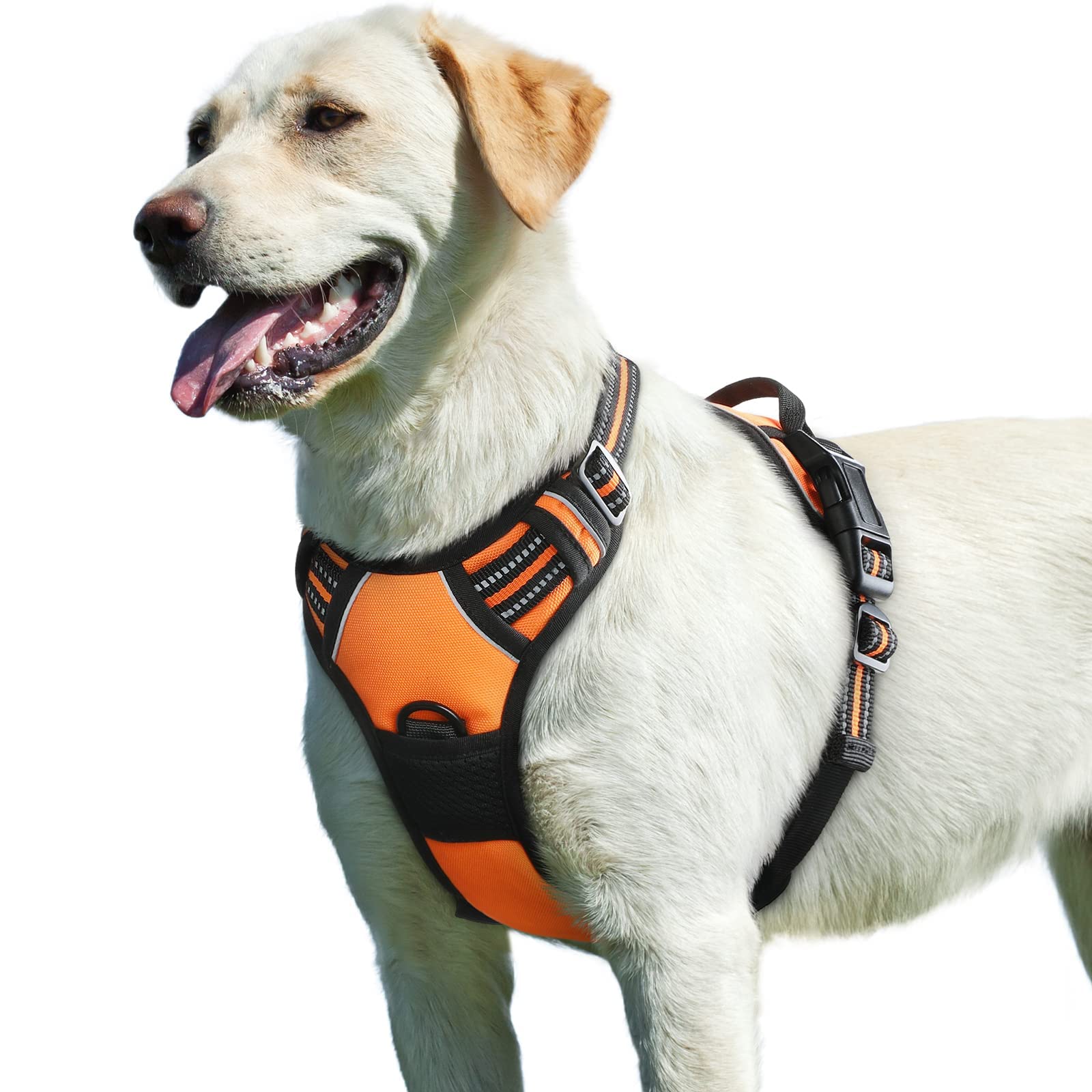
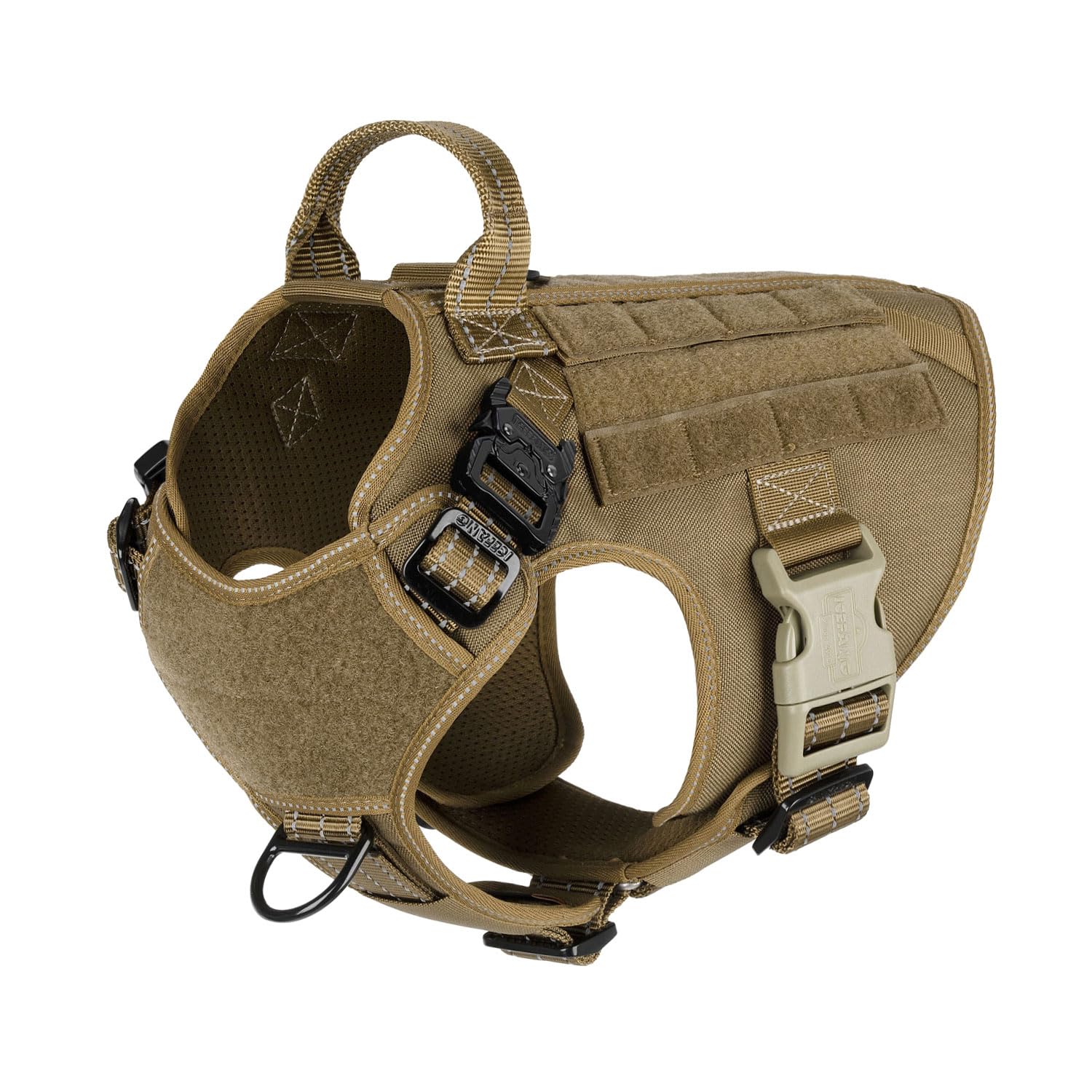
The ICEFANG opens with the details that make a tactical harness useful on a trail: a padded lift handle, strips of MOLLE on each side, and two leash clips. The handle is the part we appreciate most around rock steps and log crossings, where a hand on the dog's back steadies both of you. The front D-ring sits low on the chest for redirecting a pull, while the V-ring at the neck suits ordinary walking.

Build quality is where this one earns its place. The shell is nylon, the seams are reinforced, and the closure uses two aluminum buckles at the neck plus two plastic buckles at the chest. That mix feels deliberate: the metal takes the neck adjustment, the plastic keeps the chest quick to open. We also like the padded panels, which spread pressure better than a bare strap harness on a long descent.

The fit is the caveat. On a deep-chested dog, the chest straps need to be tighter than the size label suggests; when they sit loose, a dog can back out. Measure the neck and chest, then check the fit again after the first climb. The medium is sized for a medium dog, but the shape runs narrow at the neck for some broad-headed breeds. If your dog is between sizes, go by the chest measurement rather than the size name.

For a dog that carries its own water or a small first-aid kit, the MOLLE real estate is genuinely useful. For a fast, light hike, it is more harness than you need.

Bottom line: We recommend the ICEFANG when you want a lift handle and MOLLE panels on a rugged vest, provided you snug the chest straps on a broad-chested dog.
2

Ruffwear Front Range

Ruffwear Front Range

Long trail days

Our Score 9.2/10
Check Price

Worth Noting

  • Costs more than the other picks here
Size
Medium
Leash Points
Two
Harness Weight
5.92 oz
Adjustment Points
Four
Read the full review

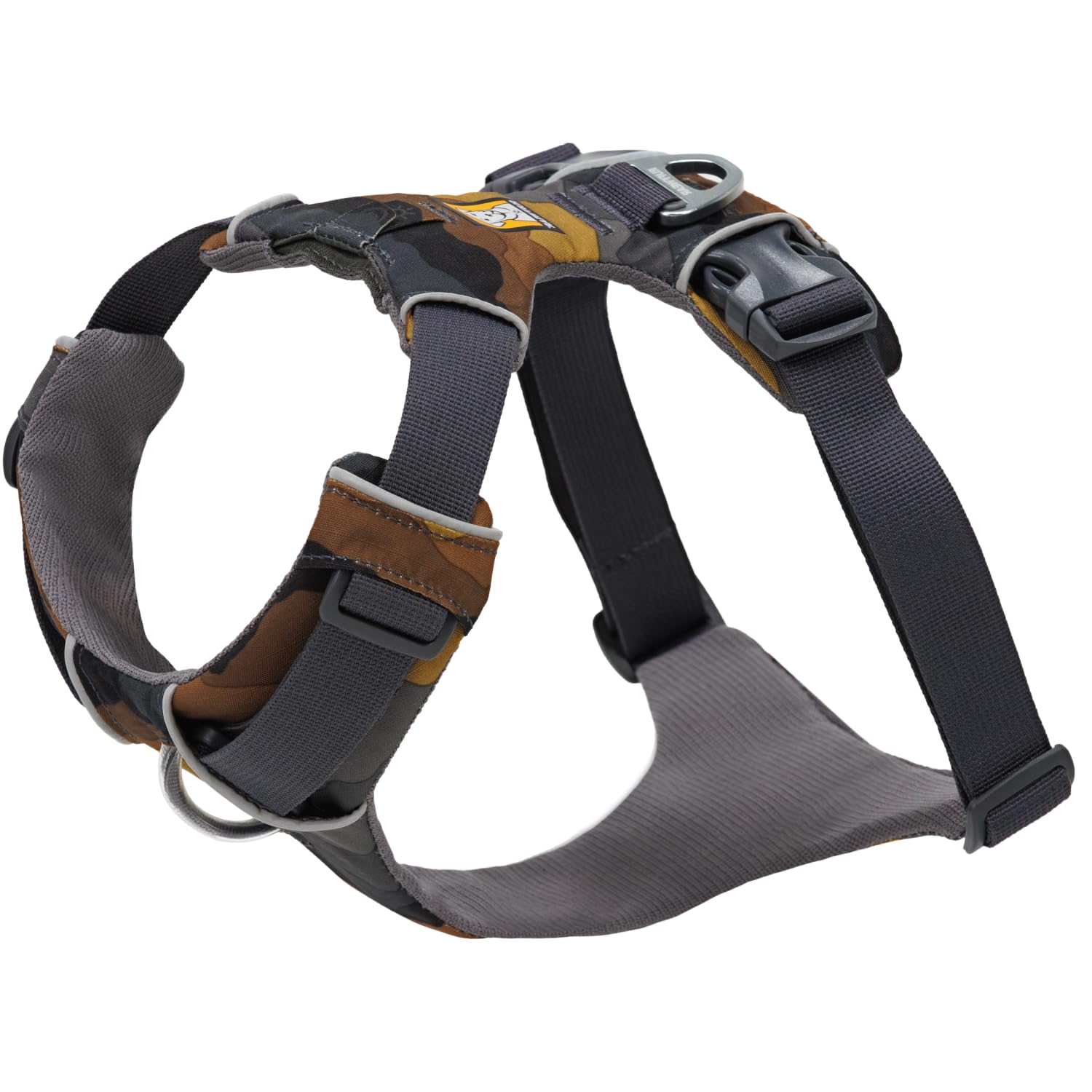
The Front Range is the harness we reach for first when the route is long and the weather is mixed. At 5.92 ounces, it disappears into a daypack, and the closed-cell foam under the chest and belly gives the straps something soft to pull against. Four adjustment points let you set the neck and chest separately, which matters on dogs that are narrow in front and deep through the ribcage. We also like the reflective trim and the dedicated light loop for early starts or late returns.

The leash setup is simple rather than tactical. An aluminum V-ring on the back handles ordinary walking, while reinforced webbing at the chest gives you a second, lower attachment for redirecting a dog that surges toward a squirrel. For a dog that hikes on its own four feet, the lower weight and flatter profile are a better trade than a vest loaded with gear loops. The ID pocket is small, but it is the right size for a folded card with your phone number.

Fit is the part to slow down for. The size chart uses chest girth, not breed or weight, and the four straps need checking after the first half mile because a padded harness can settle. On a broad-chested dog, a loose chest panel gives a dog room to back out; snug it up and recheck the neck opening. The foam and webbing wipe clean with a damp cloth, which is enough for trail dust and mud.

What seals it for us is the balance: enough padding for a full day, not so much bulk that the dog overheats on a climb. If you need MOLLE panels and a lift handle, look at the tactical picks; if you want one harness that works for most trails, start here.

Bottom line: For most hikers, we recommend the Front Range: it is light, padded, and adjustable enough for long days, with reflective trim and two leash points.

3

Beebiepet Tactical Harness

Beebiepet Tactical Harness

Gear-heavy hikes

Our Score 9.2/10
Check Price

Worth Noting

  • Hand wash only
Size
Large
Weight Range
30–100 lb
Leash Included
5 ft
Adjustment Points
Four
Read the full review

The Beebiepet arrives as a complete kit: a large tactical vest, a five-foot leash with a foam handle, and an ID tag you can write on. That matters if you are outfitting a new hiking dog and do not want to shop for a matching leash separately. The vest has four adjustment points, two metal leash clips, and MOLLE strips on both sides.

The shell is nylon with reinforced stitching, and the chest and belly panels are padded. On a large dog, that padding helps the straps sit without bunching behind the front legs. The lift handle is padded too, which makes a difference when you are guiding a dog through a rocky section or lifting it into the car after a wet hike. The ID tag is a small touch, but a useful one on busy trailheads.

What we like most is the value of the whole package. The harness is built for dogs in the 30-to-100-pound range, and the four adjusters give you room to fit a deep chest without the straps running out. The extra webbing and MOLLE make it feel more substantial than a trail-first vest. For a strong dog that carries a little gear, that trade is worth it.

Bottom line: We recommend the Beebiepet as the tactical kit that includes a leash, with four-point adjustment and a strong build for gear-heavy days.

4

OneTigris Fire Watcher

OneTigris Fire Watcher

Patrol-style gear carry

Our Score 9.2/10
Check Price

Worth Noting

  • Not chew-proof; store out of reach
Size
Medium
Material
1000D nylon
MOLLE Straps
Two per side
Harness Weight
10.2 oz
Read the full review

The Fire Watcher is a patrol vest first and a hiking harness second. The 1000D nylon shell feels stiff out of the box, and the MOLLE strips, loop panels, and padded handle give it a utility look. That bulk is the point if you want to attach a small pouch, an ID panel, or a light. It is not the harness you forget the dog is wearing.

What we like is how much control the design gives you on rough ground. The top handle is easy to grab, the four quick-release buckles let you open the vest flat, and the padded panels sit over the chest and belly rather than cutting into the armpits. The MOLLE layout is useful without being fussy: two strips per side, plus a long loop panel on top for a name patch. For a strong dog on a cool-weather hike, that combination is reassuring.

The medium runs large, and the vest is heavy compared with the trail-first picks. Measure the neck and chest, and do not size up because the harness looks substantial. The sizing chart is the place to start, not the breed label. Once it is fitted, the adjusters hold, but the tabs can work loose if you leave the straps at the end of their range. This is a harness for a dog that carries gear, not for a fast, light hike.

Bottom line: We recommend the OneTigris for a gear-heavy, cool-weather hike where a patrol-style vest and lift handle matter more than low weight.

5

PHOEPET No Pull Harness

PHOEPET No Pull Harness

Budget no-pull

Our Score 9.0/10
Check Price

Worth Noting

  • Durability is uneven over time
Size
Medium
Buckles
Three
Leash Rings
Two
Harness Weight
7.68 oz
Read the full review

The PHOEPET solves a specific problem: it has three buckles, including a lockable one at the neck, so the harness opens flat instead of going over the dog's head. On a dog that ducks away from a loop, that changes the morning routine. The chest and belly straps adjust separately, and there are two metal leash rings, one on the back and one on the chest.

The reflective material runs across the front and sides, and the back handle is soft enough to grab when you need to hold a dog close at a trailhead. The harness is light enough to leave on between trailheads. It is not the one we choose for a dog that pulls hard against the front clip all day, but it is comfortable for a dog that walks with a loose leash.

The buckles are the part to check. They are easy to open with cold fingers, but the adjustment straps take some fiddling, and they can creep once the dog starts pulling. We set the chest and neck before the first walk and then checked again after a few minutes. A snug fit keeps the front ring from swinging to the side; a loose one lets the whole vest rotate.

For the money, this is a useful second harness or a first no-pull vest for a dog that is not a serious escape artist. If you hike every weekend with a strong puller, the Ruffwear or ICEFANG is the better long-term buy; for calm dogs and shorter trails, the PHOEPET does the job.

Bottom line: We recommend the PHOEPET for a budget no-pull harness, especially if your dog hates having a harness pulled over its head.

6

Eagloo No Pull Harness

Eagloo No Pull Harness

Budget large dogs

Our Score 9.0/10
Check Price

Worth Noting

  • Plastic buckles need regular checking
Size
Large
Leash Rings
Two
Harness Weight
8.6 oz
Adjustment Sliders
Four
Read the full review

The Eagloo is the large-dog harness we point to when the budget is tight. It uses two quick-snap buckles and four adjustment sliders, so you can open it flat and set the neck and chest without wrestling a dog's legs through loops. The back handle is padded, the chest and belly panels use breathable air mesh, and reflective strips run along the sides. For a casual trail dog, that is a lot of the practical package.

The fit is generous. The large is built for a big chest, and the four sliders give you enough range to take up slack on a dog that is between sizes. We like the front ring for a dog that leans into the leash, and the back ring for relaxed walking. The harness is light enough to leave on between trailheads, and the mesh dries quickly after a wet walk.

On a calm large dog, the Eagloo does the everyday work without fuss: it goes on quickly, the handle gives you a steadying point at road crossings, and the padding sits softly against the chest. It is not the harness we choose for a dog that lunges at every squirrel. For a first hiking harness or a spare for the car, it is an easy yes.

Bottom line: We recommend the Eagloo for large dogs on a budget: it is easy to put on, has two leash rings, and costs far less than the premium picks.

7

Voyager Step-In Air

Voyager Step-In Air

Small-dog day hikes

Our Score 9.0/10
Check Price

Worth Noting

  • Step-in design limits it to easy trails
Size
L (Chest: 18 - 20.5")
Closure
Hook-and-loop, buckle, double D
Harness Weight
3.2 oz
Reflective Bands
Two
Read the full review

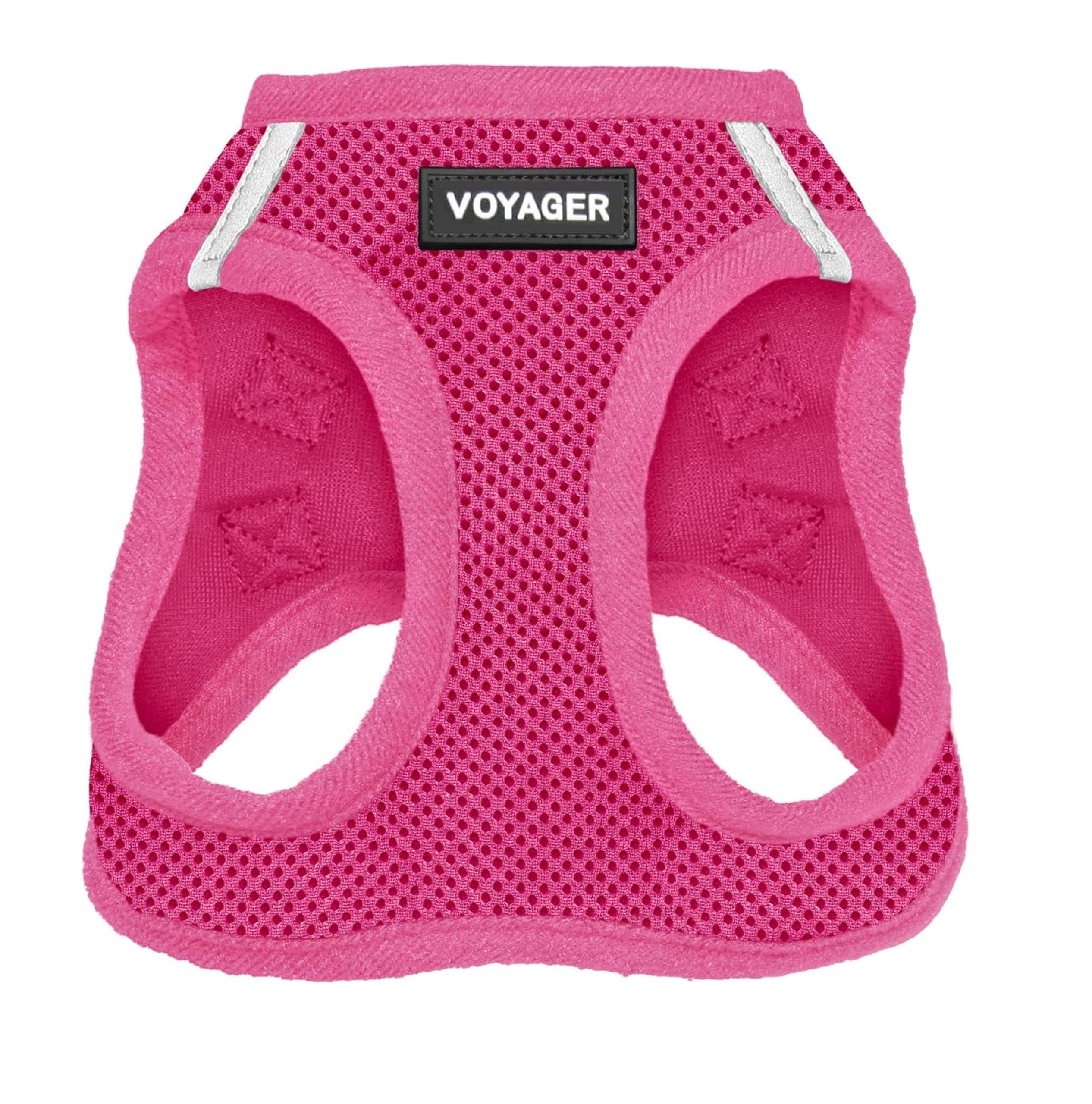
The Voyager is a step-in vest, not a trail harness. The dog puts its front legs through the openings, you pull the chest panel up, and the hook-and-loop fastener, buckle, and double D-rings close over the back. For a small dog that tolerates a harness but hates having something pulled over its head, that is a calmer start to a walk.

At 3.2 ounces, it is the lightest harness here. The air mesh is breathable and dries fast, and the two reflective bands show up in low light. The chest range on the large is 18 to 20.5 inches, which puts this in small-to-medium territory rather than the large-dog size the label suggests. Measure the chest, not the breed.

The step-in shape has limits. The chest panel sits low across the front, and the mesh has enough give that it works best on a dog that walks politely rather than one that lunges. We check the fit at the neck and behind the front legs before clipping the leash, because a loose step-in vest shifts when a dog stops suddenly.

For a small dog on a flat rail trail or a neighborhood greenway, the Voyager is simple and comfortable, and the price is easy to justify as a spare. If your hiking is mostly a long walk on maintained paths, this one is enough.

Bottom line: We recommend the Voyager for small dogs on easy, maintained trails, where a light step-in harness is easier than a tactical vest.

How We Tested: Twelve Harnesses, Six Months, a Lot of Mud

We started with a list of more than 30 harnesses sold for hiking and filtered it down using the specs that actually matter on a trail: four points of adjustment, metal leash attachment points rather than plastic, a padded chest plate, and a grab handle built to take weight. Size range came next, so small through extra-large dogs were covered, and price factored in heavily, because a harness spends its life in brush and mud and should not cost more than it needs to.

Twelve harnesses went out over six months, on daily three-mile leash walks and weekend hikes of six to nine miles. We fitted each one before the first walk: measuring chest girth at the widest point, checking two fingers of room at the sternum and behind the front legs, then taping each strap end so we could see whether the adjusters crept after a few miles of pulling.

On the trail we watched for failures rather than specs. We clipped a leash to the back ring and let a 70-pound dog hit the end of it, noting whether the harness twisted or the ring strained; we lifted by the handle from a rock ledge to see where the pressure landed; and we checked behind the front legs after long days for chafing and matted fur. Back home, muddy harnesses went through the wash, then got inspected for frayed webbing, loose stitching, and stiffened buckles. We timed getting a wriggling dog in and out, tried adjusting straps one-handed with the dog already moving, and noted which ones still looked presentable after a season of grit.

How to Choose Dog Harnesses for Hiking

Measure the chest, not the breed

Start with a tape measure around the widest part of the ribcage and around the base of the neck. Size labels and weight ranges are rough guides; a dog that weighs the same as another can be built completely differently. A four-point harness such as the Ruffwear Front Range lets you set the neck and chest separately, which is what you want on a deep-chested or narrow-shouldered dog. Check each maker's chart rather than assuming a medium is a medium. A loose chest panel is the usual reason a dog backs out on the trail.

Match padding and weight to the day

Closed-cell foam panels cushion the chest and belly without adding much bulk, which is what we want for a full day on the trail. Air mesh is lighter and cooler for short, fast walks, but it offers less padding against a long descent. Weight matters, though not as much as a clean fit: the OneTigris Fire Watcher is a substantial 10.24 ounces, while the Voyager Step-In Air is 3.2 ounces. Choose the heavier vest only if you need its structure or gear loops; otherwise the lighter harness is easier on the dog.

Decide how much control you need

A front leash ring helps redirect a dog that pulls, while a back ring is for relaxed walking. A padded lift handle is useful for steadying a dog over rocks or lifting it into the car, but it is not a substitute for a snug fit. Metal buckles and reinforced stitching are worth paying for if your dog is strong; plastic hardware is lighter and cheaper but needs more checking. The ICEFANG and Beebiepet both use lift handles, and the PHOEPET gives you a front clip at a budget price.

Add gear and visibility only if you use it

MOLLE panels let a dog carry a small water bottle, a folded bowl, or a first-aid pouch, but they add bulk and weight when empty. Buy that capacity only if you actually plan to use it. Reflective trim is useful on early starts and late returns, and a dedicated light loop is better than clipping a light to a D-ring. No harness makes a dog visible on its own; pair reflective trim with a light if you hike in traffic or after dark.

Frequently Asked Questions

Final Verdict

The Ruffwear Front Range is the harness we recommend first for most hiking dogs. It is light enough to forget on a climb, padded enough for a full day, and adjustable at four points, with reflective trim for early starts. If you need a lift handle and MOLLE panels, the ICEFANG is the better trail tool. If the budget is tight, the PHOEPET gets a calm dog out the door without the premium price.