Collars & Leashes

Best French Bulldog Harnesses of 2026

A French bulldog's shape is hostile to standard dog gear: a chest like a keg, a waist that narrows fast, almost no neck, and a center of gravity that tips forward the second something interesting appears at the end of the leash. That's why so many harnesses slide off a Frenchie's shoulders or dig in behind the front legs. The right one does two jobs at once: it spreads pressure across the chest instead of the throat, and it holds steady when your dog plants his feet and backs up. Fit is the whole ballgame with this breed, which is why we've spent three months walking 12 harnesses on Frenchies of different sizes.

The differences showed up fast. Step-in styles went on in seconds but rode up on the widest dogs; over-the-head styles stayed put but needed two hands and a patient dog. The best pull control came from a front clip and padding that didn't bunch under the arms. One thing first-timers should know: measure the chest, not the weight, and check that the straps adjust independently, because a harness with a single adjustment point will never sit right on a dog that's wide in front and slim behind. The picks below are the ones that held up.

1

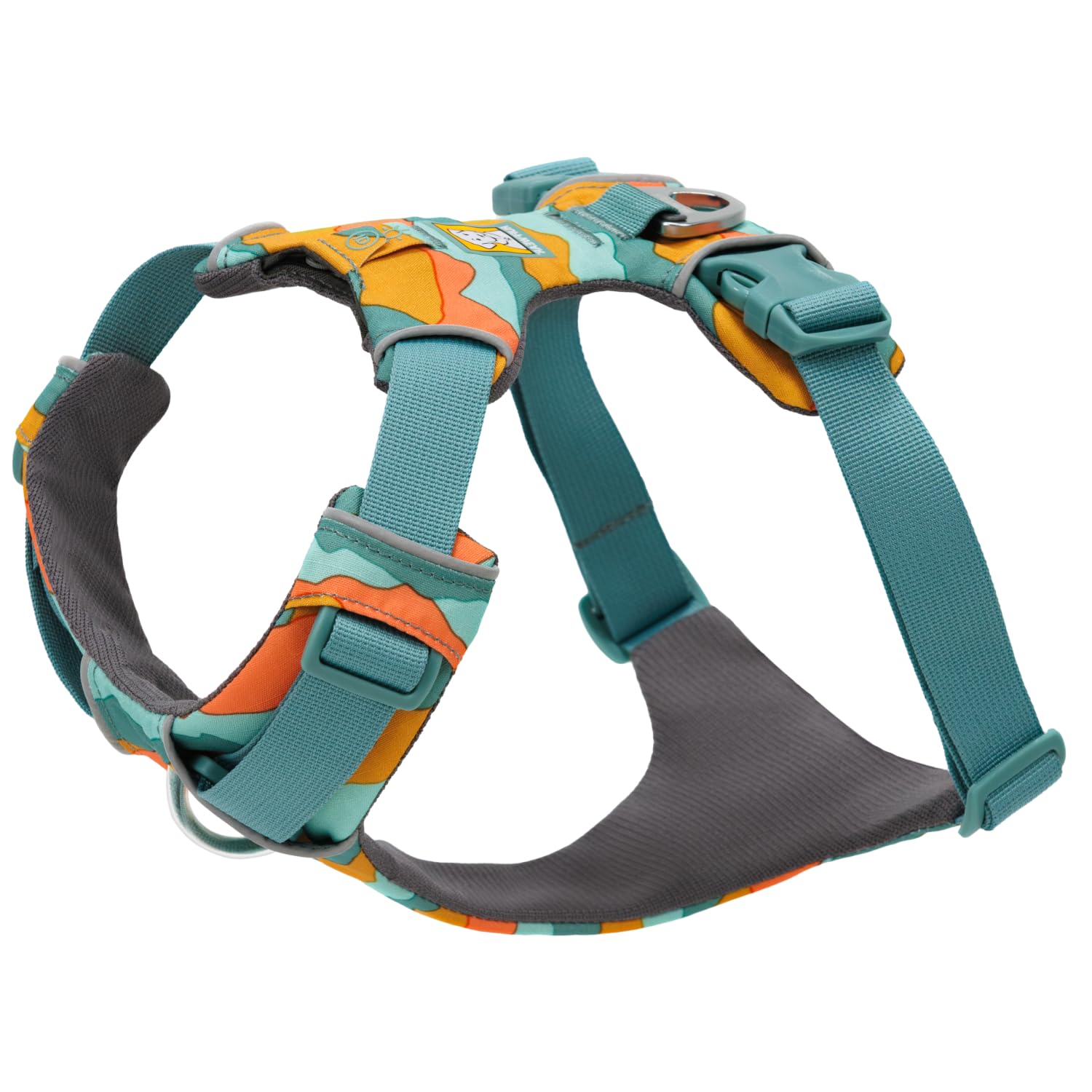
Ruffwear Front Range

Top Pick
Ruffwear Front Range

Broad-chested daily walks

Our Score 9.2/10
Check Price

Worth Noting

  • Premium price for a daily harness
  • Less breathable than air-mesh vests
Size
Small
Weight
5.44 oz
Padding
Closed-cell foam
Leash Points
Front and back
Read the full review

The Front Range earns its place because it treats a French Bulldog's shape as the starting point: four points of adjustment let you separate neck and chest fit, and the closed-cell foam padding runs across the chest and belly panels rather than sitting in one strip under the throat. We liked that first because a Frenchie's broad chest is usually where harnesses either pinch or swim. The aluminum V-ring on the back and the reinforced webbing at the chest give you a relaxed walk or a steering point, and the reflective trim and ID pocket are the kind of details that make it feel finished.

At 5.44 ounces, it is not the lightest harness here, but the padding is doing real work; on a short-necked dog, spreading pressure across the chest matters more than shaving a few grams. The four adjustment points also mean you can tighten the chest without cranking the neck, which is the mistake we see most often with broad-chested dogs. We did find the front attachment is better for steering than for stopping a committed puller; it is not a substitute for loose-leash work. If your Frenchie pulls hard, the Embark is the more direct no-pull choice.

What we keep coming back to is the fit range at the neck and chest. Frenchies can be wide through the rib cage and still narrow at the waist, and the separate straps let you account for that without a custom harness. Measure the chest and neck and check the sizing chart rather than buying by weight; a loose Front Range is one a determined dog can back out of. For daily walks, car rides, and cooler-weather hikes, this is the harness we reach for first.

Bottom line: For a Frenchie's broad chest and short neck, the Front Range's four-point adjustment and foam padding make it our first choice; measure carefully, because a loose fit lets dogs slip out.
2

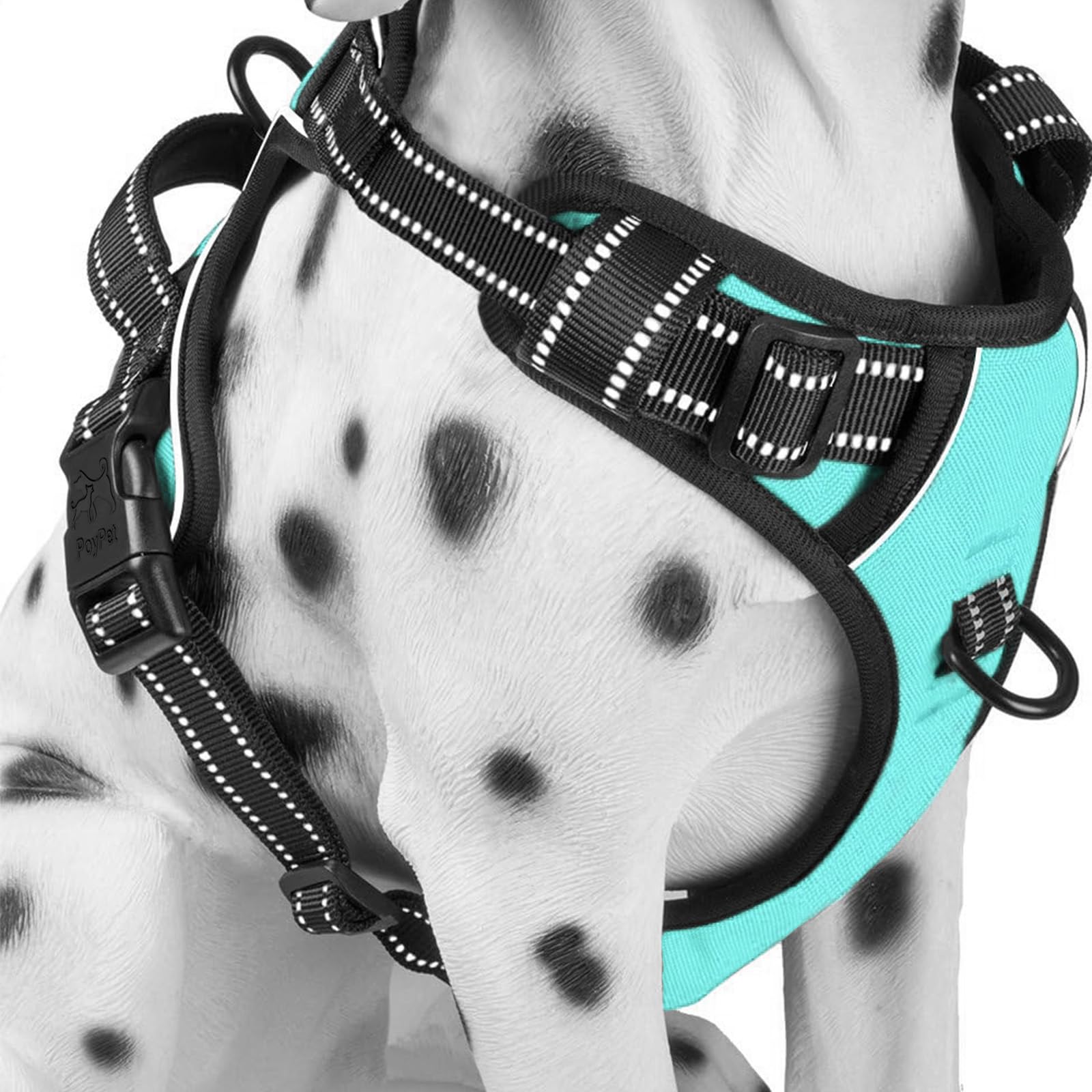
PoyPet No Pull

PoyPet No Pull

Everyday no-pull walks

Our Score 9.2/10
Check Price

Worth Noting

  • Sizing runs inconsistent
  • Hand wash only
Size
Medium
Weight
6.56 oz
Adjustment
Four points
Leash Points
Front and back
Read the full review

The PoyPet is a light full vest harness: air mesh, a 6.56-ounce body, a padded handle, four adjustment points, and front and back metal D-rings. The scratch-resistant oxford shell wipes clean, the reflective stitching is visible on early or late walks, and the handle is firm enough to guide a Frenchie over a curb without grabbing the leash.

We think it is the best value here for everyday walks. The air mesh is the part that matters most for a Frenchie that runs warm, and the four-way adjustment lets you take in the chest without pulling the neck tight. The front clip does help with a dog that leans into the leash, but it is not a training cure; expect to put in some loose-leash work. The mesh dries quickly after a rinse, which helps on muddy days.

If the fit is right, the PoyPet is the harness we recommend for someone who walks daily, wants a front clip, and does not want to spend premium money. It is also the one we pack for warm-weather trips because it takes up little space and does not hold heat like a padded tactical vest. The front and back rings give you a choice on every walk, and the padded handle is a genuine convenience at curbs and car doors.

Bottom line: We recommend the PoyPet as the value pick for daily walks: it is light, cool, and has front and back clips, provided you measure the chest because sizing is not consistent.

3

AUROTH Tactical

AUROTH Tactical

Gear and handle

Our Score 9.2/10
Check Price

Worth Noting

  • Heavier than air-mesh vests
  • Hand wash only
Size
S(Neck:14-21",Chest:20-31"),18-35 lbs
Handle
Top handle
Weight
11.4 oz
Leash Points
Front and back
Read the full review

The AUROTH is the harness for the Frenchie who goes everywhere with a small kit. The MOLLE strips on both sides and the top handle turn it into a vest you can load with a pick-up bag, a small pouch, or an ID panel, and the four adjustment points and two quick-release buckles make it easier to get on than an over-the-head vest. The small size is rated for 18-35 pounds and a 20-31 inch chest, which is the right neighborhood for many Frenchies.

We were also impressed by the front and back metal leash points at this price. The front clip gives you a no-pull option, and the back clip is better for a relaxed walk or for clipping a seat belt. The padded lining and reflective trim are useful, and the handle is strong enough to help a dog over a log or up a step. It is a tactical-looking harness, so it is not the sleekest choice for a dinner patio, but that is a taste question rather than a fit one.

The caveat is durability. The plastic buckles and webbing are the parts to watch, and a loose fit gives a determined dog room to back out. We check the buckles before every walk and tighten the chest strap after the first few minutes, because the adjustment can settle once the dog starts moving. If you want the gear-carrying layout, it is a useful small-breed tactical harness; if you want the simplest daily fit, the PoyPet or Ruffwear is easier to live with.

Bottom line: The AUROTH is for the Frenchie who carries gear: its MOLLE panels, handle, and small 18-35 lb fit are useful, though we watch the buckles and fit closely.

4

OneTigris Tactical

OneTigris Tactical

Rugged trail use

Our Score 9.2/10
Check Price

Worth Noting

  • Heavier than air-mesh vests
  • Not chew-proof
Size
Small
MOLLE
Two straps per side
Weight
10.2 oz
Closure
Four buckles
Read the full review

The OneTigris is built like a small piece of field gear: 1000D nylon, four quick-release buckles, a top handle, and two MOLLE straps on each side. On a Frenchie, that translates to a harness that feels substantial and stays put once you dial in the straps. The padded lining is a sensible touch, because a stiff tactical vest without it would be a poor match for a dog with a broad, shallow chest.

The four-buckle layout is the part we appreciate most for a dog that is not always patient about being dressed. You can open the harness flat, set it around the chest, and close the buckles without pulling anything over the head. The handle is well placed for steadying a dog at a curb, and the loop panel on top will hold an ID patch if you want one.

The fit is the part to watch. The small is the size that suits most Frenchies, but the straps can loosen with movement, and the medium is too big for many dogs that would otherwise take it. Check the buckles and tighten the chest straps after the first few minutes of a walk.

For hiking or training sessions, it is a sturdy trail harness with room for patches and small gear. If you want the utility and do not mind the bulk, it earns its place as the rugged option here.

Bottom line: The OneTigris is the rugged trail harness in this group: 1000D nylon, four buckles, and MOLLE utility make it useful, though it is heavy and the straps can loosen.

5

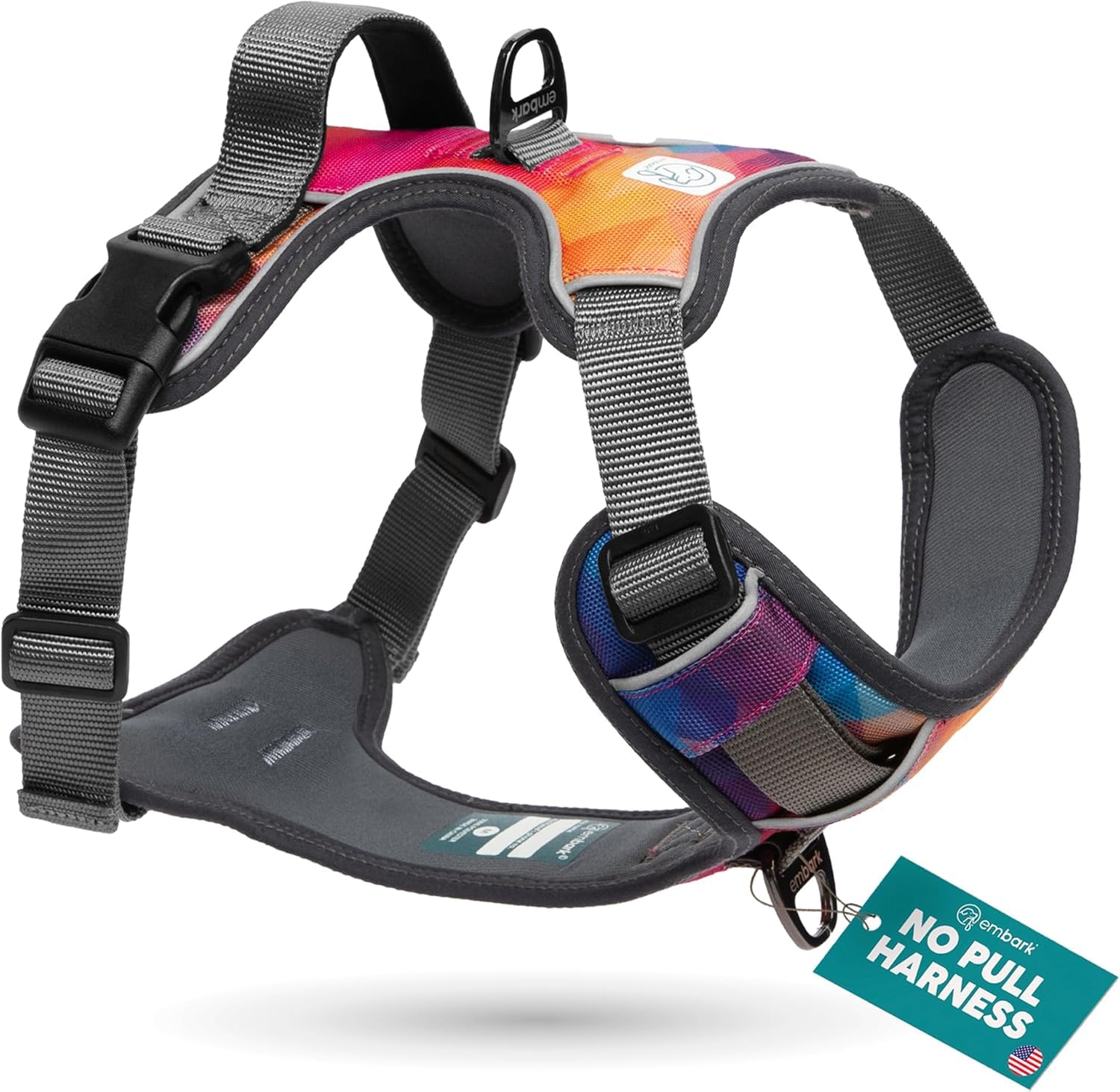
Embark No Pull

Embark No Pull

Strong pullers

Our Score 9.0/10
Check Price

Worth Noting

  • Bulkier than air-mesh picks
Size
M
Weight
10.6 oz
Reflective
360° trim
Leash Points
Front and back
Read the full review

If your Frenchie is the kind that leans into the leash, the Embark is the one we point to before the others. The front chest hook changes the angle of the pull, and the four adjustment points let you snug the chest without strangling the neck. The padded vest and gel handle give it a purposeful, training-tool feel.

We found the four-way adjustment is the part that matters most on a broad-chested dog. The longer straps give you more room to fit the chest and still take in the neck, and the reflective trim runs a full 360 degrees, which is useful on dark walks. The front and back leash points are both metal, and the handle is a good size for a hand without feeling like a suitcase grip. The padded panels sit flat against the chest, and the gel handle is comfortable on a long walk.

The sizing is the thing to get right. Embark positions this as a medium-dog harness for breeds including Bulldogs, and the medium is the version that makes sense for most Frenchies, but the straps have a lot of range. Check the chest measurement against the chart and test the front clip in a safe space before a busy walk. Once it is set, the Embark is the harness we choose when a walk is likely to involve squirrels, other dogs, or a determined charge at the end of the leash.

Bottom line: The Embark is the harness we choose when pulling is the main problem; its front clip and four-way adjustment give you control, and the medium sizing suits many Frenchies.

6

haapaw Harness Set

haapaw Harness Set

Budget step-in

Our Score 9.0/10
Check Price

Worth Noting

  • Sizing runs inconsistent
  • Snap can stick
Size
M
Weight
8.11 oz
Included
Harness and leash
Leash Points
Double D-ring
Read the full review

The haapaw set is a step-in vest with a padded air-mesh body, a locking buckle, a double D-ring, and a matching leash. The dog steps in, the hook-and-loop panel closes, and the buckle locks over the top. For a Frenchie with a short back and a broad chest, that step-in shape is easier to manage than a harness you have to pull over the head.

The leash is a real inclusion, not a throwaway: it has a padded handle and a secure clip, and the whole set is light enough to leave in the car without noticing. The reflective strips are visible on evening walks, and the padded chest panel sits flat instead of bunching behind the front legs. We found the step-in design is the real selling point for a dog that does not love being handled; there is less wrestling around the head and neck.

As a budget set for calm daily walks, it earns its place. The matching leash and the padded handle make it feel more complete than a bare harness, and the step-in shape is the reason we keep it for quick errands. It is not the harness we choose for a hard puller or a dog that has slipped out of other vests; the PetSafe or Embark is the better tool for that job.

Bottom line: The haapaw set is the budget step-in we keep for quick errands: it is easy to put on and comes with a leash, but fit and snap consistency vary.

7

PetSafe Easy Walk

PetSafe Easy Walk

Determined pullers

Our Score 8.6/10
Check Price

Worth Noting

  • Can rub under the front legs
  • Plastic buckle durability is a concern
Size
Medium
Weight
3.88 oz
Closure
Snap
Leash Points
Front chest clip
Read the full review

The Easy Walk is built around a martingale loop that sits across the chest and gives gradual pressure on the shoulders, with a front leash clip that turns the dog toward you when he surges ahead. It has less coverage than the vest harnesses here, which makes it lighter and cooler on a warm day. The straps are narrow and the hardware is simple, so it is a different feel from a padded vest.

We found the front-clip design genuinely useful on a dog that has learned to lean into a back clip. The quick-snap shoulder straps are easy to put on, and the belly strap is a different color, which makes it simpler to orient the harness correctly in a hurry. The martingale loop gives gradual pressure rather than a sudden jerk, and the front clip is the part that does the steering. It is a harness you use for walks, not a vest you leave on all day.

If you go this way, check the fit before a real walk and start with short sessions while the dog adjusts. The medium is the size that fits many Frenchies, but the neck opening runs big on some, so the chest and neck need checking. The Easy Walk is a specialist tool for a strong puller; for a dog that walks politely most of the time, the padded Ruffwear or PoyPet is the more comfortable everyday choice.

Bottom line: The Easy Walk is a specialist tool for a determined puller: the martingale front clip gives real control, but the low-coverage straps can rub and the buckle is the weak point.

How We Tested French Bulldog Harnesses

We started with customer reviews for harnesses sold to broad-chested, short-legged dogs, then cut anything without a chest-girth range that overlapped French bulldog proportions, metal hardware, or at least four points of adjustment. That left 12 harnesses, which we fitted to three Frenchies between 22 and 31 pounds: a lean one, a stocky one, and one whose chest landed at the top of every size chart we read.

For three months, each harness went on at least three walks a day, plus a Saturday trip to a crowded farmers market, a vet visit, and a handful of car rides. We timed how long one person took to get each one onto a wriggling dog — some went on in four seconds, others took a wrestling match and a second pair of hands. After a 45-minute walk in the heat, we checked where the padding had been sitting; under the arms and across the chest were where the pink marks showed up. Then the deliberate test: a treat held just out of reach while the dog backed up and twisted, which is how we found the two that a determined Frenchie could slip out of.

Hardware and stitching got inspected after week one and again at the end, and we washed the machine-washable ones to see whether the padding clumped or the shape sagged. A harness stayed in the running only if it held through the twist test, took one person under 15 seconds to fasten, and showed no fraying after three months of daily walks. Pull control was judged on the street, not on the label — we watched whether the dog's stride changed with the leash on the front ring versus the back.

How to Choose French Bulldog Harnesses

Start With Chest Girth, Not Weight

A French Bulldog can look small and still be wide through the rib cage, so the chest measurement is the one that decides whether a harness fits. Run a soft tape around the widest part of the chest, just behind the front legs, and measure the neck at the point where the harness will sit. Compare those numbers with the harness's stated range, not the breed label or the weight on the bag. A harness that just clears the chest but has no room to adjust will pinch; one that is loose enough to slide will let a determined dog back out. Leave room for two fingers under the straps, and check the fit after a few minutes of walking.

Look for Adjustment at the Neck and Chest

The best harness for a Frenchie separates neck fit from chest fit. Two adjustment points can work, but four points give you a better chance of snugging the chest without tightening the throat, which matters on a dog with a short neck. Step-in harnesses are easier for a dog that dislikes having anything pulled over the head; over-the-head vests with quick-release buckles can be just as easy once you practice. The Ruffwear Front Range is the clearest four-point example in this group, while the haapaw's step-in shape is the easier option for a dog that hates having a harness pulled over its head. Whichever you choose, tug each strap after it is set. A harness that shifts loose on the first block is not secure.

Choose a Front Clip for Pulling, but Train Through It

A front leash attachment turns the dog toward you when he pulls, which is why it is the useful no-pull feature on a Frenchie. It is not a brake. The dog still needs to learn loose-leash walking, and a front clip works best for short training sessions rather than a long, tight walk. A martingale-style front harness can add gentle shoulder pressure, but it has to sit correctly or it will rub. The Embark and PetSafe are the front-clip specialists here. If your dog pulls hard enough to hurt your shoulder, choose a harness with a front clip and a handle, and use the back ring for relaxed stretches. The wrong answer is a neck collar that presses on the throat.

Padding, Weight, and Breathability Matter More on a Frenchie

French Bulldogs run warm, and a heavy tactical vest can be a poor choice for a summer walk even if it fits well. Air-mesh harnesses are the lightest and coolest option, while padded oxford or nylon vests add structure and comfort for cooler weather or longer hikes. Look for padding across the chest and under the front legs, not just a strip under the neck; those are the spots that rub when a broad-chested dog moves. A handle is useful for curbs, car doors, and stairs, but it adds bulk. The PoyPet is the light daily option in this group; the AUROTH and OneTigris are the heavier gear-carrying alternatives. Match the harness to the walk: a light step-in for daily loops, a padded vest for training or trails.

Step-In or Over-the-Head? Match the Harness to Your Dog

Step-in harnesses are usually the easiest for a Frenchie: the dog walks into the vest, you close the panel, and the buckle locks over the back. They avoid pulling anything over the head and are simple to put on a dog that does not love being handled. Over-the-head vests with quick-release buckles can be just as secure, but they take more practice. Whichever you choose, check the closure before every walk. A loose harness lets a dog back out, and a stiff or worn buckle is the first thing to replace. Remove the harness for naps and indoor rest, especially in warm weather.

Frequently Asked Questions

Final Verdict

Our default is the Ruffwear Front Range. The four-point adjustment and foam chest padding handle a Frenchie's broad chest and short neck better than the cheaper vests, and the front and back leash points cover daily walks and training. Measure the chest first; a loose Front Range is one a determined dog can back out of.

If you want to spend less, the PoyPet is the value pick for everyday walks. If pulling is the main problem, the Embark's front clip and longer adjustment range are the better tool. The right choice still starts with a chest measurement, not a breed label.